
My Dog's Whining When I Left Alone Was Breaking My Heart. Here's What I Actually Did.
The first time I recorded my rescue dog Miso while I was gone, I saw a terrified animal, not a clingy one. Here's what actually helped — and the blunt vet advice that changed everything.
The first time I left my rescue dog, Miso, alone after adopting him, I did everythig the guides told me. I gave him a frozen Kong. I left a radio on in the kitchen playing classical music. I slipped out while he was licking peanut butter off the little rubber maze thing. And for about six minutes — maybe seven — he was fine. Then the whining started. Not a soft, polite little whine either. The kind that sounds like a teakettle that's about to blow, all high-pitched and wavery, punctuated by these heartbreaking yelps that made my neighbor text me: Is your dog okay? I can hear him from my bathroom.
I wish I could say I handled it well. I didn't. I panicked, came home early, and sprnt the next three months trying everything the internet told me to try, most of which made things worse. It took a vet visit, a behaviorist who was refreshingly blunt, and a build dog named Pretzel before I finally started to understand what was actually going on. So if you're sitting there with a dog who sings the song of his people every time you grab your keys, I'm going to walk you through what I learned the hard way. I'm not a vet. I'm not a behaviorist. I'm just someone who's fostered over 40 dogs, worked at a shelter for six years, and made enough mistakes to fill a book. Probably several books. Most of them pretty embarrassing.
The day I set up a camera and immediately wished I hadn't
After about a week of the whining, I bought one of those cheap pet cameras — the kind that connects to your phone and streams grainy 720p footage of your dog looking utterly betrayed. I set it up on the bookshelf, filled the Kong, did the whole routine, and left. I got as far as the coffee shop three blocks away before I pulled up the feed.
Miso wasn't just whining. He was pacing. Panting. Scratching at the door. Then he'd stop, tilt his head back, and let out this long, mournful howl that made me want to cry into my latte. He wasn't just sad. He looked terrified. That's when I started to suspect I wasn't dealing with a dog who was "a little clingy". Something deeper was going on. And I had no idea what to do about it.
Let me back up a second. Miso is a 45-pound mystery mutt — probably some pittie, some hound, maybe a splash of something that bays at the moon. I adopted him from the shelter where I used to work, and he'd been there for eight months. Eight months. In a kennel. With people walking past him every day, sometimes stopping to say hi, sometimes not. He'd gotten used to the constant background niose of barking dogs and clanging gates and the squeak of the mop bucket. And then I brought him into my quiet little house and expected him to be fine when I left him alone. Spoiler: he wasn't.
I should've known better. I'd worked in a shelter. I'd lectured adopters about the 3-3-3 rule (three days to decompress, three weeks to learn the routine, three months to feel at home). But when it was my dog, standing in my living room, whining so loud the mail carrier probably thought I was torturing him, I completely forgot everything I knew. That's the thing nobody tells you about working with animals professionally: the moment it's your own dog, all your training goes out the window and you become a complete idiot. At least I did.
There's whining, and then there's whining
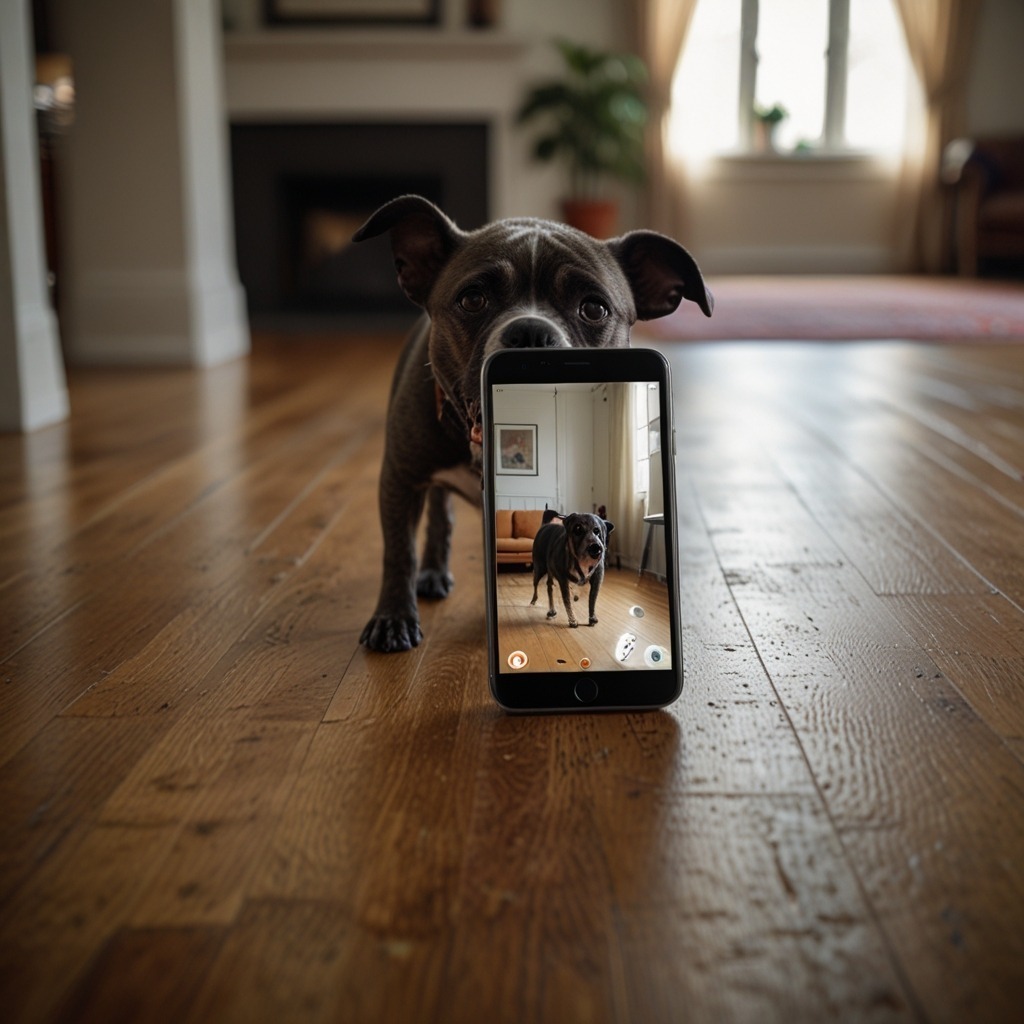
A lot of people think all whining is the saame. It's not. There's the "I see a squirrel" whine. The "I've to pee so bad I might die" whine. The "you've bacon and I don't" whine. And then there's the isolation whine — that particular, urgent, panicked sound that's basically a dog screaming: I'm alone and this feels wrrong and I don't know if you're coming back and my brain is on fire.
I can tell the difference now after years of fostering, but when I first got Miso, I just heard "dog is upset" and assumed I needed to fix it immediately. That's a dangerous instinct, by the way. Rushing back every time your dog whines teaches them that wining makes you return. That's operant conditioning 101. But ignoring it completely when the dog is in genuine distress isn't the answer either. It's a tightrope. A really wobbly tightrope made of guilt and earplugs.
Actually, let me go off on a tangent here because this drives me nuts. There's a whole school of dog training that says you should just let your dog "cry it out" — treat it like a human baby, they say. Close the door, put on headphones, and wait until they exhaust themselves. I tried this exactly once. After 45 minutes of Miso's wailing escalating to the point where I was genuinely concerned he might hurt himself, I gave up. And you know what? Later I learned from a veterinary behaviorist that "cry it out" for dogs with separation distress can actually make things worse. It can incrase cortisol levels so high that the dog enters a state of learned helplessness — they stop crying not because they're calm, but because they've shut down. That's not a win. That's heartbreaking. So screw that advice. It might work for some dogs who are just a little fussy, but for the genuine panic-response whiners, it's garbage.
Okay, rant over. Back to Miso.
The neighbor note incident
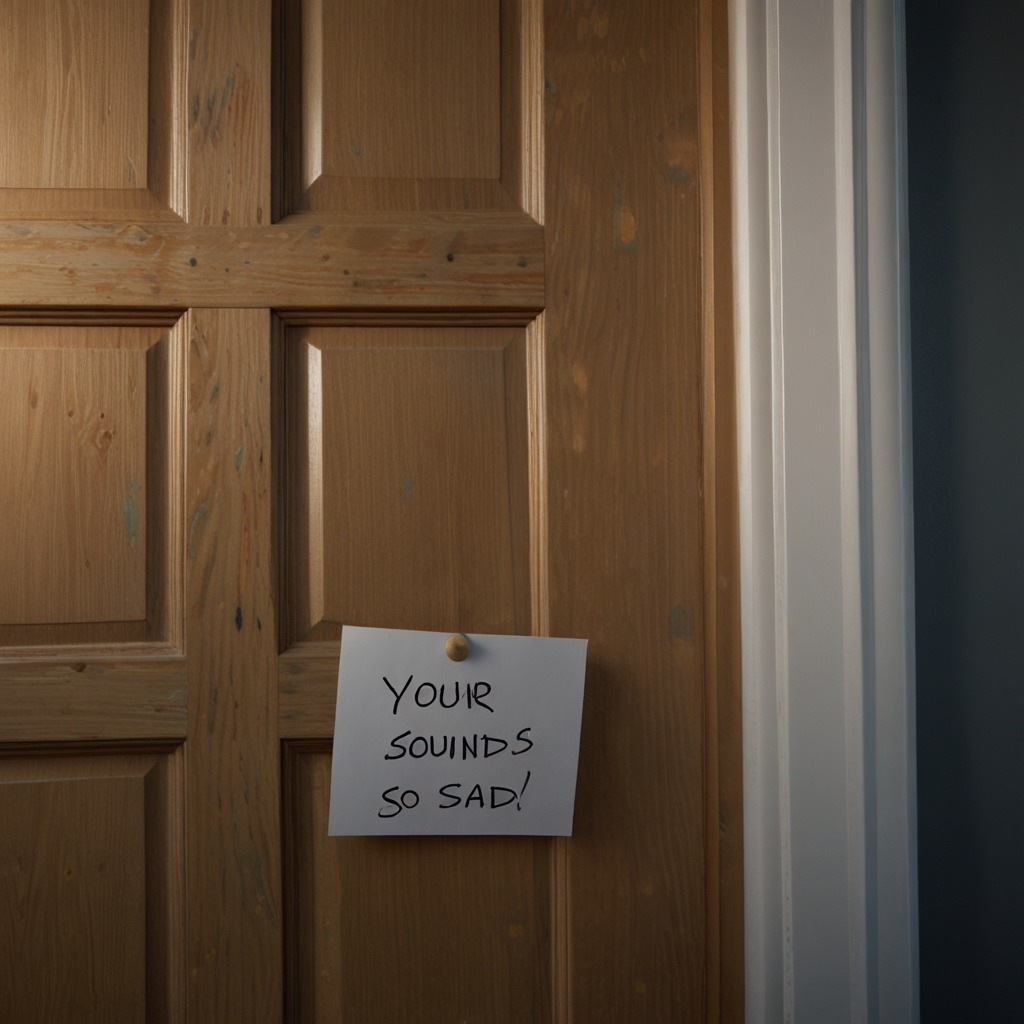
About three weeks into having Miso, I came home to find a note taped to my door. Not an angry note — my neighbor is a sweet older guy named Harold who grows tomatoes and has a very opinionated tabby cat — but a note still, . It read: "Sarah, I'm not cpmplaining, but your dog sounds so sad when you leave. Is he okay? Let me know if you need anything. — H."
I was mortified. I'd been so focused on Miso's distress that I'd forgotten how thin my apartment walls were. I brought Harold some tomatoes from my own sad little garden (a peace offering) and explained what was going on. He was kind about it, but I knew I needed to figure this out before someone less patient decided to file a noise complaint.
Isolation distress vs. separation anxiety — and why the difference matters
I'm going to get a little clinical hre, but stick with me. One of the most useful things I learned during the Miso saga is that not all dogs who freak out when left alone have true separation anxiety. There's a distinction between isolation distress (the dog is upset because they're alone, but they're fine if anyone — literally anyone — is with them) and separation anxiety (the dog is hyperattached to a specific peron and panics when that specific person leaves, even if other people or dogs are around).
Miso had isolation distress. He didn't care about me specifically. He cared about being alone. I tested this by having a friend dog-sit while I ran errands. Miso was completely fine — no whining, no pacing, just a happily wagging tail. But me leaving him in an empty apartment? Disaster. That distinction mattered because it changed the treatment approach. A dog with true separation anxiety might need anti-anxiety medication, a very gradual desensitization protocol tied to a particular person, and months of work. A dog with isolation distress might just need a companion or some clever management.
Here's a quick way to tell whihc you're dealing with:
The "any warm body" test
Have someone your dog doesn't know super well (but likes) stay with them while you leave. If the dog is calm, you've probably got isolation distress. If the dog still panics even with another person present, you might be looking at true separation anxiety.
The window licker
Dogs with isolation distress often just want to be near something alive. They'll hang out by the window watching for anyone. Dogs with separation anxiety tend to be more focused on the departure cues of their specific person — they start getting anxious the moment you grab your keys, not when you actually leave.
The "velcro" dog vs. the "companion" dog
A velcro dog follows you specifically from room to room and can't function without your presence. A companion dog just doesn't want to be alone, but they'll happily transfer their affection to whoever's available. Miso was definitely the companion type. He just needed someone — anyone — there.
Knowing this was a relief. I'd been reading all these terrifying articles about true separation anxiety — months of desensitization, medication trials, dogs who tore through drywall — and thinking that was my future. But Miso's problem was simpler. Which isn't to say it was easy. It still took months. But at least I had a better roadmap.
What I tried first (and why most of it failed spectacularly)
I need to list these out because I tried them all, and I bet you've too.
- The Thundershirt: Some dogs love these; my dog acted like I'd strapped a boa constrictor to his ribs. He froze, refused to move, and then peed on the rug. Not a win.
- DAP diffusers: I had high hopees for the calming pheromone plug-in. We used it for six weeks. I'm pretty sure the only thing it calmed was my wallet.
- Leaving a TV on: This helped a tiny bit — Miso seemed to like the sound of human vioces — but it wasn't a cure. It just took the edge off.
- The "no big deal" departure: You know the advice: don't make a fuss when you leave or come home, just act casual. I did this for weeks. Miso didn't care how casual I was; he still panicked the second the door clicked shut.
- Exercise before leaving: This actually helped, but only up to a point. A tired dog whines less, sure. But a dog in a panic state can override exhaustion. Miso could be so tired he was swaying on his feet, and he'd still work up the energy to howl for 20 minutes.
I'm not saying these thigns don't work for some dogs. They do. They just didn't work for my dog, in my specific situation. And I think that's the most frustrating part of dog training advice online — it's always presented as "do this and it'll work," and when it doesn't, you feel like a failure. You're not. Your dog is just an individual with a weird brain, like all of them.
The weird thing that did work (and my vet's blunt advice)
After three months of trial and error, I finally took Miso to my vet, Dr. Cheng, who's known me long enough to be brutally honest. I told her everything. The whining. The camera. The neighbors. The falied Thundershirt. She listened, nodded, and then said: "Have you considered he just doesn't want to be alone? Like, at all?"
It was so obvious I almost laughed. Miso wasn't broken. He was a social animal who'd spent eight months in a kennel surrounded by other dogs, and now I was expecting him to be completely fine in a silent apartment by himself. Dr. Cheng's suggestion: get him a buddy. Not a permanent adoption — just a build dog. Someone to keep him company.
Now, I know what you're thinking. "Sarah, not everyone can just get a second dog." I know. I'm not saying that's the universal fix. But for Miso, it changed everything. I brought home a calm, older build dog — a lazy lab mix named Bernard who gave zero craps about anything — and the whining stopped almost completely within two days. Miso just needed someone else breathing in the room. It didn't have to be me. It just had to be someone.
If you can't have another dog — and I get it, not everyone has the space or budget or sanity for that — there are other options. A friend of mine with a whining whippet started sending her dog to a small home-based daycare two days a week and using a pet sitter the other days. Expensive? Yes. But it kept the dog calm and the neighbors happy. Another friend rotated with a coworker who also had a dog with isolation issues — they'd take turns dog-sitting each other's pups on their days off. There's no one-size-fits-all solution. But the core insight is: some dogs just can't be alone, and no amoutn of Kongs or training or pheromone sprays is going to change that. It's like expecting a human toddler to be okay in an empty house for four hours. They're just not wired for it.
That said, I did also use some management strategies that helped while we were figuring out the buddy system:
- Short absences only, at first. I started with 30-second departures — literally just strpping outside and coming right back — and worked up from there. It was tedious, but it helped Miso learn that when I left, I'd come back.
- I stopped the pre-departure rituals. I used to jingle my keys, put on my shoes, grab my bag — all predictable cues that sent Miso into an anticipatory anxiety spiral. So I started doing those things randomly throughout the day without leaving. Keys jingle while I'm watching TV. Shoes on while I'm folding laundry. It decoupled the cues from the departure, which helped a surprising amount.
- I gave him a "job" when I left. Not just a Kong, but a whole scattered treasure hunt. I'd hide little piles of kibble around the living room before I walked out. He'd be so busy sniffing and searching that by the time he looked up, I was already gone and back before he could panic. Scavenging is a naturally calming behavior for dogs — something about the sniffing and foraging switches their brain into a lower-arousal state.
That last one, the scattered food, came from a puppy training book I'd read years ago and promptly forgotten because I was too busy panicking about Miso's howling to remember any of it. It's embarrassing how often I've to relearn things I already know. My brain is like a colander.

When it's more than just whining — the physical stuff nobody talks about
Here's a thing I learned the hard way with a different build dog: sometimes whining when left alone isn't about loneliness at all. It's about pain. Or cognitive decline. Or a medical issue that only becomes obvious when the house is quiet and the dog can't distract themselves from it anymore.
I had a senior build named Gus who whined whenever I left the room. I assumed it was anxiety. Turns out he had early-stage arthritis in his hips, and when he was alone and not moving around to distract himself, the pain would ramp up. He'd whine because he was hurting, not because he missed me. A course of anti-inflammatory meds and a better orthopedic bed made the whining disappear almost overnight.
So if your dog's whining is new, or it's accompanied by any of these red flags, get to a vet before you assume it's behavioral:
- Pacing that seems stiff or uncomfortable, not just anxious
- Whining that happens even when you're in the house but in a different room
- Changes in appetite or water intake
- Whining at night specifically (can be a sign of cognitive dysfunction in older dogs)
- Excessive licking of paws or joints (a common pain signal)
I'm not trying to scare you. It's just that dogs are masters at hiding pain when we're around because they're distracted by our presence. Alone, they can't mask it as well. It's worth ruling out before you spend months on behavior modification that woon't touch the root cause.
A build dog named Prerzel who changed my approach entirely
Okay, time for another tangent because this story still makes me emotional. A few years after Miso, I took in a little terrier mix named Pretzel. She was maybe eight years old, mostly deaf, and had been surrendered because her owner went into a nursing home. Pretzel didn't just whine when left alone. She screamed. Literally screamed — this high, keening noise that sounded like someone stepping on a cat. The first time I left her for a 10-minute grocery run, my neighbor Harold came over with his tabby cat in a carrier and said, "Should we call someone?"
I tried all the usual stuff with Pretzel. The Kongs, the pheromones, the gradual departures, the scattered food. Nothing worked. She was so old, so set in her ways, and so deeply bonded to her previous owner that any separation felt like a death to her. I finally took her to a veterinary behaviorist (the one who schooled me on the "cry it out" method being garbage) and she recommended a combination of anti-anxiety medication and a very structured protocol of absences so short — literally 5 seconds at first — that Pretzel never had a chance to panic.
It took six months. Six. Months. Of me walking out the door, counting to five, and walking back in. Of gradually increasing the time by 10 seconds, then 30 secnds, then a minute, then two. I felt like an idiot standing in the hallway for exactly 47 seconds and then coming back in like it was the most normal thing in the world. But it worked. Slowly, Pretzel's brain started to learn that when I left, I always came back. The medication took the edge off her panic enough that she could actually learn that lesson. Without it, she was so flooded with stress hormones that no amount of training could get through.
The takeaway here isn't "every whining dog needs meds." It's that some dogs do, and that's not a failure. If your dog's distress is severe enough that they can't eat, can't sleep, and can't learn, medication might be the kindest option — not a last resort, but a bridge that makes behavior modification possible. I used to be weirdly resistant to the idea of putting a dog on anxiety meds. Pretzel changed my mind. She lived another four happy years, eventually able to stay home alone for up to three hours without a peep. And then she passed away in her sleep on her favorite blanket, and I sobbed for two days. That dog taught me more about patience than any human ever has.
Why "just igore it" is terrible advice for most dogs (and you should stop listening to people who say it)
I already kind of ranted about this earlier, but I'm going to drive it home because I still see this advice everywhere: "Just ignore the whining and eventually the dog will stop." Look, if your dog is whining because they want attention and you've accidentally trained them that whining gets them attention, then yeah, ignoring it can work. That's a demand whine, not a distress whine. And you can usually tell the difference — a demand whiner will glance at you to see if it's working, their body language is loose, they'll stop the second you walk toward the treat jar. A distress whiner isn't looking at you. They're staring at the door, or pacing, or drooling, with their ears back and their body tense. They're not trying to manipulate you. They're scared.
If you're not sure which one you're dealing with, video record your dog while you're gone. Watch the footage. Is the whining constant, or does it come in bursts? Does the dog eventually settle and rest, or do they pace for the entire time you're away? A dog who whines for 10 minutes and then curls up to sleep is probably fine — you can work on that with gradual departures and ignoring the initial whining. A dog who whines for two hours straight, or who escalates to howling, destruction, or self-harm, isn't fine and won't just "get over it." That dog needs a different approach entirely.
I heard someone at a dog park once say, "Oh, my lab used to whine when I left, so I just got a bark collar and it stopped." I almost bit through my tongue. A bark collar on a dog with separation distress is like duct-taping a crying baby's mouth. It doesn't fix the far. It just punishes the expression of fear. And in some cases, it can make the anxiety worse because now the dog associates being alone with physical pain on top of everything else. Please don't do that. There are kinder, more effective ways.
Speaking of which, a dog's brain under stress works a lot like ours during a panic attack — the logical, learnng part shuts down and the survival part takes over. So if you're trying to teach a dog something while they're in that state, you're basically talking to a brick wall. you've to reduce the stress first, then train. That's why short absences and medication can be so game-changing — sorry, not "game-changing", I hate that word but I'm leaving it in because sometimes I can't help myself — so effective. They lower the basekine anxiety enough that the dog's brain comes back online.
What I'd tell my past self (and what I tell friends now)
If I could go back in time and sit down with the panicked version of me who was crying into her cold brew while her dog howled on a camera feed, here's what I'd say:
First, this isn't a reflection of your worth as a dog owner. Dogs with isolation distress or separation anxiety aren't broken. They're not doing this to punish you or because you spoiled them. They're doing it because their brains are wired to find safety in proximity, and when that safety disappears, their nervous system goes into overdrive. You didn't cause this. And you can help.
Second, figure out which flavor of this problem you're dealing with. Is it isolation distress, separation anxiety, a medical issue, or just a demand whine you accidentally reinforced? The fix for each is completely different, so before you throw money at Thundershirts and calming treats, do some detective work. Video your dog. Try the buddy test. Go to the vet. If someone had forced me to do that first instead of buying every gadgte on Chewy, I'd've saved about $200 and a lot of heartache.
Third, consider whether your dog's daily needs are actually being met. This isn't a judgement. I know Miso's weren't at first because I was so focused on the whining that I forgot to give him enough enrichment. Dogs need to sniff, chew, run, and solve puzzles. A bored dog is a stressed dog is a loud dog. I'm not saying a daily walk will cure separation anxiety — it won't. But a dog whose brain is tired from 20 minutes of sniffing around the yard or a few rounds of hide-and-seek with treats is going to be in a better pace to learn calmness than a dog who's been staring at a wall all day.
Fourth, and this is the hard one: some dogs just can't be left alone for long periods, and if that's your dog, you might have to rearrangge your life around that. I know not everyone can afford daycare or a dog sitter. But there are creative solutions — dog-swapping with a neighbor, working from home more often, hiring a teenager to come hang out with your dog after school for $10 an hour. It's not ideal. It's not what you signed up for when you adopted a dog. But sometimes that's the reality. Pretzel taught me that.
Finally, be patient with yourself and your dog. The internet is full of success stories that make it sound like all it takes is one weird trick and your dog will be cured in a week. That's crap. Real progress is slow and messy and nonlinear. Some days you'll think you've finally cracked it, and then the next day your dog will backslide so hard you'll want to scream. That's normal. Keep going. Or don't — if you've tried everything and you're both miserable, it's okay to consider rehoming to a home with someone who's around more, or to talk to your vet about medication, or to accept that your dog will always whine a little and you'll just have to manage it. There's no moral failing in any of those outcomes.
I never completely "cured" Miso's whining. He still lets out a few mournful howls when I leave, even now, years later. But it's 30 seconds instead of two hours. He settles down. He chews his bone. He naps in a sunbeam. And when I come home, his tail wags so hard his whole back end wiggles. That's enough.