Your Dog's Fear of Thunder Isn't Silly — Here's What's Really Going On in That Anxious Brain
I've fostered 40+ dogs and cleaned up more panic pee than I care to remember. Here's the unfiltered truth about noise phobia — from the science to the stuff I've screwed up.
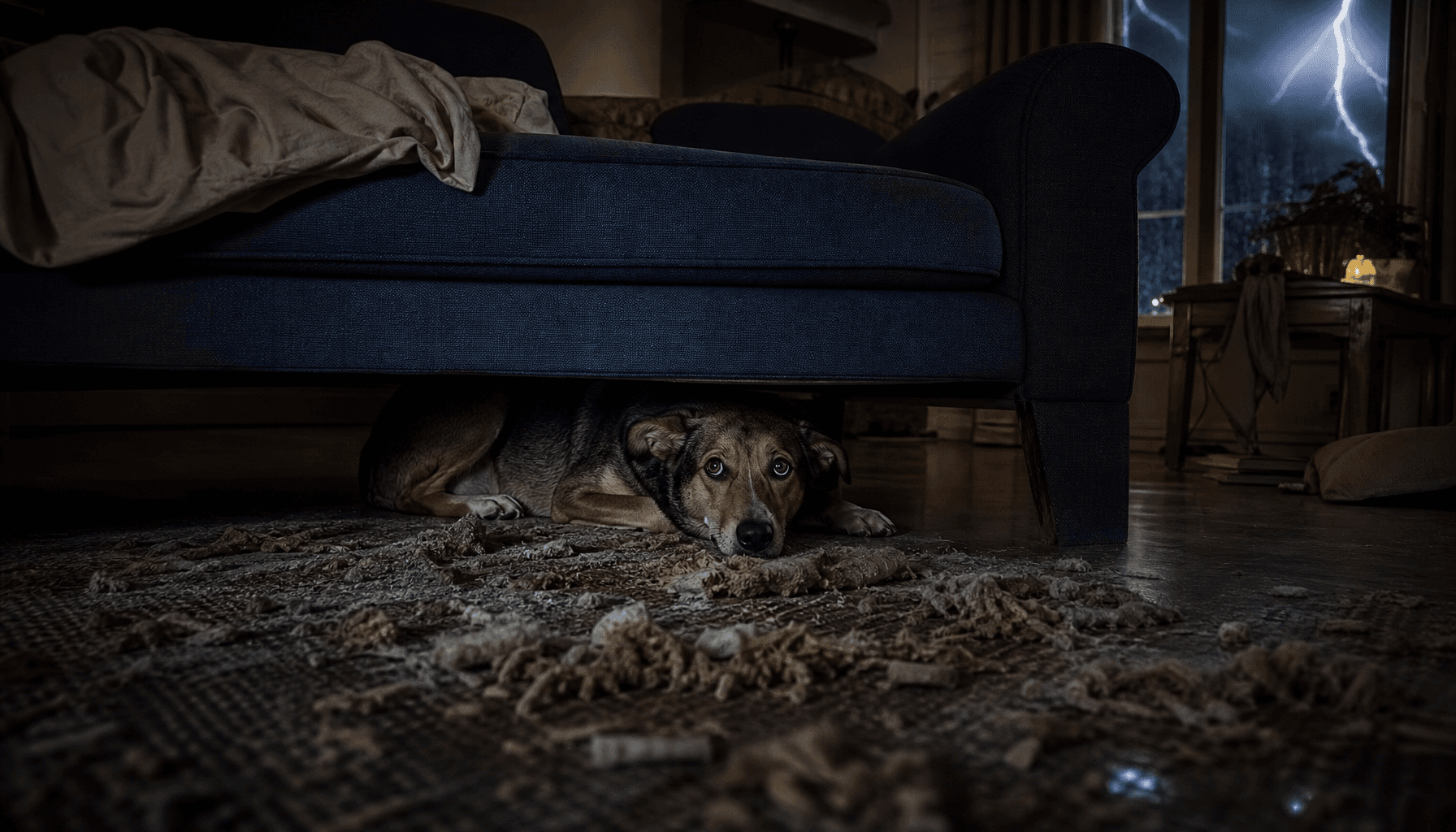
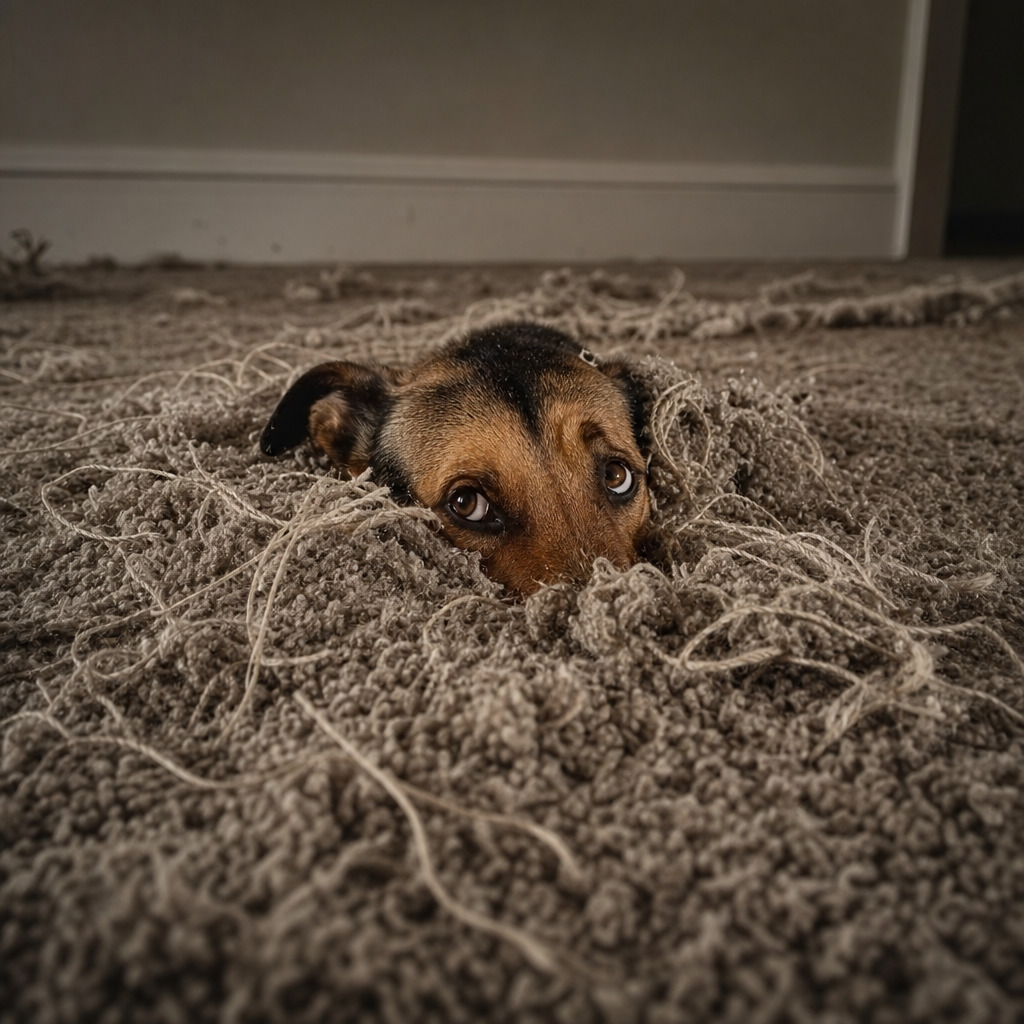
Last July, my dog Milo tried to tunnel through the living room carpet. With his face. At 3 a.m. during a thunderstorm that rattled the windows like a freight train. I woke up to a wet snout in my armpit and a shredded patch of beige Berber that looked like a badger had set up camp there. He wasn't being bad. He wasn't being stubborn. He was terrified out of his goddamn mind.
This is the part where some training guides tell you to calmly ignore the behavior and project leadership. Screw that. I sat on the floor in my pajamas, wedged between the overturned coffee table and the wall, and held 65 pounds of trembling dog until the storm passed. I didn't fix his fear that night, but I didn't make it worse either. Sometimes that's the best you can do.
The Mess in Their Heads: Why Noise Phobia Happens
I'm not a vet. I fluked out of vet tech school because I couldn't stomach the math and I kept crying during surgeries. But after 14 years of fostering everything from quivering Chihuahuas to stoic old Labs, I've learned a thing or two about panic. And noise phobia isn't a training problem. It's a brain problem.
When a dog hears a sound that scares them — thunder, fireworks, the garbage truck's unholy screech — their amygdala fires like someone pulled a fire alarm. Cortisol floods thier system. Their heart hammers. They can't think. They can't "listen." They're in full survival mode, and if you've ever had a pannic attack, you know the feeling. You don't reason your way out of it. You just endure.
The wierd part? Some dogs are fine with noises until suddenly they're not. My build dog Zeke, a Boxer mix who'd slept through fireworks for three years, lost his mind one random New Year's Eve and never recovered. Dr. Nguyen — she's put up with my panic calls for 11 years, through three dogs and a divorce — told me noise sensitivity can worsen with age or emerge after a single traumatic event. One bad sound in the wrong context, and your dog's brain decides that sound is a death sentence forever.
It's Not Just Being a Drama Queen
Dog ears are stupidly sensitive. They hear frequencies we can't, and sounds we perceive as "loud" are astronomically louder to them. A firework display mihht feel like being strapped to a cannon. The pressure changes before a thunderstorm? They feel that too, probably before we even notice the sky darkening. So by the time we hear the first rumble, your dog has been marinating in dread for twenty minutes.
Evolution's Cruel Joke
Here's a thing that bugs me: we bred some dogs to be hyper-vigilant — guard dogs, hreders — and then we get surprised when that vigilance turns into anxiety. A German Shepherd who alerts to every suspicious sound is doing exactly what we asked for, until the smoke alarm sends them into a corner. You can't have a dog who's half watchdog and half Zen master. It doesn't work like that.
When Their World Explodes
Some dogs startle and recover. Others spiral. The spiralign ones often have a genetic predisposition — I've seen entire litters of Border Collies lose it over teacups clinking — or they had a rough start. Rescue dogs with unknown histories are like boxes of mystery chocolates. You never know which noise will unearth a buried trauma. I once had a build who'd been shot at with a pellet gun (long story) and the click of a stapler sent him under the bed for hours.
If you're still reading and thinking "my dog just needs to get over it," I need you to understand that their brain chemistry doesn't work that way. This isn't about being "alpha." This is about a terrified animal who needs you to stop making it worse.
The build Who Hid in the Dryer Vent
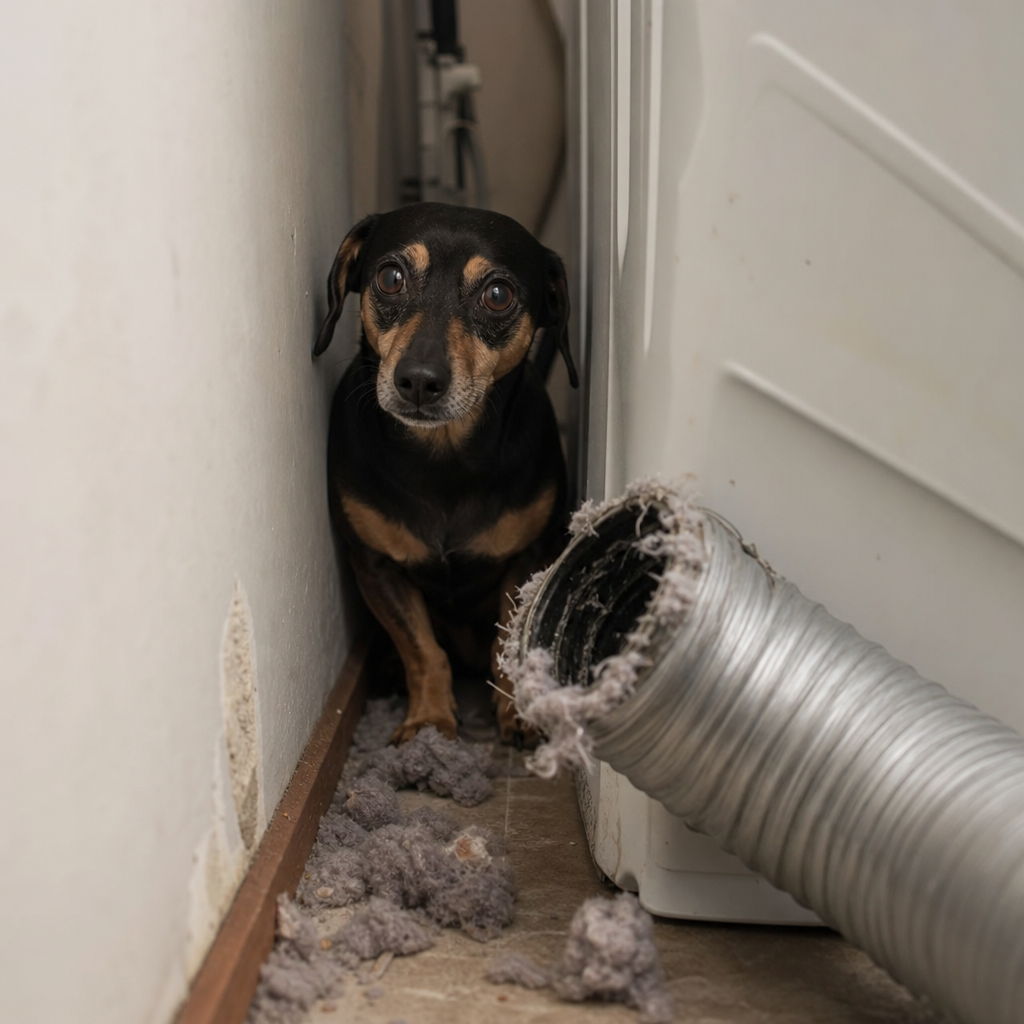
Three years ago, I pulled a Dachshund mix from a hoarding situation. She was the color of toast and smelled like ammonia. I named her Toast. Toast was fine with me, fine with the other dogs, fine with the cat (who ignored her with the icy disdain cats reserve for newcomers). The first time my neighbor's kid set off a firecracker in their backyard, Toast vanished. I searched for forty-five minutes. I finally found her wedged behind the dryer, her tiny body crammed into the space where the vent hose connects. She'd pulled the hose off. Lint everywhere. Her eyes were glassy. She'd pooped herself.
That was the day I stopped thinking of noise phobia as bad behavior and started treating it like a medical emergency. Toast didn't need a training plan. She needed safety. She needed me to be a barrier between her and a world that was too loud and too random. I'm not going to give you advice in this section. This isn't about what to do. It's just a story. Because sometimes you need to hear how bad it can get before you take your own dog's trembling seriously.
Stuff I Tried That Made Everything Worse
Oh, I've a whole graveyard of failed interventions. Buckle up.
The 'Just Ignore It' School of Thought
Some trainer on YouTube told me that comforting a scared dog reinforces the fear. So I tried to act normal during storms. I walked around humming. I didn't look at Milo. He shredded a doorframe. Turns out, you can't reinforce fear by being kind — fear is an emotion, not a behavior. That advice has been debunked to hell and back, but people still spout it at the dog park. If your kid was terrified of clowns, would you ignore them? No. You'd hug them. Dogs aren't that different.
Coddling: The Line I Kept Crossing
Wait, I just said comfort is okay. it's. But there's a difference between being a calm presence and becoming a frantic, high-pitched "oh poor baby who's scared of the big bad boom" mess. I crossed that line with Toast. My own anxiety fed hers. She'd shake, I'd shake, we'd both be a puddle. Dr. Nguyen finally said, "Sarah, you need to be a rock, not a sponge." That stuck with me. Calm, steady, matter-of-fact. "Yep, that's a loud noise. I'm here. We're fine." Not a party, not a funeral.
This reminds me of my neighbor, Crag, who once told me I should just yell at my dogs when they're scared. "Show 'em who's boss." Craig also thinks homemade dog treats are "hippie nonsense" and feeds his Lab gas-station jerky. His dog has ear infections constantly, but sure, Craig, tell me more about dominance. Anyway. Punishment during a fear response is like throwing gasoline on a fire. It doesn't teach the dog the noise is safe; it teaches the dog that you're also terrifying. I've seen fear-bitten hands from that kind of advice. Don't do it.
A Tangent About Fireworks and My Very Strong Opinions
I hate fireworks. There, I said it. I know, I'm the fun police. But I've spent too many July Fourths and New Year's Eves holding vomiting dogs and cleaning up panic pee to think colorful explosions are worth it. The week leading up to the Foutrh, my rescue gets calls from people wanting to surrender dogs who"just can't handle it." As if the dog is the problem. As if the dog should be discarded because humans decided to celebrate with simulated warfare. Every year, shelters are flooded with dogs who bolted during fireworks and ended up lost or hit by cars. I've fostered three of them. One had a microchip that traced back to an owner who said, "Oh, he's always been a nervous wreck. Maybe it's best you keep him." That's how I ended up with Bert, a Labrador Retriever mix who was afraid of everything including his own tail. He lived with me for six years before cancer took him at thirteen. Best dog I ever had. But he never fully got over loud noises. Some dogs don't.
So yeah, if you're reading this and you're the person settign off illegal fireworks in a residential neighborhood at 11 p.m. on a Tuesday, I've some words for you. But this is a family-friendly blog, so I'll just say: please don't.
The Things That Actually Helped (With My Own Dogs, Not Some Lab Experiment)
I'm going to tell you what worked for my motley crew. Your mileage may vary. I'm not a behaviorist. I'm just a person who's tried a lot of stuff and cried a lot of tears and finally found some things that don't suck.
Safe Space: It's Not a Crate, It's a Fort
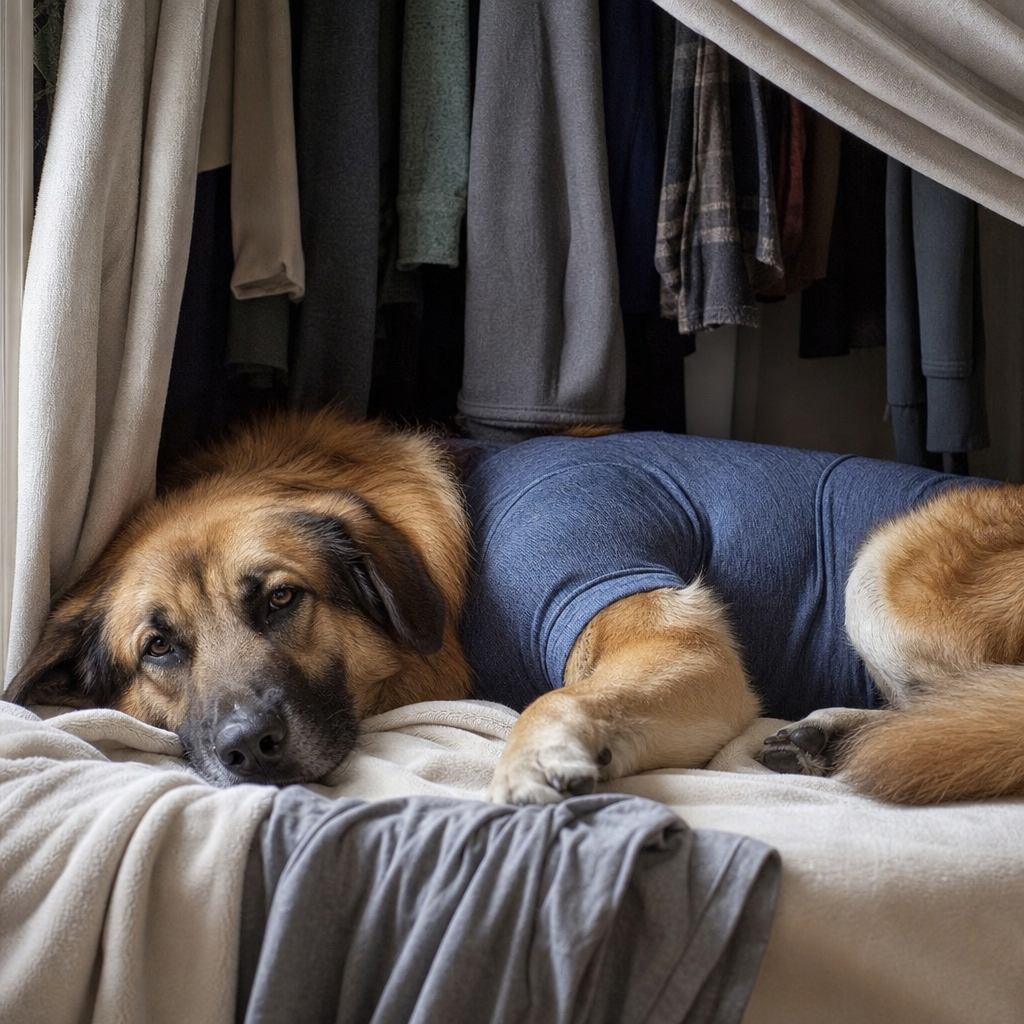
Milo has a walk-in closet he claimed as his own. I didn't train him to go there; I just noticed he'd disappear into it when the pressure dropped. So I made it better. I put a memory foam bed in there (old egg-crate mattress topper, honestly), draped a blanket over a chair to create a "roof," and stuck one of my unwashed t-shirts in the corner. The smell of you is incredibly calming to a dog. It's science. The closet muffled the sound and blocked the lightning flashes. Now, whenever a storm hits, Milo trots right to his cave and I don't bother him. He comes out when he's ready.
If your dog doesn't have a natural spot, create one. It doesn't have to be fancy. A cardboard box with a blanket draped over it in a quiet room. A space under a desk. My build cat Lint (named for obvious reasons) has a box she sits in to judge me, but that's unrelated. The point is: give them somewhere to hide that's theirs. Don't drag them out.
The Sweater Trick (a.k.a. ThunderShirts and Cheap Ace Bandages)
I was skeptical. I'm still a little skeptical. But I've seen a ThunderShirt turn a panting mess into a dog who can rest. The pressure seems to calm the nervous system somehow. I've also used an Ace bandage wrap — there are tutorials online — and it worked about as well. For some dogs, a snug sweater does the same thing. The key is putting it on before the dog is arleady panicking. If you wrestle it onto a terrified dog mid-meltdown, you're just adding stress. Put it on when the forecast looks ominous or before the fireworks kick off.
Don't spend a fortune until you know it helps. I borrowed one from a friend fist. Now I own two. They're ugly. They work. Mostly.
Sound Desensitization: Horribly Tedious, Kind of Works
You can find recordings of thunder, fireworks, construction noises. The idea is to play them at such low volume the dog doesn't react, then slwly increase over weeks. I did this with my build Zoe, a Chihuahua who'd been surrendered because she "couldn't handle apartment living" — meaning she shrieked at every neighbor footstep. We started with thunder sounds softer than a whisper, accompanied by bits of chicken. Gradually, over two months, we worked up to a volume that was like distant rumbling. She still doesn't love storms, but she no longer tries to climb inside my ribcage.
Here's where I messed up: I rushed it. One day I got impatient and cranked the volume too fast. She backslid three weeks. So if you try this, go solwer than you think you need to. Glacial speed. Molasses in winter. I hate it. I'm not patient. But it's better than the alternative.
Medication: When It's More Than Just Nerves
I used to be weird about medicating dogs for anxiety. That's my own crap from childhood where we never took pills for anything. Then I saw what constant panic did to Bert — the elevated heart rate, the exhaustion, the risk of bloat from stress. Dr. Nguyen suggested a mild anti-anxiety med for extremely noisy events. I resisted. She said, and I'm paraphrasing, "If your dog had a broken leg, you'd give him pain relief. This is a brain in crisis. Why is that different?" I didn't have a good answer.
So now, for dogs who truly can't cope, I'm not against talking to your vet about short-term anti-anxiety medication. Not sedation. Not zonking them out. Just something to take the edge off so they don't spend four hours in pure terror. I've used it with fosters who'd otheriwse be unadoptable, and it gave them enough breathing room to learn that loud noises don't kill them.
"If your dog had a broken leg, you'd give him pain relief. This is a brain in crisis. Why is that different?" — Dr. Nguyen, my vet of 11 years
Why the Vacuum Is Different (Usually)
It's a monster that lives in the closet and comes out to scream at them. I moved mine to the laundry room. That helped. I don't think vacuums need complex desensitization. Just put them away and warn your dog brfore you start. You'd want a warning before a monster attacked you, too.
When Professional Help Isn't Just a Buzzword
If your dog's fear is severe — self-injury, destruction that hurts them, refusing to eat for days — get a veterinary behaviorist. Not a trainer who uses prong collars and says they fix anxiety. A board-ceertified behaviorist. I found one through my vet after Milo started chewing holes in the drywall. She had me keep a log of triggers and designed a protocol that mixed meds, environment, and counter-conditioning. It wasn't cheap. It wasn't fast. But it saved his sanity and mine.
I hear people say, "I can't afford a behaviorist." I get it. I've been broke and feeding dogs rice and chicken scraps from a food pantry. Do what you can with the resources you've. A lot of the strategies I mentioned cost nothing but time. Building trust with a traumatized dog doesn't require money. It requires patience and a willingness to be wrong and adjust. That's free.
July 4th Is Coming and I'm Already Stockpiling Canned Pumpkin
Not for pies. Cannrd pumpkin settles nervous stomachs. Ask me how I know.
I wish I had a clean endign. A summary. But I don't. I've got a French Bulldog snoring under my chair and a storm forecast for tonight and a build cat who keeps knocking my coffee mug off the table. Life's messy. Dog fear is messy. You do what you can with what you've got, and you show up. That's the whole deal.