
I Spent $280 on a Bed That Made My Dog’s Hips Worse — Here’s What I Wish I’d Known About Beds for Big Dogs With Dysplasia
My 110-pound Rottie mix slept worse on a $280 'orthopedic' bed than he did on the floor. Here's what I learned after testing 20+ beds for large dogs with hip dysplasia.
I'd just spent $280 on a bed that was supposed to be 'orthopedic' and my dog, Bear, a 110-pound Rottweiler mix who'd been slowing down for months, got up slower the next morning than I get out of bed on a Monday. That's how I learned the hard way that a 'memory foam' label doesn't mean crap. Actually, I learned it the expensive way — with a couple hundred more dollars and a trip to the vet thrown in when I panicked because he was suddenly limping worse, not better.
Bear was 9 at the time, already dealing with early dysplasia that the vet had found on x-rays after I'd noticed him bunny-hopping when he ran. You know that hop? Both back legs moving together like he's trying to skip? Once you see it you can't unsee it. So I did what any panicked dog owner with a credit card does — I googled 'best dog bed for hip dysplasia large breed' and clicked the one with 4,000 five-star reviews and a photo of a Golden Retriever looking serenely happy on a slab of memory foam. The bed arrived in a box the size of a mini-fridge. I unrolled it, fluffed it for 48 hours (the instructions said 24, but I'm an overachiever), and nestled it in the corner where Bear liked to sleep. He sniffed it. Walked a circle. Then lay down with a groan that I now recognize wasn't contentment — it was a dog trying to find a position that didn't hurt.
Three nights later I woke up to find him back on the hardwood floor, hips splayed, looking up at me like why did you do that to me? That's when I reailzed I'd bought a bed based on what I thought would feel good, not what his actual joints needed. And that's what this whole post is really about — not which bed is the absolute best, because no bed works for every dog, but how to stop wasting money on crap and figure out what your specific big dog needs when their hips are failing them. I've been fostering large breed dogs for over a decade, including a 130-pound Mastiff named Tiny (we'll get to him later), and I've made every bed mistake there's. So here's what I've learned, including the three beds I'll buy again and the one I'd set on fire if I still had it.
The $300 Lesson I Learned From a Cheap 'Orthopedic' Bed
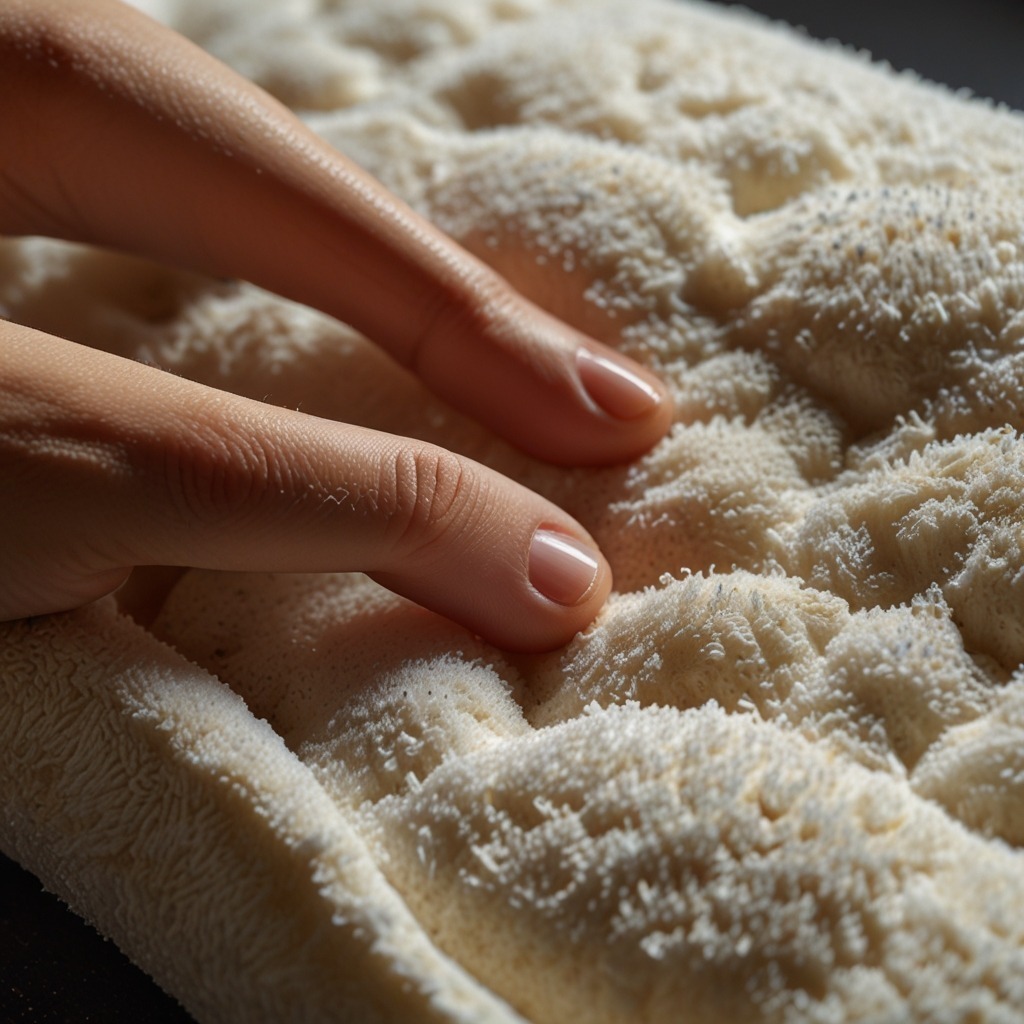
Let me back up. The bed Bear hated wasn't technically cheap — $280 isn't chump change. But it was cheap for what it claimed to be. Four inches of 'memory foam' that compressed to about half an inch under his weight. You could press your hand into it and it felt plush, so I assumed it would cradle his hips. But here's the thing that most bed descriptions won't tell you: memory foam density matters more than thickness. A 100-plus-pound dog needs high-density foam — like 5-pound density or higher — or they'll sink straight through to the floor. And that's exactly what Bear was doing: lying on a thin layer of foam with his hip bones essentially resting on the hardwood underneath, because the foam had given up.
I didn't realize this until I finally got down on my hands and knees and pressed my own fist into the bed like I was simulating his hip. My knuckle bottomed out immediately. I actually said 'oh crap' out loud, and Bear thumped his tail like I'd just offered a walk. He didn't know I'd been essentially asking him to sleep on a yoga mat for three weeks.
Memory Foam: What it's (And What It Absolutely Isn't)
Memory foam was originally developed by NASA to cushion astronauts during G-force stress. That's a neat fact, but it's also where the marketing starts to get slippery. The key proerty of real memory foam isn't that it's soft — it's that it's viscoelastic, meaning it responds to heat and pressure by mlding to your shape and then slowly bouncing back. Good memory foam distributes weight evenly, which reduces pressure points. That's exactly what a dysplastic hip needs: the weight of the femoral head pressed into the socket isn't concentrated on one spot. Spread it out, and it hurts less.
But the foam in most mid-range dog beds is what I call cheesecake foam. Looks dense, feels squishy, collapses under any real weight and doesn't bounce back for hours. It's often a blend of polyurethane and a tiny percentage of memory foam dust. The label says 'memory foam' because legally, that's true — there's some memory foam in there. It's like calling a salad a 'chicken salad' because you waved a chicken over it. I've cut open three beds now (yes, I'm that person — build life makes you destructive for science), and the difference between a $70 bed and a $250 one is almost always in the foam cpre: one is solid high-density, the other is egg-crate scrap layered with hope.
Why 4 Inches of Foam Means Nothing For a 90-Pound Dog
Four inches sounds like a lot. For a 12-pound cat or a Chihuahua, it's plnty. For a Labrador — heck, for a Labrador Retriever — whose hips carry 60% of his body weight when he's lying down, four inches of low-density foam compresses to nothing. The math is depressing: a 90-pound dog lying on his side puts roughly 25–30 pounds of pressure per square inch on the hip that's down. If the foam's indentation load deflection (ILD) is too low, the foam flattens and the dog's joint ends up pressing directly onto the floor under the bed. It's not just uncomfortable — it actively increases inflammation over time. Dr. Nguyen, my vet who's put up with my panic calls for 11 years, once told me that a bad bed is worse than no bed at all for a dysplastic dog, because it creates a false sense of cushioning while doing nothing for joint alignment. She's probably saved me a mortgage payment's worth of unnecessary vet visits by now.
That's why I've become so obsessive about density ratings. If a bed doesn't list the foam density or at least the ILD range, I assume the manufacturer's hiding something. And I'm usually right. The best beds I've used have foam in the 5- to 7-pound density range — sometimes layered, with a former base and a slightly softer top layer for comfort. It's the same principle as a good human mattress. And honestly, once I realized that, I started looking at dog beds completely differently. More like medical equipment, less like a fluffy pillow I'd buy at a big-box store because it matched my couch.
The Big Squishy Bed That Looed Like a Cloud and Was Useless
Brief detour: I once bought a bed shaped like an actual cloud. It was pale blue, round, and stuffed with something that felt like the innards of a stuffed animal from a carnival game — you know, the kind where you win a dolphin and it pops a seam within a week. Bear ignored it. A build Greyhound named Socks peed on it within 12 minutes. I donated it to the shelter's cat room, where the cats at least used it ironically. That bed cost me $89 and taught me that aesthetics don't support arthritic joints.
What Changed When I Stopped Buying Beds Based on Marketing
After the $280 debacle, I got stubborn. I spent two months researching — reading actual materials science papers, calling customer service lines and asking annoying questions about foam density, and testing beds with my fosters, who range in size from a 55-pound Boxer mix to Tiny the Mastiff, who was roughly the dimensions of a loveseat. I also started paying less attention to terms like 'orthopedic' (which means nothing, legally) and more attention to three things: foam density, support layer structure, and whether the cover was removable and actually washable, because large dogs with bad hips often have trouble getting up to pee, and accidents happen.
Tangent time: I once got into an argument with a pet store employee who tried to sell me a bed by saying 'all our beds are orthopedic.' I asked him what the foam density was. He blinked. I asked him what the ILD rating was. He said 'it's rated for large dogs.' I told him my dog weighs as much as a middle-schooler and I'd like to know the actual compressive strength. He walked away to 'check the back' and never came back. I don't blame him — he wasn't trained for me — but it drove home the point that the word 'orthopedic' on a dog bed tag is about as regulated as 'natural' on a granola bar. that's to say, not at all.
So I started treating bed shopping like I was buying a used car from a guy who might be lying about the mileage. I looked for companies that listed specs. I asked for replacement foam densities. I trackrd how long the beds bounced back after my fosters got up. And eventually I zeroed in on three beds that actually changed how my dogs moved. The difference wasn't subtle — Bear went from groaning every time he stood up to occasionally chasing squirrels again. He wasn't cured; hip dysplasia doesn't go away. But his quality of life was night and day.
And that's the thing I keep coming back to: a good bed isn't a cure. It's not goign to regenerate cartilage or reverse joint laxity. What it does is reduce the daily micro-trauma — that constant low-grade aggravation that comes from lying on hard surfaces or inadequate support. Remove that, and the body has a little more room to cope. Sometimes that's enough to get you another year of happy zoomies, or at least peaceful sleep without the whimper at 2 a.m.
Okay, backtrack slightly — I mention my fosters range from Boxer to Mastiff. The Boxer was actually my first bed-tester after Bear, and she was a 8-year-old named Daisy who'd been surrendered because her owners 'didn't want to deal with the cost of arthritis.' (I'm still mad about that. She was the sweetest dog. But I digress.) Daisy's hips were worse than Bear's, if you can believe it, and she taught me something crucial about bed height. She struggled to step up onto thicker beds, even ones that were supposedly 'low-profile.' I hadn't that about that — a dog in pain doesn't want to climb a mountain just to lie down. So the ideal bed for a dysplastic large breed isn't just supportive, it's also easy to get on and off. That's one reason I ended up favoring certain designs — they had a low entry profile without sacrificing support, so the dog cpuld sort of shuffle their front paws onto it and then heave the back end up without too much joint strain. Daisy eventually settled on a specific orthopedic bed I'll mention in a minute, but I still sometimes think about her initial confusion at the six-inch-thick mattress I'd optimistically placed in her pen. She basically looked at it like 'Are you kidding me?' and then laid down on the blanket beside it.
And Then There Was the build Mastiff Named Tiny
Before we get to the actual bed recommendations, I need to tell you about Tiny. He was a 130-pound English Mastiff I fostered for seven months in 2019, and his hip dysplasia was so bad the rescue couldn't find an adopter willing to handle the medical bills. His hips had been neglected for years — he'd waddle with that heartbreaking wide stance that big dogs adopt when they're trying to shift weight forward onto their shoulders. He'd been living on concrete in an outdoor kennel before the rescue pulled him. His elbows were a mess too, callused and cracked. I cried a little the first time I saw him try to lie down on a fluffy bed I'd set up — he circled seven times, whimpered, and ended up on the tile because he didn't know what softness felt like. Seriously, typing that still makes my throat tight.
Over the months, Tiny slowly learned to trust beds. But the wrong bed set him back days. If the foam was too soft, he'd flounder and panic, thinking he was going to fall. If it was too firm, he'd slip trying to get up, and then I'd have to help hoist him like a furry sedan. I got very good at hoisting a Mastiff, which isn't a skill I put on my resume but probably should.
The ponit of this tangent isn't just to make you sad — it's to highlight that dogs with severe dysplasia often have emotional associations with laying down. A bad bed can make them anxious, and anxiety makes pain worse. I've seen it over and over: a dog who's scared to lie down will hold tension in their muscles, which tightens around already-inflamed joints, and then they're in a spiral. So when I evaluate a bed now, I'm not just looking at foam specs; I'm watching how a dog approaches it. Do they hesitate? Do they circle a hundred times? Do they finally collapse with a sigh or a groan? The right bed gets the sigh. The wrong one gets the groan.
The Three Beds I Actually Tell Friends to Buy (And the One I'd Light on Fire)
Alright, here's the practical bit. Over six years, I've tested — and when I say tested, I mean let my own dogs and dozens of fosters sleep on, dtool on, and occasionally pee on — more than 20 beds that claimed to be good for large breed dogs with joint issues. Most were forgettable. A few were memorable for all the wrong reasons. These three are the ones I've reordered when a build chewed through a cover or when a bed finally gave out after heavy use. I'm not getting a kickback from any of these companies — heck, I wish I were — but they've earned my respect through actual performance, not influencer marketing.
The All-Around Winmer: A Solid 7-inch Dense Foam Mattress That Doesn't Quit
The bed that Bear finally slept through the night on was a 7-inch thick slab of high-density foam rated for dogs up to 150 pounds. The brand escapes me — I've had three of them — but the key spec is 5-pound density memory foam core with a 2-pound density reflex foam base underneath. The combination is clever: the base foam is firmer and provides structural support so the top memory foam doesn't have to do all the work. It's essentially a human-grade mattress scaled for a dog. The cover was waterproof inside (which I discovered by accident when Bear had a UTI incident — the pee pooled on top and didn't seep into the foam; gross but informative), and the outer cover unzipped for washing. Washability matters more than you'd think. Big dogs with dysplasia often have incontinence issues, either from age or from the straining it takes to get up. I've thrown away three beds that became biohazards because the foam couldn't be protected. The ones that survived all had liquid-proof inner liners.
Downside: this bed is heavy and expensive. At the time, I paid around $220 for the XL size. Worth every penny considering it lasted four years of nightly use, but if you're on a tight budget, I get it — the sticker shock is real. (I'll mention a budget option further down that wasn't perfect but did the job.) Also, the bed has a bolted-on side that some dogs like to rest their head on, but for arthritic dogs, I recommend pulling the bolster off if it's removable, becuase it can become an obstacle to climbing on. I yanked the bolster off Bear's bed within a week and he was happier.
The Low-Profile Memory Foam Pad That Daisy Actually Used
Remember Daisy, the Boxer who couldn't handle tall beds? The solution for her was a 3-inch thick memory foam pad — also high-density, 5-pound — that sat directly on the flopr like a yoga mat from heaven. No bolsters, no raised edges. She could shuffle onto it easily, and the thinness meant she never felt like she was going to fall off. This was the bed that taught me that 'low profile' isn't just a nice-to-have for a dog with bad hips; it can be a necessity. A dog who hurts when they lift their leg doesn't want a high step. They want something they can belly-flop onto safely.
The pad was originally a mattress topper for a human bed, cut down to sizze. I'm serious. It was a 3-inch memory foam topper I bought for myself, hated (too hot), and threw on the floor one night in frustration. Daisy colonized it within ten minutes and never left. I ended up tailoring it with a waterproof cover and calling it a dog bed. This is the point in the article where I should probably say don't DIY a dog bed — but honestly, if you can find a high-density memory foam topper with an easily washable cover, you can sometimes get a better product for less money than the ones marketed for pets. Just make sure it's dense enough. Human mattress toppers often list density in pounds; look for 5-lb or higher. And don't use one that's already sagging; it'll be useless.
The Budget Orthopeidc Bed That Did Alright (But Don't Expect Miracles)
If you absolutely can't spend $200+, there's a bed in the $80–$100 range that I've bought three times for the rescue because it's better than nothing and doesn't make me cry when a build puppy shreds it. It's a shredded memory foam and poly-fill mix in a zippered cover, with a claimed density of 4 pounds. The foam isn't a solid slab — it's crumbled memory foam mixed with standard polyester stuffing to keep costs down. The downside is that it compresses unevenly, and you've to fluff it daily in the spots where a heavy dog has been lying. I kept one in the build room for lighter-weight dogs (under 60 pounds) and it worked okay. For a 100-pounder with severe dysplasia, I'd call it a temporary solution while you save up for something better. But it's not the worst, and I've certainly recommended worse before I knew better. The cover was machine wahsable and held up to several rounds of zoomie-related destruction.
For what it's worth, I once donated a vresion of this bed to a family who'd just adopted a senior German Shepherd with bad hips but didn't have extra cash. They came back two weeks later and said their dog was sleeping better than she had in years. So maybe I'm being too harsh. The right context — a dog who's previously been on concrete or a thin blanket — can make even a mediocre bed feel like a spa. But I'd still aim higher if you can swing it, because the uneven foam sag can actually exacerbate hip rotation over time, and that's not what you want.
The Bed I'd Light on Fire
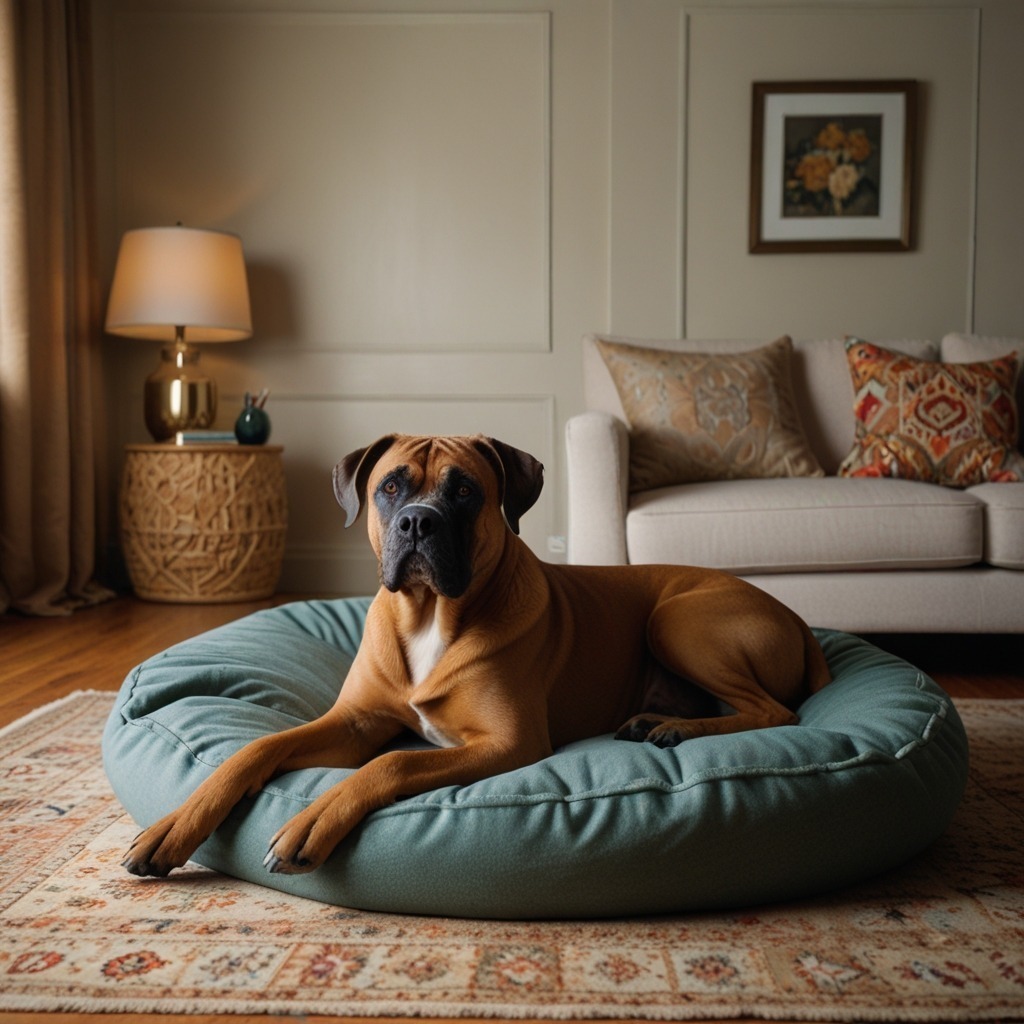
Quick dishonorable mention: there's a popular bed on Amazon that looks like a fancy sofa, with memory foam bolsters and a plush top, priced around $150. The first night Bear slept on it, his hip slipped between the bolster and the main pad and he got stuck — literally wedged in a crevice, whimpering, unable to get up. I had to lift his 110-pound body out of a foam trench at 3 a.m. Never again. Bolster beds are an extinction-level event for dysplastic dogs unless the bolster is sewn completely flat and flush with the sleeping surface, and even then I'm suspicious. Avoid anything with a gap.
Why You're Going to Spend More on Pain Meds Than a Bed — And That's a Mistake
I'm not going to pretend a bed replaces proper veterinary care. Hip dysplasia needs a vet — ideally an orthopedic specialist if you're considering surgery like a femoral head ostectomy (FHO) or total hip replacement. Pain management, joint supplements (I swear by a quality glucosamine-chondroitin with green-lipped mussel, but talk to your vet), weight management, and physical therapy are all part of the picture. I wrote a whole rant about arthritic dogs and comfort that might be useful if you're in that boat.
But here's the math that keeps me awake: a month of adequate pain meds — say, carprofen and gabapentin — can run $80–$150 for a large dog. That's ongoing. Over a year, that's $1,000–$1,800. Over the remaining life of your dog, it's thousands. A $200 bed that lasts four years is a one-time expense that can reduce how many pills your dog needs, because less pain means less reliance on medication. I'm not saying stop the meds — please don't — but a supportive bed can mean you need fewer breakthrough doses, or that you can hold off on prescription anti-inflammatories for a while longer. Dr. Nguyen once told me that proper joint support at rest can decrease the inflammatory cytokines circulating in a dog's system, which makes the daily damage slightly less. She also reminded me I'm not a vet and should stop pretending to be one on the internet, so I'll couch this carefully: talk to your vet, but consider the bed an investtment, not a luxury.
Which brings me to another thing: pre-existing conditions and insurance. If your dog was diagnosed with hip dysplasia before you got insurance, it's excluded. I've had too many build adopters not realize that until they got a $3,000 surgery bill. I wrote about that over in that post on senior dog insurance, if you want to be depressed about the state of pet healthcare. The point is, preventing unnecessary pain through environment — like a good bed — can sometimes keep you out of the emergency room and out of the insurance loophole nightmare. Not always, but sometimes, and I'll take 'sometimes' over 'never.'
The Night I Found Bear Asleep on the Floor Instead of His $250 Bed
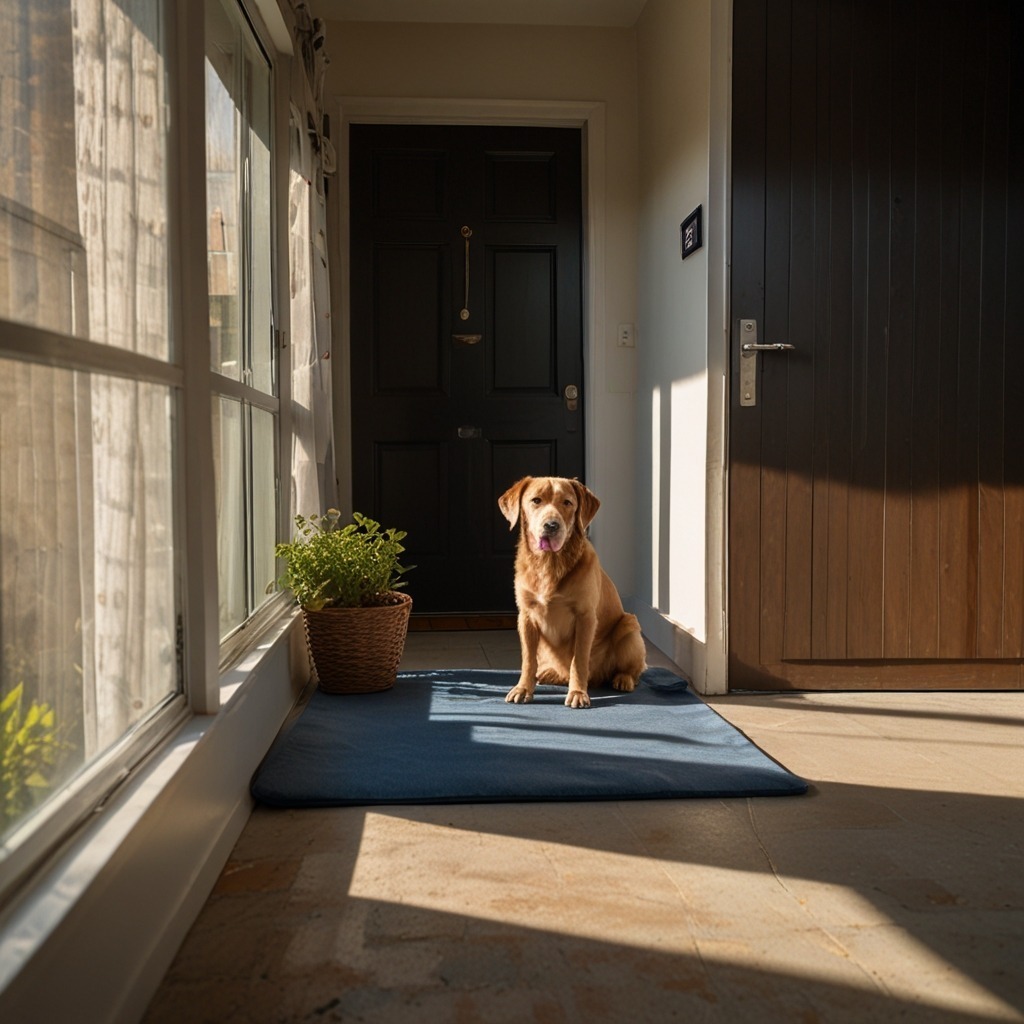
This happened msybe six months ago, before Bear passed. He'd been sleeping great on his expensive high-density mattress for years. One night I woke up at 2 a.m. to find him curled on the hardwood next to the bed, not on it. My heart dropped — was his pain worse? Did the bed stop working? I got down and tested the foam. Still good. Then I realized he was lying in the one spot where the morning sun came through the window earlier, and the wood was still faintly warm. He'd chosen warmth over perfect support.
I'd love to end this post with some tidy lesson about how dogs know what they need, but the truth is, they don't always. They'll choose a sunbeam over a proper bed, or a spot by the door because they're anxious, or the tile because they're hot. My job, and yours, isn't to force them onto the right surface — it's to provide the right surface in the places they already choose, and then let them figure out when they need it. So now I keep a supportive mat in three rooms: the living room, the bedroom, and by the back door, where Bear liked to watch the yard. He rotated between them and the floor as his mood changed. That's the model that finally worked: not a single magic bed, but a few good ones, placed where my dog actually lived.
I miss that dog ridiculously. His bed's still in my bedroom. I haven't been able to give it to a build yet. Maybe next month.