
Your Senior Dog's Pre-Existing Conditions Don't Mean You're Screwed — But Here's What Nobody Tells You About Insurance
14 years of rescue work taught me the brutal truth about pet insurance for old dogs with pre-existing conditions. It's not hopeless, but you need to know what you're walking into.
Murphy came to me when he was already ten. A border collie mix with a graying muzzle and the kind of knowing eyes that suggested he'd seen some crap in his previous life. I wasn't looking for another dog—my house was already at capacity with two rescue mutts and a build cat who'd apparently decided she lives here forever—but sometimes the universe doesn't ask. His owner had died. A niece was going to drop him at the county shelter, and I said no, absolutely not, and then somehow I was driving across three counties with a dog who hiked his leg on my backseat only once.
A month in, the limp started. Then the cough. Then the bloodwork that made Dr. Nguyen—she's put up with my panic calls for 11 years, through three dogs and a divorce—pause a little too long on the phone. Hip dysplasia. Earky kidney disease. And oh, right, that weird skin thing that turned out to be a mast cell tumor that needed surgery. The tally hit $4,800 before I'd even bought him a new collar.
I'm not a vet. I dropped out of vet tech school because I realized I'd rather clean kennels and write about it than memorize pharmacology terms at 11 p.m. What I'm is someone who has fostered over 40 dogs and cats, made every financial mistake possible with pet healthcare, and spent way too many hours on hold with pet insurance companies. This isn't one of those sanitized "best of" lists you find on sites that've never actually had to choose between paying rent and treating a dog's infected tooth. This is the real, swear-y, slightly panicked guide I wish someone had handed me the week Murphy's diagnoses started piling up.
The Day I Realized My Dog's Vet Bill Could Buy a Used Car
It was a Tuesday. I'd stopped for coffee and a sad gas station pastry on the way to the specialist because Murphy had a surgery follow-up at 8 a.m., and I'd been up half the night worried that the incision looked pinker than it should. The waiting room smelled like anxious dog and linoleum cleaner. A Weimaraner was whining in the corer. The receptionist called me up, and I handed over my credit card, and the machine declined. Not because I had no money, but because I'd hit the limit. Two surgeries in six months will do that. I sat in my car after the appointment, tearing up my uneaten pastry into tiny pieces while Murphy snored in the back, and I thought: there has to be a better way.
So begins the deep dive into pet insurance for old dogs with preconditions. Spoiler: it's a mess.
Here's the thing I didn't fully understand at the time—most pet insurance companies operate on a business model that doesn't really want dogs like Murphy. They want young, healthy puppies whose premiums you'll pay for 10 years before they need anything expensive. A 10-year-old dog with a pre-existing hip issue and a tumor history? That's not a customer. That's a liability on a spreadsheet. And I get it. Insurance is math. But that doesn't make it any less infuriating when you're the one holding the $3,000 estimate for a dental extraction that can't wait.
I'll be honest: I acutally threw my laptop across the couch one night after reading the 40th "no pre-existing conditions, but we cover accidents!" disclaimer. My build cat gave me a look that could curdle milk. She's a tortie. She judges everything. (Speaking of cats, I once tried to figure out insurance for a build kitten with a heart murmur—complete different rabbit hole, don't get me started.) But for dogs, the space is maddening.
Why Most Pet Insurance Companies Won't Touch Your Senior Dog (And Why I Don't Blame Them Entirely)
Let's strip away the marketing language. Pet insurance is property insurance—legally, your dog is a piece of proprrty, which feels wrong but that's how the laws work in most states. Companies assess risk based on age, breed, and known medical history. A senior dog with documented arthritis means a near-certainty of claims: pain meds, joint supplements, maybe acupuncture, possibly physical therapy. That's money going out the door with near 100% probability. Insurance can't work if everyone who buys a policy is guaranteed to cost more than they pay in. That's not a rant; that's just math.
The policies that do exist for older dogs usually come with a long list of exclusions shaped exactly like your dog's medical record. If you've ever told a vet that your dog "seemed stiff" after a hike three years ago, some company will flag that as a pre-existing orthopedic condition and exckude anything related to joints. Forever. I learned that the hard way. Dr. Nguyen—I love her, she's brilliant—once casually mentioned in Murphy's chart that he "guarded his hip during exam, owner reports intermittent lameness." That single sentence got a claim for his arthritis medication denied because the insurer said it was a pre-existing condition documented before the policy start date. The condition had been noted, yes. But I hadn't even realized that counted. Nobody explains these things.
If you're dealing with a senior dog, you've liekly already talked to a vet. That means there's a paper trail. And insurance companies are very, very good at finding it.
Pre-Existing Conditions: Let's Get Clesr on What That Actually Means
There's a lot of confusion heere. The insurance industry splits pre-existing conditions into two buckets: curable and incurable. A curable condition is something like a respiratory infection, a UTI, a bout of vomiting—things that resolve completely and don't come back once treated. Most insurers will cover these after a waiting period if the dog has been symptom-free and treatment-free for a certain amount of time (usually 6 to 12 months). So if your old guy had a bladder infection last year that cleared up and never returned, you might be in the clear for future UTI coverage. Potentially.
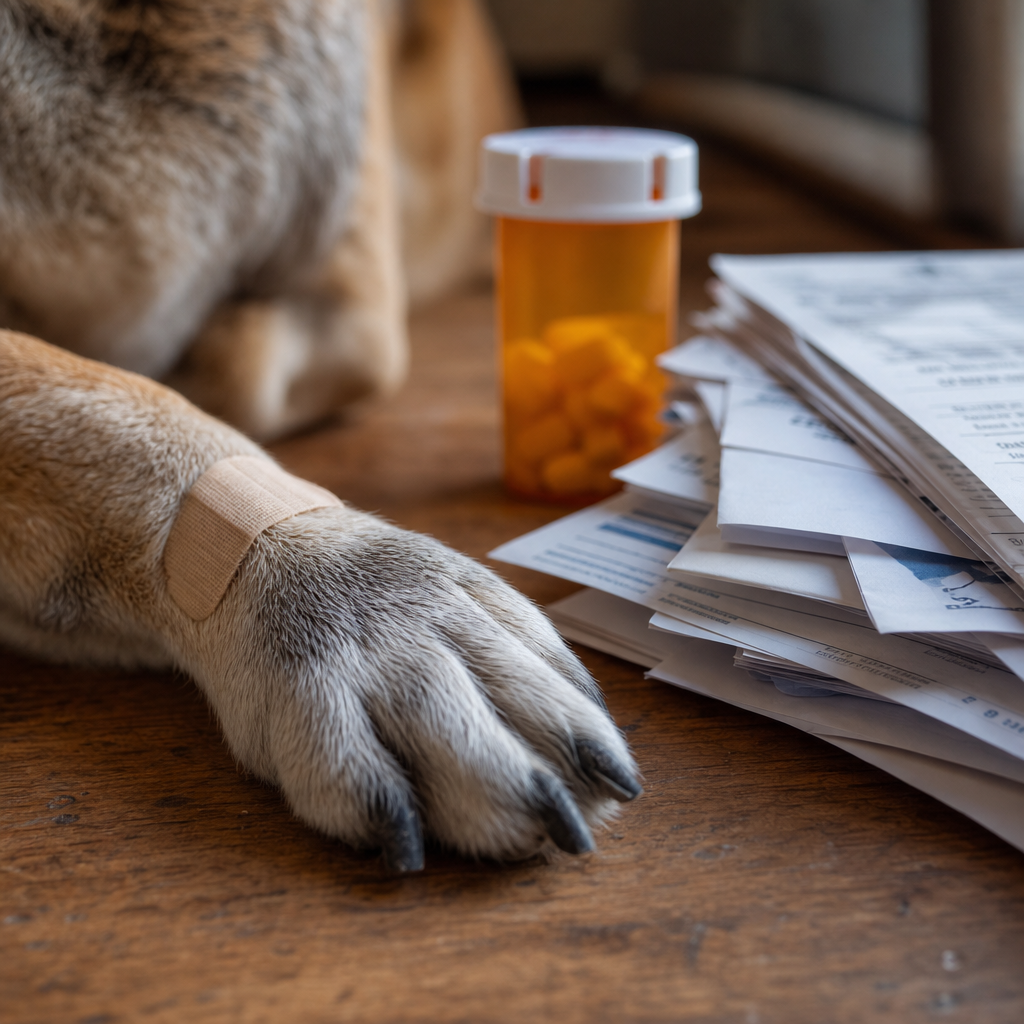
Incurable conditions—the ones that matter for senior dogs—are a different beast. Arthritis, diabetes, heart disease, kidney disease, cancer, hip dysplasia, allergies, thyroid issues, any chronic thing that requires ongoing management. These are almost always excluded permanently. And I mean permanently. Not waived after a year. Not covered if you pay a higher premium. Excluded, full stop, on nearly every standard accident-and-illness policy out there.
Let me give you a real list of what insurers commonly consider incurable pre-existing conditions:
- Arthritis and any degenerative joint disease
- Hip or elbow dysplasia
- Intervertebral disc disease (IVDD — common in Dachshunds)
- Diabetes mellitus
- Chronic kidney disease or renal failure
- Heart murmurs and congestive heart failure
- Cancer of any type, even if surgically removed
- Chronic skin conditions and allergies
- Hypothyroidism and Cushing's disease
- Blindness or progressive retinal atrophy
- Seizure disorders and epilepsy
- Luxating patella (especially in small breeds like Yorkies)
I'm not listing these to scare you. I'm listing them because nobody hands you this sheet at the vet's office when you're sitting there with a new diagnosis, wondering if insurance can still save your wallet. It can't, for these. And knowing that upfront will save you hours of Googling and false hope.
Wait, I'm getting ahead of myself. Let me back up. Because I remember what it felt like right after Murphy's cancer diagnosis, frantically searching "pet insurance that covers pre-existing conditions senior dogs," and all I got was a bunch of cheerful blogs talking about how great insurance is for puppies. Not helpful. So I'm trying to give you the information I couldn't find then.
Wait, So Is There Any Insurance That Covers Preconditions?
Short answer: sort of. Long answer: there's a tiny handful of options, and they're not what you think. We'll get to specifics down below. But if you're hoping for a full-coverage plan that'll pay for your dogs existing arthritis meds, stop looking. That product doesn't exist.
The Few Compannies That Actually Offer Coverage for Pre-Existing Conditions in Senior Dogs
Alright. There are some glimmers. Not many, but enough that you shouldn't just give up. I've spent way too much time reading policy documents—and yes, acutally called customer service lines pretending to have a senior dog with kidney disease, because I'm that person—and I've found a few paths.
1. Accident-only policies
These are dirt cheap compared to comprehensive plans, and pre-existing conditions don't matter at all for accident coverage. If your senior dog breaks a leg, gets hit by a door, ingests something stupid (like my last build who ate an entire sock, requiring $2,200 surgery), accident-only plans will typically cover it after a short waiting period. They don't cover illness, obviously, but for an old dog, an accident can still bankrupt you. I like these for peace of mind on the "oh crap" moments.
2. Companies that cover 'cured' pre-existing conditions
Some insurers—like Pets Best and Embrace—will cover conditions considered curable if your dog has been symptom-free for a specified period, usually 6 or 12 months. So if your senior dog had a UTI last month, that's gonna be excluded. But if they had a UTI 18 months ago and no recurrence, it might be covered. The key is the medical records. Never, ever try to hide a condition. They'll find it in the vet notes, and then they'll deny your claim and possibly cancel your policy for misrepresentation. That's a whole other nightmare.
3. Wellness or routine care add-ons
These aren't insurance, exactly, but some companies sell wellness packages that reimburse for things like dental cleanings, bloodwork, and vaccinations. Pre-existing conditions don't affect eligibility bceause they're not insuring against illness—they're just cost-sharing for routine stuff. For a senior dog, this can partially offset that $600 dental you know is coming. It's not going to cover his heart meds, but every bit helps.
4. Two companies that flirt with pre-existing condition coverage
AKC Pet Insurance offers a supplemental option called "HereditaryPlus" that might cover some hereditary conditions even if they're pre-existing, but it's limited and you need to read the fine print like a lawyer. Trupanion, on the other hand, has been known to cover certain undiagnosed conditions if they weren't documented by a vet before enrollment—but their underwriting is strict. I've heard stories of claims for arthritis being paid because the vet hadn't formally diagnosed it, only noted "stiffness" that the owner hadn't mentioned as a concern. It's a gray area. I'm not saying you should gamble, but know that it's not always black and white.
A word of caution: I'm not a financial advisor or an insurance broker. Every dog's situation is different, and what worked for my friend's Beagle with mild allergies might get denied instantly for your dog with advanced kidney disease. Aways, always call the company and ask hypothetical questions before you buy.

The Crap They Don't Tell You: Waiting Periods, Deductibles, and the Fine Print That'll Break Your Heart
Even if you find a policy that doesn't automatically exclude your dog's preconditions—and good luck with that—there's still a labyrinth of gotchas that'll make you want to scream into a pillow.
Waiting periods. Every policy has them. Accident coverage might kick in after 48 hours, but illness coverage often takes 14 days, and orthopedic issues sometimes require a 6-month wait. For a senior dog, 6 months is an eternity. A lot can go wrong. I had a friend whose dog tore its CCL (the dog version of an ACL) during that 6-month orthopedic waiting period, and the company denied the $4,500 surgery because the injury occurred before coverage applied. She'd paid premiums for five months for nothing. That's not a scam—it's stated in the contract—but nobody reads that stuff until it's too late.
"The problem isn't that pet insurance is evil," a claims adjuster once told me, off the record. "The problem is that people buy it like it's a membership, not a legal contract. They expect things to be covered because it feels fair, but insurance doesn't run on fair."
Deductibles, too. Some companies use an annual deductible, some a per-condition deductible. With a per-condition deductible, each new illness or injury starts a new deductible clock. So if your senior dog develops a cough (new condition) and also needs arthritis treatment (existing condition, likely excludd), you'll pay the deductible for the cough, but the arthritis won't be covered at all because it's pre-existing. It's a double whammy. I hate it. But it's the system.
Reimbursement percentages and annual caps make things more conufsing. Most plans let you pick a reimbursement level—70%, 80%, 90%—and the cheaper the premium, the lower the reimbursement. Which is fine until you realize that a $5,000 surgery at 70% reimbursement still leaves you with a $1,500 bill, plus your deductible. For people on a tight budget, that's still devastating. For someone with a senior dog and limited funds, even having insurance can mean making impossible choices.
And here's the part that really gets me: policies can change at renewal. They can reclassify your dog's breed or age bracket, raise your premium by 30% in a year, or add new exclusions based on claims history. It happened to me. After Muphy's mast cell tumor was removed, the insurer sent a renewal notice that specifically excluded all cancer treatment going forward, even though the tumor was gone and the margins were clean. Because they'd paid out a cancer claim, they now considered cancer a pre-existing condition for the next policy term. The logic is circular and it makes me want to flip tables.
Speaking of flipping tables, let me tell you about the time I tried to get coverage for my build cat's weird eye thing—
Actually, that's a tangent. The point is, fine print is the enrmy. Always read the sample policy. If you don't understand it, have someone who does. I'm serious.
So What's the Actual Best Insurance for My Old Dog With Preconditions?
There isn't one answer. The "best" depends on what your dog already has, what you can afford monthly, and how much you're willing to self-insure. Here's what I tell my rescue volunteers when they ask me this question at 10 p.m. on a Thursday.
My Honest Picks (After Screwing Up Enough Times)
Take these with a grain of salt—I'm just a blogger with three dogs snoring at my feet and a pile of old vet receipts—but after 14 years of rescue work and countless hours on hold, here's what I'd actually consider if I were in your shoes today.
Option A: The "I want something for the big emergencies" plan
Get an accident-only policy with a low deductible. Companies like Pets Best or Nationwide offer these for as little as $15–25 a month for senior dogs. Pre-existing conditions don't matter. It won't help with his arthritis or his kidney diet, but if he tumbles down the stairs or gets attacked at the park, you'll have a safety net. Is it perfect? Nope. Is it better than nothing? For a lot of people, yes. I'd rather have this than a comprehensive policy that excludes everything my dog actually has.
Option B: The "Maybe my condition ins't as pre-existing as I think" gamble
If your dog's only "condition" is a bit of stiffness you mentioned once to the vet, and there's no formal diagnosis, you might—might—get away with a comprehensive plan from a company like Trupanion that only excludes formally diagnosed conditions. But this is risky. If your vet wrote "possible DJD" (degenerative joint disease) in the notes, that's enough. I've seen claims denied for less. If you go this route, request your dog's complete medical records first, read them like a detective, and then call the insurer and ask point-blank: "If I send you these records, will you cover X?" Get the answer in writing, preferably by email.
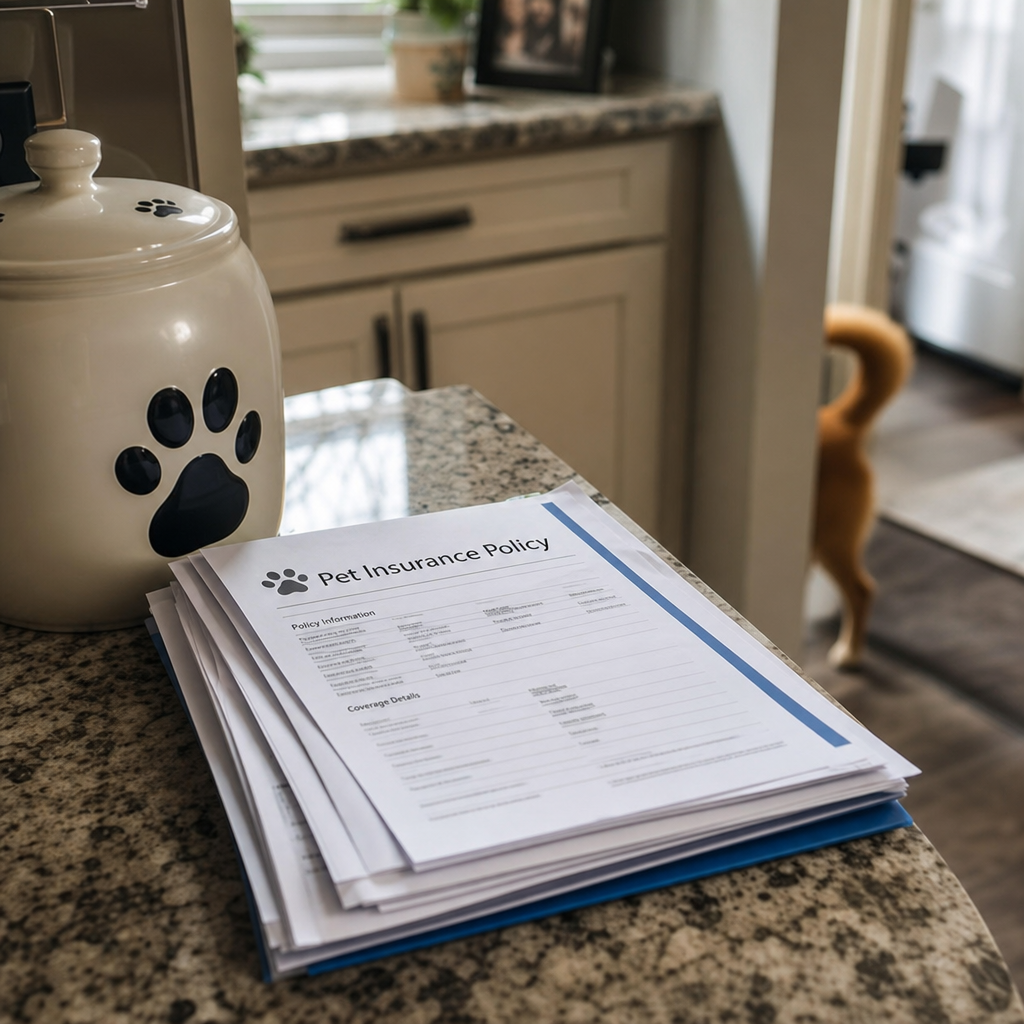
Option C: The "screw insurance, I'll just save" approach
For a lot of seniors with multiple preconditions, insurance premiums plus exclusions don't make financial sense. Instead, take that $50–100 a month you'd spend on premiums and put it into a dedicated savings account or a low-risk investment. Call it Murphy's Medical Fund. If you've the discipline to actually do this and not touch it for anything else, it can work. The downside is that a $3,000 emergency can hit before the account is built up—that's the gamble. I've done this with my own dogs, and it's worked for the predictable stuff, but life has a way of throwing curveballs. Last year, my youngest rescue (a terrier mix, the troublemaker) blocked a ball and needed abdominal surgery on a Saturday night at the emergency vet—$2,800 I hadn't saved yet. I put it on a card and cried later. So this method requires luck and a backup plan.
Option D: The discount plan or wellness program
There are non-insurance programs that offer discounted rates for vet viists, prescriptions, and procedures—like Pet Assure or various veterinary discount networks. They're not regulated as insurance, so they don't have the same protections, but for a senior dog with known conditions, they can help. You pay a monthly fee and get a set percentage off (often 25%) at participating vets. The catch is your vet has to be in the network, and it doesn't cover unexpected surgeries the way insurance would. I used a discount plan briefly for Murphy's ongoing bloodwork and it shaved off about $70 a month—nothing earth-shattering, but enough to cover his joint supplements.
Whatever you choose, please don't just click "buy" on the first policy that shows up in a Google search. The pet insurance industry is crowded with new comppanies, some of which will fold in five years and take your premiums with them. Look for a company that's been around a while, has decent customer reviews (not just the ones on their website), and is transparent about their claims process. If they hide their sample policy behind a phone call, that's a red flag the size of a Great Dane.
And while we're at it, don't slrep on the everyday expenses that can keep your senior dog healthier and maybe reduce future claims. A proper orthopedic bed—I wrote about the best beds for arthritic dogs—costs less than one month of insurance premiums and makes a huge difference in pain management. Small things that aren't insurable can still be the best investment you make.
What to Do If You Can't Get Insurance: A Couple of Backup Plans
If every path leads to a dead end because your dog's medical history is a mile long, you're not out of options. There are other ways to soften the blow.
Vet negotiation and payment plans. Many vets, especially independent practices, will work with you on a payment plan if you ask before the procedure. The emergency hospital won't, but your regular vet might. I've done this twice—once for a dental, once for a mass removal—and both times they let me split it into three payments with no interest. All I had to do was ask, and promise not to ghost them. The worst they can say is no.
Nonprofit assistance programs. Organizations like The Pet Fund, RedRover, or breed-specific rescue groups sometimes offer grants for emergency care. There's usually an application process and income requirements, and funding goes fast, but it's worth knowing about. I've directed adopters to RedRover when their newly adopted senior needed an unexpected surgery, and one couple got $500 toawrd the bill. It's not a guarantee, but it's a lifeline.
CareCredit and other medical credit cards. Okay, I hate debt with a fiery passion, but CareCredit often offers deferred-interest plans for vet expenses over a certain amount. If you can pay it off within the promotional window (usually 6–24 months), it's effectively an interest-free loan. Miss a payment, though, and the deferred interest kicks in retroactively from day one, and it's brutal. I used this once and set up automatic payments on my phone before I even left the vet's parking lot. Never missed a payment. Not the hero we want, but sometimes the one we need.
Local rescues and shelters. I know this sounds weird, but some shelters have funds set aside for community pet retention—basically, helping people keep their pets out of the shelter by paying for medical care. Call around. It's not well-advertised, but my own rescue has a tiny emergency fund for exactly this, and we've helped a few desperate families with cremation costs and euthanasia fees. Not the happy stuff, but real life.
I once drove an older Golden Retriever to a low-cost clinic three towns away for a senior blood panel because his owner, an elderly woman on a fixed income, couldn't afford the $300 at her regular vet. The clinic charged $65. Resources exist—they're just hidden under a pile of internet ads for insurance you can't use.
Look, I'm rambling now. Murphy's curled up next to me, snoring in that way old dogs do, a little raspy because of his laryngeal issue (another pre-existing thing, of cousre). The insurance search for him didn't end with a triumphant "I found the perfect plan!" It ended with me accepting that some things you just have to pay for, and others you can protect against. It's not fair. It's not satisfying. But it's the truth.
Wait, One More Thing Before You Go
My build cat just knocked a plant off the windowsill and I've to go clean that up. But here's what I want you to remember: you're not alone in this. Every senior dog owner I know has the same terrified look when they open a vet estimate. The fact that you're even reading about insurance means you care enough to try. That counts. Don't let the insurance companies make you feel like a failure becase your dog got old. They all get old, if we're lucky.
Start with the accident coverage. Talk to your vet about payment options. Build that savings fund even if it's $20 a week. And when you're up at 3 a.m. worrying about a prescription refill, remember that the bond you've with your dog isn't measured in dollars. I know that sounds like a bumper sticker, but it's te only thing that kept me sane through all of Murphy's stuff. That, and the fact that he still greets me at the door like I've been gone for years, even if he needs a boost to get up.
Now go hug your dog. they've no idea what a deductible is, and that's probably for the best.