
The morning I could count every single rib — my older dog was vanishing and I had no idea why
When my older lab mix started melting away despite a normal appetite, I spiraled. Here's the real story of diagnostics, costs, and the many things I got wrong—before we finally figured out why.
Bear was eleven, a lab-shepherd mix with the usual gray muzzle and the kind of deep, contented sigh that only old dogs can pull off. He'd been sleeping more, which I'd chalked up to age. He sttill ate like a champ. Still did his happy-tappy dance at the leash hook. The weight loss happened so gradually at first that I didn't register it—one month he looked a little trimmer, the next his hip bones had edges.
Then one morning, as the sun hit his flank just right while he was stretched out on the rug, I saw ribs. Not just faint outlines. Each one, like a xylophone. And I felt that cold-drop snesation in my stomach. The one that says you should have noticed sooner.
If you've landed here because you're suddenly seeing vertebrae you didn't see last week, I know exactly where you're. Standing in your kitchen at 11pm, phone in hand, googling things you don't want to google. Maybe you've already had a panic cry. Maybe you're trying to dceide if this warrants an emergency vet or if you can wait till Monday. Let me walk you through what I've learned—the hard way, with my own dogs, with fosters, and with too many 3am worry spirals.
I'm not a vet. I dropped out of vet tech school, I worked at a shelter for six years, and now I write about pets from my kitchen table with three rescue dogs snoring around me. I've fsotered over 40 cats and dogs, and I've made every mistake there's. So when I say I've been through this, I mean I've been through it on my own dime and on my own heart.
The morning I noticed Bear's spine wasn't just 'prominent' anymore
I'd been brushing it off for weks, honestly. Bear's last vet visit had been fine—a little arthritis, some cloudy eyes. His weight was stable at 72 pounds. That was in January. It was now April and I'd been traveling for a few weekends, and when I came back, my neighbor said, "He looks great! You put him on a diet?"
I looked at Bear. I saw lean. Lean is good, right? We're always worrying about fat dogs. But then I ran my hands down his back and my fingers sank between each vertebra like I was playing the piano. There was no padding. None. And behind his shoulders, his ribs felt like a washboard. I weighed him—65 pounds. Seven pounds down. In a 72-pound dog, that's ten percent of his body weight. Gone. In three months.
That's when the real panic set in. Because here's the thing about older dogs: weight gain we worry about, but weight loss we sometimes call 'healthy' or 'just old age.' And that's a huge mistake. Rapid weight loss in a senior dog is almost always a medical red flag. Not normal aging. Not 'just slowing down.' A flag.
My vet asked a question I couldn't answer
I got an appointment within 48 hours—not an emergency, but urgent. Dr. Nguyen—she's put up with my panic calls for 11 years, through three dogs and a divorce—she slid her hands over Bear's sides and asked, "When exactly did you first notice he was thinner?"
And I realized I didn't actually know. I'd been so busy. I'd normalized it. I told her maybe a month, maybe longer. She didn't scold me, but her quiet "hmm" said everything.
She drew blood, checked his mouth, palpated his abdomen, listened to his heart. Then she said, "I'm going to be honest—there's a long list of things that cause weight loss in older dogs, and we need to work through it carefully. Some are simple, some are… not."
That's when the lump in my throat got so big I could barely swallow.
What 'rapid' actually meams (and why I don't Google it anymore)
Let's talk definitions because I sure didn't understand them at first. "Rapid" weight loss in dogs means a loss of 5% or more of body weight in under a month, or 10% in under three months—especially if appetite seems normal or increased. Bear was smack in that category.
Now, here's where I need to go off on a tangent. I used to work at the shelter, right? And I can't tell you how many times someone surrendered an older dog and said, "He's just getting old, he's losing weight, must be his time." And the intake vet would find a mouth full of rotten teeth, or worms, or early kidney disease that was totally manageable. People assume weight loss equals impending death in senior dogs, and sometimes—sometimes—it's just a treatable condition that nobody bothered to check. So the first thing I want to scream from the rooftops is: weight loss isn't a death sentennce until you know why.
That said, I also can't stand when well-meaning friends say, "Oh, he's probably fine, just old." No. Old dogs don't melt away for no reason. Something is causing that caloric deficit, and you need to find out what. Even if the answer turns out to be something manageable, you can't manage it without a diagnosis.
Also, a confession: I once spent four hours Googling "dog losing weight but eating normally" and convinced myself Bear had a rare pancreatic tumor, hemangiosarcoma, and possibly alien parasites. By the time I got to the vet, I was so wound up I could barely form sentences. Dr. Nguyen literally put her hand on my arm and said, "Put the phone down, Sarah. Let's do this step by step." So I'm telling you: step. by. step.
The first things the vet actully checks (and the $300 I almost didn't spend)
When an odler dog is losing weight, vets run through a hierarchy of suspects. They start with the common, cheap-to-diagnose stuff and work up. Here's how it went for us and how it typically goes.
The mouth: because chewing hurts
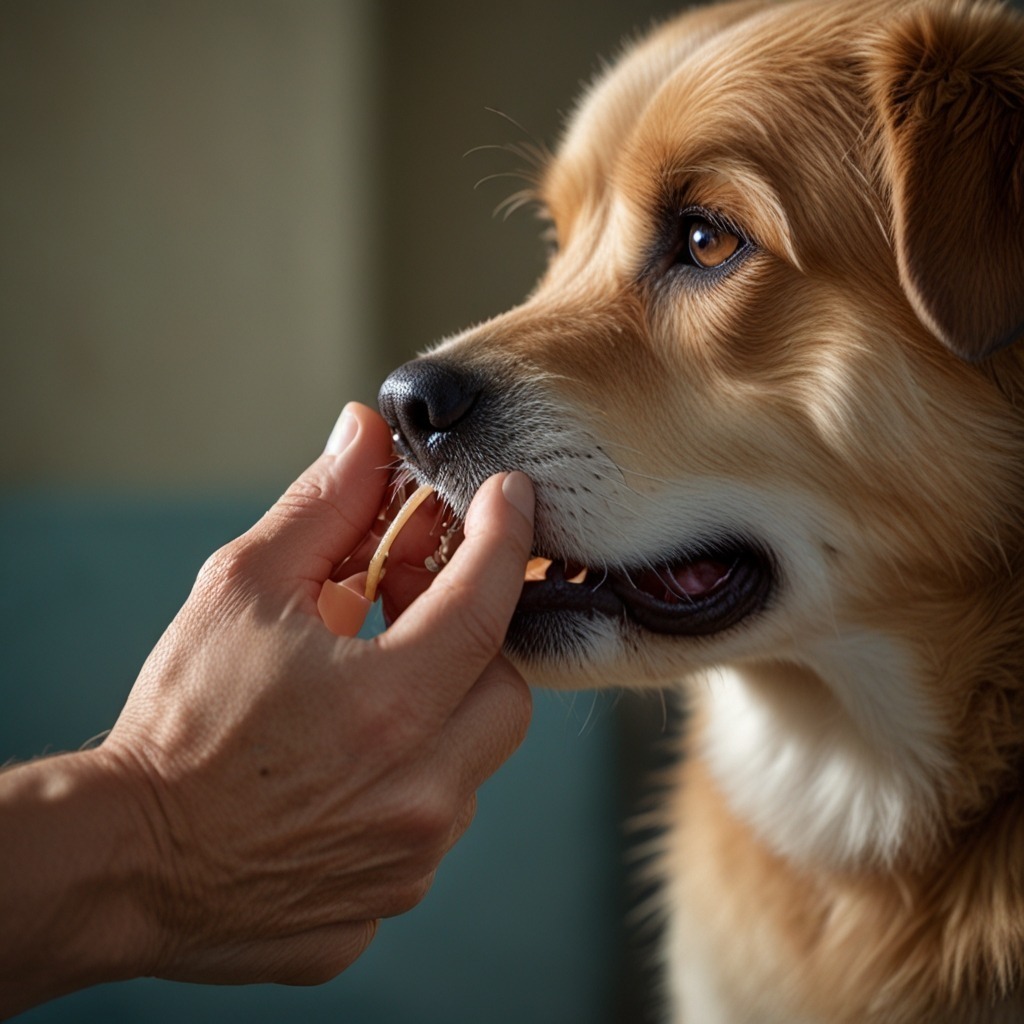
Bear had a cracked upper premolar I had no clue about. Dr. Nguyen lifted his lip and there it was—a dark fissure, gum slightly red. He'd been eating, so I never suspected dental pain. But dogs will eat through a lot of pain, especially if they're food-motivated. The thing is, they might eat slower, drop kibble, or swallow without really chewing. That reduces nutrinet absorption and can cause slow weight loss. A dental issue alone rarely causes rapid loss, but combined with another problem? Different story.
Lesson: check the mouth first. Not just a quick peek—get a flashlight and really look. If the gums are angry red or you see broken teeth, that's contributing to whatever else is going on. I ended up spending $340 on a dental because of that tooth, but it was necessary.
Bloodwork: the big picture
The comprehensive panel—CBC, chemistry, thyroid—ran about $180 here. It showed Bear's kidney values were borderline high, his albumin was sligghtly low, and everything else was… unremarkable. That's a frustrating word, "unremarkable." You want an answer, not a shrug. But low albumin can point to protein loss through the kidneys or gut, and borderline kidneys in an old dog? Worth investigating.
If your dog's weight loss is rapid, ask your vet to include a T4 (thyroid) and a urinalysis. Hyperthyroidism is rare in dogs, but it happnes. And urine specific gravity tells you if the kidneys are concentrating waste properly. Bear's urine was dilute—first clue toward early kidney disease.
The fecal test: don't skip it, even if you think you're "clean"
I know it's gross. But older dogs can carry parasite loads too, especially if they've been boarded or walked in high-traffic areas. A standard float test is cheap, and some parasites cause weight loss even when the dog's appetite is normal. Giardia, for instance, can be sneaky. Bear's fecal came back negative, but I've had build dogs where that was the entire explanation.
Abdominal palpation and imaging
Dr. Nguyen felt Bear's belly for masses, organ enlargement, anything weird. She found a slightly thickened area in his intestine—nothing definitive. She recommended an ultrasound. That's where the costs start climbing. The ultrasound was $350 and showed a slightly thickened intestinal wall and some mild kidney changes. Still not a clear answer. Welcome to diagnostic limbo, where you've ruled out the obvious but haven't found the culprit.
The cancer fear and why I didn't handle it well
Here's the thing nobody tells you about waiting for test results: you become a lunatic. I googled every scary word—"intestinal thickening," "albumin low dog." I cried in the laundry room. I convinced myself it was lymphoma, because that's the most common cancer in dogs and it loves the gut. My mind went to the worst place so fast I couldn't eat.
I've been through this before, with a build named Maggie. I'll tell you about her in a minute, but for now, just know that terror is normal. It doesn't make you weak. It makes you someone who loves their dog.
Bear's ultrasound-guided biopsy (another $500) eventually came back: inflammatory bowel disease, not cancer. IBD. Manageable with diet and medication. I sobbed in relief, then felt guilty for sobbing because other people get worse news. Cancer fear is its own special hell, and the only way out is through the diagnostics.
When apeptite is fine but your dog is still disappearing
This was the part that messed with my head the most. Bear ate like nothing was wrong—inhaled his breakfast, begged for scraps, acted completely normal except for the weight melting off. If he'd stopped eating, I'd have gone to the vet instantly. But the normal appetite made it seem like it couldn't be that serious.
Turns out, there are several conditions where appetite sttays normal or even increases while the dog loses weight. The big ones:
- Diabetes mellitus: The body can't use glucose properly, so it breaks down fat and muscle for energy. The dog eats more, drinks more, pees more, and loses weight. Easily picked up on bloodwork and urine.
- Exocrine pancreatic insufficiency (EPI): The pancreas doesn't produce enough digestive enzymes, so food passes through without being asborbed. The dog is essentially starving while eating normally. Stools are often pale, greasy, and voluminous. A specific blood test (TLI) diagnoses it.
- Chronic kidney disease: As kidneys fail, they leak protein into urine, leading to muscle waasting. Appetite may wax and wane, but early on, it can be quite normal.
- Inflammatory bowel disease (IBD) or intestinal lymphoma
- Hyperthyroidism: Though uncommon in dogs, a thyroid tumor can rev mtabolism so high that weight drops despite increased hunger.
Bear's case turned out to be IBD with a possible early kidney component. The IBD meant his gut wasn't absorbing nutrients properly, and the protein loss through his kidneys made it worse. He was literally leaking protein. So he needed a nvoel protein diet (we went with rabbit), a probiotic, and a low-dose steroid to calm his gut inflammation.
I want to pause here and link to a post I wrote about my dog Teddy, who almost died from a sudden illness. That experience taught me that sometimes you never get a neat, tidy diagnosis—and the $37 herb that changed everything was the last thing I expected. For Bear, the rabbit-based food and a cheap probiotic were game-changers. But it took weeks to see real improvement, and those weeks felt like months.
Supplements I'd actially recommend (and ones I hurled into the trash)
Okay, quick tangent because I'm still mad about this. After Bear's diagnosis, I went on a supplement shopping spree. I boght immune-boosting chews, "senior vitality" powders, CBD oils, digestive enzymes you sprinkle on food. I spent about $200 in a panic. Most of it was crap. The chews gave him diarrhea. The powder smelled like a vitamin factory and he refused to eat it. I ended up tossing half of it.
What actually helped? First, a high-quality probiotic desiggned for dogs with digestive issues. Second, omega-3 fatty acids (fish oil) for his inflammation. Third, the prescription diet. That's it. I wrote a whole rant about the immune boosting supplements I'd never buy again, so if you're tempted to throw money at the problem, read that first. Save your cash for diagnostics and real food.
One supplement I do stand by, though, is a good joint supplement with glucosamine and chondroitin for older dogs, because weight loss can make muscle wasting worse and they need all the support they can get. But check with your vet before adding anything that might interact with meds.
The dog who ate twiice as much and still disappeared: a story about EPI
This is about a build dog I had three years ago—a hound mix named Roscoe. He came to me scrawny, but I figured he'd fill out with good food. He didn't. He ate like a horse—two cups of kibble three times a day—and his stools were enormous, pale, and smelled like something that had died in a sewer. I mean, the odor would wake you up from a dead sleep. Meanwhile he lost weight every week.
The shelter's vet had dismissed him as "just a hard keeper." That's vet-speak for "I don't know why he's thin but I'm not going to test." Frustrating. I pushed for a TLI test, and bam—EPI. His pancreas made zero enzymes. He was literally pooping out undigested food. A $50 bttle of pancreatic enzyme powder, mixed into every meal, transformed him from a skeleton to a healthy weight in six weeks. It was miraculous.
Why am I telling you this? Because if your older dog is lossing weight and having weird poop, ask about EPI. It's underdiagnosed, espexially in older dogs, and it's completely treatable. Yet I've met owners who let their dogs waste away because nobody mentioned this simple test. It makes me furious.
This is also a good time to link to my post about when I thought my puppy was dying every time she pooped, because stool quality tells you so much about what's happening inside. If your dog's stool is yellow, greasy, or just off, say so to the vet. Don't be enbarrassed. I've described poop in such graphic detail to Dr. Nguyen that she's actually taken notes.
That time I blaned the food and ended up with a different problem
I'm putting this here because I've done it and I bet some of you're doing it right now. When Bear first started losing weight, I assumed his food was the issue. He'd been on a seior kibble that was mostly corn-based protein, and I decided he needed something "better." So I switched him cold-turkey to a high-protein, grain-free, boutique brand that cost $90 a bag.
Within a week, he had diarrhea so severe I thought he might dehydrate. He lost another three pounds. I panicked and took him to the emergency vet, where they ran tests and foind… nothing acute. The rapid food change had just wrecked his gut. (I later wrote about the $90 kibble that made my senior dog wobble—turns out, that food was totally wtong for his kidneys.)
Here's the deal: older dogs often have sensitive stomachs and established gut microbiomes. A sudden diet change can trigger inflammation, diarrhea, and more weight loss. It can also mask what's really going on. If you suspect something's wrong, don't change food untli you've talked to your vet. And if you must change, do it over 10-14 days, mixing in the new food gradually. I know you want to fix things fast, but rapid food swaps almost always backfire.
When the weight loss can't wait: signs you're in emergency territory
During the diagnostic limbo, I kept a notebook (actually the back of a junk flyer) where I tracked Bear's weight evety other day. I also watched for these red flags my vet drilled into my head:
- Weight loss of >10% in under a month, espeically with muscle wasting visible
- Refusing food for more than 24 hours
- Vomiting or diarrhea that doesn't stop (blood is an immediate vet trip)
- Lethargy so profound the dog caan't get up or seems disoriented
- Pale gums, labored breathing, or collapse
I once ignored subtle signs in a build dog years ago, and by the time I got her to te hospital, she was in advanced kidney failure. She survived, but I still feel sick about it. So now I err on the side of overreaction. If you're on the fence at 2am, call the emergency vet and describe the symptos. They'd rather you call than wait.
The hardest part isn't the diagnosis—it's the waiting and the money
Let's talk money because nobody does, not really. By the time we had a definitive answer for Bear, I'd spent about $1,400 on diagnostics, dental, ultrasound, biopsy, and initial meds. I had pet insurance for him (thank God), but many older dogs don't have coverage because pre-existing conditions block enrollment. If you're in that boat, I'm so sorry. I've been there, and I've had to make impossible choices.
I'll link to a post I wrote about senior dog insurance and pre-existing conditions—it's not hopeless, but you need to know what you're getting into. For Bear, I was lucky to have a plan that covered 80% after deductible. Without it, I'd have been looking at payment plans.
But here's what I want you to hear: you can often start with the basics—physical exam, full blood panel, urinalysis, fecal—and then stop and reassess. You don't have to do every test at once. A good vet will work with your budget and tell you what's most likely to give an answer first. I've had vets who didn't do that, and I left them. You're allowed to ask, "What can we rule out with just this $250 workup?" and go from there.
Maggie, the build dog who taught me about the end
Now I'm going to tell you about Maggie, because even though this post is about figuring out why your dog is losing weight, I need to be honest that sometimes the answer is the one we dread most. Maggie was a nine-year-old shepherd mix I took in as a hospice build. She was surrendered because she was losing weight rapidly, and the owners "didn't want to deal with it." By the time she reached me, she was 40 pounds but should have been 65. Her muscles were gone, her eyes were dull, and she had a mass in her abdomen you could feel just by touching her side. The vet confirmed metastatic cancer. We had six weeks together.
I'm not telling you this to scare you. I'm telling you because not every weight loss story ends with a $37 herb or a rabbit-based diet. Sometimes it's cancer, or end-stage organ failure, and the kindest thing you can do is manage pain and give them the best last days possible.
But—and this is the part I need you to hold onto—Maggie's case was obvious. The mass was huge. Bear's case wasn't obvious. It took weeks to diagnose. And today, eighteen months later, Bear is stable at 68 pounds, on his rabbit diet, with kidney levels holding steady. He's slower, but he's here. He greets me at the door wih a tail wag that still knocks stuff off the coffee table.
So before you assume the worst, get the tests. Do the work. Give your dog the chance to surprise you.
What I wish someoone had told me that first scary morning
If I could go back to the version of me staring at Bears ribs with a coffee cup shaking in my hand, here's what I'd say:
- Stop googling. You'll find the worst thinggs and you'll convince yourself it's all of them. Wait for bloodwork.
- Start a symptom diary. Weight (same scale, same time of day), appetite, water intake, stool quality, energy levels. Bring it to the vet. I used a sticky note, it was enough.
- Don't blame yourself. Dogs hide illness. You're not a bad owner because you didn't notice right away. I'm literally at home with my dogs all day and I still missed early signs.
- Feed what they'll eat, but don't make drastic changes. A dog that's losing weight needs calories from spmething nutritionally appropriate. If they'll only eat chicken and rice for a few days, do that and then ask your vet for guidance.
- you're allowed to be scared. I cried in vet waiitng rooms. I cried in my car. It's okay. This is hard.
And if you're reading this because your dog is losing weight and you're terrified, I'm holding space for you right now. Breathe. Call the vet. Then come back and let me know how it goes. I read every comment, even if I can't always reply fast.
Now I need to go—Dexter, my youngest rescue, is nudging my elbow because he believes 4:47pm is dinner time and he's not wrong. Bear is asleep in the sunbeam, and my build cat Miso is knocking a pencil off the windowsill one centimeter at a time. Life goes on. Yours will too, no matter what the answer turns out to be.