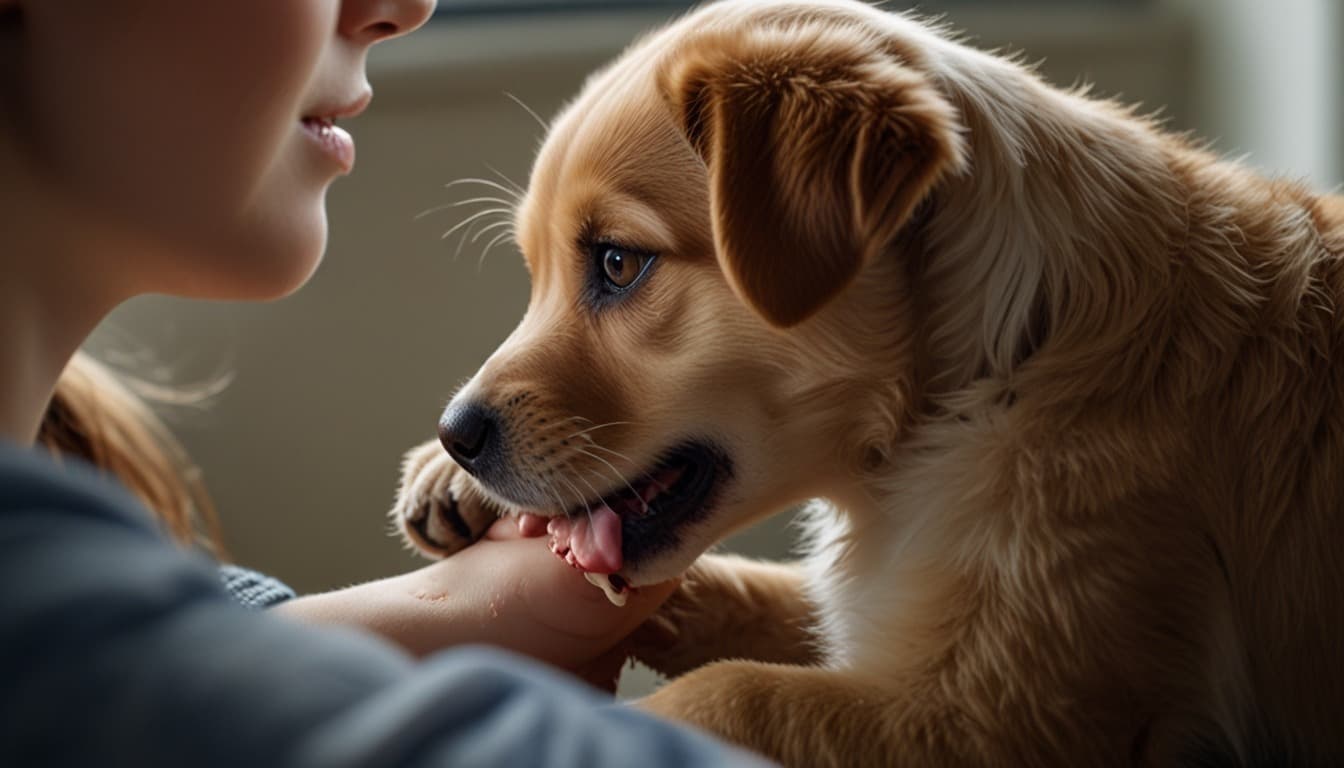
My forearms looked like I'd been wrestling a piranha. Here's what actually stopped the biting.
When my foster puppy drew blood and I ended up crying on the bathroom floor, I knew the standard advice was worthless. Here's the messy truth about stopping puppy nipping that finally worked after 14 years and 40+ fosters.
My left forearm carries a scar that looks like a tiny smile. It's from a 9-week-old Labrador mix named Chip. He was 11 pounds of pure chaos, all needles and enthusiasm, and he'd launch himself at my hands with the glee of a kid in a ball pit. Every evening I'd sit on the floor, exhausted, wrists bloody, wondering if I'd accidentally adopted a land shark. I'd read all the blogs — and yes, I had absolutely no idea what I was doing — and watched the videos. And yet, tehre I was, muttering "no bite" while Chip hung off my sleeve like a furry piranha. Honestly? Most of the advice made things worse.
Puppy nipping isn't a sign you got a broken dog. It's not aggression. It's not dominance. It's just… puppy. But holy heck, those teeth. If you've got a new pup and your hands look like you lost a fgiht with a rose bush, you're not alone. Over 14 years and 40+ fosters, I've been chewed on by dozens of tiny mouths, and I've made every mistake in the book. This isn't a polite little "here's how to train your puppy" guide. It's the messy, bloody, tear-soaked truth about what finally worked — and what just made the little monster bite harder.
Let's get one thing out of the way: the nipping phase is temporary. But temporary can feel like an eternity when your ankles are bleeding and you can't pet your own dog without a sacrificial offering of skin. I'm going to walk you through why puppies are built this way, what you absolutely shouldn't do (I'll name names), and the ridiculously simple stuff that actually turned my tornado fosters into dogs who could take a treat without removing a finger.
Why puppy teeth are designed by the devil
Puppy teeth aren't just sharp. They're deliberately, evolutionarily, maliciously sharp. I've handled hundreds of tiny jaws and I'm still shocked every time. A newborn puppy's mouth is a bear trap. Those little needles are called deciduous teeth — baby teeth — and they erupt around 3-4 weeks old. By 8 weeks, when most pups go home, they're a full set of 28 mini daggers. And they stay that way until about 4-6 months, when they start getting replaced by adult teeth. That's months of you being a human pincushion.
One afternoon I sat down with a caliper (yes, I'm that kind of dog nerd) and measured a build puppy's canine tooth. It was 4.7 millimeters long and finer than a sewing needle. My vet, Dr. Nguyen, once told me that puppy teeth are designed to pierce without crushing — they slip right between skin fibers while the pup's jaw pressure is too weak to do real damage. The result? A thousand tiny punctures that sting like crazy but don't tear. Evolution's way of making sure the pup gets feedback withotu injuring mom or siblings. In a litter, when a puppy bites too hard, the other puppy yelps and stops playing. That feedback loop teaches bite inhibition — the single most important skill a dog can learn. And when we remove them from the litter at 8 weeks, that loop is barely half written. We become the unwilling teachers.
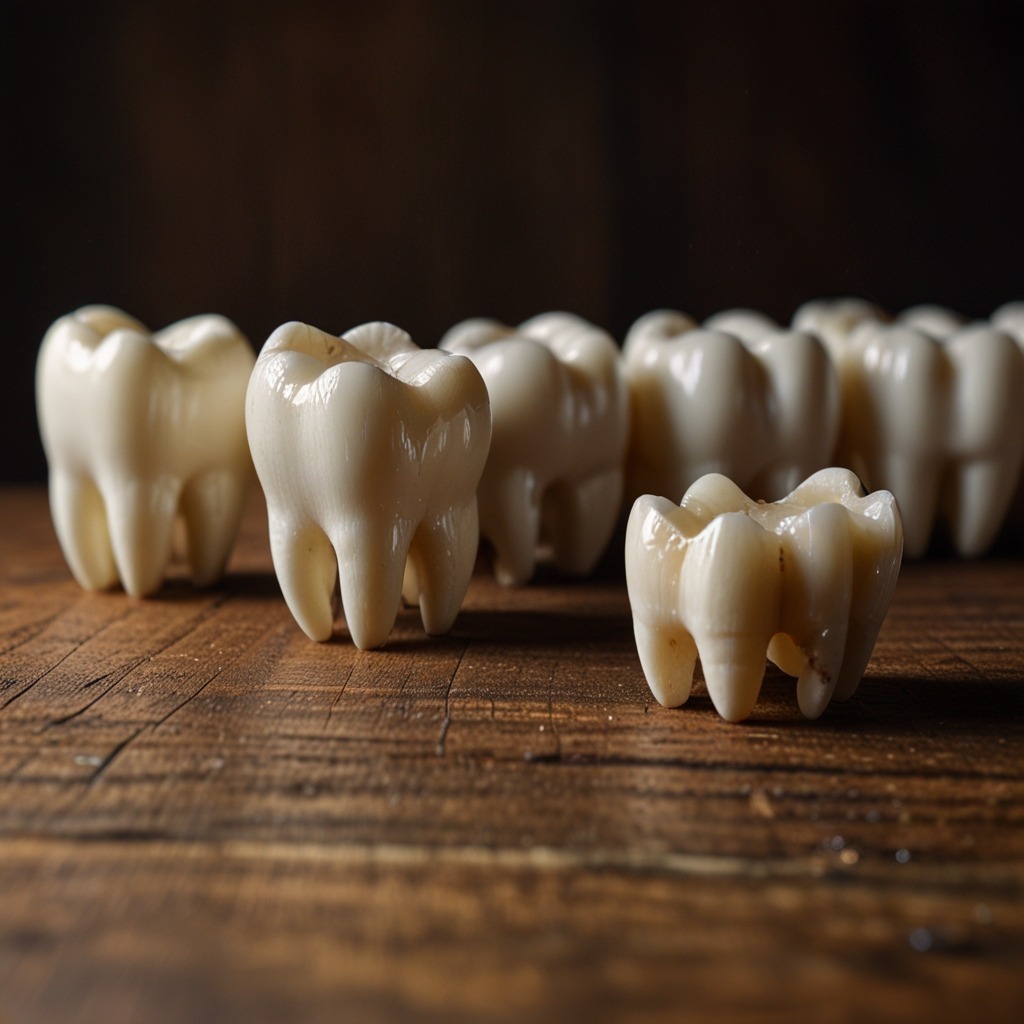
Those little needles aren't an accident
I used to think nature had a sick sense of humor. But those needle teeth serve a real purpose. They allow a pup to start weaning while still gettng mom's milk — they can nibble on mushy food without crushing it. And socially, they're a communication tool. In a litter, play-biting is how puppies figure out the rules of being a dog. Too hard? The playmate yelps and turns away. Too soft? The game goes on. By the time they're 8-10 weeks old, they've got a decent draft of the bite inhibition manual. But it's not finished. It's our job to finish it.
Chip, my piranha pup, was a singleton — the only puppy in his litter. He never had siblings to teach him. He arrived in my house at 9 weeks having never once been told "ouch" by anoother dog. He literally didn't know his own strength. I became his litter. Every time his teeth touched skin, I had to be the one to calibrate his pressure. That meant a lot of bleeding while we figured it out.
Bite inhibition: the one skill you can't skip
Bite inhibition isn't about stopping biting entirely — not at first. It's about teaching a puppy to control how hard they bite. A dog with good bite inhibition might still mouth you, but they'll do it so gently you barely feel it. A dog with poor bite inhibition can cause damage even in play. This is the foundation of everything. If you skip straight to "no biting ever," you're skipping the pressure calibration ledson. And that can backfire: a dog that never learns to soften their mouth might bite hard as an adult when startled or in pain.
I learned this the hard way with a build named Pickle — a 5-month-old terrier mix who came to me after his first family had yelled "NO BITE" at him for two months straight. He'd learned to suppress his nipping out of fear, but his bite inhibition was non-existent. One day I accidentally stepped on his tail while reaching for a treat, and he whipped around and clamped down hard enouhg to bruise bone. He wasn't being aggressive. He'd just never been taught how to use his mouth softly. The yelling had shut down the communication, not the behavior. After that, I vowed never to skip the pressure step again.
So when I'm working with a new puppy, I actually allow mouthing — I just shape it. Hard bites get a big reaction and the fun stops. Soft mouths are rewarded with more play. That's the whole game. It sounds counterintuitive, and every new build parent looks at me like I've lost my mind when I explain it, but it works.
The "ouch" method that everyone sweas by (and why I hate it)
The classic advice: yelp "ouch!" in a high-pitched voice when the puppy bites too hard, then withdraw attention. Sounds simple. For some puppies, it works. For many — especially high-drive, excitable pups — it turns into a party. My build Mocha, a Border Collie mix, would light up when I yelped. Oh, a squeaky toy that squeals! Let's bite harder! I tried everything: louder ouches, dramatic freeze, walking away. She'd just chase me and jump-bite the back of my thigh. The internet told me I was doing it wrong. The internet, it turns out, had never met Mocha.
What actually worked for her was complete silence. No sound, no eye contact, just calmly standing up and stepping over a baby gate for 10 seconds. Boring. The opposite of a fun game. The "ouch" became a cue for more excitement. I'm not alone in this — I've talked to trainers who see the same thing in herding breeds and terriers. Sometimes the sttandard script flops, and you need to rewrite it.
What actually worked for the 14 puppies I fostered
After dozens of puppies, a few strategies emerged that actually made a difference — not overnight, but over weeks. I'm not claiming I invented any of this. I'm just telling you what survived the chaos of my living room, three jealous resident doggs, and a build cat who would sit on the bookcase and glare.
1. Freeze everything
This is my number one, will-die-on-this-hill tip. Puppy gums are inflamed during teething — just like human babies, the pressure of those adult teeth pushing up hurts like the devil. Cold soothes that pain. I started freezing everything I could: wet washcloths twisted into knots, KONGs stuffed with wet kibble and then frozen solid, even whole carrots. (Side story: my cat Jasper once stole a frozen carrot from the counter and batted it under the couch, where it thawed into a disgusting orange puddle I found three days later. I still love him.)
When Chip got bitey in the evenings — and he always did, right around 7 p.m. — I'd hand him a frozen washcloth and watch him go to town. The gnawing satisfied his need to chew and the cold numbed his gums. Within 10 minutes, he'd be passed out. A tired puppy with a soothed mouth is a puppy who's not sinking teeth into your forearm.
2. Become a chew toy distributor
I used to think puppies chewed because they were naughty. Naugthy isn't a thing. They chew because their mouths hurt and because exploring the world with your mouth is the most natural puppy behavior ther'es. The fix isn't punishment. It's redirection — but aggressive redirection. I carried a toy in every pocket, had one on every surface, stashed tug ropes in every room. The moment teeth touched skin, I'd silently press a toy into the puppy's mouth. No drama. No scolding. Just "here, chew this instead." Over time, the pup learns that human skin = boring, toy = party.
This is also where I'll pause and say: if your puppy is destroying shoes, furniture, the remote, read about how I lost $600 in sheos before I figured out the right outlets. Nipping and destructive chewing are cousins, but the fix is different. Nipping is about scoial feedback; chewing is about boredom and discomfort. Both need an off-switch toy strategy.
3. Learn to read the nap-o-meter
Overtired puppies are biting machines. I can't stress this enough. A puppy who has been awake for more than 45-60 minutes is a ticking time bomb. Their impulse control evaporates, their mouths go wild, and every touch is a bite trigger. I used to think my puppies needed more exercise to "burn off the crazy." Wrong. They needed a nap. Once I started enforcing crate naps every hour — yes, like a cranky toddler — the biting dropped by 70%. Not kidding.
I'd watch for the signs: sudden zoomies, inability to focus on a toy, glassy eyes, and that frantic, unhinged kind of biting that feels desperate. That's not a training moment. That's a "go to bed" moment. I'd pop the puppy in a covered crare with a frozen kong, and within 2 minutes, they'd be out cold for an hour. They'd wake up a different dog. If you're fighting the evening witching hour, try putting the pup down for a nap at 6 p.m. instead of 8 p.m. It's a big deal for your sanity.
And loook, I know some people hate crates. You can use a puppy-proofed pen or a bathroom. The point is: forced rest. Puppies are terrible at self-regulating. They'll party 'til they drop and your ankles pay the price.
4. Stop using your handds as toys (I know, I know)
I'm guilty — so guilty — of wiggling my fingers in a puppy's face and then being shocked when those fingers get chomped. We humans, we love to roughhouse with our hands. We wrestle. We tickle. We play. But every time you let a puppy chase your hand or mouht your fingers, you're teaching them that human flesh is a toy. And then we get mad when they don't magically understand that it's only a toy sometimes.
With my fosters, I made a strict rule: hands deliver affection, treats, and gentle handling. Toys deliver play. If the puppy tried to initiate play with my hand, I'd silently swap in a long tug toy. It took weeks for some pups to catch on, but they did. My current dog, a 3-year-old rescue named Gus, will actually pick up a toy and shove it into my hand when he wants to play, because he learned that's how the game starts. It's adorable and my fingers are intact.
I also stopped wrestling games that ramp up arousal. Tug is fine — with rules. But if the pup gets too amped and starts missing the toy and going for skin, the game stops instantly. Calm happens. Then, if they can handle it, the toy comes back. This teaches emotional regulation around excitement. A dog who can play hard and still bring their arousal down is a dog with a off switch. And that off switch starts in puppyhood.
Related: if your puppy jumps on guests and mouths their clothes or hands, that's the same ovearrousal issue. I've got a whole post on why dogs jump and how to stop it, but the short version is: teach a solid sit, manage the environment so the dog can't practice the bad behavior, and don't let people squeal and flail because that's basically an invitation to a puppy party.
The day Mocha drew blood and I cried in the bathroom
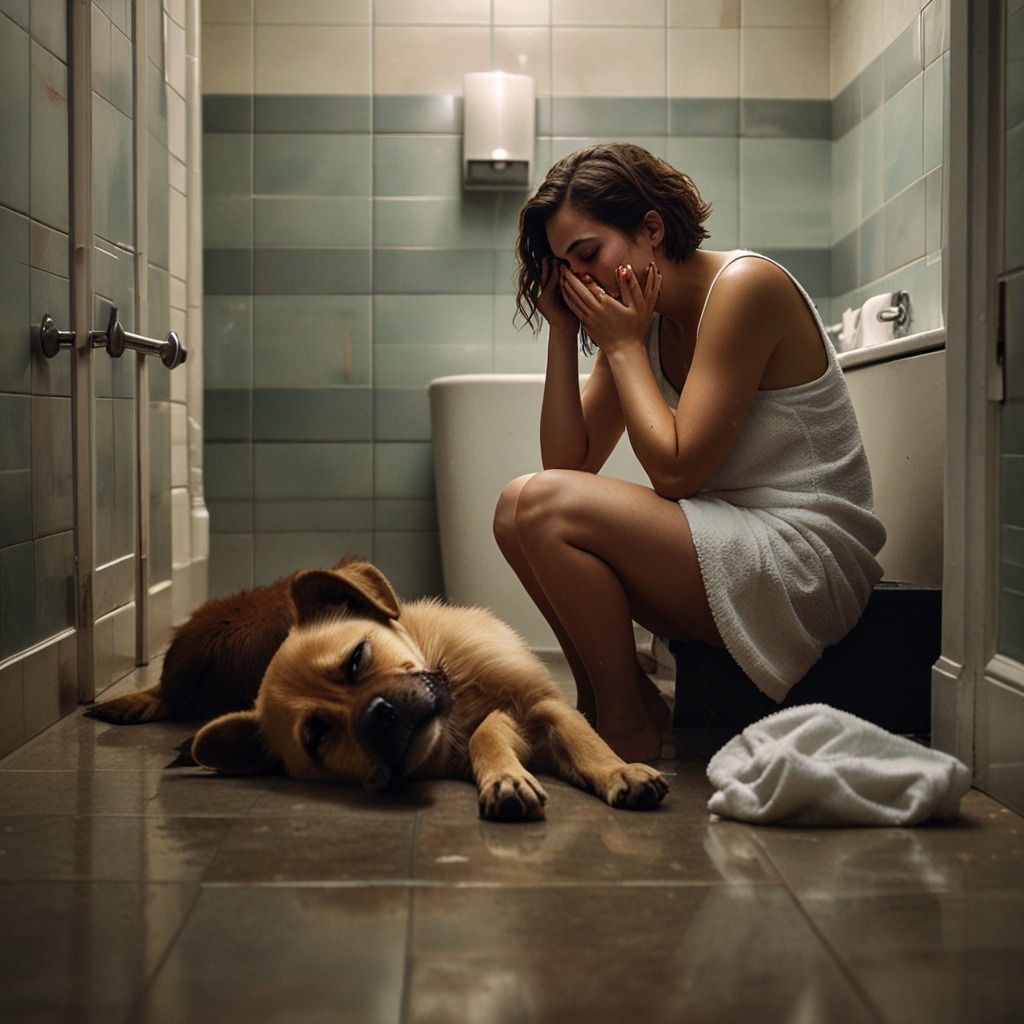
I don't talk about this one much because it makes me feel like a failure. But maybe that's exactly why I need to share it. Mocha was a 4-month-old Border Collie mix with eyes that could manipulate you into giving her your car keys. She was also intensely nippy — not mean, just intense. One afternoon, after a particularly long session of trying to redirect her biting, she leaped up and caught the web between my thumb and forefinger. Blood ran down my wrist. I yelped — a real one — and she froze, then panicked and bit another spot on my arm out of what I now think was startlement.
I crated her. Not to punish her, but because I needed to step away. I sat on the bathroom floor, bleeding into a towel, and cried. I thought: I can't do this. I'm a terrible build parent. She's going to be aggressive. I'm going to ruin this dog. Then Jasper, the cat, cracked the bathroom door open with his head (he does this) and sat next to me, purring like a freight train. I sat there for ten minutes, feeling sorry for myself, and then I realized something: Mocha wasn't bad. I was exhausted. She was exhausted. We'd been at it for an hour when she should have been napping 30 minutes in. I'd missed every nap cue because I was so focused on "fixing" the biting that I forgot to read the dog in front of me.
After that, I changed my approach entirely. I prioritized sleep. I scheduled play sessions for 15 minutes max. I kept a toy in both hands. The biting didn't disappear overnight, but it softened. Six months later, Mocha was adopted by a family with three kids, and they send me photos of her gently taking treats from tiny toddler hands. No blood. Just a dog who learned.
If you've sat on the floor and cried becsuse your puppy won't stop biting, you're not broken. You're just deep in the thick of it. It gets better. I swear.
When it's not normal puppy stuff — and you should call the vet
Most puppy nipping is normal, but not all of it. I've seen enough cases to know when the line blurs. If you've tried all the reasonable stuff for a few weeks and the biting is getting worse, not better, or if you're scared to handle your puppy, it's time to bring in a professional. Ignoring it or hoping they'll "grow out of it" can backfire. Trust me.
Pain you can't see
Hidden pain is a massive driver of sudden biting. A puppy with a sore mouth from retained baby teeth, an ear infection, a GI upset — they'll snap because touch hurts. I once fostered a chocolate Lab pup who went from sweet to snarling in three days. It turned out he had a fractured deciduous canine that had abscessed under the gum. I couldn't see it. He couldn't tell me. The only sign was that he'd bite whenever you touched the left side of his face. A quick vet trip, a tooth extraction, and he was back to his goofy self within 48 hours. Always, always rule out medical before you assume behavioral.
Fear-based biting looks different
Fearful biting isn't the same as playful nipping. It's often stiff, accompanied by tucked tail, whale eye (showing the whites of the eyes), or retreating. A scared puppy may bite once and then cower. If your puppy is growling, snapping, or biting when approached, especially in specific situations (cornered, startled, woken suddenly), that's a red flag. I once worked with a build who'd been terrified of sudden noises — and she'd lash out when startled. Fear aggression in puppies can be addressed early with a qualified force-free trainer, but you need to recognize it.
Resource guarding isn't just for adult dogs
Puppies can resource guard — food, toys, even a favorite human. If your puppy stiffens, growls, or snaps when you approach their bowl or chew, that's not nipping. That's guarding. And the old-school advice of "take it away to show them who's boss" is a fantastic way to get bitten and make the guarding worse. I raisd a build collie pup who started guarding rawhides at 12 weeks. I immediately stopped all high-value chews, switched to scatter feeding, and worked on trade-up games with a trainer. He graduated to a dog who'd bring me his treasure because he trusted I'd give him something even better. don't mess around with guarding — get help.
If you're seeing any of these, don't wait. A vet check and a consult with a certified behavior consultant (not just any trainer — look for CDBC or IAABC credentials) can make the difference between a dog that bites for life and one that's just going through a rough patch.
I still have a scar from a build pup named Cheeto
Cheeto was an orange-and-white pit bull mix, maybe 10 weeks old, with the softest ears you've ever touched. And he bit me right on the chin. I'd leaned down to kiss his head — I know, I know — and he launched upward, needle teeth first. One quick puncture, right on the chin. It bled like crazy. I still have a tiny white dot there, 6 years later. I'm not mad about it. I think of Cheeto every time I catch it in the mirror. He taught me to stop putting my face near a wound-up puppy. He also taught me that puppies don't hold grudges. Thirty seconds after the bite, he was licking my fingers and wagging his entire body. They live in the moment. We're the ones who carry the stories.
I've had fosters that bit me daily for weeks and then grew into the gentlest dogs. The puppy phase is just that: a phase. It's not a preview of the adult they'll become unless we screw it up with punishment or neglect. Give yourself grace. Give the puppy naps. And keep your face out of the danger zone.
The trainer who told me to 'dominate' my puppy can go screw himself
I once hired a trainer — recommended by a friend of a friend — who arrived at my house, loked at my bleeding hands, and said, "You need to show him who's alpha. Pin him down when he bites." I'm serious. He wanted me to alpha-roll a 10-week-old puppy. I kicked him out of my house. That was the day I started learning about actual canine behavior, not the garbage that's been debunked for decades.
Dominance theory is a myth wrapped in bad science. Puppies aren't trying to rule your household. They're trying to communicate with the only tool they've: their mouths. Pinning, yelling, cuffing, shoving — all of it teaches fear, not trust. A fearful puppy might stop biting in the moment, but they'll carry that anxiety into adulthood, and anxiety is the root of most adult aggression. I want a dog who trusts me, not one who's afraid of me.
What I learned instead — what I've used with every build since — is that the real training happens in tiny momrnts. The soft hand that offers a toy. The calm remove when teeth land. The nap they didn't know they needed. It's not flashy. It doesn't look impressive on TikTok. But it builds a dog who can deal with the world without lashing out. If you're bringing home a new rescue puppy, that bond is the whole ballgame. I've written about building unbreakable bonds with rescue dogs, and it starts right here, in the meessy, tooth-filled weeks when you're both learning each other.
Chip, my little piranha, is now a 7-year-old gray-faced gentleman who shares his bed with a cat and takes cookies from strangers with a mouth so soft you barely know he touched you. It took months. It took a freezer full of soaked washcloths. It took me learning to shut up and listen to what he was telling me with his bdy. The biting stopped not when I "trained" him out of it, but when I gave him better ways to say what he needed.
If your hands are chewed up and you're wondering if you made a mistake getting a puppy: you didn't. You're just in the shark phase. Stock up on frozen carrots, buy a toy holster, and remember that tomorrow is another chance to get it a little more rihgt. That's what I tell myself. And then I go feed my dogs.