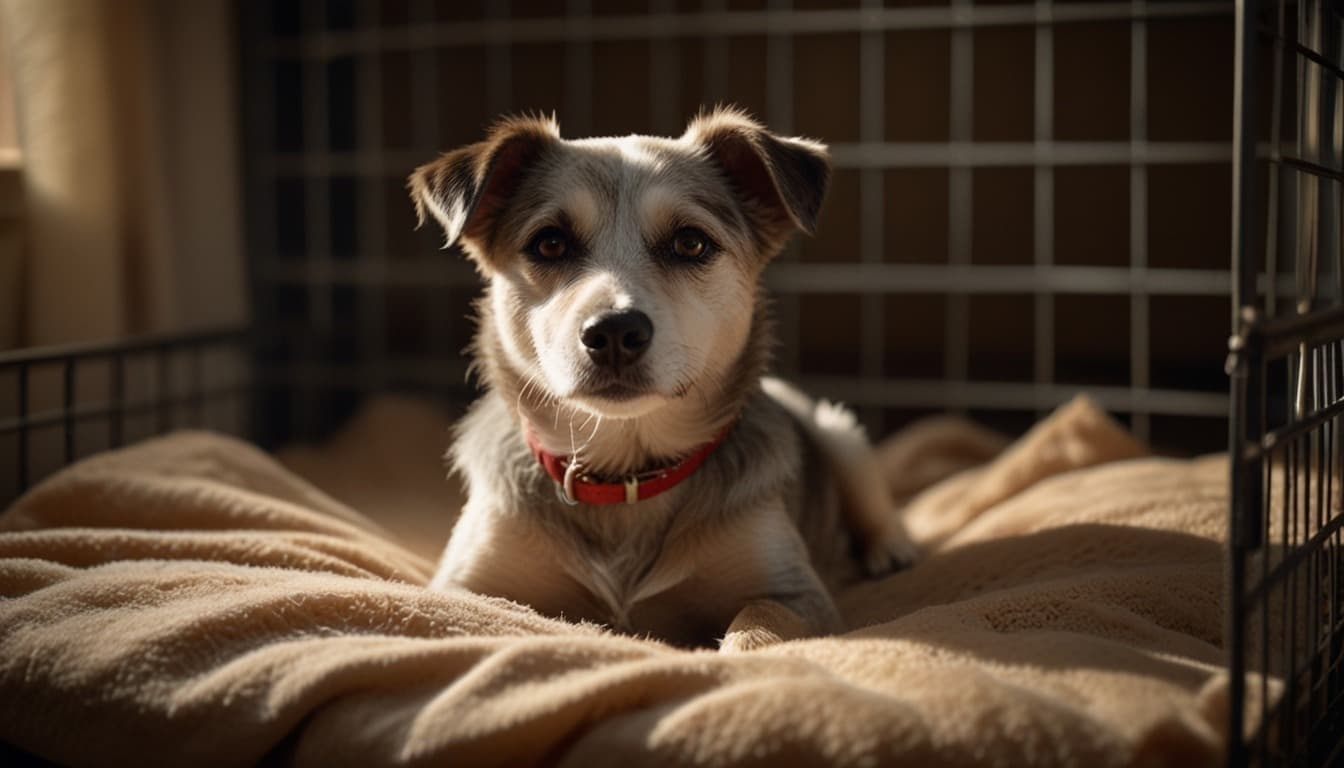
I Bought Three Crates Before My Dog Could Stand Up Without Hunching (And the 2-Minute Trick That Finally Worked)
I bought three crates for the same dog before realizing the problem wasn't his breed or his anxiety—it was my tape measure. Here's the 2-minute measuring trick that finally worked.
I still remember the first crate I bought. It was 9:36pm on a Tuesday. I'd just agreed to build a dog who was supposed to be a “medium-sized lab mix.” The shelter couldn't hold him overnight, so I did the thing we all do: panic-ordered a crate on my phone while eating cold pizza, saw “large” in the title, and clicked buy.
It arrived the next afternoon. I set it up in the living room, all proud of myself. The dog—his name was Otis—walked in, stood up, and his head pressed flat against the top. His tail couldn’t hang down without hitting the back wall. He couldn't turn around. He just stood there, staring at me like you've got to be kidding.
I learned the hard way that crate sizes are a joke. The labels are meaningless. “Large” doesn’t tell you anything. Neither does “for dogs up to 70 pounds.” Otis was 55 pounds and long as a freight train. The crate was 36 inches. I needed 42, minimum.
That was crate number one. Two more would follow before I finally got it right. And somewhere along the way I figured out a measuring trick that takes about two minutes and saves you hundreds of dollars—plus a lot of doggy misery. I’m going to walk you through it, but first you need to hear about crate number two, because that one was my fault in a completely different way.
The Measuring Tape Trick My Vet Drew on the Exam Table Paper
After the Otis fiasco, I went to see my vet. Dr. Nguyen—she’s put up with my panic calls for 11 years, through three dogs and a divorce—listened to me ramble about crate sizes. She grabbed a sheet of exam table paper, which I’m pretty sure she’d been using to jot down lab results, and drew a stick-figure dog. Then she wrote three measurements.
“Sarah,” she said, “stop reading labels. Mesure your actual dog.”
I felt like an idiot. But in my defense, nobody tells you this stuff. You either guess or you trust the packaging. The packaging is lying to you.
Here’s what she told me to measure—and I’ve psased this on to probably two dozen fosters since.
Nose to base of tail (length)
Put your dog in a standing postiion on a flat floor. Don’t measure while they’re stretched out on the couch or curled into a bagel—you’ll get a number that’s either way too long or way too short. Measure from the tip of the nose to the spot where the tail meets the body. That’s the length the crate needs to accommodate without your dog having to bend sideways.
For Otis, this was 38 inches. The 36-inch crate was a full two inches too short, and boy did he let me knw. He’d walk in and immediately bang his nose on the door. I felt terrible.
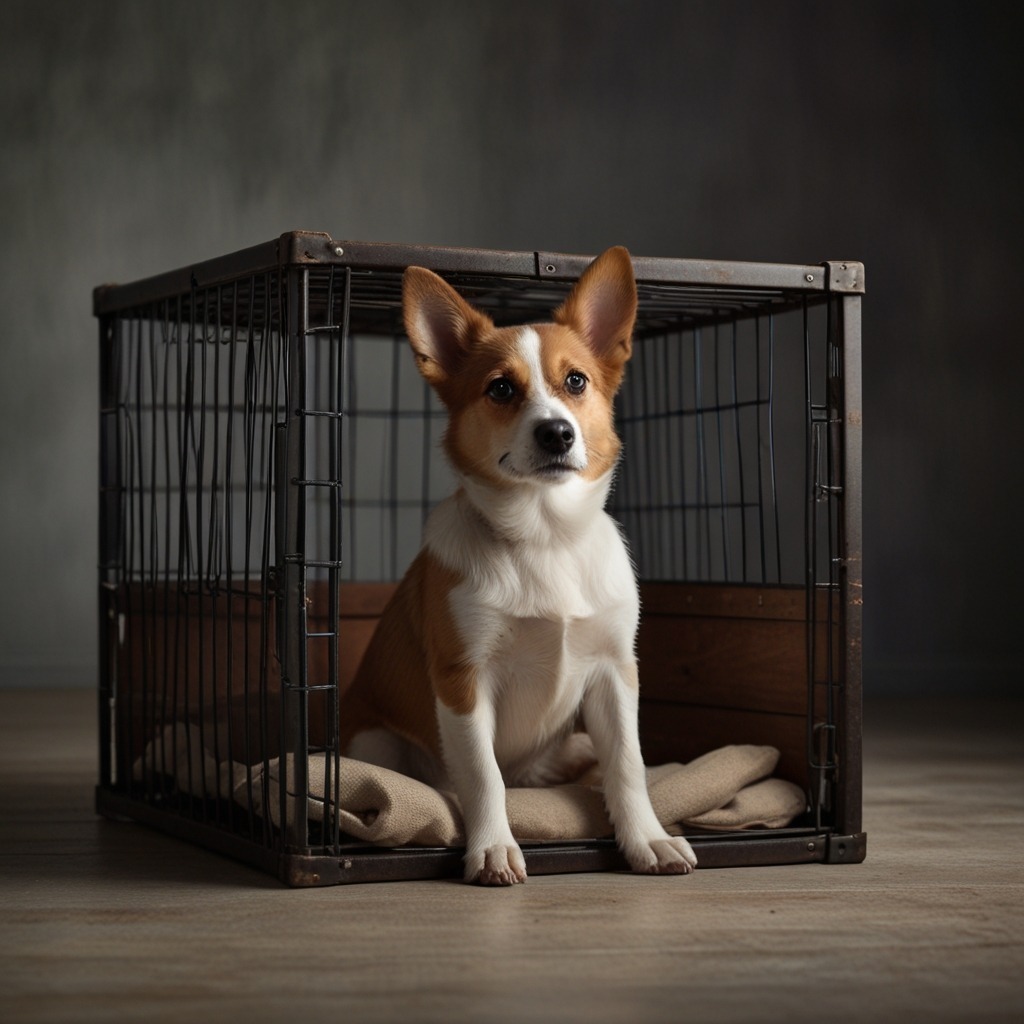
Floor to top of ears (height, sort of)
Measure from the floor to the top of your dog’s head—not the tips of the ears. Ears can flop around or point up and that’s fine. The crate height should let your dog stand with their head in a natural position, not craning down. Some people say measure to the top of the ears if your dog has naturally upright ears (German shepherds, huskies), because a dog who has to fold their ears down will be annoyed. I agree with that. But for floppy-eared dogs, head height is your guide.
Otis’s head height was 29 inches. The 36-inch crate was actually tall enough—if the door had been placed differently. Wiat, let me get to that later.
The turning radius test (non-negotiable)
Here’s the thing nobody mentions: a crate needs to be deep enough for your dog to turn around without doing a three-point K-turn. Your dog should be able to walk in, perform an easy U-turn, and lie down facing the door—or the back—without scraping their sides. If they've to contort, the crate is too narrow or too short.
Think of it like an airplane bathroom. You can stand in there, but can you turn? Big difference. A dog can’t hold their bladder forever, and they’ll need to shift positions. If the crate restricts that, you’re setting them up for anxiety and sore joints.
I once fostered a terrified little terrier mix named Pippa who refused to go into her crate. I assumed she just hated confinement. Turned out the crate I was using—a hand-me-down from my neighbor—was only 24 inches long, and she was 22 inches nose-to-tail. She could fit, but she couldn’t turn. I swapped her to a 30-inch crate and she walked right in. Spent the next three hours doing dramatic circles just because she could.
That moment stuck with me. I’d been blaming the dog when the problem was my stuff. Aren’t we all guilty of that?
The Crate I Bought for a 70-Pound Dog That He Outgrew in Six Months
This is where crate number two comes in. I’d learned my lesson about length and height and turning radius. I measured my new build—a young boxer mix named Gus, all legs and enthusiasm—and ordered a crate that fit him perfectly.
Problem: Gus was 8 months old. Over the next half year, he grew. A lot. I came home one afternoon and found him standing in his crate with his shoulers hunched like a gargoyle. He’d been fine on Friday. By Wednesday he couldn’t stand straight.
I did what any reasonable person does: I swore loudly, apoogized to Gus, and ordered a third crate. This time I added 4 inches to every measurement I’d just taken. I figured, if he grows, he grows. The crate would be slightly too big for now, and that’s okay—as long as it wasn’t so cavernous that he’d decide one corner was a bathroom. (More on that in a sec.)
Gus is now 4 years old and 85 pounds. That crate still fits him beautifully. He can stretch out on his side with his legs extended and not touch the walls. He can sit up without his ears brushing the top. He can turn. It’s the last crate I’ll ever buy him.
So if you’re measuring a puppy or a young dog, measure often. Add a few inches to account for growth. Better to have a crate that’s slightly too roomy for a few months than one they’ll outgrow right after you’ve thrown away the receipt.
“But My Dog Likes Small Spaces” and Other Things I Used to Believe
Every time I post about crate sizing on my rescue’s social media, somone jumps in with “But dogs are den animals! They like small, cozy spaces!”
Okay. Let’s talk about that.
The denning instinct is real. Wild canids do use dens for safety and raising pups. But a den isn’t a prison cell. A wolf’s den is typically big enough for the mother and pups to move around, nurse, and shift positions. It’s not a wooden box they can’t turn around in.
I made this mistake with a build named Barnaby—a giant, anxious hound who would curl himself into a tiny ball on my sofa. I thought, “Oh, he likes tight spaces. I’ll get him a smaller crate so he feels secure.” I put a soft blanket in there, the whole deal. Barnaby squeezed in, lay dwon, and panicked. He couldn’t get comfortable. He’d try to turn and wedge his hips against the side. Then he’d pant and whine. I thought he had separation anxiety. Nope. He was just physically uncomfortable.
Swapped him to a crtae with proper dimensions and—surprise—he settled instantly. I wrote about a similar situation with a dog who had hip dysplasia in this post about beds and mobility. The size of the space a dog redts in matters a whole lot more than we think.
Lying in a tight ball on the couch is a choice. Lying in a tight ball in a crate because you can’t do anything else is a constraint. Those are two very different things. A dog who feels safe will stretch out, roll ovver, change positions a dozen times. If they can’t, they’re not comfortable—they’re tolerating the space because they've no other option.
Here’s my rule of thumb: if you can’t fit a water bowl in the crate without your dog having to step over it to turn around, the crate is too small. And yes, dogs should have access to water when crated for any length of time. That’s a separate argument I’ll save for another day.
Tangentially, this reminds me of the cheapskate neighbor I once had who crated his beagle in an old washing machine box. He cut a door in it and called it a den. The dog couldn’t stand, couldn’t turn, and the cardboard absorbed smells and moisture like a sponge. Neighborhood dogs started marking that box. It was a disaster. I’m not saying you’re going to do thaat, but let the image stick. A crate isn't a cardboard box. Give your dog some dignity.
Airline Crates and Why That Label Means Absolutely Nothing
I once tried to fly with a build named Tilly, a smallish border collie mix. The airlne said “crate must be IATA-compliant” and gave me dimensions. I ordered one online labeled “medium airline crate.” It arrived, I assembled it, and Tilly’s ears touched the top when she stood. The airline would have rejected it at check-in.
See, airline crate sizes aren’t about comfort. They’re about clearance. The dog has to be able to stand without touching the top, turn around easily, and lie down in a natural position. The carrier label might say “medium,” but if your dog is leggy, that means nothing. you've to measure just like for a home crate—except the rules are even stricter. The crate can't be too big either, because it has to fit under the seat if it’s a soft-sided carrier, or in the cargo hold specs if it’s hard-sided.
I once saw a guy at the airport check-in counter arguing that his 80-pound Labrador could fit in a “500-series” crate because the sticker said “up to 90 lbs.” The dog’s head was jammed against the ceiling. The agent measured and said no. The guy missed his flight. Don’t be that guy. Measure before you buy, especially for travel crates where there’s zero wiggle room.
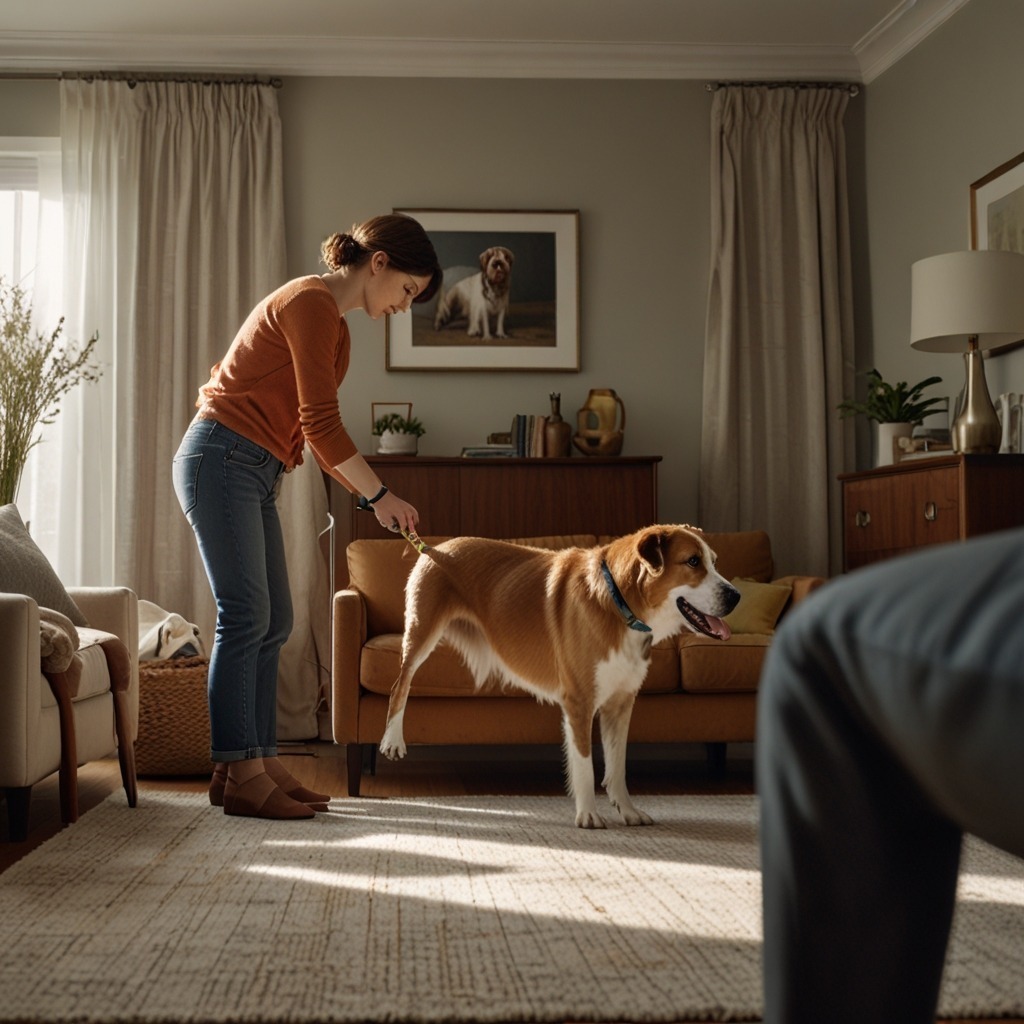
Actually, here’s another tangent about that same flight: I was so focused on getting the crate size right that I forgot to check whether Tilly was even remotely okay being in a crate at the airport. She screamed for the entire 45 minutes we waited in the security line. I’m talking pure, soul-rending shrieking. When I got home I wrote a whole post about how noise phobias and confinement can intersect—but that’s a different kind of nightmare. The point: good crate sizing prevents physical stress, but you still have to train the dog to tolerate it. A bigger crate won’t fix a full-blown panic attack.
Wire vs. Plastic vs. Soft-Sided: Where Size Gets Even Weirder
Here’s a thing I learned the hard way: the type of crate changes the effective interior sppace, even if the listed dimensions are identical.
Wire crates
These usually have open bars, so the interior feels bigger. But the corners are square and the pan at the bottom can slide around, making the space seem smaller if the dog’s paws catch on the edges. Aslo, the bar spacing matters—puppies can get their jaws stuck in gaps. So a 42-inch wire crate with 2-inch bar spacing might be dangerous for a tiny terrier even if the volume is technically fine. Size isn’t just about dimensions; it’s about how the dog occupies the space.
Plastic crates (the airline-type)
These have solid walls, so the interior can feel more confined. A plastic crate tat’s technically the same length as a wire crate will have slightly less usable space because the walls are thick and the opening is smaller. A dog who could comfortably stretch out in a wire crate might feel cramped in a plastic one of the same listed size. I always add 2 extra inches of length for plastic crates, just to account for the way the front opening funnels the dog in.
Soft-sided crates
These are basically nylon tents with mesh windows. They’re lightweight and great for travel or indoor use with a calm dog. But they sag. The roof can droop, particularly if the dog is tall or jumps against it. So the measured height might be listed as 28 inches, but once it’s set up and the fabric settles, you lose an inch or two. If your dog’s ears brush the top in a rigid crate, they’ll be constantly touching saggy fabric in a soft crate. That annoys most dogs intensely. I’ve seen dogs refuse to enter soft crates for no reason other than the roof touched their heads.
I don’t use soft-soded crates for dogs over 40 pounds anymore, to be honest. But if you do, oversize it vertically by at least 2 inches.
When a Crate Is Too Big—Yes, Thst’s a Real Problem
All this talk of “make it roomy” can backfire if you go too far with a dog who isn’t reliably house-trained. A crate that’s overly spacious gives the dog room to pee or poop in one corner and sleep in another. The whole point of crtae training is that dogs instinctively avoid soiling their sleeping area. If the crate is the size of a small apartment, they don’t have that instinct engaged.
So if you’re potty training a puppy, you actually want a crate that’s just big enough to stand, turn, and lie down comfortably—no extra real estate. Many wire crates come with a divider panel for exactly this reason. You block off part of the crate, then expand as the puppy grows. I wish I’d known that with Gus, my boxer mix. Instead I bought a full-size adult crate for a puppy, and then spent weeks cleaning up messes because he’d designated the far corner as his personal bathroom. Divider panels are magic.
If you’re dealing with a puppy and you’re losing your mind over potty training, this post about puppy stupidity (mostly mine) might help. But from a crate perspective: buy with a divider, or get a cheap in-between size and upgrade later. A little inconvenience now saves a lot of laundry.
Giant Breeds: The Specialty Sizing Nightmare
If you've a Great Dane, an Irish Wolfhound, a Mastiff—oh boy. You’re entering a world where “extra large” crates top out at 48 inches and that might not be enough. I once fostered a Dane mix named Hooch (yes, really) who measured 44 inches nose-to-tail and stood 34 inches at the head. The biggest wire crate I could find locally was 48 inches. That gave him 4 inches of extra length—barely enough to turn. He could stand but his ears hit the top if he tilted his head even slightly.
I ended up ordering a specialty 54-inch crate from a company that makes crates for giant breeds. It cost a small fortune and shipped on a pallet. The delivery guy knocked and said, “Ma’am, you ordered a horse stall.” I didn’t have the heart to correct him.
If you’re in giant-breed world, you've to plan for crates that aren’t available at your local pet store. Measure obsessively. Check the interior height of the crate, not the exterior. Many crates list the outside dimenions, and the inside is a few inches shorter. A 54-inch crate might have a 50-inch interior, which makes a huge difference. Also, check that the door opening is large enough for the dog to walk through without ducking. A huge crate with a tiny door is a special kind of cruelty.
Hooch would sttand in front of his new giant crate and just stare at the door, like he was calculating the physics. I had to teach him to lower his head slightly. Once inside, though, he couuld sprawl like a king. Worth every penny of that absurd shipping cost.
The Day I Meaasured My Dog’s Butt and Saved $300
I want to go back to that vet visit for a second, because Dr. Nguyen said one more thing that stuck with me.
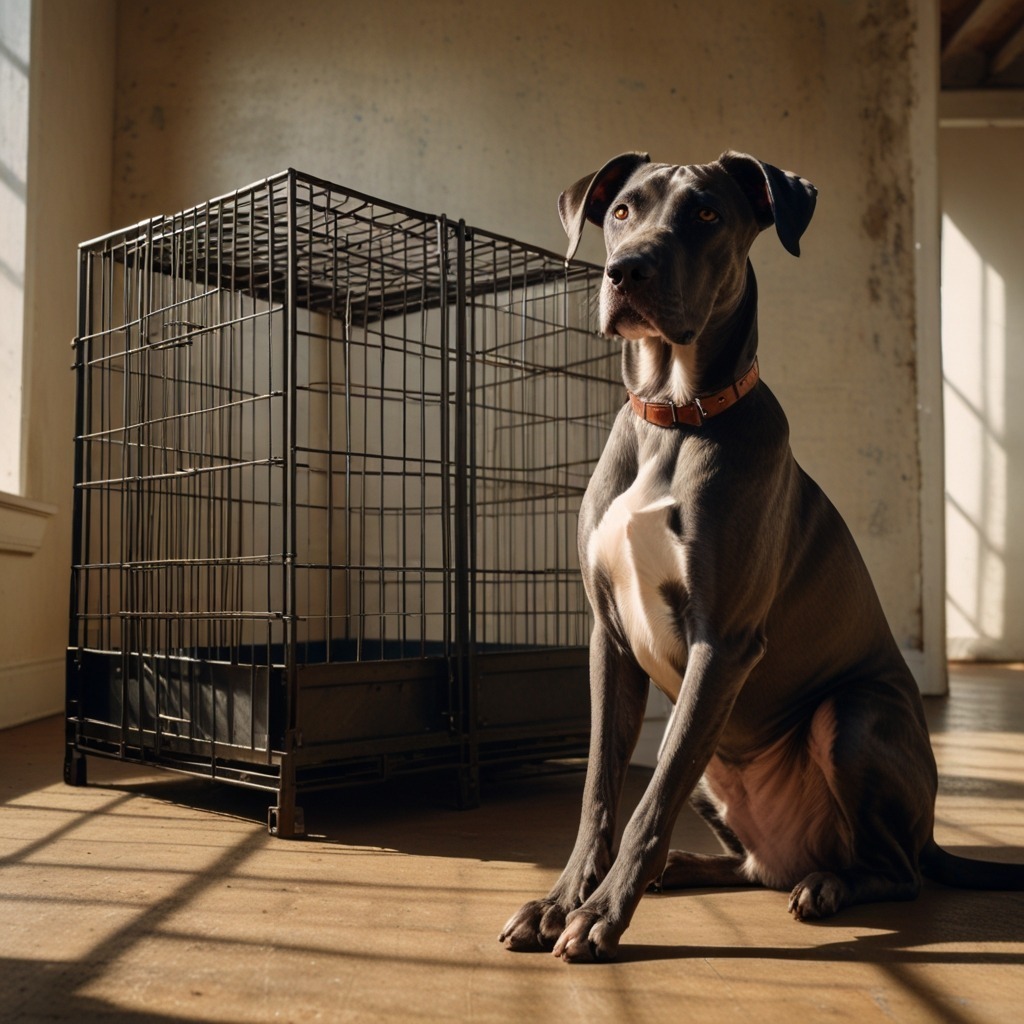
“Measure the widest part of their body—usually the hips or chest—and make sure the crate is at least that deep.” Depth, meaning the distance from the front to the back wall. I’d been so focused on length and height that I forgot width. Otis, the long lab mix, had a deep chest. When he lay on his side, his shoulders extended outwards. In that first 36-inch crate, his back would press against the side bars and his shoulder would hit the door. He couldn’t lie fully flat. No wonder he was grumpy.
So I started actually measuring the butt width of every dog I fostered. Not weight. Not guesswork. I’d get a soft tape measure and wrap it around the widest part of the body while they stood. I’d write that number down, then compare it to the crate’s interior depth. If the number was close, I’d size up.
That’s how I avoided buying a fourth crate for Gus. I measured his growing butt and realized he’d need at least 27 inches of depth. The mid-size crate I was eyeing had an interior depth of 25 inches. That’s a two-inch difference—the difference between a dog who can lie comfortably and a dog who always has one shoulder jammed against metal. I skipped that crate, waited a month, and bought the bigger one. Saved myself $120 and a whole lot of guilt.
If you take nothing else from this ramble, take this: measure the widest part of your dog’s boddy, in inches. Add 2-4 inches. That’s your minimum interior depth. Length and height matter, but depth is the quiet dealbreaker.
The One Rule That Kept Me from Buying a Fourth Crate
After three crates, two panic returns, and a lot of measuring tape, I finally landed on a process that takes maybe two minutes. I’ve used it for every build since, and I’ve never bought the wrong size again.
Here’s the whole thing:
- Stand your dog on a hard floor.
- Measure nose to base of taail. Add 4 inches. That’s your minimum crate length.
- Measure floor to top of head (not ers, unless they’re prick-eared). Add 2-4 inches. That’s your minimum height.
- Measure the widest part of the body—chest or hips—with a soft tape. Add 2-4 inches. That’s your minimum interior depth.
- Look at the crate specs online. Find the interior dimensions, not the exterior. If the maufacturer doesn’t list interior dimensions, call or skip it.
- Buy a crate that meets or exceeds all thee of your numbers. If a crate is slightly bigger in one dimension, that’s okay. Smaller in any dimension? Move on.
That’s it. Two minutes. No guessing. No trusting the word “large.”
My current dog—a perpetually anxious, 60-pound shepherd mix named Benji—has been using the same 42-inch wire crate for five years. I measured him the day he arrived from the rescue, added my 4-inch buffer, and bought once. He goes in willinlgy when there’s a thunderstorm or when I leave the house. He stretches out, rolls onto his back, kicks his legs in his sleep. It’s his space. It fits.
I’ve written about thunder phobia before—why “just ignore it” is terrible advice—but one thing I didn’t mention in that post is that the crate size plays a part. A dog whose body feels constrained during a panic attack will panic more. It’s like being trapped in a too-small elevator. Give them room to breathe.
I’m not a vet. I’m not a trainer. I’m just someone who’s spent way too much money on metal boxes. Do the meausrements. Save yourself the frustration. Your dog will thank you by not giving you that “you've failed me” look from behind a door they can’t turn away from.
And if you’re wondering why I care so much about a simple rectangle—blame Otis, and Pippa, and Gus, and Branaby. They taught me that the right crate isn’t about the label. It’s about letting your dog be a dog even when they’re contained. That’s not too much to ask.