I've Fostered 40+ Cats and I'm Still Not Sure if Keeping Cats Indoors Is the Right Call — Here's the Messy Truth Nobody Tells You
Miso was the cat who broke my indoor-only rule — and now I'm not sure what's right. A messy, honest look at the pros and cons from someone who's cleaned more litter boxes than she can count.
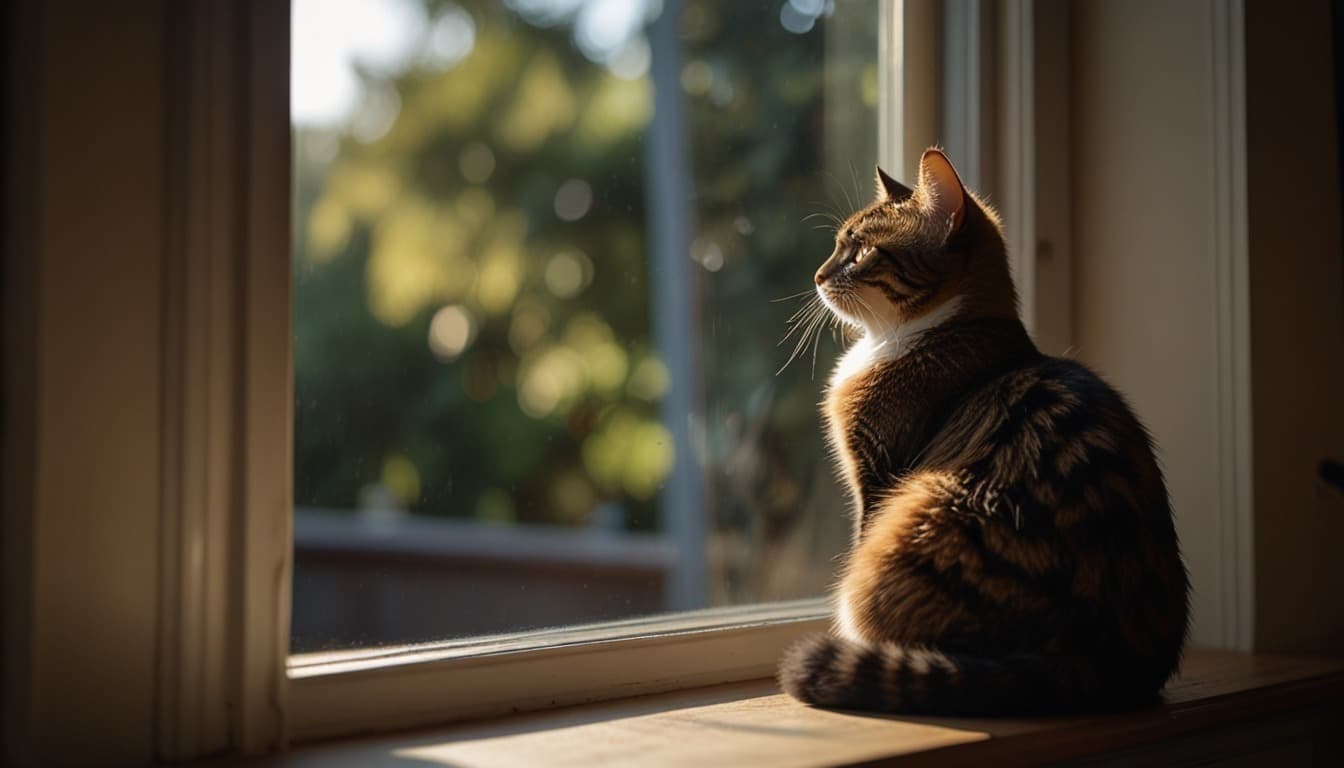
Miso was the cat who broke my indoor-only rule. Not by escaping — well, not the first time. He just sat by the sliding glass door for hours, chin resting on the frame, watching squirrels with this low, vibrating ache that I couldn't fix with a feather wand or a puzzle feeder or any of the crap the internet promised would make him happy. He wanted out. Not just the catio, not the screened porch I'd built for exactly this reason. He wanted the grass, the dirt, the actual sun on his actual fur, and I wanted to keep him alive long enough to get old and grumpy. That tension? It's been the undercurrent of my entire life with cats, and I've spent 14 years oscillating between "indoor cats or you're an irresponsible owner" and "what's the point of a long life if it's spent staring out a window, dreaming of something you'll never get?"
So this isn't a guide. It's not a pro-con list with tidy bullets. I've made every mistake, I've spent money I didn't have on vet bills for things that were entirely my fault, and I've lain awake at 3am while my build cat yowled at the back door like I was holding him prisoner. What follows is the messy, incomplete, sometimes contradictory truth about indoor cats — from someone who's cleaned more litter boxes than she can count and still doesn't have a clean answer.
Why I Was a Hardcore 'Indoor Cats Only' Zealot (and the Cat That Shattered That)
For years, I was that person. The one who'd corner you at the shelter orientation and talk about indoor cats like it was a moral imperative. I'd seen too many cats come in with abscesses from fights, eyes swollen shut from Feline Herpes caught out in the colony, thin and battered and dead by the side of the road. I'd held a cat while the vet imjected the euthanasia solution because someone's "outdoor cat who never went far" got hit by a car and dragged himself home with a shattered spine. Those images bake into you. They make you rigid. So I preached the indoor gospel: safety, longevity, responsibility. If you let your cat outside, you didn't care enough. That was my entire worldview for a decade.
Then Miso showed up. He was a build, a chunky orange tabby with ears that looked like he'd been in a few too many arguments, and the very first night he sat in my living room and stared at the door like it was a window into everything he'd lost. I figured he'd adjust. I bought Feliway diffusers and climbing shelves and a window perch that suction-cupped to the glass. I played him YouTube videos of birds. He ignored all of it and started meowing at 4am — not the usual feed-me meow, but this hollow, desperate sound that made my other two cats leave the room. After three weeks, he stopped eating his kibble and started losing weight. My vet, Dr. Nguyen (who's put up with my panic calls for 11 years, through three dogs and a divorce), said, "Sarah, some cats just don't do well confined. It's not a moral failing." She didn't say to let him out. She just said the thing I needed to hear: that my absolutism wasn't serving this particular cat.
It took me another month to even consider the possibility that keeping him inside might be its own kind of cruelty. I'm not saying it's. I'm saying I had to confront the reality that my rule existed for my comfort, not just for their safety. And that's where the whole damn topic gets messy.
The Obvious Stuff That Nobody Argues Aboout (But I'll Say It Anyway Because Some People Are New to Cats)
Look, I can list the benefits of keeping cats indoors in my sleep. Cars, coyotes, dogs, poison, cruel humans, FIV, FeLV, parasites, abscesses, getting trapped in garages, eating things that kill them, getting "adopted" by a well-meaning neighbor who thinks the cat is a stray and then you never see them again. Indoor cats live longer — the studies say 10-15 years versus 2-5 for outdoor cats, and honestly that number probably undersells the difference because the "outdoor" cohort includes cats who are semi-feral, unfixed, and basically surviving on scraps. A well-managed indoor cat often hits 20 without much drama. So that's the argument that gets brought out at every adoption counseling session, and it's not wrong.
Then there's the other obvius stuff: indoor cats don't kill wildlife. And I'm not being glib here — cats are devastating to bird populations, and if you've ever had a cat 'gift' you a disemboweled robin, you know the guilt sits in your stomach like a stone. So there's that. Plus, indoor cats are less likely to bring fleas into the house (though they can still get them if you've a dog, or if a flea jumps in through an open window — don't get me started).
But then you turn the list over and the cons of keeping a cat indoors smack you in the face. Obesity from lack of movement. Boredom that morphs into anxiety and depression. Destructive behaviors — scratching furniture, peeing on things, excessive grooming to the point of bald spots. The constant need for you to provide enrichment that a 30-minute romp in the yard would solve naturally. And the litter box. Sweet lorrd, the litter box situation alone can break a person. So yeah, the simple list is simple. The lived experience? Not so much.
The Window Argument — and Why I Got a Scratched-Up Screen Door Within 3 Days
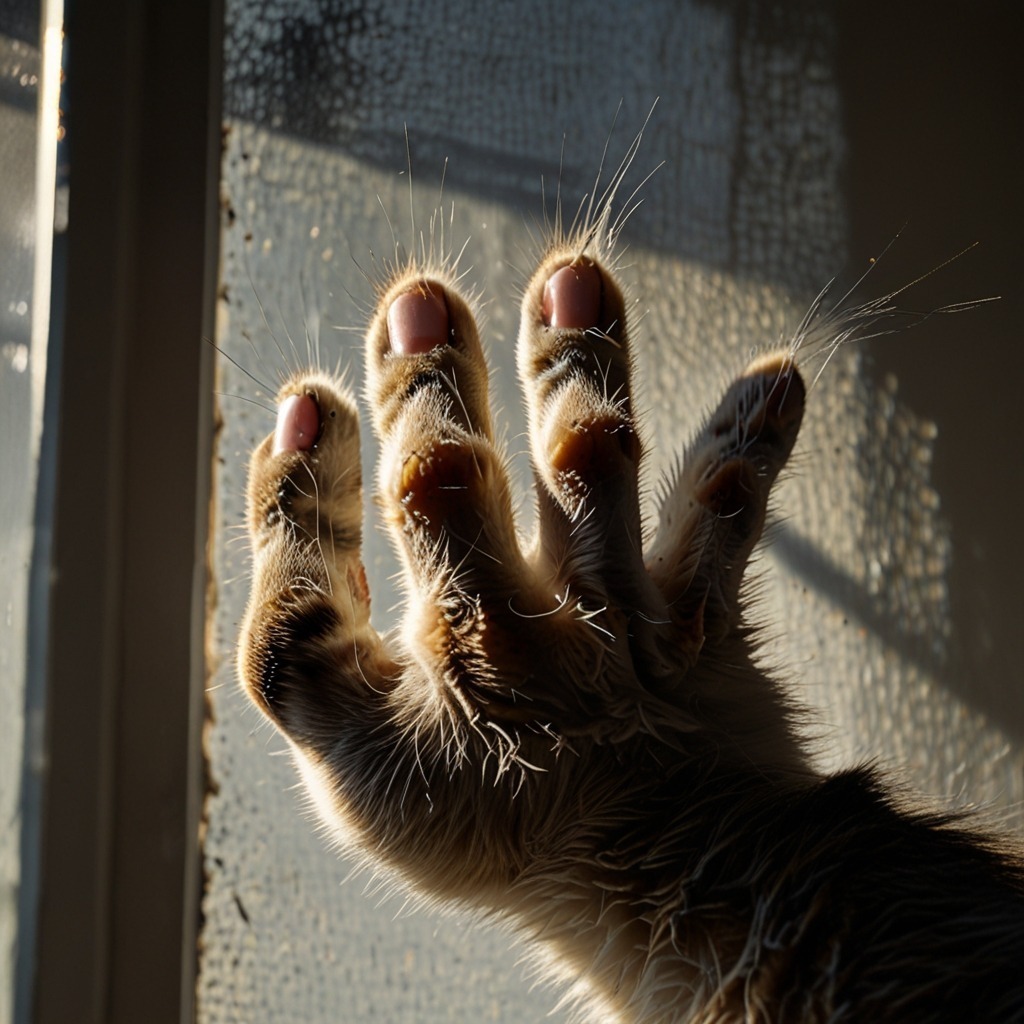
When Miso first arrived and I was still clinging to my indoor-only identity, I thought I had a genius compromise: I'd open the bathroom window (the one with the sturdy screen) and he could at least smell the outside world and feel the air. He sat on the sill for exactly 45 seconds before he hooked a claw into the screen and yanked. I patched it. He yanked again. By day three, there was a hole the size of a grapefruit, and my dog Max — a Labrador with the impulse control of a toddler — had wedged his head through it and was barking at a squirrel while I tried to pull him back in. Miso watched from the bathroom counter like he'd orchestrated the whole thing. I closed the window and duct-taped the screen, feeling like a prison warden. That was the first time I thought, maybe this cat needs an actual outdoor plan, not a half-measure that's just going to end in a massive vet bill.
Honestly, that whole episode was only tangentially about cats because Max was the one who almost got stuck. But it's the kind of chaos you don't anticipate when you decide to keep a cat inside. You think you're being responsible, but you're just creating new problems. Anyway, I digress.
Litter Boxes. Oh God, the Litter Boxes.
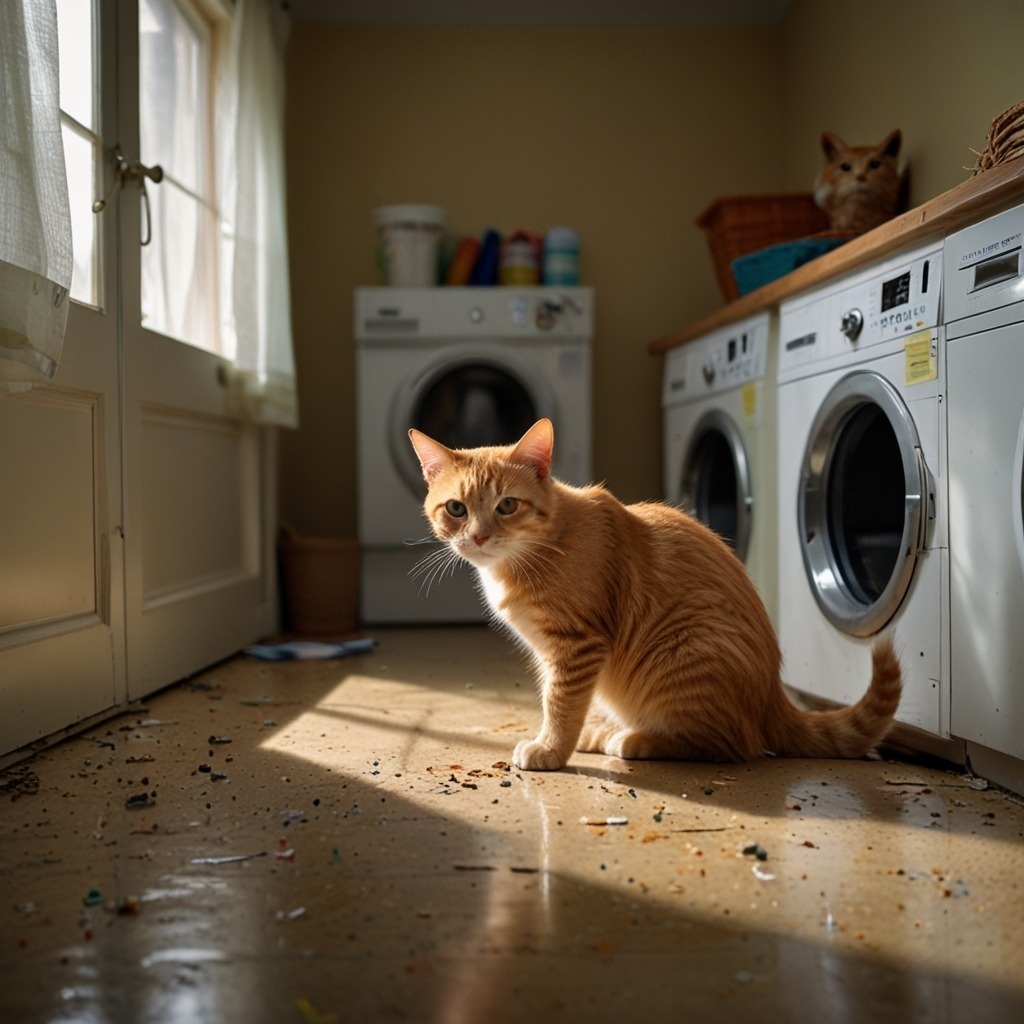
Nobody tells you, when you adopt your first indoor cat, that your home will become a factory for granulated misery. I don't care what litter you buy, what mat you put down, what top-entry box you rig up — you'll find litter in your bed, in your coffee, and in places that defy physics. I've had buidl cats track litter up the stairs, across the kitchen, and into the silverware drawer. I've inhaled so much litter dust that I'm probably 12% bentonite clay at this point.
The Tracking That Nearly Ended My Relationship
Seven years ago, I was dating a guy who was a neat freak. I had three cats at the time, all indoor, and I was using a clumping clay litter that was basically gravel. Every morning he'd get out of bed and step on a scattering of litter pellets that had migrated the ten feet from the box. He wasn't mean about it, but I could feel the resentment building like a low-grade electrical current. I bought a mat, then a bigger mat, then a mat that looked like a patch of artificial grass and cost $40 and trapped exactly 0% more litter. Our relationship ended for unrelated reasons (he wanted kids, I wanted more cats — we were doomed), but I swear those little grey pellets were the background noise of our last year together.
The Smell That Made My Landlord Think I Was Running a Kennel
There was a period when I had six fosters in a two-bedroom apartment, and the litter box situation was so overwhelming that my landlord did a surprise visit and actually wrinkled his nose. He asked if I was running some kind of boarding facility. I said no, just fostering, and he gave me that look that landlords give when they're calculating the security deposit deductions. I started scooping three times a day and bought an air purifier that cost more than my couch, and even then, on humid days, the ammonia smell would seep into the hallway. An indoor-only cat doesn't eliminate in the garden; it eliminates in your space. That's a trade-off you need to be honest about.
I tried everything. And I mean everything. Pine pellets that turned into sawdust and got tracked even wrose. Corn litter that attracted pantry moths — I had an infestation in my kitchen for six months and I still blame that damn natural litter. Crystals that my cat refused to step on, so he peed on the bathmat in protest. Eventually I landed on a setup that's sort-of okay, and I wrote a whole separate rant about it (the one where I vacuumed litter out of my bed for three years, you know the one). That post sums it up better than I ever could, but the point is: litter management is a part-time job. If you're keeping cats indoors, this is non-negotiable.
Wait, I'm getting off track. The whole indoor debate circles around more than just littr, so let's swing to the stuff that's less tangible but way more important.
When Indoor Cats Turn Into Furyr Puddles of Anxiety and Boredom
Here's a thing they don't put on the adoption flyers: keeping a cat indoors doesn't guarantee they'll be healthy. It just changes the threats. Instead of getting hit by a car, they get stressed to the point of bladder inflammation. Instead of fighting another cat, they redirect their aggression onto your ankles or your fuurniture or your other cat who never did a damn thing. The indoor boredom spiral is real, and I've seen it more times than I can count.
The Cat Who Peed on Everything I Owned
I had a build named Suki who, within a month of coming inside, started marking everything: my laundry hamper, my couch, my pillow while I was sleeping. She was perfectly healthy, no UTI, no crystals — just profoundly understimulated and anxious about being stuck in a 900-square-foot box. I tried every enrichment trick in the book, and eventually the only thing that fixed it was a behavior modification process that took six months and tested my sanity. I wrote about that here, and looking back, it's a wonder I didn't rehome her out of sheer exhaustion. The indoor life was the source of her misery, and I was too stubborn to see it at first.
The Scratching Post Saga
And then there's the furniture destruction. My cat Noodles used my old apartment's doorframe as a scratching post for two years despite having three scratching posts within arm's reach. I tried double-sided tape, citrus spray, those plastic covers that look terrible, and eventually had to resort to the stupid simple trick I wrote about here. But the underlying problem was that she was bored out of her mind. She wasn't a bad cat; she was a cat doing what cats do when their world is six rooms and a window.
The Obesity That I Ignored for Too Long
Miso, before I finally caved and gave him some outdoor access, got fat. Not chubby — genuinely obese, to the point wherre my vet used the phrase "clinically obese" and I got all defensive. I was feeding him weight-control kibble, but he wasn't moving enough to burn anything. I spent months trying various diets, and the only thing that really changed his body was when he started spending time in the catio and on the screened porch — actual space to walk around and watch things that weren't inside a TV. I documented that whole nightmare here, and I'll tell you: it's hard to get a cat to exercise when his world is the size of a studio apartment. Movemeent happens naturally outside; indoors, you've to manufacture it.
Okay, I need to pause here and tell you about something only loosely related. I once tried to clicker-train a build cat named Pickles because I'd read that mental stimulation helps indoor cats. I bought a book, watched videos, got the little clicker. For tjree days it was great — Pickles would sit and target and get a treat. Then he made the connection that the click meant food, and he started showing up at 4am meowing incessantly, and if I didn't respond he'd sit on my face and pat my nose with a single claw out. The clicker training ended very, very badly. I share this because with indoor cats, you'll try a lot of things, and half of them will blow up in your face. That's just the life. Anyway, back to the topic.
The 'Catio' and Other Compromises I've Tried (and Those That Failed Spectacularly)
The middle ground between total confinement and total freedom is something I've spent way too much money chasing. Catios, harnesses, strollers, those weird bubble backpacks that make cats look like astronauts. I've done them all, and each one taught me something about how cats aren't designed for the solutions we create for them.
The Great use Escape of 2019
Miso, on a use, looked like a sausage that had been stuffed too tight. I bought a "escape-proof" use (spoiler: none of them are), and I took him out into the backyard on a leash. He immediately flattened himself to the ground like the sky was falling, then suddenly twisted his body in a way that shouldn't be anatomically possible and wriggled out. He was gone for 12 minutes. I found him under the neighbor's deck, eating a beetle, looking extremely pleased. I was shaking. That was the last time I tried use training with him. Some cats just don't, and I'm fine with that.
Why I'm Too Broke for a Proper Catio
I built a DIY catio out of PVC pipes and chicken wire once, on a second-floor balcony, and it collapsed in a windstorm and I found my fosters huddled in the coorner of it, somehow both traumatized and still refusing to come inside. That cost me a security deposit and a night of emergency repair. A proper catio — the kind with multiple levels and safety doors — runs hundreds of dollars. I've priced them. I've daydreamed. I've never actually pulled the trigger because I'm always spending money on probiotics or dentals or the thousand other things that come with running a rescue. For now, I've got a screened-in back porch with a cat door that my landlord only sort of knows about, and that's the main outdoor option for my crew.
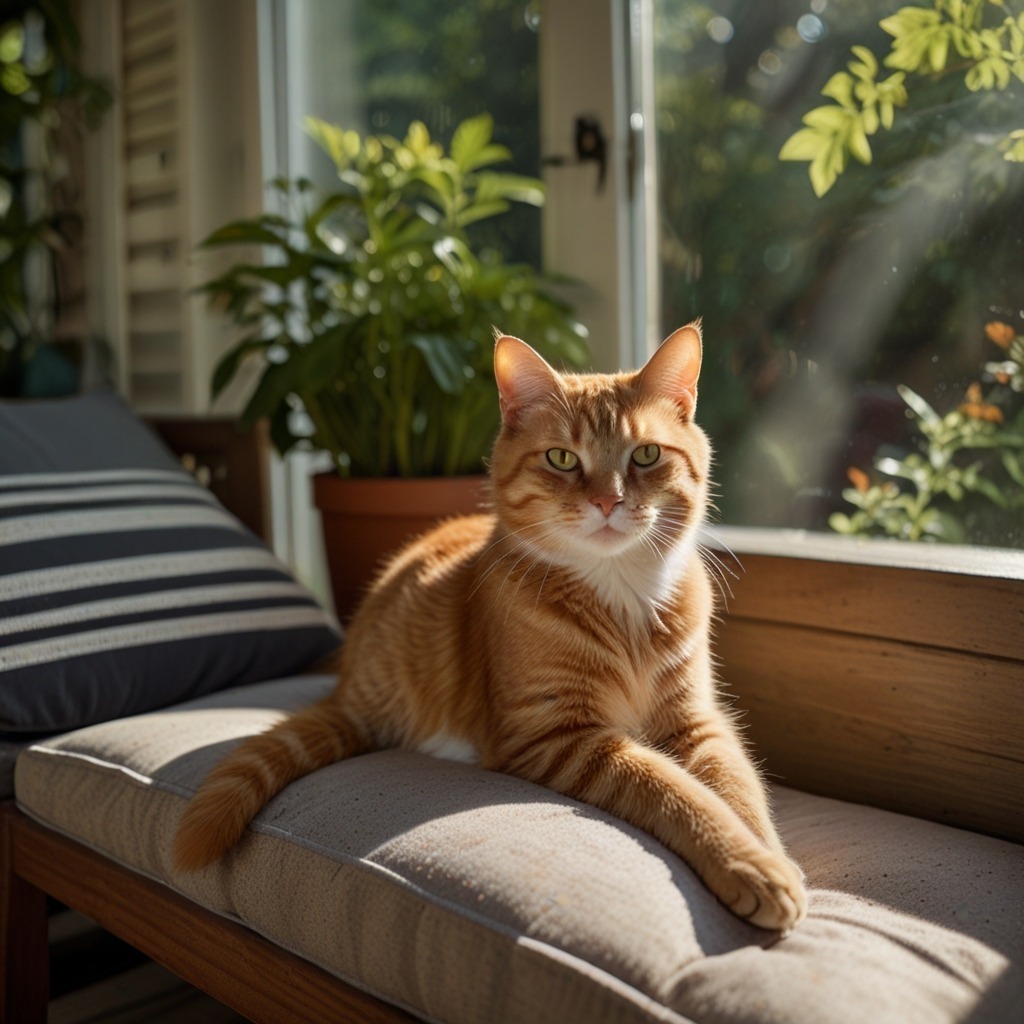
And honestly? The screened porch wokrs better than I expected. It's not outdoor-outdoor, but there's sun and wind and bugs to watch, and Miso spends half his day out there. He still stares longingly at the yard, but he's not yowling at 4am anymore. I count that as a win.
The $340 Vet Bill That Made Me Reconsider Everything
A few years back, I had a build cat named Cricket who was strictly indoors — never so much as a paw out the door. Then she chewed on a lily that I'd stupidly bought at the grocery store without checking whether it was toxic. Two hours later, she was vomiting and I was at the emergency vet at 11pm, shelling out $340 for bloodwork and activated charcoal and a night of fluids. She survived, but the vet's words still ring in my head: "Indoor cats aren't immune to poisoning. They just find different things to poison themselves with."
That night, I was so angry at myself. I'd been so careful about windows and doors and leahs training, and here my cat nearly died from a damn flower on my kitchen table. It reframed the whole debate for me. Outdoor risks are more visible — cars, predators — but indoor risks are quiet and hidden and just as dangerous if you're not paying attention. Houseplants, string, human food, essential oils, certain cleaners — the list goes on. Keeping a cat inside doesn't mean keeping them safe; it just means the hazards are different. And you've to stay vigilant either way.
What the Reesarch Actually Says (and the Parts I Don't Trust)
I've skimmed the studies. I'm not a scientist, but I've read enough to have opinions, and my opinion is that the research about indoor cats living longer is true but messy. Those studies lump together all "outdoor" cats — free-roaming strays, ferals, owned-but-outdoor cats who are intact and only semi-cared-for. A cat who spends supervised time in a secure yard and comes inside at night isn't in the same risk category as a cat who's fighting for survival in a colony. But the studies don't separate them out, so we get this oversimplified narrative that any outdoor acceess equals a drastically shorter life. I don't buy it.
What gets me is that the quality-of-life stuff is almost never measured. Researchers chart lifespan and disease incidence, but they don't ask whether the cat is content. And I get it — contentment is hard to measure. But when you're living with a cat who's depressed and anxious and over-grooming, the "well, he'll live to 18" argument feels hollow. I'm not saying we should let all cats roam. I'm saying the data isn't as clear-cut as the shelter brochures pretend, and some of us have cats who fall outside the statistical comfort zone. I could be completely wrong. I probably am. But Miso, at 12, with his screened porch and his supervised time in the yard (with me standing over him like a hawk), is healthier — physically and mentally — than he was when he was locked inside and pining. That's not in any study. That's just one fat orange cat whose whole being changed when he got a taste of the outside.
The Neighbor's Outdoor Cat and the Guilt That Doesn't Go Away
My neighbor two doors down has a cat named Smokey who's outdoor 24/7. He's fifteen, lean, shiny-coated, and I see him every morning lounging in the sun on their front steps like he owns the block. He's never been to a vet except for rabies shots, according to them, and he's never had a significant injury. I wave at him and feel a pang of guilt. Then I remember the cat I saw at the shelter last week, hit by a car and brought in by a good Samaritan, and I remind myself that Smokey is an exception, not the rule. But the guilt still sits there, quiet and uncomfortable.
And then Miso throws up a hairball on my laptop and I remember why I clean litetr boxes. Still not sure.
Miso's Screen Porch Compromise and Why I'll Never Aain Say 'I Would Never Let a Cat Outside'
These days, Miso's routine is this: I open the cat door at 7am, he ambles out onto the screened porch, and he stays there until the afternoon sun shifts and the spot isn't warm enough. Then he comes back in, eats his lunch, and stares at the yard from the other side of the screen. Sometimes I take a chair out there and sit with him, both of us facing the same direction, watching squirrels. He still wants more. I can't give it to him — the road out front is too busy, the neighbor's dog too unpredictable, my own fear too big. So this is our compromise, and it's not perfect, but no one's dead.
I used to think there was a right answer. Indoor is safe, outdoor is reckless. End of conversation. But after 14 years and 40+ cats, I've landed in this muddy, uncomfortable middle where I know that every cat is different and every situation demands a different balance. Some cats thrive inside with a few puzzle toys and a window perrch. Some cats, like Miso, need to feel the sun on their fur even if it's behind a screen. And some cats — maybe the luckiest ones — have a owner with a fully fenced yard and the time to supervise and the money for a proper catio. I'm not that owner. I'm the one duct-taping screens and apologizing to the landlord and lying awake wondering if I'm doing enough. But Miso is alive, and he's not yowling, and he's not fat. So maybe that's the win I get.
He's 12 now, still on that porch every afternoon, and I'm on the other side of the screen drinking cold coffee, both of us wanting something we can't quite have. That's pet care, I guess.