
My Foster Cat Peed on Everything I Owned for Six Months — Here's What Finally Made Him Stop
My foster cat Toby peed on my pillow, my bath mat, and my will to live — until I finally figured out what he was really trying to say. Spoiler: it wasn't about the litter box.
It started with my pillow. I'd had Toby, a scrawny orange tabby with half an ear, for about three weeks. Sweetest cat you'd ever meet — purred if you looked at him sideways. Then one morning I rolled over and my cheek landed in something cold and wet and unmistakably cat pee. I washed my face three times. I was so mad I put him in the bathroom while I stripped the bed, and he sat on the toilet tank and yowled like I'd betrayed him.
I thought it was a fluke. Maybe he'd been locked out of the room where his box was. Maybe I'd forgotten to scoop that day. I wish I'd known what I know now about scooping schedules, because the next morning he peed on the duvet I'd just washed. And then the bath mat. And then a stack of clean laundry I'd left on the couch for maybe twenty minutes. Within two weeks I'd thrown out three pillows, a bath mat, and a pair of slippers I had a weird emotional attachment to.
I've fostered over 40 cats. I've worked in a shelter for six years. I've made every mistake you can make with a litter box, and I've cried into more enzyme cleaners than I want to admit. This isn't a tidy list of solutions. It's the messy, frustrating, expensive process of figuring out why a cat — your cat, my build, some cat who used to be perfect — starts peeing outside the box and won't stop. And I'm going to tell you the crap I wish someone had told me 14 years ago, back when I was googling "cat peeing everywhere" at 2am with a wad of paper towels in my hand.
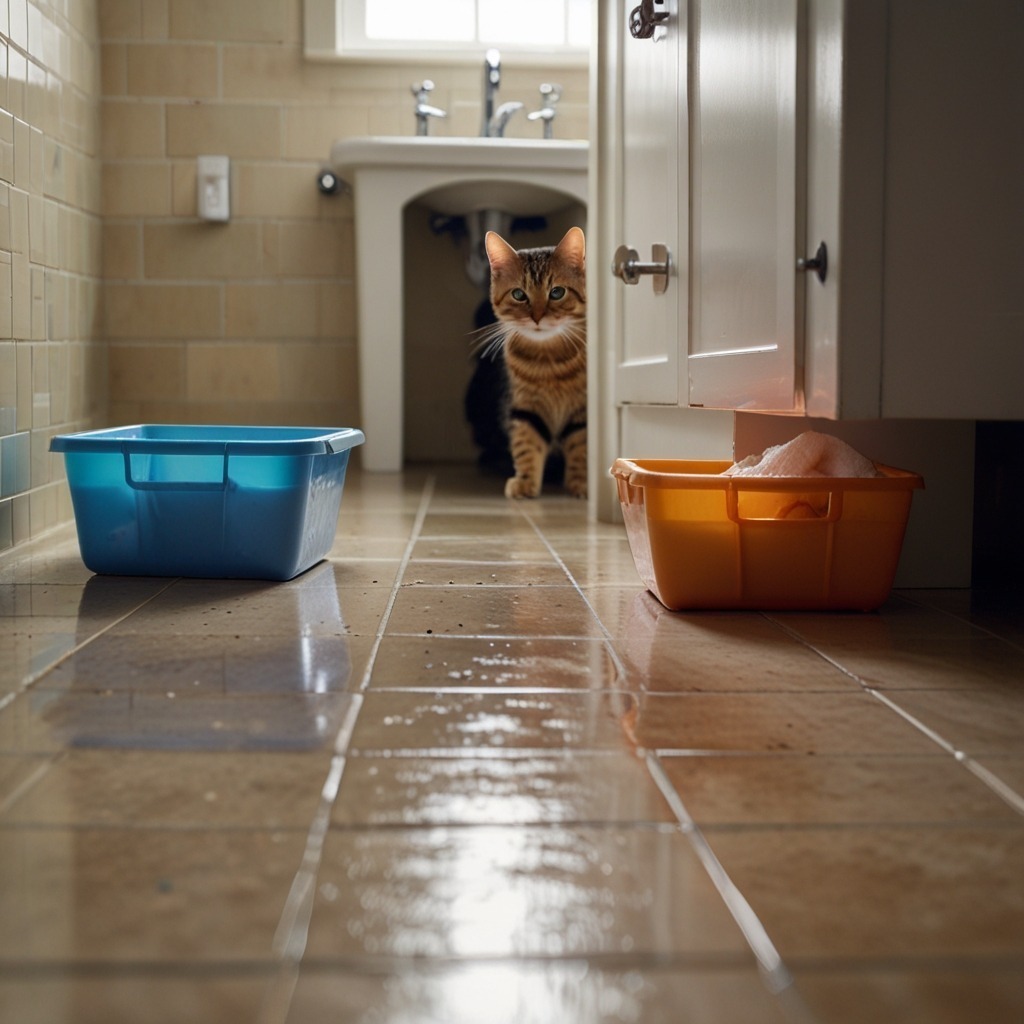
The vet visit noody wants to make (and the $340 lesson I'll never forget)
Here's the thing that nobody tells you when you're standing in a puddle of cat pee at 6am: the first thing you do isn't change the litter. It's not buy a new box. It's not spray vinegar everywhere. It's go to the vet. Even if you're broke. Even if your cat seems fine otherwise. Because cats don't pee on your stuff to be jerks — they do it because something is wrong, and a lot of the time that something is medical.
I learned this the expensive way with a build named Pickle. Pickle was a 12-year-old Siamese mix who'd been surrenddered because his owner went into assisted living. He was quiet, dignified, and peed on every soft surface in my house for a month straight. I assumed stress. New environment, new smells, my dogs. I did all the behavior stuff — more boxes, different litter, Feliway diffusers in every room. Nothing worked. Then one morning I saw him squat in his box, strain, and produce a few drops of pee with blood in it. Rushed him to my vet — Dr. Nguyen, who's put up with my panic calls for 11 years — and $340 later we had a diagnosis: struvite crystals and a raging urinary tract infection.
Pickle had been associating the box with pain. And that's the thing about cats: they're masters of hiding discomfort until it's really freaking obvious. A UTI, bladder stones, kidney disease, diabetes — any of these can make peeing hurt, and your cat might start avoiding the box because they think the box caused the pain. Even after the infection clears, that association can stick for weeks or months. So if your cat is suddenly peenig outside the box, stop reading this for a second, call your vet, and get a urinalysis. I'm not a vet, I'm just some person with a laptop and a lot of ruined pillows, but I've seen it too many times. The medical stuff has to come first.
And here's a tangent — I'm going to complain for a second about cat food, because it's related. I fed Pickle a cheap dry food for the first week I had him. Like, bottom-shelf grocery store kibble. I didn't know any better; I was trying to stretch the rescue's budget. Then I learned that low-quality dry food can contribute to crystal formation because it doesn't provide enough moisture and the mineral balance is crap. Cats are desert animals — they're designed to get most of their water from their food. Dry kibble is about 10% moisture. A mouse is about 70%. Your cat's kidneys are working overtime on a dry-only diet, and concentrated urine is a breeding ground for crystals. I'm not saying you've to feed raw or exclusively wet — I've made plenty of food mistakes myself — but adding even one can of wet food a day can make a difference. Anyway, Pickle got switched to a prescription urinary diet after that vet visit and I added a water fountain because he was a weirdo who'd only drink from running water. That's a whole other story.
The litter box setup you think is fine but absolutely isn't
Okay, let's assume you've ruled out medical issues. Your cat's pee is clean, no crystals, no infection. Now you get to play the fun game of "what does my cat hate about their bathroom?" And cats are picky. Like, incredibly, absurdly picky. I once moved a litter box three feet to the left and my build cat Margo — a fluffy calico who I'm pretty sure held a grudge against me until the day she got adopted — started peeing exclusively in my laundry hamper. Three feet. That's all it took.
The "rules" of litter boces that I've learned the hard way:
One box per cat plus one extra isn't a suggestion
This is the hill I'll die on. If you've one cat, you need two boxes. If you've two cats, you need three boxes. Minimum. And they can't be right next to each other in the same room — that counts as one giant box to a cat's brain. I had a build fail named Beans who would guard the hallway where both boxes were and ambush my resident cat every time she tried to pee. The solution wasn't more Feliway — it was putting a box in the bedroom and one in the kitchen, completely out of sight of each other. Territory stuff runs deep, and litter boxes are a major resource.
I see people with three cats and one box all the time and I want to scream. Imagine if you lived in a house with two other people and there was only one toilet, and it was in a dark corner of the basement, and someone kept forgetting to flush. You'd pee in the sink too. That's basically what your cat is doing when they go on your bath mat.

Hooded boxes are the devil (for most cats)
I know, I know — they hide the litter, they contain the smell, they look nicer. But a hooded box traps ammonia odors inside, and your cat's sense of smell is about 14 times better than yours. It's like a port-a-potty at a music festival in August. Some cats don't care, but a lot of cats — especially older ones or anxious ones — feel trapped and vulnerable. One of my build cats, a massive orange tom named Gus, refused to use a covered box at all. He'd paw at the flap, shove his head in, and then back out and pee on the floor right next to it. I took the hood off and he used the box immediately. Lesson learned.
That scented litter you bought? Your cat hates it.
Lavender-scented clumping litter. Fresh cotton scent. "Odor neutralizing" crystals that smell like a laundromat. Cats don't want their bathroom to smell like a meadow. They want it to smell like nothing, or like their own scent, which tells them this is a safe, familiar sppt. I once bought a lavender litter because it was on sale and my build cat — a tiny gray kitten named Mochi — looked at me like I'd committed a war crime and then peed in my shoe. I'm not making that up. If you wouldn't want to stick your head in a box that smells like a chemical flower factory, your cat probably doesn't either.
Location, location, location
Don't put the box next to a washing machine that suddenly kicks into spin cycle while the cat is mid-squat. Don't put it in a high-traffic hallway where dogs and toddlers and vacuum cleaners roam. Don't put it in a cold basement with a scary furnace that rumbles. Cats want quiet, private, and accessible. And if you've multiple floors, you need at least one box on each floor — especially if your cat is older and has arthritis. I had a 17-year-old cat once who stopped using the box because he couldn't climb the stairs to get to it. I put a lwo-sided box on the main floor and the problem disappeared.
I know that's a lot of rules. And you're probably thinking, "Sarah, my house is tiny, I caan't have three boxes in different rooms, I don't have the space." I get it. I live in a 900-square-foot house with three dogs and a rotating cast of build cats. My bathroom is basically a litter box annex. But here's the thing: you find the space, or you find pee on your couch. Those are the options. I've accepted that my guest bathroom is now the cat bathroom and I warn visitors before they come over.
The time I made everything wores by trying to fix it
So back to Toby, the pillow-peer. After the vet cleared him (no crystals, no UTI, perfectly healthy), I went into overdrive. I bought a third litter box. Then a fourth. I tried three different types of litter — clay clumping, crystal, newspaper pellets. I bought Feliway diffusers and plugged them into every outlet. I cleaned the boxes twice a day. I put plastic sheeting on my bed during the day. And Toby just… kept peeing on soft things. The couch. The dog bed. A pile of towels. I was losing my mind.
What I didn't rralize was that all my frantic changes were stressing him out even more. Cats hate disruption. Every time I introduced a new box or a new litter, I was basically telling him, "Your bathroom isn't safe, here's another confusing thing." I was cleaning with bleach (which smells like ammonia to a cat and actually attracts them to pee on that spot) instead of an enzymatic cleaner that actually breaks down the proteins in urine. I was making every classic mistake.
The cleaner is worth a whole tangent, so here goes: if you use anything with ammonia (even Windex) on a pee spot, you're inviting your cat to pee there again. Vniegar works okay as a deterrent, but it doesn't break down the uric acid crystals that keep the smell locked in. You need an enzymatic cleaner specifically designed for pet urine — Nature's Miracle, Anti-Icky-Poo, whatever your pet store has. Soak the spot. Let it sit. Don't just spray and wipe. And if the pee has soaked into carpet padding or a mattress, you might need to replace it. I've thrown out area rugs because the smell was in the pad underneath and no amount of enzyme cleaner could reach it. It's expensive and it sucks, but living in a house that smells like cat pee is worse.
What nobody tells you about multi-cat households
My house is rarely a single-cat household. Between my resident cats and fosters, there are usually two or tree felines competing for resources. And litter box issues in multi-cat homes are a whole different beast. A cat who's peeing outside the box might not be protesting the box itself — they might be telling you they don't feel safe using it because of another cat.
I had a situation with two build sisters, Clementine and Juno. Clementine was the dominant one — she'd stalk Juno to the litter box and swat at her when she tried to come out. Juno started peeing under the dining room table. Clementine never peed outside the box, so it looked like Juno was the problem. But the problem was actually bulling. Adding more boxes in different rooms helped — Juno could sneak to one without Clementine noticing — but what really changed things was giving them separate "territory zonees" in the house with baby gates and staggered feeding times. Resource guarding isn't just about food; litter boxes, perches, even a specific sunny spot on the rug can become flashpoints.
If you've got multiple cats and one of them is peeing outside the box, watch the dynamics. Does one cat block the hallway? Does another cat ambush the first one when she's done eating? Are there hissing matches near the litter area? You might need to do a reintroduction, or at minimum ensure that every cat has a clear, conflict-free path to a private bathroom. Introductions and territorial peace are a whole thing, and I've messed them up more times than I can count.
Stress peeing: the invisible stuff that makes cats lose their minds
We think of stress as big, obvious things: moving to a new hoouse, a new pet, a new baby. But cats are sensitive to changes we barely notice. You rearranged the living room furniture? Stress. You switched from working at home to going into the office? Stress. you've construction happening two blocks away and there's a low vibration that freaks them out? Stress. A stray cat is sitting on your porch at 3am and staring through the window? Oh, that's a massive stress trigger that you might not even see unless you've a motion-activated camera.
I had a cat named Henri who started peeing on the front door mat. The box was clean, the vet said he was fine, and I couldn't figure it out. Then one night I got up to get water and saw a big orange tomcat sitting on my front step, just… staring in. Henri was marking the door because he felt threatened by an intruder. I put up a motion-activated sprinkler (the kind meant for deer) and the stray stopped coming around. Henri stopped peeing on the mat within a week.
That's the kind of detective work this requires. you've to think like a cat, which means thinking about territory, scent, and safety in ways that feel ridiculous to a human brain. It's not always about the litter box. Sometimes it's about the neighbor's cat, or the new scent of a visitor's dog on your jeans, or the fact that you changed your laundry detergent and now their favorite blanket smells wrong. I know people who've solved litter box problems by simply closing the blinds so the cat couldn't see outdoor cats, or by playing classical music during the day (I'm not kidding — one adopter swears that leaving NPR on reduced her cat's anxiety pee).
The art of re-trainign a cat to use the box (after they've decided it's the enemy)
Once a cat has developed a negative association with the litter box — whether from pain, a scary noise, or a bad experience with another cat — you can't just plop them back in and hope they remember. you've to actively re-train them. This is especially true for cats who've been peeing on soft surfaces for a while. The carpet, the bed, the laundry — those have become their preferred substrate because they're soft and absorbent and don't hurt their paws.
I had to re-train Toby, the pillow-peer, and it took about three weeks. Here's what I did: I confined him to a single room (my office) with two litter boxes, his food, his water, and a cat tree. No soft surfaces he could pee on except a cat bed, which I removed after the first day when he peed on it anyway. Hard floor, no rugs. The two boxes had different litters — one was a fine, unscented clumping clay, the other was Cat Attract (a litter with an herbal additive that's supposedly irresistible to cats). I scooped both boxes twice a day and kept everything else in the room clean and boring. He had nowhere else to go.
After a week of him using the box consistently, I expanded his space to include the hallway, but still no soft furniture. I put a litter box in the hallway so he always had one nearby. After another week, I let him into the living room while supervised, and I'd put him in his box every few hours like a puppy. Yes, you can train a cat like a dog; a lot of people think cats can't be trained, but they absolutely can — it's just that their motivation is different. If the box is the most attractive, comfortable, safe-feeling spot to pee, they'll choose it.
During this whole process, I also made his box experience extra pleasant. I'd give him a treat after he used the box (if I caught him). I put a Feliway diffuser near the box. I made sure the box was in a quiet corner where the dogs couldn't bother him. And after the three weels, I slowly reintroduced soft surfaces — first a cat bed, then a throw blanket, always under supervision — and he didn't pee on any of them. He'd re-learned that the box was the place to go.
Now, confinement feels mean. I get it. Nobody wants to lock their cat in a room. But a small, controlled, boring space with everything the cat needs is often the reset button they need. It's not punishment — it's creating a safe bubble where they can't fail. And failing (peeing on your bed again) reinforces the bad habit. So you prevent them from rehearsing the unwanted behavior while you stack the deck in favor of the wanted behavior. That's the core of all animal training, really. I used a similar approach for nighttime yowling, and it worked there too.
The weird things that actually worekd (and the expensive crap that didn't)
Let me save you some money. Here's a quick list of things I've tried that were completely useless for litter box problems:
- Those pheromone collars. Maybe they work for some cats, but my fosters generally acted like I'd put a venomous snake around their neck and spent three days trying to remove it.
- Litter box liners. Some cats hate the crinkle or get their claws caught. I had one cat who would shred the liner and then pee on the plastic underneath, whcih defeated the whole purpose.
- Self-cleaning boxes. These are fantastic for humans but can terrify cats who are already anxious. A motorized rake that starts moving while they're nearby? That's a recipe for pee on your rug.
- Punishment. Yelling, rubbing their nose in it, spraying with water — none of that worsk and it'll make your cat afraid of you, not the behavior. They don't connect the punishment to the peeing; they connect it to you being unpredictable and scary.
- Those "calming" treats from the pet store. Most have minimal efficacy and no regulation. If your cat has true anxiety, you need a vet-prescribed medication or a behaviorist, not a chamomile chew that costs $20 a bag.
Now, the things that did work (for specific cats, in specific situations, and I'm not promising miracles):
- Dr. Elsey's Cat Attract litter. This stuff honestly smells like a garden center threw up, but it got multiple hesitant cats using the box when nothing else did. I don't use it permanently — just for the training period — because it's expensive and stinky.
- Plain, unscented, non-clumping clay litter for cats with paw sensitivity or declawed cats (don't get me started on declawing). Some cats, especially older ones, find cluumping litter painful on their paw pads or they don't like the texture. The cheap, old-school clay litter that your grandma used? That's sometimes the answer.
- A low-entry box for arthritic cats. You can buy ones with a cut-down side or just use a large, shallow stroage bin. I've used the lid of a Rubbermaid tote as an emergency litter box for a senior cat who couldn't step over a 4-inch lip.
- Temporary anti-anxiety medication. For a cat who was truly panicked about something (like a move), a short course of gabapentin or fluoxetine from the vet can be a lifesaver while you work on the environmental stuff. Medication isn't a cop-out; it's a tool.
- Putting a litter box exactly where the cat is peeing. If your cat has chosen a specific corner of the living room, put a box there. I know, it looks ugly. But you can slowly move it inch by inch to a better spot over the course of weeks. Cats don't understand why you can't just put the toilet in the middle of the rug.
Why I stopped wrrying about the carpet and started listening to my cat
There's a deeper thing I had to learn, and it only happened after probably the sixth build cat who used my house as a toilet. I was so focused on fixing the behavior — stopping the pee, protecting my stuff — that I wasn't respecting what the cat was trying to tell me. A cat peeing outside the box isn't being bad. They're communicating. Something is wrong — in their body, in their environment, in their social world — and they don't have words. All they've is pee.
Toby wasn't trying to ruin my pillows. He was a cat who'd been abandoned, put in a loud shelter, then brought into a house with barking dogs and strange smells. His whole world had collapsed, and the one thing he still had some control over was where he put his scent. That pee on my pillow was him saying, "I don't feel safe here, but I'm trying to make it smell familiar." It took me months to understand that, and by then I'd already spent hundreds of dollars on cleaners and diffusers and vet visits that didn't actually address the root of his fear.
I'm not saying you've to be a cat whisperer or let your house get destroyed. But I'm saying this: when you're standing in a puddle at 2am, try to swap frustration for curiosity. Ask what your cat might be feeling, not what they're doing wrong. Because they're almost never doing it to spite you. Cats don't do spite. They do necessity, they do stress, they do pain. If you can meet them where they're — with a cllean box, a quiet corner, a clean bill of health, and a home that feels safe — most of the time, the peeing stops on its own.
And if it doesn't? If you've been to the vet, you've got five boxes, you've tried every litter on earth, and your cat is still treating your laundry basket like a toilet? Then you might need a veterinary behaviorist — yes, they exist — or a deeper conversation about quality of life. Some cats have severe anxiety disorders, or brain changes from old age, and no amount of environmental tweaking will fully resolve it. That's not your fault. It's not the cat's fault. It just is. I've had to make peace with pee pads under a senior cat's favorite napping spot, and I've had to let a few build cats go to adopters who were warned upfront about their bathroom habits. It's not a failure; it's just living with animals who have their own complex inner lives.
That time Toby finally climbed into my lap and purred
Three weeks into Toby's confinement and retraining, I was sitting on the floor of my office, scrolling on my phone, and he walked out of his litter box, shook a paw, and then climbed right into my lap. He'd never done that before. He'd always been skittish, darting under the desk whenever I moved too fast. That afternoon he kneaded my thigh, turned around three times, and fell asleep. He didn't pee on me. He didn't pee on anything else that day. Or the next day. Or ever again, actually — he was adopted about two months later by a woman who lived in a quiet apartment with no other animals, and I still get Christmas card photos of him sleeping on her bed with no pee in sight.
I'm not going to end this with a neat little summary or a "key takeaway" because that's not how this works. Cat pee is messy and unpredictable and sometimes it takes years and sometimes it's a simple fix like moving the box away from the furnace. All I know is that after 40 cats and a lot of ruined linens, I've stopped being angry and started being curious. And that shift — from "why are you doing this TO me" to "what are you trying to tell me" — has made all the difference.