My Dog Tried to Chase Every Toyota That Passed. Here's What Actually Stopped Him.
I nearly watched my dog get hit by a Honda Civic, and it changed everything. The real, messy guide to stopping car chasing—from someone who's failed more times than she can count.
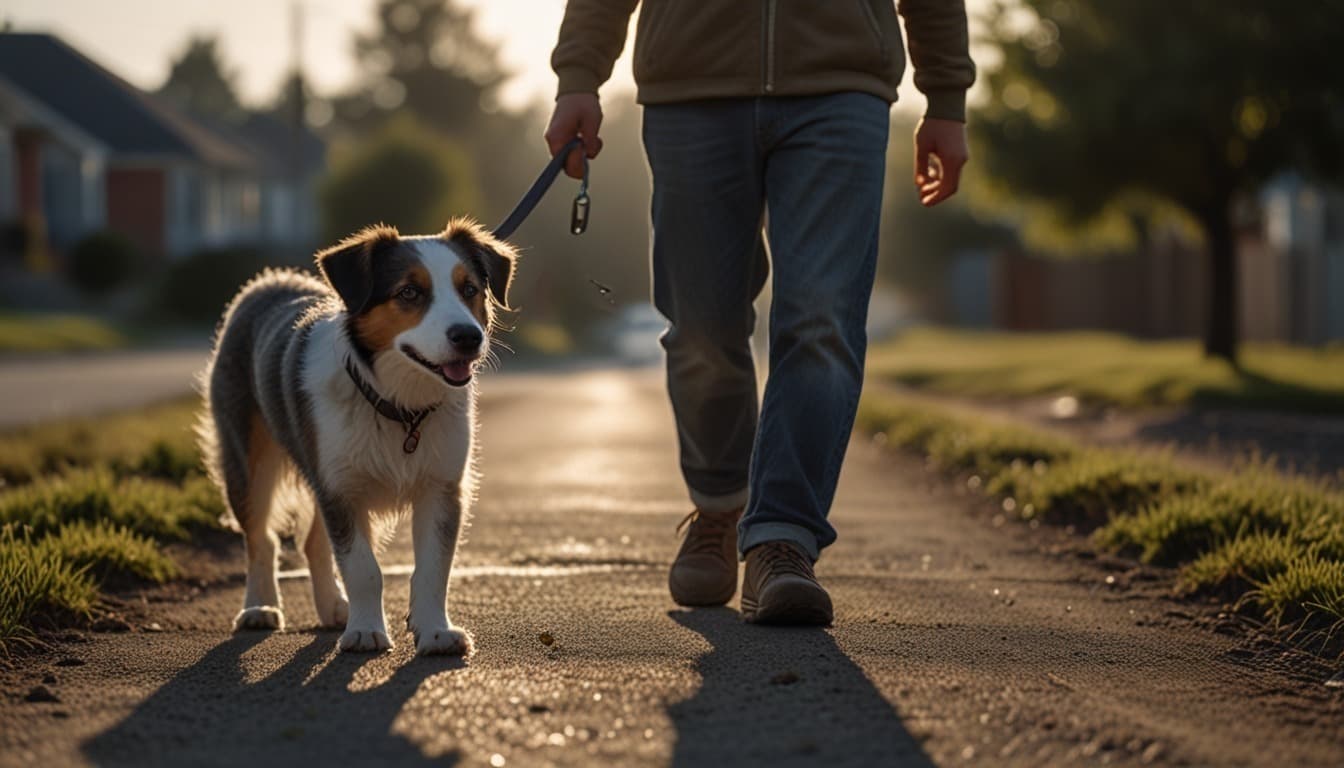
I'll never forget the sound of screeching tires. The Honda Civic had to swerve so hard I saw the driver's coffee fly out the window and splatter across the dashboard. She was fine. The coffee wasn't. And my dog Jasper—an eighty-pound lab-shepherd mutt with the brains of a potato and the prey drive of a velociraptor—stood there on the verge, tail wagging, totally unaware he'd nearly become a hood ornament. He turned and looked at me like, 'You see that? That silver thing moved and I ALMOST GOT IT.' I couldn't breathe for a solid thirty seconds.
That was three years ago. I've fostered forty dogs since then, and about one in five had some version of the car-chasing bug. Some wanted to herd minvians. Some wanted to murder motorcycles. My current build, a little terrier mix named Artie, thinks the UPS truck is a giant squirrel sent from hell to destroy us all. I get it. The impulse is ancient, and when a thirty-five-mile-an-hour hunk of metal goes whooshing by, some dogs short-circuit. They don't know they'll die. They just know the thing moved, and their brain goes LET'S GET IT.
This isn't a gentle how-to guide with numbered steps and a tidy checklist. Screw that. I'm going to tell you what I've learned the hard, ugly, near-cardiac-arrest way. I'm going to tell you what sucked, what didn't, and what finally, after months of sweaty palms and apologetic waves at strangers, made the chasing stop. And I'm going to go off on a couple of tangents because that's what my brain does. So grab a coffee (the kind that stays in the cup, ideally) and let's do this.
The Screeching Tires That Almost Made Me Puke
It was a Tuesday morning. I'd gotten Jasper from the shelter six weeks before. He'd flunked his first adoption trial for 'exuberant leash behavior'—shelter code for 'dragged the adopter into a hedge chasing a squirrel.' I should've known. The morning of the Honda incident, we were walking along a quiet street, no cars for ten minutes, I got complacent. He'd been doing so well with the `look at me` game we'd been practicing in the living room. Then a silver Civic rounded the bend. Jasper's whole body went rigid. I saw the whites of his eyes. And he launched—eighty pouunds of muscle and idiot joy—and my shoulder damn near dislocated before the leash snapped right out of my hand.
The driver was a twenty-something woman with a ponytail and a ceramic travel mug. I'll never forget her face through the windshield: mouth wide open, coffee arcing across the passenger seat. The car swerved, tires screaming, and she ened up half on the opposite curb. Jasper stood there, two feet from the bumper, barking his fool head off. Like he'd won. Like the car was a rival wolf he'd chased off the property. I wanted to curl up and die.
That night, I sat on my kitchen floor with a bag of frozen peas on my shoulder and cried. Not because of the paain. Because I realized if that had been a bus, or a faster car, or a driver not paying attention, Jasper would be dead. And it would have been my fault. I'd had him six weeks and I'd let my guard down for six seconds. That's all it takes.
So I went into research mode. I called my vet. I called a behaviorist I trust. I called a trainer who specializes in high-drive working dogs and basically begged her to take my money. And I'm going to tell you everything they told me, plus everything I screwed up along the way, because the internet is full of tidy little lists that make this sound easy and it's not. It's terrifying. But it's fixable. Most of the time.
So Why the Hell Do Dogs Chase Cars Anyway?
You can't solve a problem if you don't understand what's driving it. And I don't mean that as some cheesy proverb. I mean literally—what's happening in that doggy brain when a four-thousand-pound metal box rumbles past? I used to think it was just stupidity. My neighbor, a guy with a perpetually muddy golden retriever named Fenton, said, 'They just like the wind or something.' (Fenton, by the way, once tried to chase a riing lawnmower. So maybe there's a theme.) But no, it's way more layered than that.
It's Not Just Prey Drive — It's a Cocktail of Instincts
Prey drive is the big one, sure. Movement triggers it. Cars move fast, and to a dog's ancient wiring, fast-moving thing = prey. But there's also herding instinct: breeds like border collies, Australian shepherds, corgis, even GSDs were literally bred for centuries to chase and control movement. A car is a big, rogue sheep to them. Then there's territoriality. Some dogs only chase cars that pass near their property line—they see the vehicle as an intruder. Jasper, my lab-shepherd, had all three in some mix. He wanted to catch the car, herd it, and tell it to get off his sidewalk.
And here's a fun layer of weird I didn't expect: some dogs chase out of fear. A noise-sensitive dog might lunge at a loud truck because they're trying to make it go away. It's fight-or-flight and they pick fight. My dog Lola, a traumatized husky mix I fostered, never chased cars on wslks but would absolutely lose her mind if a garbage truck stopped near our house—lunging, barking, hackles up. She was terrified. The chasing was a panic response, not play. I had to learn that the hard way, because the same technique that works for a prey-driven dog can totally backfire with a fearful one. (More on that in a bit.)
One behaviorist I workeed with pointed me toward a 2018 study in Applied Animal Behaviour Science that found dogs who chase cars often have higher baseline impulsivity scores—meaning they act first, think never. She said it's like having a dog with a permanent 'hold my beer' button. And training has to target that impulsivity, not just the chasing.
Some Breeds Are Hardwired for This Crap
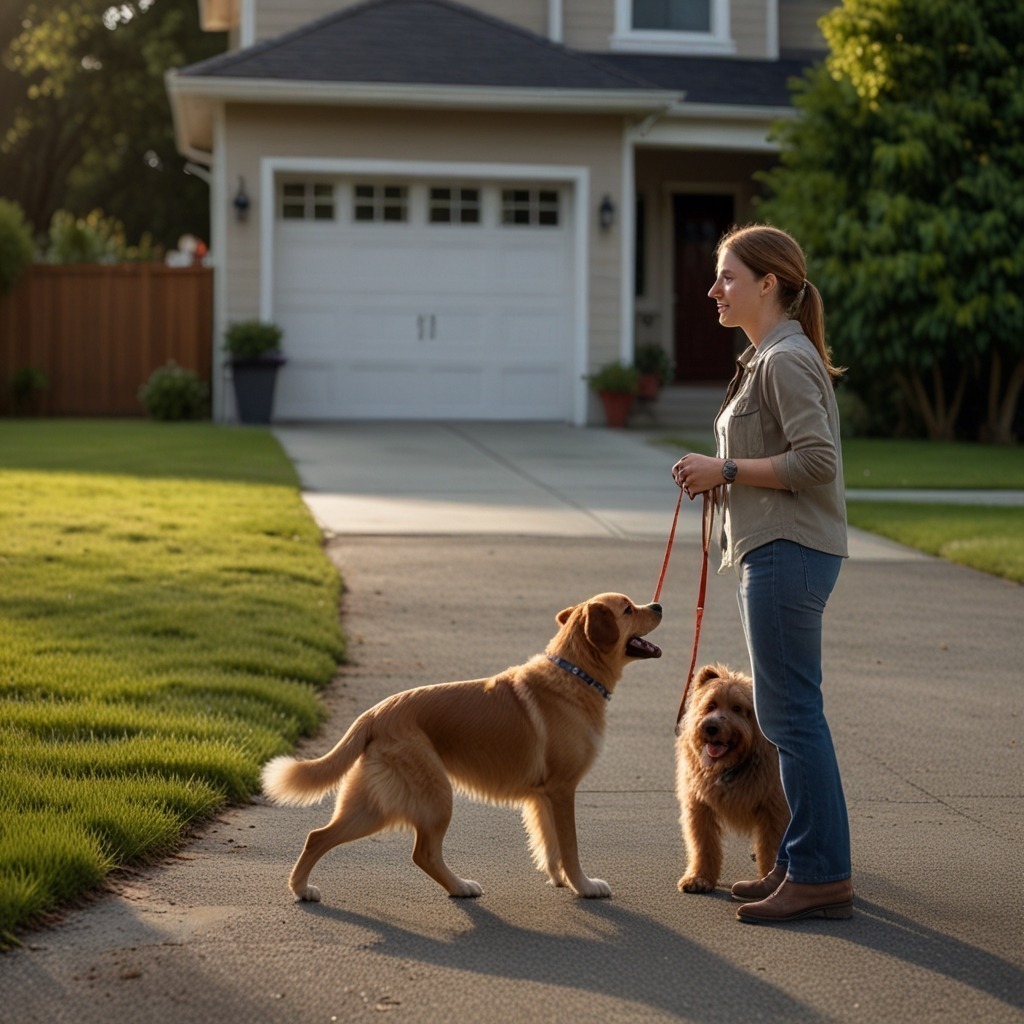
I'm not a breed determinist—I've met lazy huskies and cat-friendly greyhounds—but if you've got a herding breed or a sighthound, the deck is stacked. Border collies were designed to chase movement all day without stopping. Greyhounds can hit 45 mph and their brains literally get a dopamine hit from spotting a moving target. And terriers? Terriers were bred to chase and kill smlal fast things. Cars are just big fast things. My build Artie the terrier mix reacts to a passing sedan like it's a giant rat and he's a furry little gladiator. It's not his fault. But it's still my responsibility to manage.
One thing I wish someone had told me earlier: breed matters less than individual dog. Jasper was a mutt from a shelter with no known pedigree. His chasing wasn't from centuries of selective breeding; it was because he had the impulse control of a toddler and the physical power of a bodybuilder. Some dogs, regardless of breed, just have higher chase drive. The trick is figuring out which levers to pull, and that depends on whether it's play, predation, herding, fear, or all of the above.
The Thing Most People Do That Makes Everything Worse
They yell. They yank the leash. They run after the dog screaming 'NO! BAD DOG!'—which, guess what, sounds to the dog like you're joining the chase. Congratulations, now it's a pack activity and you're the hype man. I did this. Exactly once. On the morning of the Civic, I shrieked 'JASPER STOP!' and sprinted toward him. He didn't stop. He thought I was coming to help. The whole scene went from terrifying to a terrifying game of canine chicken.
The worst thing you can do is turn it into an exciting event. Because whatever energy you bring—anger, panic, frustration—the dog's brain reads it as arousal, and arousal fuels the chase. You might think you're punishing, but you're just addinng more noise and motion to the drama. So stop doing that. (I say that with love.)
What I Tried Fiirst (and Why It Was a Disaster)
After the Civic incident, I went into panic-fix mode. I read every blog post I could find—most of them garbage—and tried a bunch of things that either didn't work or made Jasper worse. I think telling you about these is important because it'll save you the money, the guilt, and the time I wasted. And I wasted a lot of time.
First, I tried the 'exposure therapy' thing. I took Jasper to a park bench near a busy road and made him sit while cars went by. My lgoic was: if he sees a hundred cars, he'll get bored. What actually happened: he got more worked up. By car forty-three, he was drooling, trembling, and lunging harder than ever. I was basically doing the dog equivalent of flooding, and it was making his anxiety spike. I didn't realize at the time that his chasing was prtly fear-based—those loud engines scared him, and forcing him to sit there was like forcing me to sit in a room full of spiders. Not helpful.
Then I bought a prong collar. The pet store employee said it would 'correct' him. I put it on, walked near a car, he lunged, the prongs pinched his neck, he yelped and spun around and bit at the air near my hand. Not aggression—just confusion and pain. I felt like the biggest asshole on the planet. I took the collar off in the middle of the street, tears streeaming, and threw it in a trash can. Literally. In a public trash can. Some people swear by balanced training; I'm not going to debate that. But for Jasper, pain made everything worse. His trust in me dropped for weeks. I had to rebuild it with peanut butter and patience.
I also tried a citronella spray collar—like, a puff of gross-smelling mist when he barked. He just sneezed and kept lugning. Then he started associating sneezing with cars, which meant I had a dog who sneezed at traffic. Super useful.
What I learned: if your plan relies on scaring or hurting the dog, you're probably going to create a more anxious, less predictable chaser. The goal isn't to suppress the behavior. The goal is to change the dog's emotional response to the trigger, and to teach a better behavior that's more reewarding than the chase. That's a completely different mindset.
Okay, So What Actually Works? The Messy, Multi-Month Plan
I'm going to walk you through what finally worked for Jasper, and what's worked for a half-dozen build dogs since then. It's not a magic protocol. It's a combination of management, impulse control games, counter-conditioning, and a ton of patience. You need to be at least as stubborn as your dog. If you can't be, you're gonna struggle. I'm not gonna sugarcoat that.
Step 1: Management (Because Willpower Isn't a Thing)
The absolute first thing I did was make it physically impossible for Jasper to ever be near a road off-leash or on a flimsy leash again. I bought a tough, six-foot leather leash with a locking carabiner (the kind rock climbers use, not some decorative crap) and a properly fitted front-clip use. I also ordered a fifty-foot long line—not for walks, but for practice sessions in open fields later. For the first month, walks happened only in enclosed spaces: a friend's fenced acre, a Sniffspot rental, the dog park at 5:30 AM when nobody was there. No streets. No cars. None. Was it annoying? Oh hell yes. But I had to stop reinforcing the chasing pattern. Every time he chased and didn't catch the car, his brain learned, 'Well, that was fun, let's try again.' I had to starve that loop.
Management also meant changing my schedule. I walked him when traffic was lightest. I parked way down the block so we didn't have to cross busy streets to get to the car. I mapped routes based on hedges and fences. Did I feel ridiculous scouting my own neighborhood like some kind of dog-walk spy? Absolutely. But it worked. The chasing stopped for a bit because there was nothing to chase, and his coritsol levels started to drop. He could finally relax outside.
Step 2: The Redirection That Changed Everything
Here's where I cue the trainer who saved my ass. She introduced me to the 'Look at That' game, adapted from Leslie McDevitt's Control Unleashed program. The idea is: you teach the dog that looking at the trigger calmly is a behavoor that earns a treat. You're not avoiding the car. You're not staring at it. You're teaching 'see car, look at me, get cheese.' It rewires the car from 'explosive trigger' to 'cue to check in with my human.'
We started ludicrously easy. I sat with Jasper on a bench at the far end of a park, so distant that the cars on the road looked like Matchbox toys. When he noticed a car (ears went forward), I clicked and shoved a piece of hot dog in his face. Notice car, get hot dog. That's it. No lunging possible because we were a football field away. After twenty reps, he started looking at me after he spotted the car, before I even cliced. That's the magic. The dog starts offering the behavior. 'Oh, a car. Where's my hot dog?' That's the first glimmer of hope.
We did this for two weeks at that distance, then moved closer, inch by inch, over weeks and weeks. I used a long line to keep him safe on the days we moved to a parallel sidewalk. Some days we went backward because he hadn't slept well or I was stressed and my tension traveled down the leash. That's normal. Progress isn't a straight line.
One thing I absolutely screwed up early: I rewarded the lunging. I'd see him start to tense, and I'd shove chicken in his mouth to distract him. What I actually taught was 'tense up and get chicken.' you've to reward the calm noticing, BEFORE the lunge chain starts. Catch that splot second—ears forward, but body still soft. Click then. If the dog has already launched, you're too late. No treat. Just walk away and reset. That was a bitter lesson.
Step 3: Building a 'Check-in' Habit So Strong It Became Automatic
I had this idea that if I could teach Jasper to automatically look at me whenever he saw a car, I'd never have to cue it. So I started peppering 'check-ins' into everything—not just cars. I taught a default eye contact behavior using a game I call 'ping pong look.' I'd toss a treat to my left, then when he turned back toward me, I'd mark 'yes' and toss another to my right. Back and forth. He learned that turning toward me was the most profitable choice in any environment. Over time, that generalized. On walks, when a squirrel appeared, he'd whip his head around to me like, 'Pay up.' That's the holy grail.
This is where the recall work I'd done came in handy. Dogs who have a solid 'come when called' and automatic orientation to the owner are far less likely to fixate and chase. If your dog already ignores you outside, you need to fix that base relationship first. I describe the whole painful proces in that post I just linked—it's a whole saga. But the gist is: if you're not more interesting than a car, you'll lose every time.
I also layered in impulse control games at home, like 'wait at the door,' 'leave it' with moving toys, and a flirt pole with strict rules. Flirt pole was a big deal: it let Jasper chase a toy in a controlled way, satisfying his drive, but only when I said go. I'd drag the toy on the grpund, he'd quiver, I'd say 'get it,' he'd chase, catch, and then I'd trade for a treat and ask for a sit. We did this until he could wait while the toy flew past his nose. That self-control muscle got stronger. And stronger.
Step 4: Proofing Arround Real Cars Without Losing Your Mind
Proofing is fancy trainer-speak for 'making it work in the real world, not just your living room.' This part was terrifying. I recruited a friend with a car and a lot of patience. We drove to a dead-end road in an industrial park on a Sunday—no traffic. I had Jasper on a long line, about thirty feet of it, so he felt a little freedom but I could still catch him. My friend drove back and forth at five miles per hour. Five. Not thirty. We built it up. Every pass, mark and treat for calm behaviors. At first, he'd freeze. Then he'd do a play bow. Then he'd watch and turn to me. Then, after a dozen sessions over two months, he'd see the car, glance at it, and keep sniffing the grass. That felt like winning the lottery.
One day, a real car went by on a nearby road while we were practicing, and he didn't even look up. I cried a little. Not ashamed.
Now, I've to mention something here: for some dogs, especially those with deep fear, you may never fully eliminate the lunge. You might get it down to a momentary head-check and a whine. That's okay. That's a win. Perfect is the enemy of safe. I've had fosters who improved 80% and I'm happy. Jssper got to about 95%. Once in a blue moon, a particularly loud motorcycle would still make him flinch and startle-bark. That's fine. I can live with that. He's a dog, not a robot.
What If Your Dog Is Already Off-Leash and Bolts?
Short section, because there's no magic trick. If your dog is actively chasing a car, don't chase them. don't scream their name. Instead, run in the opposite direction while calling in a high, playful voice. Most dogs will turn and chase you instead—because a human running away is a fantastic game. I've had to do this twice with fosters. It works about 70% of the time. The other 30%, you pray and wait and then sob when they come back. It's awful. There's no sugarcoating.
Better plan: invest in a recall that's so heavily reinforced it becomes a reflex. You train it with a whistle, with steak, at home, in fields, with distractions. You never, ever punish your dog for coming to you, even if they've just chased a car and you're furious. Fake happy. Because if they associate the recall with anger, they wom't come next time. That post I mentioned on recall—the one where my dog blew me off for forty minutes—covers all of that gnarly stuff.
A Completely Unhelpful Rant About Off-Leash Dogs Near Roads
Okay, I need to say this. If you let your dog off-leash near a road—even a quiet suburban street—and you don't have a bombproof recall, you're gambling with their life. I don't care how well-trained you think they're. Cars are faster than you think. A squirrel can pop out, a kid can drop a hot dog, and your dog can be in the street in half a second. I've seen the aftermath. I volunteer at a shelter that's received dogs hit by cars—broken pelvis, ruptured bladder, death. It's not a philosophical debate. It's physics.
I get it. The fantasy of off-leash bliss is real. I've done it, too. I've a big open field where I let my dogs run, and I've had close calls with bikes, joggers, a rogue drone. But near a road? Never. Not for anything. Even now, after all the training, I don't trust Jasper off-leash anywhere within sight of a moving vehicle. Some people say, 'But my dog has never chased a car.' Neither had mine—until he did. there's always a first time. Please, for the love of all that's furry and good, use a leash. Or a long line. I'll climb off my soapbox now.
Six Months After the Cement Truck Incident
About five months into training, we had a moment that made all the frustration worth it. We were walking on a sidewalk paralleling a somewhat busy road—the same road I'd avoided for a year. A huge cement truck rumbled by, engine groaning, dust flying. Jasper paused. His ear flicked. He looked at the truck, then looked up at me. I said 'Yes!' and gave him a piece of dried liver. He took it gently, tail giving a slow, lazy wag. The truck passed. We kept walking. And I realized my hands weren't sweating. My heart wasn't racing. I hadn't braced for impact.
That's the goal. Not perfection. Just the ability to walk past a car without your soul leaving your boody. And it took months. Worth it? Every damn second.
A weird thing happened a few months later. I was fostering a little beagle mix named Poppy who was obsessed with cars. I found myself automatically using the Look at That game with her, without even thinking. She made progress so much faster than Jasper had. I realized I'd become a better trainer because of the disaster dog. Jasper taught me how to read tiny signs of arousal, how to set up the environment, how to breathe so I didn't transmit my panic down the leash. He's still an idiot about many things—he once treid to eat a sponge—but he's not a traffic statistic. And that's enough.
Training a car-chasing dog is like defusing a bomb with treats and patience. Some days you'll feel like you're getting nowhere. Some days you'll want to give up and just walk at 3 AM for the rest of your life. But if you stick with it, if you learn to see the world through your dog's impulsive, prey-addled eyes, you'll find a way. And maybe, on a random Tuesday, you'll watch your dog calmly ignore a cement truck while you cry happy tears into your coffee. It's possible. I promise.
If you're fighting the same battle, check out the impulse control tips I wrote about for jumping—a lot of that overlaps with chasing stuff. And if your dog's chasing is fear-based, the thunder phobia post might give you insight into that anxious brain. You got this.