I Threw a $40 Bottle of 'Allergy Relief' Chews in the Trash After Day Three. Here's the Medicine That Actually Stopped My Dog Licking His Paws Raw
I threw a $40 bottle of allergy chews in the trash after day three. Here's the combination of medicine, shampoo, and one vet visit that actually stopped my border collie mix from licking his paws raw.
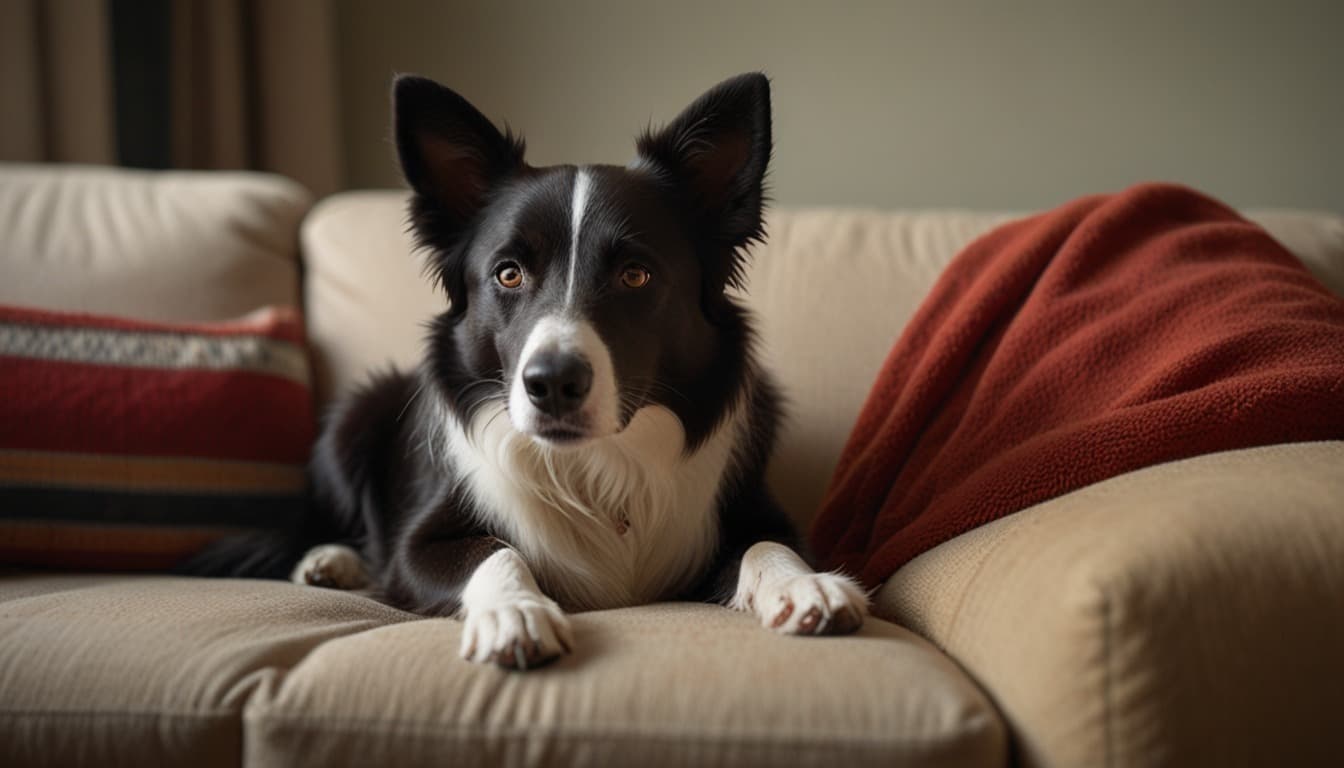
The first time I heard that wet, rhythmic schlop-schlop-schlop at 2 a.m., I thought a pipe had burst. Nope. Just my border collie mix, Chester, going to town on his front paw like it owed him money. By morning, the fur between his pads was stained pink and he'd licked a bald spot the size of a quarter. That was five years ago. I'm older now. Tired. And I've spent roughly the equivalent of a used Honda Civic on allergy treatments.
Here's the thing nobody tells you when you get a dog: some of them are just allergiic to the world. Grass. Dust mites. The chicken in that fancy $90 kibble. Your wool rug. Maybe your laundry detergent. Figuring out what's causing the itch is like playing veterinary sudoku with a blindfold on. But you're here because your dog is miserable right now, in this very moment, and you want something that'll stop the scratching before you both lose your minds. I get it.
I'm not a vet. Let's get that out of the way. If your dog's face is swelling or they're vomiting or covered in hives the size of dinner plates, drive to the emergency clinic and stop reading blogs. But if what you're dealing with is the slow, grinding, sanity-destroying kind of itch — the one that's been going on for weeks and makes you dread the sound of a dog collar jingling at 3 a.m. — then strap in. I've made enough mistakes for both of us.
The day Chester licked his leg so hard I found blood on the couch
Before I get into what medicines work, I need to tell you about Chester's worst episode. Because if you're picturing a cute little scratch behind the ear, that's not what we're talking about here. Chronic allergic dermatitis in dogs can turn into a full-body obsession. Chester had a hotspot on his flamk that went from "huh, that's pink" to "oh god, that's oozing" in about six hours. He gnawed through the top layer of skin. The couch cushion looked like a crime scene. I tried to wrap it with vet tape — he ripped it off in under a minute and brought it to me like a slobbery gift.
I called my vet, Dr. Nguyen — she's tolerated my 2 a.m. panicked voicemails for over a decade — and she said something that changed how I think about allergies: "Sarah, the itch isn't just uncomfortable. Chronic inflammation makes the skin barrier weak. Every time he breaks the skin, you're opening the door to staph infections and yeast overgrowth. The medicine isn't just for comfort. It's to stop a cascade."
That's the piece most articles skip. Itchy skin in't a cosmetic issue. It's a health issue. When a dog scratches intensely and repeatedly, they introduce bacteria from their nails and mouth into compromised skin. Then you've got a secondary infection on top of the allergy, and you're treating two things at once with antibiotics and anti-fungals that mess up their gut. The goal of allergy medicine isn't just to make your dog stop scratching so you can sleep — it's to break that whole horrible cycle before it spirals.
Chester's hotspot that day required a cone of shame, a prescription topical spray that smelled like a hospital, and an oral steroid that I'll talk about later. Total cost for that one episode: $340. And that was just treating the flare-up, not the underlying allergy.
What's actually causing the itch in the fitst place? (A quick detour that will save you money)
Okay, quick tangent. I once fostered a three-legged pit mix named Pickles. Sweetest dog on earth. Arrived with half his fur missing and skin that felt like alligator hide. The previous owner said he'd "always been like that" and had tried every shampoo, every spray, every supplement. I looked at his intake paperwork and saw they'd been feeding him the cheapest chicken-and-corn kibble available at the dollar store. I switched him to a liited-ingredient fish-based food — nothing else — and within three weeks the crusty patches started shrinking. By week six, his coat was glossy. No medicine needed. Just a food that didn't contain the one thing his immune system had decided to wage war against.
Why am I telling you this? Because roughly 10% of allergy cases in dogs are food-related, according to the veterinary literature I've read (and confirmed by Dr. Nguyen). Environmental allergies — pollen, mold, dust mites, grass — are much more common. But food allergies are the easiest to fix without medication, and the easiest to rule out. If your dog is itchy year-round, not just seasonally, and especially if they've ear infections or anal gland issues on top of the skin stuff, do an 8-week elimination diet trial with a novel protein they've never eaten. Not a "sensitive skin" kibble with chicken fat buried in the ingredients — an actual hydrolyzed or novel protein diet. Your vet can prescribe the right one.
The mistake I see people make constantly: they grab a "grain-free" bag with exotic meats and assume they've solved the problem. Grain allergies are actually quite rare in dogs. The most common food allergens are chicken, beef, dairy, and wheat. So switching from chicken-and-rice kibble to chicken-and-sweet-potato grain-free kibble changes exactly nothing for a chicken-allergic dog. I ranted about this in my post about grain-free marketing nonsense, and I'm still mad about it.
Anyway, back to the medicine. The point is: don't spend $200 a month on prescription allergy meds if you hven't at least ruled out a food trigger first. Some dogs need both — food trial and meds for environmental allergies — but you'll kick yourself if the remedy was just switching proteins.
The antihistamine gamble: cheap, accessible, and frustratingly hit-or-miss
When Chester's licking first started, the vet suggested we try an over-the-counter antihistamine before jumping to the heavier stuff. Made sense. An antihistamine like diphenhydramine (Benadryl), cetirizine (Zyrtec), or loratadine (Claritin) can block the histamine receptors that trigger itching in some dogs. Keyword: some. The response rate for antihistamines in dogs with atopic dermatitis is, frankly, not great. Studies show maybe 20-30% of dogs get meaningful relief. But when they work, they're cheap, safe, and easy.
Chester took two Benadryl tablets wrapped in a glob of peanut butter twice a day for a week. Zero improvement. Not even a little drowsy — some dogs get sedated, which at least might make them forget they're itchy, but not my dog. He was wide awake, still gnawing at 3 a.m. We tried cetirizine next. Same outcome. Loratadine? Might as well have been feeding him breath mints.
Dr. Nguyen told me this is common. Dogs metabolize these drugs differently than humans, and the effective dose is often much higher per pound than what a person would take — which is why you absolutely need your vet's guidance on dosing. Don't just guess based on the human label. You can give too much and cause vomiting or a racing heart. Some antihistamines are combined with decongestants in human formulations, and those are toxic to dogs. The plain stuff only.
Here's the dose range I've seen vets use (and again, I'm not your vet, don't take this as a prescription): Benadryl at 1 mg per pound of body weight, given 2-3 times daily; Zyrtec at 0.5 mg per pound once or twice dily; Claritin at 0.2 mg per pound once daily. The pills come in sizes meant for humans, so for small dogs you sometimes have to cut them into quarters and your dog ends up spitting out bitter pieces. There are compounded liquid forms, but they're pricey.
I've had exactly one build — a senior chihuahua named Bean — who responded beautifully to Zyrtec. His entire back half was raw from a grass allergy, and within 48 hours on a tiny quarter-pill, he stopped biting his tail. For him, it was magic. For every other dog I've tried it on? Nada. Still, it's often the first step because it's a $10 experiment instead of a $200 one. Just don't let a month go by with no improvement and your dog still suffering while you keep hoping an antihistamine will kick in. I made that mistake with my first build with skin issues and I still feel guilty.
The shampoo you're using might be making it wprse — and a surprisingly good one that helped
This is a short section because the solution here took me one vet visit and a $14 bottle.
I used to think medicated shampoos were for treating the allergy itself. They're not — they're for soothing the damaged skin and washing away the allergens that are sitting on the coat irritating things further. If your dog has environmental allergies, pollen and dust mite particles accumulate on the fur and skin, so frequent bathing can literally rinse the triggers down the drain. The key is using a shampoo that doesn't strip the skin's moisture barrier. Harsh detergents and overpowering fragrances? No thank you.
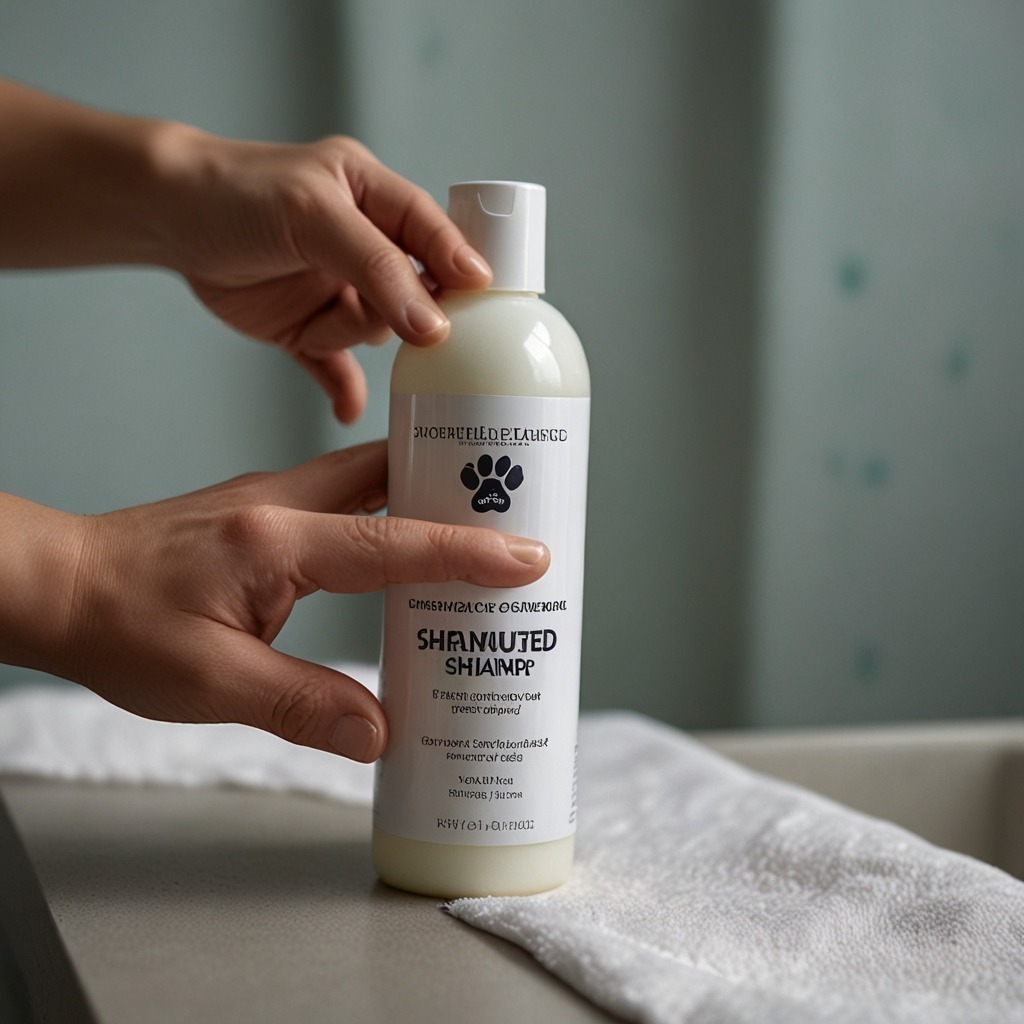
The one that finally worked for my itchy fosters was a 4% chlorhexidine shampoo with ceramides. Chlorhexidine is antimicrobial, so it helps prevent those secondary infections I mentioned, and the ceramides replenish the skin barrier. I bathe Chester once a week in allergy season and it's not a miracle cure, but combined with his other meds, it brings his itch level down from "wanting to gnaw his leg off" to "casual licking that doesn't leave bald spots."

Apoquel changed our lives until I saw the bill
After antihistamines failed, we entered the big leagues: Apoquel (oclacitinib). This is a daily pill that targets the itch signal right at the source — it's a Janus kinase inhibitor, which essentially blocks the cytokine messengers that tell the brain "itch!" It doesn't care what's causing the reaction. Pollen, flea saliva, food protein, whattever — Apoquel intercepts the itch signal downstream. It's not curing the allergy, but it sure as heck stops the sensation.
And it works fast. Like, within 4 hours for some dogs. Chetser's first dose kicked in that afternoon. He went from chewing his paws raw to sleeping peacefully on his back with all four legs in the air, a position he hadn't assumed in weeks. I could have cried.
The catch: it ain't cheap. For a 50-pound dog, you're looking at about $2 to $3 per tablet, and most dogs need it twice daily for the first couple weeks, then once daily for maintenance. That's $60-$90 a month, indefinitely. If you've a giant breed, double that. And Apoquel requires bloodwork monitoring every 6-12 months because it can potentially suppress bone marrow function long-term (there've been occasional reports of lowered white blood cell counts). Most dogs tolerate it beautifully, but you can't just grab it at the pet store and call it a day.
There's also the issue of whether it increases the risk of certain cancers — the label itself warns of this in predisposed dogs. The data isn't crystal clear, and many dermatologists consider the risk low compared to the misery of uncontrolled itching. But it's a conversation you need to have with your vet. I've had Chester on Apoquel seasonally for three years now, and his bloodwork's always been clean. I do check it religiously, though, because I'm paranoid.
One thing nobody mentions: some dogs build a tolerance to Apoquel over time and need a higher dose. Chester's been stable at 16 mg once daily, but a friend's labradoodle started needing a second dose again after 18 months. She had to switch to Cytopoint, which I'll get to next.
Oh, and I should mention: Apoquel is prescription-only. You can't buy it online without an approved vet, and if you find some sketchy overseas pharmacy selling "generic" oclacitinib, run. The manufacturing process isn't regulated the same way and you could be gving your dog pink sugar pills or worse. I've seen too many horror stories on rescue boards.
Cytopoint: the shot that sounsd too good to be true (but often isn't)
About two years into the Chester saga, Dr. Nguyen mentioned anther option: Cytopoint. It's a monoclonal antibody injection that targets and neutralizes interleukin-31, which is a major itch signal in dogs. Unlike Apoquel, which blocks the signal inside cells, Cytopoint acts like a sponge that grabs IL-31 floating around and inactivates it before it can trigger the sensation. It's given as a shot under the skin, and it lasts anywhere from 4 to 8 weeks depending on the dog.
The advantages are substantial. Cytopoint doesn't burden the liver or kidneys because it's a biological molecule broken down like any other protein. No blood monitoring needed. It works for about 75% of dogs with atopic dermatitis. It can be used alongside other meds. And it's not a daily pill you've to force down a suspicious dog who's learned to eat around the pill pocket.
Chester got his first injection on a Tuesday. By Wednesday evening, the scratching had dropped by maybe 70%. By day 5, he was essentially a normal dog. No licking at all. I was ecstatic. The shot lasted 6 weeks for him before the scratching crept back. At that point, we'd do another injection. The cost was comparable to Apoquel — around $60-80 per shot depending on weight — but without the daily hassle.
Of course, thhere's a downside. For some dogs, it just doesn't work — if their itch isn't mediated primarily by IL-31, or if there's so much inflammation that other pathways are involved, they might get partial relief or none at all. Chester had one skin infection that required antibiotics on top of the Cytopoint because bacteria were causing itch independently. Also, rare dogs have injection-site reactions (swelling, soreness), though Chester just ignored the poke and went looking for a post-vet treat.
One weird thing: the Cytopoint shot works best if given when the dog's itch level is moderate rather than severe. If they're already in a full-blown flare with secondary infection, they might need a steroid course first to calm things down before Cytopoint can be effective. I didn't know that the first time we tried it during a bad spring, and we almost wrote it off as a failure when really we just needed to clear the staph infection first.
Why I ended up usign both Apoquel and Cytopoint together
Wait, what? Yes. Dr. Nguyen suggested that for Chester's peak allergy months (April through June, when grass pollen blankets our yard like yellow dust), we could overlap them. The rationale: Apoquel works quickly and broadly to block the itch signal inside cells, while Cytopoint mops up the extracellular IL-31. Together they cover more pathways. We do this for about 8 weeks each spring, and it's expensive — around $140 a mnoth for the overlap period — but it keeps him so comfortable that I've accepted it.
This isn't standard for every dog. Most do fine on one or the other. Chester is just a hot mess of allergies — grass, oak pollen, dust mites, and a touch of chicken sensitivity for flair. So if one single approach isn't cutting it, ask your vet abot multimodal therapy. Sometimes the solution isn't one drug but a carefully orchestrated combination.
The steroid elephant in the room (prednisone, dexamethasone, and why I hate them)
Before we had Apoqul and Cytopoint, vets only had antihistamines and corticosteroids. Prednisone is the most common one. It works — I mean, it really works. A dog covered in weeping sores can be itch-free in 24 hours on a tapering dose of ped. The inflammation melts away. It's cheap too, pennies per pill. So why did I just say I hate them?
Because long-term steroid use wrecks a dog's body. Increased thirst and urination (you'll be getting up at 3 a.m. for a potty break), voracious appetite, muslce wasting, thin skin, potbelly appearance, liver enzyme elevation, risk of diabetes, Cushing's disease, and immune suppression that makes infections harder to fight. I've seen rescue dogs who were kept on prednisone for years because the owners didn't know there were other options, and they looked like they'd aged ten years in two.
Now, steroids absolutely have a place. Theyre a literal lifesaver in an acute, severe flare. If your dog's airway could close from facial swelling or they're so miserable they can't sleep, a short course of prednisone is the right move. I've used it three times with Chester when his ears got so red and swollen he couldn't shake his head without yelping. But we always wean it down within 10-14 days. Long-term, I'll take Apoquel or Cytopoint every time.
There's also a topical steroid spray called Genesis (triamcinolone) that's designed for localized hot spots. Less systemic absorption, so fewer side effects. It's useful for spot-treating a flare without the full-body effects of oral steroids. I keep a bottle in my dog first aid kit, though it expires quickly and I always forget until I need it.
"The goal with allergies is control, not cure. We try to use the least amount of systmeic medication needed to keep the dog comfortable and prevent skin infections. If we can do that with just Cytopoint and a good shampoo, amazing. If we need more, we add more, but we monitor closely." — Dr. Mai Nguyen, DVM
The supplement rabbit hole: what I actually saw improve my dog's skin
I mentioned spending $40 on chews that went in the trash. I've also spent $30 on salmon oil, $50 on a probiotic powder, $25 on quercetin capsules, and $20 on coconut oil that I now use for cooking pancakes. Dog allergy supplements are a billion-dollar industry, and most of them have zero controlled studies behind them. But a few things actually moved the needle for Chester and my build dogs.
Omega-3 fatty acids (fish oil). High-quality fish oil — the kind with a good EPA and DHA ratio — can reduce skin inflammation over time. The effect is mild to moderate, not dramatic, but it's safe and cheap. I give Chester human-grade Nordic Naturals liquid (the cat version works for dogs too, just adjust the dose) squirted on his food. His coat got shinier, and I think his overall itch baseline dropped a notch. It took about 6 weeks to notice anything, though. Most people quit after week 2 when nothing happens.
Probiotics. There's a gtu-skin axis theory that balancing the gut microbiome can dial down systemic allergic reactions. I tried two brands — one did nothing; the other, which contained a specific strain called Lactobacillus rhamnosus, seemed to correlate with firmer stools and slightly less itchy behavior during pollen season. Could be coincidence. But I've kept it in the roation because even if it doesn't help skin, gut health matters for immune function. I wrote about immune supplements more broadly in my vitamin deep-dive, and honestly most of them are overpriced fluff.
Quercetin. This is a plant flavonoid sometimes called "nature's Benadryl" because it inhibits histamine release from mast cells. Some full vets love it. I tried it for two months — gave it in capsule form with bromelain for better absorption, following a dosing protocol I found. Chester's itch level didn't change enough to convince me it was working, but a friend swears by it for her westie. The research is sparse but not nonexistent. If you try it, get a brand with consistent dosing, and give it with food because it can upset empty stomachs. But talk to your vet first; quercetin can interact with some meds.
What I don't recommend: random "allergy support" chews with a long list of herbs you can't pronounce. Some contain yuccca, which can cause vomiting, or licorice root, which can mess with blood pressure. Others are basically just expensive Benadryl mixed with turmeric. Just… don't.
One supplement I was pleasantly surprised by: ceramide-based oral chews (like those from the vet brand Dermaquin). Ceramides are lipids that help repair the skin barrier from the inside. Dr. Nguyen recommended them after Chester's skin was trashed from a bad flare, and within a month, his skin felt less leathery and more pliable. They're pricey — about $40 for a month's supply — but I saw enough improvement to use them during flare recovery. Not as a first-line treatment, but as maintenance.
That one time I spent $87 on a 'miracle' shampoo that made Chester's skin peel
This is the promised tangent. About three years ago, I fell for an Instagram ad for a "natural, chemical-free" dog shampoo that claimed to eliminate allergies by "detoxifying the skin." It had colloidal silver and tea tree oil and a bunch of essential oils. It cost $87 and smelled like a health food store threw up. I bathed Chester with it, following the instructions to leave it on for 5 minutes. He looked miserable. An hour later, his skin was bright pink and flaking off in sheets. Not an exaggeration — actual peeling. Called Dr. Nguyen in a panic (again). She said tea tree oil is toxic to dogs and can cause chemical burns in high concentrations, especially on already irritated skin. The "detoxifying" claim was marketing rubbish.
I threw the bottle out and used plain colloidal oatmeal shampoo from the grocery store for the next two weeks while his skin healed. Oatmeal is soothing, but it doesn't treat allergies — it just calms the surface. Which is fine for maintenance. But the lesson, the one I keep relearning: if a product calls itslf "natural" and "chemical-free," run. Everything is chemicals. Water is a chemical. And natural doesn't mean safe — poison ivy is natural, and you're not rubbing that on your dog.
I now stick with veterinary-formulated products that have been studied. The chlorhexidine/ceramide shampoo I mentioned earlier is made by a brand called Douox. It's not glamorous. It comes in a generic white bottle. But it works.
What about the dog's environment? Two free things that cut Chester's itch by half
Before you max out your credit card on prescriptions, look at what your dog is lying on and walking through every day.
First: wash their bedding in hot water with a fragrance-free detergent at least once a week. Dust mites love dog beds. If your dog has a dust mite allergy (common in year-round itch), a filthy bed is like a allergen spa. I use All Free & Clear, and I double-rinse to get rid of residue. I also run a HEPA air purifier in the room where Chester sleeps. It catches a shokcing amount of fine dust. Does it help? My completely unscientific observation is that his morning itchiness decreased after I started using it. Placebo? Maybe. But for $80 on an air purifier, I'll take placebo.
Second: wipe your dog's paws and belly with a damp cloth every time they come inside, especially if you've grass or pollen. Pollen sticks to fur. They track it onto their bed, they lick their paws and ingest it, the cycle continues. It's annoying to do — you'll feel like a doorman at a five-star hotel — but it's literally free. I keep a designated "dog towel" by the back door. Chester now lifts his paws for wiping, which is adorable and also a sign I've bcome a very specific kind of crazy dog lady.
Also, if you've forced-air heating, change the filter regularly. I once forgot to change mine for seven monts and the dust buildup was so bad I sneezed for a week; imagine how poor Chester felt.
The fleas thing (yes, even if you use prevention)
I almost didn't include this because it's so obvious, but I can't tell you how many times I've seen a rescue dog arrive with "general allergies" that turned out to be flea allergy dermatitis (FAD). Flea saliva is intensely allergenic. A single flea bite can trigger a systemic reeaction in a sensitized dog that makes them itch for weeks, even after the flea is gone. And here's the kicker: if your dog is on monthly oral flea prevention, it kills fleas after they bite. So the bite still happens. For a FAD dog, that one bite is enough.
My flea saga from a few years ago taught me that you also need to treat the environment — vacuum daily during flea season, wash everything, maybe even use a household spray with an insect growth regulator. And ask your vet about flea preventatives that have a repellent effect (some topicals like Vectra 3D repel and kill before biting) rather than just systemics that wait for the bite. If your dog has a disproportionate reaction along the back near the tail base, suspect fleas, even if you never see a single flea. I didn't believe it until I saw a dermatologist for a biuld who had textbook FAD but zero fleas visible. He was so allergic that one flea had snuck in, bitten him, and died before I ever spotted it.
The expensive dermatologist visit that finally explained everything
After three years of managing Chester's allergies with our regular vet, we hit a wall. He was still having breakthrough itching in August, outside of his usual pollen season. Dr. Nguyen referred us to a veterinary dermatologist. The specialist did intradermal skin testing — they shaved a patch of Chester's side and injected tiny amounts of 60 different allergens to see which ones swelled up like a mosquito bite. He was positive for grass mix, oak pollen, dust mites, storage mites (yes, those are a thing in dry dog food), and mildly positive for a couple of molds. No food reactions on the skin test — skin testing isn't great for food allergies, but it ruled out the environmental overlaps.
The dermatologist then formulated allergy immunotherapy serum — custom allergy shots — based on Chester's triggers. This is the closest thing to a "cure" for environmental allergies. You give a tiny injection under the skin on a schedule (initially more frequent, then maintenance every few weeks) to desensitize the immune system. It takes 6-12 months to see results, and it doesn't work for all dogs — about 60-70% see significant improvement. But for tjose who respond, it can drastically reduce the need for other meds.
We're 9 months into immunotherapy now. Chester still needs Cytopoint during the spring explosion, but his summer and fall itch have dropped enough that we often don't need Apoquel at all. The shots cost me avout $200 for a 6-month supply after the initial testing ($500-ish, depending on where you live). Over time, if it works, it could pay for itself in avoided monthly meds. Plus, it's addressing the root cause rather than just throwing a chemical blanket over the symptoms.
Immunotherapy isn't feasible for everyone — it rqeuires commitment, and your dog has to tolerate injections (Chester doesn't care at all, but some dogs hide under the couch when they see a needle). It's also not for food allergies; it only works for environmental triggers. But if your dog has severe, year-round environmental allergies and you've got a dermatologist within driving distance, it's worth the conversation.
So where does that leave you on a Tuesday night with an itchy dog and a headache?
Let me put this in the order I'd suggest, based on a decade of making mistakes:
- Rule out fleas and obvious food triggers. I don't care if you're "sure" it's not that. Do an elimination diet for 8 weeks with a novel protein or hydrolyzed diet. Keep up flea prevnetion religiously. These are the two most fixable causes and they cost nothing extra if you're already feeding your dog something.
- Try a high-quality omega-3 supplement and a ceramide shampoo. This isn't going to cure anything, but it'll support the skin barrier and might take the edge off while you figure out the next steps. Bathe the dog at least weekly during bad seasons and rinse off allergens.
- Ask your vet about an antihistamine trial. It's cheap and safe. If it works, you just saved yourself thousands. If not, you've rued out an option and can move on.
- Discuss Apoquel or Cytopoint with your vet. If the antihistamines fail and the dog is suffering, these are the current gold standards for controlilng atopic itch. Which one you choose depends on your dog's temperament, your budget, and your ability to be consistent with daily pills vs. monthly-ish vet visits for injections. Some vets like to start with Cytopoint because of the cleaner safety profile; others prefer Apoquel for its rapid effect.
- Consider a dermatologist referral for skin testing and immunotherapy if the allergies are severe and ongoing, especially in a younger dog (Chester was 4 when we started). It's an upfront investment, but it can reduce lifelong medication needs.
- Don't throw steroids at the problem long-term unless you've exhausted everything else and your vet is closely monitoring. they've a role in emergencies, but they shouldn't be a maintenance plan.
That's the practical framework. It's not sexy, and it's not a one-week fix. Allergies are a marathon. Chester's currently lying at my feet, not itching at all, because I did the things on this list in the right order. He's on monthly Cytopoint during spring, plus immunotherapy shots every orher week, plus fish oil and weekly baths with a medicated shampoo. It's a routine now. It's still not cheap, but it's predictable, and he's comfortable.
What I'd also tell you if we were having coffee and you asked about my biggest regret
Remember that $340 vet bill I mentioned at the start? I could have avoided it if I'd taken the itch seriously earlier. When I first noticed Chester licking his paws a little more than usual, I thought "he'll be fine, it's probably just dry skin." I bought a cheap oatmeal spray from the pet store and called it a day. Within two weeks, he'd chewed a hole in his flank that required antibiotics, steroids, and an e-collar. If I'd gone to the vet when the licking first started, we could have tried antihistamines or a topical steroid and possibly prevented the whole infection cascade.
This is the part most owners get wrong: they wait until the dog is bleeding before seeking help. By then, you're not just treating allergies — you're treating a skin infection, behavioral habit loops (licking becomes compulsive even after the itch is gone), and sometimes even trauma. Early intervention genuinely saves money and suffering.
Also, take photos of your dog's problem areas. I now have a whole album on my phone called "Chester Skin" (gross, I know) that I use to track progress. When you see the dog every day, you miss gradual improvement or worsening. A side-by-side photo from a month ago might show that the redness is fading even if it still looks bad to your anxious self. It also gives your vet objective data, which they appreciate.
The one thing I still can't answer
I get asked all the time: "Can I just give my dog human allergy meds?" The answer is complicated. Some are safe at the right dose. Some will kill your dog. There's no universal answer. The one I get most nervous about is people giving their dogs Zyrtec-D (the D stands for pseudoephedrine, which is toxic) or giving ibuprofen for "pain and inflammation" because they don't realize ibuprofen causes kidney failure in dogs. I've seen it happen. A friend's dachshund almost died from half an Advil. So when I say "talk to your vet," I'm not being a corporate shill — I'm remembering that poor little dog on IV fluids for three days.
I don't have a tidy ending here. Chester still itches sometimrs. Some spring mornings, I wake up to that schlop-schlop noise and sigh and check the calendar to see if his Cytopoint is wearing off early. Managing allergies is about stacking small interventions until the dog is comfortable, not chasing a perfect cure. If you're reading this at midnight with a miserable dog beside you, I hope one of tjese options gives you both some relief soon. And if you're feeling overwhelmed, here's someone who has cried in a vet parking lot more than once. You're not alone, and this won't last forever.