My Fosters Were Raw and Miserable. These Are the Only Shampoos That Didn't Make Things Worse.
After 40+ foster dogs with skin so angry it kept me up at night, I found a handful of shampoos that actually soothe—not strip—delicate canine skin. Here's the honest, unscientific list.
Peanut came to me on a Tuesday. I remember because it was trash day and I was dragging the bins to the curb when the shelter coordinator called. “We’ve got a terrier mix with skin like sandpaper. Can you take him tonight?” I had three dogs already and a build cat who’d decided my kitchen curtains were an enemy combatant. I said yes because that’s what I do. I say yes, and then I regret it at 2 a.m. when something is crying.
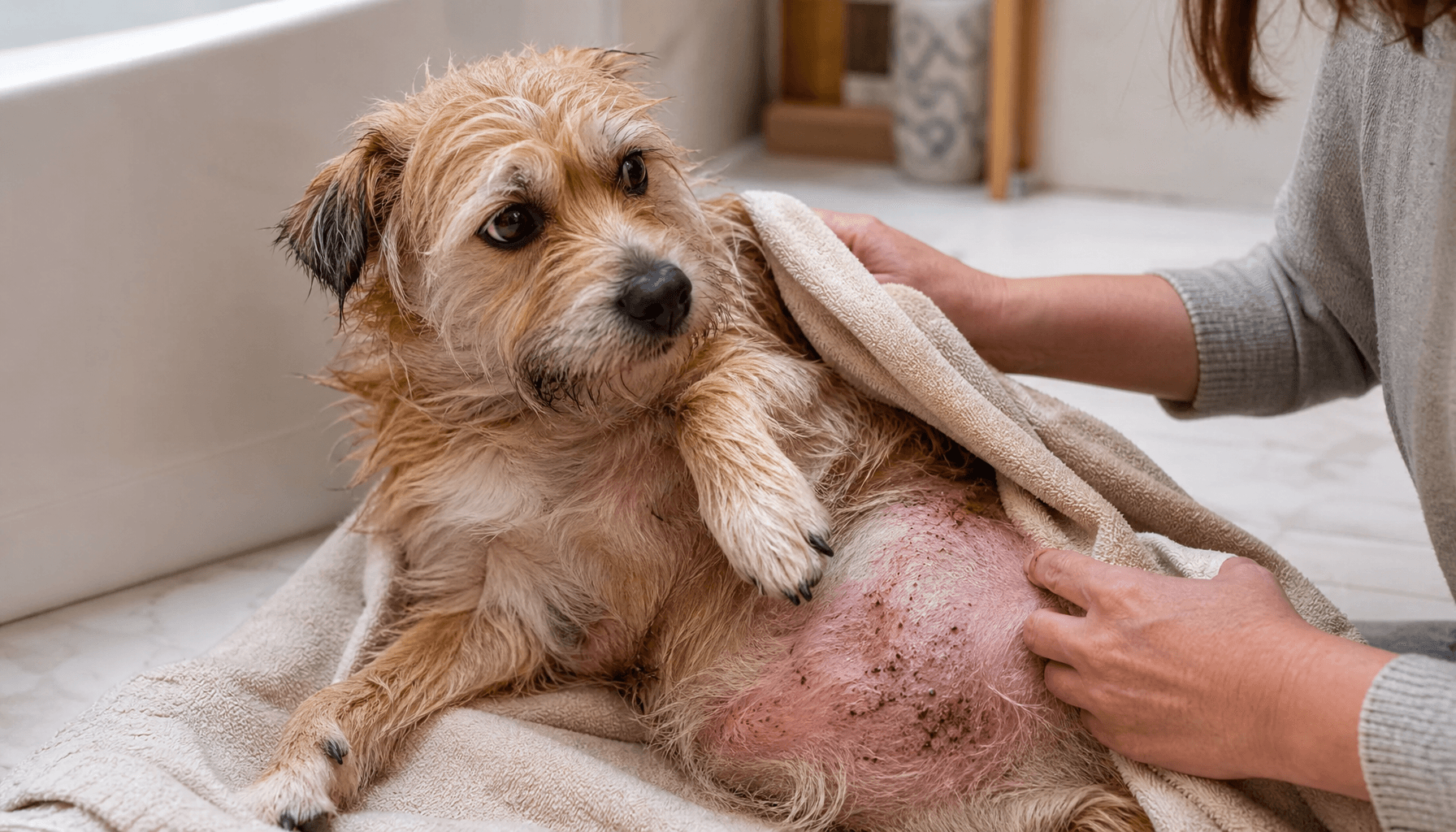
Peanut was seven pounds of pure misery stuffed into a dog-shaped package. His belly was bald in patches. His armpits — if dogs have armpits — were raw and oozing clear fluid that crusted into little yellow scabs. He smelled like yeast and desperation. The first thing I did, like an idiot, was give him a bath. I grabbed whatever gentle-looking shampoo I had under the sink, lathered him up, and watched in horror as his skin turned bright angry pink within seconds. He screamed. Not a whimper, a scream. My own dogs hid. The build cat gave me a look that said you absolute disaster of a human.
I rinsed him off with lukewarm water, wrapped him in a towel that I didn’t care about ruining, and sat on the bathroom floor for twenty minutes while he shook. That was the night I learned that “gentle” on a dog shampoo bottle means absolutely nothing. Zero. It’s a marketing word, like “natural” or “wholesome” or “artisanal.” The companies can slap it on anything and nobody stops them. I spent the next five years and roughly $300 of my own money figuring out which shampoos actually calm sensitive canine skin instead of setting it on fire. Here’s what I know now. I’m not a vet. I’m just a lady with a lot of scarred build dogs and a simmering grudge against bad pet products.
What sets sensitive skin off — and what doesn’t
Most people think food allergoes cause all the itching. I did too for a long time. And sure, sometimes it’s the chicken or the wheat or whatever cheap filler is in the kibble. I went through a whole phase where I baked my build dogs homemade treats for allergies because I was convinced every skin issue started in the bowl. That’s not wrong — diet matters — but it’s also not the full picture. Environmental allergies hit harder than food for a lot of dogs. Pollen, dust mites, mold, the weird smell that coes out of the air vents when you first turn on the heat in October. And then there’s contact dermatitis, which is a fancy way of saying something touched the dog’s skin and the dog’s skin went NOPE.
Here’s the thing about contact dermatitis that nobody tells you when you’re a new dog owner: it can build up over time. Your dog might tolerate a scented laundry detergent for two years and then one day, boom, red belly. It’s like their immune system keeps a little ledger and eventually it says “that’s enough.” Shhampoos are a huge trigger because they sit on the skin for minutes at a time and often contain fragrances, dyes, sulfates, and preservatives that are well-documented skin irritants. A dog with healthy skin might shrug it off. A dog with a compromised skin barrier — from chronic scratching, from allergies, from stress — can’t. You lather them up and you’re basically throwing gasoline on a tiny brush fire.
Wait, I’m getting ahead of myself. Let me talk about stress for a second because people forget this. Stress messes with skin. Cortisol weakens the barrier. I’ve seen dogs come into rescue with skin so bad you’d swear they had mange, and six weeks of decent food, a quiiet routine, and someone who didn’t yell at them cleared up half the problem without any medicated shampoo at all. I wrote about that weird magic of routine when I talked about building bonds with rescue dogs. It’s not directly about shampoo, I know. I’m digressign. But I can’t talk about sensitive skin without mentioning that the dog’s whole life affects it. The shampoo is just the thing you’re pouring on top of an already complicated situation.
Okay. Tangent over. Back to topical stuff.
The label lies I fell for
“Hypoallergenic” means nothing. It’s not a reguulated term in the pet industry. I coudl bottle bacon grease and call it hypoallergenic if I was feeling unethical. “Natural” means nothing. “Dermatologist tested” usually means they paid a dermatologist to say the product exists. “pH balanced” is good in theory — dog skin is more neutral than human skin — but half the brands that claim it don’t actually list the pH on the bottle, and when I tested a few with cheap litmus strips, the results were all over the place. Read the ingredient list or don’t bother reading anything. I learned that the hard way, standing in a pet store aisle at 9 p.m. crying because I’d just spent $18 on a shampoo that made my build dog smell like a coconut and scratch like he had fleas.
The time I used baby shampoo and my vet almost ended me
Dr. Nguyen has been my vet for eleven years. She’s seen me through three dogs, a divorce, and more build crises than I can count. One time I told her I’d bathed a Chihuahua mix in Johnson’s baby shampoo because “it’s so gentle” and she just stared at me for a full ten seconds. “Sarah,” she said, “human baby shampoo has a pH around 6, dog skin is around 7.5. You stripped every protective oil that dog had.” Then she wrote me a prescription for medicated wipes and told me to stop improvising. I stopped improvising. Mostly.
Shampoos that actually helped (and how I used them)
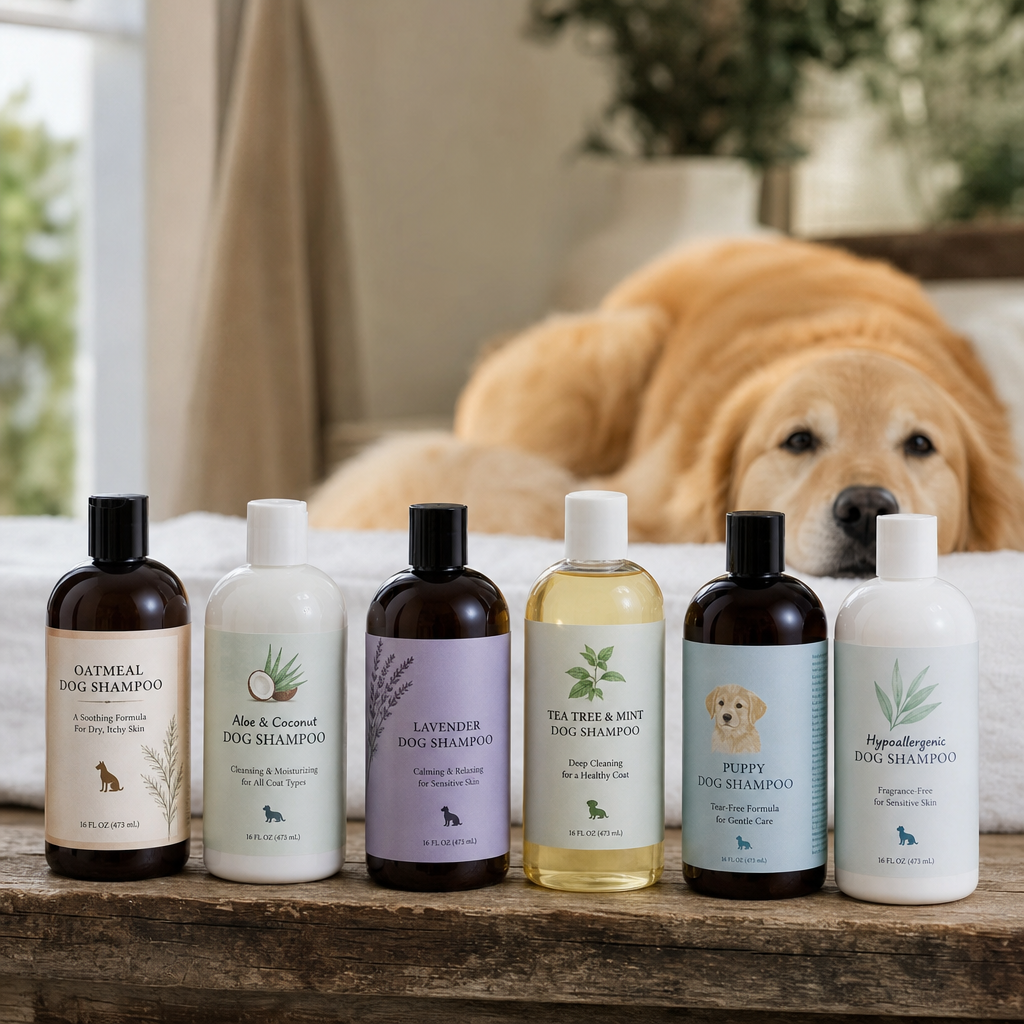
These aren’t in order of best to worst because honestly every dog reacts differently. What worked on Peanut didn’t always work on the next dog and the dog after that. But these are the bottles I kept reaching for after dozens of baths and hundreds of towels that will never be white again.
Earthbath Oatmeal & Aloe
This is the one I used after the Peanut disaster. I was terrified to bathe him again but he smelled like a yeast infection had set up permanent residence, so I had to do something. The Earthbath formula is soap-free — it uses colloidal oatmeal and aloe vera as the main soothing agents, and it doesn’t have any of the sulfates that make big bubbles but also strip oils. Lather is usually a sign of detergent, and sensitive-skin dogs don’t need detergent. They need clean without the aftermath. Peanut tolerated it. That’s the word: tolerated. He didn’t scream. His skin didn’t get pinker. Two days later some of the redness had faded. I almost cried from relief but I was too tired to cry so I just refilled his water bowl and went to bed.
4-Legger Organic Dog Shampoo (Unscented)
This stuff is almost aggressively minimalist. The ingredient list is like six things: saponified organic oils, aloe vera, rsoemary extract, nothing else. It smells like nothing. It looks like something you’d find in a mason jar at a farmer’s market. I was skeptical because I’m a cynical person by nature and minimalist marketing sometimes just means “we charge more for less.” But I tried it on a build named Mango who had open sores all down his back from a flea allergy, and it was the only shampoo that didn’t make him flinch. The lack of fragrance is a feature, not a bug, for dogs whose skin is already inflamed. Fragrance is just more molecules the immune system has to process, and if the immune system is already losing its mind, why would you give it more homework?
Veterinary Formula Clinical Care Antiparasitic & Antiseborrheic Shampoo
This one smells medicinal because it's medicinal. It contains coal tar, salicylic acid, and micronized sulfur, which sounds like something from a Victorian apothecary, and honestly it kind of is. I use this on dogs with seborrhea — the greasy, flaky, yeasty skin that makes them smell like a damp basement even right after a bath. you've to leave it on for ten minutes before rinsing, which is a lifetime when you’re holding a wet, unhappy terrier in a bathtub. I put on a podcast. I talk to the dog in a stupid high-pitched voice. I count tiles. It works, but it’s not a casual shampoo. This is the nuclear option for dogs who have more going on than just general itchiness. Talk to your vet before you use something with active ingredients like salicylic acid because if the dog’s skin is already broken, you can cause pain. I learned that from Dr. Nguyen during a very tense phone call.
Burt’s Bees for Dogs Hypoallergenic Shampoo with Shea Butter & Honey
I’m putting this on the list because it’s widely available and didn’t make my dogs worse, but I’ll say honestly: for truly severe skin, this isn’t strong enough. It’s a maiintenance shampoo, not a rescue shampoo. If your dog’s skin is already calm and you just want something mild to maintain that calm, fine. If your dog is raw and bleeding, skip it and go straight to the Earthbath or the 4-Legger. The shea butter does seem to provide some moisture barrier, and the formula is sulfate-free, which I appreciate. But I keep it in my cabinet for my own healthy dogs, not for fosters who are in crisis. That’s not a knock on the product. It’s just that “hypoallergenic” and “sensitive skin” sit on different shelves in my brain.
TropiClean OxyMed Medicated Oatmeal Shampoo
This one surprised me. I bought it on accident — meant to grab the regular TropiClean and got this medicated version — and it ended up helping a build named Biscuit who had hot spots so angry they looked like someone had taken a cheese grater to his flank. The oatmeal is soothing and the salicylic acid (again! it’s in everything medicated) helps with flaking and sacling. It has a light coconut scent that I was nervous about, but Biscuit didn’t react. Not every dog will react to fragrance. Some dogs with sensitive skin are actually fine with light natural scents as long as the base is gentle. The problem is we lump all “sensitive” dogs into one category when they’re individuals. I’m including this because it worked for a dog with flaming hot spots and I think it’s worth knowing about, especially since it’s not expensive and you can find it at most big pet stores.
Zymox Enzymatic Shampoo for Dogs & Cats
Okay, this is a weird one. It’s enzyme-based instead of detergent-based, which means it cleans by breaking down organic matter rather than stripping oils. The lack of soap confused me at first because there’s no foam and my brain associates foam with clean. Getting past that mental block took effort. But the enzyme proteins (lactoperoxidase, lysozyme, lactoferrin) are the same ones found in colostrum and saliva, which is wild to think about. The theory is they support the skin’s natural defense system instead of disrupting it. I used this on a senior Dachshund mix with chronic skin infections and it was the only bath that didn’t leave her looking exhausted afterward. She actually fell asleep in the towel while I was drying her, which never happens. I don’t know if that’s a shampoo endorsement or just a tired dog, but I bought a second bottle.
Why I stopped bathing my dogs every week
Somewhere along the way I absorbed the idea that clean dogs get bathed regularly. Lke, weekly. That’s for show dogs or dogs who roll in dead things, not for dogs with skin that’s already throwing a tantrum. Overbathing strips whatever fragile barrier the skin is trying to rebuild. Now I bathe my fosters only when they actually need it — if they stink, if they’re visibly dirty, or if a vet recommends medicated baths for a specific condition. Between baths, I use damp washcloths on problem areas and keep their bedding clean. That last part is huge and nobody talks about it. If your dog has skin issues, wash their bedding in fragrance-free detergent on hot once a week. It cuts down on bacteria and allergens so you’re not re-inoculating them every naptime.
I had a build named Radar who got a staph infection because I wasn’t washing his crate pad enough. The vet pointed it out and I felt like an absolute idiot. Radar’s skin was already compromsed and I was basically marinating him in a bacteria hotel every time he lay down. I got a waterproof liner, started washing everything on sanitize cycles, and the infection cleared up without stronger meds. Sometimes it’s not the shampoo. Sometimes it’s everything else.
A story about Bruno (no shampoo advice here)
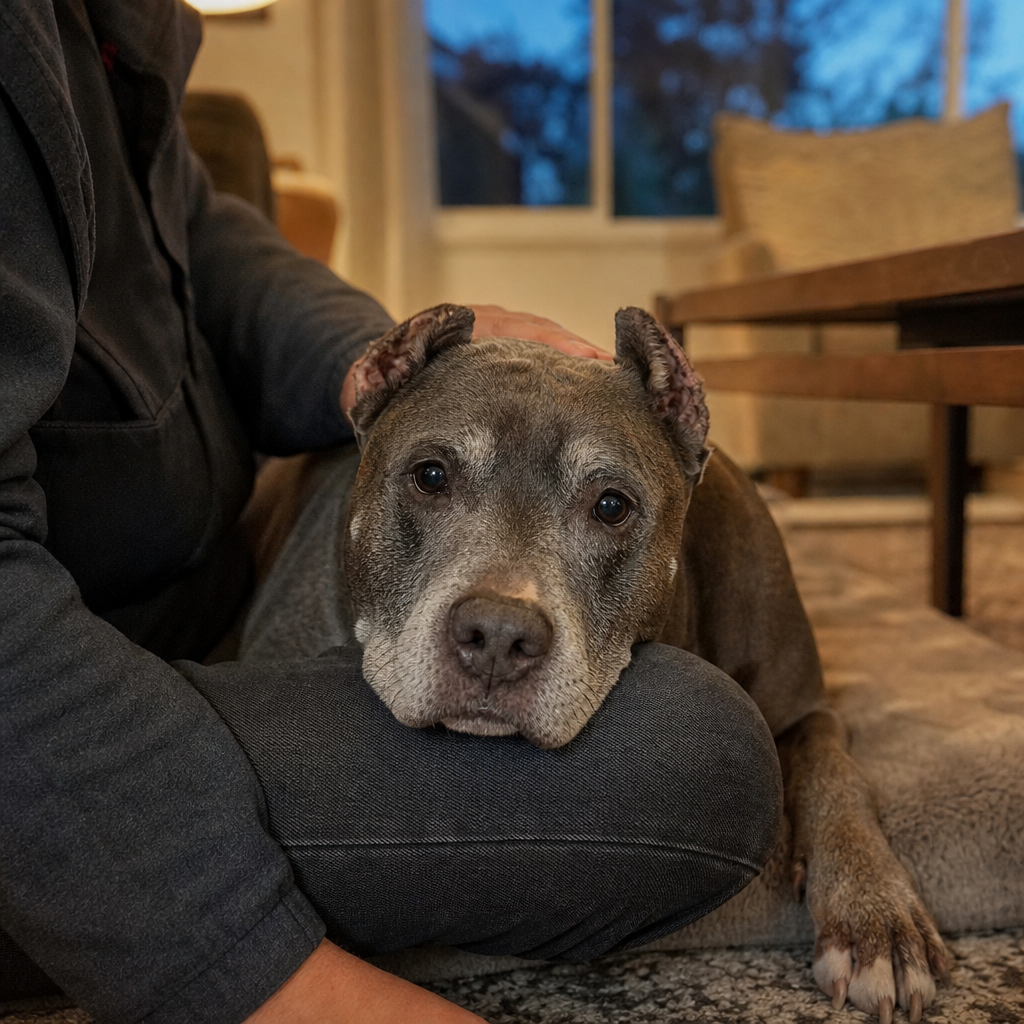
Bruno was a 65-pound pit bull mix with a head like a cinderblock and skin that had given up on life. He came into rescue afer his owner passed away and he’d been living in a house with no air conditioning for a Florida summer. His allergies were so severe that he’d scratched his ears until they were thickened and scarred. His eyes were constantly red and goopy, the kind of thing I later wrote about when I was trying to figure out why some dogs’ eyes get so inflamed. He was on Apoquel, prescription food, medicated ear drops, and a special shampoo, and still nothing felt like enough. I bathed him twice a week with one of the mediated formulas up there and while it kept things from getting worse, it never got better.
What finally made the difference wasn’t the shampoo. It was that I stopped trying so hard. I stopped switching products every two weeks, stopped hovering over him with a bottle of antiseptic spray every time he licked his paws, stopped letting my anxiety become his anxiety. I know how woo-woo that sounds. Trust me, I’ve rolled my eyes at “healing energy” people more times than I can count. But stress is a real physiological thing, and I’d been so frantic about fixing Bruno’s skin that I was probably stressing him out just by existing near him with that worried-face energy. One night I just sat on the floor and let him dropl on my knee without trying to wipe it off. We watched a nature documentary about penguins. I scratched his chin, carefully avoiding his raw spots. He fell asleep and didn’t scratch the whole time. I’m not saying positive thinking cures atopic dermatitis. I’m saying that when the shampoo and the meds are doing all they can, sometimes the only thing left is to just be calm with the dog and stop treating them like a medical project. Bruno eventually got adopted by a couple who had a yard and a kiddie pool and a very relaxed attitude about drool. They still email me every few months. His skin still flares up in the spring but they manage it without losing their minds, which is probably the real secret anyway.
You know, I almost titled this something else entirely. “Everything I Know About Sensitive Skin I Learned From Dogs Who Pooped on My Floor Whole I Panicked.” Too long. Probably for the best.