My Counters Were a Cat Highway for 7 Years — Here’s What Actually Stopped the Parade (And the $300 Gadget That Was Useless)
After fostering 40+ cats, my kitchen counters became a feline freeway. I finally found a few things that stopped it—and a bunch of crap that didn't. Real advice, no fluff.
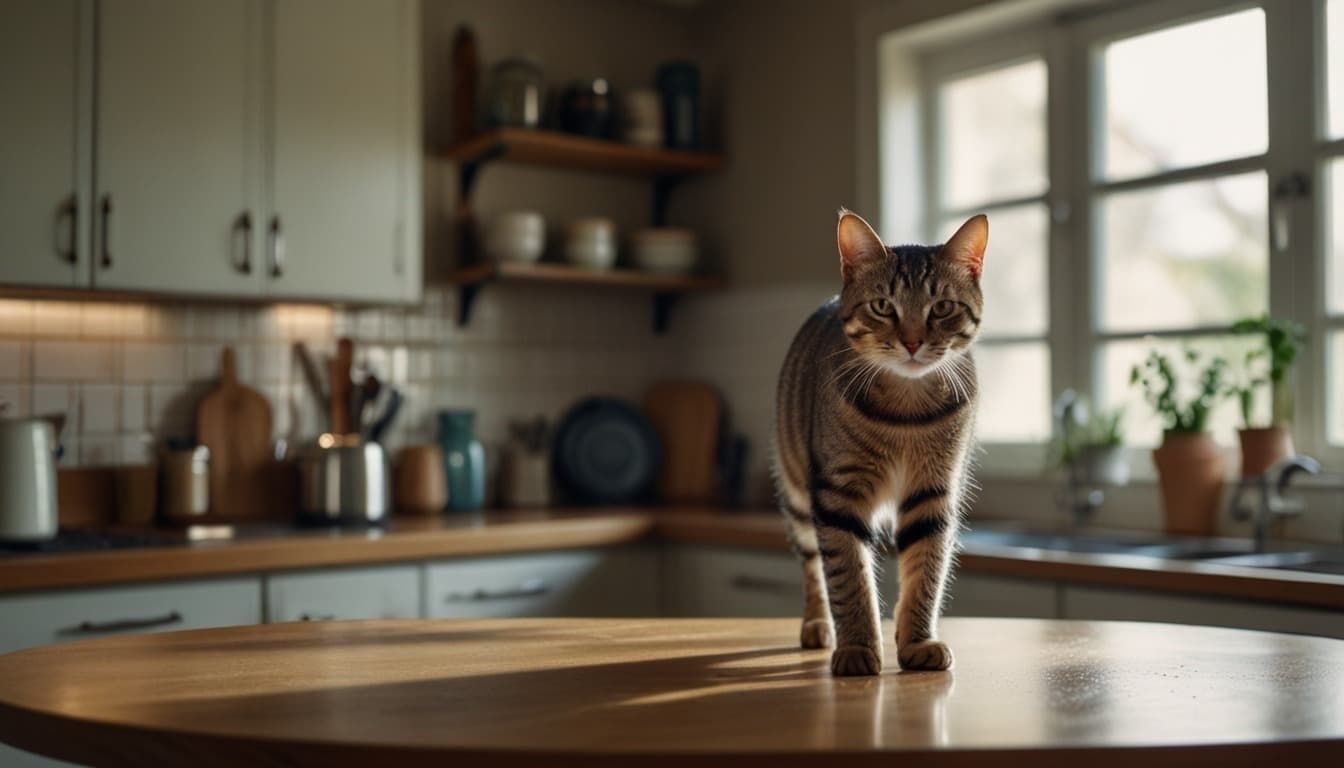
The first time I saw a cat on my kitchen counter, I laughed. It was my own cat, a scrappy tuxedo named Beckett, balancing on the edge of the sink like he was on a tightrope over Niagara Falls. I thought, aw, look at him exploring. I was 24 yrars old and clueless. Fast forward fourteen years and forty-plus build cats later, and I’ve scrubbed paw prints off every inch of that counter too many times to count. I’ve lost track of how many meals I’ve had to toss because a cat I didn’t even know I owned at the time decided to audition for a butter commercial right on my cutting board.
I didn't really start to care until the morning I found a build kitten named Pickle sitting in my cereal bowl. He'd climbed up while I grabbed my coffee and just — planted himself. Little orange butt right in the milk. I stared at him for a full ten seconds. He meowed. I threw the whole thing away and started googling “how to keep cats off counters” with enough rage to power a small city. That was 2016. Everything I read was either useless, impossible, or made me feel like a monster. Spray them with water. Yell NO. Screw that. If yelling worked, my ex-husband would've been a different person.
I'm going to tell you what I've actually tried, across 40+ cats with wildly different personalities, ages, and levels of stubbornness. Some of it worked. Some of it was a spectacular, embarrassing failure. I'm not a vet. I'm not a behaviorist. I'm just a woman with too many animals and a pathological need to solve problems at 3am. Let's start with the hardest lesson I learned: you'll never, ever win a battle of wills with a cat. you've to be smarter than that.
The Day I Realized I'd Lost the Counter War
I was fostering a cat named Martin. Martin was a nine-pound grey terror who could open cupboards, turn on faucets, and — I swear to god — look directly into your soul while he did something he knew he shouldn't. He was on the counter constantly. It wasn't random exploration. He had a mission: he wanted to be up there, surveying his kingdom, like a tiny, furry real estate developer.
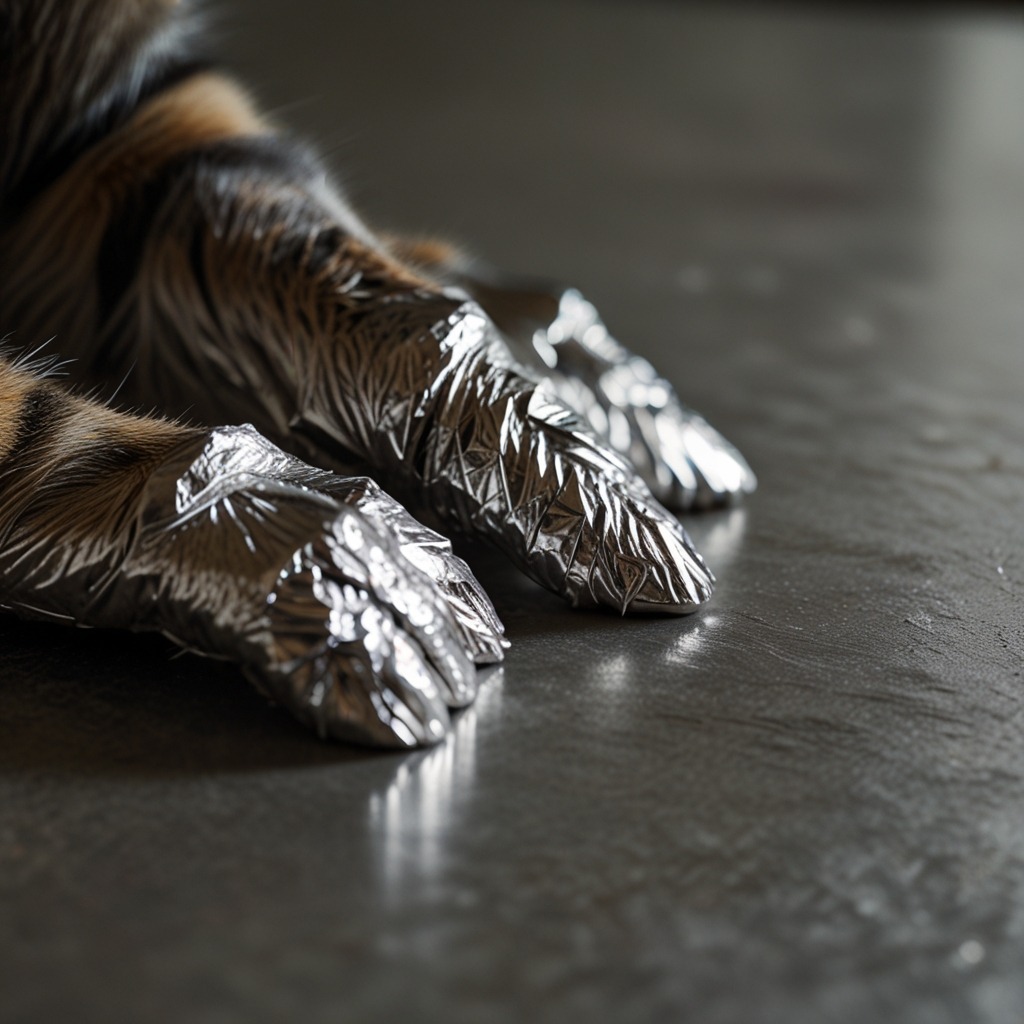
I tried everything. I lined the edges with aluminum foil, like every blog on earth told me to. Martin hopped up, heard the crinkle, paused, and then sat exactly on the foil. Didn't even flinch. He just looked at me like, yes? This your decorative choice? I tried double-sided tape. He groomed the stuck fur off his paw for twenty minutes and then — I kid you not — went right back up. It was like his paws held a personal grudge. I tried a citrus spray that smelled like someone had murdered an entire orange gorve in my kitchen. He sneezed twice and kept walking.
One evening, I was cooking dinner. Pasta. Martin jumped up, walked across the stove — the stove, while it was on — and tried to stick his face in the sauce. I yelled “MARTIN NO” and he gave me this slow blink, like I'd offended his ancestors. That was the moment I sat down on the floor of my kitchen, next to a bag of onions, and seriously considered whether I was cut out for tjis. I'd been doing rescue work for years at that point and never once felt so utterly defeated by six pounds of fluff.
I had no supplies left and the counter was a lost cause. But I also had a mortgage and a job and I couldn't just surrender the kitchen. We had to find a middle ground. The next day I called my vet, Dr. Nguyen — she's put up with my panic calls for 11 years, through three dogs and a divorce — and she said something that changed my whole approach. She said, “Sarah, cats are vertical animals. You're asking a bird not to fly. Give him a better place to perch and stop trying to make the counter the enemy.” She was right, of course. She always is. I hate that.
That conversation sparked a full-on obsession. I spent the next six motnhs running experiments on every build cat that came through my door. I kept a spreadsheet. Yes, I'm that person. 14 cats, 4 different methods, a note on my fridge that said “don't EAT THE COUNTER CATS”. My life is a disaster.
Let's Talk About Why Cats Do It
It's not about spite. I know it feels like spite — especially when you're pulling cat hair out of your scrambled eggs — but it's genuinely not. Cats like height because height = safety. In the wild, the cat that gets the high ground gets to spot predators and prey. Your kitchen counter is basically a ridge overlooking the Serengeti, if the Serengeti smelled like last night's salmon.
Also, counters are warm. The refrigerator gives off heat, the dishwasher radiates coziness during a dry cycle. Sometimes it's food. Sometimes it's curiosity — there's a new item on the counter and they need to inspect it with their face. Boredom plays a massive role, which I'll get to later because that part made me feel like an absolute jerk when I finally figured it out.
And some cats simply prefer smooth surfaces. My late cat, Beckett, had arthritis in his last years and he hated the texture of my old tile floor. The smooth granite counter was like a spa for his old bones. Didn't make it less gtoss, but understanding that helped me find a solution instead of just being mad at a dead cat.
Why Most Advice on the Internet Is Crap
When you google “how to keep cats off counters,” the internet serves up the same six suggestions in slightly different fonts. Most of them are written by people who've never met an actual cat. Or they met one cat, one time, at a party. Here's what I tried and why it almost always failed.
Aluminum Foil
The theory: cats hate the sound and feel. The reality: about half of the cats I tested walked around like they were modeling for a futuristic runway show. A few were startled but then habituated within 48 hours. Exactly two cats — out of fourteen — genuinely avoided the foil after the first encounter. Those two cats were both incredibly skittish to begin with; one was afraid of ceiling fans, the other flinched at the sound of a spoon dropping. So if you've a confident cat, foil is just a weird kitchen decoration.
Double-Sided Tape
This had a slightly better hit rate — maybe four out of fourteen cats decided the counter wasn't worth sticky paws. The problem is it collects dust, crumbs, and becomes a nasty little lint trap within a day. Then you're peeling tape off the counter and findong new tape and it becomes a whole chore. I fostered a cat with long fur (a Persian named Marshmallow — I wrote about her ridiculous double coat once) who got a chunk of tape stuck in her tail and panic-ran through the house at 2am. That was a fun night. Not fun. The opposite of fun.
Also, some cats just… tolerate it. Martin, my grey nemesis, would lick the adhesive off his paw like it was a challenge. I'm not saying double-sided tape never works, but it's not the miracle solution Pinterest wants it to be.
Spray Bottles
I've a whole rant about sprya bottles. Give me a second. Spray bottles teach your cat to fear you, not the counter. They don't understand cause and effect the way dogs do. To a cat, you're just a hman who randomly sprays water in their face, and now they associate you with something unpleasant. I used a spray bottle on Beckett back in 2011, before I knew better, and for two years afterward he'd flinch evety time I picked up a cleaning bottle. I broke his trust. It didn't even keep him off the counter — he just learned to jump up when I wasn't around, which meant I'd come home to invisible paw prints and a cat who side-eyed me. Spray bottles are a band-aid made of betrayal. Don't.
Citrus and Scent Deterrents
I bought a $14 bottle of “all-natural cat repellent” that smelled like someone distilled the concept of lemon Pledge. You know what happened? One cat started licking the counter where I'd sprayed it. Licking it. Another cat sneezed constantly for three days until I wiped it all off. I'm not saying scent deterrents can't work — some people swear by them — but in my sample size of fourteen cats, exactly zero gave a single heck about citrus. Maybe my build cats are broken. Maybe the internet lied. Could be both.
There's a whole sub-idustry of cat deterrent products and I'm convinced most of them are designed by people who think cats are small dogs. They're not. Cats are their own alien species and we're just living in their world.
At one point I was so desperate I considered covering my entire kitchen in plastic carpet runners with the spiky side up. You know, the kind your grandma had over her beige carpet. I actually measured the counter. Then I imagined explaining that to a dinner guest and decided I'd rather let the cats win.
The $300 Garbage Gadget I Bought at 2 AM
I've a bad habit of impulse-buying pet products when I'm sleep-deprived and frustrated. This one was a motion-activated “cat training device” that promised to emit an ultrasonic sound only cats could hear. It cost three hundred dollars. I won't name the brand because I'm not being sued, but it looked sleek, had good reviews, and the marketing copy used words like “proprietary algorithm” which, in retrospect, should've been a giant red flag.
It arrived in a very fancy box. I plugged it in. My dog, Potato, immediately whined and left the room. The cats — all three of them at the time — looked up, flicked an ear, and went back to whatever they were doing. I waved my hand in front of the sensor. It beeped. They still didn't care. I moved it closer. I changed the settings. I spent an hour crouching on the floor with the manual while a cat licked her butt on the counter directly above the stupid device. Three hundred dollars. I still think about that money, especially when my car needs an oil change.
That gadget taught me something important, though: cats aren't universally bothered by the same things. What sends one cat running sends another into a deep nap. If a product guarantees it'll work for “any cat,” that product is lying to you.
What Actually Worked — and the 3 Things I Wish I'd Known Earlier
After my expensive gadget meltdown, I got systematic. I started tracking what each cat responded to, and I noticed certain patterns. The methods below are the ones that had a real, lasting impact across multiple build cats. None of them are magic. All of them require some effort. But they beat scrubbing counters at 6am.
Give Them a Better Perch
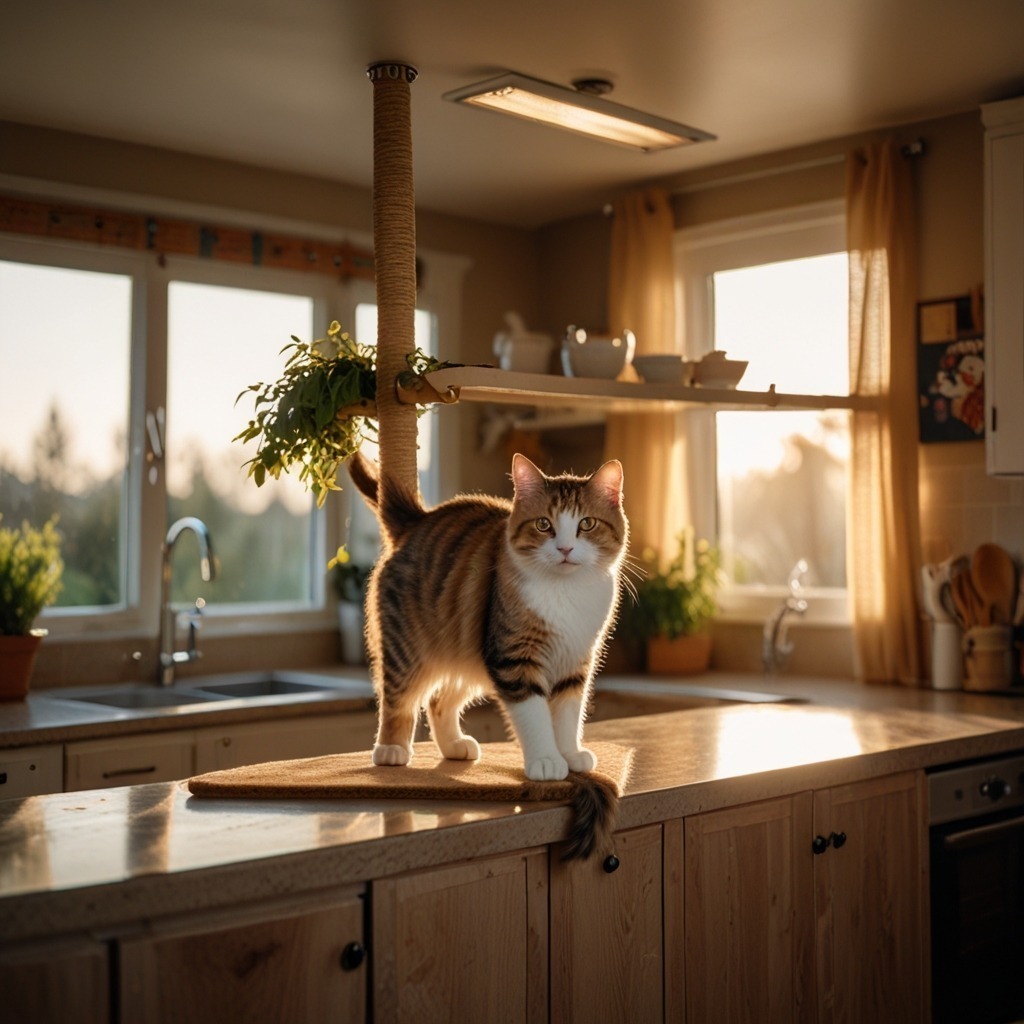
Remember what Dr. Nguyen said about cats needing height? She was right. Every cat in my house now has at least one alternative perch that's taller than the counter. In my kitchen, I've a tall cat tree positioned right by the window — higher than the cointer, with a view of the backyard. When a cat jumps on the counter now, I gently pick them up and place them on the cat tree, then give them a treat. Over and over and over.
This takes time. I'm not going to pretend it's instant. With Martin it took about three weeks of consistent redirection before he started going to the tree first. I kept a jar of freeze-dried chicken on the counter — I know, irony — and every single time I saw him on the tree instead of the counter, I'd reward him. Eventually he figured out that Tree = Chicken, Counter = Nothing. He wasn't a genius, but he was food-motivated enough to care.
If you don't have room for a cat tree, get creative. I've used wall-mounted shelves, the top of a sturdy bookcase, a window hammock suction-cupped to the glass. The key is that it has to be more appealing than the counter — higher up, cozier, with something interesting to look at. I put a bird feeder outside the kitchen window. Now my current build cat, Lucy, spends her mornings glued to that window, chattering at sparrows. She hasn't touched the counter in months. Not because she's a good cat, but because the counter just isn't the best option anymore.
Motion-Activated Air Sprays (Yes, Actually)
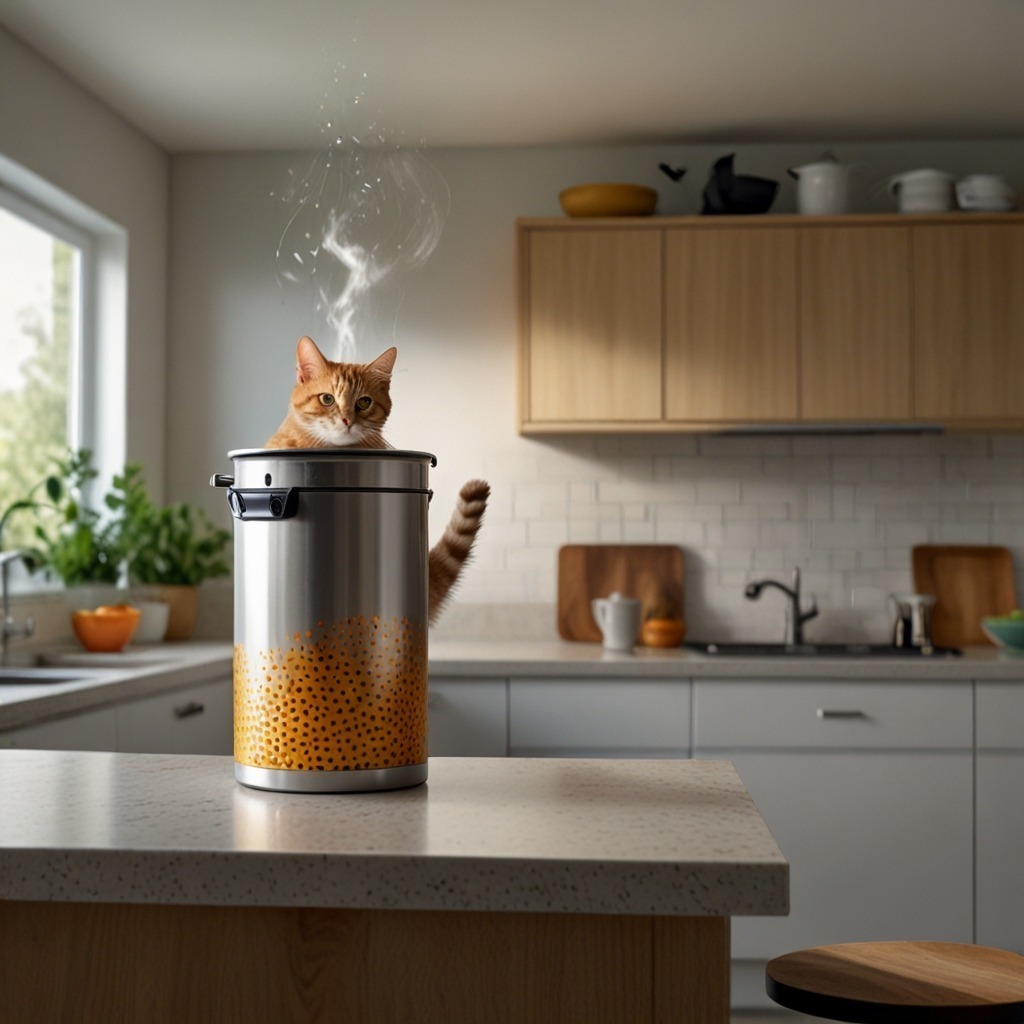
This is the one gadget that surprised me. Unlike the ultrasonic nonsense, a motion-activated canister that emits a harmless puff of air actually worked on eleven of the fourteen cats I tested. The device, often called Ssscat, sits on the counter and when a cat enters its range, it releases a quick burst of air with a sound like a hiss. It doesn't hurt them — it's just startling. And because it happens every time, regardless of whether you're in the room, the cat learns to associate the counter with the startling puff, not you.
That's the crucial difference. They're not afraid of you. They just think the counter is haunted by a ghost who hisses at them. Which, honestly, is a lot funnier to imagine. The first time I set one up, Martin — my nemesis — jumped back so fast he knocked over a spatula holder. I had to leave the room because I was laughing too hard. After a few days, he stopped trying. The counter wasn't worth the jump scare. I eventually took the device away and he never went up again. It was like the counter had just… ceased to exist in his mind.
A few cats weren't fazed. Lucy, my currrent build, sat and stared at the air burst like excuse me? That's the thing. No single method works for evety cat. But for the majority, this was a genuine solution.
Remove the Temptation — Religiously
I'm terrible at this because I'm messy. My counters collect mail, grocery bags, half-empty coffee mugs. Every single one of those items is a cat investigation waiting to happen. When I actually keep my counters clean — no food, no crumbs, no interesting objects — the cats lose interest. They're not jumping up to stare at an empty expanse of granite. They're jumping up because something smells good or there's a rubber band to steal.
I had to learn the hard way. One night I left a butter dish out, and by morning the entire thing was on the floor with perfect little bite marks. That butter dish cost $30 and I still hold a grudge. Now I put everything away. Food goes in cabinets. Dishes go in the dishwasher or the sink. Counters stay bare. It's annoying but it's a lot less annoying than re-buying butter every week.
Related: I once tried making homemade cat food to control my cats' diet — guess who spent an enntire afternoon on the counter trying to steal raw chicken? Read about that whole urinary health experiment here.
Make the Surface Unpleasant, Not Terrifying
For the cats who ignored the air spray, I found that sticky surfaces and certain textures sometimes helped — but I had to get strategic. Instead of covering the whole counter in tape, I put cat training mats along the edge. These are plastic mats with little nubs that are uncomfortable to walk on but don't hurt. Think of it as a politely hostile welcome. They didn't stop every cat, but they stopped the ones who were just casually strolling up for a look-around.
One cat, a fat orange tabby named Cheeto, stepped on a mat exactly once, made a face I wish I'd filmed, and never jumped up again. Cheeto was a sensitive soul. Another cat, a sleek Siamese mix, danced around the mats like she was on a reality competition show. you've to know your cat. If they're the determined type, unpleasant surfaces alone won't cut it — you need to combine this with the perch solution above.
A Tale of Two Cats: One Stopped, One Didn't
Let me tell you about siblings, because they wreck every theory. I fostered a bonded pair, Luna and Loki, identical black cats with the same upbringing, same age, same food. Luna learned within a week that the counter was off-limits when I used the air spray and a perch. Loki decided he didn't cate. He'd endure the hiss if it meant he could sniff the toaster. I never fully solved Loki. He's the reason I still keep the butter hidden.
Some cats are just… like that. You can't personalize the wolrd enough for every single one. Accept the partial win and move on.
The Boredom Connection
This one made me feel like garbage when I figured it out. Most of the counter-jumping that happened when I wasn't home wasn't about food or height — it was about boredom. Cats are crepuscular hunters with brains that need stimulation. When they're stuck indoors with nothing to do, the kitchen counter becomes a puzzle box. There's stuff to push, smells to investigate, maybe a paper towel to shred. It's basically a feline playground.
I once left a build cat home alone for a weekend with a pet sitter coming twice a day. I came back to an entire roll of toilet paper unspooled across the apartment, shredded into confetti. That cat, a young ginger named Mango, had been so bored he'd orchestrated a paper apocalypse. I wrote about that disaster because it taught me that boredom is the root of so many “bad” cat behaviors. When I started dedicating 20 minutes a day to active play — feather wand, laser pointer, puzzle feeders — the counter surfing dropped dramatically. Martin became a different cat when he was tired. He'd sprawl in his cat tree, eyes half-closed, and the counter might as well have been on the moon.
Read the whole saga of Magno and his toilet paper masterpiece right here. The shrot version: play with your cat. It fixes more problems than any gadget.
And Then There's the Food Thing
I'd be stupid not to mention this. If your cat only jumps on the counter when food is out, you don't have a counter problem, you've a food obsession problem. I've seen it in fosters who were strays — they never know when their next meal is coming, so they'll seize every opportunity. One cat, a former dumpster-diver nammed Oscar, would climb onto the counter while I was actively cooking and try to grab chicken off the pan with his paw. He came from a colony where food was scarce. I couldn't train that out of him overnight. What worked was making sure he was fed right before I started cooking, so his stomach wasn't screaming at him, and then giving him a puzzle toy in another room to keep him occupied.
If your cat is treat-crazy, use that to your advantage with the perch training. If they're genuinely hungry all the time, talk to your vet about their diet — maybe they're not getting enough calories or the food isn't satisfying. Homemade food helped some of my fosters with satiety, though it's a whole ordeal. I'm not a nutritionist. I just know hunger makes cats reckless.
Here's the Thing About Consistency
Every time you “let it slide” once, you reset the clock. If you sometimes shoo them and sometimes ignore them, you're teaching them that the counter is a gamble with occasional payoff. Cats are excellent gamblers. I learned this the hard way when my ex let Beckett walk all over the counter during his weekend visits because “it's cute.” It took two weeks to undo that damage.
Meanwhile, Back with the Dogs
I got so obsessed with cat-proofing my kitcjen that I forgot my dog was going through a chewing phase. While I was busy testing air spray devices, my dog Teddy (now passed, rest his silly soul) ate a pair of $300 boots I'd left by the door. Then he ate the replacement pair. Total loss: $600. I wrote about that expensive lesson here, and honestly, it's the same principle: you can't fix a behavior problem if you're not paying attention. Counter cats and shoe-eating dogs both thrive on distraction and lack of supervision. So while you're out here googling cat deterrents, maybe also check that your dog hasn't found your favorite heels.
What I'd Tell My Younger Self
Don't waste money on ultrasonic junk. Start with the cat tree and a jar of chicken. Buy the motion-activated air spray if you need backup. Clean your goddamn counters. And stop expecting perfection — a cat who occasionally trsts the counter on a Tuesday afternoon isn't a failure. It's a cat. The goal isn't a sterile, cat-free kitchen; it's a kitchen where you aren't eating paw-flavored pasta every night. I've had fosters who never set a paw on the counter after training, and I've had fosters who still do a quick patrol at 3am when they think I'm asleep. The difference is I now know how to keep it manageable.
There was this one build, a Persian named Marshmallow — I mentioned her earlier — who would sit on the corner of the counter like a fluffy gargoyle and judge me while I cooked. She never touched the food. She just… watched. At some point I decided that was fine. She had her perch, I had my spatula. We coexisted. You can read about her magnificent double coat and my terrible grooming fails in that post. Sometimes a cat will still use the couunter as a throne. If it's not destructive and not unsanitary — I kept that section covered with a washable mat — then maybe the war you're fighting isn't the one you think it's.
The One Move That Changed Everything
Okay, I'm going to tell you the single most effective thing I ever did, and it's so stupidly simple I'm amlost embarrassed. I made the counter boring and the rest of the house thrilling. That's it. I stopped treating the counter like a problem to be solved and started treating my cat's environment as the solution. When the rest of the house meets their needs — height, hiding spots, hunting games, a sunny window — the counter loses its magic. It's just a flat surface.
I added vertical spaces everywhere: a shelf above the fridge, a window seat in the living room, a cat tunenl that runs behind the couch. I rotated toys so there was always something new. I started doing five-minute training sessions where I taught them to come to a mat — yes, cat training is real, and yes, it's possible, even with a cat who's previously only been motivated by contempt. The counter surfing dropped so dramatically that I sometimes forget it was ever a problem.
It's not about rogid rules. It's about giving them something better than the thing you don't want them to do. That works with dogs, kids, partners — probably the whole animal kingdom. Martin eventually became the cat who'd run to his mat when I walked into the kitchen because he knew a treat was coming if he stayed off the counter. He still glanced at it sometimes, that beautiful grey menace, but he didn't jump. Most days.
I can still find a paw print on the stove occasionally. I'm not naive. But I haven't found a cat in my cereal bowl since 2017, and that's a win I'll take.