I Left My Cat Home Alone and Came Back to a Toilet Paper Apocalypse — What Boredom Actually Looks Like
I came home to a toilet paper apocalypse and a cat who wasn't naughty, just bored out of her mind. After 40+ fosters, here's the no-BS system that actually keeps cats happy while you work.
Three Tuesdays ago I came home to a crime scene. The toilet paper roll—a fresh one, 400 sheets of two-ply—had been unspooled from the bathroom, down the hallway, through the living room, and artistically draped over the cat tree like some kind of low-budget Halloween decor. My build cat Moxie, a 9-pound tabby with the face of an angel and the soul of a demolition crew, was sitting in the middle of it. Blinking slowly. Looking pleased. I had been gone 6 hours.
I knew right then. This wasn't a behavioral problem. Moxie wasn't bing "naughty." She was bored out of her tiny mind. And honestly? I'd failed her. You spend all this mental energy worrying about separation anxiety in dogs—I've written entire essays on that—but cats get the short end of the stick. We tell ourselves they sleep 16 hours a day so they must be fine while we're at work. Here's the tjing: a sleeping cat isn't necessarily a content cat. Sometimes they sleep because there's literally nothing else to do.
I've fostered over 40 cats and dogs over the years, and if I've learned one thing it's that a bored cat is a destructive, anxious, sometimes peeing-everywhere cat. I've also learned that "keeping a cat entertained while you're at work" isn't about buying a bunch of crap from the pet store. It's about understanding what a cat's brain actually needs and building tiny, dirt-cheap routines that work while you're gone. I'm not a vet. I'm not a behaviorist. I'm just someone who's made every mistake and picked toilet paper out of carrier vents more times than I care to admit.
The 8-Hour Guilt Trip
Honestly, the mental load of leaving a cat alone all day gnaws at you. It did for me, anyway. I'd be sitting at my desk during my shelter days, filing intake forms, and my brain would drift to my apartment—was Jasper, my senior black cat at the time, just staring at a wall? I'd run home on lunch breaks, heart racing, only to find him on top of the fridge, blinking. He was fine. But I wasn't.
Here's what changed the game for me: I stopped thinking about entertainment as something I provide in the mornings and then abandon for 9 hours. I started thinking about the apartment itself as a system—a seeries of little interactions spread across the day. Morning routine sets it up. What's left behind keeps it going. Most stuff we buy doesn't matter. The system does.
This might sound absurd, but imagine if you were locked in your apartment with no phone, no books, nothing that changed. Day after day. You'd sleep a lot too. And maybe unspool some toilet paper just to feel something.
A Few Things That Completely Failed
Let's get this out of the way. I've wasted so much money. Automatic laser poitners that zigzag across floors? Moxie ignored them after 20 minutes. Those ball-in-a-track circular things? She'd bat it once, then wander off. Battery-operated floppy fish? Terrified her. I still have the damn fish in a closet somewhere, and every time I see it I feel annoyance prickle up my neck.
Your Cat's Actually Got a Job, You Just Didn't Know It
A cat's day, in its natural feral scheduling, is all about short bursts of energy: hunt, catch, kill, eat, groom, sleep, repeat. In your home, that "hunt" part is missing. There's no mouse to stalk, no bird to track. So they sleep. They sleep too much, and then at 3 AM they're racing across your face because their clock is completely backwards. I used to think my cats were just nocturnal jerks. Turns out they needed hunting simulations at the right times, especially during that long midday stretch when I'm gone.
Building a daytime "job" for your cat isn't complicated. It's abot sequencing. You want a pattern that mimics the hunt-eat-groom-sleep cycle while you're at work. I settled on a three-part morning routine that takes me under 5 minutes but keeps them occupied for hours.
The Morning Routine That Takes 4 Minutes
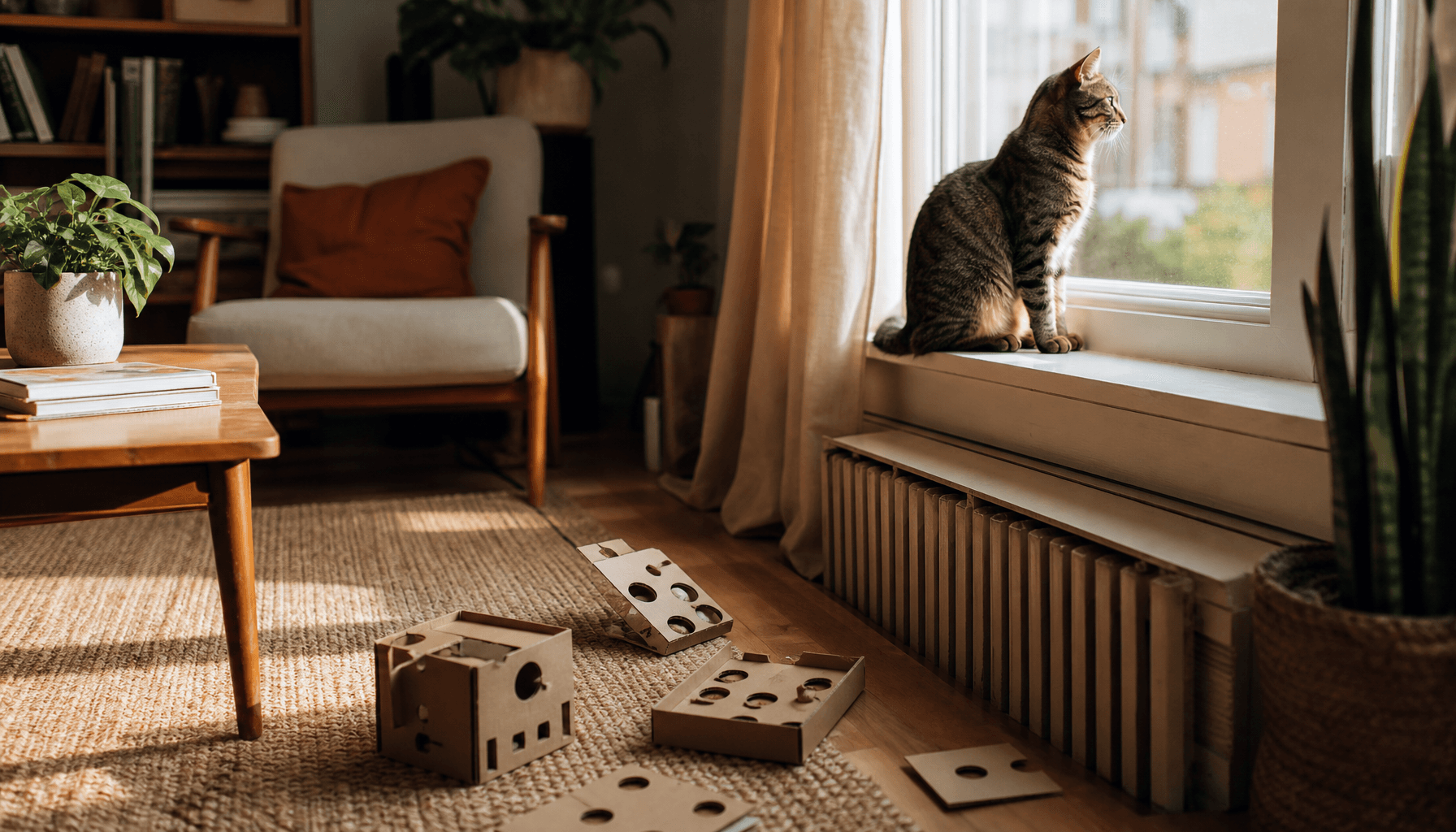
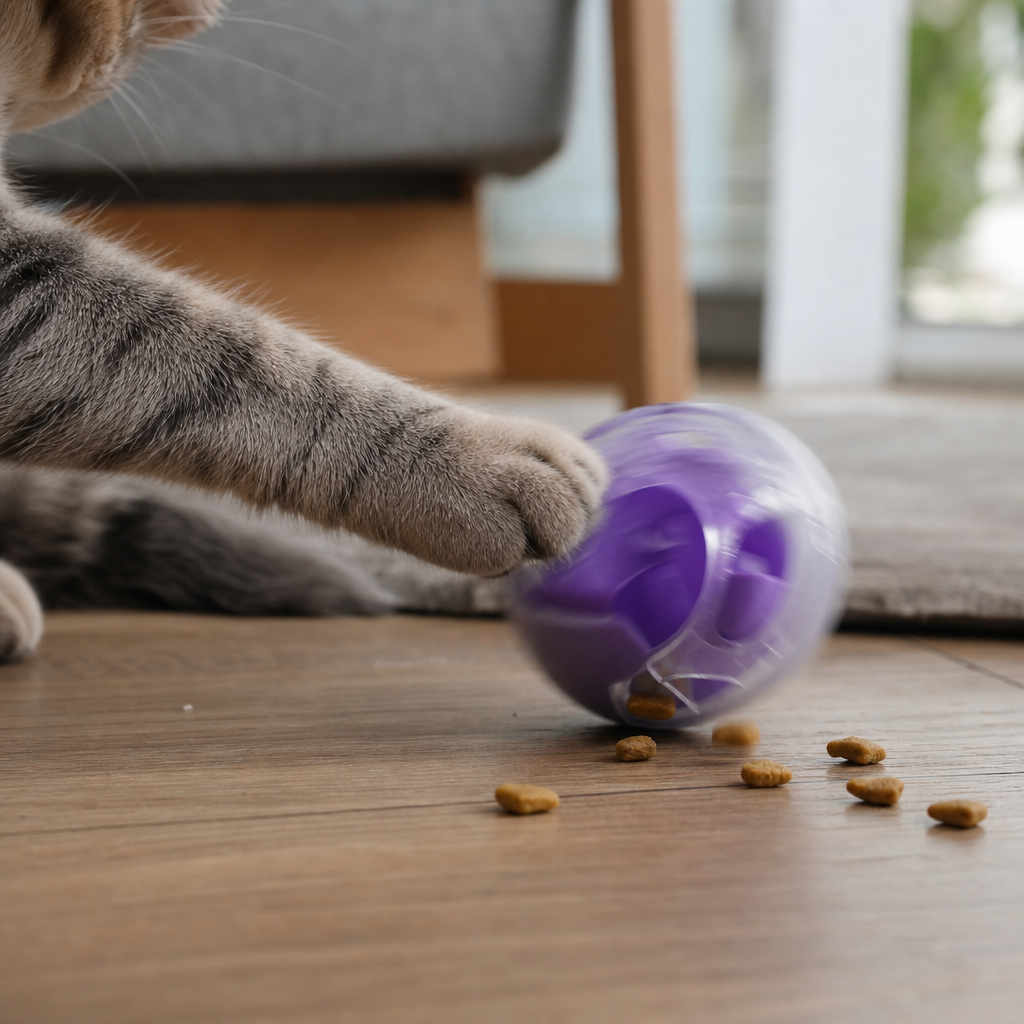
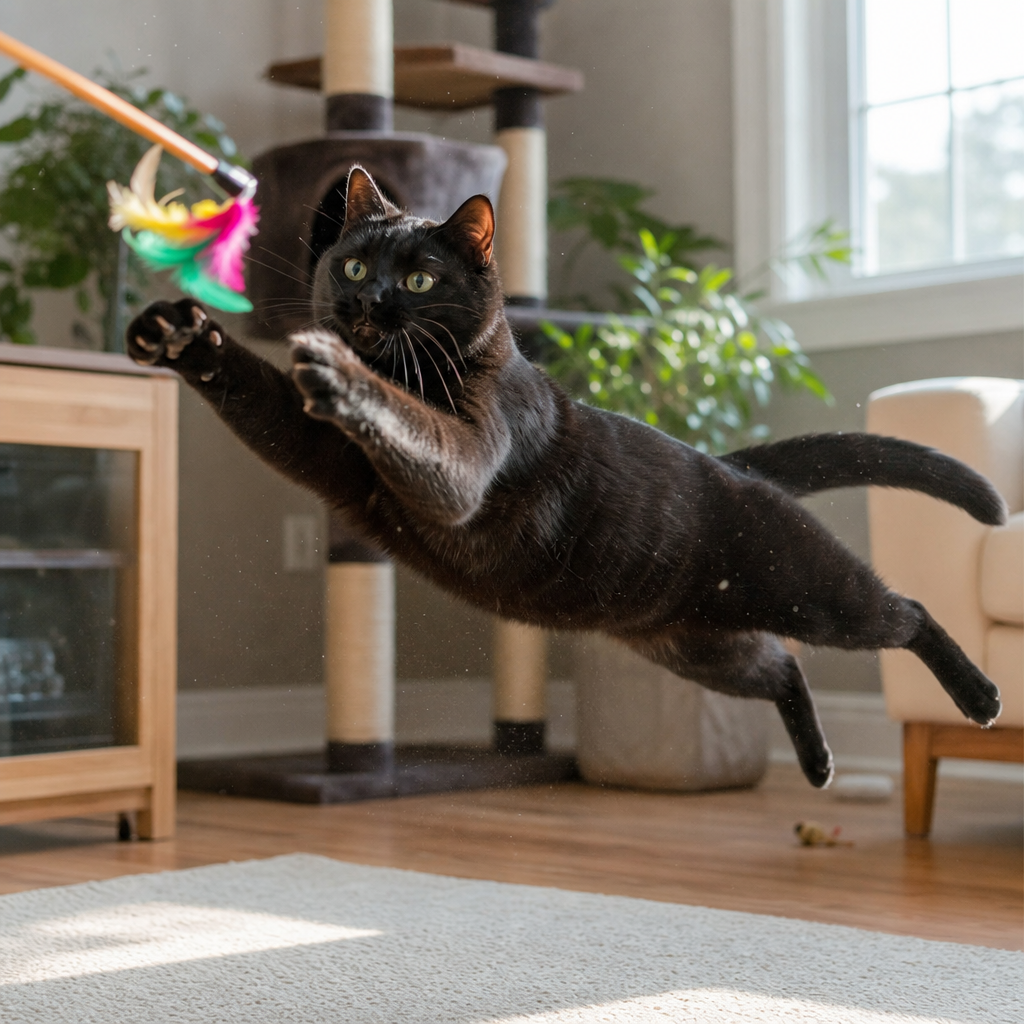
Before I leave, I do three things. First, a high-energy play session—wand toy, something that makes them leap and twist. Get the heart rate up. Ten minutes if I can manage it. Second, I feed them using a puzzle feeder, not a bowl. The act of working for food is the "catch and kill" part of the cycle. Third, I hide a few high-value treats around the apartment in spots that change daily: inside a crinkled paper bag, under a lightweight cardboard box with holrs cut out, tucked behind a door stopper. That's it. When I walk out the door, my cat is breathing hard, full belly, brain already scanning for the next snack. She'll groom, she'll nap. The cycle is satisfied.
The Art of Rotating Toys (Without Losing Your Mind)
I've got a plastic bin under my bed labeled "CAT STUFF." It holds maybe 20 items: feather wands, crinkle balls, catnip mice, ping pong balls, a few of those crinkly tunnels. Every Sunday night I swap out the toys that are currently in the living room with 5 or 6 from the bin. The old ones go back in. That's it. The toys feel new, even though they're not. I read somehwere that cats habituate to objects in about 48 hours—they stop seeing them as interesting. So the rotation keeps novelty alive. On Monday morning my cats act like I've invented the wheel.
One mistake I made early on: buying too many interactive electronic toys that just… did the same thong over and over. After the initial curiosity, they'd lie down and watch it like a boring TV show. The randomness of a paper bag tossed on the floor? Way more engaging. I'll take a paper bag over a $40 gadget any day.
Window Real Estate Is Everything
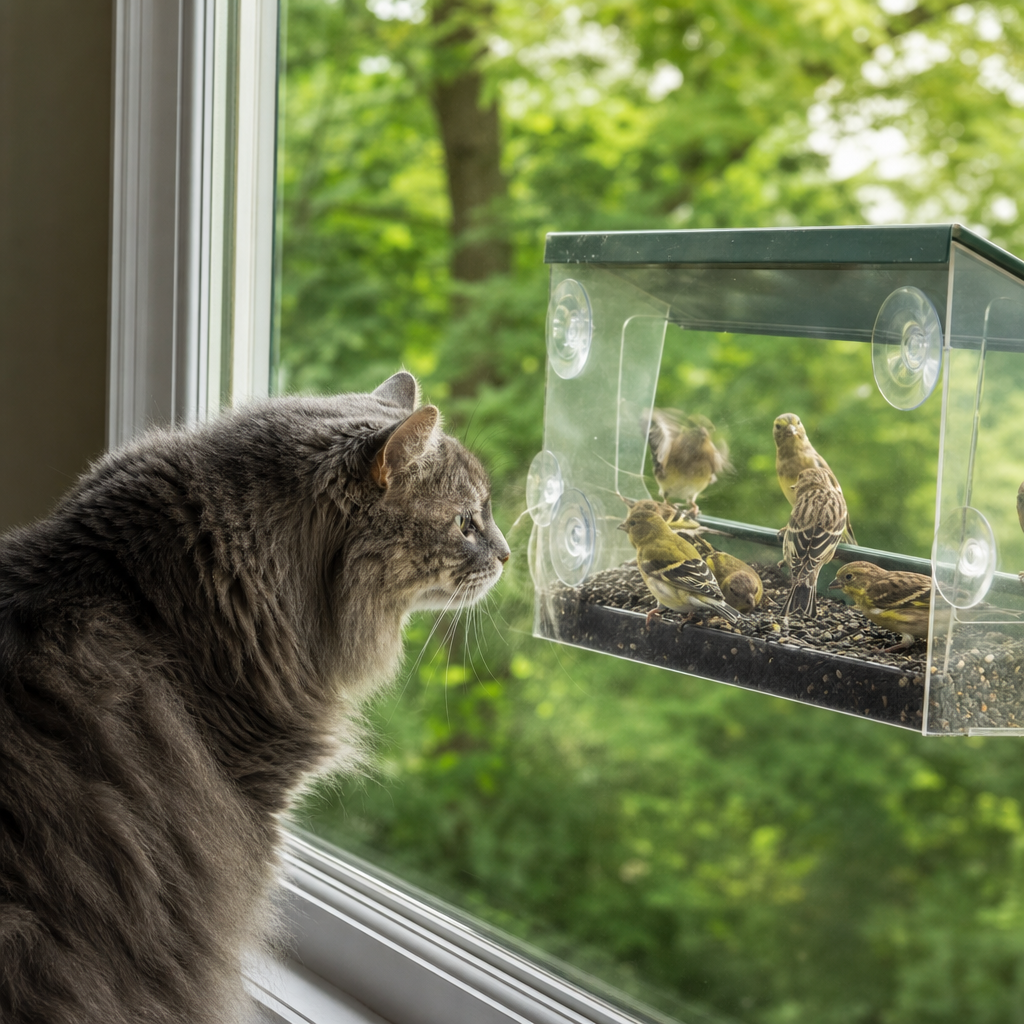
If you've only got one window your cat can access, fix that. I put a suction-cup perch on the bedroom window, a cat tree by the living room window, and a cleared-off end table under the kitchen window. Different views, different sounds. The living room window has a bird feeder suction-cupped to the outside glass. That feeder—$12 at a hardware store—has provided more entertainment than every toy I've ever purchased combined. The cats will sit there for hours, chirping at finches, tails flicking. Sometimes I'll come home and find dried birdseed on the sill from where they've obviously been pressing their noses against the glass. It's the best thing I've ever done for their mental health.
Just make sure the feeder is really stuck on there. I once came home to a squirrel dangling from it like a furry piñata. Moxie was beside herself. I had to go outside and shoo the squirrel away while my neighbor watched. Not my finest moment.
The $70 Robotiic Mouse That Taught Me a Hard Lesson
Okay, story time. A few years back, I was fostering a very shy torbie named Clementine. She'd been at the shelter for 8 months—nobody wanted her because she hid. I thought, "Technology will fix this!" I bought this expensive robotic mouse that skittered around and made squeaking sounds. Set it up in the living room before I left for work. Came home to find Clementine wedged behind the toilet, pupils blown, refusing to come out for 6 hours. That stupid mouse had cornered her. She tohught it was a threat, not a toy. I returned the mouse the next day, tail between my legs.
The lesson? Cats aren't little humans. They're prey animals and predators, and anything that moves unpredictably and makes noise can flip them into panic mode. you've to watch your individual cat's reactions. My current resident cat Poe loves anything that rolls—ping pong balsl, tin foil balls, the occasional grape that fell on the floor. Clementine? She wanted a cardboard box with a hole cut in it and a single feather trailing out. That was her speed. I spent the next two weeks just sitting with her, letting her dictate the pace. She finally got adopted by a lovely retired couple who, I assume, didn't subject her to robot mice.
That whole episode with Clementine reminds me of something I tell every new build: you can't force enrichment. If you bring in a new toy or puzzle and your cat hides, back off. Some cats take weeks to trust new objects. Actually, I wrote a piece about the pain of introductions when we had to get our resident cats used to a new build—it's a whole process—and some of those same patience principles apply to toys. Watch the cat. Let them lead.
Food Puzzles Are the Actual MVP
I'm not exaggerating when I say food puzzles changed my life. A cat that eats from a bowl in 45 seconds flat has nothing to do for the next 8 hours. A cat that has to work for its kibble for 20-30 minutes? Completely different animal. I use a few different types and rotate them, just like toys. Some mornings it's a treat ball they've to bat around. Other mornings it's a snuffle mat made from fleece strips tied to a rubber sink mat (I made three of these for under $5 each). Sometimes I'll just scatter their dry food across the floor in a specific room and let them forage.
When I worked at the shelter, we had one room dedicated to "food enrichment." Volunteers would smear wet food onto textured silicone mats, freeze it, and give it to the cats at lunchtime. The cats would lick and lick for an hour. Kept them occupied and also increased their water intake. I started doing a version of that at home: a lick mat with some watered-down pâté smeared on, or a frozen Kong with wet food inside. I know I wrote something similar about homemade cat food and urinary health—the same principle applies. You're not just feeding, you're engaging their brain.
DIY Stuffing That Won't Break the Bank
The internet is full of fancy puzzle feeders that cost $30-$50. Screw that. You can make them. Empty toilet paper rolls (the cardboard tube, not the tissue—though Moxie disagrees) folded on one end, filled with a few kibbles, folded on the other end. Egg cartons with a few treats inside the dimples, lid closed. A shoebox with holes cut in the sides, stuffed with crumpled paper and a few treats hidden inside. My cats have spent entire afternoons trying to figure out how to get into a cardboard box. The sound of paws scrabbling against cardboard is the soundtrack of my workday.
The Magic of a Frozen Kong
If you only do one thing, do this. The night before, fill a Kong (the pink and blue ones for cats are smaller, easier to handle) with wet food, a little plain pumpkin, maybe a few kibble pieces. Plug the small hole with a dab of peanut butter (xylitol-free, please, xylitol will kill your cat). Freeze it. In the morning, put it on a tpwel by the food station. For the next hour or more, your cat will lick, paw, roll, and obsess over that thing. It's messy. It's worth it. I've done this with over 30 build cats and it's the single most reliable enrichment tool I know. Even cats who "don't play with toys" will engage with food.
A Quick Note About Screen Time
There are 8-hour YouTube videos of birds and squirrels. I've tride them. Some cats watch, some don't. My cat Poe will bat at the screen. Moxie ignores it completely. Screens aren't a substitute for real sensory input, but they can be a nice supplement in a pinch. Just don't leave them on if your cat gets over-stimulated and starts attacking the TV. I've had to replace a monitor.
The Radio, Bird Feeders, and Other Free Sh*t
This is the section where I tell you all the stuff I do that costs nothing and works better than most things you can buy. I'm a big believer in sensory enrichment: sound, smell, sight. Cats live in a world of scent we can barely comprehend. Leaving something that smells like you—a worn t-shirt, your pillowcase—can be calming. I've read studies about cats being soothed by the scent of their owner's clothing. When I had a super anxious build named Button, I'd leave an unwashed hoodie on the couch. She'd curl up inside it and sleep for hours.
Why Classical Music Actually Works
Sounds ridiculous, I know. But there's actual research—and I'm not talking about those "music for cats" albums with weird synth sounds. Low-vokume classical radio, specifically baroque at around 60 beats per minute, has been shown to reduce stress behaviors in shelter cats. I've been leaving the radio on a classical station for years. I don't care if it makes me a weird cat lady. When I get home and my cats are sprawled out, eyes half-closed, instead of yowling at the door, I feel like less of a failure.
Don't leave it on talk radio. Something about the unpredictable cadence of human voices might be okay for dogs, but for cats it can be agitating. Music without sharp dynamics is the way to go. I learned this after one horrifying day when I left the apartment and accidentally had the podcast app playing a true crime episode. Came home to a cat under the bed and a knocked-over lamp.
Bird TV Without the Internet
Already mentioned the bird feeder. But if you can't put up a feeder—say you're in a high-rise—consider a mobile of lightweight objects near a window. Even the movement of leaves outside creates visual stimulation. I once tied a feather to a length of fishing line and hung it from the curtain rod so it would drift with the HVAC. Poe wathced it for 45 minutes. That's 45 minutes he wasn't scratching the sofa.
The Day I Realized Cat Televison Was Overhyped
I need to rant for a second. You know those 12-hour YouTube compilations of colorful fish swimming? Everyone swears by them. I propped my iPad up, hit play, and for about 6 minutes Moxie watched with interest. Then she walked over to a cardboard box and spent 3 hours inside it. Three. Hours. The box had nothing in it. I had to accept that the internet had sold me on a concept my cat didn't care about. The same goes for those tablet games where fish swim across the screen and you tap them. My cats didn't get it. They'd look at my finger then walk away. I think we project a lot onto cats, assuming they'll interact with screens the way we do. They won't. Save your screen time for yourself.
This connects back to what I said earlier about knowing your individual cat. Moxie is a box cat. Clementine was a feather-trailing-from-a-box cat. Poe is a whack-everything-that-moves cat. you've to experiment. Pay attention to what they grvaitate toward when you're home and then replicate a version of that when you're gone.
What 40+ Fosters Taught Me About Boredom
I've fostered a lot of cats. Some came from hoarding situations, some from the streets, some were surrenders from families who couldn't keep up with medical bills. Nearly every single one of them, in the first few days in my apartment, hid. Then they explored. Then they got bored. And when they got bored, the trouble started.
One senior cat, Grizz, would methodically open my kitchen cabinets and pull out the pots and pans. Another, a tiny black kitten named Beans, discovered she could climb my curtains and then scream because she couldn't get down. I'd come home to a soundtrack of yowling and clattering metal. It was chaos. But it was never about them being "bad." They just had energy and a brain that needed to solve problems. Once I built environmental enrichment into their day, the chaos dropped by maybe 70%.
I started noticing patterns. Cats who had access to vertical space—cat shelves, tall cat treees, a cleared-off bookshelf—were calmer. Cats who had a covered hiding spot (a cat cave, a blanket draped over a chair) were less stressed. Cats who got morning play and food puzzles were less likely to greet me at the door with a yowl or a "present" of shredded paper towels. I even had one build, Mango, who would urinate on my pillow every single day until I added a second litter box and a window perch. Once he had those, the urinating stopped. I swear, half the "problem behaviors" people google are just boredom and environmental stress. The other half are medical. If you've ever searched "my cat urinates everywhere" at 2 AM with tears in your eyes, I need you to hear me: your cat probably isn't vindictive. They're trying to tell you something. (I wrote about that more extensively here—you're not alone.)
Here's what I don't do: I don't leave toys out all the time. I don't leave food in a bowl. I don't keep the apartment silent and still. Sound, movement, scent, food challenges—these are all part of the system. And I rotate constantly. The cat who had the same floor-to-ceiling cat tree for 2 years? I moved it to the opposit wall one Saturday. Moxie acted like she'd discovered a new continent. Climbed every platform, sniffed every inch. It was the exact same tree. She just needed it to feel different.
A lot of this stuff is also about managing our own expectations. Cats are crepuscular—they're most ative at dawn and dusk. When you're at work during the day, they should be sleeping for a good chunk of it. The goal isn't to keep them awake and partying for 9 hours. It's to give them meaningful actibity during the windows when they're naturally alert, so that the sleep they do get is restful, not depressed.
The Hardest Part
Accepting that you can't be there. This is the guilt that sits in my chest somedays. I've done everything right and I'll still come home to an upturned water bowl and a cat staring at me like I owe them an explanation. Some days, the system fails. You can't beat yourself up about it. They're animals. They're resilirnt. And a little boredom won't ruin them forever. It just might ruin the toilet paper.
Things I Stopped Worrying About
Honestly, after 14 years of this, I've made peace with a lot. I stopped feeling guilty about not having a dedicated "cat room." I stopped buying expensive automated toys that end up in the closet graveyard. I stopped checking the pet camera every 20 minutes (mostly). And I stopped pretending that a cat who sleeps for 7 hours during a workday is a sign of neglect. It's not. A cat who sleeps like that and then never engages when I'm home? That's a problem. But a cat who perks up when the keys jingle, coomes trotting over, and rubs against my legs? We're fine.
If you take one thing from this whole mess, take this: your cat needs a reason to wake up. A reason to look out the window. A reason to bat something across the floor. Those moments of tiny engagement—hunting a treat, watching a bird, climbing to the top of a cat tree—add up to a life that feels like something. And you can set up almost all of it before you walk out the door.
When Moxie finally got adopted, her new mom sent me an email a month later. She said, "I leave her some cardboard bxoes and turn on the classical radio. She seems happy." I maybe teared up. I'm not above it. The cat that taught me the most about boredom ended up in a home that understood her. All it took was a bird feeder, some crumpled paper, and the willingness to stop buying dumb crap off Amazon.
Don't overthink this. Start with the window. Start with a box. Build from there.