My Cat Sneezed Green Gunk on My Keyboard and I Spent a Week Googling 'Cat Runny Nose' — Here's What I Wish I'd Known
After a decade of panicking over cat snot, here's what I've actually learned about runny noses — the color myths, the steam trick that almost got me evicted, and the $340 misdiagnosis I'll never make again.
The first time my build cat Miso sneezed directly into my open mouth — I know, I know, I shpuld've learned to close my mouth around cats by age 38 but here we're — I didn't think much of it. Cats sneeze. Dust, a tickle, whatever. But then she sneezed again. And again. And suddenly there was a string of green snot hanging from her tiny nostril, swaying like a disgusting little pendulum, and I realized this wasn't a dust thing.
I did what any rational person does at 11 PM with a snot-dripping build cat. I opened 47 browser tabs, convinced myself she was dying, and spent the next four hours spiraling through pet forums where every thread ended with "update: he's gone" and the OP never came back. don't do that. That's the first piece of actual adviec I've. Those forums are haunted and they'll eat your soul.
Anyway. Miso's fine now. But the next week was a crash course in cat nasal discharge that I didn't ask for, and since I've now dealt with runny noses in maybe 18 fosters and three of my own cats over the years, I figure I should write down what I've learned — including the expensive mistakes, the vet visits I should've done sooner, and the one trick that worked but also almost got me evicted. Let's get into it.
The color of the snot actualy matters — but not the way Google told you
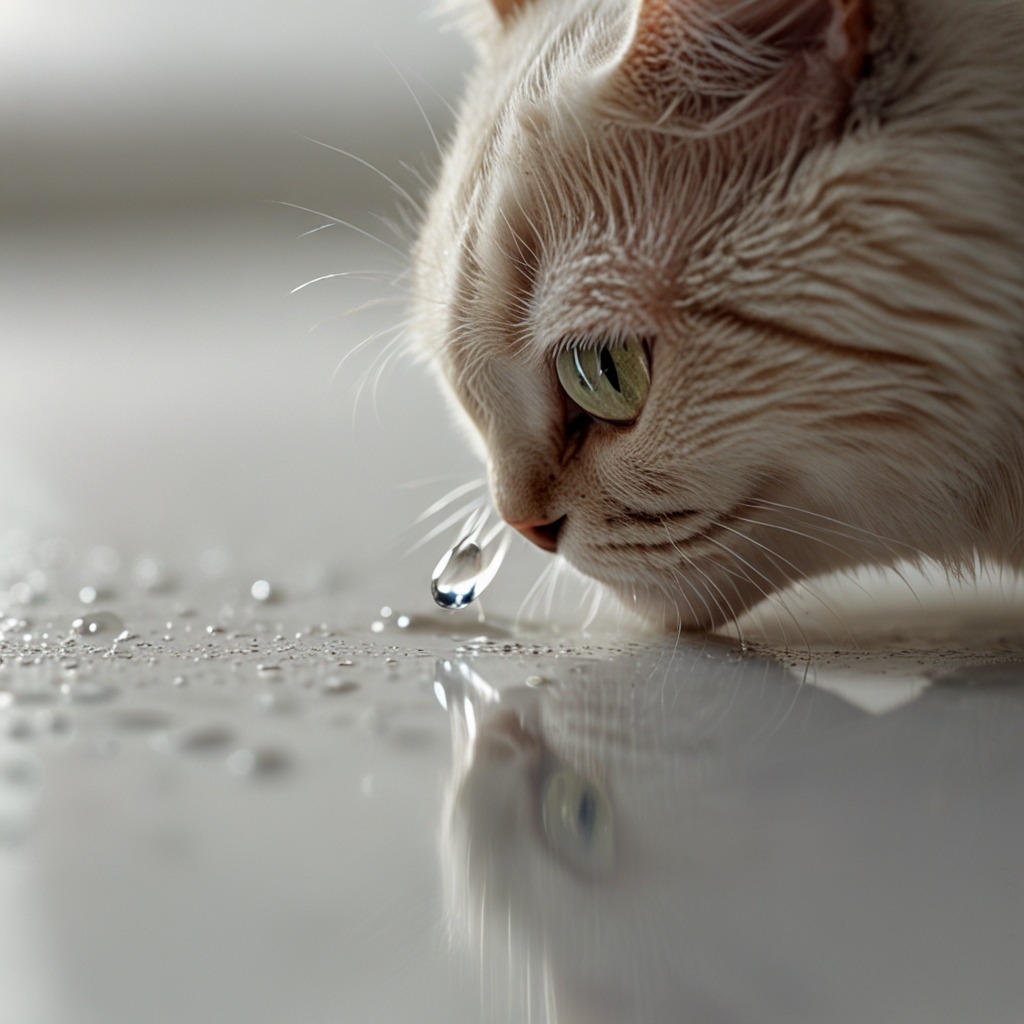
Every single website I landed on that first night said the same thing: clear discharge is allergies or mild irritation, yellow/green means infection, blooddy means trauma or something scary. And sure, broadly, that's not wrong. But I've seen cats with crystal-clear drips that turned out to have raging bacterial infections deep in their sinuses, and I've seen cats with green boogers that cleared up with nothing but steam and time. The color is a clue, not a diagnosis.
What I pay attention to now is the volume and the persistence. A tiny clear droplet that appears once after a sneeze and then the cat's fine? Probably nothing. But a steady, constant drip — even if it's clear — that keeps coming for hours or days? That's when I start paying attention. The nasal lining is irritated enough to keep producing fluid, and irritation doesn't just happen for no reason. And if that discharge is thick enough to plug a nostril, making the cat breathe through its mouth, that's an immediate vet visit in my book. Cats are obligate nasal breathers. A stuffy nose isn't just uncomfortable — it can mess with their ability to eat, because they can't smell their food and they can't breathe while chewing.
I learned that last part the hard way with a build named Squash. Squash was a maassive orange tabby who came to me with a chronic runny nose that had been going on for months before I got him. His previous owners just thought he was "a sneezy cat." By the time I had him, he'd lost almost two pounds because he couldn't smell his wet food. His nose was constantly crusted shut. Clearing that crust so he could breathe — and then watching him finally eat — was one of those small, gross victories that makes fostering worth it. But I'm getting ahead of myself.
What I actually look at now (forget the color chart)
- One nostril or both? Unilateral discharge — just one side — makes me think foreign body, polyp, tooth root abscess. Bilateral usually means systemic: viral, bacterial, allergic.
- Consistency changes. If it starts watery and becomes thick and sticky over a few days, that suggests the body is mounting an inflammatory resppnse. Doesn't always mean antibiotics, but it's a signal.
- Is the cat still eating with enthusiasm? A cat who stops eating because of a stuffy nose is in trouble faster than you'd think. Hepatic lipidosis is real and it's terrifying.
- What the third eyelid is doing. If I see that inner membrane creeping up, especially in one eye, I'm worried about something systemic or painful.
- How's the breathing sound? Not just sneezing. Is there a wheeze? A snore at rest? Open-mouth breathing? The last one is a red alert.
None of this is a substitute for a vet. I'm not a vet. But after 14 years of panicking over snot and six years working at a shelter where I saw respiratory cases daily, these are the things I've trained myself to notice before I decide whether to wait overnight or drive to the emergency clinic.
The steaming bathroom fiasco (and why I almost got evicted)
When Miso's nose first started running, I remembered the old humidifier advice. Run a hot shower, sit in the bathroom with the cat, let the steam loosen things up. Simple. I'd done it before with a congested kitten and it worked fine.
What I forgot was that my current apartment has a bathroom fan that automatically kicks on with humidity and vents directly into the hallway — and that my downstairs neighbor, who already hated me for "letting my dogs bark" (they bark exactly twice a day when the mail carrier comes, but fine), would interpret the sudden cloud of steam billowing past her door as a fire. The fire department showed up. At 6 AM. To my bathroom. Where I'm sitting on the toilet lid, wrapped in a towel, holding a dripping cat and crying from exhaustion. The firefighter was very professional. I wasn't. Miso, to her credit, looked unbothered.
I tell this story because everyone says "use steam" like it's a casual spa day for your cat, but nobody mentions that cats don't always want to sit in a steamy room for 15 minutes while you drip sweat onto your pajama pants. Some cats will claw their way out of your arms and wedge themselves behind the toilet, where you can't reach them and the steam doesn't help. Others will tolerate it but then act like you've committed a betrayal for the rest of the day.
So here's what I do now, after the fire truck incident: I use a small cool-mist humidifier right next to the cat's favorite sleeping spot. Not in a closed bathroom. Just near the bed or the cat tree. I aim the mist so it drifts toward where the cat already rests. No force. No screaming. No fire department. And if the cat is really stuffed up, I'll bring them into the bathroom but I leave the door cracked so the steam doesn't build up to riot-police levels and I don't trap them. Most cats will stay put if they can leave. Shocking, I know.
Warm, stinky food also hlps more than steam in my experience. Heating wet food for 10 seconds in the microwave — just until it's slightly warm, not hot — releases the smell and can tempt a stuffy cat to eat when they can't smell anything otherwise. I've used this with seniors, kittens, and a grumpy Persian named Marshmallow who once held a hunger strike for two days because her nose was plugged and she couldn't smell her salmon pâté. The warmed food broke the strike in about 90 seconds.
When it's not "just a cold"
Most runny noses in cats are viral. Feline herpesvirus — which despite the name is a respiratory thing, not something you catch from your cat — is the big one. Almost every shelter cat has it. It flares with stress, and then it passes, and then it flares again. I've had fosters who arrived fine and started sneezing within 48 hours just from the stress of transport. That's not even a "cold" in the sense of a new infection; it's a latent virus waking up.
But sometimes a runny nose isn't viral, and treating it like it's can mean weeks of a cat getting worse whille you wait for something that'll never resolve on its own.
The tooth nobody thought about
I had a build named Pip — tiny gray tabby, about seven years old — who had a chronic runny nose only on the left side. It was clear but constant. She'd sneeze and a little droplet would fly out, and that was just her thing. I'd ruled out viruses, tried antihistamines, even had her scoped — nothing. Then during a routine dental cleaning, the vet found an abscessed upper premolar with a root that extended into the sinus cavity. The infection had been draining into her nose for probablly months. The tooth came out, the nose dried up within a week. I'd spent months chasing respiratory causes for a dental problem.
Now, any time I see a one-sided runny nose, I ask the vet to look at the teeth. Even if the cat's eating fine. Even if the gums look okay from the outside. Tooth roots and sinus cavities are neighbors, and these cats won't tell you when their face hurts.
Nasal polyps and the stuff you can't see
Polyps are benign growths that can block the nasal passages or the eustachian tubes, causing discharge, sneezing, and sometimes a weird snuffling sound. They're not super common, but I've seen two cases. One cat would make a honking noise when he breathed, like a tiny goose. The polyp was removed surgically and he was fine. The key sign was that the discharge came and went but the honking stayed. If your cat's making a noise that doesn't match any sneeze or cough you've heard before, get a scope.
Allergies — yes, cats get them too
I once spent $340 ruling out everything else before I considered that a build cat's runny nose was allregic. She'd been sneezing clear droplets for weeks, no other symptoms, eating like a champ. I switched her litter from a scented clay to an unscented paper-based litter and the sneezing stopped in four days. Four days. After months of vet visits and allergy panels that showed nothing. Some cats react to the fragrances in litter, to dust, to certain cleaning products. I wrote about a similar expensive journey with a misdiagnosed hairball here — it's wild how often the simplest chnage gets missed while we're chasing zebras.
And don't get me started on essential oils. I'll save that rant for later. But if you diffuse anything with eucalyputs, tea tree, peppermint, or citrus and your cat has a runny nose, stop. Those oils are toxic to cats and their respiratory systems are tiny. I've seen cats develop full-blown respiratory distress from a lavender diffuser running in a closed room. It's not woo-woo "natural is bad" — it's documented organ damage. Just don't.
The vet visit I wish I'd done sooner (and the one time I waited too long)
Here's the timeline most people foollow, and I've done all of them:
The "wait and see" phase: Cat sneezes a few times, maybe a lottle clear drip. You think it's dust. You'll give it a day. Usually this is fine. Most mild viral things resolve in 2–3 days.
The "okay it's been four days and it's worse" phase: Now the discharge is thicker, the cat's sleeping more, maybe not eatimg as much. This is where you should call the vet. I've learned to call at day 3 or 4, not day 10. Because the longer it goes, the more likely it's bacterial or secondary, and the harder it's to treat.
The "I'm an idiot" phase: This is when you've waited two weeks, the cat's lost weight, and now you're at the emergency vet at midnight because the cat can't breathe through its nose at all. I've done this exactly once, with a kitten named Beans. Brans was 10 weeks old and I'd convinced myself it was just a stubborn herpes virus flare. It was pneumonia. He survived, but he spent three days in an oxygen cage and I spent the equivalent of a nice vacation on the bill. I still feel sick thinking about it.
So here's my actual rule now, which a vet — the wonderful Dr. Nguyen who's dealt with my panic calls for over a decade — helped me articulate: if the cat's still eating and acting like itself, you can give it 48–72 hours of supportive care at home. Steam, warm food, keeping the nose clean. If it's not noticeably better by day 3, go in. If at any point the cat stops eating, starts open-mouth breathing, or seems lethargic — go in that day. Not tomorrow. Not after work. Now.
And when you do go, ask about nasal swabs. Seriously. I've had vets skip them because the cat was stressed or because "it's probably viral," and then we ended up treating blind with antibiotics that didn't work because we didn't know what bacteria we were dealing with. A PCR panel can test for herpes, calicivirus, chlamydia, bordetella, mycoplasma — and knowing which one you're fighting changes the treatment entirely. Maybe your cat needs antibiotics. Maybe it just needs lysine and time. But guessing is expensive and stressful for the cat.
I also want to mention something weird: a cat's sneeze can contain truly alarming things. That post is about a cat who sneezed blue — blue — snot, and I learned more about feline respiratory disease from that one incident than in months of reading. Sometimes the discharge color isn't just about innfection; it's about what the cat inhaled or what's draining from somewhere unexpected.
What actually helps at home (that doessn't involve wrestling your cat into a headlock)
I hate medicating cats. I hate it. I've been bittten, scratched, peed on, and once, memorably, had a cat vomit directly into my shoe while I was mid-pill. Nobody likes it, not even the cats who politely swallow. So when I've a cat with a runny nose, I start with things that don't require a chase scene.
Wiping the nose (and why it matters more than you think)
Cats are fastidious. A crusty nose bothers them. They'll paw at it, they'll rub their face on things, they'll get more irritated. Wiping the discharge gently with a warm, damp cotton pad — no soap, no witch hazel, nothing — three or four times a day keeps them comfortable and also lets you monitor changes. I use a separate pad for each nostril if there's any chance of infection, just to avoid cross-contamination. Is that paranoid? Maybe. But I've had enough cats develop secondary eye infections from rubbing snot into their own eyes that I'm okay being a little extra about it.
If the crust is really stubborn, a warm compress held gently against the nose for 30 seconds softens it. Don't pick. I've picked. The cat bleeds. The cat hates you. Just don't.
Humidity, but smarter
I already told you about the fire truck. But beyond the humidifier near the bed, I also run one in the room where the cat sleeps at night. Cool-mist, cleaned regularly (mold in humidifiers is a thing and it'll make respiratory stuff worse). If I don't have a humidifier, a wet towel drpaed over a radiator or a bowl of hot water set somewhere the cat can't knock it over works in a pinch. But I've lost enough security deposits that I just bought a damn humidifier.
Lysine (the controversial one)
I need to be clear: the evidence for lysine supplements in cats with herpesvirus is mixed. Some studies say it helps reduce viral shedding; others say it does nothing or might even make things worse. My experience — and this is purely anecdotal, I'm not a researcher — is that for some cats with chronic herpes flares, a daily lysine powder on their food seems to reduce the frequency and severity of outbreaks. For other cats, it does absolutely squat. I've tried it with about 10 cats over the years. Maybe six showed improvement; four didn't. If your vet suggests it, it's probably worth a trial. If not, there are other options. Don't megadose without guidance, because you can mess up their arginine balance and that's a whole different problem.
Saline drops (the one I wish I'd known sooner)
Plain sterile saline nasal drops — the kind for human infants with no additives — can be a gamechanger for a stuffy cat. One drop per nosril, wait a few seconds, then gently wipe away whatever loosens. I was intimidated by this for years because the idea of putting drops in a cat's nose seemed absurd, but most cats tolerate it way better than you'd expect if you're quick and don't make a big production of it. The relief is almost immediate. Don't use medicated decongestant drops — those are toxic. Saline only.
A quick word about the internet's favorite "natural" remedies
Okay, this is the rant I promised. I can't tell you how many times I've seen someone in a cat group recommend putting a drop of colloidal silver in the cat's water, or rubbing coconut oil on the nose, or diffusing thieves oil to "boost the immune system." Please. Please stop. Colloidal silver can build up and cause organ damage. Coconut oil on the nose is just going to get licked off and, while not toxic, isn't doing anything for a viral or bacterial infecion inside the sinuses. And any essential oil diffused in an enclosed space with a cat is a risk, period. Cats lack the liver enzymes to metabolize phenols and terpenes. What smells nice to you can cause respiratory burns, neurological symptoms, or liver failure in a cat.
I once had a well-meaning adopter tell me she was using a tea tree oil spray on her cat's bedding to "clear up his sniffles." The cat ended up with tremors and needed hospitalization. He survived, but it was touch-and-go. I don't think she was a bad person. She just trusted something she read online. And that's exactly the problem — the internet is full of people who mean well and know nothing, and cats pay for it.
If you wouldn't put it in your eye, don't put it anywhere near your cst's respiratory system. That's my rule. Simple.
The build who taught me patience (and the chronic runny nose that never fully went away)
Squash — I mentioned him earlier — came to me with what his surrender paperwork described as "chronic sinus issues, manageable." Manageable meant the previous owners just wiped his nose when it got too crusty and otherwise ignored it. When I got him, he had green discharge from both nostrils, his breathing was audible from across the room, and he'd lost so much weight that his spine felt sharp under his matted fur.
We treated him with antibiotics based on a culture (mycoplasma, it turned out), antivirals for herpes, and supportive care for weeks. The green cleared, the breathing improved, he gained back some weight. But he never stopped dripping entirely. Some days his nose was clear and barely damp. Other days — stress days, weather-change days, days where the air was dry — he'd get a little clear drip again. It was just his baseline. The vet said he probably had permanent damage to the nasal turbinates from chronic inflammation. His nose was always going to be a little leaky.
And that was okay. He wasn't suffering. He breathed fine, he ate well, he played. He just needed someone willing to wipe his nose a couple times a day and not freak out about it. He got adopted by a retired nurse who thouht his "little snuffle" was endearing. I still get updates. He's fat and happy and still drips when he purrs too hard.
I tell Squash's story because sometimes a runny nose isn't an emergency or a puzzle to be solved. Sometimes it's a chronic condition you manage. The line between "needs treatment" and "monitor and maintain" is one you draw with your vet, not alone at 3 AM. But if you've done the workup and the cat is stable, you don't have to keep chasing a cure that doesn't exist.
When the runny nose is just the opening act
A couple years ago I had a build named Cricket who arrived with a mild runny nose and sneezing. A few days in, she also started scratching her left ear obsessively until it bled. I'd initially written the ear thing off as a separate issue — maybe mites, maybe an infection — but it turned out they were connected. Cricket had a nasopharyngeal polyp that had grown from her eustachian tube into her ear canal, causing irritation in both places. The runny nose was the first sympttom; the ear thing came later.
I wrote about the ear-scratching nightmare in another post, but the takeaway here's this: if your cat's runny nose is acccompanied by head shaking, ear scratching, facial asymmetry, or a weird eye blink, mention it to your vet. These things can be connected in ways that aren't obvious.
Also worth noting — and this is one of those things I didn't learn until I'd been doing this for years — some cats with chronic nasal discharge develop a behavior where they swallow excessively or smack their lips. That can mean the discharge is dripping down the back of their throat (postnasal drip) and causing nausea or discomfort. If you see that, don't ignore it. It can affect appetite and lead to weight loss even if the nose looks relatively clear from the outside.
I'm not a vet, I'm just tired
Look, I dropped out of vet tech school. I worked at a shelter for six years and I've fostered more cats than I can count, but none of that makes me an expert. I can tell you what I've seen, what worked for the cats I've cared for, and what I wish someone had told me. That's it. If your cat has a runny nose and you're worried, the best thing you can do is call your actual vet. Not Dr. Google. Not me. Not the person in the Facebook group who swears by apple cider vinegar.
But if you're sitting here at 2 AM with a sneezing cat and you're trying to figure out whether you can wait until morning, I hope this helped. I've been there. I've made all the mistakes. I've cried into a cat's fur more times than I want to admit. It's going to be okay — just pay attention, don't wait too long, and keep the essential oils far, far away.
And maybe buy a humidifoer that doesn't summon the fire department. Just a thought.