
My dog's breath went from fine to horrifying overnight—here's the disgusting thing I found in his mouth
My dog Duke went from fine to horrifying breath overnight, and I wasted a week on Google before finding the real cause in his mouth. Here's what I wish I'd done first.
I almost kissed my dog Duke on the nose that morning. Thank god I didn't, because the smell hit me like a wall when he yawned—rotten seafood, maybe a little sewer. The kind of stench that you don't just smell, you feel it in your throat.
I reeled back so fast I nearly tripped over my other dog, Gus, who was waiting for breakfast. "What the hell," I said out loud, "what died in there, Duke?" He wagged his tail. He's a golden retriever mix, and in his mind every word I utter is code for "treat coming soon."
Here's the thing that tripped me up: the day before, his breath was just normal old-dog breath. A little funky, sure. He's twelve. Nothing to panic about. But this was sudden, like someone flipped a switch between Tuesday night and Wednesday morning.
I grabed my phone, shining the flashlight into his mouth while he tried to lick the phone out of my hand. That's when I got my first clue—and it wasn't pretty.
So I did what any sane person does: Googled at 2 a.m.
Actually it was 7:15 a.m., but the principle stands. Within two minutes I'd convinced myself Duke had kidney failure, diabetes, or a mouth tumor the size of a grape. The internet is great for that. One minute you're checking a symptom, the next you're pricing cremation urns. I've been down that rabbit hole before, like the time my other dog's nose turned into sandpaper and I spent three days convinced he had lupus (he didn't, he was just dehydrated and the furnace was too high—I wrote about that expensive panic lesson here).
Bad breath in dogs, it turns out, isn't always just "he needs a dental." Sometimes it's a giant red flag waving from a major organ. Sometimes it's a chunk of something nasty wedged behind a back tooth. I've now experienced both, and I wish I'd known to look in his mouth first, not the third day into my spiral.
The obvious first guess (and the thing I should've checked immediately)
I'm not a veterinarian. I dropped out of vet tech school, remember? But after 14 years of fostering, you learn a few things. One of them is that if your dog's breath suddenly turs foul, you need to look inside their mouth with a real flashlight, not your phone's pathetic glow.
Duke didn't appreciate this. Getting him to open his jaw wide enough to see the back molars while he's awake required two hands, a piece of cheese as a bribe, and me doing a sort of awkward headlock that made my daughter ask if I was hurting him. I wasn't. If anything, Duke was enjoying the extra attention.
What I found wasn't a tumor. It was worse in a mundane way: a thick, brownish coating of tartar on his upper molars, and along the gumline there was red, angry inflammation. And down by one of the canines, a dark spot that looked suspiciously like a chunk of something lodged. I had to get him to the vet, but in the meantime I started mentally cataloging all the times I'd seen this before.
Just a lot of tartar and gum disease
Most dogs have some tartar by middle age. I'm not proud to admit this, but for years I didn't brush my dogs' teeth. I thought those dental chews were enough. They aren't. Plaque hrdens into tartar within about 48 hours, and once it's cement-like, no chew toy is gonna scrape it off. The bacteria in that tartar produce sulfur compounds—the same ones that make human morning breath so delightful. Pile up enough of that bacteria, and you get the kind of halitosis that can clear a room.
Was that Duke's problem? Possibly. But it didn't explain the suddenness. Gum disease usually builds up over months. His breath had been fine yesterday. That was the part nagging at me.
The stick incident with Lola
A few years ago I fostered a border collie mix named Lola who came to me with breath that could peel paint. I assumed it was rotten teeth. When the vet sedated her to do a dental, she pulled out a fragment of a stick—about the size of my pinky nail—that had wedged up between her upper molars and torn the gum. It had been there for maybe weeks, getting more disgusting by the day. Once it was out, her breath was normal within 48 hours.
So I had that in the back of my mind while I peered into Duke's mouth, wondering if he'd gnawed on a stick in the yard without me noticing. I couldn't see anything obvious, but I'm not a vet with a dental probe and half an hour of his cooperation. I called Dr. Nguyen.
An abscess hiding under a worn tooth
I've learned that an abscessed tooth root can smell like something died because, well, tissue is dying. The infection can burrow down under the gum where you can't see it, and the first sign is often a sudden foul odor. I didn't know Duke's canine was so worn—he'd chewed tennis balls obsessively for years, and the abrasive fuzz had sanded down the enamel until the root was exposed. That made it vulnerable. Later, the X-ray showed the abscess clearly, a dark halo around the root tip that made me wince.
But I'm getting ahead of myself. I diddn't know that yet. I knew I needed a vet visit, and I knew I was probably looking at a dental procedure that would cost more than my last laptop.
When the vet said "it's probably just dental" and I almost canceled the bloodwork
Dr. Nguyen has put up with my panic calls for eleven years, through three dogs and a divorce. She knows I'll Google myself into a frenzy. When I brought Duke in, she took one sniff of his mouth from a foot away and said, "Dental. Definitely." She lifted his lip, probed a bit, and Duke didn't flinch—but that didn't mean there wasn't an abscess lurking.
Then she said something that anoyed me: "Do a full blood panel before the dental cleaning."
I was ready to refuse. The bloodwork would add $150 to a bill that was already going to be north of $600 for the exttraction and cleaning. And she'd just said it was dental. Why poke him for nothing? I almost said no, and I'd have been wrong.
Why sudden halitosis can be a kidney disease red flag
Dr. Nguyen explained something I hadn't considered: when the kidneeys start failing, waste products build up in the bloodstream because they're not being filtered out properly. One of those wastes is urea, which can break down into ammonia. You can smell it on the breath—a sharp, almost chemical scent that's very different from the rotten-sulfur smell of dental disease. I hadn't noticed ammonia in Duke's case, but I'm also not confident I'd recognize it unless someone pointed it out.
"With a twelve-year-old large breed dog," she said, "I don't assume anything until I see the numbers."
I'd spent enough time in veterinary clinics to know she was right. Kidney disease is common in older dogs, and early symptoms are vague—more drinking, more peeing, sometimes just a subtle change in smell. I've known people who missed it entirely.
Diabetes and that weirdly sweet breath
Diabetes can also hit suddenly and change the way a dog's breath smells. It's not always sweet; some people describe it as fruity, like nail polish remover. That's from ketones produced when the body can't use sugar properly. I'd never smelled it myself, but I remembered a story from my shelter days about a dog whose breath smelled like Juicy Fruit gum and then collapsed in the kennel. He pulled through, but it was a close call.
I don't want to be that person who assumes it's just a tooth and misses something systemic. I've learned that the hard way before—like the time I was sure my cat's coughing was just a hairball and it turned out to be asthma. That cost me $340 and a lot of guilt. I wrote about that ordeal here.
Liver disease — and why I panicked about that
Dr. Nguyen mentioned that severe liver disease can produce a musty, almost sweetish-sour odor on the breath, often described as "fetor heapticus." I'd only ever read about it in textbooks. But combined with sudden lethargy, vomiting, or a yellow tinge to the gums, it's a sign to run—not walk—to the emergency vet. Duke had none of those other signs, thank god, but the word "liver" alone triggered my anxiety.
I should note that oral tumors can also cause sudden foul odors, sometimes from necrotic tissue. I didn't feel any obvious lums in his mouth, but again, I'm not a vet. Anesthesia and X-rays would rule that out.
What Duke's bloodwork actually showed
I agreed to the panel. It took a day to get results. The longest day. I kept smelling his breath as if I could magically diagnose him over breakfast. When the call came, his kidney values were normal, liver fine, glucose perfect. I nearly cried with relief. It was dental. Specifically, a periapical abscess on that worn upper canine, and a bunch of moderate periodontal disease around his premolars. The extraction would solve the acute stench, and a deep cleaning would handle the rest.
I should have started a savings account for dog dental work years ago. Or gotten pet insurance when he was younger, before things were "pre-existing." I wrote about what nobody tells you about insurance for senior dogs here, and I should have taken my own advice.
A quick (disgusting) thing you'll want to rule out before anything else
While I was waiting for Duke's results, my neighbor texted me a photo of her dog's breath problem. Turns out the dog had been sneaking into the cat's litter box and eating poop. Coprophagia. It's gross, it's common, and it can cause a sudden, deeply foul mouth odor that no dental chew will fix. I'm not saying your dog is eating his own poop, but check the litter box access before you schedule a $400 dental. I've seen it happen enough times that it's worth mentioning.
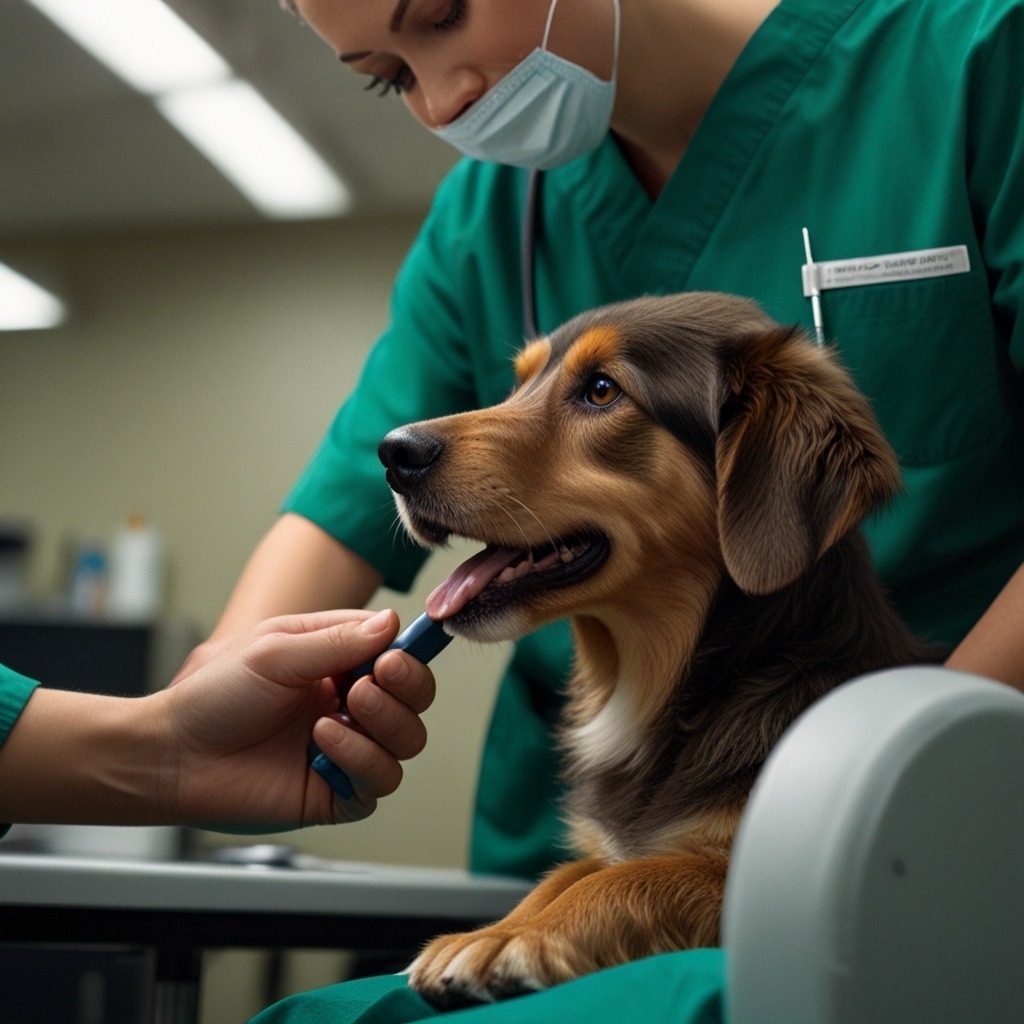
What actually made the difference for Duke (after 3 vet visits)
The extraction went smoothly. He came home groggy with a stitched-up gum and a cone of shame that he instantly walked into every doorframe in the house. The vet sent us home with antibiotics, pain medication, and a packet of soft food instructions. I thought the hard part was over. It wasn't.
The extraction and the Cone of Shame
For ten days Duke wore the cone and acted like he'd been personally victimized by plastic. He couldn't figure out how to eat without bumping it into the bowl. I had to hold his dishes at an angle. The post-op swelling made his face look lopsided, and I felt like the worst dog mom on the planet, even though this was literally what needed to happen.
But here's the thing: within 24 hours of the surgery, his breath didn't stink anymore. I mean, it still smelled like a mouth—the faintly yeasty, doggy breath you accept when you own a dog. But the rotting-garbage note was gone. It was a stark reminder that the infection had been cooking under his gum for who knows how long, and I'd been too squeamish to look earlier.
The wet food disaster I didn't anticipate
Because he couldn't chew hard food while the gum healed, I switched him to a canned wet food the vet recommended. I thought I was doing a good thing. His poop turned into soft-serve within two days, and one night he couldn't hold it and I woke up to a disaster on the living room rug at 3 a.m. It took me a full week to stabilize his digestion with a probiotic and graduual dry food reintroduction. No one warned me that a sudden diet change, even if medically necessary, can wreck a senior dog's gut. I've said it before about my build dogs—diet transitions need to be slower than you think, or you'll pay in ways you don't want to think about.
Brushing: I finally caved and it doesn't have to suck
After spending all that money on an extraction, I couldn't justify ignoring home dental care anymore. I bought a dog toothbrush—the kind with a long handle that looks like a tiny toilet brush—and chicken-flavored enzymatic toothpaste. The first time I tried to brush, Duke acted like I was trying to scrub his gums with acid. He jerrked his head back and made a sound like a rusty harmonica.
But I remembered something from my shelter days: you don't start with the brush. You start with your finger and a dab of toothpaste, letting the dog lick it off. For a week we did nothing but that—lick, praise, done. Then I'd rub my finger along his front teeth for two seconds. Then five. Then I introduced the brush just on the front canines while he licked the toothpaste off the bristles. He built up tolersnce. Now he'll let me brush for a whole thirty seconds before he decides we're done. Is it perfect? No. Is it drastically better than nothing? Absolutely.
I wish I'd done this when he was a puppy, but you can teach an old dog new tricks if you accept that progress is slow and that his cooperation is negotiable.
The $12 enzyme chew that"s not a miracle but helps
Between brushings, I started giving him enzyme-infused dental chews—not the ones that are just hardened starch and sugar, but ones with actual proteolytic enzymes that break down plaque-forming proteins. They cost about twelve bucks a bag. After a week of nightly chrws, I noticed less grime on his back teeth when I checked. His breath stayed neutral longer. I'm not claiming they replaced brushing—nothing does—but they made the gap between cleanings less catastrophic. I once threw forty dollars into "allergy relief" chews that were glorified mozzarella sticks, so I'm suspicious of most supplements. But these enzyme chews are one of the few things I'd actually re-buy, alongside the joint supplement that helped Gus jump onto the sofa again (which I wrote about here).

A tangent about "fresh breath" water additives and why I threw mine in the trash
In a moment of desperation before Duke's diagnosis, I bought a bottle of water additive that promised to "eliminate bad breath at the source." It was basically chlorhexidine diluted in water, with a minty scent that did nothing. Duke drank less water because he hated the taste, so he got slightly dehydrated. I also tried some green-tea-extract treat that made his farts smell like a botanica. Zero impact on his mouth. I'm convinced 90% of fresh-breath dog products exist to make the owner feel better, not the dog. Save your money for the vet.
Wait, but what if it's something worse?
This isn't to scare you, but if your dog's sudden bad breath comes with other changes—drinking more water, peeing in the house, weight loss, vomiting, or yellow gums—you don't wait. You go to the emergency vet. Ammoniia- or urine-like breath is a kidney alarm. A sweet, fruity, or chemical odor can be diabetes or liver trouble. And if the breath smells like feces, that could be an intestinal blockage. I'm not a vet, but I've seen enough to know that sudden bad breath is sometimes the only early sign of something that needs immediate treatment. So rule out the simple stuff, sure, but don't gamble.
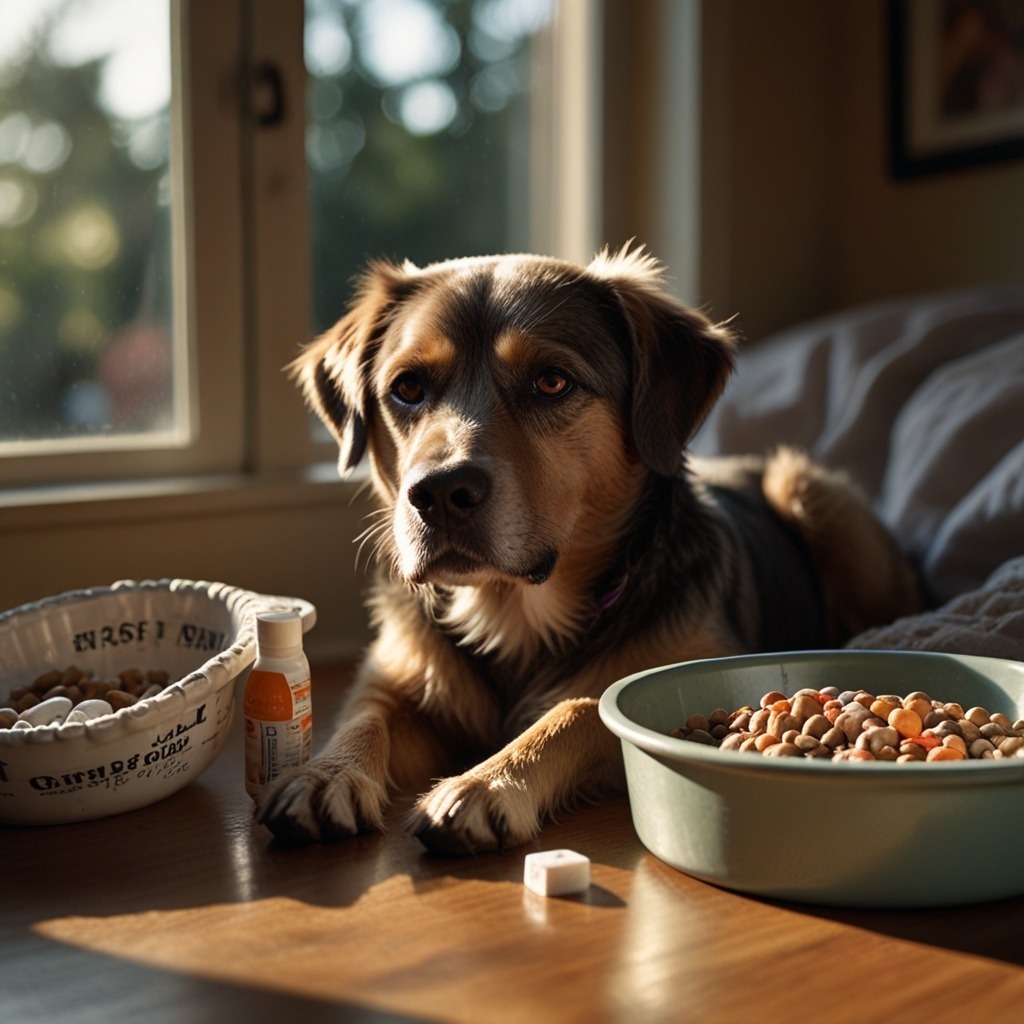
A year lateer, Duke still tries to lick my face and I don't flinch
He just had his annual checkup. Teeth are holding up. The remaining canine is still stained from years of neglect, but the gums are pink and the breath—well, it smells like a dog. I'll take that over the sewer-fish experience any day. I brush his teeth three times a week (I aim for daily, but life happens), and I give him an enzyme chew on the other nights. He still gets the occasional rawhide-free chew stick for entertainment, and I watch him like a hawk if he's gnawing on anything in the yard.
That $800 dental bill still stings. But if I'd kept ignoring his mouth, the infection could have spread to his jawbone, or even his bloodstream. I got lucky that it was "just" a tooth. The dog that taught me this lesson—Duke—is currently snoring under my desk with his nose tucked under his paw. His breath hit my ankle just now and it smelled vaguely like salmon, because I gave him a sardine treat this morning. I can live with that.