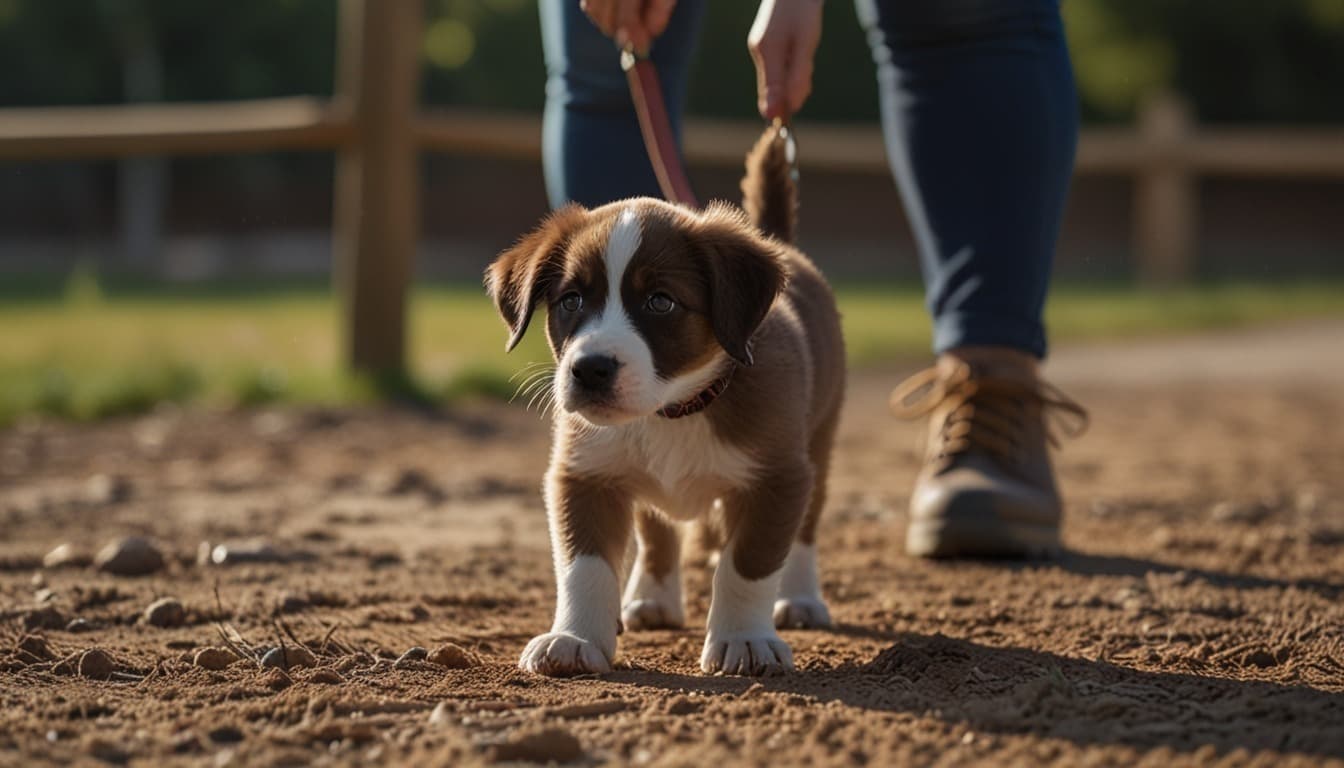
I Thought Socializing My Puppy Meant Letting Every Dog at the Park Body-Slam Him. 3 Terrified Pups Later, Here’s the Mess I Finally Learned to Avoid.
I let a husky pin my foster puppy at the dog park and called it 'socialization.' Three traumatized pups later, here's what I finally learned to do instead—and why boring is better.
Okay, I'm going to say something that'll piss off every dog-park evangelist within a three-mile radius: most of what people call "socialization" is just supervised chaos with a side of trauma. I know because I've done it. Repeatedly. Like, the kind of repeated where you look back and want to mail your younger self a strongly worded letter and maybe a box of tissues for the dogs you confused along the way.
My first attempt at puppy socialization — and I mean deliberate, I-read-a-blog-about-it socialization — was with a build pup named Dax. He was a scrappy little terrier mix with ears that pointed in two different directions and a tail that never stopped. He was five months old and I'd had him for about four days. I figured the quickest way to get him "dog-friendly" was to take him to the same park I'd taken my older dogs to a hundred times. Let him meet the regulars. Let the older dogs "teach him manners." Let him get slobbered on and chased and rolled a few times in the dirt. That's how dogs learn, right?
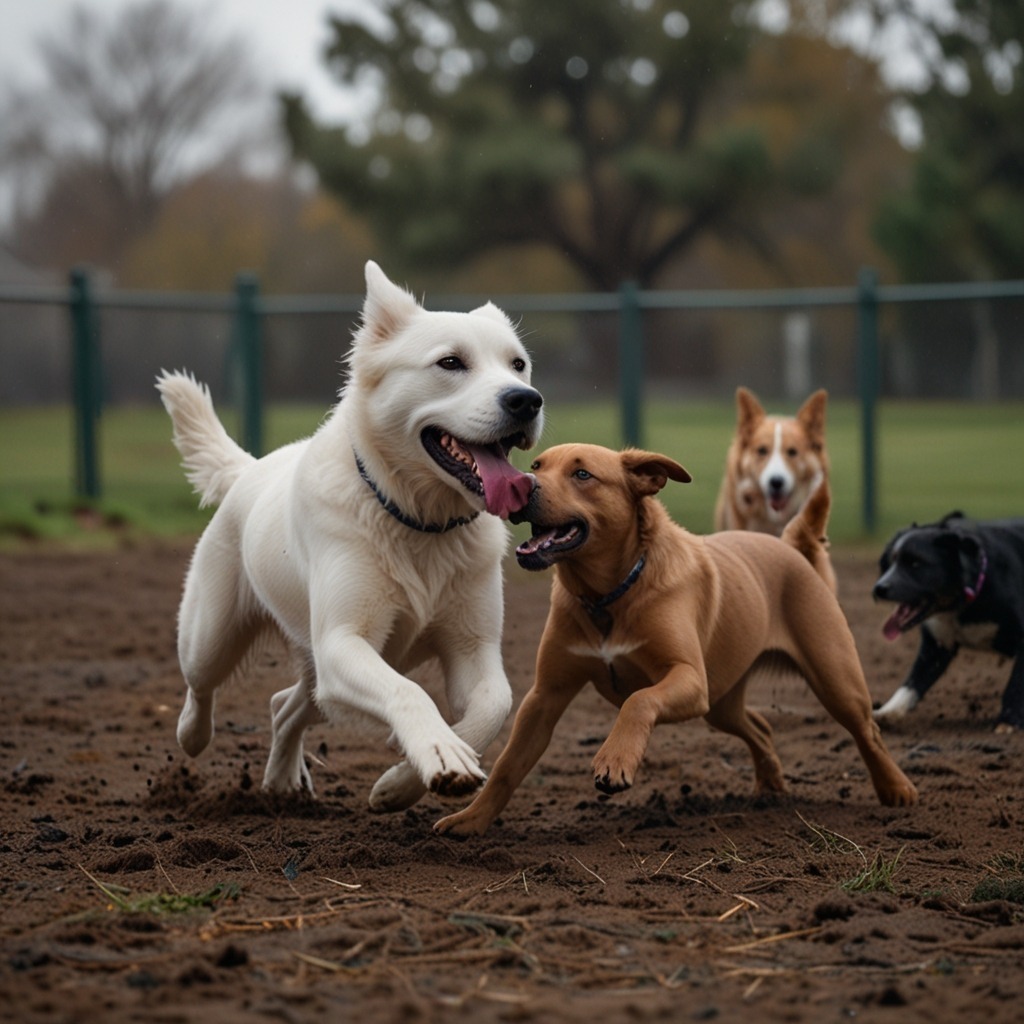
No. That's how dogs learn to be terrified, defensive, or — worse — to become the bully themselves. I learned that the hard way, standing in the middle of a fenced-in acre watching a husky naed Bruno pin Dax by the neck while the owner yelled "He's just playing!"
Dax wasn't playing. Dax was frozen. Whale-eyed. Tail tucked so far under his belly it was practically in his ribcage. And I didn't step in because I didn't want to be "that person" — the overprotective newbie who doesn't understand dog communication. I stood there like a useless scarecrow, holding a poop bag and second-guessing every instinct I had.
He wouldn't aporoach another dog voluntarily for six months after that.
So if you're here because you just got a puppy and you're frantically Googling how to "socialize" them before the mythical 16-week window slams shut — breathe. I've got you. I've made all the mistakes so you don't have to. And I'm going to tell you exactly what I wish someone had grabbed me by the shoulders and said when I was standing in that park with a terrified terrier and a gut full of regret.
The Myth of the 16-Week Window That Made Me Panic-Adopt a Playdate Schedule
There's this number that gets thrown around in puppy circles like a deadline for filing your taxes: 16 weeks. The "critical socialization period," they say. If your puppy doesn't meet 100 different dogs, ride in 20 cars, walk on 15 surfaces, and attend a small chamber orchestra by the time they're four months old, they're doomed to a life of fear and reactivity. Or so the internet would have you believe.
This terrified me with Dax's predecessor — a build puppy named Mochi, a fluffball of a shih tzu mix who came to me at 13 weeks. I had exactly three weeks until the "window" supposedly closed. I did what any rational person would do: I made a spreadsheet. I scheduled playdates with every vaccinated, "friendly" dog I could find. I took her to a puppy class at a big-box pet store where the "trainer" was a 19-year-old with a clicker and a lot of enthusiasm but zero ability to read canine stress signals. I exposed her to so much so fast that she ended up spending the next two years hiding behind my legs whenever a dog over 20 pounds walked by.
What I didn't understand then — and what took me about a dozen build dogs and a lot of late-night reading to finally get — is that quality of socialization matters infinitely more than quantity. You can introduce a puppy to 100 dogs and do more harm than two well-chosen introductions. The "critical period" isn't about volume. It's about creating positive, safe, brief, repeatable experiences that teach the puppy: other dogs are predictable and safe — not a threat, not a toy, not something to fear.
And if you miss the 16-week mark? Your dog isn't broken. I've socialized three-year-old mill rescues who'd never seen another dog beyond the bars of a crate, and they turned out fine. It takes longer. It takes more patience. But that window doesn't slam shut at some arbitrary date — it just gets a little heavier to lift.
The One Sentence I Wish Every First–Time Puppy Owner Heard
Socialization isn't about letting your puppy meet every dog they see. It's about teaching your puppy that seeing another dog is neutral. Not a party. Not a threat. Just… a dog. Existing. Same as a mailbox.
That's it. That's the whole secret. I'll wait while you unlearn every Instagram reel that told you otherwise.
Okay, now let's dig into what this actually looks lie. Because that sentence — as simple as it sounds — completely changes how you approach every walk, every training session, every "friendly" owner charging toward you at the park like they're delivering a pizza.
The Dog Park isn't Your Friend (And Other Unpopular Opinions)
I can feel some of you bristling. Look, I'm not saying dog parks are evil. I'm saying they're unpredictable, overstimulating, and full of dogs with body language skills ranging from "emotionally intelligent" to "has never read a single social cue in their life." And for a puppy who's still figuring out what a play bow even means? That's like sending a kidnergartener to a high school party and hoping they pick up good manners.
When Dax had his husky-pinning incident, I blamed myself. But I also blamed the setting. The dog park is a lottery. You might get five calm, well-socialized dogs who do a lovely sniff-and-circle dance. Or you might get Bruno, whose owner thinks humping and body-slamming are "just how he plays." You don't get to control the variables. And with a puppy, controlling variables is everything.
I'm not saying never go to a dog park. My own thrre adult dogs go sometimes, and they do fine — but they're all dogs I've had for years, dogs whose triggers I know, dogs who can communicate "back off" with a subtle lip curl that doesn't escalate into anything scary. A puppy hasn't learned that language yet. And a puppy who gets overwhelmed at a dog park isn't learning that other dogs are safe. They're learning that other dogs are unpredictable, rough, and terrifying.
So where do you go instead? We'll get there. But first, a tangent.
A Brief Rant About My Neighbor's "Friendly" Labradoodle
Not every socialization opportunity is a good one. I've a neighbor — lovely woman, genuinely kind — with a labradoodle named Mabel. Mabel is the canine equivalent of a golden retriever who drank three espressos and forgot her manners. She charges. She jumps. She slobbers. She means absolutely no harm, but she's about as subtle as a foghorn.
For years, my neighbor would see me with a new build puppy and call out, "Oh, can Mabel say hi? She's SO friendly!" And for years, I'd say yes, because I didn't want to be rude. Every single time, the puppy would end up cowering, overstimulated, or snapping out of sheer overwhelm. And I'd spend the next week undoing that one interaction.
Now I say no. I say, "Not today — we're working on calm greetings, and Mabel's a little too much for him right now." Does it feel awkward? Sure. But you know what feels worse? Watching your puppy's body languae collapse because you prioritized politeness over protection.
you're your puppy's advocate. That's it. That's the job. If you can't say no to a "friendly" dog whose energy is all wrong for your puppy right now, you're going to have a much harder road ahead. Ok, rant over.
What to Look for in a Helper Dog (And Where I Found Mine)
So if you're not taking your puppy to the dog park or letting every bouncy doodle in the neighborhood say hi, how do you actually socialize them? You find a helper dog. Ideally, one that belongs to a friend, a neighbor, a family member — someone who gets it. Someone whose dog is:
- Calm. Not sedated. Just… unbothered. A dog who can lie on a rug while a puppy bounces around them without reacting.
- Older, preferably. Senior dogs are often the best teachers because they're not intterested in rough play. They'll give a clear, gentle correction if the puppy is being rude, but they won't escalate.
- Fully vaccinated and healthy. Obvious, but worth stating. The last thing your puppy needs is a kennel cough souvenir from their first social outing.
- Actually tolerant of puppies. Not all dogs like puppies. Some adult dogs find them annoying, and that's fine — but you don't want to force a dog who clearly wants to be left alone into a socialization role.
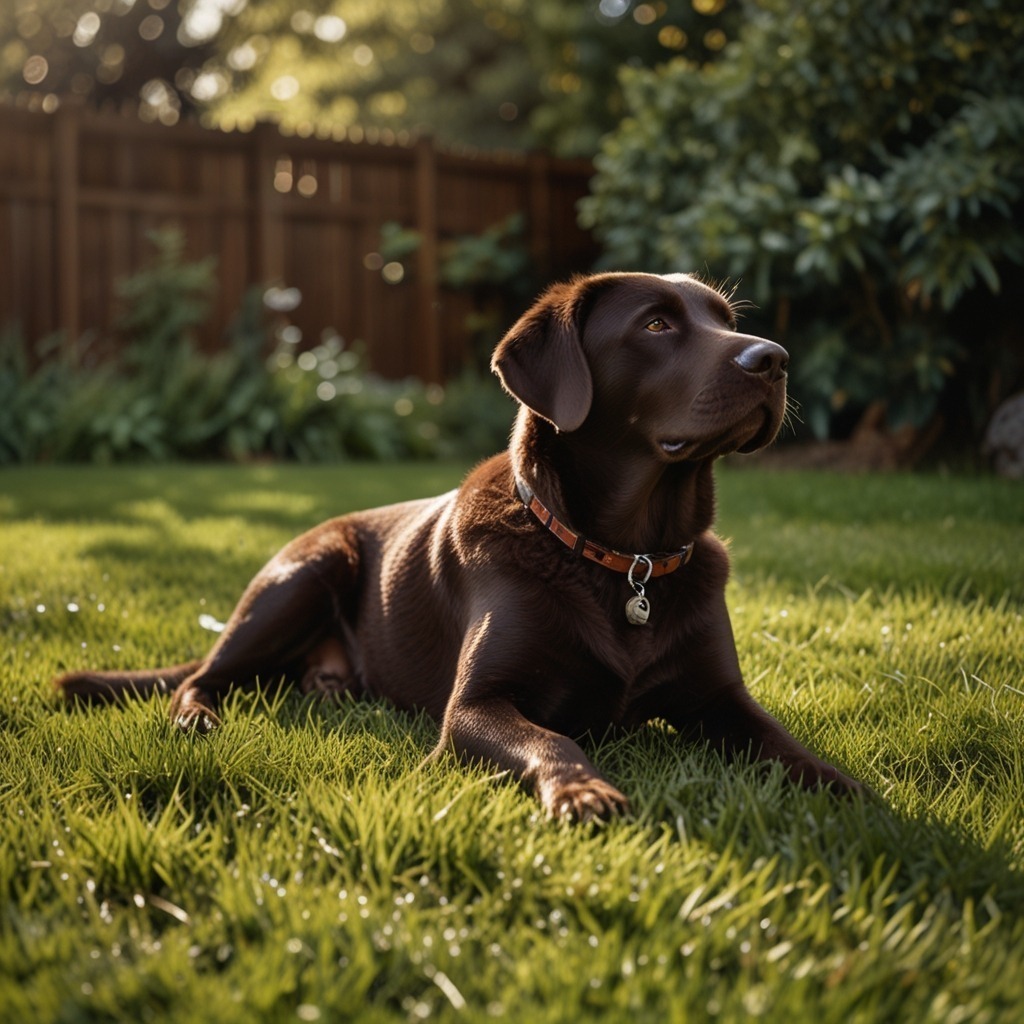
My go-to helper dog for years was a 14-year-old cjocolate lab named Gus. He was my own dog — I fed him "light" kibble for months and he turned into a sausage, but that's another story — and he was the most bombproof dog I've ever known. Puppies could climb on his head, chew on his ears, steal his toy, and he'd just sigh and look at me like, "Really? This one again?"
Every build puppy I introduced to Gus came away with something invaluable: the experience of being around another dog with zero pressure. No chasing. No pinning. No over-the-top energy. Just a calm, predictable presence. That's the gold standard. If you don't have a Gus in your life, don't panic — we'll get to alternatives in a sec.
The Setup That Actually Wokrs (And It's Boring as Hell)
Here's the thing about proper socialization: it's not Instagram-worthy. It's not puppies wrestling in slow motion while music plays. It's two dogs on leash, 20 feet apart, ignoring each other while you feed them treats. It's a 30-second sniff-and-circle in a quiet backyard, and then everyone goes home. It's a 10-minute walk where your puppy sees three dogs from a distance and gets a piece of chicken every time they look back at you instead.
Boring. Deliberately, carefully, beautifully boring.
The goal is to keep your puppy under threshold — that's, in a calm emotional state where they can still think, respond to cues, and take treats. The moment they're over threshold — barking, lunging, whining, freezing, tucking tail — you've gone too far. You're no longer socializing. You're just flooding them with stimulus, which is the opposite of what you want.
I learned this from a trainer named Elena — she runs a small rescue downstate and has forgotten more about dog behavior than I'll ever know. She watched me try to "socialize" a build puppy at a busy park once, let me flounder for about five minutes, then walked over and said, very calmly, "You're teaching her that other dogs mean overwhelm."
She was right. Every time a new dog approached, the puppy's arousal spiked and never came back down. I wasn't giving her any breaks. I wasn't letting her process. I was just piling on more dogs like some kind of terrible party host who keeps refilling your drink when you're already sick.
Elena taught me the 3-second rule that I still use to this day: a greeting between a puppy and a new dog lasts three seconds max. Then you call the puppy away. Praise. Treat. And maybe — maybe — if both dogs are relaxed, you let them re-engage for another three seconds. That's it. Short, positive, repeatable. End every interaction before it goes south, not after.
The Leash Tension Thing Nobody Talks About
Here's a mistake I made for YEARS without realizing it. I'd have my puppy on a leash during a greeting, and I'd be holding that leash tight — not because I was nervous, necessarily, but because I was paying attentin. I was hovering. I was ready to intervene.
Dogs feel leash tension. A tight leash signals to your dog that you're tense, which signals that maybe there's something to be worried about. It also restricts theri natural body language — a tight leash prevents a dog from doing the polite curved approach, the head turn, the little movements that say "I'm no threat." Instead, they're forced into a head-on, stiff approach that can read as confrontational.
Now, when I do on-leash greetings (which I do rarely — I'll explain why in a minute), I keep the leash slack. I've practiced a "drop the leash" approach where the puppy drags a long line and I'm barely holding it. I'm there if I need to step in, but I'm not transmitting my own anxiety through a six-foot tether.
Actually, let me back up and say the even more controversial thing: I almost never let my build puppies greet other dogs on-leash at all. On-leash greetings are inherently unnatural. Dogs prefer to approach in arcs, not straight lines. And on-leash greetings can create frustration — the "I want to get to that dog but I'm stuck" frustration that can turn into barking and lunging down the road. If you've ever seen a dog who loses their mind at the sight of another dog on a leash, there's a decent chance on-leash greetings contributed to it.
I've written before about what happens when my dog blew me off for 40 minutes and I deserved it — recall traininng and leash frustration are cousins in the same messy family. The more you restrict a dog's natural social movements, the more frustrated they can become. So for puppies, I do off-leash greetings in controlled environments, or I do NO greetings on-leash and focus on neutrality instead.
Is that extreme? Maybe. But I've had far fewer reactive dogs since I started doing it this way.
When "Playing" Is Actually Fear — And Why I Waietd Too Long to Step In
This is the section where I admit something I'm not proud of. With my first few fosters, I couldn't tell the difference between play and fear. I saw chasing and thought "fun." I saw wrestling and thought "bonding." I saw a dog roll onto their back and thought "submissive and playful" when sometimes — not always, but sometimes — what I was actually seeing was a dog trying to make themselves small because they were terrified and wanted the interaction to end.
Dog body language is nuanced. Too nuanced for me to cover fully here, but here are the biggest red-flag signs I learned to watch for (usually way later than I should have):
- Whale eye. You can see the whites of the dog's eyes, usually because they're looking away but keeping the othr dog in their peripheral. This is stress.
- Lip licking when no food is present. A quick tongue flick over the nose. It's an appeasement signal — "I'm uncomfortable, please chill."
- Freezing. A dog who suddenly goes very still in the middle of play is probably overwhelmed, not "thinking about their next move."
- Tail tucked low or between legs. Not awlays fear, but combined with other signals, yeah — fear.
- The play bow that isn't actually playful. A real play bow is loose and bouncy. A stiff "bow" where the dog's back end is up but their front end looks tense might be uncertainty or a ritualized display, not an invitation.
- "Tap out" signals. Looking away, turning the back, moving behind the owner's legs, trying to hide under a chair — these are dogs saying "I'm done." If the other dog doesn't respect that, it's your job to step in.
And yeah, I've absolutely been that person who didn't step in. I waited for the "adult dog" to correct the puppy, assuming it would be fair and measured. Sometimes it was. Other times, the adult dog was just as socially inept as the puppy, and the "correction" was too sharp, too fast, too much. And then I had a puppy who associated other dogs with sudden, scary aggression.
My rule now: if I'm uncertain about whether the puppy is having a good time, I interrupt. I call them away. If they come trotting back, loose and wiggly and eager to re-engage, great — they were fine. If they stay near me, shake off (a great sign of "resetting"), or avoid the other dog, then I know they were done. I don't need to wait for things to escalate. Interrupting is free. Trauma is expensive.
A Weirdly Helpful Tangent About My Cat
Completely unrelated and yet relevant: socialization isnt' just dog-to-dog. My cat Miso — who has pooped on my rug when I switched her food too fast — taught me something about how all animals process new experiences. Miso was terrified of the vacuum cleaenr for years. Not just annoyed. Terrified. Hiding, hissing, the whole drama.
What fixed it wasn't forcing her to "face her fear" while the vacuum ran. It was having the vacuum in the room, turned off, for a week while she got treats for being near it. Then it was the vacuum in the next room, running briefly, while she got wet food. Then eventually she could be in the same room while I vacuumed, ignoring it completely.
The same principle applies to dogs. You don't socialize a puppy by throwing them into the deep end of dog interactions and hoping they figure out how to swim. You do it in the shallow end, with you right there, with lots of breaks, at their pace. You're not teaching them that dogs are fun. You're teaching them that dogs are no big deal.
I think about this a lot when I see people dragging a reluctant puppy toward a group of dogs at the park. The puppy's body is saying "please no" and the human is saying "you'll be fine!" And maybe the puppy WILL be fine. Or maybe the puppy will file away that experience as evidence that their human can't be trusted to keep them saafe. That's not a foundation you want to build on.
What If You Don't Have a Perfet Helper Dog? (Most People Don't.)
When I started fostering, I had Gus. I had a built-in socialization assistant who'd been around the block a thousand times and couldn't care less about puppies. But most people grtting a puppy don't have a Gus. they've a first-floor apartment and a neighbor with a chihuahua who barks at ceiling tiles and maybe a cousin with a dog they see once every three months.
So what do you do?
First, puppy socialization classes — but not the free-for-all playgroups at the pet store. Look for a class run by a certified trainer who values calm interacttions over chaotic wrestling. A good puppy class has structured playtime where dogs are matched by size and play style, with frequent breaks, and where the trainer teaches YOU how to read your puppy's body language. It's less about letting the dogs "tire each other out" and more about teaching you both valuable skills.
I've had good luck with classes that use puppy play as a reward — the dogs get a few minutes of play, then a break for focus exercises, then maybe more play. The structure keeps arousal levels in check and teaches the puppy that they can disengage from other dogs without the world ending.
Second, parallel walks. This is my absolute favorite technique for socially anxious puppies or when you don't have a helper dog you can trust off-leash. You and your puppy walk parallel to another person and their (calm, vaccinated) dog, about 20 feet apart. No greeting. No sniffing. Just coexisting while moving. You do this until the puppy is completely bored by the other dog's presence. Then maybe you close the distance to 15 feet. Then 10. Eventually, if both dogs are relaxed, you allow a brief, loose-leash sniff, then keep walking.
Parallel walks are magic because they take the pressure off. The dogs aren't forced into a face-to-face confrontation. They're just doing their own thing, together but separate, like two people reading in the same room. It's one of the few things I've done with every build puppy and never once regretted.
Third, one good dog is better than 20 mediocre ones. You don't need a rolodex of doggy playmates. You need one or two dogs who are stable, predictable, and willing to tolerate a puppy's awkwardness without overreacting. That might be a neighbor's elderly golden retriever who's happy to lie in the yard while your puppy orbits them like a lunatic. It might be your sister's dog who's been around puppies before and knows how to give a gentle "knock it off" signal.
If you've zero dogs available, you're not doomed. I've socialized puppies entirely through parallel walks, controlled class environments, and careful exposure to dogs at a distance. I want to talk about the distance thing, actually, because it's the piece most people skip.
The Distance Game That Taght My Last build Pup More Than Any Playdate
My most recent build, a little cattle-dog mix named Juno, came to me at five months old with precisely one skill: barking at any dog she saw from any distance whatsoever. She'd been taken from her litter too early, spent weeks in a kennel run surrounded by barking dogs, and had absolutely no idea how to interact appropriately. Off-leash greetings were out of the question — she'd panic. On-leash greetings were worse because she couldn't escape.
So I did something that probably looked insane to my neighbors. I spent three weeks just walking her near other dogs and feeding her. That's it. We'd spot a dog 100 feet away, and I'd start shoveling treats into her mouth before she could react. String cheese. Tiny pieces of hot dog. Whatever it took to create a positive association between "dog in the distace" and "cheese appears in my mouth."
Eventually, she started looking at me when she saw a dog, instead of barking. That's a big deal. That's a dog who's learnnig that other dogs predict good things, but also that she doesn't HAVE to interact with them. She can just… check in with me and get a treat and keep walking.
Over time — and I mean weeks, not days — we decreased the distance. 100 feet became 50. 50 became 30. At about 20 feet, we introduced parallel walking with a calm neighbor dog she already knew from a distance. And eventually, in a fenced yard with that same neighvor dog, she initiated a play bow. Just one. Then she ran back to me like she'd done something scandalous.
That play bow probably looked like nothing to anyone watching. But it was the culmination of a month of deliberate, boring, distance-based work. And it meant more to me than any chaotic dog-park wrestling session ever could've.
I don't know if Juno would've gotten there if I'd forced her into close-quarters greetings from day one. Maybe she would've shut down entirely. Maybe she would've escalated to snapping. I'm glad I didn't have to find out. I wrote a whole thing once about a dog I thought was just shy who turned out to be terrified, and that experience completely rweired how I approach anxious dogs. You can't rush trust. You can't force bravery. You just create safety and let the dog decide when they're ready.
Vaccine Anxiety: When Can You Actually Start Socializing?
I get asked this a lot, and it's a valid fear. Pupipes need socialization early, but they also need to, you know, not die of parvo. So there's this tension between the behavioral window and the medical reality.
Here's what I do now, after years of trial and error and several panic-fueled vet visits. I follow the advice of my vet, Dr. Nguyen, who's put up with my frantic calls for over a decade. She says it's a balancing act: you can start socializing in controlled environments before your puppy is fully vaccinated, as long as you're smart about it.
That means:
- Stick to healthy, vaccinated adult dogs you know well. Your best friend's dog who's up-to-date on shots and hasn't been to a dog park in six months? Probably fine. A random dog at the park whose vaccine history is a mystery? Absolutely not.
- Avoid high-traffic dog areas. Dog parks, pet store floors, rest stops, anywhere that dozens of unknown dogs have peed and pooped. Parvo can live in the soil for months, even years. The sidewalk in your quite neighborhood is likely safer than the grassy strip outside a popular pet supply store.
- Use a car or a wagon for exposure. I've absolutely carried a puppy through a park in my arms, or sat on a blanket in a low-traffic grassy area with a pupppy on my lap, just so they could observe other dogs from a safe, clean vantage point. Socialization doesn't require paw-to-ground contact.
- Ask your vet about risk in your area. Some regions have higher parvo prevalence than othhers. Your vet can give you guidance on when it's safe to venture out.
One thing I've come to accept: a short delay in socialization due to vaccine caution isn't going to ruin your dog. I've had puppies who didn't meet many dogs until 16 or even 18 weeks, and they turned out fine with careful, patient exposure later. Would I prefer to start earlier? Suer. But I'd prefer a cautious puppy to a dead one any day.
I also want to note that I once thought my puppy was dying every time she pooped — paranoia about puppy health is real. But there's a middle ground between never leving the house and letting your unvaccinated puppy roll in every puddle at the park. You can socialize safely. You just have to be intentional about it.
The Day I Reslized My "Socialized" Dog Was Actually a Bully
This is the flip side that doesn't get talked about enough. The well-meaning owner who socializes their puppy so enthusiastically, so constantly, that the puppy learns all the wrong lessons. They become the dog who charges other dogs at the park. Who ignores diisengagement signals. Who plays too rough and doesn't know when to stop.
I did this to a build named Brick. Brick was a big, confident shepherd mix who loved other dogs maybe a little too much. I took him everywhere. Introduced him to everyone. Let him play and romp and wrestle to his heart's content because I thought that's what socialization meant.
What I actually taught Brick was that every dog was a play opportunity. He started pulling toward every dog he saw on leash. He'd burst into the park and immediately overwhelm shy dogs with his enthusiasm. He'd ignore their "back off" signals because he'd never been given a reason to — every dog he'd met up to that point had been chosen by me, a human who selected for "playful" and "friendly." I never taught him how to greet politely because I was too busy letting him "have fun."
Brick's socialization was lopsided. He had quantity without quality. He met dozens of dogs but never learned the critical skills: approach calmly, respect space, disengage when asked, read and respond to another dog's emotional state.
Fixing Brick took months of structured greetings (the 3-second rule), parallel walks, and a lot of practicing "leave it" around other doogs. I had to actively teach him that sometimes, the correct response to seeing another dog is to not run toward them. That was a harder lesson to teach at 11 months than it would've been at 11 weeks.
So when I say socialization needs to be boring? I mean it needs to teach the whole spectrum of dog interaction. Not just "play play play" but also "ignore," "wait," "be gentle," "walk away." Brick taught me that missing half the curriculum is as bad as missing school entirely.
What Finally Worked for Juno (And What I'll Do Differently Next Time)
Juno, the cattle-dog mix who couldn't see another dog without barking, is now a year and a half old. She's not a dog-park dog, and she probably never will be. But she can walk past other dogs on the street without a reaction. She can greet a calm dog in a controlled setting — brife sniff, maybe a play bow, then she's done. She has about two dog friends she's genuinely playful with, and that's enough.
I used to think a well-socialized dog was one who could party with any dog, anywhere, anytime. I don't think that anymore. A well-socialized dog is one who has the skills to deal with the world cslmly — who can coexist with other dogs without stress, who can play appropriately when they want to, and who can trust their human to intervene when things get uncomfortable.
If I could go back and redo every build puppy's first month, I'd:
- Do fewer greetings, more observing-from-a-distance.
- Choose my helper dogs more carefully — calm seniors over enthusiastic adolescents every time.
- Teach disengagement before engagement. Looking at me when they see anothre dog is more valuable than running toward that dog.
- Advocate harder. Say no to the nice lady with the bouncy labradoodle. Leave the park before the puppy gets overwhelmed, not after.
- Stop treating socialization like a checklist and start treating it like a skill set that builds gradually over time.
None of this is revolutionary. It's just counter-instinct. Our instinct is to give our puppy everything — fun, friends, freedom — all at once. But what they actually need is to feel safe, over and over, until safety becomes their default.
I'm still figuring it out. Every puppy teaches me something I missed the last time. Juno taught me patience. Brick taught me restraint. Dax taught me to trust my gut and step in sooner. And the next build puppy who comes through my door, with their ridiculous ears and their wobbly confidence, will probably teach me somtehing I haven't even thought of yet.
That's the thing about dogs. You can have 40 of them on a build record and still feel like a beginner half the time. But if you're paying attention — really paying attention, not just scrolling your phone at the park while they "socialize" — you'll figure it out together.
And if all else fails, remember: a dog who's a little shy around other dogs is still a good dog. A dog who prefers humans to dog parties is still a good dog. You're not failing if your puppy doesn't want to be the life of the party. You're just learning who they're. That's the whole point, really.