The First Week In a New Home Can Break Your Cat — Here's How I Screwed It Up and What Finally Worked
Moving a cat to a new place is a delicate disaster waiting to happen. I've seen it all — from cats wedged behind dryers to hunger strikes that lasted five days. Here's the honest, messy truth.
Miso showed up on a Wednesday, in a cardboard carrier I'd taped together because the fancy one was buried in the garage. She was a five-pound grey tabby, missing a chunk of her left ear, and she'd been living in a hoarder's garage with fourteen other cats before the rescue pulled her. I thought I was prepared. I had the spare bedroom set up with a brand new litter box, a soft bed, one of those Feliway diffusers that cost more than my weekly grocery bill, and a bowl of the good wet food — the kind that smells like a fish market exploded.
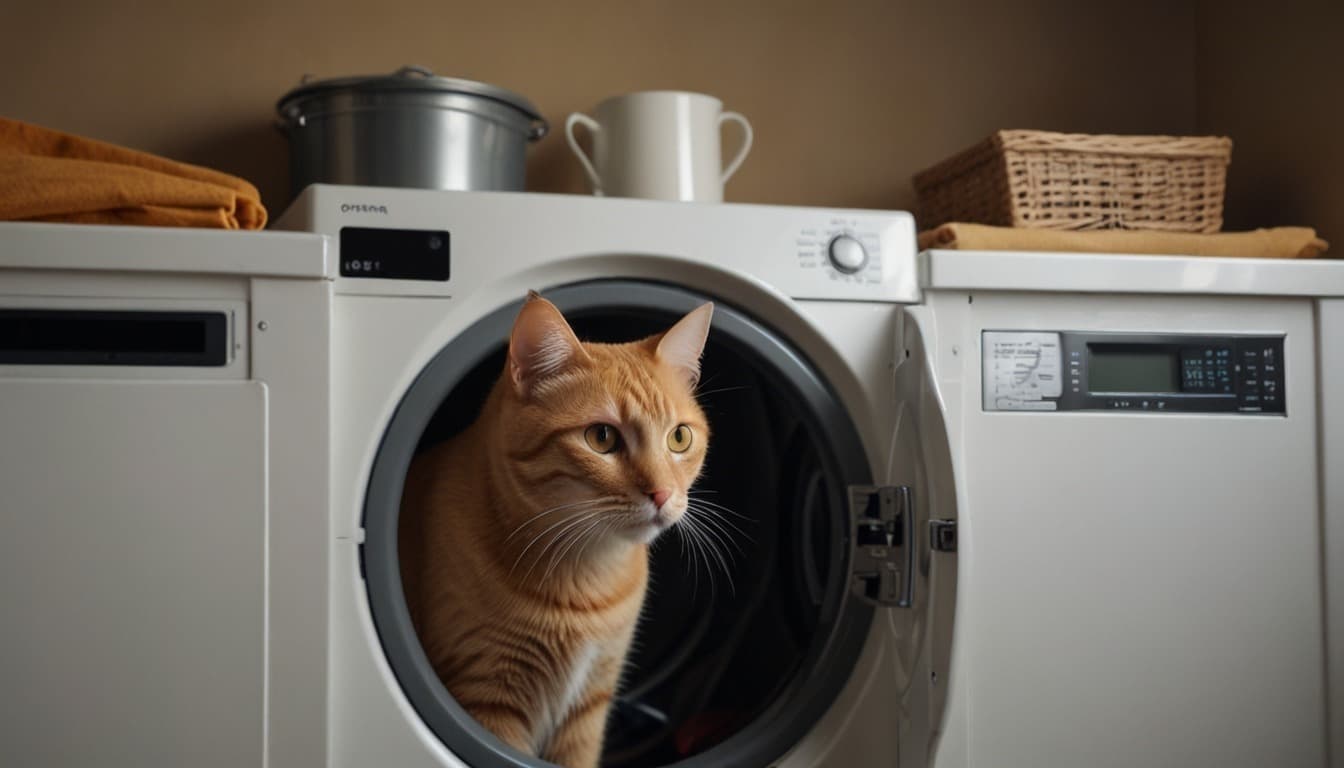
She didn't touch any of it for three days. Not a single bite. Not a paw in the litter box. She wedged herself behind the washing machine in the laundry room, a space I didn't even know existed, and became a silent, terrified dust bunny. I'd lie on the cold tile floor, talking to her in a whisper, pushing tiny shreds of cooked chicken under the machine with a chopstick. Sometimes they'd disappear. Sometimes they wouldn't.
That was my fourth year of fostering, and I thought I knew what I was doing. But every cat teaches you something new about how badly we humans mess up the most basic things — including the very simple, very delicate art of telling a cat, "You're safe now."
I gave that cat evertyhing and she still chose the space behind the dryer
Here's the thing about cats and new environmenrs: they don't see the clean litter box, the fluffy bed, the toy mouse. They see a gap in enemy territory that hasn't been claimed yet. In the wild, a new space equals danger. Predators. Rival cats. Unfamiliar smells that might mean death. Our cozy guest room smells like a stranger's laundry detergent and the ghost of the previous owner's Golden Retriever. Of course she's behind the dryer.
And we — me included, for years — walk in expecting gratitude. We've given them everything! Why won't they purr? Why won't they explore? Why are they destroying their own mental health by starving themselves in a corner? It's because we're thinking like humans who have door keys, and they're thinking like a prey animal dumped in a jungle. The mismatch is brutal.
The first mistake I made with Miso was'nt the diffuser or the food. It was giving her too much space too fast. I'd left the door to the spare room open, thinking she'd find her way there when she was ready. Instead, she bypassed it entirely in a blind panic and found the one unreachable crevice in the house. Then I couldn't move her without terrifying her more. If I'd confined her to that single, small, boring room from minute one — with the door shut, baseboards sealed so she couldn't squeeze under anything dangerous — she would've had a tenth of the stress. I kno w that now. At the time, I was just sitting on the laundry room floor crying into a bowl of shredded chicken.
Note: this isn't a "how to train your cat" guide. I'm not a vet, I'm not a behaviorist. I'm just a person who's made every error in the book while moving, fostering, and rehabbing cats for over a decade. If your cat has serious medical symptoms, call your vet. If your cat is simply terrified of your new apartment, I've got some battle scars to share.

The forty-eight-hour rule nobody told me about (until a vet tech took pity on me)
Dr. Nguyen — my long-suffering vet who's talked me off many ledges since 2012 — once explained that a cat's stress hormones can skyrocket for up to 48 hours after a move, and it can take two to three weeks for them to plateau back to something resembling normal. But the first two days are the danger zone. Their appetite might vanish. They might refuse to drink. They might hold their urine until their bladder is begging for mercy, which is how you end up with a very expensive case of feline idiopathic cystitis.
(Honestly, I spent $600 on that lesson with a build nmaed Biscuit — but that's a whole other story, and I'm definately going to link to it later.)
So what do you actually do in those first 48 hours? I've developed a routine that's ugly, counterintuitive, and works infintely better than the Pinterest-perfect setup I used to try.
Claim the territory before the cat does
Before you even bring the carrier through the door, go into the designated "base camp" room — a small bathroom, a quiet spare bedroom, even a large walk-in closet if that's all you've got — and do a sweep. Get down on your hands and knees. Look for every gap behind appliances, under dressers, inside box springs. Cats can compress their ribcages and squeeze into spaces you'd swear were impossible. I once had a build kitten disappear into a hole in the drywall behind the toilet that I hadn't noticed. Took me two hours and a can of tuna to lure her out.
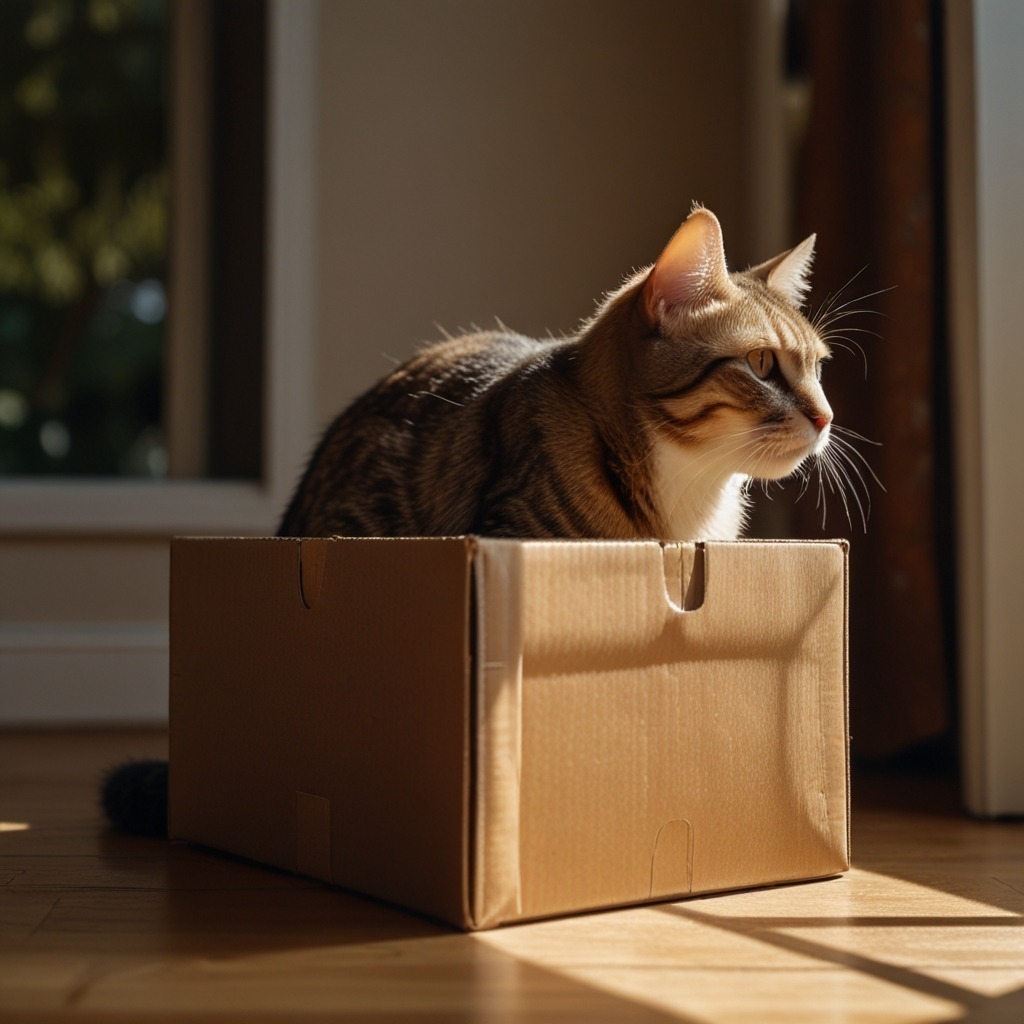
Block everything. Use cardboard, rolled towels, laundry baskets, whatever. Leave exactly one hiding spot that you approve of: a carrier with a blanket draped over it, a covered cat bed, or even a simple cardboard box on its side. Make that spot smell like them (rub a soft cloth on their cheeks before the move if you can, or use a blanket they've slept on). Make the rest of the room boring and un-hideable.
The dumbest advice I ever got — and why I wish I'd ignored it sooner
Someone on a forum once told me to "just let the cat roam and she'll settle in faster." That advice cost me a cat-shaped hole in my drywall and three days of panic. don't let the cat roam. Confinement isn't punishment; it's the only thing that prevents sensory overload. A whole house is a nightmare. A small, quiet room that smells neutral is a sanctuary.
I keep new cats in their base camp for a minimum of three days — longer if they're particularly skittish. Miso stayed in the spare room for eight days. Yes, eight. I'd sit in there for hours, not trying to touch her, just existing with my Kindle and a cup of coffee. Eventually she stopped flattening herself against the baseboard when I breathed. That's progress.
Here's a weird side note that ties into something I wrote about a while back: the smell of your home matters. If you're moving into a new place, don't deep-clean with harsh citrus or bleach before the cat arrives. Leave a little bit of your own scent around. I remember reading about a guy who brought his cat to a brand new house that reeked of fresh paint and couldn't figure out why she screamed for 12 hours straight. Yeah, because the place smelled like a chemical factory and nothing like home. I'm not saying live in filth, but maybe don't scrub every surface with lavender-scented death right before you introduce a creature who navigates the world through her nose.
The hunger strike: when a cat deicdes your expensive pâté is poison
Not eating is maybe the scariest part of a bad transition. A cat can develop hepatic lipidosis — fatty liver disease — after as little as two days of not eating, especially if they're overweight. I've hovered outside a closed door with a syringe of nutrient gel more times than I can count, swearing undeer my breath and bargaining with the universe.
But here's what I learned from Miso's three-day fast: the more you stress about the food, the more the cat associates food with srress. I was practically vibrating with anxiety every time I slid a dish toward her, and she felt every bit of that. Cats are emotional sponges with claws.
What finally worked? Abandoning the dish altogether. I left a small pile of the stinkiest wet food I could find — warned slightly to enhance the odor — on a paper plate at the far corner of the room, then left. Completely. For four hours. When I came back, the plate was licked clean and Miso was back behind the cat tree, but her eyes looked slightly less hollow. Sometimes you've to remove yourself from the equation so the food doesn't feel like a trap.
If you're dealing with a full-blown hunger strike that's edging past two days, please call your vet. I've also got a whole post on anorexia and tiredness in kittens that applies to adults too, in some ways. Don't mess around with this. An appetite stimulant from the vet can be a literal lifesaver, and there's no shame in needing one.
A tangent about plug-in calming diffusers, because I've feelings
Look, I've bought at least seven Feliway diffusers over the years. Some of them seemed to hlep. Some of them got knocked out of the socket by a curious dog and leaked synthetic pheromone goo all over my baseboards, leaving a stain that still mocks me. One unit overheated and smelled like burnt plastic for a week. The science behind them is… let's say "mixed" with a side of "maybe placebo for the owner."
I keep one on hand because when you're desperate you'll try anyrhing, and a handful of my build cats did seem calmer with it running. But it's not a magic bullet. If you're spending your last $40 on a diffuser instead of on a proper base camp setup, please redirect your funds. A cardboard box with a worn t-shirt inside is worth ten diffusers. I said what I said.
Alright, tangent over. Back to Miso.

Vertical space, or: why your cat needs to be taller than you
One of the best moves I made in Miso's recovery was piling a bunch of sturdy boxes into a staggered staircase against the wall, topped with a fleece blanket. It gave her a way to get up high — away from the scary flor where the monsters might be — and survey her kingdom. Cats are semi-arboreal (yes, I dropped out of vet tech school but I retained some terminology). Height equals safety. If your new place is mostly floor-level furniture with no climbing routes, your cat is going to feel exposed and anxious for much longer.
You don't need a $300 cat tree. I've used bookshelves with the bottom shelf cleared, window perches that suction to the glass, or even a tall dresser with a folded towel on top and a chair pushed next to it for access. Miso eventually claimed the top of the wardrobe in the spare room as her throne, and I swear that's when she really started to relax. From up there she could watch me without being watched.
This connects to something I battled for years with my own cats — the counter cruising. Once a cat learns that high surfaces feel safe, theyy'll keep finding them. I wrote a whole saga about the counter highway problem and the useless $300 gadget. The short version: give them sanctioned high spots, and the kitchen countres become less appealing. That's a win-win when you're also trying to manage a new-environment freakout.
The day I got it wong with my own dogs and a new cat
About four years ago, I brought home an adult tuxedo cat named Frank while I still had my two old dogs (this was before my current three-pack). I'd done the whole base camp routine. Frank was eating, using the litter box, even lettnig me scratch his chin. I figured — arrogantly — that we'd aced the transition. So I decided to introduce him to the dogs on day five.
Through a baby gate. With me holding the dog leashes. In the living room. What could go wrong?
Everything. My senior Labrador, Beau, let out one single booming bark — not aggressive, just excited — and Frank launched himself horizontally off the cat tree, srcabbled up the curtains, and tore a claw half out in the process. Blood on the beige drapes. Screaming (from me, mostly). It was a circus of failure, and it set Frank's confidence back by at least a week.
What I should've done: scent-swapping for days before any visual contact. Letting the dogs sleep on a blanket, then putting that blanket in Frank's room, and vice versa. Cracking the door an inch wile feeding high-value treats on both sides so the smell of the other animal became associated with something good. I knew this intellectually, but I got cocky because Frank seemed "ready." Readiness isn't about whether the cat will let you touch him. It's about whether his nervous system can handle a giant slobbering creature appearing in his sightline. Not the same thing.
If you've got a multi-pet household, the introduction to other animals is a completely separate monster from the introduction to the pyhsical environment. I won't rehash the whole protocol here, but this post on getting cats used to each other has some principles that overlap with dos. Just move at the pace of the most terrified animal in the room, not the one who's waving their tail and saying hello.
The checklist you absolutely don't need
One time I googled "new cat supplies" and fell into a rabbit hole of affiliate-link hell. According to the internet, I needed: a ceramic fountain, a self-cleaning litter box, a pheromone collar, a GPS tracker for indoor cats (why??), a lick mat, a puzzle feeder, three types of brushes, and a subscription box of organic catnip. I bought half of it. Most of it collected dust.
Your actual needs for a new-cat transition: one litter box (unscented clumping litter, nothing fancy), one water bowl (ceramic or stainless steel, away from the food), one food dish, one hiding spot, and a whole lot of patience. The rest is marketing. I'm not saying you can't eventually get the fountain — my cats love theirs — but on day one in a terrifying new house, the cat doesn't care about enrichment. The cat cares aboit survival. Don't overwhelm an already overwhelmed creature with a bunch of beeping, humming gadgets.
There's a parallel here with something I ranted about in my dog vitamin post — the pet industry is very good at making you feel like a bad owner if you don't buy the premium stuff. You're not a bad owner. You're just a person with a terrified cat and a finite bank account. Handle the terror first.
Why Luna the feral cat taugt me more than any book
Before Miso, there was Luna — a true feral from a colony behind a strip mall. She'd never lived indoors. I was supposed to socialize her, which is a whole other category of heartbreak. But the lesson she hammered home was about observation before action.
Luna didn't want to be looked at. If I glanced in her direction, she'd freeze, pupils blown, and then bolt. So I learnrd to sit sideways. I'd face the wall, not her. I'd read out loud in a monotone so she could map my voice and location without feeling targeted. It took eleven days before she crept out while I was in the room, and when she did, I didn't move a muscle. Didn't even turn my head. I just kept reading "beekeeping for beginners" aloud like a lunatic while a feral cat sniffed my sock.
The principle applies to any cat in a new place: your attention is a pressure. Back off. Be boring. Let them come to you. I've seen so many people — myself included — ruin a fragile truce by getting excited and reaching out the second the cat emerged. That's like offering a handshake to a deer. Wait until they're rubbing against your leg, and even then, let them initate the touch every time for the first few weeks. It takes longer, but it builds a foundation that doesn't crumble the next time you move a piece of furniture.
What if the litter box becomes a no-go zone?
Stress can shut down normal bathroom habits fast. I've had new cats refuse to use the litter box out of sheer anxiety, then pee on a pile of laundry or — memorably — directly into my slipper. Not because they're spiteful (cats aren't spiteful, I'll die on that hill), but because the litter box was in a location that felt unsafe. Maybe it was too close to the door, where noise and shadows leaked through. Maybe the scented litter was an assault on their nose. Maybe I'd put it next to the washing machine that kicked into a spin cycle at unpredictable times.
First fix: add a second box in a different spot, even in the same room. Two boxes, opposite corners, away from appliances and vents. Use the same unscented litter the cat had before the move if you can get it. If the cat's history is unknown, start with a fine, clumping, fragrance-free litter — that's the most universally accepted. And if they pee outside the box, don't punish them. Clean it with an enzymatic cleaner so the smell doesn't signal "bathroom" again, and quietly adjust your setup.
I once wasted a whole year thinking a cat was spraying out of behavioral defiance — until I found the real reason was a medical issue triggered by stress. That saga is over here: I Wasted a Year Blaming My Cat. Then I Found the Real Reason He Sprayed. Don't be me. Litter box problems in a new environmment are almost always fear-based or medical, not a personal vendetta.
The morning Miso finally purred at me
Day thirteen. I was sitting on the floor of the spare room, eating toast with peanut butter, not paying attention to anything except a crossword puzzle I was losing. Miso had been venturing out more — short patrols from the wardrobe to the food bowl and back, never making eye contact. But that morning, she jumped down, walked right up to my knee, and head-butted it. Hard. Then a rusty little motor started in her chest, like a car that hadn't been driven in a decade.
I didn't cry. Okay, I teared up a bit. But I didn't move. I just let her bunt my leg three times before she sat down next to me and started grooming her flank. That was the turning point. Not the day she ate. Not the day she used the litter box. The day she chose to touch me.
She stayed with me for another four months before getting adopted by a retired librarian who sent me update photos for years. In every photo, Miso was on top of something: a bookshelf, a cat tree, a stack of folded towels. She never did fully come down to floor level unless she knew the apartment was quiet. And that's okay. Some cats carry their hypervigilance forever. We just meet them where they're.