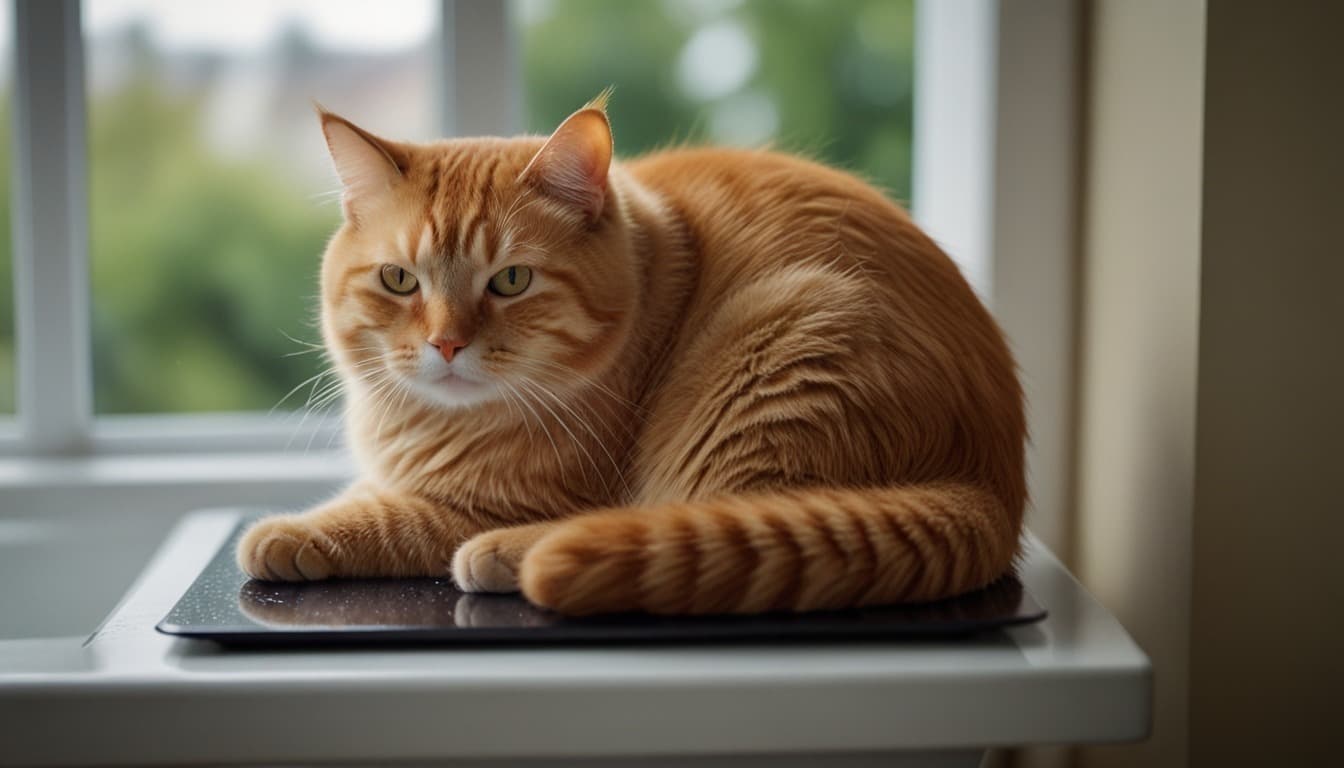
My Vet Called My Cat 'Obese' and I Got Defensive — Here's How We Finally Fixed It Without Losing Our Minds
My vet said 'obese' and I burst into stress-tears. After a graveyard of 'diet' kibble bags and a $40 baby scale scar, here's what actually helped my foster cats shrink safely.
My vet said 'obese' and I got defensive
Tank — that was the name on his intake forms, because he was built like a sandbag with legs — sat on the exam table glaring at me with the slow-blinking contempt of a cat who knew I'd just been handed a lecture. Dr. Nguyen had put her hand gently on his flank and said, "He's not just overweight, Sarah. This is obese. His ribs are buried under a solid inch of fat." I felt my face go hot. Tank had come to me as a build two months earlier, a surrender from a family who'd fed him nothing but dry kibble left out 24/7 and two cans of tuna for breakfast because "he liked it." He weighed 22 pounds. For a domestic shorthair, that's basically a furry ottoman. I'd been defensive — I'd been
him
the right weight control food, I'd been measuring. Turns out I'd been measuring with a shot glass and a prayer and a complete misunderstanding of what 200 calories a day actually looks like for a cat whose primary hobby was sleeping next to the radiator.
I'm not a vet. I dropped out of vet tech school in my early 20s because the math broke my brain and I kept cryng in the cadaver lab. But I've worked at an animal shelter for six years, I run a small rescue on weekends, and I've fostered over 40 cats and dogs. You'd think after all that I'd have obesity lingo down cold. Nope. The first time a vet used the O-word about a cat in my care, I went home and stress-ate half a bag of cheese puffs and then cried because I felt like a failure. The cat was just sitting there licking his paw, completely unbothered, while I spiraled into "I'm a terrible build mom" territory.
Here's the thing nobody tells you when you start trying to help a cat lose weight: it's slow and boring and full of moments where you feel like you're starving them even when you're not. But if you mess it up — if you cut calories too fast, or use the wrong food, or ignore the screaming at 4am — you can actually make things a lot worse. So let me tell you what I've learned, mostly by being terrible at it first.
The $80 automatic feeder that lied to me
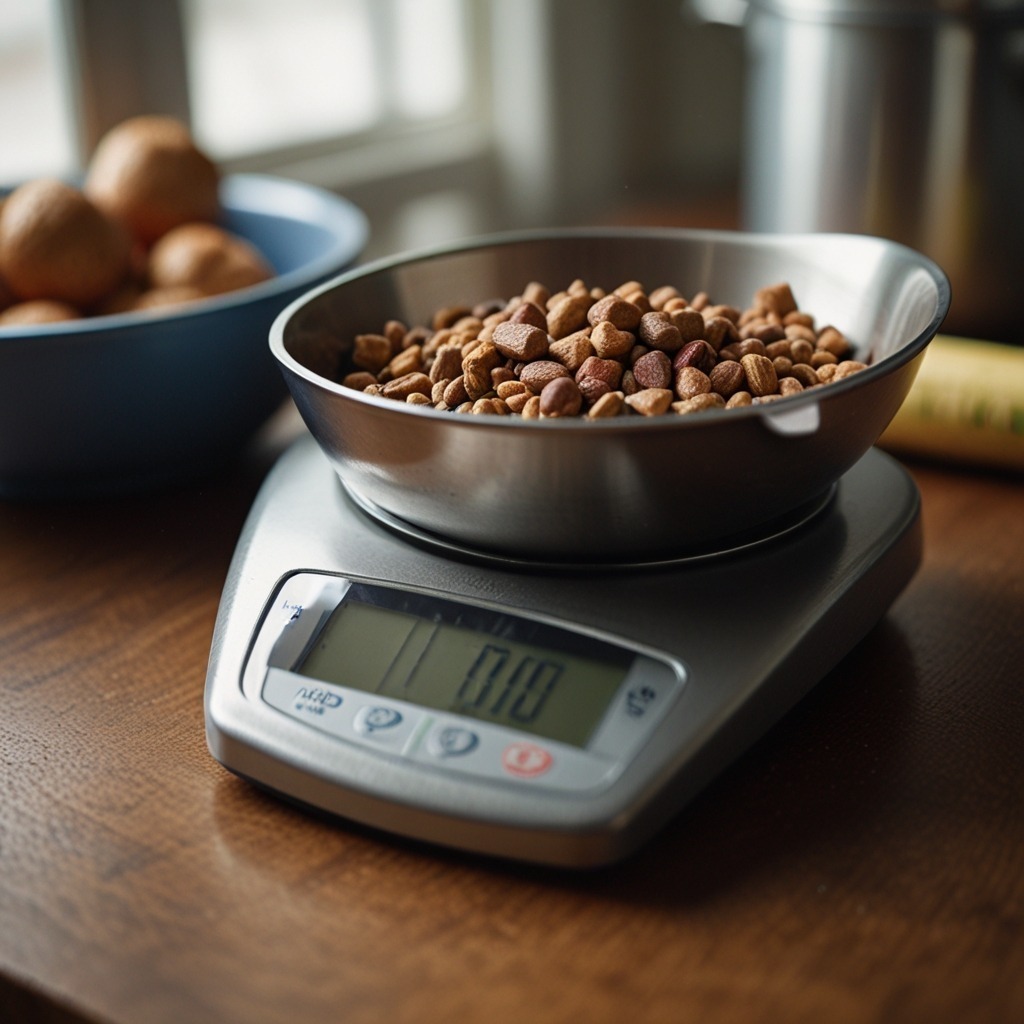
I bought one of those fancy automatic feeders that dispense kibble on a timer because I thought it would be science. It wasn't science. It was chaos. Tank learned within two days that if he body-slammed the machine hard enough, a few extra kibbles would ratte out. He'd lie in wait and then launch himself at it like a furry battering ram. I'd come home to find the feeder tipped on its side and cat food scattered across the kitchen floor and Tank sitting in the middle of it looking extremely pleased. $80 down the drain. I went back to manual feeding after that but my ego took a hit.
Why your 'weight control' kiibble is probably making things worse
I already wrote a whole angry post about this — about my cat Miso, who I fed a "weight control" kibble for a year and watched him turn into a buttered potato. So I won't repeat the entire rant, but the short version is: most commercial weight control dry foods are just regular kibble with a little extra fiber thrown in so the cat feels full but they're still calorie-dense because they've to be shelf-stable. You feed the recommended amount on the bag and the cat still gains weight because the recommendations assume an active outdoor cat who's hunting mice at dawn and not an indoor cat who considers walking to the litter box a workout. And because it's dry, the water content is practically zero, which means your cat is perpetually slightly dehydrated and their metabolism is sluggish. I've seen so many build cats come in on "diet" kibble who were still obese because the owner was feeding exactly what the bag said and the bag was wrong.
Here's a specific number that made me furious: one popular brand's indoor weight control formula clocks in at 380 calories per cup. For a 12-pound cat who needs to lose weight, you might aim for 180-200 calories per day. That's
half a cup
. Half a cup looks like a sad little pile at the bottom of the bowl. Most people unconsciously overpour. Most cats are starving an hour later and start screaming and the owner caves and adds a little more. And that "little more" over a week equals an extra 300 calories and suddenly the cat is gaining weight on diet food. It's maddening.
I've a whole separate deep dive on why I swwitched Miso to wet food and never looked back, but the caloric math is just better with high-protein wet food. A 5.5oz can of a good pâté is often around 180-200 calories total, and it's satisfying because it's mostly moisture and animal protein, not corn gluten meal and cellulose filler. You feed one can, split into two meals, and the cat feels like they've actually eaten something. I'll link to that Miso story later if you want the gory details of how I switched him over without turning my house into a diarrhea science experiment.
(Quick tangent: Remember how I dropped out of vet tech school? I'm not a nutritionist. But I did sit through enough animaal nutrition lectures to know that the first ingredient on a bag of weight control kibble being "chicken by-product meal" followed by "brewers rice" and "corn gluten meal" isn't ideal for an obligate carnivore who evolved to eat mice and birds. We're basically feeding a desert animal a dry cereal and wondering why they're fat. Okay, rant over.)
Related reading: I Fed My Cat 'Weight Control' Kibble for a Year and She Turnned Into a Buttered Potato — Here's the Slow, Safe Weight Loss That Actually Worked
Measuring cups are garbage
I don't trust a measuring cup for pet food. I've done the test: scoop out what looks like a cup using three different cheap plastic cups and weigh each one on a kitchen scale. The difference was up to 15%. When you're dealing with a cat who needs to lose a pound over six months, a 15% calorie surplus is the difference between success and a cat that looks
exactly the same
at the vet recheck. A $12 digital kitchen scale is the only thing I'll use now. Weigh everything in grams. Be ruthless. Your cat will still love you, probably.
The wet food switcch that actually helped (but not like you think)
Okay, I know I just said wet food is better for calorie control, but the bigger benefit isn't even the calorie count — it's the water. Cats are descended from desert creatures and their thirst drive is kind of pathetic. They don't naturally chug water like dogs; they expect to get most of their moisture from their food. A mouse is about 70% water. Dry kibble is roughly 8-10% water. Even a cat who drinks from a fountain is likely in a mild state of chronic dehydration, and dehydration makes the kidneys work harder and slows everything down, including metabolism. When I switched Tank to an all-wet diet, he started peeing more (in the box, thank god), his coat got less flakey, and he seemed more comfortable. He didn't lose weight insrantly, but his energy perked up enough that he started batting at toys again instead of staring at them from across the room like a furry gargoyle.
There's also this sneaky behavioral thing that happens with wet food: you feed it on a schedule. It can't sit out all day because it spoils. So the cat learns to eat when the food appears and not to graze constantly. Many obese cats are grazers who've had dry food available 24/7 their whole lives. Breaking that free-feeding habit is huge. I feed my cats twice a day, 12 hours apart, and for the first week they act like I've committed a war crime, but they adjust. Tank used to scream at 4am for breakfast and I'd stuff a pillow over my head and ignore him. It was brutal. I've more to say about that later.
The bathroom scale ritual that made me hate myself
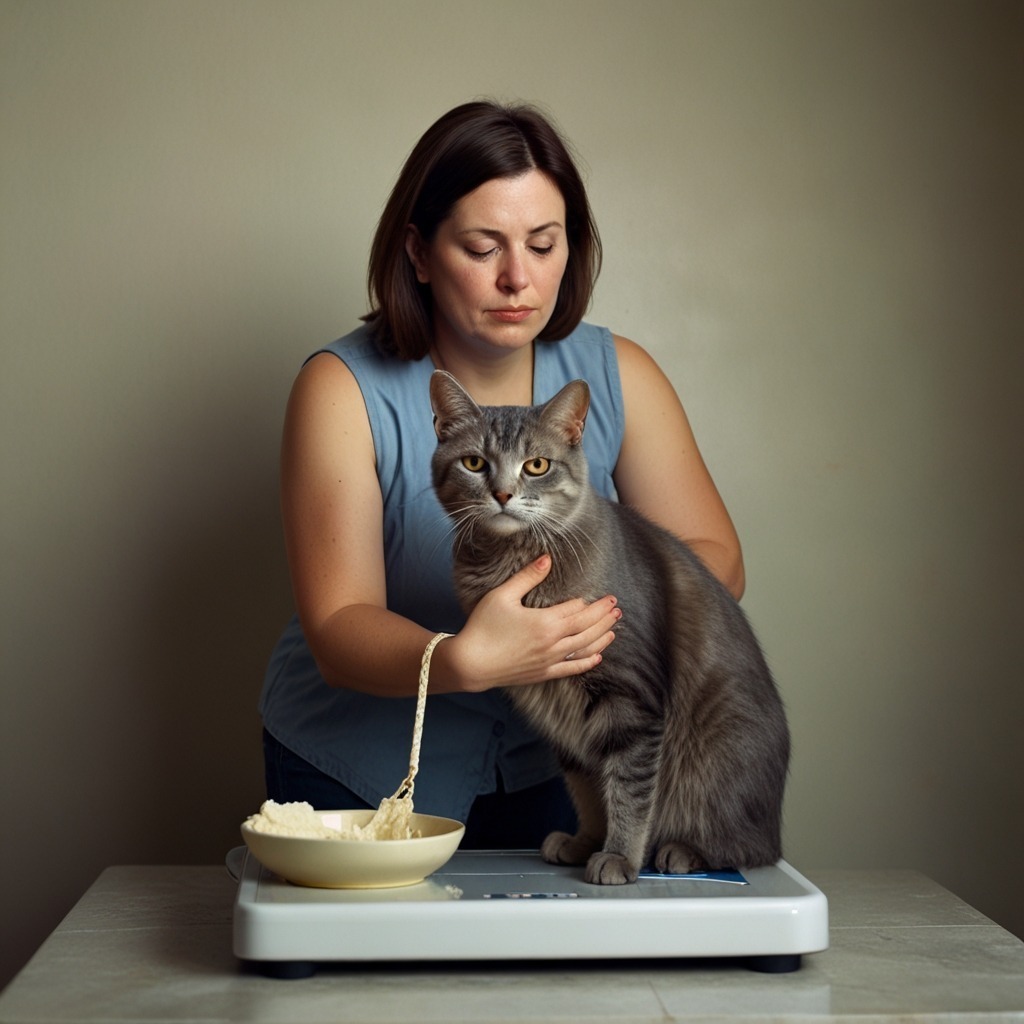
I bought a baby scale. It was forty bucks and I used it every Sunday morning for three months. Tank hated it. I'd plop him on it and he'd immediately try to leap off, and the numbers would flash 9lbs, 16lbs, ERROR, 11lbs, and I'd be crouching on the bathroom floor trying to hold a 22-pound cat still while he dug his claws into my forearm. I've a scar from this. The whole thing felt like a weird power struggle and it made me dread Sundays. Eventually I figured out I could weigh myself on the regular bathroom scale, then pick up the cat and weigh us together, and subtract. It wasn't perfect but it was less traumatic for both of us. For small fluctuations I just used my hands — if I could feel ribs more easily after a motnh, that was good enough. The number on the scale is a data point, not a judgment. I had to tell myself that a lot.
(Tangent that I'm only slightly embarrassed about: I used to be really into my own weight tracking years ago and it got a little obsessive. So when I started doing it for my cat, all those old perfectionistic voices came rushing back — "he didn't lose anything this week, you're failing, you're a terrible person." Nobody tells you that caring for an animal can hook into your own weird food baggage. I had to step back and remind myself that Tank was a cat and difn't care about his number, only whether his dinner arrived on time. That helped.)
That one build cat who lost zero pounds for six months
I need to tell you about Matilda. Matilda was a 7-year-old tortie who came to me at 18 pounds and should have been about 11. I did everything right. Wet food. Gram scale. Twice-daily meals. Play sessions with a wand toy. For six months she lost absolutely nothing. Not a single ounce. The vet ran bloodwork — thyroid, diabetes, everything — and it all came back normal. I was losing my mind. She'd literally sit and stare at the empty bowl like I was torturing her and then go sleep on my clean laundry and shed all over it out of spite.
Finally one of the shelter behaviorists came over to visit and pointed out that Matilda had been sneaking into my other build cat’s bowl when I wasn't looking. I had two cats at the time, and I'd been feeding them in separate rooms but the doors didn't latch perfectly and Matilda figured out how to nudge them open with her giant head. She'd been eating maybe an extra 50 calories a day from leftover wet food scraps and that was enough to keep her at maintenance. I felt like such an idiot. We started feeding in crates after that — each cat locked in for 20 minutes — and she finally started losing. Four months later she was down to 13 pounds and her arthritis improved and she started playing like a kitten. All that wasted time because I underestimated a cat's commitment to petty theft.
I once heard a vet say that cats are like tiny criminals who will exploit any weakness in your system. She was right.
When the vet said 'you need to exercise an indoor cat' and I laughed out loud
I genuinely laughed at Dr. Nguyen's face when she suggested I "increase Tank's activity level." This was a cat who considered walking three feet to the water bowl an athletic event. I tried everything. Laser pointer? He'd follow the dot with his eyes but not move his body. Wand toy? He'd bat at it when it came within six inches of his face, otherwise no. Catnip? He'd roll over, get excited for two minutes, then fall asleep. I bought a cat wheel — one of those giant hamster wheels for cats — and he looked at it like I'd installed a portal to hell. He never set a single paw on it. It sat in my living room for four months gathering dust until I donated it to a cat rescue that actually had active cats.
What did work was ridiculously simple: tiny bursts. I'd shake a bag of freeze-dried chicken treats (broken into crumbs, because calories) and he'd actually waddle toward me. Then I'd toss one crumb across the room and he'd lumber after it. At first, after five tosses he'd flop over and pant. We did that twice a day. After a month, we got up to ten tosses. After three months, he was actually trotting. Not runming. Trotting. But his muscle tone improved, his back legs got less wobbly, and he started jumping onto the couch without the little hesitation-hop he used to do. The lesson: don't expect a fat cat to suddenly become an athlete. Just get them moving slightly more than yesterday. That's it. That's the whole exercise plan.
I'll say one thing about laser pointers: be careful. Some cats get obsessed and frustrated because they can never catch the thing, and it can lead to neurotic behaiors. I've seen it in a couple of fosters. If you use a laser, always end the session by landing the dot on a physical toy they can pounce on, so they get that closure. And for the love of everything, don't shine it in their eyes. Okay, that's my little PSA.
The 4am screaming and how I survived
When you cut a cat's calories, they'll complain. Loudly. At inconvenient hours. Tank started with gentle meowing at 5am, which I could ignore. By week two it had escalated to full-throated, operatic ywoling directly into my ear at 4:15am, accompanied by him standing on my chest. He weighed 21 pounds at that point. It was like being crushed by a bag of wet sand while someone blared a foghorn.
I tried a few things. An automatic feeder set to dispense a tiny canned portion? I already told you about that disaster. Feeding him right before bed? That bought me an extra hour. Ignoring him completely? He just got louder and more creative — he started knocking things off my nightstand. The only thing that worked was a combination of (a) never, ever rewarding the screaming with food, ever, not even once, and (b) a strict scheudle so his internal clock eventually reset. It took about three weeks of hell, but eventually he realized 7am was breakfast and nothing earlier would get him anything. Now he just sits quietly on my pillow and stares at me at 6:45am, which is creepy but manageable.
Don't give in. I know it's hard. I know you're tiired. But one single 4am kibble handout will undo weeks of training. Be stronger than the cat. (Says the woman who once cried into her pillow at 3am while a build cat serenaded her.)
Related reading: My Cat's 3 AM Yowling Made Me Want to Cry in the Laundry Room — Here's What Actually Stopped It
What nobody tells you about rapid weight loss in cats
Here’s a terrifying thing I learned the hard way: if a fat cat loses weight too fast, their body can go into hepatic lipidosis, which is a fancy way of saying their liver inundates with fat cells and starts to shut down. It can be fatal. Vets recommend cats lose no more than 1-2% of their body weight per week. For a 20-pound cat, that’s about 0.2-0.4 pounds per week, which is basically nothing. You can’t see it. You can’t feel it. You just have to trust the process. This is why those crash diets and starvation methods you see on some internet forums are monumentally dangerous.
I didn’t know about hepatic lipidosis until a friend’s cat, a 19-pound Maine Coon mix named Buster, stopped eating after his owner decided to "help" by cutting his food in half without consulting a vet. Three days later, Buster was jaundiced and lethargic and on IV fluids at the emergency clinic. He survived, but the vet bill was over $2,000 and the owner was wracked with guilt. I still get nervous when a build cat skips a single meal because I’ve seen how quickly a cat’s metabolism can go off the rails. If your cat goes more than 24 hours without eating anything at all, call your vet immediately. Don’t wait. I don’t care if it’s 2am. That’s an emergency.
How I stopped wrrying about the carpet and actually measured progress
After Matilda’s failed six-month weight plateau, I started tracking progress in ways that didn’t involve numbers. I’d take photos from above once a month, with the cat standing on a flat surface, so I could see if the waist was starting to reappear from the blob shape. I’d do a rib-feel test: if I could feel ribs with light pressure but not see them, that was good. If I could see ribs, I was overdoing it. If I couldn’t feel any ribs at all, we still had work to do. I’d also note behavioral things: could the cat jump onto the kitchen counter now? Could they groom their own back without toppling over? Tank, when he’d first arrived, couldn’t reach his hindquarters and his back fur was getting matted with dander and who-knows-what. Once he’d lost a couple pounds, he started grooming there again and I literally cheered in my kitchen when I saw him twist around to lick his lower spine. My neighbors probably think I’m insane.
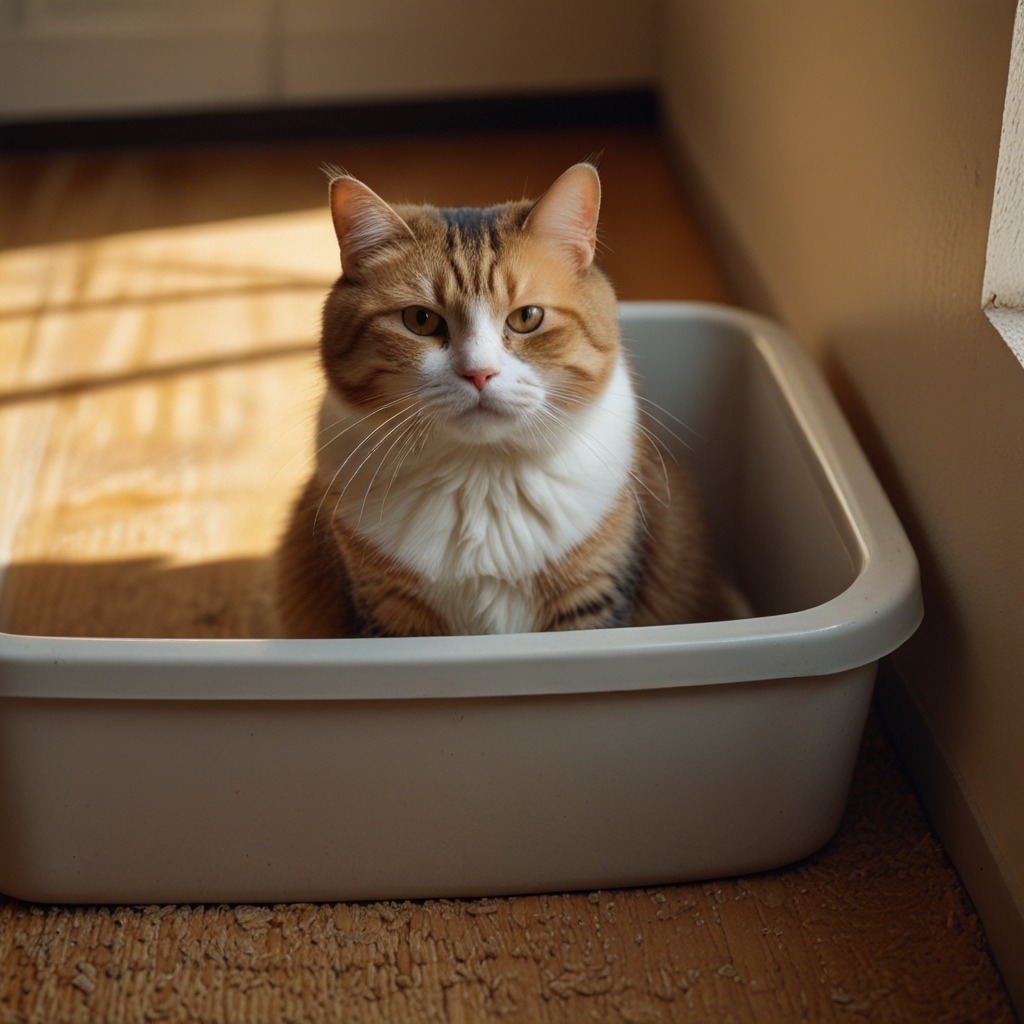
This is also where I’ll mention the litter box issue that nobody wants to talk about. An obese cat sometimes can’t posture properly to pee or poop, or the box sides are too high and they’re in pain from arthritis, so they start going outside the box. I’ve seen it in multiple fosters. If your cat is overweight and suddenly having litter box problems, it’s not necessarily behavioral — it might be physical. Get a lower-sided box, or a shallow plastic storage bin, and put puppy pads around it. Tank had a phase where he’d get his entire front half into the box but leave his back half out, and I’d find a puddle on the bath mat. I wrote about that with another build cat once, and the solution was absurldy simple: a bigger box and more frequent scooping.
Related reading: My build Cat Peed on My Pilloow and It Was 100% My Fault — Here’s the Litter Box Schedule I Wish I’d Known Sooner
So what actually worked for Tank (and what didn’t)
Tank, God rest his grumpy soul, lived with me for eleven months before he was adopted. In that time, he went from 22 pounds to 13.8 pounds. That’s a loss of over 8 pounds, which is more than a third of his starting body weight. It was slow and messy and full of setbacks. I cried twice. I yelled into a pillow once. I spent more on high-quality wet food than I care to admit. But watching him rediscover that he could jump onto windowsills and actually fit his whole body on them was worth every single frustration.
Here’s what didn’t work: weight control kibble. Free feeding. Human food scraps (even tiny bits add up). Guessing portions. The cat wheel. Laser pointers used badly. Reacting to his screaming with food. Beating myself up when the scale didn’t move.
What did work: switching to high-protein wet food on a twice-daily schedule. Weighing portions in grams. Tracking progress with photos and rib feels instead of just the scale. Microwaving his wet food for 5 seconds so it was warm and stinkier and more appealing. Using treat-dispensing puzzle balls with his allotment of kibble crumbs so he had to work for it. Feeding in a separate room behind a closed door so there was zero chance of food theft. Accepting that progress was going to be glacial and that was okay.
I’m not going to end this with a tidy summary because weight loss — for cats and for humans — is never tiddy. It’s a long series of boring choices that eventually stack up into a living creature who feels better. If you’re wrestling with an obese cat right now, you’re not a bad owner. You’re just someone who probably got some bad information from a kibble bag. That’s fixable. Take a deep breath. Buy a kitchen scale. Pick a decent wet food. And prepare for a few weeks of unholy screeching. You’ll get through it. And someday, when your cat effortlessly jumps onto the kitchen counter and steals a chicken nugget, you’ll be weirdly proud even as you chase them around the kitchen.
Related reading: I Thought Switching Cat Food Was as Simple as Mixing Bowls. Then Miso Pooped on My Rug.