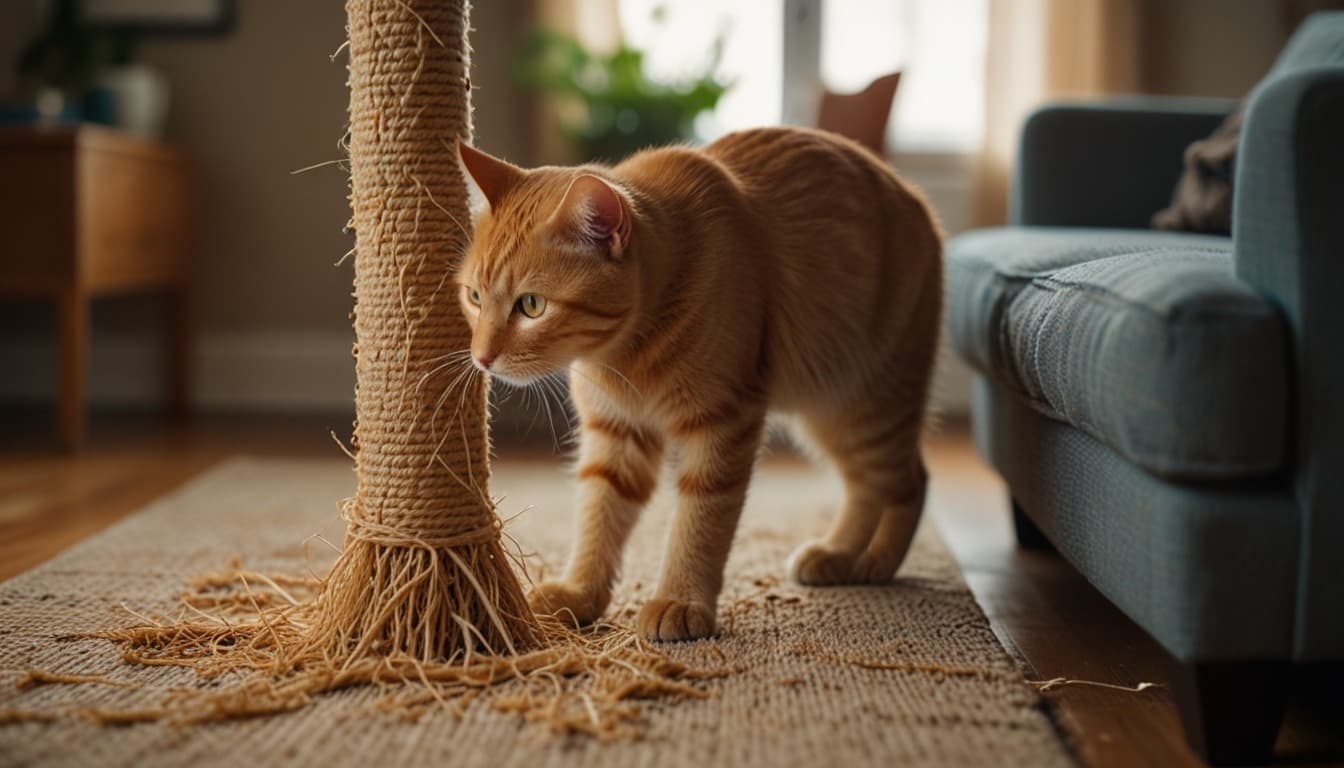
My first scratching post was a $90 carpeted monstrosity and every single foster cat ignored it. Here's what I wish I'd known.
My first scratching post was a $90 carpeted disaster that every single foster cat ignored. 40 cats later, I've learned the hard way what actually matters—and it's not what the pet store tells you.
The first cat I ever fostered—a scrawny orange tabby named Cheeto who came to me with a cauliflower ear and a grudge—unraveled the arm of my grandmother's antique sofa in under four minutes. I'd set up a brand new scratching post right next to it, the kind the pet store employee swore up and down was "the one cats love." It was beige. It was carpeted. It wobbled if you looked at it wrng. Cheeto sniffed it once, sneezed, and then went to town on the couch like it owed him money.
I stood there holding a spray bottle—because that was the advice back then, praise and punishment, like the cat was a tiny criminal—and I felt completely out of my depht. I had volunteered at the shelter for years by then, thought I understood cats, and here I was with a $90 post that might as well have been a modern art installation.
That was 40-something cats ago. And I can tell you with absolute certainty: most of what we're told about training cats to use scratching posts is half-baked. The rest is just marketing.
Your cat isn't destroying your furniture to be a jerk. I promise.
I've had people tell me, straight-faced, that their cat scratches the sofa out of spite. The cat waited until they left for work and then, with calculated malice, shredded the armrest. I used to believe that too, until I spent enough time watching cats actually scratch. It's not personal. Scratching is as natural to a cat as wagging is to a dog—probably more so, because it serves like five different purposes at once.
They're marking territory. The pads of their paws have scent glands, so when they scratch, they're leaving a calling card that says "I was here, this is mine, back off." They're stretching the muscles in tjeir shoulders and back—watch a cat after a nap, that full-body reach-and-drag against a surface. They're shedding the outer sheath of their claws to keep them sharp and healthy. And honestly? Sometimes they're just working off nervous energy, the same way I stress-clean the kitchen at 10 p.m. when I'm avoiding a deadline.
So when a cat ignores the post you bought and heads for the couch, she's not being defiant. She's telling you, in the only way she can, that the post you provided doesn't meet her needs. Maybe it's too short—she wants to stretch all the way up, tail twitching, and that 18-inch thing from the bargain bin isn't cutting it. Maybe it's covered in carpet that feels nothing like the tree bark her instincts are screaming for. Or maybe it's tucked in a corner where nobody ever goes, and she's scratching the armchair by the front door because that's where she wants her scent to be: right where the action is.
I learned this the hard way with Miso, a build cat who had been returned twice for "destructive behavior" before landing on my doorstep. Miso was a sleek black cat with one ear that always looked slightly inside-out. She ignored the three—THREE—scratching posts I had set up and instead shredded the wooden doorframe of my guest bathroom. I stood there watching her one morning, coffee in hand, and realized: she was scratching vertically, right as I walked past, on a solid wood surface that didn't budge. The posts I'd put out were wobbly and horizontal. Of course she picked the doorframe. It was perfect.
The "why" behind scratching matters way more than most peple realize. It's not just about providing an outlet—it's about providing the right outlet. And for that, you've to watch the cat. Which is something I didn't do early on because I was too busy panicking about my furniture.
I bought the wrong post 6 times befroe I figured out what actually matters
If I could go back and save myself about $400 in useless srcatching apparatus, I'd tell 25-year-old Sarah three things: height, stability, and texture. That's it. Everything else is decoration.
Make it tall enough to let them stretch all the way up
Cats want to fully extend their bodies when they scratch. It feels good, like a really satisfying yawn. A post that's only kneehigh is like giving a basketball player a hoop they've to crouch to use. The minimum should be around 30 inches, but taller is better. My current favorite is a 38-inch sisal-wrapped post that one of my dogs knocked over once and then looked deeply ashamed—the cats love it because they can reach up, dig in their claws, and pull downward with their full weight.
I once had a massive build cat named Tubbs (he weighed 22 pounds, no exaggeration, and the vet kept using words like "vigilant monitoring") who wouldn't touch any post shorter than 36 inches. He needed the real estate. He'd walk up to a short post, sniff the top, and look at me like I'd insulted his ancestors. Then he'd go scratch the side of the refrigerator. Message received.
Stability is non-negotiable
A wobbly post might as well be a threat. Cats don't trust surfaces that move under them—it's why so many of them hate those hanging hammock beds that swing. I learned this with a post that had a base the size of a dinner plate. Every time a cat tried to scratch, it would tip forward and they'd jump back like they'd been electrocuted. After the third cat rejected it, I threw it in the garage and used the base as a doorstop for two years.
You want a base that's wide and heavy. Some of the best posts I've used have bases I can barely lift with one hand. If you've got a big cat or a vigorous scratcher, consider bolting the thing to the wall. It sounds extreme, but when you've seen a 16-pound cat launch himself at a post and take it down like a tree in a storm, you start thinking about drywall anchors.
Texture: throw out the carpeted nonsense
Here's a hill I'll die on: carpet-covered scratching posts are a scam. They're cheap to manufacture, they look fine in catalogs, and they teach cats nothing. The texture is too soft, too looped, too reminiscent of actual household carpet. A cat can't eadily tell the difference between the post you want her to scratch and the berber on the stairs. I've had fosters who, after being trained on a carpeted post, went on to destroy every carpeted surface in the house because, in their minds, it was all fair game.
The gold standard is sisal rope. It's rough, it shreds satisfyingly, and it feels nothing like upholstery or carpet. Cats go absolutely bonkers for it. The first time I brought home a sisal post, my resident cat at the time—a tuxedo named Pixel who I'd had for 6 years without ever seeing her scratch anything but the cpuch—walked up, sniffed it, and started clawing with a look of pure, unhinged joy. I sat on the floor and watched like she'd just performed a magic trick.
Cardboard scratchers are a solid runner-up, especially the horizontal ones you can toss on the floor. They're cheap, replaceable, and cats love the way the corrugated texture catches their claws. But they're temporary. You'll buy a dozen of them over the life of one good sisal post. Still, for a cat who's reluctant or for a kitten you're introducing to the concept, cardboard can be a great gateway drug. I keep one in every room because I'm a pushover.
Placement matters more than the post itself
I can't tell you how many times I've watched someone plunk a scratching post in a forgotten corner of the living room, behind a pottd plant, and then wonder why the cat ignored it. Cats aren't interior decorators. They don't care about symmetry or "flow." They care about high-traffic areas, spots near their favorite napping zones, and places where their humans already smell like themselves.
The most effective placement I've foumd is right next to whatever the cat has already been scratching. Yeah, I know. You don't want a cat tree next to your vintage velvet armchair. But here's the thing: you can move it later. Get the behavior established first, then slowly—over weeks—shift the post a few inches a day toward where you actually want it. It's the same principle I used when redirecting my cats away from the kitchen counters. Start where they're, then guide them where you want them to be.
Also, think about where your cat naps. Cats typically scratch immediately upon waking. It's a stretch-and-mark ritual. So put a post near their favorite sleeping spot. And put one near the front door if your cat greets you there, because that's a prime territory-marking location. Miso—my doorframe destroyer—finally started using a post when I realized she was scratching to say hello. I moved a tall sisal post right next to the bathroom door, and then later shifted it three feet to the hallway, and she followed it like a little duckling. It was almost too easy, once I understood the logic.
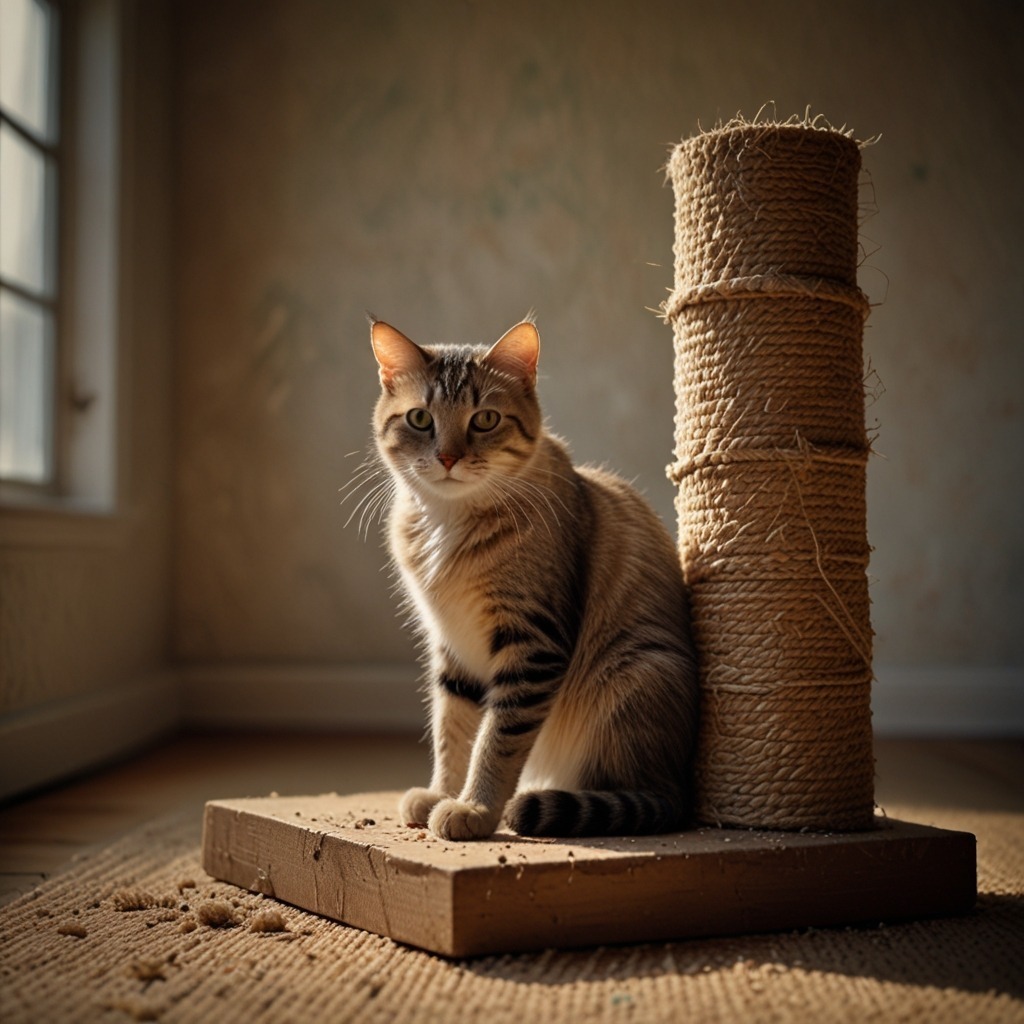
The spray bottle disasetr and why I stopped punishing my cats for being cats
Let me tell you about the lowrst point of my early cat ownership. I was 24, living in a one-bedroom apartment with a cat named Gus (this was pre-dogs, pre-fostering, just me and a grumpy tabby who hated my boyfriend). Gus was shredding the side of the mattress every morning at 5 a.m. I read a blog—a blog I now realize was probably written by someone who'd never actually met a cat—that said to use a spray bottle. Every time he scratched the bed, I'd spritz him with water. He'd run away, I'd feel victorious, and the mattress continued to look like confetti.
What I didn't understand at the time was that the spray bottle wasn't teaching him to use the scratching post. It was teaching him to be afraid of me. He still scratched the mattress; he just did it when I wasn't in the room. And then he'd hide under the dresser when I walked in, because he'd learned that I was unpredictable and potentially damp.
Positive reinforcement is the only thing that actually works long-term. It's slower, it's less dramatic, and it doesn't give you that immediate sense of control. But it respects the cat's intelligence and doesn't damage your relationship. With Gus, I eventually figured out that he hated the texture of my bedsheets but loved the feel of rough cardboard. I put a horizontal cardboard scratcher right next to the bed, and every time I saw him even sniff it, I'd toss a treat onto it and tell him he was a genius. Within a week, the mattress attacks stopped.
This isn't theoretical. There's actual behavioral science behind it, but I'm not going to bore you with cortisol levels and stress responses. I'll just say: cats don't learn from punishment the way dogs sometimes can (and even with dogs, it's dicey). A cat associates the punishment with YOU, not the behavior. They don't think "scratching the couch leads to water in my face." They think "when that human is around and I'm near the couch, smething bad happens, so I'll avoid the human." It's a recipe for a distant, anxious cat.
The reward system that actually worked for 40+ fosters
I've tested this on more cats than I can count—from feral kittens who'd never been indoors to elderly cats rehomed after their owners passed. The reward-based approach isn't instant, but it sticks. Her'es what it looked like with most of them:
First, I'd figure out what the cat valued more than anything. For some, it was freeze-dried chicken treats. For others, it was a few seconds of chin scratches and a high-pitched "who's a good baby?" For one particularly food-motivated build named Pesto, it was those tube treats that look like Go-Gurt for cats—she'd do backflips for that stuff. I keep a stash of high-value rewards on hand and I'm not stingy with them during the training phase.
Then, every single time the cat so much as looked at the scratching post, I'd reward them. At first I'd gently place their paws on the post and immediately treat. Some cats need that initial nudge. Others are suspicious of anything new and need to approach on their own—those got rewarded for simply walking near it. The goal was to build a positive association so powerful that the post became a treat dispenser in their minds.
I also used catnip as a lure, but sparingly. Not all cats react to catnip—something like 30% don't have the gene for it—and those that do can get over-stimulated if you overdo it. I'd sprinkle a little on the base, let them roll around and rediscover the post, then reward any scratching that followed. For cats that didn't respond to catnip, silver vine or valerian root sometimes worked, though I had one build who ate the valerian root pouch whole and spent the next six hours staring at a wall. Different cats, different quirks.
The biggest mistake people make is stopping the rewards too soon. A week of treats and then you figure the cat "has it"—and then they revert. I cotninue intermittent rewarding for at least a month, and even now I'll randomly toss a treat on my cat's post when I walk by, just to reinforce the magic of the spot. It costs me nothing and it keeps my furniture intact.
The cat who rejected eveyr post I owned and what finally clicked
This is the story I promised. Her name was Daphne, a petite calico who came to me after her owner passed away. Daphne was 12, arthritic, and absolutely bewildered by my chaotic household of dogs and other cats. She spent the first week under my bed, emerging only to eat and use the litter box. When she finally started venturing out, she bypassed every scratching surface I owned—4 posts, 2 cardboard scratchers, and a cat tree—and headed straight for the woven basket I kept my laundry in.
She lovved that basket. She'd sit in it, sleep in it, and scratch it with a slow, methodical intensity that left wicker shreds all over the floor. I was about to give up and just let her have the basket when I noticed something: she was scratching horizontally, not vertically. Her arthritis made it painful for her to reach up, so she preferred surfaces at floor level. All my posts were vertical.
I ordered a large horizontal sisal mat, the kind you can muont on the wall or leave flat, and placed it right next to the laundry basket. Then I sprinkled a little catnip. Daphne approached it like it was a trap, sniffed for what felt like an eternity, and eventually kneaded it with her front paws. No scratching at first. But I rewarded her for kneading, and within two days she was scratching with gusto. Eventually she abandoned the laundry basket entirely. The key was recognizing that her physical limitations—something I should have thought of immediately, given her age—demanded a different kind of surface.
That experience changed how I approach scratchong post selection for every new cat. I now watch them scratch my furniture first—yes, I let them do it once—to see their preferred angle and material. It tells me more in 30 seconds than any pet store recommendation ever has.
Screwing up, over and over: the common mistakes I still see people make
I've made all of tjese myself. I still cringe thinking about some of them.
Mistake #1: Declawing or considering declawing. I'm not going to soften this: declawing is amputation of the last bone on each toe. It's illegal in many countries and increasingly banned in U.S. states for a reason. It causes chronic pain, changes how a cat walks, and can lead to litter box aversion and biting. If you're at the point where you're considering declawing, please rehome the cat to someone who can manage the scratching. There are so many alternatives that don't involve surgery. I once fostered a cat whose previous owner had declawed her, and she spent years walking gingerly on her front paws and biting anyone who touched them. It was heartbreaking.
Mistake #2: Only having one post. Cats like variety. Some prefer verticsl, some horizontal, some angled. I've at least three scratching options per room now, and I rotate them occasionally. It sounds excessive, but my furniture thanks me.
Mistake #3: Not trimming claws. This doesn't stop the scratching instinct, but it reduces the damage. Get the cat used to claw trims early, keep it positive, and do it every two weeks. I learned the hard way that waiting umtil the claws are needle-sharp leads to bloody forearms and a cat who now associates the clippers with pain. I've got a whole method for this that mirrors what I did when stopping my cat's play biting: short sessions, lots of trreats, knowing when to quit.
Mistake #4: Replacing the post too late. A worn-out post isn't appealing. When the sisal rope is hanging off in clumps and the csrdboard is just a pile of dust, the cat will look elsewhere. I replace cardboard inserts every few months depending on use, and I rewrap sisal posts myself with cheap rope from the hardware store because I'm too stubborn to buy new ones. It takes 20 minutes and some hot glue, and the cats act like it's brand new.
Mistake #5: Punishing the cat for scratching furniture. I already ranted about this, but it's worth repeating. Clapping, yelling, spray bottles—they don't teach the cat to scratch the post. They teach the cat to fear you. And anxious cats often scratch MORE, because it's a self-soothing behavior. It's a vicious cycle.
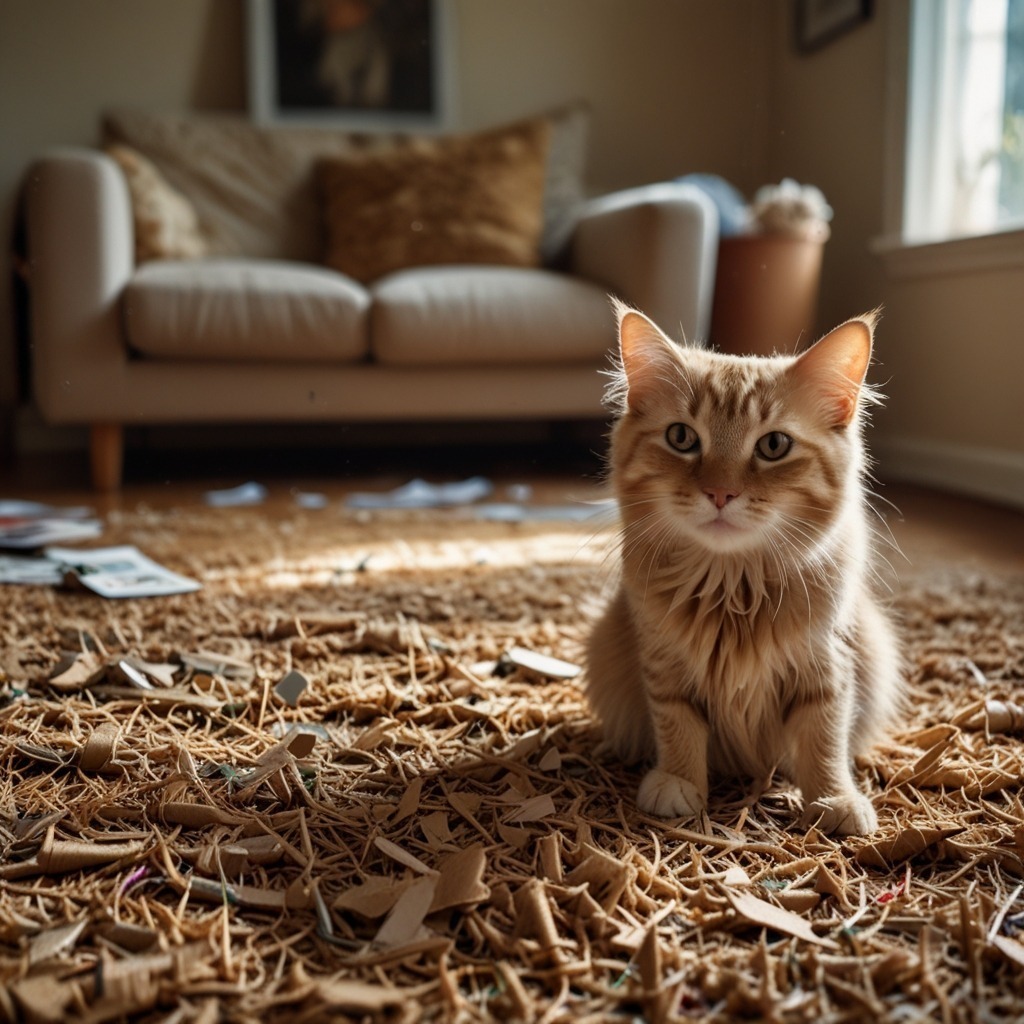
A tangent about dogs and scratching posts
This has nothing to do with cat training, but I need to vent. My dog Gus (a different Gus, this one's a 65-pound lab mix who drools when he's happy) has destroyed more scratching posts than any cat ever has. He doesn't scratch them—he tries to eat the sisal rope. I've caught him with a mouthful of fibers, looking guilty, and I've had to replace posts I'd only had for a month because someone decided it was a chew toy. If you've dogs and cats toggether, keep an eye on the scratching infrastructure. I once came home to find cardboard shreds covering every square inch of my living room floor because the dogs had discovered a flat scratcher and turned it into confetti. It looked like a ticker-tape parade had gone wrong.
And don't even get me started on catnip-infused posts and dogs. My collie-mix, who has the digestive system of a Victorian orphan, ate an entire catnip-filled toy and then stared at me with pupils the size of dinner plates. The vet said she was fine, just "having an experience." I now keep posts and catnip toys in areas the dogs can't access, which is a logistical puzzle in my small house.
Anyway, back to cats.
I tested 3 DIY scratchnig post ideas so you don't have to
I'm not crafty. I failed high school art. But desperation and a tight budget during my early rescue days forced me to get creative. Here's what I tried:
The 2×4 wrapped in sisal. I bought a 4-foot length of lumber at the hardware store, wound sisal rope around it tightly, and secured it with hot glue. I attached it to a heavy plywood base and braced it against a wall. Total cost: about $15. It was ugly as sin, but it lasted for years and every cat loved it. The height was perfect, the texture was exactly right, and it didn't budge. If you're even slightly handy, this is the way to go.
The cardboard box scratcher. I cut up a shipping box into strips, glued the strips on their sides in a shallow tray so the corrugated edges were exposed, and tamped it down. It worked for about two weeks before it disintegrated, but for a temporary lure or a kitten who's just learning, it's not bad. I've since learned that just buying the $5 cardboard replacements for the commercial scratchers is easier and not much more expensive, but if you're in a pinch, DIY works.
The carpet scrap on a board. This was a disaster. I fastened a remnant of old carpet to a plank and put it out, thinking the cats might differentiate between floor carpet and scratch-surface carpet. They didn't. Within a month, every carpeted step on my staircase had become a target. I ripped it up and threw it away, and it took another month of retraining to fix the mess. I cn't stress this enough: anything that feels like house carpet is a bad idea.
If I had to recommend one approach for someone who's not hanyd and not rich, it's the sisal-wrapped 2×4. It's basically indestructible, and you can customize the height to your cat's preference.
How long this actually takes (and why I stopped panicking about the timeline)
Some cats catch on in a day. Some take a month. I've had fosters who were so traumatized from previous living situations that they didn't scratch anything for weeks—not the furniture, not the post, nothing—because they were too shut down to engage with their environment. And then one day, out of nowhere, they'd discover the post and it was like a light switch.
My current resident cat, a grey shorthair named Possum who I bottle-fed from 3 weeks old, took eight months to consistently use a scratching post instead of my desk chair. Eight months. I'd done everything "right"—positive reinforcement, the right textures, strategic placement—and she'd use the post when I was watching and treat her, then calmly walk over to the chair the moment my back was turned. It was infuriating.
What I eventually realized was that the chair had become a habit, and habits are hard to break. So I draped a thick blanket over the chair that was unpleasant for her to scratch—a microfiber thing with no loops or weave to catch her claws—and made the post even more enticing by rubbing dried catnip directly into the sisal. The combination of mkaing the undesirable surface less satisfying and the desired surface more rewarding finally tipped the scales. But it took patience I didn't always have.
If you're in the middle of this proxess and your sofa is still getting shredded, you're not failing. You're just not at the end of the story yet. I've been there, sitting in my ripped-apart living room, wondering if I was cut out for cats. The answer is yes, you just have to keep adjusting and observing.
The time I thought a cat tree would solve everything and it made it worse
I spent $200 on a multi-level cat tree with scratching posts built in. It had platforms, cubbies, dangling toys—the works. I was so proud of it. The cats sniffed it for ten minutes, then returned to shredding the back of my office chair. The problem was that the scratching surfaces were carpeted, and the posts were too thin for them to get a good grip. Worse, the base wasn't heavy emough for the whole structure, so whenever a cat tried to scratch, the entire tree wobbled ominously. It was like a bad carnival ride.
I ended up disassembling the tree, throwing away the carpeted parts, and wrapping the remaoning posts with sisal. Then I weighted the base with a 40-pound bag of cat litter I had in the garage. It wasn't pretty, but it worked. The lesson: a cat tree is only as good as its scratching surfaces and its stability. Don't be seduced by the fluffy platforms and cute hideaways unless the core elements are solid. I've since become a complete snob about cat furniture, and I'm not sorry.
I was reminded of this when I read a post about how my first scratching post was an utter flop. So many of us start with the wrong thing because it's what's matketed. You learn, eventually, that the less flashy options—the plain sisal post, the simple cardboard scratcher—are the ones that actually hold up.
When to call in a pro (and who I actually trusted with my hardest cases)
I'm not a behaviorist. I've picked up a lot over the years, but there have been cats where I was genuinely stumped. A build named Luna wouldn't stop scratching the walls—the actual drywall, not even a wooden surface. She'd paw at the paint untli it chipped off. It turned out to be a sign of severe anxiety; she needed medication and a very structured environment before she could settle. I worked with a veterinary behaviorist who prescribed a low dose of fluoxetine, and Luna's wall-scratching stopped within two weeks. She wasn't being destructive. She was having a panic attack, every single day, and the scratching was how it manifested.
If your cat's scratching seems compulsive, or if it's accompanied by other signs of distress—hiding, overgrooming, aggression—don't try to DIY it. A vet visit to rule out medical issues is step one, and a board-certified veterinary behaviorist (not a random trainer from the internet) is step two. Your vet can recommend someone or you can search the American College of Veterinary Behaviorists directory. I've used them twice now, and both times it was worth the consult fee just to hear someone say "this isn't your fault, and here's a plan."
The same goes for cats who suddenly start scratching inappropriately after years of being fine. That can signal pain, arthritis, hyperthyroidism, or a dozen other things. I once spent three months trying to retrain a cat who'd stopped using the post, only to find out she had a urinary tract infection and was in discomfort. Once the infection was treated, she went back to the post like nothing happened. I felt like an idiot for not checking sooner, but I'd been so focused on the behavior that I missed the physical cause.
The $12 scrap of carpet that finalky did the trick for a cat who hated everything else
I've to end with Frank. Frank was a build who taught me that sometimes you've to break every rule. He was a massive, scarred tomcat who'd lived roough for years before being trapped. He hated sisal. Hated cardboard. Hated everything I'd learned to swear by. I was at my wit's end when I noticed he kept gravitating toward an old welcome mat I had by the back door—one of those rough, coconut-coir mats that scrape mud off your shoes. It was textured, scratchy, and nothing like the posts I was offering.
I bought a piece of similar coir material for $12 at a hardware store, nailed it to a piece of plywood, and leaned it against the wall where he liked to scratch. Frank took to it immediately. He scratched it, slept on it, and defended it from the other cats like a dragon guarding gold. It was the ugliest thing I've ever had in my house, a literal doormat on my living room fkoor, but it worked. And eventually, over several months, I was able to introduce a sisal post near it and he gradually shifted. But I wouldn't have gotten there without the coir.
Not every cat will need a weird solution. Most will be fine with a well-placed, stable sisal post and a handful of treats. But for the outliers, like Frank, you've to be willing to look at what they're telling you and get creative. It's not that they won't use a post—it's that you haven't found the right one yet.
A few years back I'd've been embarrassed to have that doormat in my living room. Now, I think about how many cats I've helped since then, and I'd put a dozen doormats on my floor if it meant giving a senior cat like Daphne or a tough case like Frank a safe place to scratch. Furniture is just furniture. It can be repaired or replaced. The cat can't always say what they need, but they'll show you if you pay attention.