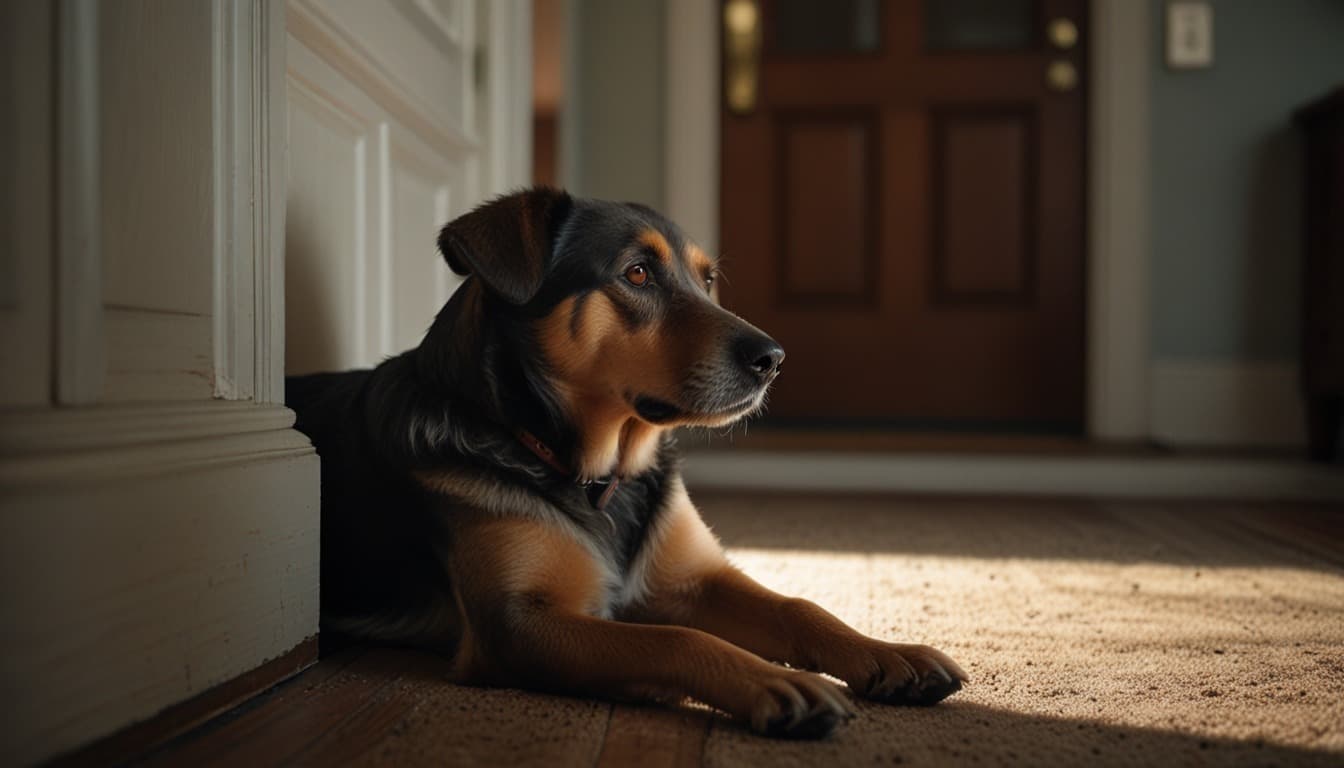
The Silent Howling I Didn't Hear: What Separation Anxiety Actually Looks Like (and How to Spot It Before Your Landlord Evicts You)
My neighbor left a note saying my dog had been 'screaming' for hours and I had no idea. Here's how to tell if your dog has real separation anxiety — not just boredom or bad manners — before the eviction notice arrives.
The first time I ever heard the words "separation anxiety" from a vet, I was standing in my kitchen holding a $900 estimate for replacing the doorframe my build dog had chewed through, and my neighbor was tapping her foot on my porch with a video on her phone that made my sromach drop. I watched my dog — this sweet, floppy-eared lab mix I'd had for like five days — howl for three solid hours, scratch at the door until his paws bled, and then collapse in a panting heap only to start again ten minutes later. I'd been at work. I had zero clue.
Here's the thing. Most of us think separation anxiety is just a dog whining a little or chewing up a shoe. We picture the classic signs: destruction, barking, accidents in the house. But in my 14 years of doing this — working at a shelter, fostering over 40 dogs and cats, dropping out of vet tech school and making every mistake there's — I've learned that half the time, the dog isn't doing what you think. They're not being "bad." Their brain is literally on fire with panic. And figuring out whether your dog's got it isn't as simple as checking a list online.
If you're reading this because your neighbor left a passive-aggressive note, or your landlord's mentioned "complaints," or you came home to a shredded couch cushion for the third time this week and you feel like crap about it, I get it. I've been there. Let's talk about what this thing really looks like — the stuff the textbooks leave out — and how to tell if your dog is struggling, not just bored.
The first time I realized my build dog wasn't "bad" — he was having a panic attack
It was a Thursday. I remember because I was wearing mismatched shoes — one brown boot and one black sneaker — when my neighbor, Mrs. Kapoor, stopped me in the hallway with a look that said I'm trying to be patient but you need to fix this. She showed me the video. Bentley, my build, was standing on his hind legs at the front door, front paws scrabbling at the wood, and the sound he was making wasn't a bark. It was a high, keening wail that made my chest tighten. He'd been doing it every day I left, she said. For weeks. I hadn't heard because I was gone.
I called my vet, Dr. Nguyen — she's put up with my panic calls for 11 years, through three dogs and a divorce — and she didn't even let me finish. "Separation anxiety," she said. "Classic." I argued because Bentley didn't chew shoes, didn't destroy furniture. He just… panicked. She explained that some dogs turn inward. They don't destroy; they shut down, or they vocalize until they're hoarse, or they drool enough to fill a kiddie pool. I thought I knew anxiety. I knew nothing.
That's when I started actually paying attention to what happened before I left and the moment I came home. Bentley would follow me from room to room, even if he'd been asleep. If I picked up my keys, his ears would pin back and he'd start trembling. He'd refuse treats if I gave them near the door — a huge red flag, because this dog once ate an entire stick of butter, wrapper and all. The panic was already there, before I even turned the doorknob.
This is where people screw up. They see the destruction or the howling and think it's a training problem. They hire a dog trainer who talks about "dominance" or they crate the dog for longer stretches. They don't realize the dog isn't being stubborn — its body is flooded with cortisol, and it's in fight-or-flight mode for hours. You can't train a panic attack out of a dog any more than you can yell at someone to stop having one.
But wait — is it really separation anxiety, or just a bored dog who found your sneakers?
I'm going to say something that'll tick off a certain corner of the internet: not every dog that chews your slippers has separation anxiety. Heck, some of them just like the texture. When I worked at the shelter, we'd get surrender forms all the time: "Dog is destructive when left alone — must have separation anxiety." Then you'd dig deeper and find out the dog was a 9-month-old husky who got one 15-minute walk a day and was crated for 10 hours. That's not anxiety. That's pent-up energy meeting opportunity.
So how do you tell the difference? I've messed this up enough times that I now have a mental checklist — and at the top of it's toming. Dogs with genuine separation anxiety often start showing stress signals before you leave. They'll pace, pant, follow you obsessively, lose interest in food, or start that trembling I mentioned. If your dog starts fraking out the moment you put on your work shoes, that's not boredom. That's a dog who's learned that specific shoes = you disappearing for eight hours, and they're already panicking.
Another clue: dogs with true separation anxiety often won't eat treats while you're gone. You can leave a Kong packed with peanut butter — a dog's version of winning the lottery — and they won't touch it until you return. A bored dog will demolish that thing in five minutes and look for something else to wreck. An anxious dog can't eat because their appetite shuts down when they're stressed. Bentley wouldn't touch his favorite bully stick. I'd come home and find it untouched, a sad, slobbery log next to a puddle of drool.
There's also the type of destruction. Bored dogs tend to chew a variety of things — shoes, remote controls, the corner of the coffee table. Dogs with separation anxiety often focus on exit points. Doors, windows, the gate you closed. They're trying to escape the room or the house, not just exploring. Bentley's damage was all around the doorframe and the window near the door. He'd stripped the weatherstripping and gouged the paint off the door itself. He was trying to get to me, not just entertain himself.
I want to be crystal clear though — you can't diagnose this from a Reddit post or a 30-second TikTok. I'm giving you the patterns I've seen across dozens of dogs, but if your dog is harming themselves, or you're seeing blod, or they've stopped eating entirely, skip the internet and get a vet involved. Preferably a vet behaviorist, not just a regular vet who'll hand you a pamphlet and a trazodone prescription without looking deeper. (Dr. Nguyen is great about this, but not all vets are.)
The bathroom door test and otjer experiments that broke my heart
After Bentley, I got a little obsessed with figuring out how to spot separation anxiety early — before a dog destroys a dporframe or a neighbor starts a petition. So I started running low-key experiments with my fosters, always making sure they weren't actually distressed long-term. (Before anyone yells at me in the comments: I'm not saying torment a dog for science. I'm talking about 30-second departures, monitored on a webcam, with immediate returns if the dog showed panic. Calm down.)
The 30-second disappearance
Here's a trick that costs nothing and takes less than a minute. Wait until your dog is relaxed — not amped up, not post-walk zoomies. Without making a big deal of it, walk out the front door and close it behind you. Count to 30. Then come back in like it's no big deal. If your dog greets you like you've been gone for a decade — jumping, whimpering, whole-body wiggles that look more frantic than happy — that's a yellow flag. If they were scratching at the door or barking in those 30 seconds, that's a bigger flag. A dog with no anxiety might lift their head, maybe trot over, but they won't be in a full-body panic.
I did this with every build after Bentley. A few of them couldn't handle even 10 seconds. One terrier mix, I swear, stsrted screaming the instant the latch clicked. I didn't need a webcam for that one — the whole building heard.
The "can you eat a treat while I'm on the other side of the door?" test
This one's more telling. Grab a super high-value treat — think chicken, cheese, something they'd sell their soul for. Place it on the floor, then step into another room and close the door, leaving your dog with the treat. If they scarf it down immediately and then look around for more, probably not anxious. If they ignore it entirely and press their nose against the door seam, whimpering, you've got a problem. I once left a build dog with a piece of hot dog, and when I came back two minutes later, it was untouched and he'd licked a bald spot on his paw. I sat on the floor and cried a little, not gonna lie.
Wait, I'm getting off track. The larger point is that dogs with true separation anxiety often can't engage in normal behaviors — eating, playing, resting — when they're isolated. It's like the anxiety shuts down everything else. That's what makes it so dofferent from a dog who's just bored and decides to redecorate your couch with stuffing.
The webcam rabbit hole (and why I eventually stopped watching)
After the Bentley incident, I bought a cheap webcam — one of those Wyze cams you can stiick on a shelf. And I became one of those people. The kind that check their phone every 20 minutes at work, watching a live feed of their dog pacing. I watched dogs howl, chew their own tails, destroy blinds, and one particularly memorable beagle who learned to open the refrigerator and pulled out an entire rotisserie chicken before I could rush home. (That was a $67 emergency vet bill. The chicken was fine. The beagle had no regrets.)
But here's what I didn't expect: I started reacting to what I saw. I'd rush home if I noticed my build panting too hard. I'd come back early from dinner with friends, making excuses about a "stomach bug" so they wouldn't think I was insane. I'd cancel plans and stay home because the webcam showed a dog who looked a little sad, even though she wasn't actually panicking. That's not healthy for anyone. So I eventually stopped the constant monitoring. It's useful for diagnosis, sure — for those first couple weeks when you're trying to figure out what's happening — but after that, watching every twitch will make you neurotic and probably won't help the dog.
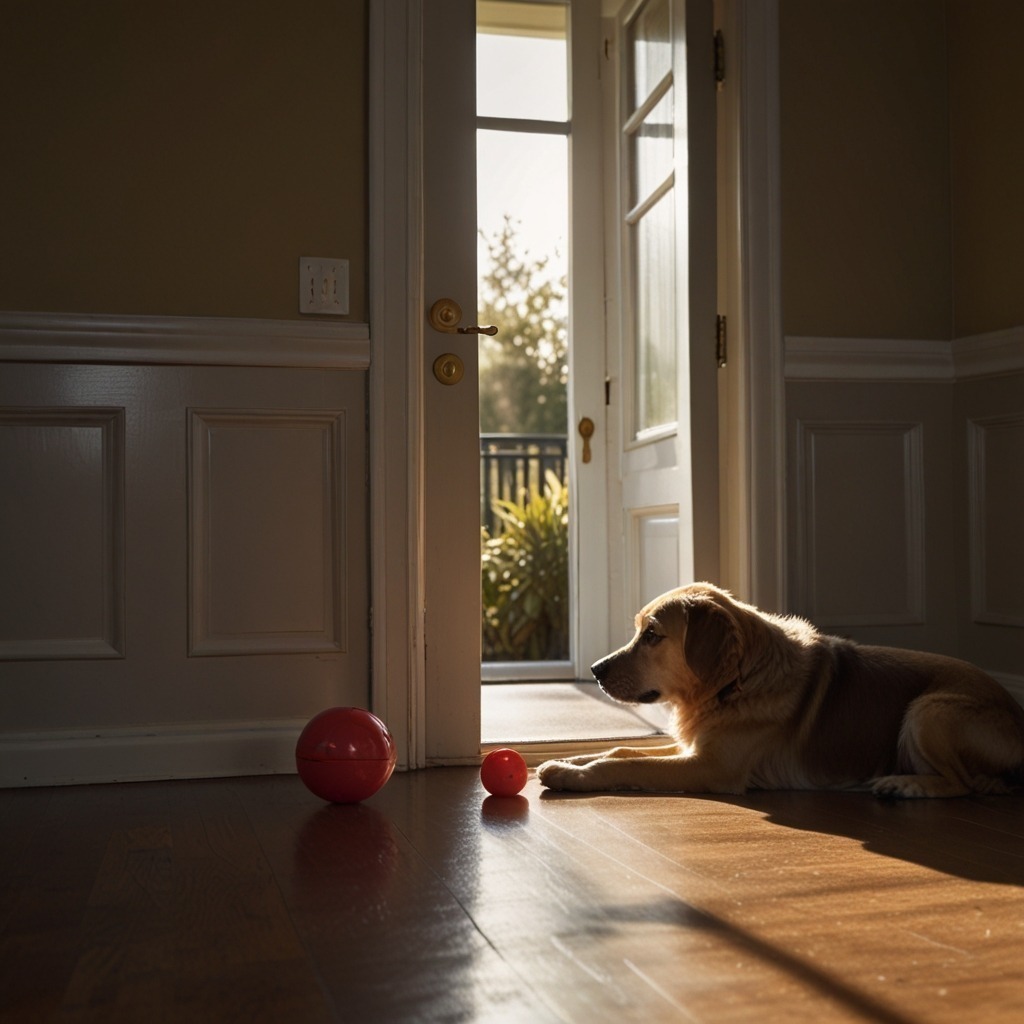
The day my landlord threatened to evict me over a dog I'd only had for three weeks
This is the part where I tell you a story that doesn't neatly fit into an advice column, because it's mostly about how I messed up. I'd taken in a build named Gus — a big, block-headed pitbull mix who looked intimidating but would roll over for belly rubs from strangers. I'd had him for less than a month. He seemed calm when I left. No desrruction, no barking that I could hear from the parking lot. So I assumed he was okay.
Wrong. So wrong. The property manager called me one afternoon, voice tight, and said there'd been multiple complaints about a "loud, distressed animal" in my unit and if it didn't stop, they'd start the eviction process. I was stunned. I drove home in a panic, and when I got there, Gus greeted me with his normal goofy grin. No evidence of any problem. I knocked on my downstairs neighbor's door and she looked exhausted. "He cries for hours," she said. "Not barking — just this awful moaning sound. I can hear him through the floor." I was mortified.
That's the thing about separation anxiety in apartment buildings. You might not hear it because you're not home, but your neighbors sure as heck do. And they don't know it's a medical issue — they just think you're a terrible owner with an untrained dog. I've had fosters where the only sign something was wrong came from a note under my door, not from anything I observed myself.
Gus eventually got better with a combination of medication (prescribed by a vet behaviorist, not some random internet recommendation), a gradual desensitization protocol that took the better part of six months, and a truly absurd amount of frozen Kongs. But the near-eviction still makes me cringe. Now, any time I bring a new build home, I talk to my neighbors preemptively. I give them my number and say, "If you hear anything weird, text me immediately — I'm not offennded, I need to know." It's saved me more than once.
What separation anxiety actually looks like in real life (not the textbook list)
Every website will give you the same bullet points: barking, howling, destruction, house soiling, pacing, escaping, drooling. And those are accurate, mostly. But they don't capture the weird, specific things I've seen dogs do when their person leaves. Things that don't fit neatly into a symptom checklist but still scream "I'm not okay."
- Refusing to lie down for hours. I had a build shepherd mix who, according to my wbcam, stood in the exact same spot in the living room for four straight hours. Didn't sit. Didn't lie down. Just stood, staring at the door, occasionally trembling. When I came home, her legs were visibly stiff. That's not normal dog behavior.
- Obsessive licking of one spot. I've seen dogs lick a single paw or a patch of floor until it's raw, like a nervous habit. One build beagle created a wet spot on the wall from licking it repeattedly — not licking food, just licking. The vet said it's a self-soothing behavior, like a kid sucking their thumb. Except the thumb was the drywall.
- Not drinking water all day. You'd think a panting, stessed dog would drink. Nope. I've come home to full water bowls and a dog who seemed desperate for water the second I walked in, but couldn't bring themselves to drink while alone. It's as if the anxiety paralyzed them.
- Destroying only one specific thing. Not chewing everything in sight — just the blinds, or just the area rug by the door, or just their own bed. It's targeted. They're not exploring; they're trying to escape or self-soothe.
- The "welcome home" that's actually a panic release. When you walk through the door and your dog launches at you, spinning, yelping, peeing a little — a lot of people think that's just a happy greeting. Sometimes it's. But if it's frantic, over-the-top, and the dog takes 20 minutes to calm down, that's often a sign they've been in a stte of high stress the entire time you were gone.
I've also noticed subtler signs that something's off. Things like: your dog starts shedding excessively when left alone — a stress response. Or they pant and drool so much that a puddle forms on the floor. Or they refuse to enter the room where you last left them, because they've associated that room with the panic. One of my fosters started hiding under the bed whenever I picked up my bag — he knew what was coming, and he was trying to make himself small and invisible before I even left.
If any of this sounds familar, please dno't dismiss it as "he'll get over it." I've said those exact words and regretted them. Anxiety tends to get worse without intervention, not better.
A note on crates: sometimes they make everything worse
I used to be a crate evangelist. I really was. After seeing what my build puppy chewed through my baseboards I thought crates were the answer to every destruction problem. But for a dog with true separation anxiety, a crate can become a torture chamber — not because the crate is bad, but because the panic makes them hurt themselves trying to escape. I've seen dogs bend crate bars with their teeth, rip out claws, and break off canines trying to chew through metal. The first time I saw a dog's bloody muzzle after a crate escape attempt, I changed my entire stance.
If your dog is destroying exit points or hurting themselves in a crate, don't — I'm begging you — just get a heavier-duty crate. That's not solving the anxiety; it's just containing the destruction while the dog is still suffering inside. I had a build who would scream so loudly in his crate that a neighbor called animal control. The answer wasn't more confinement; it was medication, behavior modification, and a dog-proofed room with a baby gate instead of a solid door, so he didn't feel trapped. Sometimes you gotta think outside the metal box.
This is one of those areas where I hear terrible advice online. "Just crate train harder" or "he'll learn to like it." No. A dog having a panic attack can't learn anything. Their brain is offline. The only thing they learn is that the crate is terrifying. Back off, reassess, and if the dog is injuring themselves, talk to a professional about safer confinement options while you work on the anxiety itself.
Why I stopped recording my dogs on webcam (and what I wish I'd known sooner)
Look, I already mentioned the webcam thing, but I need to tell you about Mabel. Mabel was a build who, according to all the separation anxiety checklists, was fine. No barking, no destruction, no house soiling. She'd eat her Kong and then nap. But because I was obsessed with documenting everything after Bentley, I set up the webcam anyway. And I watched her.
For the first hour, she slept. Then she woke up, yawned, and stared at the door for 90 minutes. Just stared. Her body was tense, ears forward, not moving. Occasionally she'd whine softly, this tiny sound I'd never have heard from outside. Then she'd pace a tight circle and go back to staring. She wasn't "fine" — she was frzen. That's a trauma response. But a checklist would've told me she was a success story.
I got rid of the webcam after Mabel because I realized I was using it to torture myself. I could see all these subtle signs of distress and I couldn't do anything about them from my phone at a coffee shop. It made my own anxiety skyrocket, which probably transferred right back to the dog. Dogs are weirdly attuned to our emotional state. If I walked through the door panicked and guilty because I'd watched them suffer from afar, they picked up on it and got more stressed. So I stopped watching. I set up the dog for success, trusted the protocol, and asked neighbors for feedback if I needed data. That worked better for everyone.
This is a tangent, I know. But if you're a new dog owner and you're driving yourself crazy with a pet camera, maybe don't. Check in occasionally if you need to for safety, but staring at a screen while your dog has a bad day isn't going to improve anything. You'll just feel helpless, and that's a terrible place to be.

The $340 vet bill that wasn't about separation anxiety at all (but taught me something important)
A couple years ago, I had a build named Clover who started urinating in the house evey time I left. Classic separation anxiety sign, right? I already had the whole protocol ready — vet behaviorist referral, adaptil diffuser, the works. But Dr. Nguyen, bless her, insisted on running a urinalysis first. Turned out Clover had a UTI that had been brewing for weeks, and the timing of my departures just happened to coincide with when she couldn't hold it anymore. She wasn't anxious; she was physically uncomfortable and needed antibiotics.
I tell this story because I think we pet owners have a tendency to jump straight to behavior issues when the real problem is medical. A dog that suddenly starts having accidents might have a bladder infection, kidney problems, or even diabetes. A dog that pants and paces might be in pain from arthritis, not anxious. I'm not saying you shouldn't consider separstion anxiety — I'm saying rule out the physical stuff first, especially if the behavior is new and your dog is middle-aged or older.
When I worked at the shelter, we had a surrender of a 6-year-old lab who'd started destroying the house after years of being "perfect." The owners were sure it was anxiety. Turned out the dog had severe hip dysplasia and was chewing doorframes because pacing was the only thing that distracted him from the pain. He'd been trying to tell them something was wrong, and they'd misread it as a behavior problem. That dog got pain management and a new home, and the "anxiety" vanished. So, yeah. Vet first. Always.
So you think it might be separation anxiety… now what?
I'm not going to pretend I can give you a cure in one blog post. What I can do is tell you what I've seen work for the dogs who've passed through my house, and what's made things worse. Because I've made all those mistakes, and if I can save you from some of them, great.
First, quick and dirty: you can't punish this out of a dog. If you come home to destruction and you yell at them, rub their nose in it, or lock them in a room longer, you're not teaching them anything except that you're unpredictable and scary. Anxiety is already telling them the world is unsafe; you adding to that doesn't help. I know it's frustrating. I know you prbably want to scream into a pillow when you see your hundredth destroyed shoe. But punishment can actually make the anxiety worse because now the dog has two stressors: being alone and anticipating your angry return.
Second, management matters more than you think. For a lot of dogs, just reducing how long they're alone while you work on the underlying issue is huge. Doggy daycare, a pet sitter, a neighbor who works from home — whatever prevents the panic from happening. I once traded dog-walking services with a friend for an entire summer so my anxious build was never alone for more than two hours. It was exhausting, but it kept him from practicing the panic, which is half the battle. You can check out some of the stuff I've written about how my lab destroyed eveything I loved until I figured out he needed something else entirely — that dog turned out to need mental stimulation, not just less alone time, and the difference was night and day.
Third, I've seen dogs improve significantly on anti-anxiety medication, and I wish the stigma around it would die. If your dog's brain chemistry is off, no amount of training will fix it alone. A good vet behaviorist can prescribe fluoxetine, clomipramine, or something else that takes the edge off so the dog can actually learn. Bentley needed meds for about a year while we did desensitization, and then we weaned him off gradually. He was a different dog. Some fosters I've had needed meds forever, and that's okay too. Would you deny a human with panic disorder their medication? Didn't think so.
And yeah, I know some of you're reading this and thinking "but what about natural remedirs." I've tried them. Adaptil diffusers, thunder jackets, CBD treats, calming music, rescue remedy — I've experimented with all of it. Some dogs respond; most don't. I've spent hundreds of dollars on things that didn't work across various build dogs, and I've learned that supplements and wraps might take the edge off mildly anxious dogs, but for true pamic-level anxiety, they're like throwing a band-aid on a broken leg.
What finally worked for Buster (and what just made me feel like I'd tried something)
Buster was a 2-year-old cattle dog mix who came to me after being returned to the shelter twice for "severe separation anxiety." He'd chewed through a wall. Like, actual drywall and studs. The first few weeks, I couldn't even leave the room without him vocalizing. I thought I was in over my head. But I had a vet behaviorist on speed dial and a stubborn streak.
We started with medication — fluoxetine — and waited six weeks for it to bulid in his system. During that time, I did something radical: I stopped leaving him alone. I set up a rotation of friends, a neighbor who worked from home, and a dog sitter from Rover who charged way too much. I was broke, but I needed to prevent the panic. Because every time a dog with separation anxiety has a full-blown episode, it reinforces the terror. you've to stop the cycle before you can fix anything.
Once the meds started working, we did a desensitization protocol that felt absurdly slow. The first week, I'd pick up my keys and put them down 20 times without leaving. Then I'd touch the doorknob without turning it. Then I'd open the door and step out for one second — literally one — and come back. Buster and I spent weeks on the "I'm just stepping onto the porch for 5 seconds" stage before I could even close the door behind me. It's like how socializing a puppy in't what I thought it was — slow, boring, counterintuitive work that actually pays off.
Buster eventually got to the point where he could handle four hours alone, which for a dog who once ate a wall is a dang miracle. The process took eight months. I'm not gonna pretend it was easy or that there's a quick fix. But he got adopted by a couple who worked from home and continued the protocol, and last I heard, he's doing great.
What didn't work was everything I'd tried the first two weeks out of panic. Bark collars (I knnow, I was desperate, don't @ me), crating him tighter, leaving him with "calming" chews that were basically expensive treats. None of it touched the root cause. I wasted money and time and probably scared him more. Learn from my mess, please.
When Miso the cat taught me that anxiety isn't just a dog thing
I know this is an article about dogs, but I've a cat named Miso — she's currently judging me from the windowsill — and she's the reason I understand anxiety a little better. She's not a dog, obviously, but her panic attacks when I'd be gone for a weekend looked eerily similar: overgrooming until she had bald patches, refusing to eat, and urinating on my bed. And the treatment? Same principle: medication, slow desensitization, and management. It reminded me that anxiety is a brain thing, not a species thing.
I'm bringing this up because if you've a multi-pet household and one animal's anxiety is triggering another, it's chaos. I once had a build dog whose crying set off a build cat so badly that the cat started spraying the curtains. The whole house smelled. I was losing my mind. There's no brilliant lesson here — just that you're not alone if your home feels like a zoo on fire. I get it.
Things I wish someone had said to me when I was sobbing in my car outside my own apartment
I didn't always handle this well. There were days I resented my fosters because my life revolved arround their panic. I'd come home hoping the damage wasn't too bad, and I'd feel this hot surge of anger, followed by guilt, followed by exhaustion. If you're in that place right now, hear me: you aren't a bad person for being frustrated. You aren't a failure because your dog isn't getting better on a timeline you set.
Another thing: you don't have to fix this alone. There are certified separation anxiety trainers (CSATs) who do virtual consultations. There are vet behaviorists who can do telehealth. There are online communities of people who get it. I was terrified to spend money on a behaviorist, but honestly, it saved me more in ruined bellongings and vet bills from stress-related health issues. The $500 I spent on a consult probably saved me $2,000 in the long run.
And finally, I've had to accept that some dogs won't ever be okay alone for a full workday. It's not common, but it happens. For those dogs, rehoming to someone who's home more often, or to a household with another dog that provides comfort, isn't a failure — it's a humane option. I've done it twice, and it tore me up, but both dogs thrived in their new situations. You're not a forever home for every dog, and that's okay.
Now if you'll excuse me, one of my dogs just knocked over the trash can because I've been writing for three hours and she's decided that's long enough. I gotta go. But I mean it — watch the subtle signs, trust your gut, and don't wait until your landlord is filing paperwork before you act.