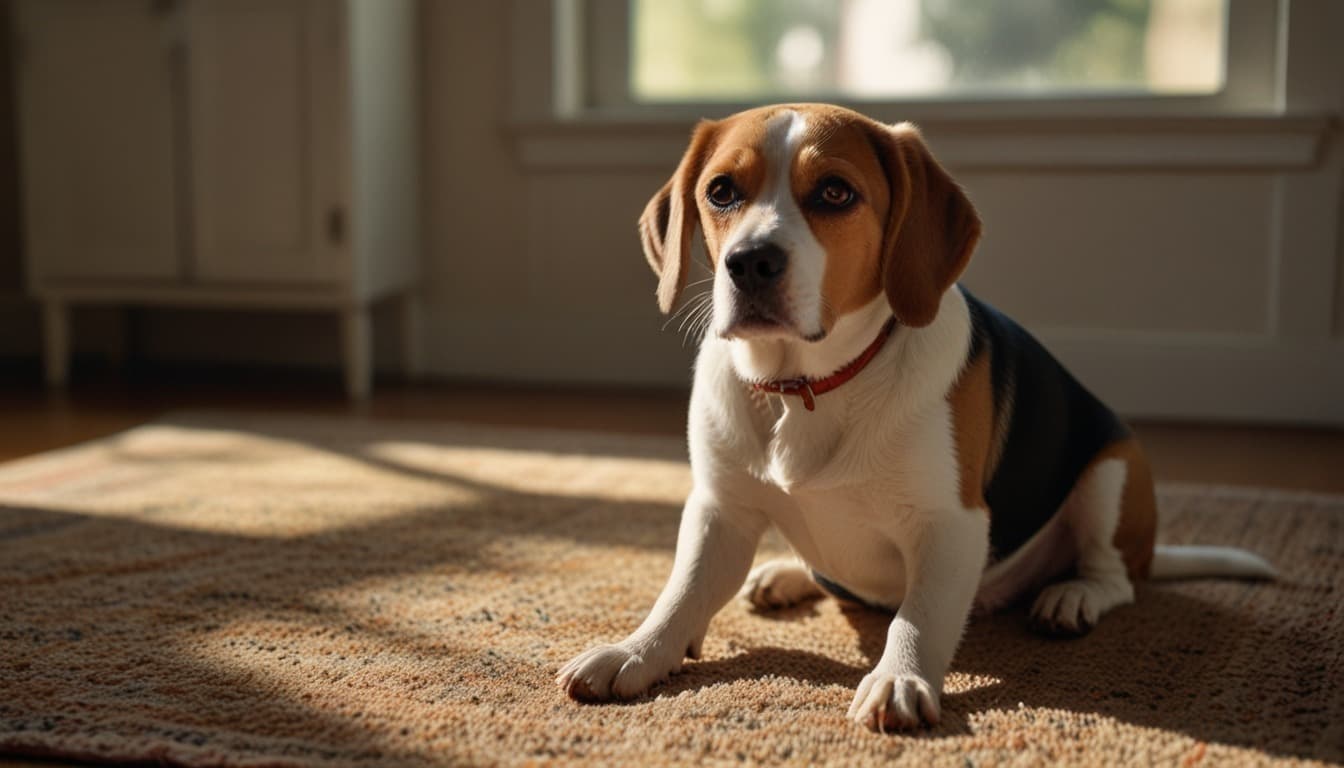
The Day My Foster Beagle Outsmarted a 'Puzzle-Proof' Treat Dispenser in 3 Minutes (And What That Taught Me About Actually Training a Stubborn Dog)
I've fostered over 40 dogs, and the 'stubborn' ones taught me more than any perfect puppy ever did. Here's what finally got them to listen—no dominance, just slow, humbling, and effective.
The day my build beagle outsmarted a "puzzle-proof" treat dispenser in 3 minutes
It was supposed to be the holy grail of enrichment toys. A thick plastic orb witth adjustable openings, marketed as "virtually indestructible and mentally challenging." The Amazon reviews glowed. People claimed their border collies couldn't crack it. I thought, perfect. My current build, a six-year-old beagle named Gus who had already chewed through two drywall patches and figured out how to open the refrigerator door by pulling the dish towel handle, needed a challenge.
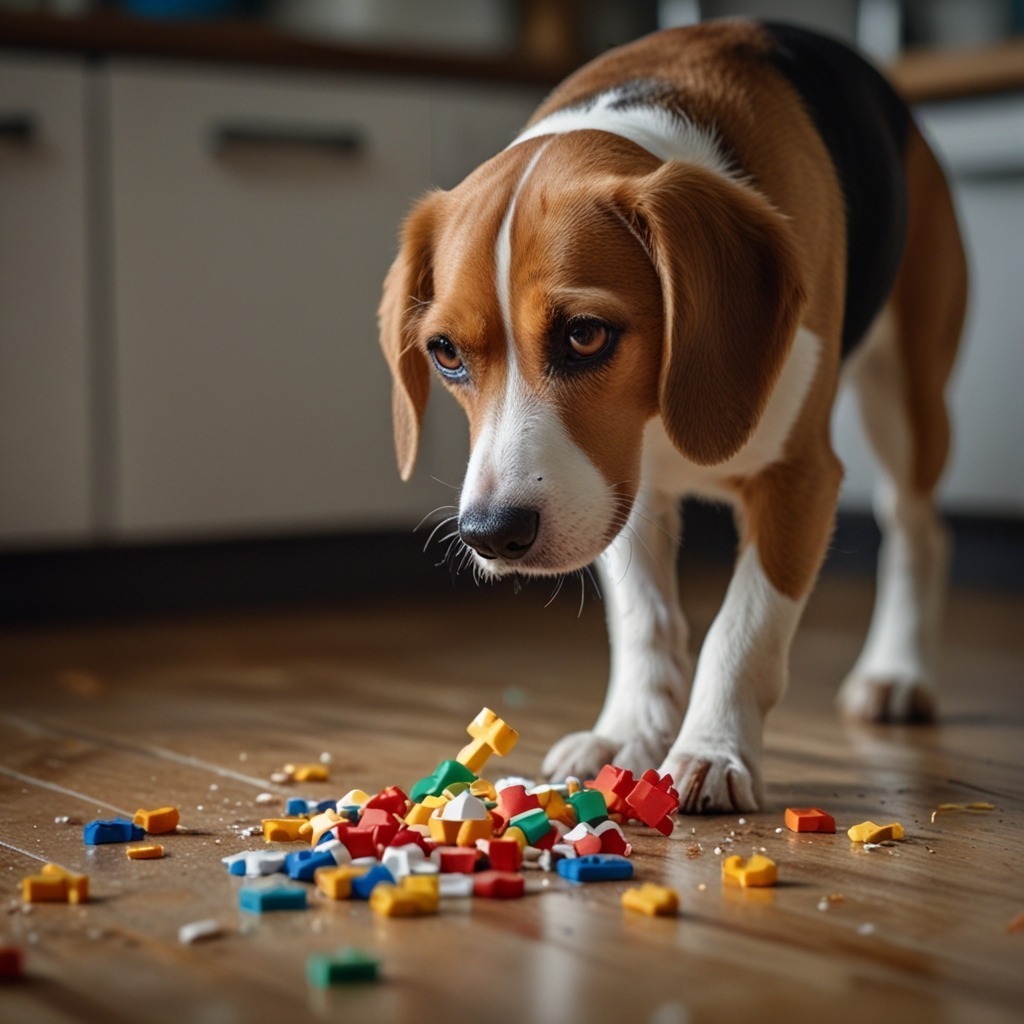
I stuffed the thing with freeze-dried liver, twistted the opening to the "hardest" setting, and set it on the kitchen floor. Gus sniffed it once, flipped it with his nose, rolled it against the cabinet, and had half the treats out in under two minutes. At minute three he'd wedged it under the oven and was prying it apart with his back teeth.
"Well, crap."
That moment sums up life with a stubborn dog. The tools the internet swears by? They laugh at them. The standard advice about "just be consistent"? They'll outlast your consistency with a patience that borders on monastic. Gus wan't broken. He wasn't dumb. He was just… efficient. He'd learned that persistence and creativity paid off, and my attempts to outsmart him had only sharpened his skills.
I sat down on the cold tile floor next to him, pulled out what remained of the puzzle—now basically a chew toy—and started rethinking everything I thought I knew about training a dog who didn't want to be trained.
Actually, let's define "stubborn" before we go any further
Because I've thrown that word around myself for years and only recently realized how useless it's. When I say stubborn, what I usually mean is: this dog isn't doing the thing I want, when I want it, for the reason I think they should. That's not stubbornness. That's me being a control freak with unrealistic expectations. The dog is just existing, making choices. The question is why they're choosing something else.
Why your "stubborn" dog probably isn't stubborn at all
The reinforcement history you're not seeing
Dogs do what works. That's the whole ballgame. If your husky ignores "come" every time he sees a squirrel, it's because chasing squirrels is way more reinforcing than whatever you're offering. You're up against a biological jackpot. I can't tell you how many owners I've met who say their dog is stubborn but they've literally never practiced recall around distractions, or they only call the dog to end fun things. That's not a stubbron dog—that's a dog who's been taught that "come" means the party stops.
One of my fosters, a pit mix named Marge, would absolutely ignore "sit" if there was any food on the counter within sniffing distance. My trainer friend watchrd me one day and said, "You're asking her to abandon a high-value opportunity for a dry biscuit. If I were her, I'd walk away too." Ouch. But she was right.
you've to audit what you're actually reinforcing. Maybe you're unintentionally rewarding the behavior you hate. Like when your dog barks at you for dinner and you eventually give in and feed them. That's a slot machine payoff. They'll keep barking forrver because it paid off once.
Breed purpose isn't personality
Here's a hill I'll die on: most "stubborn" breeds aren't hard-headed; they're independent because they were bred to work away from humans maikng decisions. Hounds, terriers, sled dogs—they were selected for generations to ignore distractions and follow their own judgement. A beagle who ignores your recall to track a scent isn't giving you the finger. He's doing exactly what he was designed to do, and your recall cue sounds like static next to the symphony of smells.
I had a basset hound build who couldn't care less about a squeaky toy or praise. He'd look at me with those droopy eyes as if to say, "I'm busy smelling the history of this spot." Once I accepted that, training became less of a battle and more of a negotiation. I used stinkier treats (tripe, anyone?), shorter sessions, and I started rewarding anything that even resembled engagement. It was humbling.
When pain or anxiety looks like defiance
I brought home a shepherd mix last year who refused to lie down on cue. I thought she was being willful. I'd repeat "down" until my voice cracked. Turns out she had a hip issue that made lowering painful. The "stubbornness" was self-preservation. Another build, a little terrier, couldn't focus on any training because he was so anxious about the cats in the next room he couldn't hear my voice. He wasn't stubborn; his brain was flooded.
I'm not a vet, so I won't diagnose, but if your dog suddenly stops doing something they used to do easily, or they seem to "blow off" certain commands always in the same context, maybe check for pain. And if they're new to your home or in a chaotic environment, anxiety can short-circuit everything. Fix the underlying issue first.
The single worst thing I did with my first stubborn build
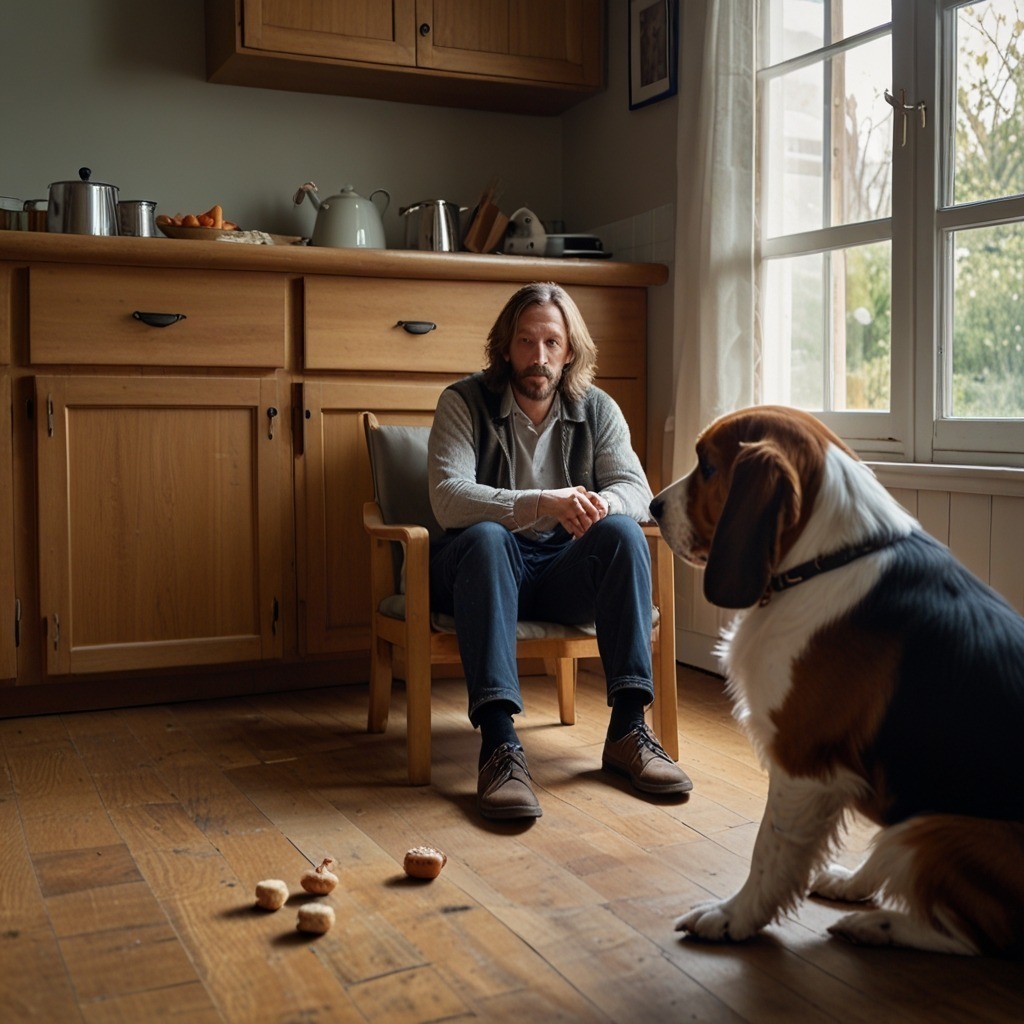
I repeated the cue. Constantly. "Sit. Sit. Siiit. Sit, boy, sit." You know what I taught him? That "sit" was a meaningless noise that happened in a series, and he only needed to respond when my voice hit a certain pitch or I gave up and walked away. He learned to wait me out. I created a dog who was masterful at ignoring me beccuase I never enforced the cue once, quietly. I just babbled it into the void.
The toolbox that actually works (and why it feels slower than you want it to)
High-value is a moving target
Commercial training treats are a joke for most stubborn dogs. Those little kibble-like pellets smell like cardboard. Gus, my beagle, would accept them politely indoors but outside they were invisible. I started carrying roast chicken shreds, then graduated to chunks of hot dog, then—in a particularly desperate moment—I used a warm sice of cheeseburger from my own dinner. Was it ridiculous? Yes. Did he suddenly learn "leave it" in the presence of a dead bird? Also yes.
you've to find what your dog considers life-changing. For some it's a squeaky ball, for others it's a tug session, for many it's whatever you're eating. But here's the catch: the value of a reinforcer changes based on context. Chicken might be great at home but worthless at the park where squirrels exist. So you constantly adjust. I've gotten weird looks pulling a tuna pouch out of my pocket at the vet's office, but whatever works.
One thing I've learned from fostering over 40 dogs: just having a solid no-pull use that doesn't choke them means you're not fighting a losing battle on walks, so you can actually train instead of just managing the pulling.
Wait… it out… literally.
Here's the most counterintuitive thing I do with stubborn dogs: I stop talking. Completely. When I ask for a sit and they don't do it, I just breathe and wait. No repeating the cue, no hand signals, no frustration sigh. I've stood in my kitchen for four entire minutes waiting for a dog to offer a sit. At first they look at me like I've lost my mind. Then they try things—paw, spin, bark—and when they finally sit, I mark and reward. The next time, it's three minutes. Then one. Then they sit before I even say it because they've learned that sitting gets the good stuff.
This technique is agony for us humans. We want to fill the silence. But silence is where the dog thinks. A dog who's just listening to you repeat yourself isn't thinking; they're tuning you out. My beagle Gus became a different animal when I learned to shut up. He'd offer behaviors to get me to move. It flipped the script: he was trying to train me.
Why I stopped repeating commands
I made a rule: if I say it once and the dog doesn't respond, I assume they didn't understand or the environment is too distracting. I don't repeat; I reset. I might move closer, use a higher-value treat, lower my criteria. I might whisper the cue instead of shouting it. But I never just say it again louder. Once I break the "one cue, then silence" rule, I've diluted the word. And with stubborn dogs, they catch that dilution faster than any other breed.
This probably saved my sanity with a build Malinois who was so smart he'd wait for the third repetition because that's when I'd pull out the cheese. I had to retrain myself not to be a broken record.
Setting up the environmment so they can't practice the wrong thing
If your dog counter surfs every time you leave the kitchen, you can train "off" or "leave it" all day, but if they're still getting a mouthful of butter when you're not looking, that behaior is self-rewarding and it'll stick. Management is half the training. I put baby gates everywhere. Crates, x-pens, leashes indoors. I teach "go to mat" and use it when I can't supervise. I don't give a stubborn dog the chance to rehearse what I don't want. Rehearsal makes permanent.
When I wrote about the lab who needed something beyond physical exercise to stop destroying the couch, I realized that mental stimulation through training and puzzles can drain a stubborn dog's energy far better than running them for hours. A five-minute nosework game wipes out Gus more than a two-mile walk, and it teaches him to engage with me instead of the garbage can.
What about e-collars and prongs? Here's where I land
I don't use them. I'm not your mom and I'm not going to lecture you, but in my experience—working in a shelter, fostering, making every mistake—punishment-based tools have always, always backfired with the dogs I thought were stubborn. They made the dog more shut down, or more reactive, or they suppressed warning signs that I should've seen. Marge, the pit mix, was trained on a prong collar by a previous adopter and she'd pancake to the ground if you reached for her neck. It took months to undo that. I'm not willing to risk that again.
If someone tells you a stubborn dog needs a "firm hand," I'd ask what they mean. Because usually that translates to scaring the dog into compliance, which isn't the same as teaching. And with a truly independent dog, you'll just create a dog who obeys only when the threat is present and ignores you the second it's gone. That's not training; that's a hostage situation.
A Tiesday night with a basset hound who refused to sit
This was three years ago, with a build named Otis who weighed fifty-three pounds and had the emotional range of a houseplant. I'd blocked out 9 PM to work on basic commands. I had a pouch full of stinky liver treats and a plan. Otis flopped onto the rug like a beached whale. I said "sit" in my cheerful voice. Nothing. Not even an ear twitch.
I waited. I waited some more. The clock ticked past 9:15. I started to sweat because my laundry was poling up and I was tired. I tried to lure him with a treat above his nose. He rolled onto his side and sighed. I sat down on the floor, defeated. I ate one of the liver treats myself just out of curiosity. (Don't. Just don't.) It was gross and salty. I started giggling hysterically. Otis lifted his massive head, sniffed my breath, and thumped his tail once. Then he sat up. Not because I asked, but because something interesting was happening.
I rewarded him anyway. He looked at me like, "You're weird, but okay." That night we accomplished nothing. Or maybe everything. Because I learned that sometimes you've to stop trying so hard and just share space. Otis eventually learned to sit on cue, but only after we'd spent weeks building a rlationship where he genuinely wanted to interact. The training was secondary.
Why I stopped teaching "sit" as the first command
Actually, scratch that. I stopped teaching cues entirely as the first thing. The first thing I teach now is that my presence predicts good stuff and that I'm worth paying attention to. That means scattering treats every time I walk into the room, hand-feeding meals, and not asking for anything. It's the opposite of what most people do with a stubborn dog—they start demanding obedience right away to "establish leadership." But with a dog who's already resistant to input, you need to build a bank account of positive interactions before you make any withdrawals. Once that account is full, asking for a sit feels like a tiny request, not a threat.
This shift alone turned around three fosters who'd completley ignored previous adopters. I'd spend the first week just existing and being a food dispenser. By day 8, they were trotting over whenever I moved. Then I could start adding cues without the dog even noticing it was training.
The $40 "training hakc" that set us back three weeks
I'll admit it: I bought a vibrating collar once. Not a shock, just a buzz, advertised as a "gentle attention getter" for stubborn dogs. I put it on a distracted terrier build named Pippin during recall practice. The first buzz made him jump and spin in circles looking for a bee. The second made him bolt to the door. After that, he wouldn't take treats from my hand for days. Totally poisoned the whole training experience. I returned it, ate the restocking fee, and learned that quick fixes with gadgets rarely end well. Pippin eventually got reliable recall with hot dog pieces and a long line, but that's a story for another day.
The 3 sprcific things that changed everything for my most stubborn fosters
Tiny, tiny, tiny steps
With a shy, shut-down, or highyl distracted dog, I reward for any glimmer of the behavior. Not a full sit—a slight bend of the elbows. Not a recall—a head turn toward me. I shape behavior like I'm molding clay with a toothpick. It feels ridiculous, but it works. A dog who's been allowed to ignore me for months doesn't know what I want. So I make it so easy they can't fail. This is the opposite of what most people do with stubborn dogs; we tend to up the pressure, demand more, get frustrated, and the dog checks out.
The "nothing for free" protocol (but not how you think)
I used to think "nothing for free" meant making the dog sit before every meal, every door, every anything. That's exhausting and it damages your relationship if it becomes a transactional nightmare. For me now, it simply means: every time you interact with the dog, think about what behavior you're reinforcing. If the dog nudges your hand and you pet them, you're reinforcing nudging. If you want a sit instead, ask for it. But not aggressively. Just casually. I'll mix in training throughout the day in tiny bursts—five seconds here, a treat for eye contact there. The dog starts to see me as a source of predictable goodness when they engage. That mindset shift alone transformed my relationship with a build GSD who wouldn't give me the time of day.
And if you're dealing with a dog who panics or barks at everything, remember that half the dogs I've been told are "stubborn" were actually anxious or reactive, and that the fix isn't more exposure—it's careful, slow counterconditioning. That approach sved my sanity with a build who barked at every stranger for months.
Learning to read the micro-signals
Dogs who are about to disengage or lose focus give off tiny signs: a lip lick, a look away, a scratch. If I keep pushing, I lose them. So I started watching like a hawk. The second I saw Gus yawn during a training session, I'd stop and do something fun for thirty seconds, or just sit quietly. Training sessions became two or three minutes long, max. His "stubbornness" turned out to be over-arousal and frustration. By honroing his signals, I kept him in the game instead of triggering a shutdown. It's the same skill I used when learning to build trust so he'd let me handle his feet—tiny concessions, big trust dividends.
The neighbor who told me to "be the alpha" and how I almost lost a dog over it
I'll never forget Mr. Henderson from two doors down. Retired, had hunting dogs his whole life, walked with a cane. He watched me struggling with a surly Great Pyrenees mix who was refusing to get into the car. He shouted, "You just gotta show her who's boss! Grab her collar and haul her in!" I was desperate, so I tried it. The dog, Lola, turned and air-snapped near my face—a clear warning that I was about to get bit. I backed off, heart pounding. Mr. Henderson shook his head. "See? She's spoiled." No, she was terrified and I'd just violated her trust.
That incident stuck with me for years. I started reading about canine body language, learning about cooperative care, and eventually understood that many dogs labeled as dominant or stubborn are just scared or confused. The relationship I've with my dogs now isn't built on dominance; it's built on mutual repsect and a willingness to listen to what they're telling me. That's way harder than being "alpha," but it actually works.
And for the record, Mr. Henderson's hunting dogs might have been obedient, but I never saw him handle them with anything gentler than a stern voice and a jerk of the lead. I'll pass.
The online course that promised to cure stubbbornness and gave me nothing but guilt
A few years back, in a moment of desperation with a young husky who'd escape the yard and ignore every cue, I bought a pircy online training program with the tagline "Break Through Their Stubbornness in 7 Days." It was full of dominance rhetoric and pop-and-release leash corrections I couldn't stomach. I tried one exercise where I was supposed to "claim my space" by walking into the dog. The husky just backed away, confused, and then peed on the floor from stress. I quit the course on day three, feeling like a failure, and later worked with a positive reinforcement trainer who helped us in one session. Guilt is a terrible motivator. Don't let anyone sell it to you.
The thing I finally realized about my own stubbornness
Here's the thing I never expected: every stubborn dog I've fostered has forced me to look at my own need for control. I want a dog to sit the instant I say it not because it's crucial for safety or welfare, but because it makes me feel like a competent trainer. When they refuesd, my ego took the hit. I'd get rigid, repeat commands, tighten up. The dogs felt that tension and checked out even more.
Gus, the beagle who dismantled my puzzle dispenser, taught me more about lettting go than any book ever could. He never became a star pupil. He still ignores recall if the scent trail is too good. But we built a working relationship where he trusts me enough to try. Most days that's enough. And when it's not, I remind myself that a dog who thinks for himself isn't a broken dog. He's just a dog who, like me, needs a better reason to cooperate.