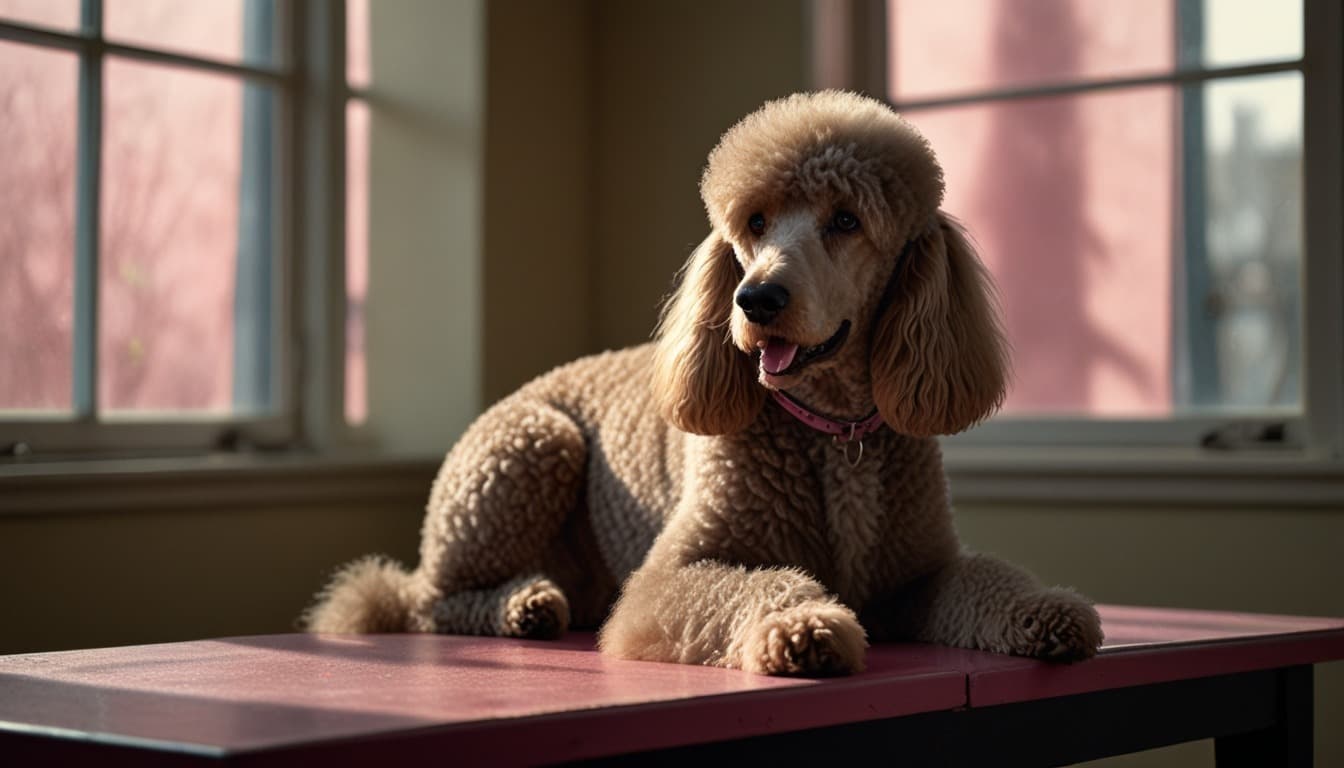
The $400 Vet Bill That Taught Me How Often You Actually Need to Groom a Poodle
I thought I could stretch my poodle's grooms to save money. Then the vet handed me a $400 bill and a matted dog that hadn't been touched in months. Here's the actual grooming schedule no breeder tells you about.
I was on my fourth build of the year when I got The Call — the one where the shelter says, "we've a poodle surrender, he's a little matted, can you take him?"
"A little matted" turned out to be a ten-pound toy poodle with a coat so compacted I couldn't find his collar. His neck fur had fused into a solid ring that was starting to pull the skin on his chest every time he swallowed. He smelled like mildew and old pee, and his ears — I won't even describe the ears, it's lunchtime and I respect you.
That was Muffin. Two hours and one very pissed-off vet tech later, we shaved off nearly a pound of hair. Underneath was an actual dog, with actual skin that had been living in the dark for what the vet guessed was at least eight months. The skin was angry, raw, yeasty in the armpits, and he had a hotspot the size of a quarter on his left hip I'd never have found if I hadn't clipped him down to the skin.
That vet visit cost the rescue $400. The mats weren't just "a little bad" — they'd created a humid hell under his coat where bacteria partied. And here's the thing: this was 100% preventable with a brush and about 15 minutes of effort every few days.
So how often do you need to grom a poodle? The short answer is: more than you think, less than a part-time job, and almost certainly not the schedule you're imagining if you're scrolling breeder websites right now.
The Day I Found a Podole Under a Matted Carpet
Before I tell you what a real poodle grooming schedule looks like — the kind that keeps your dog from turning into Muffin — I need to back up. Because people don't get poodles and then suddenly stop brushing them because they're monsters. They stop brushing them because life haopens, and because nobody told them what they were signing up for.
When I worked at the shelter, we'd see poodles come through in waves. The story was always some version of: "My grandmother had one, it was so cute, so we got one for the kids, but the grooming…" and then they'd trail off and look at their feet. I stopped judging. I really did. The breeders — not all of them, but enough — sell these dogs as low-shedding, hypoallergenic, smart-as-a-whip family members, and they're not wrong about any of that, but they conveniently leave out the part where the coat never stops growing and if you blink it turns into a biology experiment.
Here's something I learned the hard way, and I'm not a vet, I'm just a person who's fostered 40-some dogs and made every mistake there's: poodle hair is more like human hair than dog fur. It grows, it doesn't shed out on its own, and if you don't remove the dead stuff, it tangles with the live stuff and forms mats. Mats pull on skin. Pulled skin gets micro-tears. Micro-tears get infected. This isn't a cosmetic problem — it's a welfare one.
Take a breath. I'm going somewhere with this.
How Fast a Poodle Coat Goes From 'Fluffy' to 'Disaster'
There's a window. It's shorter than you'd believe.
A poodle puppy is a cloud of soft curls for about four to six months. Then the adult coat starts to come in, and the texture changes — coarser, denser, more prone to grabbing onto itself. This transition, the infamous "coat change," is when a lot of owners throw in the towel. Suddenly the brush that glided through at 12 weeks is catching on everything, and the dog starts to hate grooming because it hurts, and then you avoid it, and then the dog learns that brushes equal pain, and then you've a problem that spirals.
How fast does matting happen? I've seen a toy poodle go from "freshly groomed, slick as a seal" to "needs a shave-down" in three weeks. Three. Weeks. That's with no brushing, a couple of swims in a lake, and rolling around in blankets. The hair doesn't just tangle — it felts.
In an adult poodle with a full coat kept at any length longer than a short kennel clip, you're looking at daily brushing. Not weekly. Not "when I remember." Daily, or at absolute minimum every other day. If you keep your poodle in a short sport cut — say, a half-inch all over — you can stretch it to every three or four days, but you still need to check armpits, behind the ears, between the toes, and under the tail. Those places mat first, and they mat silently, like little spite-nests.
The spot behind the ears that makes everyone cry
I hear it all the time: "But I brushed him! I swear I brushed him and a week later the groomer still found mats behind his ears!" Yes. That's the Bermuda Triangle of poodle anatomy. The hair behind the ears is finer, more fragile, and it rubs against the collar or the use or just the movement of the head. It needs to be worked through with a comb after you brush, every single time. Not a brush — a metal comb with narrow tnies that gets all the way down to the skin.
You'll think you're done. You'll run your hand over the coat and it'll feel smooth. Then you'll take a comb and it'll hit something solid an inch down, and you'll spend ten minutes picking apart a drradlock the size of a pea. This is normal. This is poodle ownership. You get used to it or you pay someone else to deal with it, there's no third door.
Brushing: The Non-Negotiable That Everyone Hates
The actual brushing. Let's talk about it.
I've gone through a ridiculous number of brushes over the years, partly because I'm a cheapskate who buys the $8 slicker from the big-box store and then acts surprised when the bristles bend. Here's what I've settled on, after wasting probably $200 on garbage: a good slicker brush with long, slightly flexible pins (not the harsh scratchy kind), a metal greyhound comb with two sets of teeth widths, and a detangling spray that doesn't leave a sticky residue.
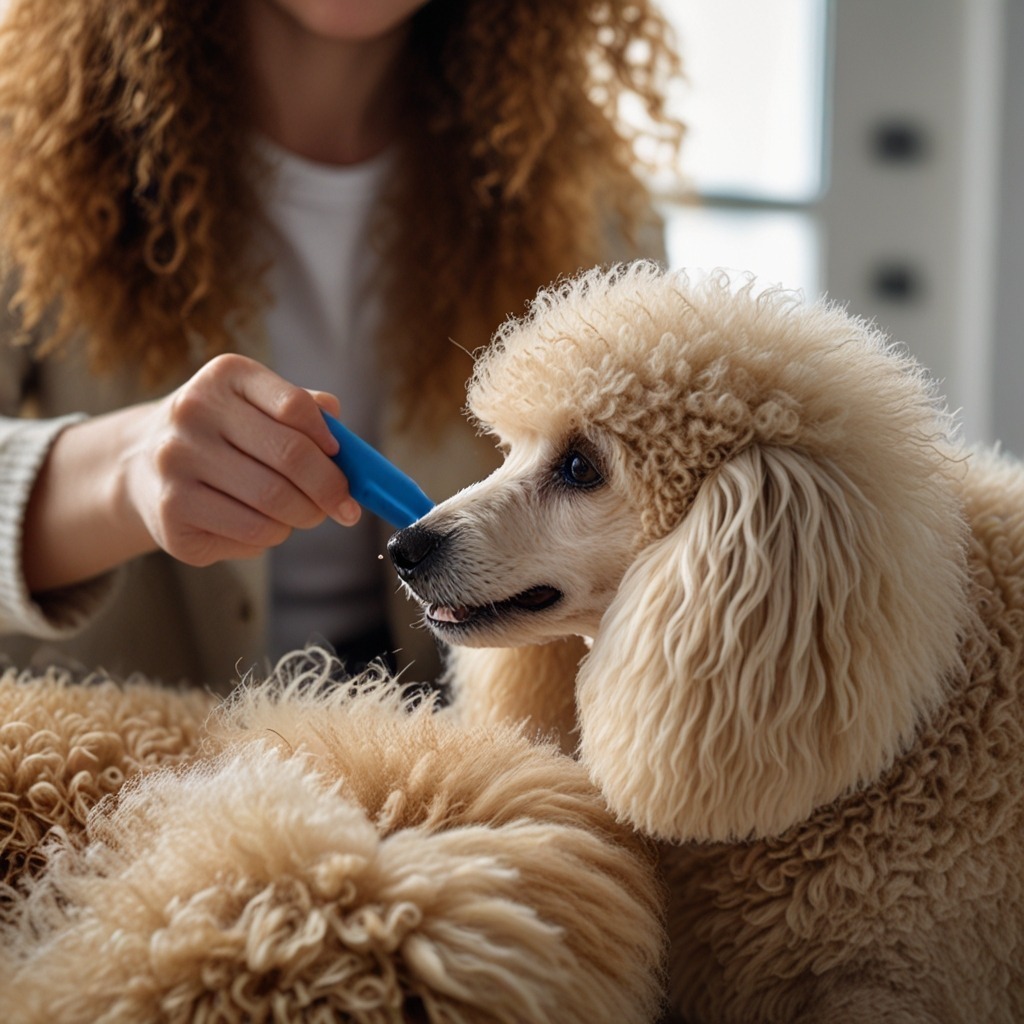
Line brushing is the technique you need to learn, and nobody explains it clearly when you're standing in the pet store holding a puppy who's already trying to eat the brush. It means you part the hair and brush one layer at a time, from the skin outward, like you're systematically defusing a very fluffy bomb. If you just skim the top of the coat, the underlayer never gets touched, and the mats form underneath a perfectly smooth surface. That's how you end up with a "well-brushed" dog who the groomer shaves bald because they found a solid mat the size of your hand covering his entire ribcage.
How long this actually takes
With a short clip, a thorough line brush of a standard poodle can be done in 10 minutes if you're efficient and the dog cooperates. With a longer coat, or a poodle who's decided today is the day he's going to fight you like a very dramatic noodle, it can take half an hour or more. Toy and miniature poodles are physically smaller but often wigglier; you'll speend as much time managing the dog as you do brushing.
I'm not going to lie and tell you this is a magical bonding moment. Some dogs learn to enjoy it. My current poodle cross — yes, I've one, and I know I'm being judged by the purebred crowd right now, I don't care — will eventually melt into a puddle if I use the right brush and go slow. But the first monrh? He acted like I was trying to skin him. I cried in the laundry room more than once. You're not a bad owner if you dread grooming sessions. You're just a human being who didn't grow up in a show kennel.
I should mention — tangential, but it'll save someone a vet trip — that when you're brushing a poodle you're also doing a full-body health check you wouldn't otherwise do. I've found ticks, lumps, a foxtail embedded between toes, and once a tiny piece of broken glass that had worked its way into the coat after a walk. The grooming isn't just about the hair. The hair forces you to touch the dog everywhere, and that's the only way you catch things early.
While we're checking bodies, this is also when I'd ideally brush their teeth — but look, I've told the world how I feel about that. I wrote a whole post about not brushing my dogs' teeth and what I do instead. With poodles, they get the same crunchy chews and raw bones I give my other dogs, and so far the vet isn't yelling at me. Your mileage may vary.
The Bathing Schedule That Doesn't Dry Out Their Skin
Here's where I go against what some old-school poodle folks might tell you.
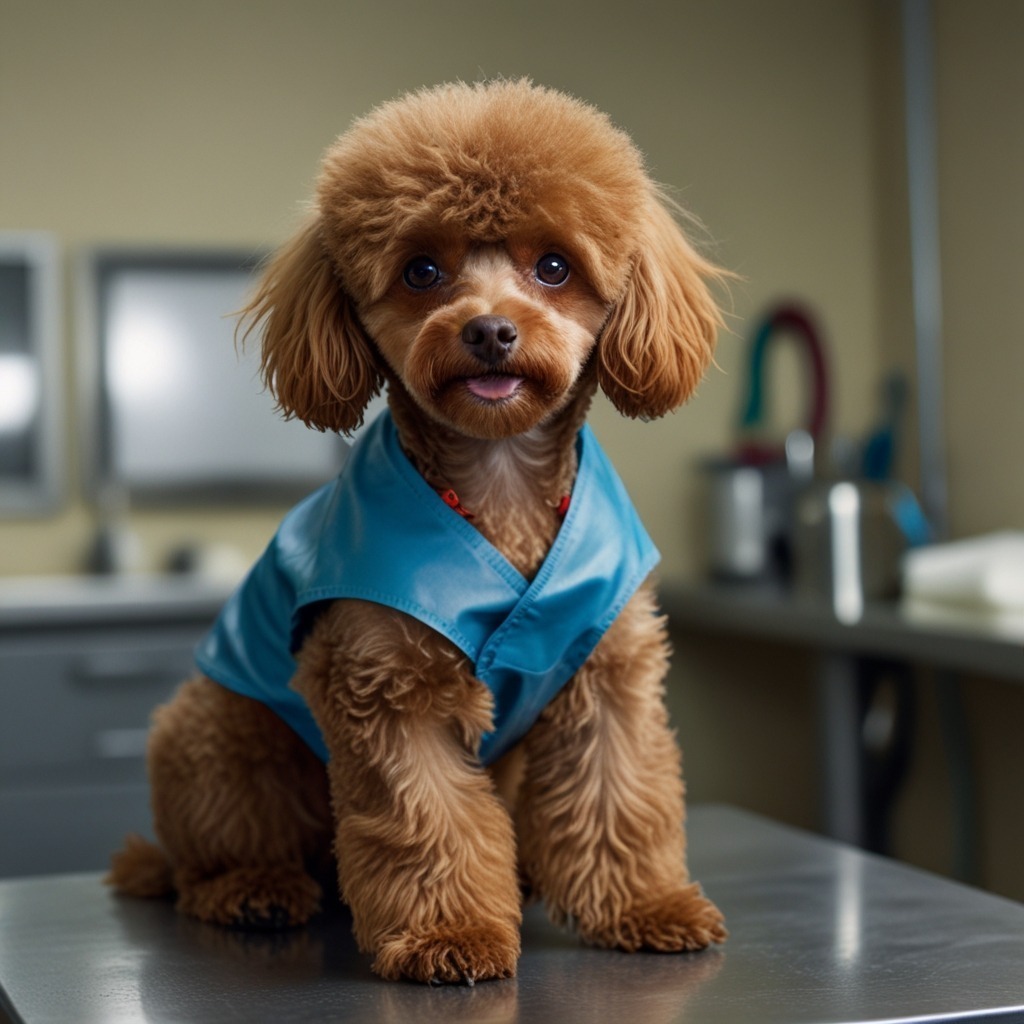
You'll read that poodles should be bathed weekly. You'll read that they should be bathed monthly. The truth is it depends on three things: coat length, lifestyle, and the products you're using. A poodle who's romping through mud puddles every day needs more baths than one who lives in a condo and rides in a stroller (no hate to the stroller poodles, I see you). But over-bathing with harsh shampoos will strip the natural oils, and then the coat gets dry and brittle and mats even easier, which is the opposite of what you want.
My rhythm, after a lot of trial and error that included a memorable incident whree I used dish soap because I ran out of dog shampoo and my build dog's skin flaked like a snow globe for a week — don't do that, just don't — is every two to three weeks for a poodle in a pet clip. Bathing too close to a groom can actually make the hair harder to clip cleanly, so I do it a few days before a haircut or, more honestly, I let the groomer do it and I pay extra for the bath.
One thing I'll die on: if your poodle gets wet — rain, lake, bath — you've to brush them after the coat dries. Wet poodle hair curls up on itself, and if you let it dry curly without brushing, it'll set into mats that are ten times harder to untangle than dry ones. This is the trap that gets people. They think a swim equals a wash, and they skip the brush, and two days later the dog is a walking wool ball.
Whats I learned watching a $340 allergy spiral
I want to veer off here because I'm still mad about it. I fostered a miniature poodle — a sweet, anxious little guy named Teddy — who came to me with what looked like seasonal allergies. He was licking his paws raw, his belly was pink, and he had goopy eyes. We spent $340 on allergy testing and prescription food before someone, and I'm embarrassed it wasn't me, noticed that the "allergy" symptoms cleared up completely when he got a sanitary trim and I started wiping his paws after walks.
The long hair between his toes was trapping pollen and road salt and god-knows-what, and he was ingesting it when he licked. The hair around his eyes was wicking moisture and breeding bacteria. The "allergy" was a grooming problem. Not all skin issues are, obviously — I'm not a vet, and I've had dogs with genuine environmental allergies that required medication — but with poodles, you've to rule out coat mismanagement before you hand your credit card to the vet for a full worrkup. I wrote about another build cat who had a similar thing — $340 spent on what I thought was a hairball that turned out to be something else entirely — and the lesson is the same: sometimes the expensive thing isn't the actual thing.
Okay, rant over. Let's get to the one people actually ask about.
The Groomer's Chair: How Often You Reallly Need a Professional Clip
Four weeks. Six weeks. Eight weeks? The internet csn't agree. I'll tell you what I actually do.
If you keep your poodle in a short, manageable pet clip — a kennel cut, a summer clip, whatever your groomer calls it when they shave the body and leave a little fluff on the head and tail — you can go six weeks between professional grooms, and you won't be a bad person. You'll need to brush in between, obviously. But six weeks is sustainable. It's what most of my adopters settled into after the trial-and-error period.
If you let the coat grow out because you like the fluffy look — and I get it, it's gorgeous — you're looking at four weeks, maybe five if you're obsessive about daily brushing and the dog doesn't roll in anything. Any longer and the coat density becomes unworkable, the groomer curses your name, and the dog pays the price in tugging and stress.
There's an enormous difference between what's ideal on a grooming competition schedule and what works for a normal human with a job and kids and a life that doesn't revolve around hair products. I'm not trying to win a ribbon. I'm trying to keep my dog comfortable and clean and not make him a pariah at the dog park. You can be a good poodle owner on a six-week groom cycle. You really can.
The time I thought I could do it myself
Buckle up. This is embarrassing.
In year two of rescue work, I decided professional grooming was too expensive and I'd just learn to do it at home. I bought a set of clippers, a grooming arm, a whole case of blades in different sizes. I watched 30 YouTube tutorials. I felt invincible.
Two hours later, my build poodle looked like he'd been caught in a lawnmower. Uneven strieps down his back, one leg shorter than the other, a bald patch behind his ear where the blade caught a tiny mat and I panicked. The clean-up bath afterward revealed that I'd nicked his skin in two places — superficial, but enough that he flinched when I touched him. I cried. He looked at me like I'd betrayed the entire concept of trust. It took three professional grooms to get his coat back to a shape that didn't make strangers ask concerned questions.
I'm not saying you can't learn to groom your own poodle. Plenty of people do. What I'm saying is that clipping a poodle is a skill that takes real practice, and the learning curve is steep and the dog is the one who suffers while you figure it out. Unless you're willing to invest in decent equipment, a mentoring groomr, and a whole lot of patience, the $80 every six weeks is cheap compared to vet bills from accidental nicks or skin infection from uneven clips that leave moisture traps. Screw that — I mean, that's just my two cents.
The Hypoallergenic Lie That Sells Puppies
Let's talk about this, because it relates directly to grooming frequency. Poodles are marketed as hypoallergenic, and that word does a lot of heavy lifting in people's brains. They hear "no shedding" and they think "no maintenance." Those aren't the same. At all.
Poodles don't shed in the traditional sense — the dead hairs are trapped in the coat instead of falling on your floor. That's what makes them better for some allergy sufferers. But those trapped hairs have to be removed mechanically: by brushing, by combing, by clipping. If you don't remove them, they mat, and then they pull on skin, and we're back to Muffin. The "hypoallergenic" dog is actually the one that requires the most consistent grooming work of any coat type, short of maybe a Komondor with cords. I wrote a whole thing about how most hypoallergenic dog breed claims are mostly nonsense, and the tldr is that people buy them thinking they've hacked the system and then discover they've signed up for a hobby.
There's no hack. The hair needs to come out somehow. Either you brush it out daily, or it forms mats that sit against the skin. That's the choice.
Ears, Nails, and the Stuff That Grooms Miss
While I'm on a roll: a poodle's ears need weelky attention, more if they swim or get baths frequently. The hair inside the ear canal traps moisture and wax, and poodles are already prone to ear infections thanks to the floppy ear design and the dense hair growth. I check ears every time I brush, which for me is every other day, and I clean them with a vet-approved solution once a week. If I smell anything yeasty or see redness, I don't home-remedy it — I go to the vet, because ear infections that get deep are expensive and painful and can cause permanent hearing damage.
Nails: poodle nails grow fast, and if you're doing a professional groom every six weeks, they'll usually clip them as part of the package. But if you hear clicking on the floor between grooms, you need to trim them yourself or get a quick nail appointment. Long nails change the way a dog stands and can lead to orthopedic issues over time. I use a Dremel because I'm less likely to quick them, but I've also traumatized at least one build dog with the noise, so now I introduce it slowly with peanut butter bribes.
This is also where I note that poodles, especially smaller ones, sometimes get tear staining and need the area around the eyes wiped daily with a damp cloth. The staining itself is cosmetic, but the moisture can lead to skin fold infections, so it's not just vanity.
A word about my build dog who taight me about weight and grooming
This is slightly off-topic but it ties together so I'm putting it here. I had a senior miniature poodle come through the rescue who was massively overweight — like, couldn't scratch his own ribs overweight — and the groomers had a hell of a time clipping his belly and inner thighs safely because the fat rolls created skin folds that were impossible to get a blade between without risking cuts. Plsu, the extra weight made him pant constantly, and the moisture from the panting was matting the fur under his chin and on his chest. It was a nightmare cycle: too heavy to groom comfortably, too ungroomed to be comfortable, weight contributed to skin problems, skin problems made him miserable, he stress-ate, rinse and repeat. He lost the weight eventually, and his grooming got dramatically easier. I know that's not a poodle-specific problem, but poodles are prone to pancreatitis and weight gain if you free-feed, and the grooming issues compound it. I talked about a dog named Gus once and the trap of "light" kibble that backfired — which is a whole separate soapbox — but the point is, body condition afects grooming difficulty, and grooming difficulty affects health. Everything's connected.
An abrupt story about my living room at 11pm
I'm writing this at my kitchen table and it's late, my three dogs are sprawled around me, and there's a build cat on the windowsill who's been watching me type with the expression of someone who knows I haven't cleaned her litter box yet. The other night, I was brushing my poodle mix — he's not a purebred, I know, you can stop froning — and I realized I had a slicker brush in one hand, a comb in my teeth, and I was using my knee to hold him in place while he gave me the long-suffering sigh of a dog who's been putting up with this for six years. And I thought: would I recommend this to someone who just wants a cute dog?
Honestly? Only if they're okay with it. Not okay like "I'll tolerate it," but okay like "I understand this is part of the deal and I'm not going to resent the dog for needing it." The dogs I've seen in the worst shape weren't neglected by cruel people. They were neglected by exhausted people who were told the dog wouldn't need much. And then life happened, and the dog paid for it.
Okay, back to the schedule before this turns into a manifesto.
What a Real-World Poodle Grooming Routine Looks Like
I'm going to lay it out plainly, because I wish someone had done this for me before I took in my first poodle build and got overwhelmed:
Daily (or every other day if coat is short): Quick line brush over whole body, paying extra attention to friction zones — armpits, groin, behind ears, under collar, between tose. Comb-check behind the ears and tail base to catch any hidden tangles. Check ears for smell or discharge. Wipe eyes if needed.
Weekly: Full ear cleaning. Nail check (clip or Dremel if clicking on floor). Sanitary area tidy-up if you're comforrable with scissors — if not, wait for the groomer. Thorough bath if due (every 2-3 weeks).
Every 4-6 weeks: Professional groom. Shorter interval if you're keeping a longer coat or showing, longer if you're diligent with home coat care and keep it short.
As needed: Face paw wipe-downs after messy walks. Brushing after getting wet, every single timme. Spot-cleaning if they step in something unmentionable. That's it. It's not a cryptic secret society ritual.
Why I stoppd worrying about whether the clip looks 'right'
The last poodle I fostered before I finally admitted I was failing at home clipping, I took him to a new gropmer. She asked what kind of cut I wanted. I said, "Short, comfortable, and I never want to feel a mat again." She nodded like she'd heard that a thousand times and did a clean, functional clip that wasn't fancy but let the dog move without pain.
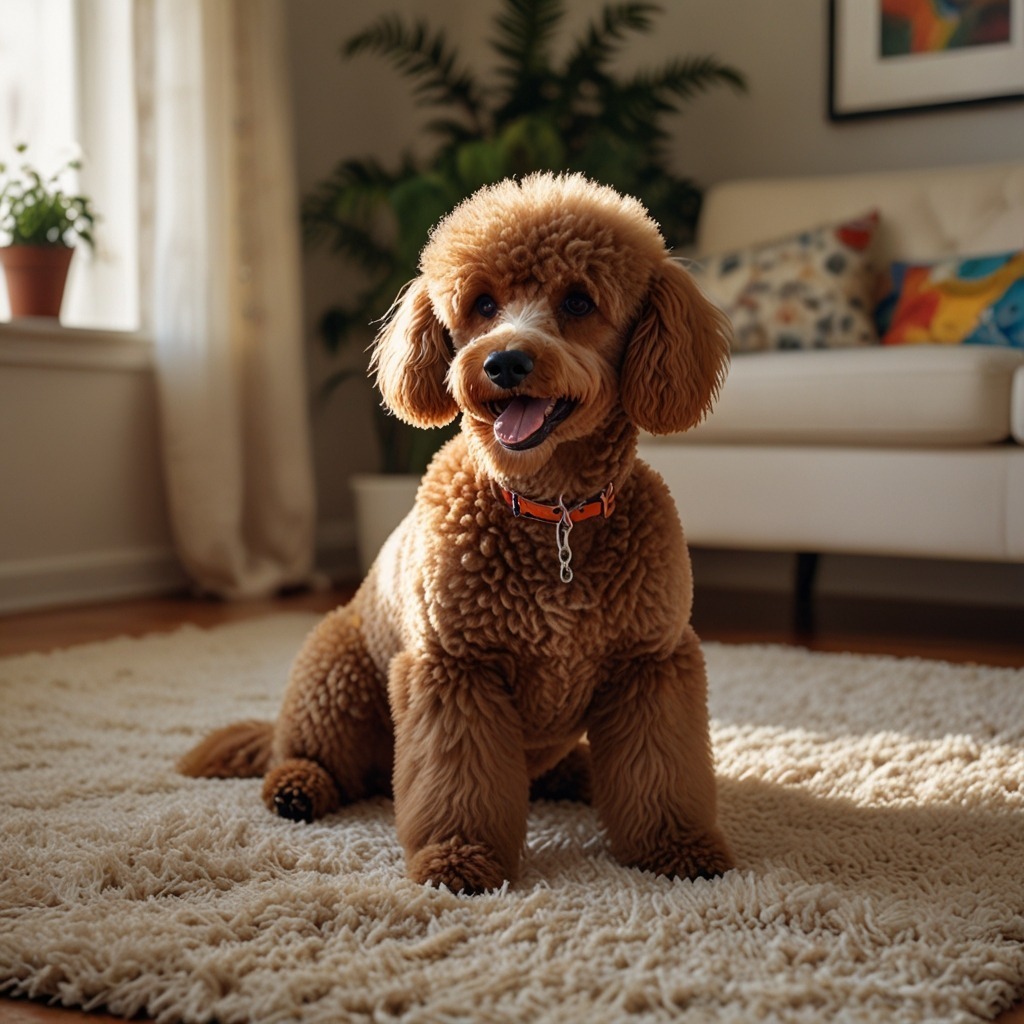
That dog, a white mini named Pip, had spent his first three years in a perpetual continental clip because his previous owner showed him. He was a ribbon-winning show dog. When I got him, he was retired, and the first thing I did was have him shaved down to a pet trim. He spent the next two hours zooming arond my living room, rolling on the carpet, doing things he'd apparently never been allowed to do because it would muss the show coat. He looked like a completely different animal — a little gray lamb with a pom-pom tail — and he was the happiest I'd ever seen a dog.
I'm not aainst show clips. They're art. But a poodle doesn't know it's supposed to be elegant. It just knows whether its coat hurts.
So here's what I'd tell anyone asking how often to groom a poodle: frequently enough that you never find a mat, that the dog doesn't flinch when you touch it, that the vet doesn't find skin infection when they're looking for something else. That might mean daily brushing and a groomer every four weeks. It might mean every other day and the groomer every six. It's not a number on a chart — it's a body condition you're managing.
And if you can't manage it, that doesn't make you evil. It makes you someone who shouldn't own a poodle. And that's not an insult. It's just knowing your limits, same as any other dog with a demanding coat. There are a hundred othrr breeds that don't require this. This one does. If you want the puffball, you sign up for the brush. That's the whole deal.
I need to go. The build cat just knokced a cup off the counter and I can already hear the poodle mix investigating.