Stop Telling Me to 'Just Socialize' My Reactive Dog — Here's What Actually Stopped the Barking
I tried every quick fix, every well-meaning piece of advice, and still my foster dog Bug would bark his head off at anyone who wasn't me. Here's the messy, repetitive training that actually got him to stop — and the $200 vet lesson I'll never forget.
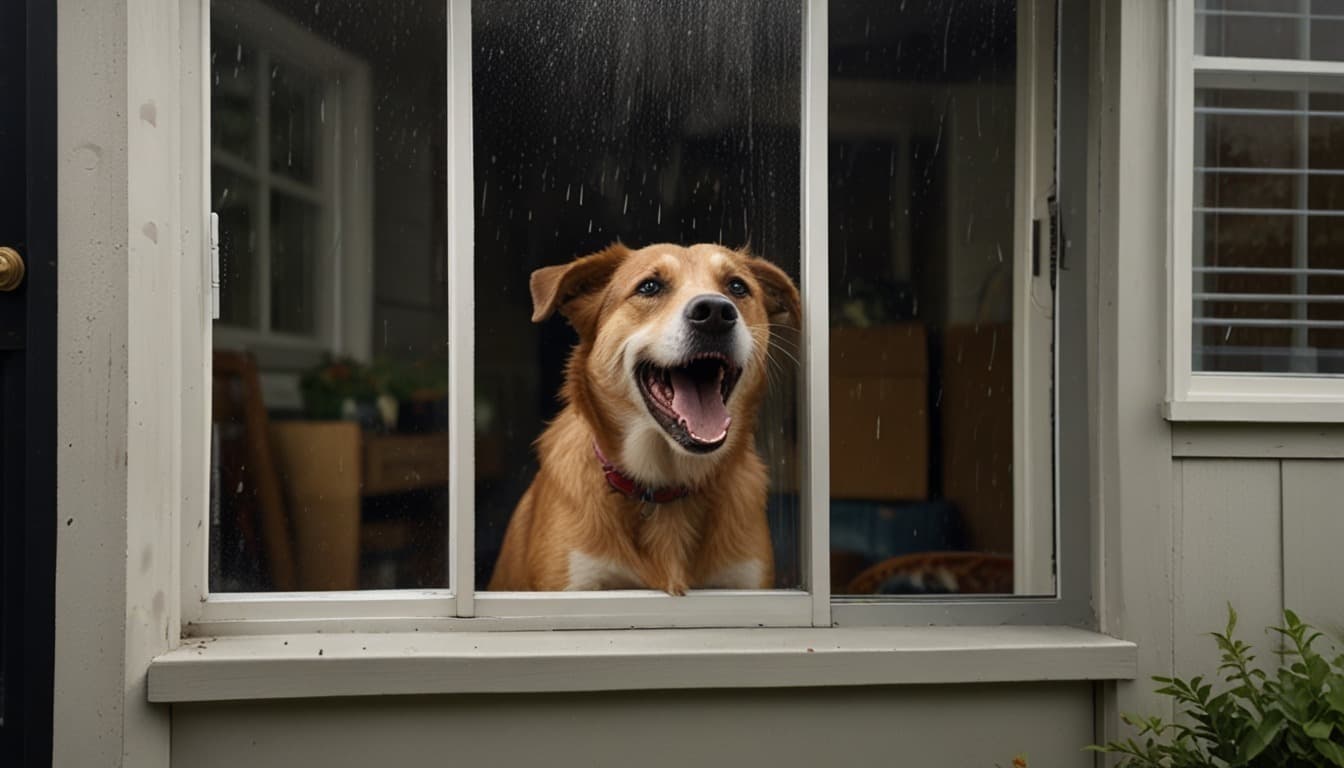
Bug was a 55-pound pit mix with a head like a cinder block and a bark that could rattle windows. I’d had him for exactly four days when the mailman left a note on my door that just said: “Please control your dog.” No greeting, no signature, just that, in scratchy pen, taped next to the doorbell I’d already disconnected. I remember standing there with the sticky note in my hand, Bug still barking his face off at the window, and thinking: crap. This is gonna be one of thhose build stories I tell people about at parties with a strained smile.
I didn’t know it then but that note was the start of a seven-month odyssey through every barking cure ever suggested on a dog forum — and I’ve read them all. Squirt bottles, citronella collars, “just let him bark it out,” “exercise him more,” “exercise him less” (seriously, someoe said that). I made every mistake, and I made them loudly, usually while a delivery driver fled down my driveway. I’m not a trainer, but I’ve fostered over 40 dogs and this was the barker who broke me. And then, finally, the one who taught me what actually works.
The Mailman Cried Uncle Before I Did
That sticky note was just the opening salvo. Over the next three weeks, I got a passive-aggressive email from the HOA, two voicemails from a neighbor who claimed Bug “sounded aggressive” (he was terrified, not aggressive, but good luck explaining that to someone who’s already decided your dog is Cujo), and a face-to-face encounter with our mail carrier, Terri, who told me she’d started carrying pepper spray “just in case.” Terri’s a nice lady. She didn’t want to pepper spray my dog. She wanted me to fix the problem so she didn’t have to. I promised her I’d figure it out.
The pressure was suffocating. Every time the doorbell rang — or honestly, every time a car pulled into a driveway two houses down — Bug would launch himself at the window, hackles up, barking so hard his front feet left the floor. I’d grab him by the collar and drag him to the back bedroom, both of us shaking. My other two dogs, who’d always been chill, started feeding off the chaos and would join the barking chorus. The house became a war zone, and I was the general who’d lost control of the troops.
In those early weeks, I tried the quick fixes. A citronella spray collar that made Bug sneeze uncontrollably and then bark louder, as if he was yelling AT the collar. A “calming” pheromone diffuser that did absolutely nothing except make my living room smell like a perfume counnter. I even bought a sonic anti-bark device shaped like a birdhouse that, far as I could tell, just annoyed my cat. Nothing worked. Bug kept barking, and I kept googling “how to stop dog barking at strangers” at 1 a.m. with a pit in my stomach.
I Tried a Bark Collar Exactly Once and I Stll Feel Sick About It
This is the part of the story I’m not proud of. Desperate and sleep-deprived, I borrowed a static-shock bark collar from a friend who claimed it “cured” her beagle. I put it on Bug, adjusted the fit, and waited. The mail came. Bug barked. He yelped, froze, and then barked again — and the collar zapped him again. He yelped a second time, a sound I’d never heard from him, and then he did something worse: he stopped barking and just stood there, trembling, with his tail tucked so far under his belly it almost touched his chest.
I ripped the collar off within thirty seconds and threw it in the trash so hard the plastic cracked. Bug wouldn’t look at me for the rest of the afternoon. He lay under the kitchen table and whined softly every time I moved. I sat on the floor next to him and cried. I’d just taught my build dog, who was already terrified of strangers, that the world could now physically hurt him at random. Screw that. That collar is still in the landfill, and I hope it’s melted into a puddle of regret. If I hadn’t already learned my lesson about foring dogs through their fear — like the time I threw the nail clippers and my dog hid for hours — this sealed it. You can’t frighten a dog quiet. You just make the fear worse.
Everyone Told Me to 'Socialize Him More' (They Were Wrong)
I got so much unsolicited advice during those months. The most common was “you just need to socialize him more.” People told me to take him to dog parks, to PetSmart, to crowded sidewalks, to “let strangers pet him so he learns they’re friendly.” I want to scream every time I hear that now. Bug wasn’t under-socialized. He was over-threshold. Forcing him into situations where he was constantly inundated with scary strangers wasn’t socializing — it was flooding. It made him more reactive, because every interaction confirmed his worst fear: strangers are unoredictable and they keep coming at you and nobody listens when you say you’re uncomfortable.
Real socialization isn’t about quantity of exposure. It’s about quality. Neutral or positive experiences at a distance the dog can handle. Everything else is just trauma with a cute name. I wish I’d known that from the start, but I had to learn it the messy way, one bark explosion at a time.
First We Ruled Out the Medical Stuuff (Because I've Been Burned Before)
Before I dove into any training plan, I made an appointment with my vet, Dr. Nguyen — the same saint who’s put up with my panicked calls for 11 years, through three dogs and a divorce. After the time my senior dog Gus started shaking at 2 a.m. and I spiraled into a stroke panic only to find out it was his breakfast (I wrote about that disaster when I was stikl embarrassed enough to think it was funny), I don’t mess around with medical rule-outs. A dog in pain can act like a dog with a behavior problem, and no amount of training will fix a toothache.
Dr. Nguyen did a full exam — ears, eyes, teeth, joints, thyroid panel, the works. Two hundred dollars later, we had a clean bill of health except for one interesting thing: Bug had some mild neck sensitivity, probably from lunging against his collar for months. She recommended switching to a padded use and temporarily avoiding collar walks, because that low-grade pain might be making him more irritable and reactive. She also told me, in her blunt way, that some dogs just have a genetic predisposition to fear-stranger reactivity, and that medication was an option if his quality of life crashed. I filed that away.

We walked out with a tube of anti-inflammatory goo and a use that looked like it belnged on a sled dog. I also walked out with the first piece of actually useful advice: “Don’t let him practice the barking. Every time he barks at a stranger and the stranger goes away, his brain learns barking works. Short-circuit that loop before you do anything else.” That one sentence changed everything.
The Treat Scatter That Chamged Everything (And the Weird Conversation With My Vet)
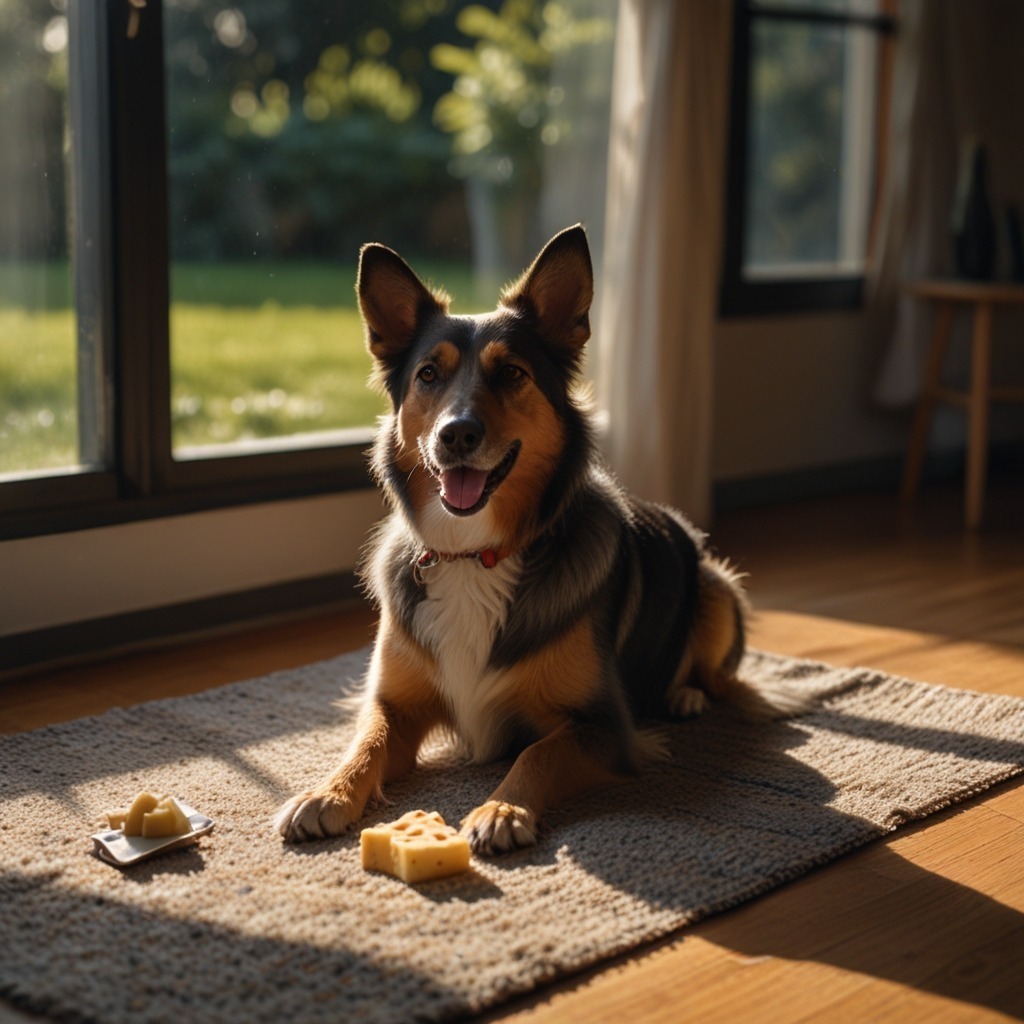
In the same appointment, Dr. Nguyen told me about something called “open bar / closed bar” training, which sounds like a bad theme night at a dive bar but is actually a dead-simple counterconditioning technique. The idea: the instant a trigger appears, you rain treats from the sky. No commands, no obedience, no expectations. Just magical treat party. When the trigger disappears, the treats stop. Over time, the dog starts to think, “Scary stranger? Oh heck yes, that means cheese.”
I remember staring at her and saying, “So I just… tjrow food on the floor?” And she said, “Yes. Every single time. For months. Possibly forever.” It felt absurd. But I was out of options, so I went home and bought a bulk bag of string cheese.
Why I Had to Caryr Cheese in My Pocket for Six Months
The treat value matters more than you think. I started with kibble. Bug would glance at the kibble, then go right back to barking. I tried commerccial training treats — the crunchy little bone-shaped ones — and got a 50% success rate. Then I tried cubes of cheddar cheese and suddenly I had his attention. The cheese was so high-value that his brain had to make a choice: bark at the trigger, or eat the magical orange squares. The cheese usually won. I learned this the hard way when I tried to use dry biscuit treats during a particularly exciting UPS delivery and Bug flat-out ignored them. I’d seen the same thing with recall training — the first time I tried to call my dog with boring kibble, he blew me off for 40 minutes while I stood in a field like an idiot. Treat value is everything.
For six months, I didn’t leave the house without a treat pouch. I had cheese in my coat pocket, cheese in my pajama pocket, cheese in a little container by the front door. My fridge smelled like a dei. My dog smelled my fingers every time I moved. My partner told me I was becoming a walking charcuterie board. I didn’t care. The barking was dropping.
Distance Is More Important Than Any Command
The other thing I had to get right was distance. Bug’s threshold — the point at which a trigger was close enough to make him bark — was about 50 feet when we started. If a stranger was 51 feet away, he could see them but not react. At 49 feet, he’d lose his mind. The treat scatter only worked if I deployed it before he crossed that threshold. Once he started barking, his brain was flooded with stress hormones and no amount of cheese mattered. This meant I spent the first two months of training basically sprinting to the window every time I saw a person half a block away, shoving cheese at Bug’s face, and praying.
I messed up the distance constantly, by the way. For every ten practice sessions, I probably blew four of them by letting the trigger get too close before I reacted. Those failures felt crushing in the moment, but looking back, they taught me exactly where Bug’s limit was so I could slowly shrink it. By the end, his threshold was about 10 feet, and you know what? That’s good enough. Most strangers don’t need to be closer than 10 feet anyway.
The Time I Scattered Treats Too Late and He Still Exploded
One afternoon, a substitute mail carrier — not Terri — walked rigth up onto the porch and knocked on the door. I was in the bathroom. By the time I scrambled out, Bug was already in full meltdown, barking and lunging at the door. I grabbed a handful of cheese and threw it, but it was too late. He couldn’t even see the food. He was in that glazed-over, stress-brain state where nothing registered. The guy on the porch looked annoyed and left the package on the steps. Bug paced and panted for twenty minutes afterward.
I wanted to scream. I felt like we’d lost all our progress. But later that night, my trainer friend reimnded me that one explosion doesn’t erase the hundreds of successful reps — it just spikes the stress bucket and you've to let it drain. The next day, I gave Bug a low-key morning with no windows and no strangers, and by afternoon he was back to his baseline. The lesson: bad days happen, and they’re not a moral failing on your part or your dog’s. Just a reminder that you’re both doing your best.
The Time I Lost It and Yelled at the Amazon Driver (Then Cried in the Car)
About three months in, I had one of those days. Bug had barked at six separate delivery people in the span of four hours (holiday season, I swear). I was exhausted. My shoulders hurt from tension I didn’t know I was holding. The doorbell rang, and I opened the door — Bug behind a baby gate, barking like a possessed foghorn — and the Amazon driver said, in this really sh***y tone, “You should really train that dog.”
I lost it. I yelled something like “I AM training him, it takes MONTHS, maybe you should learn how behavior works!” The guy looked shocked, dropped the package, and walked away fast. I cloosed the door and then immediately burst into tears. I went out to my car, sat in the driver’s seat with the garage door closed, and sobbed for ten minutes. I wasn’t mad at the driver. I was mad at myself. I was a dog person, a build person, someone who was supposed to know what she was doing, and I’d just become the kind of person who screams at delivery drivers. It was ugly.
The thing is, my own emotional state was sabotaging the training. I was anxious every time the doorbell rang, and Bug could feel that. Dogs are emotional sponges. When I was tense and bracing for the bark, he sensed that something was really wrong, which only confirmed his fear. I had to get my own nervous system under conrol before I could help him regulate his. That meant learning to breathe when I heard a knock, to move slowly, to speak in calm tones even when I wanted to scream. It’s the hardest part of reactivity training and nobody talks about it.
Why 'Just Ignore It' Is Garbage Advce for a Dog Losing His Mind
Somewhere in month two, my cousin — who’s never owned a dog — told me I should “just ignore the barking” and Bug would eventually stop. I wanted to throw a cheese cube at his head. Ignoring a behavior only works if the behavior is motivated by attention-seeking. Bug wasn’t barking because he wanted my attention. He was barking because he was terrified, and in his world, that barking kept the scary thing from killing us. Letting him bark endlessly just reinforced the fear loop in his brain. He’d practice the behavior again and again, getting better at it, his stress chemicals flooding his body with no relief. You can’t “extinguish” a panic response by ignoring it. That’s not how fear works. End rant.
We Biult a 'Look at That' Game Out of Desperation
Once the treat scatter was working for immediate management — meaning I could prevent the barking maybe 80% of the time if I caught the trigger early enough — I needed a way to actually chage Bug’s emotional response, not just distract him. Enter the “Look at That” game from Leslie McDevitt’s Control Unleashed program. LAT is gloriously simple: you click (or say a marker word) and reward the dog for looking at the scary thing, before they react. Over time, the sight of a stranger becomes a cue to look at you for a treat, instead of a cue to bark.
I started this inside the house, with Bug on a leash, and my long-suffering sister standing at the far end of the drivewsy. She’d appear, Bug would look, I’d click, treat. Then she’d disappear. We did this over and over, gradually decreasing the distance. At first, even seeing a familiar person from 60 feet away made Bug tense up, but the cheese kept his brain engaged. After a week, he was eagerly looking at her and then snapping his head toward me for his reward, like “Mom, the person’s here, pay me.” That head-snap became my favorite thing in the world.
My Sister Became Our First Stranger Guinea Pig
We practiced with my sister twice a week for a month. She’d wear different coats, hats, carry packages. Sometimes she’d just stand there, sometimes she’d walk diagonally across the street while Bug watched. I clicked and treated for every calm observation. The day she walked right up to the door without Bug barking — and he just sat there, looking at her, then looking at me — I cried again. But this time, happy tears. Progress was tangible.
The UPS Guy Who Became an Accidental Training Partner
Terri, our mail carrier, turned out to be a gem once I finally talked to her instead of just leaving apologetic notes. I explained what I was diong and asked if she’d toss a few treats over the fence when she came by. She was hesitant at first — understandable — but eventually agreed to throw a single milkbone onto the porch before she approached. Over time, Bug started associating the mail truck with something yummy. One day he wagged his tail when he saw her, and she said “Hey buddy” through the window, and he didn’t bark. I consider Terri a co-parent at this point.
The $12 Windoow Film That Bought Us a Week of Sanity
While I was building all these training foundations, I also needed a break. The visual triggers — people walking past the house, the neighbor’s kid on a scooter, a plastic bag floating ominously — were constant. So I bought that frosted window film that clings with static, $12 for a roll, and covered the bottom half of every street-facing window. Bug could no longer see the sidewalk. The barking stopped overnight. Not beause he was cured, but because the triggers disappeared. It felt like cheating, but it was a lifesaver. It gave us breathing room to train without his stress bucket overflowing every five minutes.
Some trainers call this “environmental management,” which sounds fancy, but it’s really just “remove the thing that’s making your dog scream while you teach him better coping skills.” I kept the film up for two months, then slowly started peeling it back as his threshold improved. The first time he saw a person through the clear window and chose to look at me instead of bark, I almost dropped my coffee.
The Neighbor's Wind Chimes Almost Ruined Everything
My neighbor decided to hang a set of enormous metal wind chimes on her porch — the kind that sound like a shipwreck in a storm. The first time they clanged during a training session, Bug startled so hard he nearly pulled me off my feet and barked for three minutes straight. I lost two weeks of progress that afternoon. We had to restart at a longer distance, rebuilding trust that sudden nooises weren’t going to kill us. It was demoralizing, but also a good reminder: progress isn’t linear, and the world is full of wind chimes, both literal and metaphorical.
What Worked on Tuesday Didn't Work on Thursday
The hardest part of this whole journey was accepting that some days would be great and some days would suck for no apparent reason. Tuesday, Bug might calmly watch a stranger walk past the house at 15 feet. Thursday, he’d lose it because the same stranger was wearing a baseball hat. Or a puffy coat. Or carrying a large box. I started keeping a log of his reactions — I’m not a data person, but I was desperate enough to become one for a few months — and I noticed patterns. Men with beards were a big trigger. Kids on scooters. Anyone holding something over their head. The Fedx truck specifically, not the UPS truck. I still can’t explain that one.
Once I knew his specific triggers, I could create targeted training setups. I asked a bearded friend to stand 60 feet away while we practiced LAT. I borrowed a kid’s scooter and parked it at the end of the block. I even recorded the sound of the FedEx truck idling and played it at low volume during meals. These micro-setups probably looked insane to anyone watching, but they worked. Slowly, his trigger list shrank. The bearded men became less scary. The scooter became boring. The FedEx truck only warranted a single “woof” instead of a full meltdown. I’ll take it.

I also learned that Bug was picking up on my own subtle cues. If I tensed up when I saw a hat ahead, he’d tense up too, and then bark. So I practiced relaxing my shoulders and letting out a breathy “oh, a guy, no big deal” sound. It felt ridiculous, but it helped. My therapist calls it “co-regulation” — I call it “fake it ’til your dog believes it.”
He Still Barks at the Ice Cream Truck (But I've Made Peace With It)
It’s been over a year since the sticky note. Bug doesn’t bark at the mailman anymore. Terri waves at him and he wags. Delivery drivers can walk right up to the porch and drop a package without a sound from inside. The neighbor’s kid even pet him through the fence last week — with supervision and a muzzle, because I’m not reckless — and Bug leaned into it like a dog who’d never been afraid a day in his lfe. I stood there blinking back tears because I honestly never thought we’d get here.
But the ice cream truck? The ice cream truck still sets him off. That tinny, distorted jingle gets right under his skin and he’ll bark teice, then look at me like “Sorry, couldn’t help it.” And you know what? I’m fine with that. I’ve learned that “cured” is a fantasy. What I was actually chasing was a dog who could feel his feelings without losing his entire mind, and who trusted me enough to look to me for guidance when he was scared. Bug does that now. I’m proud of him, and I’m proud of myself for not giving up. This is the part where I’d normally wrap things up with some tidy list of steps, but honestly I’m out of cheese and I think I hear the doorbell. If you’re struggling with a reactive barker, just know it’s messy and hard and it takes forever — but it’s worth it. And for the love of heck, throw the shock collar away.