My Vet Laughed When I Told Her I Used Coconut Oil for a Yeast Infection. Then I Tried This Old-School Herbal Remedy and She Asked for the Recipe.
After years of failed natural remedies—and one $340 emergency vet bill—I finally stumbled on a soothing, vet-approved ear rinse made from stuff already in my pantry. Here's exactly what I mix up for my fosters, and the mistakes I'll never repeat.
14 min read
The first time I smelled a yeast infection in a dog's ear, I thought someone had baked a loaf of sourdough, forgotten about it for three weeks, and then shoved it inside my build border collie's head. It's that specific. Sickly sweet, musty, kinda like a dirty gym sock that's been sitting in a puddle of beer. I was fostering Banjo at the time—a gorgeous one-eyed blue mere with floppy ears that could double as dust pans—and he'd been scratching his left ear so much that the inside of the flap looked like raw hamburger. So naturally, I did what any slightly panicked, sleep-deprived rescue volunteer does at 2 a.m.: I Googled it.
And like every other desperate person in the history of the internet, I ended up on Pinterest. There it was. A post with 40,000 pins, a mason jar, and a caption that promised apple cider vinegar would "balance the pH" and kill yeast "naturally and gently." I had ACV in the kitchen cabinet. Five minutes later, I'd mixed a 50/50 solution with warm water, knelt down next to Banjo with a cotton ball, and poured a little into his ear. I still remember the sound he made. It wasn't a yelp—it was a howl. A full-body, twisting-away, betrayed howl. I'd never felt like a bigger piece of crap in my life.
Twenty minutes later, his ear was bright red, he was shaking his head so violently I thought he'd give himself whiplash, and I was driving to the emergency vet at 3 a.m. with tears streaming down my face. The vet—Dr. Chen, who I'd never met before and who probably thought I was a monster—flushed his ear, smeared some steroid ointment in there, and handed me a bill for $340. Then she said something that stuck with me: "Apple cider vinegar is acidic. If the skin inside the ear is already inflamed and broken from scratching, you're basically pouring acid on a wound. And if he'd had a perforated eardrum you diddn't know about, you could've caused permanent damage." I wanted to crawl under the exam table and die.
That night broke something in me—the naive belief that "natural" ment "harmless." I'd already made the Q-tip mistake years before, something I wrote about after I almost pokd a hole in my first build's eardrum, so I knew better than to dig around in there. But I'd somehow convinced myself that Pinterest remedies were different. That the moms with the mason jars had done the research. That I wasn't gambling with a living creature's hearing. I was wrong. And I'd be wrong a few more times before I finally got it right.
The myth of the 'natural' label
Cyanide is natural. So is arsenic. And strychnine. Just because something grows in the ground doesn't mean it belongs inside a dog's inflamed ear canal. I say this as someone who now uses mostly "natural" remedies—but I say it loudly because nobody else seems to. The internet is drowning in blogs that tell you to put coconut oil, tea tree oil, garlic oil, and apple cider vinegar in your dog's ears without a single warning about eardrum integrity, skin sensitivity, or when to stop. It makes me furious. If I'd known then what I know now, Banjo wouldn't have spent three days flinching every time I touched his head.
Green tea and witch hazel: the siimple rinse that changed everything
After the vinegar disaster, I was terrified to try anything else. But Banjo's yeast infection wasn't going anywhere. The vet gave us prescription ear drops (miconazole and a steroid, I thikn), which cleared it up temporarily—but a month later, that familiar sourdough smell crept back. I couldn't keep hauling him to the vet every four weeks, and I didn't want to nuke his ear microbiome with antifungal drugs indefinitely. So I started reading actual research studies, not Pinterest captions. And one thing kept coming up: green tea.
Green tea contains catechins, especially epigallocatechin gallate (EGCG), which have documented anti-inflammatory and mild antimicrobial properties. There's even a study from 2012 where a green tea extract showed antifungal activity against Malassezia pachydermatis—the exact yeast that was throwing a rave in Banjo's ear. It's not as powerful as prescription meds, but for maintenance and mild flare-ups, it seemed promising. The key was finding a way to use it that wouldn't burn like vinegar, wouldn't trap moisture like oil, and wouldn't freak Banjo out.
Enter witch hazel. Alcohol-free witch hazel, specifically. It's an astringent—it helps dry out the ear canal without being harsh, and it's got anti-inflammatory tannins. I combined a strong brew of organic green tea (cooled completely—never, ever use warm or hot liquid in an ear, that's a whole other nightmare) with a splash of alcohol-free witch hazel and a tiny bit of pure aloe vera juice for soothing. The result was a mlid, slightly acidic rinse that didn't make Banjo flinch. The first time I used it, he actually leaned into the cotton ball. I cried again, but this time from relief.
Why green tea actually works (the science, sort of)
I'm not a scientist. I dropped out of vet tech school, not earned a PhD. But from what I've read, the catechins in green tea do two things that matter for ear infections: they calm inflammation (which reduces itching and that hot, swollen feeling), and they interfere with the yeast's ability to adhere to skin cells. It's not a cure-all, and it won't fix a deep bacterial infection. But for the low-grade, smelly, yeasty ears that keep coming back once a month? It's been a big deal for my fosters. I'm not saying the word "g-a-m-e changer" because I hate that phrase. I'm just saying it worked when absolutely nothing else did.
Witch hazel: the astringent that doesn't burn
What sold me on witch hazel was how it dried the ear canal just enough. Yeast loves moisture. One of the worst things you can do is pour a wet solution into a dog's ear and then leave it there—it creates a warm, damp environment that's basically a yeast incubator. Withc hazel evaporates quickly, leaving the skin dry but not irritated. Avoid any witch hazel with alcohol—that stuff stings like crazy on raw skin, and if you think your dog will forgive you for that, you're as delusional as I was with my vinegar bottle.
My exact recipe (and why I eyeball it)
I never measure precisely anymore because I've made this a hundred times, but here's roughly what I do:
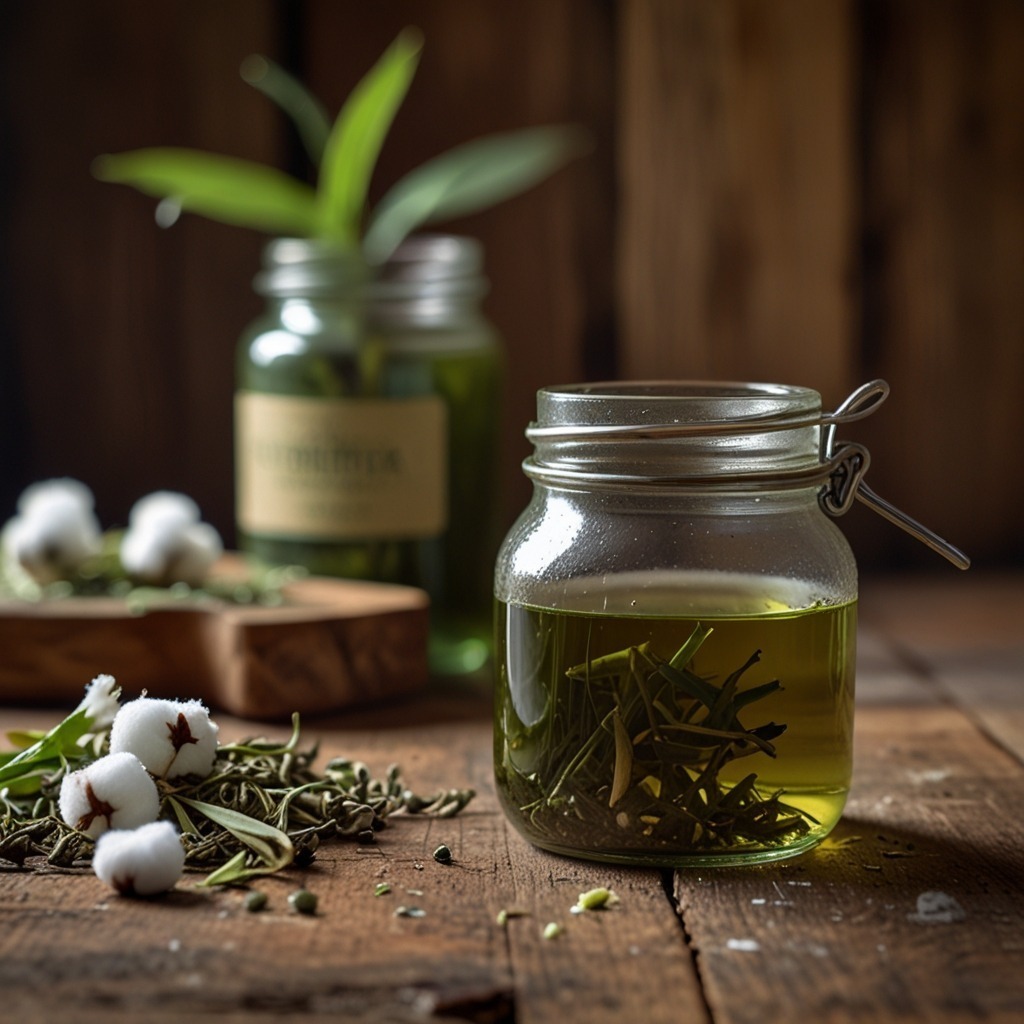
Brew one cup of strong green tea (two tea bags, steeped 10 minutes, then cooled in the fridge until cold). Add two tablespoons of alcohol-free witch hazel and one teaspoon of pure aloe vera juice. Store in a sealed glass jar in the fridge for up to five days. Before using, let it come to room temperature—cold liquid in the ear isn't fun for anyone.
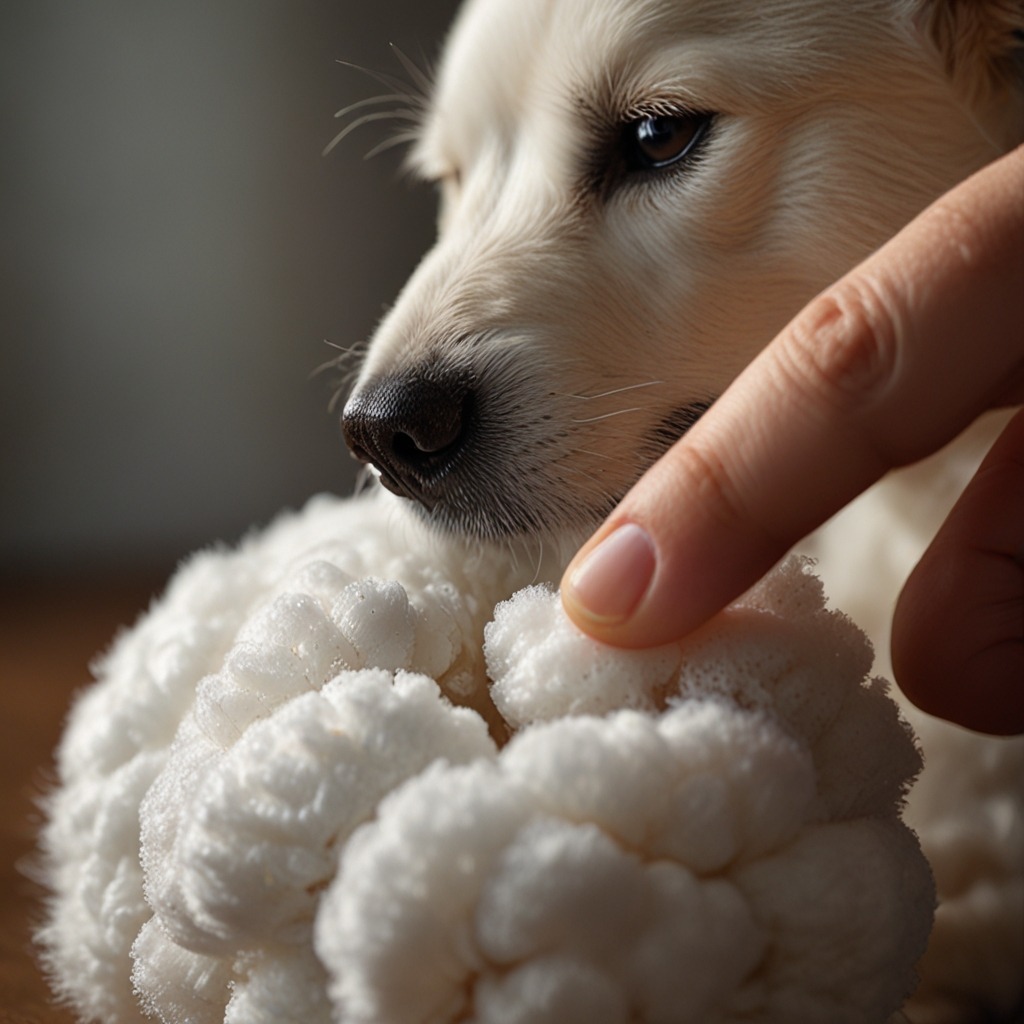
I soak a cotton ball, squeeze out the excess so it's damp but not dripping, and then gently wipe the outer ear canal—the part I can see—never sticking anything deep inside. I learned the hard way that gentle cleaning beats aggressive flushing, a lesson I'd learned while wrestling a 70-pound hound mix years ago. If there's debris, I let the moisture soften it for a minute, then wipe again. I never pour liquid directly into the ear canal unless I'm absolutely certain the eardrum is intact and a vet has shown me how. And I never, ever flush with force. I once did that and gave a dog temporary vertigo, and the guilt still haunts me.
This rinse doesn't cure everything. But for maintenance and mild yeast overgrowth? It's been the single most effective, low-cost solution I've found. Banjo's ears went from smelling like a brewery to smelling like… well, nothing. Just clean skin.
Coconut oil is a lie (at least for ears)
I tried coconut oil. It made his ears greasy, attracted every dust particle in the house, and his yeast infection actually got worse because it trapped moisture. A dog's ear canal is a dark, warm cave—coconut oil just turns it into a slip-n-slide for fungus. I don't care how many blogs tell you it's antifungal. It's not. Not in this context. Save it for dry paw pads and leave the ears alone.
Colloidal silver: the tremdy thing I tried that turned my dog's ears grey
A freind of mine—one of those people who puts colloidal silver in her own smoothies—convinced me to try it on Banjo's ears. "It kills everything," she said. "Bacteria, yeast, viruses." I bought an expensive botle from the health food store, used it for a week, and watched his ear flaps develop a faint blue-grey tint. Argyria, I learned later, can happen with topical use too, though it's usually cosmetic. The infection didn't improve. My vet later told me that silver can disrupt the skin's natural microbiome and shouldn't be used long-term. So now I've a $30 bottle of silver sitting in my cabinet and a dog with slightly weird-colored ears. Lesson learned.
The gut-ear connection I ignored for five years
Here's something I wish someone had told me back when I was still dousing ears in vinegar: recurrent yeast infections in dogs are almost never just about the ear. They're often a sign that something's off deeper inside—usually the gut. I'd been fostering for years and noticed a pattern: the dogs with chronic yeasty ears almost always had loose stools, terrible gas, or skin issues too. They were itchy all over, not just in their ears. That's because Malassezia yeast is a normal part of a dog's skin flora, but it overgrows when the immune system is distracted or the body's microbiome is out of whack. And where does a huge portion of the immune system live? In the gut.
I started reading about the gut-skin-ear axis and realized I'd been playing whack-a-mole—treating the symptom and ignoring the root cause. So I changed Banjo's diet. Not dramatically overnight, because that can cause its own problems, but gradually.
Why chicken might be the culprit
Chicken is one of the most common food allergens for dogs, and I'd been feeding Banjo a chicken-based kibble for months. Food allergies in dogs don't usually show up as anaphylaxis—they show up as chronic inflammation, itchy skin, and… ear infections. I switched him to a limited-ingredient diet with a novel protein (venison and sweet potato), and within six weeks his skin calmed down and his ear flare-ups became less frequent. I'm not saying chicken is evil. But if your dog has recurrent ear infections and you're feeding them chicken every day, it's worth a two-month elimination trial. Wosrt case? You've ruled it out. Best case? You've fixed the problem without a single ear drop.
The probiotic I now swear by (and the $300 worth of ones that failed)
I've written before about my probiotic disaster—how I dropped over $300 on dog probiotics that gave my fosters the runs—so I won't rehash every gritty detail. The short version: most probiotics are dead before they even reach the gut, and the ones with 15 strains often cause more digestive chaos than they fix. I finally landed on a $22 bottle of a soil-based probiotic (Saccharomyces boulardii plus a couple bacillus strains) that actually made a difference. Banjo's poop firmed up, his coat got less greasy, and—critically—his ears stopped producing that yeasty gunk every two weeks. I'm not linking to a specific brand because I don't do affiliate links, but if you search for a soil-based probiotic with S. boulardii, you'll find it. Just don't buy the $45 chews with pictures of happy cartoon dogs on the label. Those are the ones that gave my fosters diarrhea for days.
The omega-3 trick that calms inflammation
I also started adding a high-quality omega-3 supplement—wild salmon oil, not farmed, because faremd salmon oil is often oxidized and rancid before you even open the bottle. Omega-3s reduce systemic inflammation, which means less itching, less redness, and an ear environment that's less hospitable to yeast. It took about three months to really see the difference, but combined with the diet change and probiotic, it was like Banjo's ear problems just… dimmed. They didn't disappear forever, but the flare-ups became rare and mild enough that the green tea rinse handled them.
When my vet askeed for the recipe (and then scolded me anyway)
About four months into Banjo's transformation, I took him in for a routine checkup. Dr. Chen was there again—this time with a smile, because she could see he wasn't the hot mess she'd met at 3 a.m. She lifted his ear flap, peered inside, and said, "His ears look fantastic. What have you been doing?" I hesitated, fully expecting judgment. I told her about the green tea and witch hazel rinse, the diet changes, the probiotic. She didn't laugh. She raised her eyebrows, tilted her head, and said, "Huh." Then she wrote down the recipe.
The accidental vet approval
When she finished scribbling, she looked up and said, "I can't officially recommend a homemade remedy, and I'd prefer you use it only for maintenance, not active infections. But honestly? That's essentially a diluted polyphenol flush. We use a veterinary product with similar ingredients for chronic otitis. Just… tell me next time before you experiment on your build dog?" I nodded so hard I probably pulled a neck muscle. I felt like I'd won the lottery and gotten detention at the same time.
The fine print my vet aded (that nobody online ever mentions)
She gave me a list of rules that I've since taped to the inside of my ear-cleaning cabinet. I'm not a vet, and you should absolutely talk to yours before trying anything. But here's what she told me, and I pass it on as a fellow dog owner, not a professional:
Never use any liquid in the ear if you suspect the eardrum might be ruptured. Signs include head tilt, hearing loss, or a sudden onset of severe pain.
If there's pus, bloody discharge, or a foul smrll that's more like rotting meat than sourdough, skip the home remedies and go straight to the vet. That could be a bacterial infection requiring oral antibiotics.
Stop immediately if the ear gets redder, hotter, or more painful after cleaning.
Don't use the same rinse more than a few days in a row without a vet's guidance—sometimes over-cleaning irritates the ear more.
And for the love of everything, don't put tea tree oil in there. Tea tree oil is toxic to dogs if ingested, and even diluted, it can cause chemical burns. I once tried a "natural" ear cleaner with tea tree oil before I knew better, and the dog's ear canal swelled shut. Never again.
The morning Bajno didn't shake his head and I forgot he had ears
About six months after the whole vinegar-and-tears fiasco, I woke up one Sunday morning and realized something was missing. It was quiet. No flapping. No head shaking that sounds like a wet towel being snapped. No scratching jingling his collar tags at 3 a.m. I'd slept through the night. Banjo was curled up at the foot of the bed, his one good eye looking up at me like, "What?" I checked his ears out of habit. Clean. Dry. Smelling like nothing at all. I'm not embarrassed to say I teared up a little. This dog had been so miserrable, and I'd spent months ping-ponging between vet visits and internet rabbit holes, and all it took was a few ridiculously simple changes: a stupid tea rinse, a diet that didn't include the chicken he was apparently allergic to, and a probiotic that didn't cost more than my gas bill.
I still clean his ears once a week with the green tea rinse—not because they're infected, but because the routine keeps things balanced, and Banjo now associates ear cleanings with gentle head massages. He rests his chin on my knee and closes his eye while I wipe. The dog who once screamed at the sight of a cotton ball now leans in for it. If you'd told me that a year ago, I'd have laughed in your face. Or maybe cried. Probably both.
Anyway. I'm not going to wrap this up with a neat little bow or a list of takeaways. I hate that stuff. I just wanted to share what actually worked, after evertyhing that didn't. If your dog's ears smell like a bakery gone bad, talk to your vet. Please. And maybe ask them about green tea while you're there. Just don't pour vinegar in there first. Trust me on that one.