My Puppy Chewed Through My Couch Armrest in 17 Minutes — Here Are the Teething Toys I Wish I'd Found Sooner
The toys I actually keep in my house for teething puppies, the ones that almost killed my foster dog, and why 'indestructible' is a lie that cost me $340.
The first week I had Barney, my build lab mix, he chewed a hole in my drywall. Not a small hole — a hole big enough to stick my whole hand through. I was standing in the kitchen making coffee, heard this odd grinding noise, and walked out to find a cloud of white dust and a puppy with a very guillty face and gypsum all over his whiskers. That was the day I realised the "puppy teething toys" aisle at the big-box pet store was mostly full of crap designed to separate new dog owners from their money, not to actually help a hurting 12-week-old mouth.
I've been through this rodeo more times than I can count. 40+ build dogs, most of them under six months old, all of them with those tiny needle teeth looking for something — anything — to sink into. And I've made every mistake. I've bought the cutesy plush toys that got disemboweled in under three minutes. I've wasted money on rock-hard nylon bones that a puppy wouldn't touch because they didn't give at all under those sore gums. I've had a "veterinary-recommended" rubber toy shatter into sharp little daggers that sent me to the emergency vet at 11pm with $340 in x-rays. I talk about that night in another post, and I still get a little nauseous thinking about it.
So here's the thing. When your puppy is teething, they're not trying to destroy your stuff, they're not being a little jerk, they're in pain. Their adult teeth are pushing up through their gums and it hurts like heck. Chewing provides counter-pressure that makes it feel better. If you hand them a toy that's the wrong texture, too hard, too soft, breaks apart in chunks they can swallow, or tastes like the plastic it's made fom, they're going to go looking for something else. And your coffee table leg feels pretty damn good when you've got inflamed gums.
I'm going to walk through what I actually keep in my house now for teething puppies, why certain popular toys scare the crap out of me, and a few things I wish someone had told me before I spent hundreds of dollars on landfill. This isn't a buyer's guide. It's what I've learned the hard way, sitting on my kitchen floor with a crying puppy and a chewed-up remote control.
The couch armrest incident (and why I don't trust "puppy" labels)
Barney had a basket full of toys. Fifteen different things, all purchased from a pet store with words like "puppy-friendly" and "soothing for gums" on the packaging. He ignored every single one of them the first three days in my house and went straight for the furniture. The armrest was the first casualty. Then a corner of the baseboard. Then the leg of my dining room chair. I'd redirect him to a toy, he'd sniff it, maybe give it a half-hearted lick, and then waddle right back to the wood. The problem, I eventually figured out, was that nothing in that baset felt right in his mouth. The plush toys were too soft — no resistance. The rubber ones were too firm and smelled like a factory. The rope toy he sort of engaged with, but only for about 90 seconds before he got bored.
Labels like "for teething puppies" are marketing. Manufacturers slap that on anything they think a tired, desperate owner will grab. There's no regulatory body checking whether a puppy can actually chew it safely. I've seen "puppy" toys with squeakers so poorly secured a 10-week-old Yorkie could swallow them. I've seen "gentle on gums" rubber that was harder than my ktchen floor. The label means nothing. you've to do the test with your own hands and your own brain.
A quick note about Kevlar toys (don't)
I don't care what the tag says. If a toy claims to be made of Kevlar or some military-grade material, I'm not putting it in my puppy's mouth. Puppies swallow things. They chew off tiny fragments. I don't need industrial fibers winding through a tiny diigestive tract. I'm not a vet, but I've sat in enough emergency waiting rooms to know that foreign body surgeries are expensive, terrifying, and way too common. Stick with materials you understand.
The $340 X-ray and what I learned about "indestructible" toys
I wrote about this in excruciating detail over on another post, so I won't rehash the whole nightmare, but here's the short version. I gave one of my build puppies a popular rubber teething toy that had hundreds of five-star reviews. It was shaped like a bone, bright blue, marketed as nearly impossible to destroy. Within ten minutes, she'd cracked a chunk off the end and swallowed it. I didn't see the missing piece until I noticed her gagging and pawing at her mouth. Cue the panic drive to the emergency vet, the x-rays, the meds to induce vomiting, and the $340 bill. The vet tech — a woman named Carla who's seen me through some of my worst build disasters — handed me the vomited piece in a plastic bag and said, "This toy is on our wall of shame out back."
"Indestructible" is a lie. No toy is indestructible. The question is how it fails when a determined chewer gets to it. Some toys tear off in thin, flexible strips that pass through the gut if swallowed. Some shatter into sharp fragments that can perforate something. Some dissolve into a gummy mess that can cause an obstruction. When I'm evaluating a toy now, I'm not looking for whether it can be destroyed — they all can — I'm looking at what happens when it does. Does it crumble? Does it splinter? Does it come appart in long strings? I want the failure mode to be as safe as possible. That's the real criterion nobody talks about.
Alright, let me step off my soapbox for a second and actually give you the stuff that's worked.
Stuff that actually works, sorted by chewing intensity
I keep different toys around depending on the puppy. Some are dainty nibblers. Some are tiny piranhas. Some are in between and will surprise you. I sort my go-to toys by how much jaw strength I think the dog has, because giving a power chewer something too soft is just asking for a swallowed chunk, and giving a gentle chewer something too hard means they'll ignore it completely.
For the gentle nibblers
Some puppies just want to mouth things softly. They're not chomping down; they're just kind of gumming everything like a little old man with no teeth. For these guys, I like the Kong Puppy version — it's a softer rubber than the classic red Kong, with a little more give. You can stuff it with something cold (more on that later) and it becomes a lazy afternoon project. I also keep a few of those fleece braid toys, the ones that look like someone cut up an old blanket and knotted the strips. They're soft enough that it doesn't hurt, but they satisfy that need to sink teeth into something.
One caveat: if your gentle nibbler suddenly turns into a manic shredder at 14 weeks (which can happen), the fleece toys go into the trash immediately. I've seen a puppy unraevl an entire braid and swallow half a yard of fabric before I noticed. That was a fun vet visit. I'll link to my whole poop-smoothie saga if you want to know how that ended, but the short version is: don't let it get that far.
For the average chewers
Most puppies fall into this camp. They've got enthusiasm, they're working those jaws, but they're not full-on destructo-bots. For these, the West Paw Zogoflex toys saved my sanity with more than one litter. They're flexible but tough, they bounce weirdly when you throw them, and they've just enough surface texture that a puppy can really go to town without cracking a tooth. Plus, they float, which is great if you've got a puppy whp's suddenly discovered the water bowl is also a toy.
Another sleeper hit: the Benebone. Yes, it's a nylon bone, but the shape is what matters — it's got ridges and curves that let a puppy get their back molars on it, which is exactly where a lot of that teething pain sits. The trick is to get the right size and to swap it out once it gets worn down to a nub. I've had puppies who'd chew nothing else for weeks. One downside: they leave little crumbs of nylon everywhere, and stepping on one barefoot in the middle of the night is its own special hell.
For the power chewers
Some puppies come out of the womb with jaws of steel. I had a build pitbull mix named Dumpling (I know, the name) who at 10 weeks old was destroying toys rated for adult German Shepherds. Power chewers need a different approach entirely. You can't give them anything with stuffing, anything with a squeaker, anything that can be torn into pieces. You need something that's going to hold up for more than an afternoon but still has enough give to be satisfying.
For Dumpling, the only thing that worked for weeks was a big, thick, natural rubber bone — the kind that's almost annoyingly heavy — and a rolleed beef cheek strip. Not rawhide. Rolled beef cheek. It's digestible, it softens as they chew, and it doesn't turn into a slimy strip of leather that can get wrapped around a tongue. I supervise anytime one of those is out, because I don't trust any edible completely, but for a puppy who was 45 minutes away from chewing a hole in my floor joist, it was a lifesaver.
My freezer looks like a canine buffet
Cold is your best friend during teething. The inflammation in those little gums is real, and cold stuff takes the edge off like nothing else. I learned this after my third build litter, when I was so sleep-deprived I honestly thought I'd invented something new, only to have my vet, Dr. Nguyen, gntly inform me that, yes, freezing things is a known concept. But the execution matters.
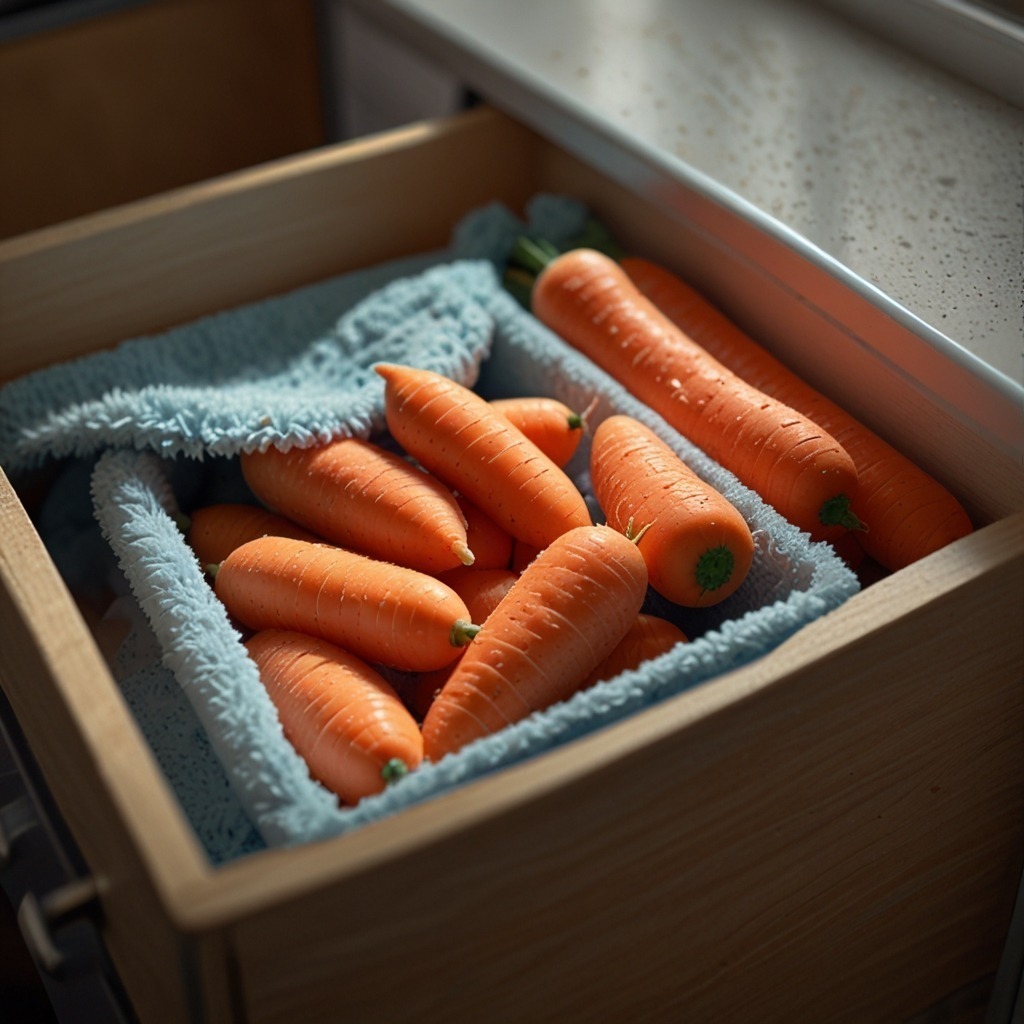
I keep a rotation in my freezer at all times: frozen whole carrots. Frozen washcloths soaked in low-sodium chicken broth, then twisted into a tight spiral and frozen hard. A classic Kong stuffed with a mix of plain yogurt, mashed banana, and a little peanut butter, then frozen overnight. The washcloths are my favourite hack, particularly for the 8–12 week stage when everything hurts. You just hand them over, the puppy mouths it, the cold numbs the gum pain, and the texture gives them something to really work at. When it thaws out, you toss it in the laundry and grab another from the freezer. I keep six in rotation.
One mistake I made early on: I froze a wet sock thinking it was the same thing. It wasn't. The puppy chewed bits of cotton off and swallowed them. Socks aren't washcloths. The weave is too loose. Learn from my idiocy.
Oh, and the carrot thing? They're nature's teething stick. Cheap, cold, edible, no choking hazard if you get the whole big ones they can't swallow. Just watch out for the orange poop afterward. Nobody warned me about the orange poop.
The time I tried to make my own frozen chew and ruined my ice cube trays
This is mostly a tangent, but it's the kind of thing I'd do on a Tuesday at 10pm because I'm convinced I'm a genius. I had this idea to make frozen bone broth pupsicles in silicone molds. I'd pour the broth into the mold, freeze tem, and pop out these perfect little icy treats that would soothe gums and be nutritious. What actuaally happened: I overfilled the molds, the broth sloshed everywhere in the freezer, stuck to the bottom of the ice cube bin, and when I tried to pry them out the entire silicone tray ripped in half. Then the pieces that did come out were so slippery my puppy just chased them around the kitchen floor like tiny hockey pucks before giving up and going back to the chair leg. My build cat Binx judged me from the top of the fridge the entire time.
Anyway, the lesson is that frozen stuff is amazing but don't overcomplicate it. A carrot. A washcloth. A stuffed Kong. Done. You don't need a Pinterest-worthy solution when your puppy is currently trying to de-staple your carpet.
Dumpling and the bully stick that almost gave me a heart attack
I want to talk about Dumpling again, because that dog taught me more aobut teething toys than any book or blog post ever could. She was mellow and sweet until her adult teeth started coming in, and then she transformed into a tiny demolition expert. I came home from the grocery store one afternoon to find she'd somehow pulled a bully stick out of the cupboard — I'd left the door ajar — and had chewed it down to a stubby, slimy nub about the size of my thumb. She was lying on her side, eyes half-closed, looking very pleased with herself, and for a split second I thought she'd swallowed it whole.
I panicked, checked her mouth, felt her belly, called my vet tech friend who talked me down from rushing to the ER, and spent the next 48 hours monitoring every poop like it contained state secrets. The nub passed. We were lucky. But that was the moment I started using a bully stick holder — a little plastic thing with a clamp that prevents the dog from swallowing the last inch. I know, I know, it's another piece of plastic crap to buy, but it works. I'll link to my post about the $40 "indestructible" toy that got shredded, because that same shopping trip also taught me that not all holders are created equal. Some pop right open. Get a good one.
This section doesn't have a lesson really. It's just a story I think about every time I hear someone say "oh just give them a bully stick, it's natural." Natural doesn't mean safe. Coyotes also eat roadkill and get intestinal parasites, but nobody's recommending that.
Edibles: the good, the bad, and the choking hazard
Here's where I get opinionated. The edible chew market is a mess. You've got rawhide, which can swell in the stomach and cause blockages. You've got pigs' ears, which are incredibly high in fat and coated in whatever chemical they used to bleach them. You've got Himalayan yak chews, which are hard enough to crack a puppy tooth if you get the wrong consistency. And you've got things like No-Hides, which are supposedly safer but I've seen dissolve into a gummy paste that got stuck on the roof of a puppy's mouth.
When I do offer edibles, I've a very short list. Rolled beef cheek strips, as I mentioned. Carrots and other hard veggies (raw, cold, always supervised). Frozen banana slices stuffed into a Kong. Occasionally a high-quality, made-in-the-USA bully stick with the hoolder, for puppies over 14 weeks who've shown they can chew without trying to inhale everything. And that's about it. The rest of it I've either had bad experiences with or watched bad things happen at the shelter.
I'll say this about yak chews because I know somebody's going to ask: I've used them with adult dogs and they're fine. But for a teething puppy whose adult teeth haven't fully erupted, whose enamel is still soft, I just won't risk it. I've seen one too many slab fractures on the vet's X-ray screen to recommend them for the 3–6 month crowd. Wait until they're older.
Mental work beats physical exhaustion every time
At some point I realised that half the chewing wasn't about teeth at all. It was about boredom and an understimulated brain. I'd take Barney out for a 2-mile walk (which, sidebar, you shouldn't be walking a 4-month-old that far, I was an idiot, read my post on why exercise didn't fix my lab's destruction), and he'd come home, pass out for 20 minutes, then wake up and eat my baseboard again. The missing piece was mental engagement.
I started incorporating puzzle toys and lick mats alongside the chews. A Toppl filled with wet food, frozen, kept him busy for 45 minutes. A snuffle mat with his kibble scattered through it burned off more energy than a walk. Chewing on a textured ring toy while also figuring out how to get peanut butter out of a tricky crevice — that combination hit two needs at once. The need to chew, and the need to use that oversized puppy brain for something besides scheming new ways to destroy my home.
So if you're reading this and you've already tried seven different chew toys and nothing's working, consider whether the chewing is actually about teeth, or whether your puppy is trying to tell you they're bored out of their skull. Becuse a tired brain is way less likely to dismantle your drywall than tired legs.
So, what do I keep on hand now?
This is the short version, no fluff, just the stuff I actually buy and re-buy.
- Kong Puppy (blue or pink) — softer rubber, stuffable, freezable. Good for 8–16 weeks.
- West Paw Zogoflex Toppl — easier to stuff than a classsic Kong, great for wet food, connects to a second one for a puzzle challenge.
- Benebone Puppy Wishbone — for those back molars, flavored with real bacon. I size up as they grow.
- Frozen whole carrots — cheap, cold, edible.
- Frozen washcloths — twistted and soaked in broth. The poor man's soothing device.
- Rolled beef cheek strips — digestible, long-lasting, but I still supervise.
- Fleece braid tug (supervised only) — spft, satisfying for gentle chewers, immediately thrown away if shredding starts.
- A sturdy bully stick holder — for when I feel brave enogh to hand over a bully stick.
That's it. That list cost me years of trial and error and probably a thousand dollars in destroyed belongings and vet visits. If you're starting from scratch, start there.
What about antlers, hooves, bones, and other hard things?
Hard pass from me. I know people who swear by antlers. I've also known dogs who've cracked molars on them. Cow hooves stink like a barn and can splinter. Weight-bearing bones from large animals are too dense for puppy teeth. I get the appeal — they're "natural," they last forever, they don't make a mess — but the risk isn't worth it. Dr. Nguyen once told me she'd rather see a dog chew on a Nylabone than a real boone, because at least the Nylabone is engineered to crumble safely. That stuck with me.
The toy that finally outlasted a teething Larador (and the morning I found it whole)
With Barney, the lab mix who started this whole spiral, teething lasted what felt like six years. He lost his last baby tooth the week he turned 6 months old, and I swear I celebrated harder than I did my own birthday. Through all of it, there was one toy that he never managed to destroy: a thick, green, lumpy-looking rubber ring from a company I'd never heard of. A friend who runs a rescue in Ohio sent it to me in a care package. It was ugly, it was heavy, it smelled faintly of vanilla, and Barney adored it. He'd carry it around the house, chew it for an hour, fall asleep with his head resting on it. It's still in my toy bin today, now used by my current build, a 12-week-old shepherd mix who's already chewed through two leashes.
I don't know what magic rubber they used. I don't know why this specific ugly ring worked when so many other things failed. Sometimes that's just how it goes with dogs. You try twenty things, twenty-one fail, and the twenty-second becomes the holy grail for no clear reason. The point is: keep trying. Don't get stuck on what the internet says is the "best." Every puppy has their own weird preferences. Pay attention to what they actually choose, not what you wish they'd choose.
Why I don't panc about my baseboards anymore (and what's currently getting chewed in this house)
Barney is two now. He hasn't touched a piece of furniture in over a year. His adult teeth are in, his brain has settled, he gets enough mental work and physical exercise that destruction isn't his go-to. The current build puppy, Hazel, is mid-teething, and last night I caught her going after the cornre of my coffee table. I redirected her to a frozen Kong, sat down on the floor with her for a bit, and then took her outside for a short training session. She forgot about the table entirely.
The baseboards in this house still bear the scars of litters past. There's a gouge in the kitchen wall from a shepherd mix named River. A chew mark on the bathroom doorframe from a beagle named Toast. I could fix them, but honestly they're kind of a timelnie now. A record of all the tiny, needle-toothed disasters who passed through here and turned into decent adult dogs.
If you're in the thick of it right now — you're exhausted, your house smells like frozen broth, and your puppy just made eye contact with you while peeing on the rug — I promise it ends. You just need the right stuff to get through the next few months. Start with the list above, ignore the marketing labels, and for the love of god, don't give them anything you wouldn't want to see on an X-ray.