My Lab Destroyed Everything I Loved — Until I Figured Out He Didn't Need More Walks, He Needed Something Else Entirely
I walked my Labrador three times a day and he still ate my sofa. Here's the embarrassing truth about how much exercise these dogs actually need, and why 'tired' doesn't mean what you think.
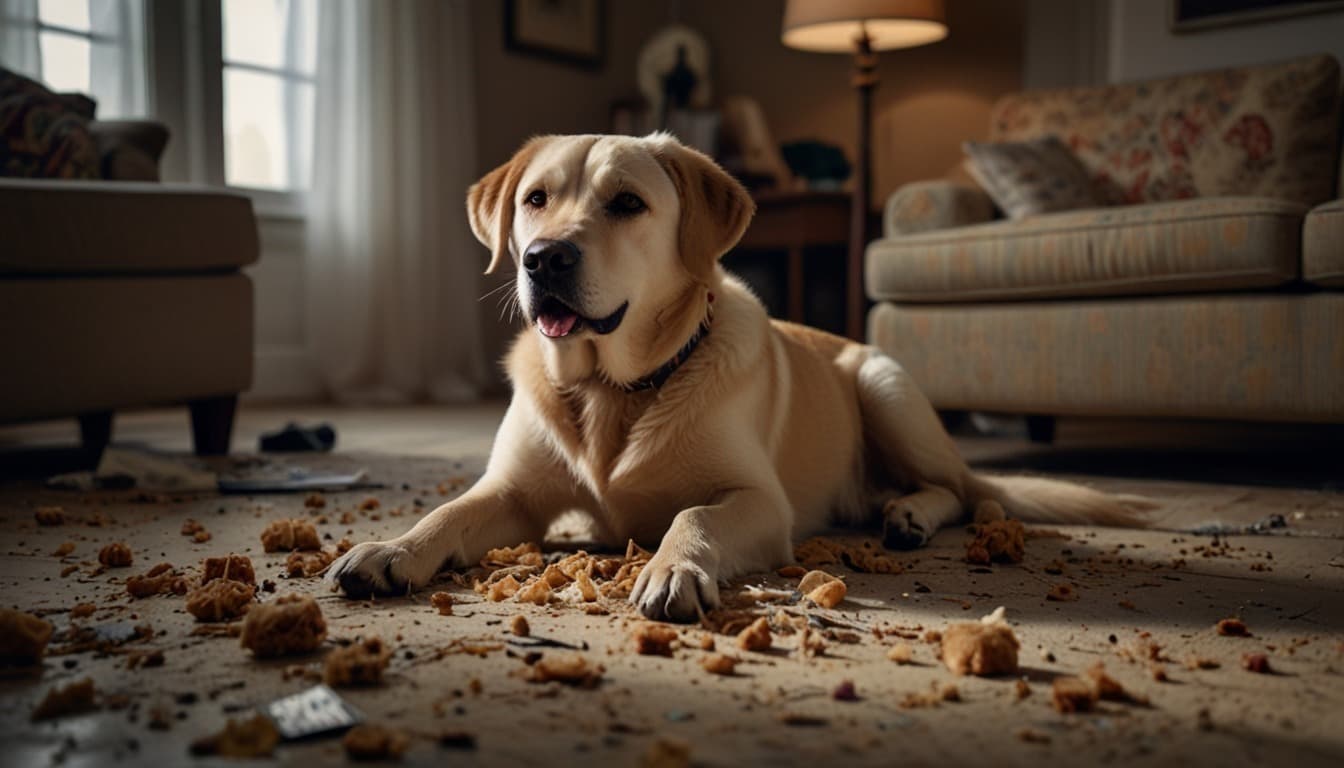
The first time my Labrador build dog ate a couch cushion — and I mean ate it, like swallowed chunks of foam the size of my fist — I thought I was exercising him enough. A 30-minute walk in the morning, another in the evening. That's what the books said. That's what the internet said. So why was he methodically dismantling my furniture like a furry demolition crew?
I'd had Tucker for about three weeks. He came to me as an owner surrender: 2 years old, purebred Lab, the color of a perfectly toasted marshmallow. His paperwork said 'high energy, needs active home.' I figured I had that covered. I've got three dogs of my own. I walk. I hike. I even own a ball launcher that I swore I'd never buy because they look ridiculous. I was ready.
Except I wasn't. Not even close.
That couch cushion was just the beginning. Over the next month, Tucker chewed through two remote controls, a pair of my favorite wool socks (the expensive ones I got for christmas three years ago that I still didn't deserve), and the leg of my kitchen table. The table leg was the one that broke me. I called my vet, Dr. Nguyen — se's put up with my panic calls for 11 years, through three dogs and a divorce — and she said, 'Sarah, how much exercise is he actually getting?' I told her about the walks. She paused. 'That's not enough for his breed. Not even close.'
I was walking him enough according to the internet — and my dog was still losing his mind
Here's the thing nobody tells you when you google 'how much exercise does a Labrador need.' You get numbers. 60 minutes. 90 minutes. Two walks a day. Maybe a run. And those numbers? They're not wrong, exactly. They're just completely useless for a lot of Labs. Because a Labrador Retriever isn't just a dog with a certain exercise requirement. It's a dog that was bred for generations to do one thing: work alongside humans all day, retrieve downed birdds from icy water, and then do it again the next morning with zero complaints. The energy in those genetics doesn't clock out after 45 mins on a leash around the neighborhood block.
I've fostered over 40 dogs in the last 14 years. A lot of them have been Lab mixes or purebred Labs. And I've made every exercise mistake you can think of with them. Icluding the one where I tried to run with a 6-month-old puppy because I thought 'tired' was the goal. (Spoiler: it's not. And my knees still remember that vet bill.)
The problem with those generic time recommendations is they don't account for what kind of exercise. A 60-minute sniffy walk where your Lab stops to investigate every blade of grass isn't the same as 60 minutes of sprinting after a ball. And neither of those is the same as 60 minutes of swimming. They all drain different energy tanks. And Labs have more energy tanks than they've any right to. Physical. Mental. Social. Purpose-driven. The kind that only kicks in when there's a job to do. If you're only draining one tank, you're gonna end up with a dog who's physically exhaussted but still pacing the house at 9pm looking for something to destroy.
I learned that the hard way with Tucker. After that couch cushion incident, I upped his walks. Added a third one. Then a fourth. He was getting nearly two hours of leashed walking a day and he was still… fidgety. Restless. He'd sit at the window and whine. He'd follow me from room to room like a lost shadow. He wasn't tired—he was bored. There's a difference, and it took me way too long to figure that out.
Actually, scratch that. I didn't figure it out. A friend who trains hunting dogs ponted it out over a beer. She said, 'Sarah, you're giving him a commute. He needs a purpose.' I thought she was being dramatic. She wasn't.
The 5 stages of an under-exercised Lab — and why stage 3 is where things get expensive
After Tucker, I started noticing a pattern. Every Lab or Lab mix that came thruogh my rescue followed the same downward spiral when they weren't getting the right kind of exercise. I've seen it enough times now that I can practically predict what's going to happen by day three of a new build. Here's what it usually looks like:
Stage 1: The pacing
This is the quiet before the storm. The dog isn't being destructive yet, but they can't settle. They follow you to the bathroom. They stare at you while you work. They circle the liiving room like they're casing the joint. You think, 'Oh, they're just adjusting.' Nope. They're building up a charge.
Stage 2: The mouthing
This is where it gets annoying. The dog starts grabbing things. Not chewing yet — just holding. Your shoe. The tv remote. A pillow. They parade it around like a trophy. It's not aggression. It's not separation anxiety. It's a dog who was bred to cary things in their mouth for miles and who currently has nothing to carry. I call this the 'retriever with no retrieve' phase.
Stage 3: The destruction
This is the stage where your stuff starts becoming confetti. The Lab has figured out that chewing feels good. It relieves the pressure of all that pent-up enegy. And they don't discriminate — baseboards, couch cushions, drywall, that expensive pair of boots you left by the door. If it fits in their mouth, it's fair game. This stage cost me $187 in emergency vet visits when one of my build dogs, a yellow Lab named Biscuit, ate a sock and required induced vomiting. (That's not even counting the cost of the thing he destroyed, which was a hand-knitted blanket from my ex's grandmother. I'm still mad about that one. Not the blanket — the vet bill.)
Stage 4: The barking
Some Labs get vocal when they're under-stimulated. It starts as demand barking — like, 'Hey, pay attention to me' — and escalates into this high-pitched, repetitive barking at nothing. They'll stand in the middle of the room and bark at the ceiling. Or at a shafow. This is when neighbors start leaving notes on your door. I once fostered a Lab mix who barked at the refrigerator for 20 minutes straight. The fridge. It wasn't even running at the time.
Stage 5: The shutdown
Weirdly, the worst stage isn't the destruction. It's when the dog just… stops. They lie down and don't move. They look depressed. They lose intetest in food, in toys, in you. This can look like a calm dog, but it's not. It's learned helplessness. I've seen it happen with dogs who've been in shelters too long, and it's heartbreaking. The energy doesn't go away — it just turns inward. And untangling that kind of mental shut-down takes way more work than just walking them more.
I should mention: not every Lab hits all these stages. Some skip straight from pacing to destruction. Some never get to the barking phase. But if you're seeing any of these in your dog, the solution probably isn't 'more walks.' It's probably 'different walks' — or something else entirely.
I tried ruunning with my 6-month-old Labrador puppy and almost ruined his joints forever
Okay, let's talk about the age thing. Because this is where I screwed up royally with my first Lab. Gus was my heart dog — a block-headed yellow Lab I adopted from the shelter where I worked at the time. He was 4 months old and absolutely relentless. I thought I was being a good dog mom by tiring him out. We'd go on runs. Not long ones, maybe a mile or two. But he was a pupppy. His growth plates weren't closed yet. And I didn't know that was a problem until he started limping at 8 months old.
Dr. Nguyen took x-rays and pointed out the inflammation in his joints. 'Puppies aren't built for pounding pavement, Sraah. Their bones are still setting. Running on hard surfaces before they're fully grown can cause lifelong damage.' I felt like the world's worst dog owner. She put him on restricted activity for six weeks — leash walks only, no running, no jumping, no stairs if we could avoid it. Try keeping a 8-month-old Lab calm for six weeks. It's like trying to convince a tornado to sit still.
That experience taught me a lesson I now pass on to every single person who adopts a Lab puppy from my rsecue: you can't out-exercise a young Lab's growth phase. Their bones, joints, and cartilage aren't ready for high-impact activity until they're at least 12-18 months old. Running on hard surfaces, agility jumps, even excessive fetch on concrete — that's all stuff to avoid until your dog is fully developed. And yes, that means you're going to have an incredibly energetic puppy who you can't properly exhaust physically. That's where mental exercise comes in. (We'll get to that. Hold on.)
I've already written abot the heart-attack moment with my senior dog, but the puppy joint thing is a different kind of scary. Because you think you're doing everything right. You're exercising the dog. Isn't that what they need? Not exactly. Not when they're still cooking.
The general rule I follow now: puppies up to 6 months get 5 minutes of structured walk per month of age, twice a day. So a 4-month-old gets 20-minute walks. That's not nearly enough to tire them out physically, which means the rest has to be mental and free play in the yard or indoors. At 6-12 months, you can bump it up a bit, but still no forced running on hard surfaces. After a year, you can start building distance slowly. By 18 months, most Labs are ready for whatever you throw at them. But if in doubt, ask your vet. Not the internet. Your vet knows your dog's specific joint health.
The day my Lab laerned to swim and I finally got my evening peace back
Here's something magical about Labradors: they were literally designed for water. Webbed toes. Otter tail. A double coat that repels moisture. If you've a Lab and you're not using water as an exercise tool, you're workign about three times harder than you need to.
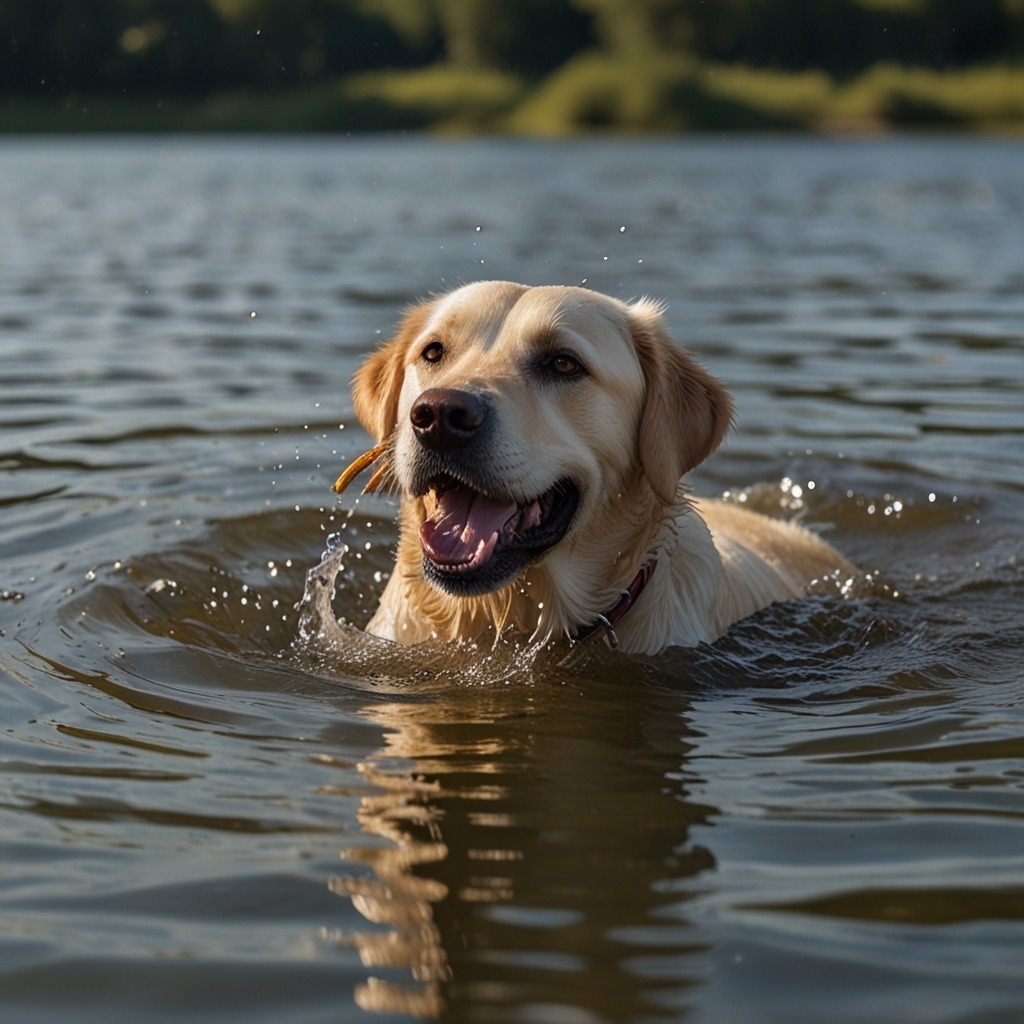
I discovered this with Tucker — the couch-destroyer from earlier. One Saturday, I took him to a friend's property that had a pond. I wasn't planning on swimming. I just thought a new place to walk would be more mentally stimulating. Tucker saw the water, made a sound I can only describe as a joyful scream, and launched himself into the pond like he'd been waiting his entire life for this moment. He swam for 45 minutes. Nonstop. Back and forth across that damn pond. When he finally got out, he collapsed on the grass, his paws twitching in his sleep for the next two hours. He didn't destroy anything for the rest of the day. I went home and immediately googled 'dog life jacket indoor pool' which is probably how I ended up on a watchlist somewhere.
Swimming is the ultimate Lab exercise for a couple of reasons. It's incredibly physically demanding — 10 minutes of swimming is roughly equivalent to a 30-minute walk in terms of energy expenditure. But it's zero-impact. No pounding on joints. No risk of overheating on hot days. It works muscles they don't use on land. And for a breed that's prone to hip dysplasia and elbow issues, it's basically a gift from the dog-exercise gods.
I started taking Tucker to a local dog-friendly lake twcie a week. Those were the days he was actually calm at home. The other days? Still a menace. Which is how I learned that even swimming wasn't enough if it wasn't frequent enough. Labs need variety and consistency. A weekend swim doesn't cover Monday through Friday.
If you don't have access to a lake or a pool, you can still use water in creative ways. A kiddie pool in the backyard filled with a few inches of water — toss some toys in there and let your Lab bob for treats. A sprinkler on low they can chase. A hose with a gentle spray if they like that. (Not all Labs do — some are weirdly nervous about water from above. I've had two who'd happily swim in a lake but would run away from a hose like it was a snake.)
The one thing I'll caution: not all Labs are natural swimmers. The first time you introduce them to water, go slow. Use a life jacket if you're in deep water. Stay with them. Tucker was a freak of nature who swam like a goldfish, but I had another build, a black Lab named Odie, who panicked when his paws left the bottom and had to be taught that water wouldn't eat him. Took three weeks of gradual exposure before he was comfortable. Now he won't get out of the water if I let him. (Actually, getting him out is its own problem. But that's a different article.)
Swimming brings its own coat care challenges, obviously. Wet dog smell is no joke when you've got an indoor dog. But the trade-off — a tierd, happy Lab — is worth a little mildew smell in your car.
Why I stopped counting minutes and started watching my dog's ears instead
People get obsessed with the clock. 'How many minutes of exercise does my dog need?' I get it. I've been that person. But here's what I've learned after 14 years of watching dogs: the number on the clock measn nothing if you're not reading your individual dog. Because Labs aren't a monolith. I've had couch-potato Labs who were content with a single walk and a chew toy. I've had Labs like Tucker who could run a marathon and still be edgy. Age, genetics, health, personality — they all change the equation.
So instead of counting minutes, I started watching for what I call the 'ear shift.' It's a thing I noticed with my dogs. When they're truky tired — the kind of tired that means they'll actually relax — their ears do this thing where they droop just slightly. Not the sad, stressed droop. More like the equivalent of a human slumping into a couch after a long day. Relaxed. Soft. You see it after a good swim or a long off-leash hike. You don't see it after a neighborhood walk, no matter how long you drag it out.
Dr. Nguyen (who has laughed at my 'ear theory' more than once, but admits there's something to it) said to think of exercise in terms of quality, not just quantity. 'A 15-minute game of tug in the yard, where your dog is fully engaged and using their muscles and brain, beats 45 minutes of mindless leash-walking any day.' She's right. I hate when she's right.
That's not to say walks are useless. They're not. They provide mental stimulation through sniffing, which is actually a huge energy drain for dogs. A 2019 study (I won't bore you with the details, but my friend who still works at the shelter sent it to me) showed that sniffing activities use about as much mental energy as a light training session. So a walk where your dog is allowed to sniff freely for 30 minutes is entirely different from a 30-minute heel-focused march. Both have their place. But if your goal is a tired dog, the sniffy walk wins.
What nobody tells you about mental execrise — and the cardboard box that saved my sanity
Okay. We've gotta talk about mental exercise. Because this was the missing piece for me with so many Labs. Physical exercise drains the body. Mental exercise drains the brain. And for a breed that's as smart and purpose-driven as a Labrador, a tired brain is often more calming than a tired body.
I stumbled onto this by accident. I'd gotten a delivery — something large, came in a big cardboad box — and I left it on the floor while I unpacked the contents. Tucker, who'd been doing his usual afternoon pacing, stopped dead. He sniffed the box. He nudged it. He climbed partway inside. For the next 20 minutes, he was completely absorbed in exploring this dumb box. He pushed it around the room. He tore a flap off. He sat inside it like it was a spaceship. And when he was done, he curled up on the rug and went to sleep. No chewing. No barking. No destruction. Just… contented sleep.
That box became a regular thing. I'd save delivery boxes and give them to him. Sometimes I'd hide treats inside. Sometimes I'd fold the flaps in so he had to figure out how to get in. It was the cheapest enrichment toy I'd ever found, and it worked better than the $40 puzzle feeders I'd bought over the years.
Mental exercise for Labs can look like a lot of things:
- Nose work: Hiding treats around the house or yard and letting them find them. Labs were born for this. Their sense of smell is ridiculous. Start easy — let them watch you hide the treats at first — then gradually increase the difficulty. 15 minutes of intense sniffng work drains a Lab faster than 30 minutes of fetch.
- Puzzle toys: The ones where they've to skide levers or lift flaps to get kibble. Some Labs figure these out in two seconds and get bored. Others find them frustrating. You might have to try a few before you find one that hits the sweet spot.
- Training sessions: 5-10 minute chunks of focused training throughout the day. Not just basic commands — teach them silly trixks. 'Roll over' takes brainpower. 'Fetch the remote' takes problem-solving. Labs are eager to please, which means they'll work for the sheer joy of making you happy. Use it.
- Food-dispensing toys: Instead of putting their kibble in a bowl, put it in a treat ball or a frozen Kong. Eating becomes a 20-minute problem-solving session instead of a 2-minute gulping contest.
- Social play: With other dogs they get along with. Not just random dog park chaos — structured play dates with a compatible friend. Wrestling, chasig, and playing are physically and mentally stimulating.
The key thing I've realized: mental exercise and physical exercise aren't separate things you do in different time blocks. You layer them. A walk that includes a 5-minute training session, a 10-minute sniffing derour, and a quick game of fetch at the halfway point hits three different energy tanks at once. A swim followed by a puzzle toy when you get home does the same. You're not adding more time — you're making the time you're already spending more effective.
One of my build dogs, a terrified Lab mix who wouldn't leave her crate for six weeks, taught me the power of this layered approach. She wasn't ready for walks or off-leash play. But we could do nose work in the living room. We could do calm training games where she learned to touch my hand with her nose. Those tiny mental victories built her confidence and drained her anxiety in a way that physical exercise never could. It's a different need, but the principle applies to all Labs: a dog who's mentally satisfied is a dog who's easier to live with.
That time I fostered a Lab who actually taught me what 'enough' looked like
After Tucker got adopted (by a family with a pool and two kids who threw balls for him daily — I still get updates, he's thriving), I fostered an older Lab named Maude. Maude was 9 years old, round like a barrel, and moved like she was wading through molasses. She came from an owner who'd passed away, and she'd spent most of her life as a companion dog who got short potty walks and spent the rest of her time on the couch. She was the opposite of Tucker. She didn't need more exercise — she'd never really gotten much, and her body wasn't conditioned for it. I had to go slow. Really slow.
Maude's ideal exercise was two 15-minute sniffy walks a day, plus a few minutes of gentle fetch in the yard (she'd retrieve exactly three times, then lie down on the ball like a dragon guarding treasure). She didn't pace. She didn't destroy anything. She was perfectly happy with her gentle routine. And that's when it hit me: the exercise needs of a Labrador Retriever aren't a number. They're a conversation between you, your dog, and your vet. Maude's joints were stiff, her energy was low, and her idea of a good time was a slow stroll and a nap in the sun. Tucker's idea of a good time was running himself into a coma. Both were Labs. Both were right for themselves.
The tendency with Labs is to assume they need a military-grade exercise regimen. And some do. But not all. Not the seniors. Not the ones with health issues. Not the ones who are naturally more laid-back. I've already messed up with senior dog weight management, so I was especially careful with Maude. Over-exercising an out-of-shape senior Lab can trigger a cascade of joint problems, heart strain, and injuries that take forever to heal.
The moral of Maude's story? Watch your damn dog. I don't mean that in a dismissive way. I mean literally observe them. Notice when they seem restless and when they seem content. Notice what tires them out and what just winds them up more. A Lab who comes home from a walk and immediately starts pacing needs a different kind of stimulation. A Lab who conks out on the floor for two hours after a swim has found his sweet spot. The dog is telling you what they need — you just have to listen.
The 9pm collapse that saved my sanity
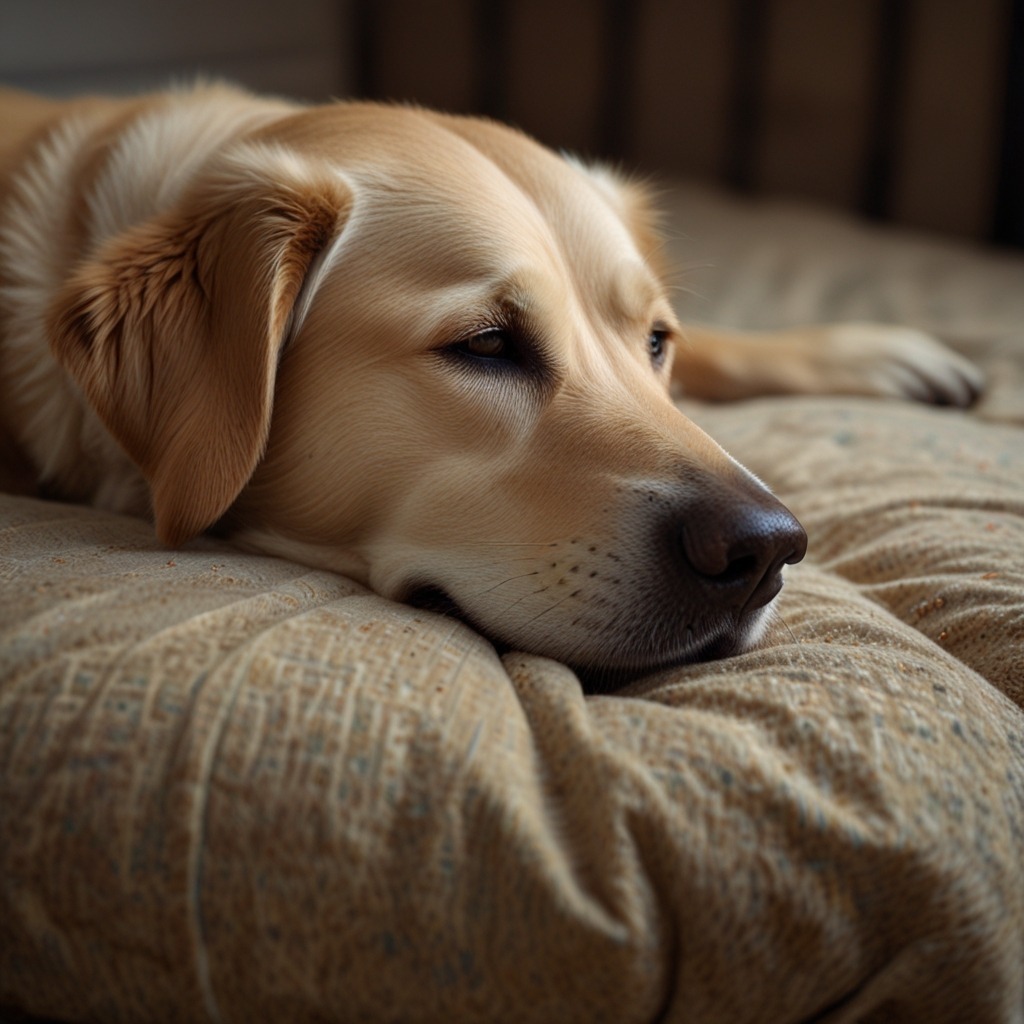
There's this moment I chase with every build dog. It usually happens around 9pm, after the last potty break of the night. The dog flops onto their bed — or my bed, or the floor, or wherever they've decided to crash — and their whole body goes heavy. They exhale deeply. Their eyes get that glazed, faraway loko. And then they're out. Not tossing and turning. Not getting up five times. Just deeply, thoroughly asleep. It's the sound of a dog who's been properly exercised.
That sound took me years to achieve consistently. And I didn't achieve it by following a chart or sticking to a rigid schedule. I achieved it by payiing attention to what each individual dog needed and giving it to them in whatever weird combination worked.
For my current dogs, that combination looks like: a 30-minute morning walk with a long lead so they can sniff and explore, a mid-day play session in the yard with fetch or tug, and an evening activity that rotates — swimming once a week, a hike on weekends, a training session if the weather's crappy. They get puzzle toys twice a week. They get frozen Kongs when I need a quiet afternoon to work. It's not a schedule I could put in a 'How to Exercise Your Lab' infographic. It's messy and it changes based on my energy level and theirs. But it works.
I've stopped comparing my dogs' exercise to what some random blog says is 'adequate.' I've stopped feeling guilty if I skip a day because it's raining sideways. Some days my dogs get less activity than usual. Some days they get way more. Over time, it balances out. The key is that they're not bored, they're not destructive, and they're capable of settling in the house without crawling up the walls.
The $340 vet bill that explained evverything I'd been getting wrong
I need to circle back to something I mentioned earlier—the joint problems Labs are prone to. Because exercise isn't just about tiring your dog out. It's also about maintaining their lonh-term health. And doing it wrong can cost you. Literally.
A few years ago, I had a build Lab named Rufus. He came to me overweight, with a limp, and a weiird shuffling gait. The owner said he 'just wasn't exercised much.' I thought I'd fix that. I started walking him longer. Then hiking. Then he started limping worse. $340 later, Dr. Nguyen told me he had hip dysplasia and arthritis, and that all my 'helping' was making it worse. She said: 'Exercise for a Lab with joint issues is like physical therapy. It has to be low-impact, consistent, and carefully managed. Swimming. Short walks on soft surfaces. No hills. No jumping.'
Rufus's ideal routine ended up being two 10-minute walks on grass, a short swim twice a week, and daily glucosamine joint supplements. He also benefited from what I call 'couch PT' — gentle range-of-motion exercises where I'd slowly stretch his back legs while he lay on his side. (Sounds absurd, I know. But he loved it. He'd fall asleep during it sometimes.) Within three months, his limp improved significantly. He lost weight. He moved easier. And the destruction and restlessness I'd initially attributed to 'not enough exercise'? Gone. He wasn't under-exercised. He was in pain. The pacing was discomfort. The chewing was self-soothing. Exercise was the answer, but the wrong kind of exercise was the wrong answer.
If your Lab has any signs of joint pain — limping, stiffness after getting up, reluctance to jump or climb stairs, a 'bunny hop' gait — talk to your vet before starting or ramping up any exercise program. The same activities that help a healthy Lab can seriously damage one with underlying issues. And for the love of all that's holy, don't run a Lab on pavement if they show any signs of joint problems. Just… don't.
Why my Lab needed a job, not a jog
I've alluded to this a few tiimes, but it deserves its own section because it's the thing that changed everything for me. Labradors were bred to work. Not to aimlessly run around. To work. To have a job. To collaborate with a human toward a specific goal. That genetic drive doesn't disappear just because your Lab lives in a suburban house and has never seen a duck.
When I first heard this from that hunting dog trainer friend, I thought it was a cute idea. But then I tried it. With Tucker, I started doing 'structured retrieve' instead of just fetch. It was fetch, but with rules. He had to sit and wait while I threw. He had to bring the ball directly to my hand. He had to drop it on command. He had to make eye contact. It was a 10-minute game, but it used his brain, his body, and his deep-seated need to cooperate with a person. When we finished, he was more tired than if we'd done 30 minutes of mindless chasing.
With other Labs, I've tried other 'jobs.' Teaching them to carry a backpack on hikes (start with empty, add weight slowly as they build muscle — big deal for a Lab who needs to feel useful). Teaching them to put their toys away in a basket. Teaching them to close the door behind them when they come inside. (I'm not kidding. It took two weeks of training and now every time Maude closes the door I want to throw her a parade.) Even redirecting hyper-focused energy into a structured activity can transform a destructive dog into a calm one.
A job doesn't have to be complicated. It just has to give the dog a sense of purpose. A task they can complete. A role they can fill. Labs thrive on being needed. If you dno't give them that, they'll create their own 'job' — and it'll probably involve disassembling your furniture.
The day I stopped being a dirll sergeant and my Lab finally relaxed
I used to approach dog exercise like it was a military operation. Wake up, walk. Noon, fetch. Evening, jog. Check, check, check. If I missed a slot, I panicked. My dogs fed off that energy. They were anxious because I was anxious. They were restless because I was constantly 'on' them about doing things.
When I finally let go of the schedule, something shifted. I still exercised my dogs — don't get me wrong. But I stopped treating it like a formula. Some days, we did a lot. Some days, we did a little. I started paying more attention to thier signals than my calendar. If they were restless in the afternoon, we'd play. If they were conked out, I let them sleep. It sounds so obvious now, but it took me years to trust that my dogs weren't going to implode if I didn't follow a rigid exercise plan.
Labs, more than any other breed I've worked with, need flexibility. They need enough activity to keep their bdoies healthy and their minds satisfied, but they also need to learn how to just be. How to settle. How to exist in a house without entertaining themselves by eating drywall. That's a skill too. It's not something they're born with — especially not high-drive Labs — but it's something you can teach through a combination of adequate exercise, mental enrichment, and calm, consistent boundaries.
If I could go back to the version of me who was googling 'how much exercise does a Labrador need' at 11pm while Tucker chewed a hole in the wall, I'd tell her this: Your dog doesn't need a certain number of minutes. They need a life that fits their body, their brain, and their breed. Pay attention. Experiment. Mess up a few times. It's fine. The dog will forgive you. And for the love of all that's holy, get a pool pass and some cardboard boxes.