My Foster Lab Ran 8 Miles and Still Destroyed the Couch — Here’s What Active Families Actually Need to Know About Large Breeds
An 8-mile run left my foster Lab ready to destroy the couch. Here's what active families actually need to know before bringing home a large breed — the energy, the money, and the heartbreak.
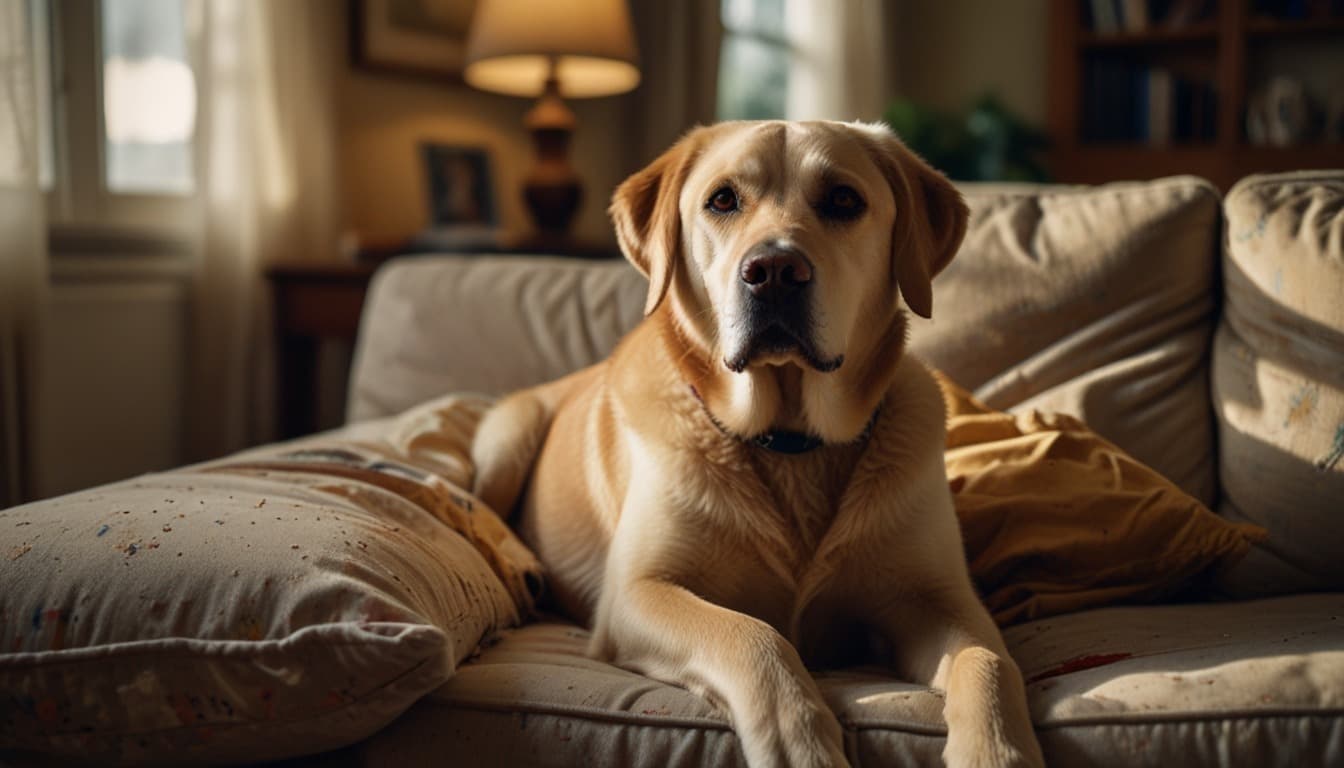
I used to think I had the whole “active dog” thing figured out. I walk my dogs every day. I build 40-plus dogs and cats over the years, worked at a shelter for six, dropped out of vet tech school because I couldn't handle the tuition and the smell of surgical prep at 7 a.m. I’ve seen every type of dog come through my door — hyper, lazy, neurotic, you name it. But there’s one dog who truly humbled me: a 75-pound yellow Lab named Gouda. Yes, like the cheese. The rescue named him.
Gouda’s profile said “perfect for an active family.” The shelter volunteer told me he’d run next to a bike for miles. So I thought, great, my niece and nephew visit on weekends, we go to the state park, we hike. This dog will fit like a glove. I picked him up on a Friday after my shift at the shelter, and by Sunday night I was sitting on my kitchen floor at 11 p.m. crying into a cold cup of coffee while Gouda chewed the leg of the same chair I’d given him a Kong on 20 minutes earlier. He’d already been on two five-mile walks that day. He was still wound up like a toddler who’d discovered espresso.
That weekend taught me somthing I forgot I already knew: large breed dogs aren’t just big versions of small dogs. They’re a whole different universe of joint management, mental stimulation, and sometimes the kind of destruction that makes you question your life choices. If you’re an active family and you think a big dog will be the perfect companion, you're probably right — but probably also missing half the picture.
“Active family” means way more than weekend hikes
Here's the thing nobody tells you when you’re scrolling through adorable Golden Retriever puppy photos: a truly active family doesn't just go on long walks on Saturdays. An active family is ready to dedicate 2+ hours a day, every single day, to exercising, training, and engaging a dog who weiighs more than your kindergartner. And if you've young kids, you’re also managing the chaos of a 90-pound zoomie machine that could accidentally knock over a toddler without even noticing.
My friend Jenna — single mom, two boys under five, lives for trail running — adopted a Weimaraner last spring. She’d done her research, or so she thought. The dog was bred for hunting, seek, beautiful, could keep up on her five-mile runs. Six months in, she called me in tears because the dog had separation anxiety so severe he’d eaten through two doors and the baseboards when she left for 45 minutes. “But he gets so much exercise,” she kept saying. That’s the first big mistake we all make: thinking physical exercise alone will fix a large working breed’s brain. They need mental work, too, sometimes more than the running. I’ll get to that.
So before you pick a breed, you've to get real — brutally real — about what your family’s daily routine looks like, not just the highlight reel. Are you up at 5:30 a.m. to walk the dog befre the kids wake up? Can you afford a dog walker midday? Do you've a plan for rainy days when the dog still needs an outlet? Large breeds don’t take days off. I’ve had Labrador Retrievers who’d guilt-trip me with a tennis ball at midnight if they felt they hadn't gotten enough playtime.
The “kid factor” nobody talks about
When people say a breed is “good with kids,” they often mean “won’t bite them.” But there’s a whole gradient. A Saint Bernard might be gentle but also likely to knock down a three-year-old just by turning arround. My neighbor has a Great Pyrenees who’s a total sweetheart, but he’s also 130 pounds and occasionally decides the kids are sheep that need herding. Cue the screaming and chaos. It’s not aggression — it’s instinct. And if you don’t have time to train that out (gently, over months), you’re setting yourself up for a disaster.
I’ve fostered big dogs that were amazing with my niece until the day she tripped and fell near the food bowl. Suddenly resource guarding showed up — something the previous owner “forgot” to mention. Every large breed parent needs to have strict management protocols: no kids near dogs during meals, no unsupervised interactions, and a serious commitment to teaching children how to read dog body language. Most families I know skip that last part entirely, and then act shocked when the dog growls after being hugged too tight for the 14th time.
So when you’re researching a breed, ask not just “is it good with kids,” but “how much time am I willing to spend supervising and educating both the dog and my kids?” Because large dogs can do real damage unintentionally.
The Labrador who thought 8 miles was a warm-up
Gouda, my build Lab, came to me as a three-year-old. He’d been surrendered because he was “too hyper.” And honestly, the first week, I was ready to surrender him right back to the universe. I walked him 8 miles one Saturday — 8 miles — through trails with hills, let him swim in a creek, and by 3 p.m. he was standing on my sofa shredding a throw pillow. I remember looking at him and thinking, “you've to be kidding me.” That’s when I realized the problem wasn’t his energy level. It was my approach.
Labs, like many large breeds in the sporting and working groups, were designed to work all day — retrieving ducks in cold water, pulling nets, running alongside horses. An 8-mile walk is a joke to them. They need off-leash running, swimming, fetch with a ChuckIt for 45 minutes straight, and then they need a puzzle toy and 15 minutes of obedience drills before thy’ll even consider lying down. If you’re an active family that just likes to walk together after dinner, a Lab might still be too much. They need high-intensity, off-lead exercise at least a few times a week, plus daily mental work.
I ended up taking Gouda to a Sniffspot — basically a private yard you rent by the hour — and we did fetch plus some scent games I learned from a trainer. That combination (exhaust his body, then exhaust his brain) was the only thing that saved my furniture. He eventually got adopted by a couple who do canicross — running with the dog pulling — and last I heard, he’s finally tired. Most days.
I actually wrote about that whole couch-destruction saga here, with the exact exercise breakdown that finally wprked. It’s not just about distance; it’s about intensity and brain work.
Why I’ll never recommend a Husky to a family with toddlers (despite what Instagram shows)
Alright, I’m about to get opinionated, but someone has to say it. Siberian Huskies are maybe the most beautiful large breed on the planet. They look like wolves in eyeliner, and every influencer with a filter has one. They’re also stubborn, independent, escape artists with the exercise needs of a marathon runner and the shedding capacity of an entire flock of sheep. I build-failed a Husky mix a few years back, and I still find hair in crevices I didn’t know existed.
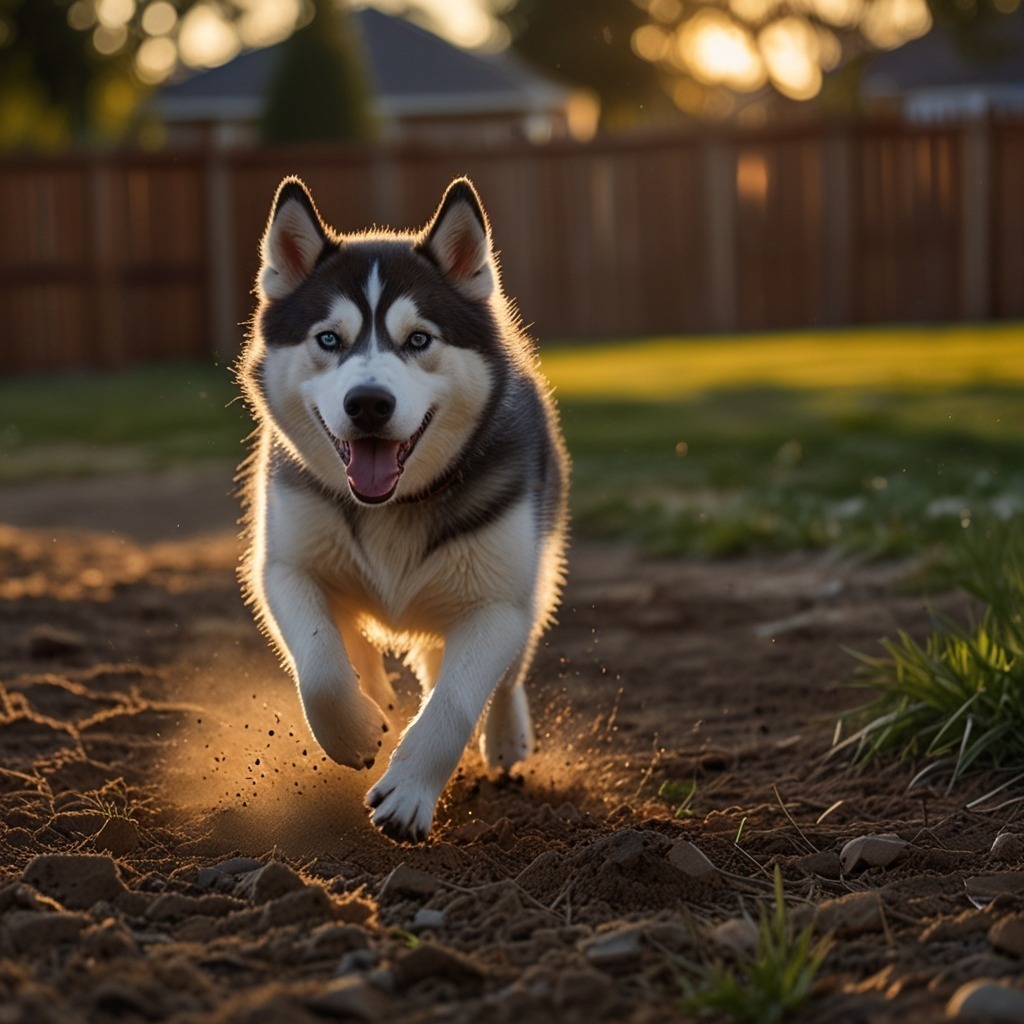
Active families see Husky videos and think, “Oh, we’re outdoorsy, it’ll be perfect!” And then three months later, the dog has dug under the fence, run three miles, and been returned to the shelter. I’ve seen this exact story play out a dozen times. Huskies aren’t bad dogs. They’re just dogs for a very specific kind of active family — one with a 6-foot privacy fence, no cats, infinite patience, and a sense of humor about their belongings being destroyed when the dog gets bored. They’re also notorious for not being trustworthy off-leash, which means that family hike you imagined suddenly becomes a wrestling match with a long line.
One of my most popular posts ever is about why you probably don’t need to batje a Husky, because so many people over-groom them and ruin their coat. (Here’s that story, complete with my soaked, miserable self.) The grooming alone is a full-time job. They blow coat twice a year, and if you don’t stay on top of it, you’ll be eating fur.
But back to kids. Huskies have a strong prey drive and a play style that’s pretty rough. They’re not deliberately aggressive, but they’ll knock a toddler over because they’re zeroed in on a squirrel. And they’re independent-minded — training them loose-leash walking or a solid recall is like negotiating with a teenager who doesn’t care about your rules. If you've small children, I’d steer way clear unless you’re a seasoned dog person with the time to manage training sessions every single day.
Now, all that said, if you’re a family with older kids, a securely fenced yard, and you’re into canicross or bikejoring, a Husky might be your dream. Just don’t base your decision on a 30-second TikTok.
Giant breeds and the heartbreak nobody talks about
I want to pause here and talk about something that’s going to make me sound like a downer, but it’s important. Large and giant breed dogs have significantly shorter lifespans than smaller dogs. Great Danes average 7-10 years. Irish Wolfhounds even less. When you bring a 150-pound dog into your family with young kids, you’re signing up for the possibility that your child’s best friend might not make it to middle school. I’ve watched families go through that grief, and it’s brutal.
There’s also the cost. Everything is more expensive in giant size: food, medication, surgeries. Bloat (GDV) is a constant risk in deep-chested breeds like Danes, Dobermans, and Standard Poodles, and an emergency gastropexy can cost $5,000 or more. Joint supplements? You’ll go through a $40 bottle a month. Heartworm prevention? Doded by weight, so double the price. I once fostered a Mastiff mix who needed an ACL repair — $4,200, and that was with the rescue’s discount. The family who adopted him had to start a GoFundMe within the first year.
None of this is to say you shoulddn’t get a giant breed. I adore them. But active families often focus on the “fun” side — hiking, swimming, playing — and don’t budget for the medical realities. When I worked at the shelter, we had a regular stream of owner-surrendered Great Danes whose families couldn’t afford the orthopedic issues that cropped up around age four. It broke my heart every time.
So if you’re set on a giant breed, please, get pet insurance immediately — before any pre-existing conditions appear. Look for plans that cover hereditary conditions and orthopedic issuues. And start a savings account just for the dog. Maybe that sounds dramatic, but I’ve had too many 3 a.m. emergency vet runs to pretend it’s optional.
That one time I found an epty brownie pan at 11 p.m. and my dog looked way too pleased with himself, I wrote about it here, and I still shuder thinking about the $1,200 bill. Chocolate toxicity is no joke in large dogs because they can inhale an entire batch before you even notice.
The Boxer who boumced off walls until I learned about mental work
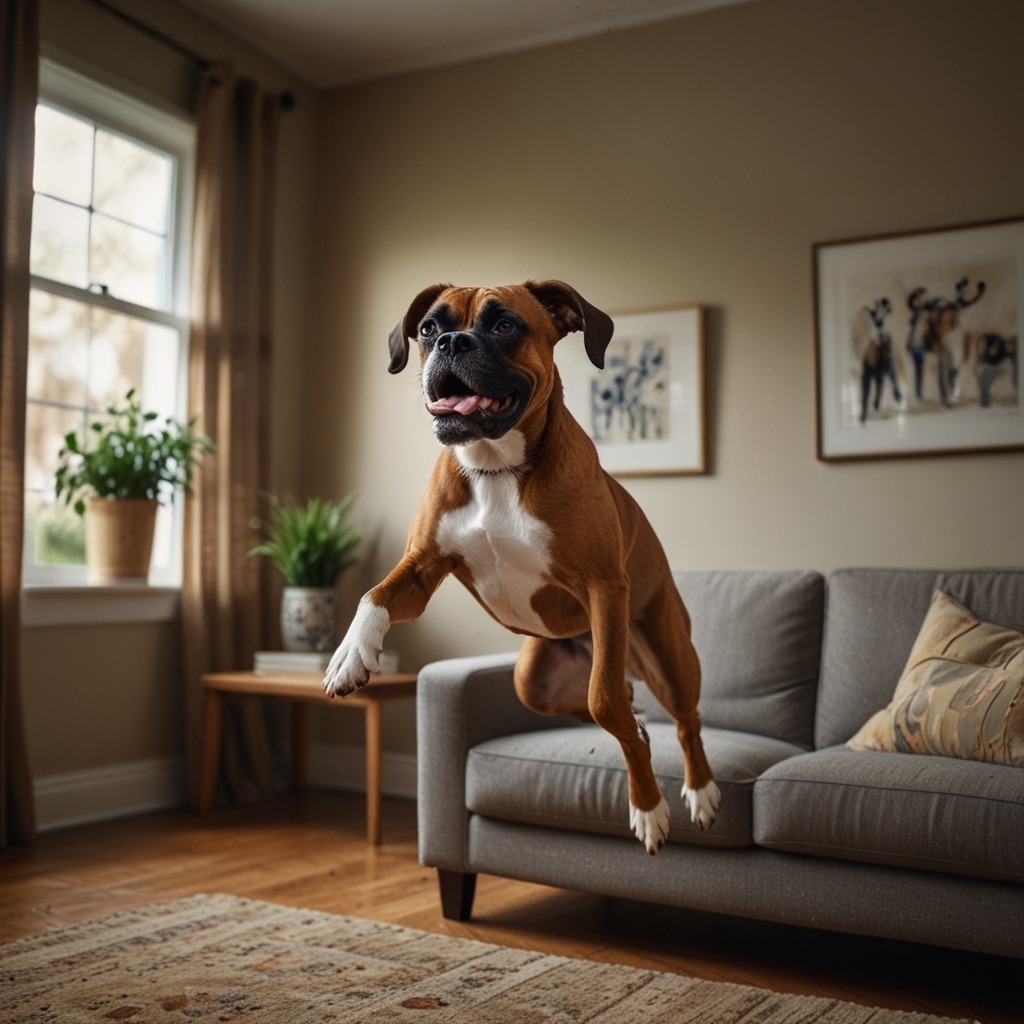
Switching gears entirely. Boxers are another breed that’s often labeled “great for active families,” and that’s true, but with an asterisk so large it needs its own zip code. I fostered a Boxer named Rudy for two months, and he was like a perpetual motion machine. He’d bounce off walls, literally — I’m not being dramatic. He’d run at the wall, launch himself off it, spin around, and do it again. The first time I saw it, I thought he had a neurological problem. Nope. Just an under-stimulated Boxer.
Rudy taught me that for some breeds, physical exercise alone actually makes things worse. The more I ran him, the more endurance he built, and the more he needed. I’d be panting on the floor, and he’d be dropping a slobbery ball on my face. I finally started incorporating 20-minute sessions of nosework in the house — hiding treats, teaching him to find my keys — and that’s what took the edge off. Ten minutes of mental work equals about 30 minutes of physical exercise for dogs like this.
Boxers are also major clowns, which is a double-edged sword. They’re hilarious with kids, so gentle in their own goofy way, but they’ll also knock over a coffee table without breaking stride. They’re prone to heart conditions and certain cancers, so vet bills can stack up. But if your family loves a breed that’s basically a stand-up comedian with fur, and you’re willing to do daily training and puzzle toys, a Boxer could be your perfect match. Just don’t expect them to quietly snooze after a walk.
The one training mistake I see over and over
Here’s a tangent, but it fits. One mistake active families make with large breeds is focusing all their training energy on “don’t jump on the kids” and “don’t pull on the leash” while ignoring the dog’s emotional regulation. I used to be guilty of this myself until I worked with a reactive dog who barked at every stranger. (That whole mess is documented hete, with the slow, frustrating thing that actually worked.) Teaching a dog to be calm in the house, to settle on a mat while the family eats dinner, to have an off-switch — that’s just as important as running them into the ground.
Large dogs who are always “on” can become nuisances or even dangerous. They knock over grandparents, they knock into kitchen counters and send hot food flying. I’ve seen it. So when you’re considering a breed, ask yourself: “Am I prepared to teach this 80-pound animal how to relax?” Becauuse that skill doesn’t come naturally to working breeds. they've to be taught, slowly, with patience and a lot of treats.
A few large breeds that actually work for active families (and the catch with each)
Okay, I’ve been doomy enough. Let’s talk about breeds that can genuinely thrive in an active family, as long as you go in with eyes open. I’m not giving you a generic list — I’m giving you the real talk, based on dogs I’ve personally fostered or worked with at the shelter.
Golden Retriever: The classic. Loves kids, lpves fetch, loves water. The catch: they’re mouthy as heck during puppyhood and adolescence. They’ll carry your kids’ toys around, and if you don’t teach a soft mouth, those “gentle” retrieves can get painful. Also, cancer rates in Goldens are heartbreaking. Plan on yearly vet checks and maybe a savings account just for oncology. But they’re incredibly forgiving of a family’s learning curve — that’s why they’re so popular.
Standard Poodle: Don’t sleep on Standards. They’re athletic, smart almost to a fault (they’ll outssmart your children), and don’t shed, which is great for allergy-prone families. The catch: grooming. You’re either learning to clip them yourself or paying $80+ every 6 weeks. And they need mental work or they’ll invent their own games, which often involve stealing laundry and parading it around the house. I fostered a Standard once who could open lever door handles. I had to childproof my own house.
Rough Collie: Gentle, elegant, great with kids, less intense than a Border Collie. They’ll bark though — a lot. If you’re in an apartment with thin walls, pass. They’re also sensitive, so harsh training doesn’t work. But for an active family who ennjoys long walks and wants a dog that’ll watch over the kids like a furry nanny, Collies are underrated gems.
Bernese Mountain Dog: Sweet, loyal, good with kids, more chill than other large breeds. The catch: short lifespan (6-8 years), serious cancer risks, and they shed enough to knit a second dog weekly. They also don’t do well in hot climates, so if you live in Floroda, think twice. But if you've older kids and you’re okay with the heartbreak timeline, a Berner’s love is something special.
German Shorthaired Pointer: If you’re the family that runs marathons, hunts, and never sits down, this is your dog. If you’re the family that thinks a 30-minute walk is enough, stay far away. GSPs need daily off-leash running and a job. They’re prone to separation anxiety if cooped up. Great with kids who can handle their energy, but they’ll bowl over a toddler without meaning to.
The hard truth about “active” and “yard”
This is a short one, but it needs to be said. A lot of families assume that having a big backyard means they don’t need to walk the dog as much. That’s a myth I wish woud die. Most dogs, especially large active breeds, won't self-exercise in a yard. They’ll lie in a sun patch and wait for you to come out and play. The yard is a supplement, not a replacement, for structured exercise and mental work. I’ve had fosters with acres of fenced land who still needed two dedicated exercise sessions a day. So if your “active” plan is to just open the back door, you’re going to end up with a bored, destructive 80-pound dog, and I’ll be writing about you in my next rant.
When the dog chooses you — a story about a build that stayed
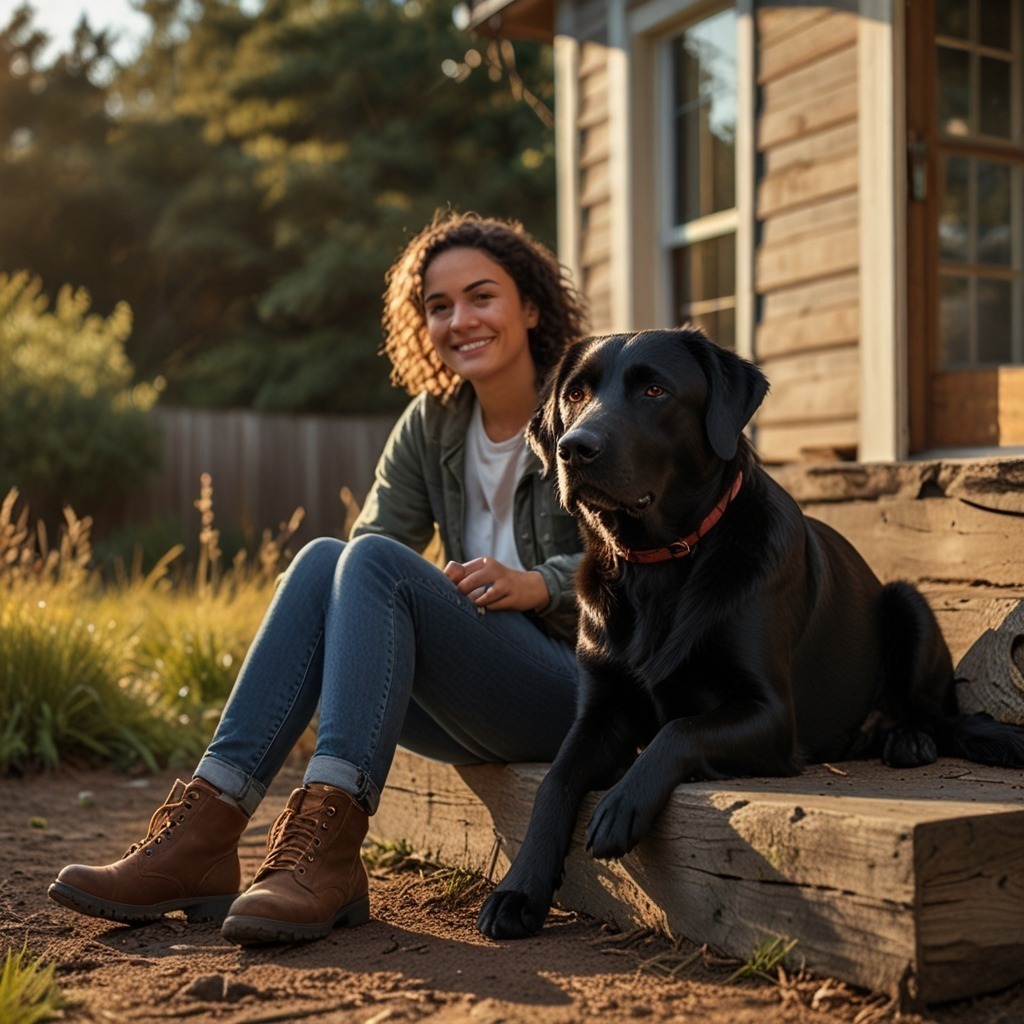
I wasn’t planning to keep any of my fosters — I already had two dogs and a rotating cast of cats. But there was this one dog, a black Lab-mix named River, who came to me as a temporary placement after being pulled from a hoarding case. He was underweight, terrified of doorways, and had no idea what a leash was. I figured I’d get him healthy and adopt him out. That was three years ago. He’s currently snoring at my feet, having just woken up from his third nap of the day.
River turned out to be the exact opposite of Gouda. He’s a big dog (65 pounds) and he loves to run, but he’s also got an incredible off-switch. He’ll hike 10 miles or spend six hours at a barbecue just lying near the grill, waiting for someone to drop a rib. He’s gentle with my niece, patient with build puppies, and his worst habit is stealing socks and hiding them under the couch. He taught me that the right large breed dog for an active family isn’t just about the breed — it’s about the individual dog’s temperament. I’ve met hyper Goldens and couch-potato Border Collies. So while breed gives you a blueprint, the actual dog in front of you matters more.
If you’re open to adopting an adult dog from a build-based rescue, you can get a much better sense of their real energy level than you can from a puppy. Puppies of large breeds are adorable, but they all have similar energy levels (insane) during adolescence. The dog’s true personality doesn’t settle until they’re 2-3 years old. I’ve seen families return young dogs at 14 months because “we didn’t realize he’d still be this crazy.” Yeah, they’re basically teenagers until they’re fully mature, and with large breeds, that can take up to three years.
I once wrote about my Lab destroying everything I loved until I figured out he didn't need more walks, he needed something else entirely, and that was River. The “something else” was teaching him how to settle, how to exist without constant stimulation. It took months, but it was the single most important skill I ever taught him.
The $340 vet bill that explained everything
Oh, here’s the tangent I promised about toy safety. When River was a young dog in my care, I gave him a hard nylon chew toy that claimed to be “indestructible.” He shattered pieces of it, swallowed them, and I spent $340 in X-rays at the emergency vet at midnight. (I wrote about that nightmare right here, with what I actually give my dogs now.) If you’re bringing a large, powerful chewer into a house with kids, you've to supervise toy time like a hakw. Not just for the dog’s safety, but because the last thing you need is a $3,000 foreign body surgery because the dog ate a toy truck that looked like a chew toy.
So as you research breeds, also research what types of toys are safe for power chewers. And keep the kids’ toys picked up. I can’t tell you how many build dogs I’ve seen pass bits of Lego. Yes, Lego.
What finally worked for Rivver (and why we’re a Lab family now)
After all the trial and error with Gouda, Rudy, and a dozen other fossters, I’ll tell you what I tell families now: the best large breed for an active family is the one whose mental and physical needs you can commit to meeting every single day — not just the weekends. For us, that turned out to be a moderate-energy Lab mix who’s down for adventure but also knows how to chill. River and I hike thrree times a week, we do nosework in the house, and I take him to the park for fetch. The rest of the time, he’s my shadow, and he’s completely content.
But that contentment didn’t happen by accident. It’s the result of years of training, thousands of dollars in joint supplements and quality food, and a whole lot of mistakes I’ll never repeat. I’ve learned that large breeds need boundaries as much as they need exercise. They need a calm, confident leader who doesn’t just push them physically but teaches them that the world isn’t a constant stimulus party. If you can give them that, you’ll have the most loyal, joyful companion your kids will remember forever.
If you can’t — if your family’s idea of active is a weekend stroll and the occasional game of fetch in the yard — I promise there’s a smaller breed or a senior large dog who’d be over the moon to join you. And there’s no shame in that. The shame is in pushing a dog beyond what it needs and then blaming the breed when it chews your drywall.
So take the time, do the hard research, and please, for the love of everything, don’t get a Husky just because the puppy had blue eyes. Your couch, your kids, and the shelter workers will thank you.