
My Foster Dog’s Poop Looked Like Soft-Serve for Two Weeks — Here’s the Probiotic That Firmed It Up (And the $30 Chew That Made Him Worse)
My foster dog’s poop looked like soft-serve for two weeks. Here’s the probiotic that firmed it up, the $30 chew that made him worse, and the 3 a.m. Walmart discovery I still use.
The smell hit me before I even opened the back door.
That’s not an exaggeration. It was the kind of smell that hangs in the air like stale regret — sour, faintly rotten, the unmistakable announcement that something had gone terribly wrong inside a dog. And since I’d just brought home a trembling, underweight brindle pit mix from the county shelter the day before, I already had a sinking feeling I knew exactly whose insides were staging a rebellion.
Moe — that’s what I’d started callnig the dog, because he had this big sad moose face — had been in my care for roughly 18 hours. In that time, he’d produced four piles of poop. None of them solid. The last one had the approximate consistency of a melted Wendy’s Frosty, and it was deposited directly onto the welcome mat because the poor guy couldn’t even make it outside fast enough.
I’ve been fostering dogs for over 14 years. I’ve cleaned up things that would make a person reconsider all their life choices. I’ve seen coccidia, giardia, hemorrhagic gastroenteritis, and a truly horrifying incident involving a Labrador, an entire rotisserie chicken carcass, and an emergency vet visit at 2 a.m. Diarrhea doesn’t faze me anymore — except when it won’t stop. Except when you’ve already done the worming protocol and the bland diet and the metronidazole and the dog is still pooping liquid like it’s his personal mission to dehydrate himself into a medical emergency.
That was Moe. And that was the week I dove headfirst into the maddening, contradicory, overpriced, underscrutinized world of dog probiotics.
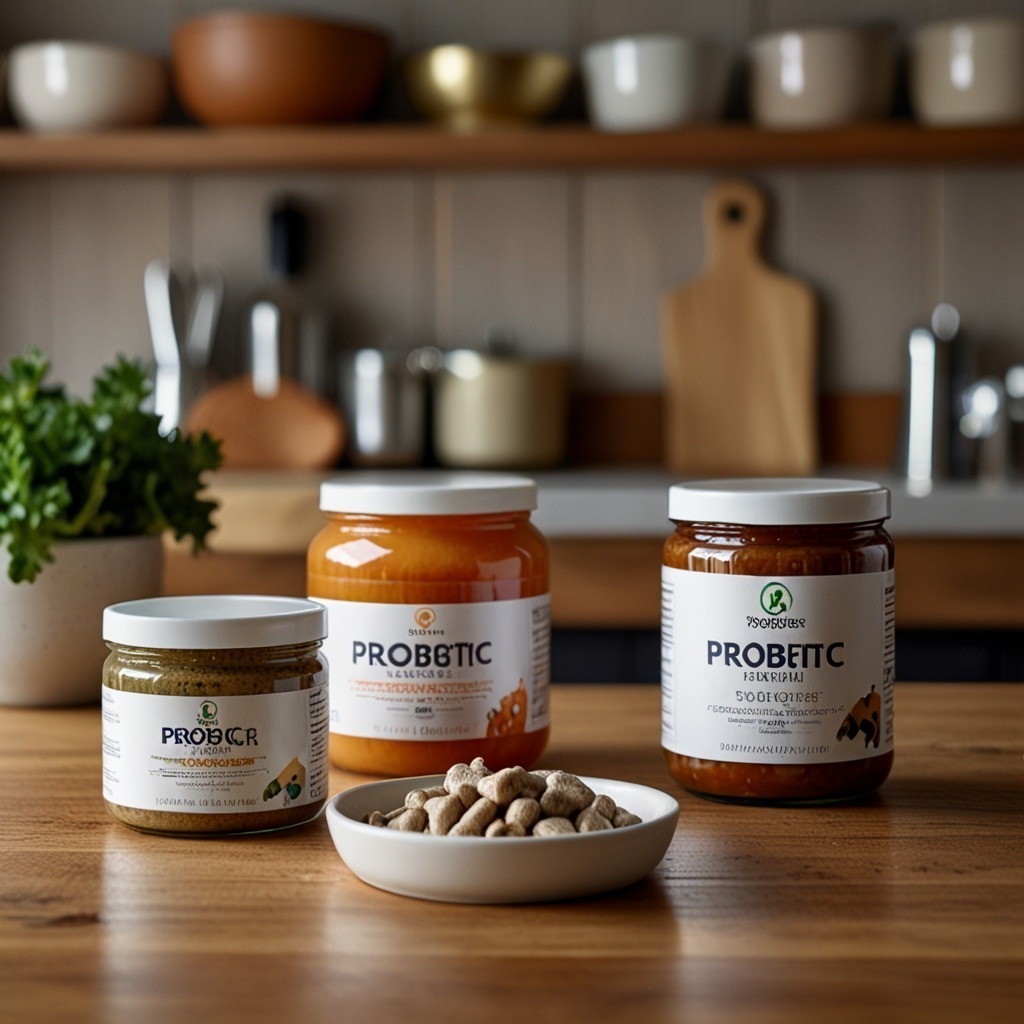
The Day the Vet Said the Words ‘You Could Try a Probiotic’
After seven days of chicken and rice, probiotics weren’t even on my radar yet. I was still operating under the assumption that Moe’s stomach was just adjusting to shelter-to-home life — stress colitis, maybe a touch of parasites that the fecal float missed. The vet (Dr. Chen, who’s seen me through more build crises than any one person should have to endure) had already prescribed a round of metronidazole and some canned gastrointestinal food that cost $4.50 a can and smelled like boiled cardboard. Moe’s poop firmed for exactly two days, then liquefied all over again the moment we tried tapering the meds.
I was standing in the clinic parking lot, cradling a fresh bag of prescription kibble and blinking back frustrated tears, when Dr. Chen leaned against the door and said, kinda offhandedly, “Some dogs with stubborn diarrhea do better when you repopulatte the gut. You could try a probiotic. Purina FortiFlora is usually well-tolerated.”
FortiFlora. If you’ve ever had a dog with digestive drama, you’ve heard of it. Vets hand it out like candy. The little packets of beige powder that smell like roasted yeast and something vaguely industrial. I’ll be honest — I’d used it before, with mixed results. Some dogs seemed to love it and did great; others just pooped out the expensive powder with zero change. But Moe was different. Moe was desperate. So I swung by the pet store on the way home, picked up a box of 30 packets for $32, and sprinkled the first one onto his mush.
Two hours later, he was squatting on the lawn while I stood there in my pajama pants, watching a jet of brown warer shoot out of him like a hose. The probiotic clearly hadn’t had time to do anything useful — or maybe it was the flavoring, the animal digest, the stress — I don’t know. But I remember thinking, well, crap, there goes thirty bucks.
The $30 Chew That Made Everything Worse
The FortiFlora was a bust in the short term, so I did what any sleep-deprived build mom does at 11 p.m. while the dog is crying softly in the crate. I went down an internet rabbit hole. I landed on a brightly colored website selling “premium” probiotic chews with five-star reviews and a label that practically screamed GUT HEALTH in cheerful green letters. Price: $29.99. Claims: billions of CFU, digestive enzymes, pumpkin, ginger, the whole hippie-dippy gut-soothing kitchen sink.
The chews arrived in two days. Moe gobbbled the first one like a treat — they smelled kind of sweet, almost like a human vitamin — and I let myself feel a tiny flutter of hope. That flutter lasted exactly eight hours. The next morning, Moe’s poop wasn’t just soft. It was greenish. And there was undigested food in it. And he was farting so aggressively that my own dog, Gus, got up and left the room with a look of betrayal.
Here’s the thing I didn’t know at the time: those chews had more filler than active culture. The ingredient list was mostly glycerin, potato starch, and something called “natural flavoring.” The CFU count on the label — the one I’d squinted at proudly — was measured at the time of manufacturing, not at expiration. And when I looked closer, I realized the strain they were using was something I’d never seen in any veterinary study: Bacillus coagulans as the main event. Not that it’s useless — but I’ll get to why that matters later. The point is, I’d just paid 30 bucks to give my buld dog the equivalent of expensive fake sweet potato candy.
I threw the jar in the trash so hard the lid cracked. My negihbor probably heard me swear. Moe looked up from his crate like wait, what did I do? and I had that wretched build-mom guilt that burns behind your sternum.
Probiotics Aren’t a Fairy Tale — But the Supplement Industry Sure Is
Okay, I need to rant for a second. Not about probiotics themselves — I’ve become genuinely convinced that certain strainns can make a massive difference for dogs with chronic digestive problems. I’ve seen it work. But the pet supplement marketplace is a frickin’ dumpster fire. you've no idea.
Unlike prescription medications, probiotics for pets are regulated as dietary supplements. That means nobody’s testing them for purity, potency, or even whether the bacteria inside are still alive by the time you open the jar. I once oepned a tub of probiotic powder that was supposed to have “six billion CFU per scoop” and it smelled like musty cardboard and an old basement. Dead bugs. I basically fed my dog a jar of graveyard dust. The company refunded me after I sent a strongly worded email, but the experience left me so mad I couldn’t look at a “veterinary approved!” seal for a month without side-eyeing it.
There’s also the issue of label claims. A study published in the Canadian Veterinary Journal a few years back tested a bunch of pet probiotics and found that most contained way fewer live organisms than advertised, and some had strains that didn’t even match the label. This is the kind of thing that keeps me up at night when I’ve got a sick dog and a $40 tub of powder and no way to tell if it’s doing a damn thing.
I could go on. The whole industry is built on marketing and a collective agreement to pretend that every dog’s microbiome is the same. It’s not. But I’ll stop screaming into the void and get back to Moe.
What Even Are Probiotics, Sarh, and Why Should You Care?
I figure I should probably back up and explain this, because when I was first triyng to figure this stuff out six or seven years ago, I thought a probiotic was just “a pill with good bacteria that fixes poop.” That’s technically not wrong, but it’s like saying a car is “a thing with wheels that goes places.” The nuance actually matters.
Probiotics are live microorganisms — specific strains of bacteria and yeast — thta, when given in adequate amounts, might confer a health benefit on the host. In dogs, we’re mostly talking about lactic acid–producing bacteria that help maintain the gut barrier, crowd out pathogens, improve digestion, and communicate with the immune system in ways I still don’t fully understand (and honestly, neither do most researchers). They’re not a cure-all. They’re not magic. But when a dog’s gut microbiome has been obliterated by antibiotics, stresss, poor diet, or prolonged diarrhea, adding back the right bugs can sometimes be the thing that breaks the cycle.
I’m not a vet. I dropped out of vet tech school after two semesters and I'll never pretend I've a medical degree. But I’ve scrubbed enough liquid feces off grass to know that when a dog’s digestive system is a train wreck, the difference between a useless probiotic and the right one can mean the gap between a dog who slowly stabilizes and a dog who slides into dehydration and a $600 vet bill.
Also — and this is one of those tangents I apologize for in advance — people always ask me why I don’t just give my dogs yogurt. I used to do that, back in my early twenties when I thought “natural” automatically meant good. Spoonful of plain Greek yogurt on the kibble, a pat on the head, job done. Then I learned most adult dogs are lactose intolerant. That yogurt I was so smug about? Full of sugar (even the plain kind has natural milk sugar) and a protein structure that upsets bellies. And the bacterial strains in human yogurt — Lactobacillus bulgaricus and Streptococcus thermophilus — aren't the same ones studied for canine gut health. So I was literally giving my dog the runs in an effort to stop her runs. You can’t make this stuff up. I stopped doing that years ago after a particularly fragrant incident with my senior Chihuahua mix, Peanut, and I haven’t touched it since.
Strains That Actually Matter (And the Ones That Are Just Filler)
Now we get to the part where I nerd out a little. If you only care about product names, you can skip ahead to the experiment section below. But if you want to understand why one probiotic failed and another worked, you kinda need to know what’s inside. I’ll make this as painless as possible, I swear.
Lactobacillus acidophilus and friends
This is probably the strain most people picture when they think “probiotic.” It’s found naturally in the gut of many mammals, it produces lactic acid, and it’s got a decent body of evidence behind it for managing acute diarrhea in dogs. There’s been research showing that Lactobacillus species can help reduce the duration of diarrhea caused by stress, dietary indiscretion, or antibiotics. Fosters like Moe who’ve been through the shelter wash cycle — literally — often have guts that are stripped raw from stress hormones, so a Lactobacillus-based product can be a safe starting point.
The catch: Lactobacillus acidophilus is delicate. Heat, moisture, and time kill it. I’ve learned through many failed attempts that refrigerated products (or at least those guaranteed through the expiration date) tend to hold up better. The stuff sitting on a shelf in a hot warehouse for three moths? Probably dead before it hits your dog’s bowl.
Bifidobacterium animalis
Another big one. Bifidobacterium species are known for colonizing the large intestine and helping with constipation as much as diarrhea — they’re like the grntle mediators of the gut. Several commercial canine probiotics include B. animalis because it’s been studied for immune modulation and it survives stomach acid relatively well. When Moe was on his second round of antibiotics (the metronidazole, which is pretty broad-sprctrum and nukes everything), I learned that Bifidobacterium populations often get decimated, and that repleting them can help normalize stool consistency over a few weeks.
Enterococcus faecium — the controversial one
Here’s where things get dicey. Enterococcus faecium is a bacterium that naturally inhabits the GI tract, but some strains can become pathogenic in immunocompromised or hospitalized dogs. A lot of veterinary probiotics — including the popular FortiFlora — contain a specific strain (SF68) that’s been studied and deemed safe for healthy dogs. I’ve used it in fosters with no issues, and it’s actually one of the few strains with solid published research in dogs showing it can reduce the severity of acute diarrhea. But I’ve also had moments of panic reading forum posts about antibiotic-resistant enterococci and wondering if I was doing harm. Dr. Chen rolled her eyes gently and said “Sarah, for a typical build dog with runny poop, the benefit outweighs the theoretiacl risk.” So I keep using it, but I understand why some owners get squeamish.
Bacillus coagulans — the one in those useless chews
Remember those $30 chews that made Moe fart like a lawn mower? They mostly contained Bacillus coagulans, which is a spore-forming bacteria. Spores are sturdy — they survive shelf life without refrigeration — which makes them popular with supplement companies. But the research in dogs is thinner, and anecdotally, I’ve found it works better for occasional loose stool than for the chronic, gut-flora-decimation kind of diarrhea that fosters come with. It wasn’t entirely useless; it just wasn’t enough on its own. And given the plant-full-of-filler context, it barely counted.
Saccharomyces boulardii — wait, that’s yeast
Yep. Saccharomyces boulardii is a probiotic yeast, not a bacterium, and it’s one of my absolute favorites for dogs on antibiotics. Unlike bacteria, yeast doesn’t get killed by antibacterial drugs, so it can hang out in the gut and help prevent the overgrowth of nasty stuff like Clostridium difficile while the antibiotics do their job. I keep a bottle of human-grade S. boulardii in my fridge at all times (yes, human graed — I’ll get to that). When Moe went through his second course of metronidazole, I added this alongside a bacterial probiotic and the difference was noticeable within three days. Less explosive aftermath. Less misery.
My Accidental Experiment With Three Different Probiotics
After the FortiFlora letdown and the Chew of Lies, I realized I needed to stop guessing. So I turned Moe into my unintentional science project. Over the next three weeks, I tried three completely different probiotic products on him, logging his stools twice daily in a sad little notebook I normally use for grocery lists. Here’s how it went down.
Week 1: Visbiome Vet (refrigerated, high-CFU powder)
I’d heard about Visbiome (formerly VSL#3) from a veterinary nutrition group online. It’s a human-grade, refrigerated probiotic with multiple strains and a staggering CFU count — something like 112.5 billion per packet for the human version. They make a veterinary formula, which I ordered from a specialty pharmacy for a price that made me gasp ($74 for 30 packets). The idea was to flood Moe’s gut with an overwhelming number of good bacteria and hope they stuck around.
Day 1 he sniffed the powder, ate it mixed in canned food, and had liquid poop two hours later. Day 2: slightly less liquid, but still a puddle. Day 4: I started to see form. Not logs — more like soft mush — but forrm. Day 6: we had a stool that I could actually pick up with a bag without it smearing everywhere. I almost cried. The downside? Visbiome is pricey, requires refrigeration, and isn’t available in every region. Also, Moe’s farts were still atrocious. I've no idea why. But his energy was better, he stopped crying in the crate, and his appetite returned.
I gave Visbiome a mental rating of 8/10 for effectiveness, 4/10 for cost, and 2/10 for my wallet’s pain level.
Week 2: Proviable-DC (capsules, multi-strain, moderate CFU)
Next up: Proviable-DC, which comes in a kit with a paste (kaolin/pectin) for the first few days and then capsules for mainenance. It’s available without a prescription but often recommended by vets. The capsules contain several Lactobacillus, Bifidobacterium, and Enterococcus faecium strains. The CFU count is lower than Visbiome — something like 5 billion per capsule — but it’s shelf-stable, which is convenient if you’re like me and your fridge is already crammed with build kitten milk replacer and questionable leftovers.
I started the paste on day 7 after the Visbiome experiment, then switched to the capsules. Moe accepted the capsule if I hid it in a chunk of wet food. The first two days on Proviable were uneventful; by day 10 total (day 3 of Proviable), his stool was firmer but still a bit soft at the end. The improvement was subtler than Visbiome. I didn’t see a dramatic transformation, but I also didn’t see regression. For a dog who’d been pooping brown water two weeks earlier, “stable soft-serve” felt like a win. It’s a good maintenance probiotic, I think, but for a severe acute case like Moe’s, it might not be enough on its own. Price was reasonable: around $30 for a month’s supply.
Week 3: Human-grade Saccharomyces boulardii + a lower-CFU multi-strain powder
By week three I was exhausted and poor. I had half a bottle of S. boulardii (the Jarrow brand) in my fridge left over from my own postantibiotic gut drama (another tangent: I once got diarrhea from dental antibiotics so bad I considered moving into the bathroom — that’s how I discovered this yeast). I combined that with a generic multi-strain dog probiotic powder from the local full pet store — something with Lactobacillus acidophilus, B. animalis, and E. faecium in moderate dose.
I gave the S. boulardii twice daily (opened the capsule and sprinkled it) and the powder once daily. And wouldn’t you know it — that’s when Moe’s poop finally crossed the line from “soft but formed” to “firm, segmented, pick-up-able with dignity.” Day 19 after intake, I stood in the backyard, holding a warm bag of dog waste, and felt the kind of ridiculous triumph that you can only share with other rescue people. I never went back to the fridge-only stuff for Moe, but I kept the Proviable capsules around for maintenance.
I link all of this to one accidental discovery: the S. boulardii was the missing piece for an antibiotic-ravaged gut. And the lesson I took away wasn’t “brand X is best” — it was that no singgle product is one-size-fits-all, and that a thoughtful combination of a yeast-based probiotic and a multi-strain bacterial one might outperform a single product with a fancy label.
The 3 a.m. Walnart Run That Cost Me $14 and Somehow Worked
I need to tell you about Popeye. Not the sailor — a tothless, ancient Chihuahua I fostered two winters ago who smelled like a nursing home and had stool that alternated between constipation and diarrhea in a way that baffled two vets. His gut was basically a mystery novel. On a whim, during a 3 a.m. bout of liquid poop and no open vet clinics, I ran to Walmart and grabbed a bottle of human probiotic capsules — the cheap store brand with like four strains and nothing special. A friend had mentioned offhand that some rescue folks use human probiotics for small dogs when pet ones are too expensive or unavailable. I split open a capsule, mixed a tiny pinch into warm bone broth, and hand-fed Popeye with a syringe. The next morning, his poop was firmer than it had been in days. I’m not saying this is a recommendation — I’m saying that when you’re desperate and broke and the dog is suffering, sometimes the imperfect solution is the only one. I kept using it caautiously for a week, and Popeye stabilized enough that I could transition him to a proper canine product later.
I only mention this because I’ve found that some of the best discoveries in rescue come from necessity, not from a vet’s prescription pad. That doesn’t mean throw caution to the wind — it means understand the basics (strains, CFU, expiration, and safety) and then make the best call you can with what you’ve got. And for the love of all things holy, never give a dog a probiotic with xylitol in it. I triple-check labels.
What I’d Actually Do Now If a build Dog Walked in With Diarrhea Tomorrow
After all that rambling — and believe me, I know I’ve rambled — I’ve distikled my approach into something that looks like a plan (but I reserve the right to throw it out the window based on the dog). Here’s the rough-and-dirty protocol I’d follow today, based on 14 years of cleaning up crap and the expensive mistakes I’ve made.
- Rule out the obvious killers first. Vet visit, fecal float, gardia snap test. I don’t guess. Moe had a clean fecal on intake, so I knew parasites weren’t the primary driver — but I’ve also seen negative floats miss coccidia. Re-testing after 48 hours if diarrhea persists is a thing I learned the hard way.
- Bland diet simultaneously while running diagnostics. Boiled chicken and white rice (or a low-resiidue prescription food if the dog tolerates it). I feed small, frequent meals to reduce gut workload. No treats, no rawhides, no human food. That includes no yogurt — see my earlier rant.
- Start a yeast-based probiotic like Saccharomyces boulardii if the dog is on metronidazole or any other antibiotic. I keep a bottle around always. It’s cheap, it’s stable, and it doesm’t get slaughtered by the meds. The dose I use for a medium dog is roughly half to one whole human capsule twice daily, but talk to your own vet because I’m not prescribing anything.
- Add in a multi-strain bacterial probiotic once the dog isn’t vomiting and is eating. This is where I pick my battles. If the diarrhea is severe and I can afford it, I’ll use a refrigerated high-CFU product like Visbiome Vet for one to two weeks. If not, I’ll use a reputable shelf-stable capule like Proviable-DC. I absolutely avoid any chew that lists glycerin, potato starch, or “natural flavor” in the top three ingredients — those are treats, not supplements.
- Don’t switch things every two days. Give it at least five to seven days before deciding it’s not working, unless the dog is getting worse. This was one of my biggest mistakes early on — I’d panic at a soft stool and switch brands, never giving the bacteria time to establish. Dr. Chen once told me “Sarah, the gut doesn’t rebuild in 24 hours,” and I felt like an idiot because I knew that intellectually but panic overwrites logic.
- Add a prebiotic or fiber spurce only when the stool is somewhat formed. Too early, and you’ll just accelerate transit time and make mud. But once things start firming, I’ll use a little canned pumpkin (pure, no spices), or a powdered inulin-based prebiotic. I’ll talk about that below.
And I do all this whille managing the environment — because I’ve had diet-induced diarrhea that looked exactly like infection, and I’ve learned that food sensitivities can masquerade as something much scarier. So I keep everything boring, hypoallergenic, and monotonous until I know what I’m dealing with. I wrote a whole other post about how my puppy was pooping like a fountain because of her food, and I still have nightmares about that week.
Prebiotics: The Stuff Nobody Talks Aboout (And Why Your Probiotic Is Useless Without It)
Here’s another thing I messed up for years. I’d give a probiotic alone and expect miracles. But probiotics need food — prebiotics — to survive and multiply. Prebiotics are essentially indigestible plant fibers that feed beneficial bacteria. Without them, you might be dropping live bugs into a desert and wondering why they died.
In practice, I now use a small spoon of organic pumpkin puree (not pie filling — check the can) or a commercial inulin/GOS supplement specifically made for dogs. I start a few days after introducing the probiotic, not on the first day, because if the gut is too inflamed the extra fiber can backfire. Moe’s breakthrough came partly because I started adding a pinch of a powdered prebiotic to his food during week three, after the S. boulardii had calmed things down. The change was subttle but real — his stool had better consistency and color, and he stopped straining.
However — and I learned this the hard way with my own dog Gus when I overdid the pumpkin — too much prebiotic can cause explosive gas and bloating. Start with a pinky-fingertip amount for a small dog, a teaspoon for a big one, and work up slowly. You can also use psyllium husk, but I’ve had dogs who turned their noses up at the texture, and one build who gagged so dramatically I thought he was choking. So I stick to pumpkin and FOS powder.
When My Vet Suggested FortiFlora and I Didn’t Throw It Out This Time
I know I badmouthed FortiFlora earlier, and I want to be fair. For some dogs, it actually works — especially mild stress diarrhea or inappetence. When I later fostered a little terrier mix named Dottie who had loose stool from anxiety after a flight transport, I used a box of FortiFlora that a client had donated to the shelter, and her poop normalized within three days. The difference was that Dottie didn’t have a shredded microbiome from weeks of antibiotics and chronic stress — she had a temporary, functional diarrhea. The probiotic just needed to tip the balance, not rebuild a city from rubble.
I still don’t love the animal digest base or the fact that it’s only one strain, but I’ll keep a couple packets stashed for mild cases. It’s not in my heavy-hitter drawer for bad cases anymore. My heavy-hitter drawer now has S. boulardii capsules, a refrigerated bottle of high-CFU multi-strain powder, and a note taped to the lid that says “PUMPKIN isn't MAGIC — DON’T OVERDO IT.”

The Morning I Saw a Perfeect Turd for the First Time in Two Weeks
It was a Thursday. I’d been up since 4 a.m. with a headache and the faint scent of dog fart still lingering in the hallway. Moe nudged my leg while I poured coffee, and I stumbled out to the yard in my robe and mismatched slippers. The grass was wet. The neighbor’s sprinkler was running. And Moe squatted in his usual spot, did his business, and trotted away with his tail up like nothing had happened.
I looked down at the little pile of brown in the grass. Firm. Segmented. Normal color. No urgency, no straining, no mucus. I just stood there for maybe a full minute, coffee getting cold, staring at a dog turd like it was a sunrise over the Grand Canyon. Then I laughed. I actually laughed out loud, the kind of exhausted, unhinged laugh that only makes sense when you’ve been on poop watch for 14 days straight. Moe tilted his head at me and wagged his stump of a tail. I went inside, wrote “Moe — solid stool — no blood” in the notebook, stuck it on the fridge, and ate a celebratory stale donut.
We kept him on the S. boulardii and multi-strain powder coombo for another month while his body slowly rebuilt itself. He gained weight, his coat lost its dullness, and he starte d learning that humans weren’t terrifying. He got adopted by a couple who lived near a lake and promised to send me photos. I never saw them again — but I like to imagine Moe is out there somewhere, pooping logs, living his best life.
And that’s it, I guess. I don’t have a neat wrap-up. I never do. If your dog is poooping liquid right now and you’re losing your mind, start with your vet, eliminate the scary stuff, then pick a probiotic that makes sense for the specific flavor of gut disaster you’re dealing with. Don’t trust the label. Watch the poop. And if you ever find yourself standing in the rain at dawn, staring at a dog turd and fighting back tears of relief — congratulations. You’ve officially joined the club.