My Foster Dog Wouldn't Leave the Crate for Six Weeks. Here's What Finally Made Him Trust Me.
My foster dog hid behind the couch for six weeks and wouldn't take a treat from my hand for eleven days. I made every mistake. Here's what finally worked.
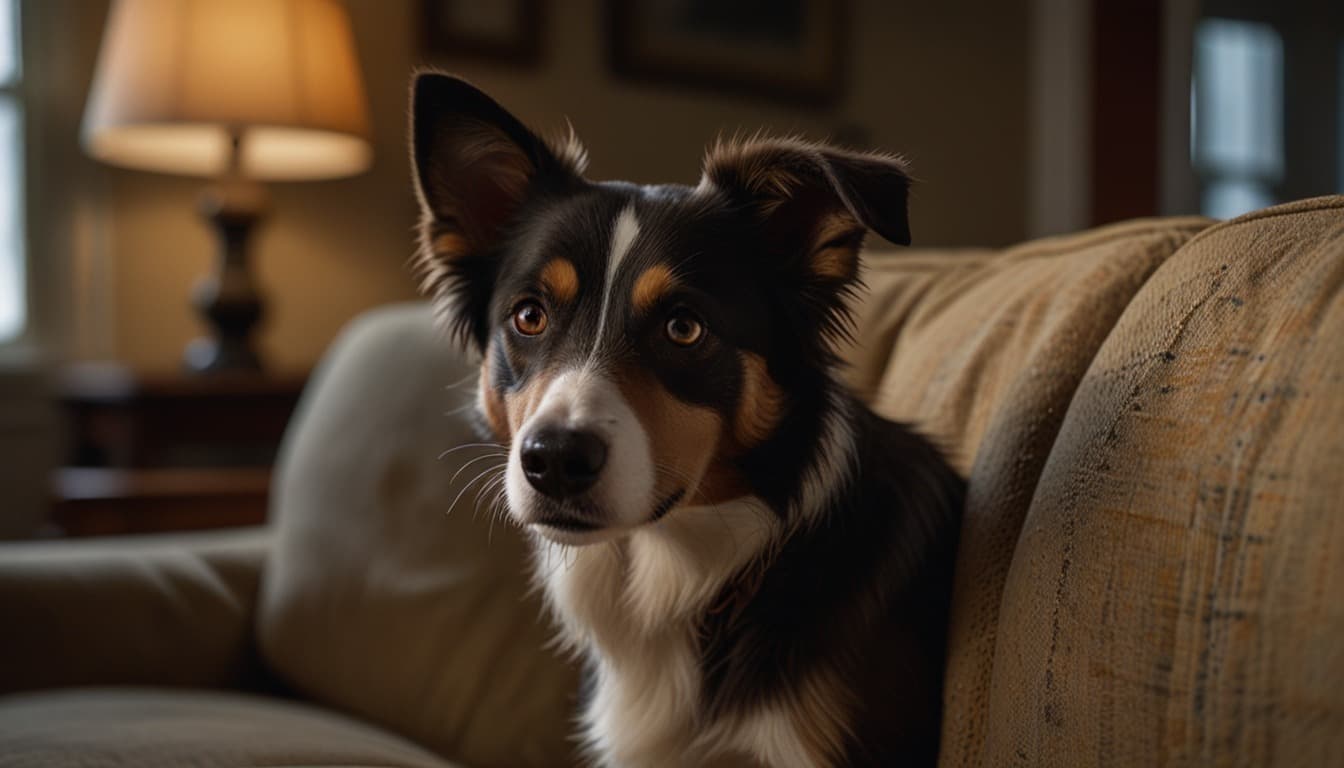
The first time I met Mac, he was a 45-pound border collie mix pressed so flat against the back of a shelter kennel that I thought he'd somehow fused with the cinderblock. The shelter staff had written “SHY” on his intake card in Sharpie. That's it. One word. I'd been doing this long enough to know that “SHY” in shelter shorthand means “this dog is going to break your damn heart.”
And he did. For six weeks, Mac lived behind my couch. Not on it, not next to it — behind it, wedged between the wall and the backrest in a space so tight I still don't understand how he fit. He'd come out at 3am to eat a few bites of kibble and pee on the puppy pad I'd set up three feet away (the pad he'd managed to shred into confetti the first night because apparently it was threatening). Then he'd scuttle back to his crevice like a crab. During the day, if I so much as shifted in my chair, I'd hear his nails scramble on the laminate and then silence. He'd stopped breathing until I settled again.
I've fostered over 40 dogs and cats. I've worked in a shelter for six years. I've seen shut-down dogs before. But Mac was different — the kind of fear that felt deep in his bones, not just a bad few months. And I made every mistake in the book trying to fix it. Here's what I wish I'd known from the start, plus the one stupid-simple thing that finally worked.
The $40 Thunder Jacket That Made Everything Worse
Actual text I sent my friend Nina at 11pm on Day 3: “Just bought that compression wrap thing everyone raves about. He's wearing it. He's also vibrating like a phone on silent and won't look at me. Progress?”
Spoiler: it wasn't progress. I'd wrapped Mac in a snug, lavender-scented thunder jacket I'd picked up at the pet store because some Reddit thread (read at 2am while stress-eating pretzels) convinced me it would solve everything. The theory made sense — gentle pressure, calming signals — but nobody mentioned that a dog who's never been handled positively might interpret “being Velcroed into a vest” as “I'm being restrained by a predator.” Mac stood frozen for forty-five minutes, pupils blown wide, a single bead of drool forming at the corner of his mouth but never falling. I took the jacket off and he slunk back to his crevice and didn't come out for fourteen hours.
This is the thing about products for scared dogs: they're not magic, and they can backfire spectacularly if you skip the part where the dog actually consents to wearing them. I should've known better. At the shelter, I saw people return expensive calming beds because the dog chose to sleep on the cold tile instead. The bed wasn't the problem. The dog's brain was screaming danger, and a fancy foam mattress wasn't going to shout louder than that.
What I bought (and what was useless)
Here's the list of things I tried in those first two weeks, with the desperation of someone who'd googled “how to make a dog love you immediately” at least six times:
- Thunder jacket: $40, made him freeze so hard I thought he'd turned into a statue. 0/10.
- Calming pheromone diffuser: $35, plugged in two feet from his hiding spot. No observable effect. Might as well have been a Glade plugin.
- Rescue Remedy drops: $18, adedd to his water. He didn't drink the water. He didn't drink anything I put near him. So that was a bust.
- Classical music playlist “for anxious dogs”: Free on YouTube, but he'd start panting whenever the cellos came in. Maybe he was a strict bluegrass fan.
- High-value treats (freeze-dried liver, hot dog bits, cheese): $22, all of which sat on the floor untouched and eventually crumbled into a greasy smear that my own dogs desperately wanted to clean up.
Total wasted: about $115, plus my dignity and several hours of sleep. I'm not sauing these products never work. I'm saying that when a dog's fear is deep enough, none of this stuff matters until you address the one thing that actually needs fixing first: trust. And you can't buy trist in a spray bottle.
What I Wish Someone Had Told Me When I Brought My First build Home
I got into fostering because I thought it'd be easy. I'd worked at a shelter. I knew dogs. I'd have them for a few weeks, teach them to sit, find them a family, repeat. The first dog I took home was a scrawny pit bull named Lulu who wagged her whole body when she saw a leash. She was a dream. The second dog was Mac, and he shattered every assumptipn I had about what a “good build” looks like.
The mistake I kept making — and I see this constantly in new build homes, in well-meaning adopters, in people who just brought a scared dog home and are panicking — was treating the dog's fear like a project. Like if I just found the right technique, the right food, the right words, I could fix him. I'd sit on the floor beside his hiding spot and talk softly. I'd leave treats in a trail leading toward me. I'd lie on my stomach to look small. I was trying so damn hard to prove I was safe that I was actually being incredibly intrusive.
Let me say that again because it took me weeks to learn: trying to prove you're safe can be the very thing that makes you unsafe.
A scared dog doesn't need you to be a therapist. They need you to be furniture. They need you to eixst in the same space without expectation, without pressure, without even looking at them. That feels counterintuitive and kind of awful. You want them to know you love them. You want them to feel better. But love and attention, to a terrified dog, are just more threats — more things they've to monitor, more potential for something scary to happen.
I had to learn to ignore him. Completely. For days. I walked through the living room like he didn't exist. I put his food down without making eye contact. I watched Netflix with headphones on so the noise wouldn't be directed at him. I didn't talk to him. I didn't reach toward him. I became the least interesting, least threatening mammal in the house.
This was the hardest thing I've ever done in rescue. Harder than the euthanasoas. Harder than the dogs who bit me. Harder than cleaning kennels at 6am with a hangover. Because it felt wrong. It felt like neglect. My brain was screaming DO SOMETHING every hour of the day. But doing something was exactly what was keeping him stuck.
The Sciencey Stuff: Cortisol and Why Your Dog Can't “Calm Down” on Command
Okay, I dropped out of vet tech school but I do rememmber some things about stress physiology, mostly because I had a professor who made us draw the HPA axis on napkins until we dreamed about it. Here's the super-simplified version that matters for this conversation:
When a dog perceives a threat — a loud noise, a stranger's hand reaching toward them, even just the existence of a person nearby if they've been traumatized — their brain triggers a cascade of hormones. Adrenaline surges in seconds. Cortisol follows, rising over minutes and staying elevated for hours. Cortisol isn't a fast-on, fast-off system. It's the body's “this situation might require sustained vigilance” signal, and it lingers like uninvited party guests.
Here's what nobody tells you abput cortisol in scared dogs: it takes 2-6 days for cortisol levels to return to baseline after a major stress event. Two to six days. If the dog gets spooked again during that window — which, lets' be honest, happens constantly in a new home — the cortisol never comes down. They stay in a state of low-grade panic that builds on itself like compound interest.
This is why “just give him a treat and he'll see you're nice” doesn't work. His brain isn't in learning mode. It's in survival mode. You could be holding a literal steak and all his amydala registers is BIG PREDATOR HOLDING UNKNOWN OBJECT NEAR FACE. Nothing you do during a cortisol spike is going to create a positive association. The best you can do isn't make things worse while the chemistry subsides.
I see this pattern constantly in dogs who've been in the shelter system for months, or in puppy mill survivors who've never known kindness. Their baseline is already so jacked up that a new person entering the room is enough to send them over threshold. They're not being difficult. They're being physiological. You can't argue with that.
How long does it actually take?
I want to give you a realistic timeline because the internet is full of “day 3 he was cuddling on the couch!” stories that make eberyone else feel like a failure. For dogs with mild fear — maybe they're just a little nervous around new people — you can see genuine progress in a week or two. For dogs like Mac, who had been through God knows what before he got to the shelter (his intake records were basically blank, which is its own kind of ominous), you're looking at months, not weeks.
Mac didn't take a treat from my hand for eleven days. He didn't let me touch him for twenty-three days. He didn't seek me out voluntarily — not for food, not for anything — for forty-three days. That's six weeks of me being a ghost in my own apartment while this smll, terrified creature slowly decided I might not murder him.
The timeline varies wildly. What's important is that you stop watching the clock. I know it's brual. I cried at least three times during that first month, including once when I was eating cereal at the kitchen counter and Mac shifted an inch toward the gap in the couch and I felt like I'd won the Nobel Prize. The progress is microscopic. you've to learn to see it.
The One Thing I Did That Actually Worked (And Why It Felt Wrong)
If I had to boil down the entire six-week ordeeal into one piece of actionable advice, it's this: exist near the dog without ever initiating interaction.
Every day, I'd come into the living room — the room Mac had claimed as his terror den — and I'd sit on the floor about eight feet from the couch. Not facing him. Facing the TV or a wall or a book. I'd bring a mug of tea and just… sit. For twenty minutes. Then I'd get up and leave. I did this three or four times a day, at roughly the same times, like feeding a nervous stray cat. I didn't look at him. I didn't speak to him. I didn't put out a treat or a toy. I just existed in his space without being a threat.
This technique has a name — it's called passive socialization — and it's simultaneously the simplest and most emotionally draining thing I've ever done. It's simple because you literally do nothing. It's draining because every fiber of your being wants to do something. You want to see progress. You want the dog to love you. You want this to be over. But the dog doesn't owe you progress. The dog owes you nothing.
By the second week, Mac had stopped holding his breath when I sat down. By the third week, he'd started peeking around the edge of the couch to watch me. Not moving. Not approaching. Just… watching. And here's the critical part: I didn't react. I didn't make eye contact or smile or say “good boy.” Because any reaction from me was still pressure. It was still me inserting myself into his experience. I just let him look.
The day he finally crawled out from behind the couch — forty-three days in — he didn't come to me. He went to the opposite corner of the rooom, lay down facing the door, and fell asleep. Not near me. Not touching me. Just… in the same room. Voluntarily. Unprompted. I cried into my tea.
Why this goes against every instinct
We're conditioned to think we need to “help” scared dogs by soothing them. Pet them. Talk to them. Offer them things. But from the dog's perspective, all of that's more social pressure, more stimuli, more risk. A truly terrified animal needs one thing above all else: safety. And safety isnt' provided by affection. Safety is provided by predictability and the absence of threat.
Every time you approach a scared dog, even with kindness, you're forcing them to make a decision: fight, flee, or freeze. You're forcing them to interact with you, even if that interaction is just cowering. That's exhaudting. That's the opposite of safety. Letting them exist completely unbothered — that's rest. That's where healing starts.
I had a mentor at the shelter, a veteran kennel worker named Tammy who'd been there 22 years and had seen it all. She once told me, “If you want a scared dog to trust you, be the most boring thing in the room. Be the wall. Be the chair. Nobody makes eye contact with the chair.” It sounded ridiculous at the time. It's now the truest thing I know about working with fearful animals.
My Neighbor's Dog Who Wouldn't Stop Shaking
sidetrack time. Last year my neighbor Denise adopted a little white terrier mix from a hoarding case — 47 dogs pulled from a single trailer. This dog, Potato (real name, I've it on good authority), shook so constantly that you could see her trembling from across the street. Denise asked me what to do, and I told her about passive socialization and not pushing. She nodded and said “okay” and then I watched her spend the next three months doing almost none of it.
She bought a thundershirt. She tried CBD treats. She bought a calming bed shaped like a donut. She'd crouch down and coax Potato with a baby voice every time the dog looked vaguely in her direction. Potato's shaking got worse. She started hiding under the bathroom sink. Denise was heartbroken because she was trying so hard and nothing was working.
What Denise didn't realize — and I didn't adequately explain — is that every time she crouched and baby-talked, she was drawing attention to herself at exactly the moment the dog was starting to self-regulate. Potato would tentatively take a step toward the living room, and Denise would immediately “reward” her with excited attention. But Potato wasn't looking for a reward — she was inching toward safety on her own terms. The interruption spooked her, so she retreated.
This is a mistake I've made dozens of times myself. It's natural. But it's wrong. When the dog finally makes a brave move, your job is to pretend you didn't notice. Let them have that independence. That autonomy is the whole point.
Denise eventually got it. She backed off completely for two weeks — no coaxing, no baby talk, no treats beyond what she quietly placed near Potato's hiding spot and then ignored. And within those two weeks, Potato started sleeping in the dog bed next to Denise's desk while she worked. Not touching. Just… nearby. That was the start of everything.
A Note About “Just Give Them Time” Advice
I want to rant about this for a second because it's one of those phrases that well-meaning poeple toss out and it actually makes everything worse. When you're on week three of a dog who hasn't let you touch them, and someone says “just give them time,” it feels dismissive. It feels like they're saying your panic is unwarranted. But the real problem with “just give them time” is that it implies time alone is sufficient — that you can keep approaching the dog, keep trying to pet them, keep thrusting treats at their face, and eventually the clock will run out and they'll magically be fine.
That's not how it works. Time only helps if you're using it correctly. If you're re-traumatizing the dog daily with your good intentions, all that time is doing is deepening the grooves of their fear. So yes, it takes time. But it also takes the right kind of nothing. The kind of nothing that doesn't put prsesure on them. That's the distinction that changes everything.
What to Do When You've Tried Everyhing and the Dog Is Still a Mess
Okay, let's say you've been doing the whole passive thing for weeks or even months. You've stopped pushing. You've given them space. You've ignored them so hard you forgot what color their eyes are. And the dog is still terrified. They're still hiding. They're still shaking. They're still peeing every time a car backfires two blocks away.
First, take a deep breath. This is more common than anyone admits. Social media is full of triumph stories; nobody posts the 2am breakdowns. I've had build dogs who never fully came around during their time with me, and it's not always a failure. Some dogs need more than a build home can provide. Some need medication. Some need a level of stability I couldn't give as a single person with three resident dogs and a shifting cast of fosters.
Here's the path I'd recommend if you're stuck:
- Get a full vet workup. Pain can mimic fear. A dog with a bad tooth or arthritis or a brewing infection might appear anxious because they feel unsafe in their own body. I've seen dogs who were labeled “fearful” turn out to have hip dysplasia so severe they couldn't sit without hurting. The anxiety was seocndary. Fix the pain, and some of the behavior melts away.
- Talk to a veterinary behaviorist, not just a trainer. I'm not anti-trainer — I know some incredible ones. But a scared dog isn't an obedience problem. It's a mental health problem. A board-certified veterinary behaviorist (DACVB) can assess whether medication might help, and they can create a behavior modification plan that goes way beyond what most trainers are qualified to offer. Yes, it's expensive. So is replacing your chewed-up drywall and your frayed sanity.
- Consider medication seriously. Look, I used to be weird about this. I thought meds were “giving up” or “drugging the dog.” Then I watched a greyhound on fluoxetine go from trembling in a corner to actually wagging her tail when she saw a leash. The meds didn't make her a zomvie — they brought her baseline low enough that she could learn. That's the key. Medication isn't meant to erase the dog's personality; it's meant to make learning possible. If the dog's brain is so flooded with cortisol that they can't process anything new, no amount of passive sitting is going to stick.
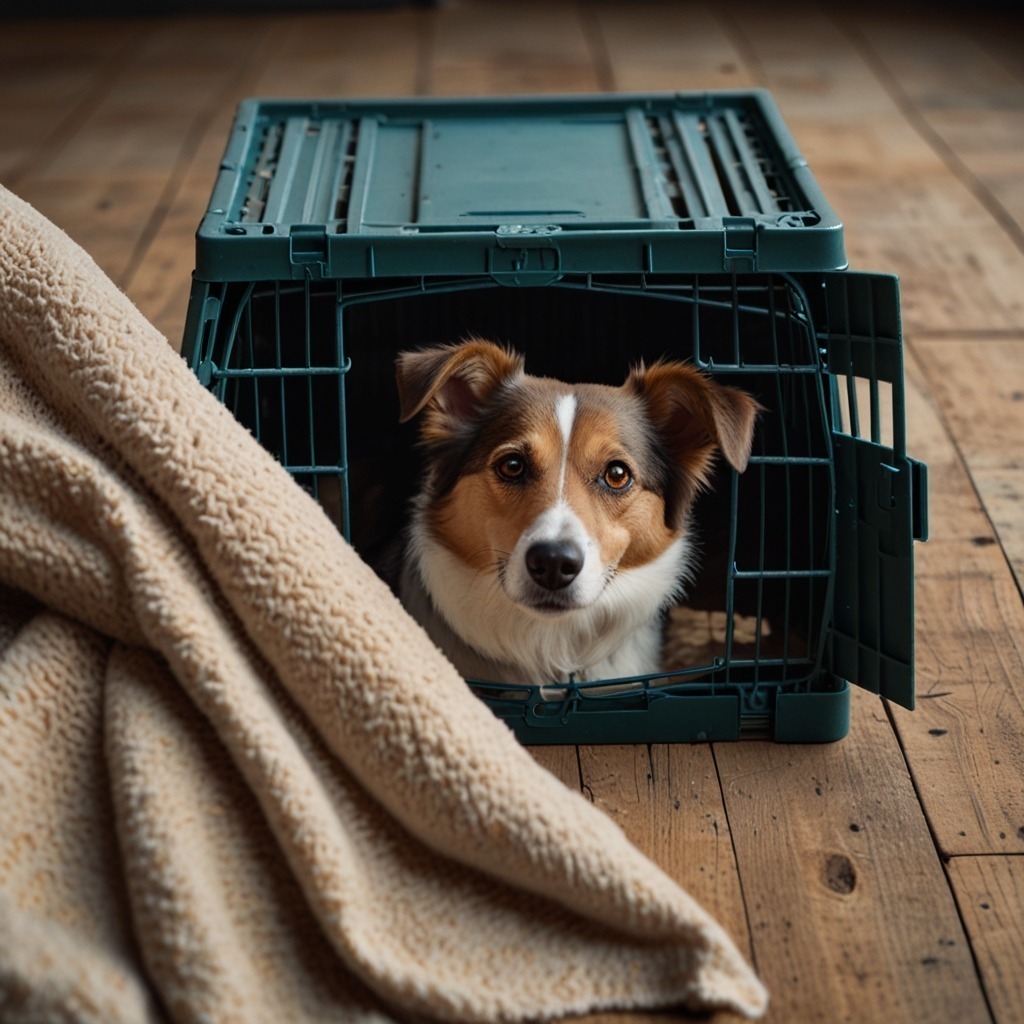
- Build their world small and predictable. For dogs who are scared of everything, a whole house is overwhelming. A single room is better. A crate with the door open and a sheet draped over the top can be a sanctuary. I always keep a crate available for my fosters — not as a punishment, but as a “no one will bother you here” zone. I wrote about the crate mistake I made with my own dog years ago over in that saga, but for a scared build, a prroperly-sized crate is a godsend.
- Lower your expectations all the way to the floor. I mean this gently. The goal isn't “the dog loves me and wants to cuddle.” The goal is “the dog feels safe enough to exist in the same house.” That's it. If you get there, yoi've already won. Everything after that's gravy.
I also want to mention something I rarely see in these discussions: sometimes the kindest thing is to let a professional take over. I'm not talking about dumping the dog at a shelter. I'm talking about honestly assessing whether your home environment is the right fit. If you live in a small apartment with thin walls and a neighbor who practices drums, and your dog is terrified of noise, that dog might do better in a quiet suburban build with a fenced yard. That's not failure. That's stewardship. I've transferred fosters to other homes three times, and all three dogs thrived.
The Role of Routine (And Why I Hate Routines But They Work)
I'm not a routine person. My internal clock is approximate at best. I eat dinner at wildly different times. I go to bed when I'm tired. But scared dogs crave predictability the way I crave coffee in the morning — it's not optional, it's structural. A predictable routine tells them: this is what will happen. Nothign unexpected. You can relax.
With Mac, I started feeding him at exaxtly the same times every day. 7am and 5pm, on the dot. I'd place the bowl in the same spot, walk away, and not look back. I'd take my own dogs out on a walk at 8am and 6pm (Mac was still too scared to go outside, so I just let him adjust). I'd do my passive sitting sessions at 10am, 2pm, and 8pm — not because those times were magical, but because he began to anticipate the pattern. Predictability is a form of safety.
One thing I accidentally did right: I put my pajamas on at 9pm every night and made a big, obvious producton of it — turning off the main lights, clicking on a lamp, making tea, settling onto the couch with my laptop. Mac started to associate this nighttime ritual with the most peaceful part of his day. After a few weeks, he'd emerge from behind the couch at exactly 9:15pm — not to interact, just to lie in the middle of the room while I typed. That was his version of a social life.
A Stry That's Only Loosely Related About My Own Anxiety
I've generalized anxiety disorder. I've had it my whole adult life, and it's made me intimately familiar with what a cortisol spike feels like from the inside. When I'm mid-panic, logic doesn't work. Someone telling me “you're fine” just adds shame on top of the terror. Someone touching me — even with kindness — makes my skin crawl. The only thing that helps is being alone in a quiet, predictable place until the wave passes.
I think about this a lot when I'm working with scared dogs. I'm not anthropomorphizing them — I'm recognizing that the sympathetic nervous system works similarly across mammals. Fear is fear. The feeling of being watched while you're vulnerable is universal. When I remember what it feels like to be on the receiving end of well-meaning but overwhelming attention, it gets easier to back off and give the dog space. I'm not being cold. I'm being the kind of person I need when I'm scared: someone who isn't asking for anything.
This is a tangent, I know. But if you're someone who struggles with anxiety yourself, you might find that working with scared dogs teaches you something about your own nervous system. It's taught me that pushing through fear is rarely the answer — that safety usually comes from stillness, not effort. I didn't expect to get life lessons from a border collie mix wedged behind my couch, but here we're.
When Mac Finally Chose the Couch Over the Closet
I wish I could tell you there was one magic moment where everything changed. There wssn't. It was a slow, uneven accumulation of tiny victories that I almost missed because I was too busy worrying about the next step.
There was the day he ate a piece of kibble while I was in the room instead of waiting until I left. The day he stopped flinching when I coughed. The day I woke up and found him asleep on the dog bed I'd placed six weeks earlier — the one he'd refused to even sniff. The day he walked past me to drink water from the bowl near my desk, and his tail gave a single, tentative wag.
But the moment that stuck with me was about four months in. I was watching TV on the couch — the same couch that had been his fortress — and Mac walked in from the other room, jumped up onto the opposite end, circled twice, and lay down. Not against me. Not touching. But on the same surface. Voluntarily. He fell asleep within minutes, his paws twitching, dreaming about whatever dogs who've finally felt safe enough to dream about.
I didn't move. I barely breathed. But I smiled so hard my face hurt.
He'd done it. Not because I'd bought the right product or said the right words, but because I'd given him the one thing he needed most: the freefom to not have to interact with me. The freedom to be afraid without judgment. The freedom to heal on his own timeline, which turned out to be much longer than mine, and entirely worth the wait.