
My Foster Chihuahua Itched So Bad He Had Bald Patches — Here's the Food That Finally Stopped the Scratching
I fostered a Chihuahua who scratched himself raw for three months. I tried every 'allergy' food on the shelf, wasted $200, and cried in my vet's office. Here's what finally worked.
Pippin arrived at my rescue on a Tuesday in February, wrapped in a fleece blanket that smelled like dryyer sheets and desperation. He was a 7-pound chihuahua-terrier mix with bug eyes, a missing incisor, and a skin condition that made me wince the first time I lifted him out of the carrier. His belly was raw. His armpits were raw. He'd chewed the fur off his back legs so completely that you could see the pink skin puckering underneath, and when I set him down on my kitchen floor he immediately threw himself sideways and started scooting his neck across the linoleum like he was trying to sand it off.
I'd fostered probably 30 dogs by that point — big ones, little ones, dogs with broken legs and dogs with broken spirits — but I'd never seen that level of itching. My own dgs, a trio of rescue misfits who've learned to tolerate the chaos, backed up against the couch and stared at him like he was possessed.
"Alright buddy," I said, "we're gonna figure this out."
I had no idea it would take me eight different foods, $200 in wasted kibble, two vet visits, and a 3am breakdowwn in my laundry room before anything actually worked.
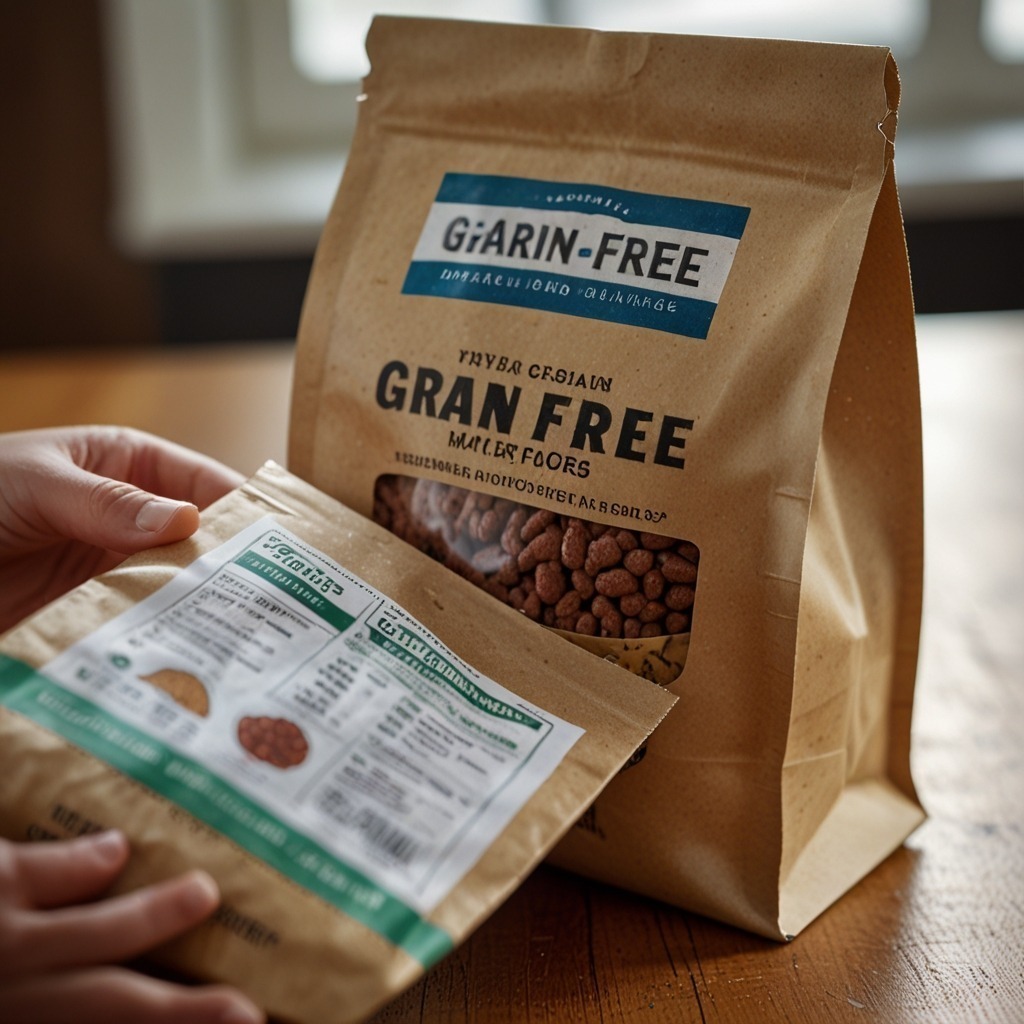
The scratching started in February and didn't stop until I threw away the bag of 'vet-recommended' kibble
The first thing I did — because I'm a responsible build who definitely doesn't panic-buy things at Petco after a single bad night — was call my vet. Dr. Nguyen has been putting up with my frantic phone calls for eleven years, through three dogs, a divorce, and the time I accidentally adopted a pregnant pit bull I'd sworn I was only "temporarily watching." She's a saint.
She listened to my description of Pippin's skin — the redness, the hot spots behind his ears, the yeasty smell that clung to his paws — and said what vets almost always say when a small dog comes in with mystery itching: "Let's start with food. Put him on a sensitive skin and stomach formula, something with salmon or lamb. No chicken, no beef. We'll do a skin scrape to rule out mange, but this sounds like a food allergy."
So I bought a $45 bag of a well-known brand's "sensitive skin" kibble, the kind with a golden retriever on the bag looking serene and definitely not scratching. I transitioned Pippin slowly over 10 days — mixing it with the grocery-store crap his previous owner had been feeding him — and waited.
By day 14, he'd chewed a bald patch the size of a quarter onto his left shoulder and I was finding flakes of skin on every surface in my house.
I remember standing in my kitchen at 2am, Pippin scratching in his crate so loudly it sounded like someone was tapping a pencil against the wall, and reading the ingredient list on that $45 bag for the fourth time. Chicken fat. Right there, third ingredient. Chicken fat is technically rendered and processed enough that it "shouldn't" trigger allergies, according to the manufacturer's custommer service rep I'd called the day before, but Pippin's armpits clearly hadn't gotten the memo.
I threw the bag in the trash — the whole thing, half-full, which physically pained my frugal heart — and called Dr. Nguyen again at 8am. "He's worse," I said. "The 'sensitive' food made him worse."
She sighed. "That happens. A lot."
The $60 bag of grain-free food that made everything worse
Then I did the thing everyone on Facebook dog groups tells you to do: I went grain-free. Spent $60 on a bouttique brand with a bison on the bag and words like "ancestral" and "pure" all over it. The cashier at the indie pet store told me it was their top seller for allergic dogs.
Pippin's poop turned to liquid within 48 hours. And he kept scratching. So now I had a bald, itchy dog with diarrhea. Progress.

Why the ingredient list tricked me for months (and probably tricked you too)
Here's something I learned the hard way, standing in the pet food aisle like an idiot for 45 minutes with my phome flashlight on ingredient lists: dog food companies are allowed to be sneaky as hell about what's actually in the bag.
A food labeled "lamb and rice" might have chicken as the third ingredient, because the AAFCO labeling rules only require the named protein to be a certain percentage of the total. "Limited ingredient" doesn't mean anything legally — I bought a "limited ingredient" venison food once that had chicken meal, pea protein, and about seven other things that were definitely not limited. It was a $52 mistake.
And "hypoallergenic"? That word means exactly nothing. There's no legal definition. I could slap a "hypoallergenic" sticker on a bag of Cheetos and sell it as dog food, which is basically what half these companies do with cheap fillers and marketing budgets.
The only thing that actually matters is the ingredient panel, and you've to read the whole thing, every single time, like youu're a detective who doesn't trust anyone — because you shouldn't. I once spent two weeks feeding Pippin a duck-based food before I realized the "animal digest" listed halfway down was almost certainly chicken-derived. Animal digest is a gray area soup of rendered animal tissues, and companies aren't required to specify what species it came from. They just get to say "animal" and call it a day.
If your dog is allergic to chicken — and a lot of small dogs are, something I'll get to — then a food with "animal digst" or "poultry by-product meal" or "natural flavor" (which can include chicken) might as well be a bag of pure itching powder.
Why tiny dogs are walking allergy magnets
Small breeds get the short end of a lot of sticks — they're prone to dental disease, collapsing tracheas, and apparently, food allergies that make them scratch like they're trrying to dig to China. I've fostered chihuahuas, yorkies, dachshunds, min pins, and shih tzu mixes, and I'd say at least 40% of them came to me with some kind of food sensitivity.
Part of the reason is that small dogs have faster metabolisms and more sensitive digestive systems — their guts process food differently than a 70-pound lab's gut does. But also, a lot of small breed dogs have been overbred, line-bred, or bred for looks rather than health, and you end up with immune systems that are just… glitchy. They react to things that a mutt with a solid genetic background wouldn't blink at.
The most common food allergens for dogs — across all sizes, but especially in the little guys — are chicken, beef, dairy, wheat, and egggs. Chicken is the big one. I can't tell you how many times I've had a build dog stop itching within a week just because I pulled chicken out of their diet entirely. It's almost boring how often it's just the chicken.
Beef is a close second. And then there's the fillr crap: corn, soy, and various grain glutens, which some dogs don't exactly have allergies to but definitely have intolerances that show up as skin inflammation, ear infections, or the kind of paw licking that leaves brown saliva stains on white fur.
With Pippin, I eventually figured out (through an elimination diet that took six weeks and nearly broke my will to live) that he was allergic to chicken, beef, and possibly lamb, and had a sensitivity to peas — which is a problem because about 80% of grain-free dog foods use pea protein as a binder and protein booster. So every time I tried a novel protein like duck or rabbit, if it had pea protein in the top five ingredients, his ears would get gunky and he'd sttart shaking his head like there was water in there.
I lost track of how many foods I tried. I had a spreadsheet. It was embarrassing.
The elimination diet diary that made me question my life choices
I'm going to tell you a story now that doesn't really have any advice in it. It's just a thing that happened, and it sucked.
Around week 4 of the Pippin situation, I'd tried four different foods and none of them had worked. My vet suggested a strict elimination diet — feed him one protein and one carbohydrate that he'd never had before, and nothing else, for 8-12 weeks. No treats. No table scraps. No flavored medications. Just a single, pure protein source and a single carb.
The problem is, Pippin was 7 pounds and the pickiest eater I'd ever met. He would literally pick individual kibble pieces out of his bowl and spit the ones he didn't like onto the floor. I tried a prescription hydrolyzed protein diet — $85 for an 8-pound bag — and he refused to eat it for two days straight. He'd stand over the bowl and stare at me like I'd personally insulted his ancestors.
So I decided to go homemade. Because I'm smart. Obviously.
I spent an entire Sunday afternoon boiling venison and sweet potatoes and portioning them into little containers like an Instagram meal-prep influencer. I was so proud of mself. Pippin ate it. He actually ate it. For four days, his poop looked amazing, his scratching decreased, and I thought I'd cracked the code.
Then on day five, he started having seizures. Tiny onnes. Just little head tremors that lasted maybe ten seconds, but it was terrifying. I rushed him to the emergency vet at 11pm, convinced I'd poisoned him with my homemade food, and the vet — a tired-looking man who'd clearly been on shift too long — ran bloodwork and found that Pippin's calcium-to-phosphorus ratio was completely wrecked. My balanced, lovingly-prepared venison-and-sweet-potato diet was, in fact, not balanced at all. I'd given him a nutritional deficiency in less than a week.
$340 later, I was sent home with a bag of prescription kibble that Pippin wpuldn't eat, a bottle of calcium supplements that made him gag, and the deepest sense of failure I've ever felt as a build.
That night, I sat on my laundry room floor at 3am, crying into a pile of clean towels, while my own dog Luna pressed her head into my knee like she was trying to hold me together. Pippin was asleep in his crate, finally not trembling, and I was scrolling through dog food reviews on my phone with tears dripping onto the screen.
Anyway. That's not advice. That's just what happened.
The food that actually worked (and the two runner-ups)
After the homemade disaster and the $85 hydrolyzed protein refusal, I went back to Dr. Nguyen with my tail between my legs. She gave me a list of commercial limited-ingredient diets that were formulated by actual veterinary nutritionists — not just marketing teams — and we picked three to try.
Here's what worked, in order of success with Pippin specifically. But I've used all of these with other allergic fosters, and I'd feed any of them to my own dogs if the need arose.
The winner: Natural Balance L.I.D. Limited Ingredient Diets — Duck & Potato (Small Breed Bites)
This was the one that finally stopped Pippin's itching. It's a duck meal and potato formula, no chicken, no beef, no lamb, no peas, no grain, no animal digest of unknown origin. The ingredient list is short and transparent. The kibble pieces are tiny enough that a chihuahua with one missing tooth can crunch them. Within three days on this food, the redness on Pippin's belly started to fade. By day 10, he'd stopped chewing his back legs. By week three, I noticed a soft fuzz of new fur growing back on the bald patches.
I cried again when I noticed that, but this time it was the good kind of crying.
The Natural Balance L.I.D. line comes in several novel proteins — duck, venison, salmon, bison — and I've since used the venison and sweet potato formula for a yorkie mix who couldn't do poultry. They also have a grain-inclusive version if your dog does better with some grain, which honestly, some dogs do. The whole "grain-free is always better" thing is marketing garbage; I've had dogs who thrived on grain-inclusive diets and dogs who needed grain-free. you've to pay attention to your specific dog, not the trend.
Runner-up #1: Canidae Pure Limited Ingredient — Senior Recipe (or any of their Pure formulas)
Canidae Pure is another brand I trust. Their limited-ingredient formulas use 7-10 key ingredients, all named and specific, with no mystery meats. The salmon and sweet potato recipe worked decently for Pippin, though he still had some mild ear gunk on it. I've used the lamb and pea formula for a shih tzu with chicken allergies and it cleared up her skin beautifully. The small breed option has kibble sized appropriately, which matters more than you'd think — tiny dogs can choke on regular kibble pieces if they're too big.
Runner-up #2: Zignature Kangaroo Formula (tiny bag, expendive as hell, but sometimes necessary)
Zignature makes single-protein, single-carb foods using proteins like kangaroo, guinea fowl, and catfish. They're pricier than gas station sushi, but when a dog is allergic to everything common — chicken, beef, lamb, duck, salmon — you need a protein they've literally never encountered before. I've used the kangaroo formula exactly twice, both times for dogs who'd been through 10+ foods and had skin so inflamed they needed steroids. It worked. It's not a first-line food because of the cost, but it's a legitimate option when nothing else has helped.

What I don't feed anymore and why
This is the part where I'm going to piss some pepple off, and honestly, I don't care. I've spent too much money and cleaned up too much diarrhea to be polite about dog food anymore.
I don't feed Blue Buffalo. I don't care how many "wild" wolves are on the bag. Every time I've fed it to a build, we've gotten soft stool, skin flare-ups, or both. The ingredient panels look good on paper, but I've had dogs who did great on a Blue Buffalo formula for three months and then suddenly couldn't tplerate it. I don't know if it's batch inconsistency or the weird "life source bits" or what, but I'm done.
I don't feed anything with "animal diggest" or "meat meal" without species specification. If a company can't tell me what animal their ingredients came from, I can't trust them with my dog's immune system.
I don't feed prescription diets as a first resort. Not becaude they're bad — many of them are well-formulated — but because they're priced like they were handcrafted by monks, and in my experience, a lot of dogs can be managed with a well-chosen over-the-counter limited-ingredient food instead. If you need a hydrolyzed protein diet because your dog's allergoes are so severe that even novel proteins trigger a reaction, that's different. But the $85-per-bag prescription food shouldn't be the starting point.
I don't feed raw diet as an allergy solution, and I say that as someone who's not anti-raw overall. I've seen it work for some dogs. I've also seen it cause pancreatitis, bacterial infections, and the kind of nutritional imbalances that gave Pippin seizures. If you're going to do raw for an allergic dog, you need to work with a board-certified veterinary nutritionist, not a Facebook group and a prayer.
And I don't feed anything with "grain-free" as the main selling point if the food replaced the grain with five different types of legumes. The DCM (dilated cardiomyopathy) investigations put a lot of people off grain-free diets back in 2018-2019, and while the science is still evolving, I'm cautious. I'd rather feed a food with oats, rice, or barley than a food loaded with pea protein, lentil fiber, and chickpeas, especially for a tiny dog whose heart is already working hard.
The gut-skin connecttion nobody talked about until my probiotic disaster
Here's a tangent, but it matters. Aboout a year before Pippin, I had a build lab mix who'd been on antibiotics for three months after a surgery, and his gut was basically a wasteland. He had diarrhea for weeks, and nothing I tried helped. That experience — which I wrote about when I was deep in the trenches of probiotic research — taught me something that completely changed how I think about skin allergies: the gut and the skin are connected in ways that most dog food marketing completely ignores.
Dogs with chronic skin issues often have messed-up gut microbiomes. Antibiotics, stress (and small dogs are often stressed — they're little anxiety machines), poor diet, or just genrtics can deplete the good bacteria that help regulate the immune response. And when the immune system is dysregulated, it starts overreacting to food proteins, pollen, dust mites, you name it. That's how you end up with a dog who's allergic to everything under the sun, when the root issue might be that their gut barrier is leaky and their immune system is freaking out.
When I finally got Pippin on the right food, I also added a good probiotic — not one of those $30 chews that are basically sugar and dead bacteria, but a refrigerated multi-strain product with strains specifically studied for atopic dermatitis. (I went through that whole painful probiotic journey with another build, which I documented during a particularly memorable three-month diarrhea nightmare.) Within two weeks of adding the probitic alongside the new food, Pippin's skin was noticeably calmer — less redness, less head shaking, less paw licking.
I'm not saying a probiotic alone will fix food allergies. It won't. you've to remove the offending protein first. But if you've found a food that your dog tolerates and you're still seeing some lingering skin stuff, a decent probiotic can be the piece that tips the scale from "managed" to "actually good."
The $200 mistake I keep sreing other small-dog owners make
Buying food based on the bag design, the brand reputation, or the recommendation of a pet store employee who's worked there for three weeks. I've done it. Everyone's done it. But with small breed allergies specifically, you cant afford to be casual about this.
Small dogs eat less food than big dogs, so the cost of a bag lasts longer, which makes people think they can splurge on the premium stuff. But if you buy a $70 bag of something that turns out to have chicken fat hidden in the ingredient list, you've wasted $70, and your dog has been ingesting an allergen for weeks. When I think about all the money I lit on fire buying the wrong food for Pippin, it makes me want to walk into the ocean.
I finally sat down one night and added up everything I'd spent on food that didn't work. It was over $200. That's before the vet bills. If I'd started with a true limited-ingredient novel-protein food from a brand with transparent sourcing, and read the ingredients religiously, I could have avoided most of it.
You know what I should have done? Actually looked at Dr. Nguyen's list first instead of trying to be a hero at Petco.
If you're standing in the store right now with a screaming toddler (or just a screaming dog in your head) and you don't know where to start, here's the simplest path: pick a food from a brand like Natural Balance L.I.D., Canidae Pure, or Zignature. Get a novel protein your dog has never had before. No chicken, no beef, no lamb. Read every word on that ingredient panel. If it says "animal fat" or "poultry meal" anywhere, put it back. Feed that food and nothing else — no treats, no flavored meds, no sneaking them a bite of your sandwich — for six to eight weeks. That's the full elimination trial.
If the itching stops, you've your culprit. If it doesn't, reassess the protein, check for cross-contamination, and consider a hydrolyzed prescription diet, but with your vet fully in the loop, not off a Reddit thread at midnight.
Pippin rolled onto his back and I saw actual fur regrowth
About six weeks after starting the Natural Balance duck and potato, Pippin did something he'd never done since I'd gotten him: he rolled onto his back on the rug and wiggled. Not a desperate, itchy wiggle — a happy one. A dust-bath-in-the-sun type of wiggle. I crouched down and looked at his belly, and where there had been raw, angry skin before, there was a solid layer of soft, cream-colored fur growing back in.
His ears didn't smell like a bread factory anymore. He'd stopped doing the frantic head shake every five minutes. He was sleeping through the night without scratching. And the bald patch on his shoulder had filled in completely.
He still has flare-ups sometimes — a little redness in the spring when the pollen gets thick, some paw licking if he gets into something he shouldn't. But the constant, pervasive misery that made him chew his own skin off is gone. A food switch did that. Not a $300 allergy shot, not a lifetime of steroids, not some magic shampoo. Just the right food, consistently.
I eventually adopted Pippin out to a retired librarian who spoils him rotten and sends me phptos of him wearing tiny sweaters. He weighs 8 pounds now and has a full coat. She told me once that he tried to steal a bite of her chicken salad and she yelled "NO, you're ALLERGIC" so loudly her neighbor knocked on the wall.
I laughed for about ten minnutes when I read that email.
Anyway. My coffee's cold and Luna just dropped her slobbery toy on my foot, which means she's decided it's walk time and she won't take no for an answer. I'll add one more thing later maybe, but for now I gotta go.