My Dog's Gut Was a Warzone and Most Probiotics Were Just Expensive Dust
I tried 7 different dog probiotics after my foster Gus painted my hallway with liquid regret. Most were useless. One brand changed everything — here's the messy truth.
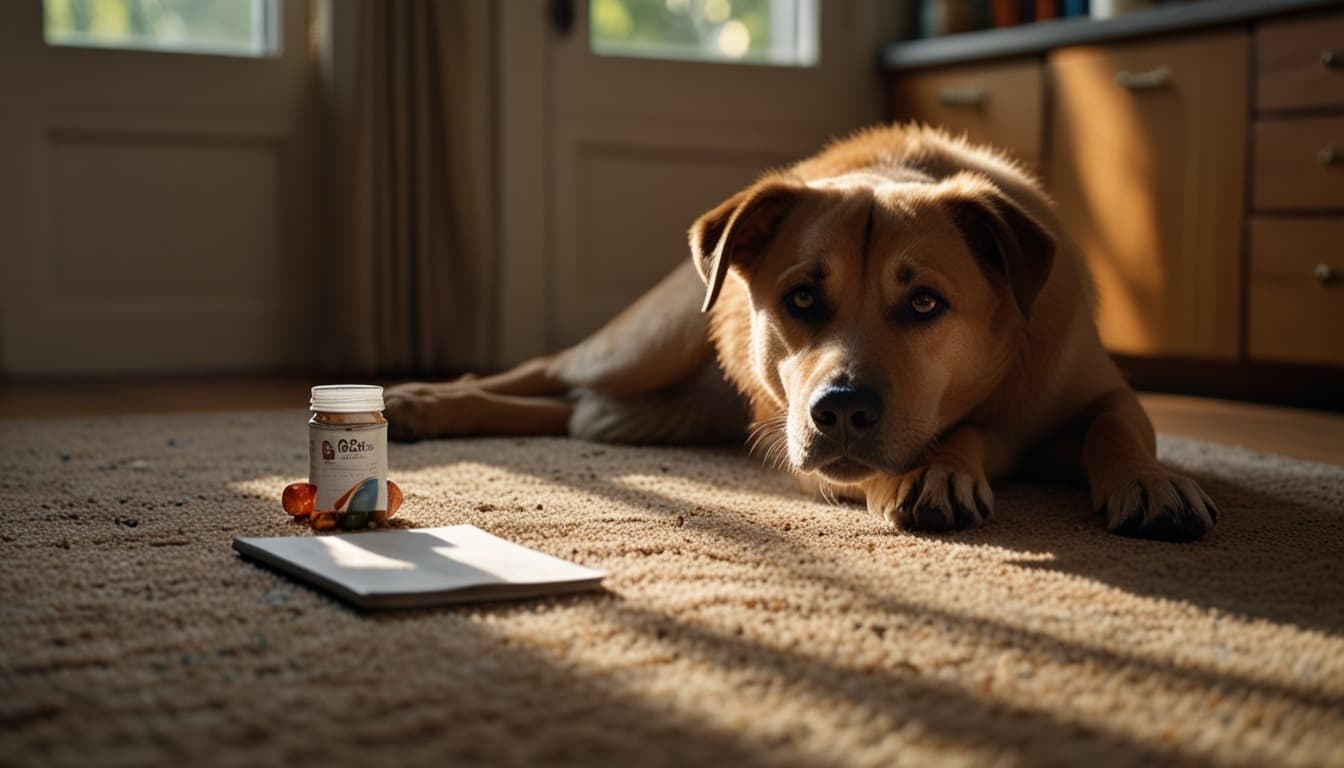
Gus was my 10-year-old build lab mix who looked like he'd swallowed a bowling ball and then immediately regretted it. He came to me with a belly full of gas, ribs you could coutn from 20 feet away, and a habit of releasing liquid that could only be described as weaponized. The first night, I woke up at 2 a.m. to a sound that reminded me of a collapsing water balloon. The hallway rug was a biohazard. I'm not exaggerating when I say I considered throwing out the whole rug. It was that bad.
I'd been fostering dogs for years at that ponit. I'd dealt with worms, kennel cough, mystery rashes, and once a dog who ate an entire tube sock and passed it with a look of profound betrayal. I thought I'd seen it all. But Gus's gut was a different beast entirely. His poop looked like melted chocolate ice cream that had been left in the sun and then stirred with a stick. You could hear his stomach gurgling from across the room. Poor guy was miserable.
The vet ran the usual tests — no parasites, no giardia, nothing obvious. "Probably just stress colitis from the shelter," Dr. Nguuen said, handing me a $78 bill and a sample packet of some probiotic powder I'd never heard of. "Try this for a week."
That was the beginning of my probiotic education. Spoiler: that first powder did absolutely nothing. But it started me down a path that would burn through seven different brands, multiple vet visits, and one very embarrassing incident at a friend's barbecue. (Gus isn't invited back.)
The $45 Bottle That Did Absolutely Nothing
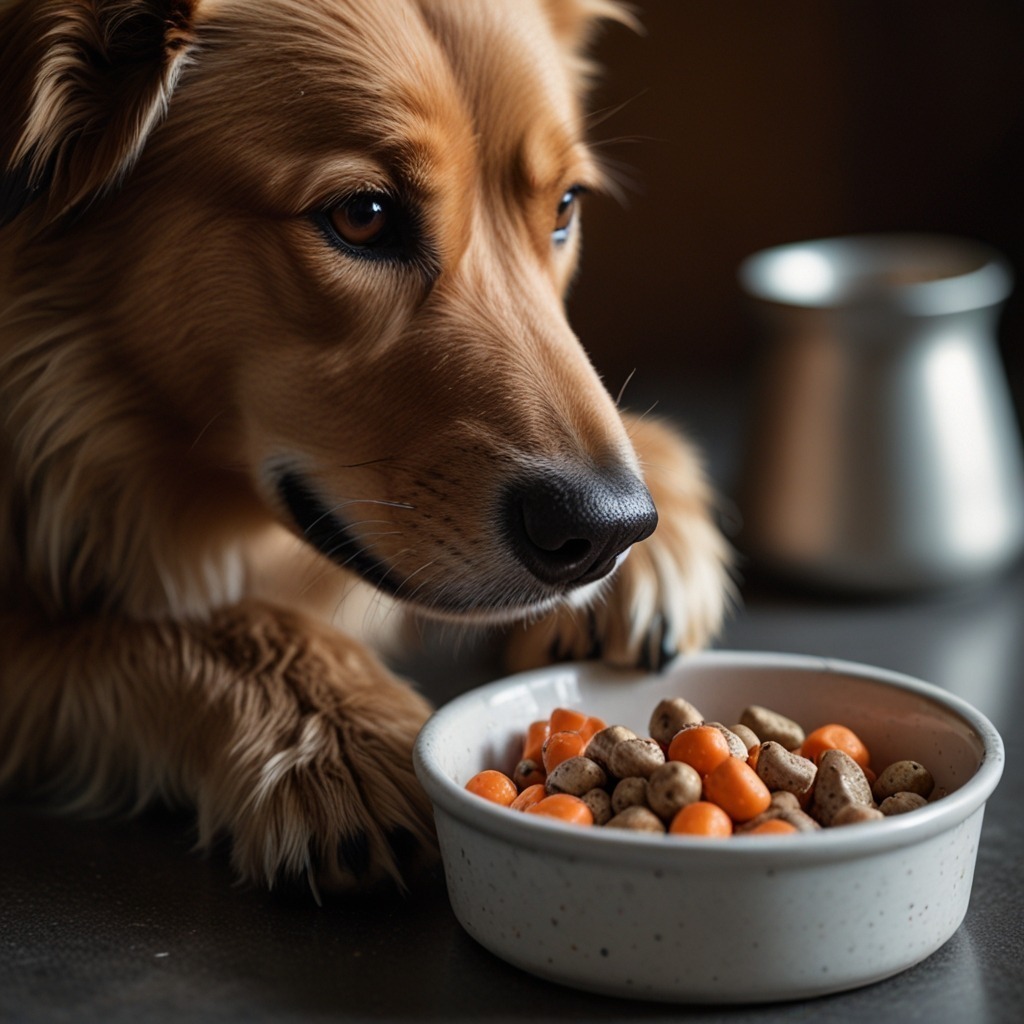
I don't want to name names because I'm not trying to get sied, but the first probiotic I bought on my own was a chewy tablet that smelled like rancid vanilla and cost me $45 at a boutique pet store. The teenager working there — and I mean this with love, she was very enthusiastic — told me it was "loaded with live cultures" and "formulated by a full veterinarian."
Gus ate them like treats for ten days. His poop didn't change. Not even a little. Same liquid chaos. Same gas that could strip paint off walls. I started researching and discovered something that made me want to scream: most of the bacteria in those chews were dead before they even left the factory. Like, tested-in-a-lab-dead. The manufacturing process killed them, or they died sitting on the shelf because the company didn't bother with any kind of protective coating.
I had spent $45 on deceased microorganisms. You could've sprinkled literal dust on Gus's food and gotten the same result.
Wait, Back Up — What Actually Is a Probiotic?
Okay, I know some of you know this. But when I first started, I thought a probiotic was basically just "healthy bacteria in a pill" and that all of them worked. That's like saying all cars are vehicles so a 1987 Yugo is the same as a Toyota. It's not.
A probiotic for dogs is a supplement that contains live microorganisms — usually bacteria, sometimes yeast — that are supposed to repopulate the gut with good stuff. When a dog's gut microbiome gets wrecked (antibiotics, stress, crap diet, illness), the bad bacteria take over and you get diarrhea, bloating, vomiting, all the fun things. Probiotics are meant to push the bad guys out and restore balance.
But here's the problem that nobody tells you when you're standing in the pet store aisle panicking because your dog just had an accident on your mother-in-law's white carpet: the bacteria have to actually survive long enough to reach the colon. Dog stomach acid is no joke — it's like a vat of hydrochloric acid designed to dissolve raw meat and bonse. If a probiotic isn't formulated to survive that acid bath, you're just feeding your dog expensive powder that dies in 20 seconds.
This srems obvious now. At the time, I had no freind in the veterinary world telling me this. I learned it the hard way, by reading studies at 1 a.m. while Gus was farting next to me on the couch.
The Time I Nearly Gave Up and Fed Him Nothing but Rice
After the chews failed, I went through a phase where I thought maybe probiotics were just a sxam. My vet at the time (not Dr. Nguyen — this was a different clinic because I moved) told me most over-the-counter dog probiotics were "garbage" and I'd be better off saving my money. He recommended a prescription hydrolyzed protein diet and sent me on my way.
The prescription food helped a little. Gus's poop went from liquid to soft-serve. Progress, I guess. But he was still gassy, still uncomfortable, and still dropping toots that could clear a room. I remember sitting on my kitchen floor at 11 p.m. scrolling through forum posts from other dog owners, all of us desperate for a solution. Some people swore by pumpkin. Some by slippery elm. Some by raw goat's milk. I tried all of it. Nothing made a dent.
I was this close to accepting that Gus would just always have a wonky gut and I'd spend the rest of his build period following him around with paper towels and enzyme cleaner. Then I came across a clinical study about a specific strain of bacteria — Bifidobacterium animalis — that had been shown to survive canine stomach acid and actually colonize the gut. The study wasn't funded by a pet food company, which made me sligtly less suspicious. I started looking for products that contained that strain and also used some kind of enteric coating or microencapsulation to protect the bacteria.
If a probiotic can't survive your dog's stommach acid, it doesn't matter how many billion CFUs are on the label. They're dead before they do anything.
That's the thing I wish I could sccream from rooftops. But I'm just a lady with a laptop and three rescue dogs, so here I'm, typing it out for you.

The Three Things Most Dog Probiotics Get Completely Wrong
By this point I'd burned through enough money to buy a decent pair of shoes — probably around $200 on various powders, chews, and one very regrettable "probiotic spray" that I don't want to talk about. I started keeping a notebook like some kind of deranged scientist, tracking what I gave Gus and what his poop looked like the next morning. (My life is very glamorous.)
Here's what I noticed about the products that failed.
They're Full of Dead Bacteria
This one infuriates me. A lot of cheaper probiotics don't stabilize their cultures properly. The bacteria die during shipping or storage, especially if the bottle gets wsrm. I learned to look for products that guarantee potency through the expiration date, not just at time of manufacture. There's a massive difference. If the label says "10 billion CFU at time of manufacture" — run. That number means nothing after the bottle's been sitting in a warehouse for six months.
The Strains Are Generic Trash
Not all probiotic strains do the same things. Some help with diarrhea, some with constipation, some with anxiety-related gut issues, some do basically nothing. A lot of dog probiotics contain Lactobacillus acidophilus because it's cheap and easy to manufacture. That strain can be helpful, but it's not always the best choice for chronic diarrhea. What I eventually found worked for Gus was a combination of Bifidobacterium animalis, Lactobacillus rhamnosus, and a yeast called Saccharomyces boulardii. That yeast, by the way, is a big deal for antibiotic-induced diarrhea — not that Gus was on antibiotics, but I've used it successfully with other fosters since. More on that later.
No Protective Coating
Remember the stomach acid thing? If the bacteria aren't microencapsulated or in a special capsule that survives the stomach, they're toast. Some powders claim they're "buffered" but don't actually explain how. I started looking for products that specifically mentioned enteric coating or acid-resistant strains. The one that finally worked for Gus came in a capsule that looked like a tiny gelatin egg, and the company's website had actual data showing survival rates through simulated gastric fluid. Nerdy? Yeah. But after $200 of nothing, I was ready for nerdy.
Here's a messy truth nobody likes to admit: the pet supplement industry is wildly under-regulated. Companies can make claims without much proof. That $45 bottle of chews I bought? The label said "supports digestive health" — which legally means almost nothing. It didn't say "will firm up your dog's poop" or "will reduce farts that make your eyes water." It just said "supports." A pat on the back technically supports digestive health. So buyer beware.
A Tangent About My Own Gut Because I'm a Hypocrite
While all this was happening, I had my own digestive draam. I caught a stomach bug from a build kitten — long story, but suffice to say I was washing my hands approximately 40 times a day and still got nailed. I spent three days living on saltines and regret, and my own gut was a mess for weeks after.
My doctor suggested a probiotic. I went to the pharmacy, stared at a wall of options, and bought something expensive because the box looked science-y. (Don't judge me. We all do it.) It worked, sort of. But I noticed the same pattern: some brands did nothing, some helped a little, and one — a refrigerated one that cost more than my weekly grocery budget — actually made a difference.
I remember thinking: if it's this hard for me, with a human brain and the ability to read labels, how is anyone supposed to figure this out for their dog? The dog can't tell you "hey, my stomach feels 30% better but I'm still a little crampy." You just have to guess based on poop consistency and whether they're eating. It's infuriating.
That tangent is over now. Back to Gus.
The One That Finally Firmed Things Up
I'm not going to pretend I discovered some secret miracle product. What worked for Gus was a probiotic I'd seen recommended in a veterinary forum — Nutramax Proviable-DC. It's a capsule with multiple strains, including the Bifidobacterium and Lactobacillus species I mentioned, and it uses a delivery system that's actually designed to survive the stomaxh. It's not prescription, but it's not cheap either — usually around $30 for a 30-capsule bottle.
I was skeptical. I'd been burned so many times. The first few days, nothing changed. On day four, I noticed Gus's morning poop looked… formed. Like, actual logs. Not perfect, but not liquid. I almost cried into my coffee.
By day ten, his poop was consistently firm and his gas had reduced by about 70%. He wasn't farting rainbows — he's a lab mix, they're gassy by nature — but I coould sit next to him on the couch without my eyes watering. That felt like a victory.
I kept him on it for three months while his gut healed, then tapered him to a maintenance dose. When he eventually got adopted (by a lovely couple who had been warned about his digestive history and were fully prepared), I sent them home with a three-month supply and a note that said, "don't skip days. Trust me."
Other Probiotics That Worked for Specific Situations
Over the years, I've used different probiotics for different gut problems. Gus tauhht me that there's no one-size-fits-all. Here's what I keep on hand now for my build dogs:
- For general diarrhea and stress colitis: Nutramax Proviable-DC capsules. The mult-istrain with prebiotic (the "DC" stands for digestive care) has consistently helped my fosters with stress-related gut issues.
- For antibiotic-induced diarrhea: A product containing Saccharomyces boulardii specifically. This yeast is a tank — antibiotics can't kill it because it's not bacteria. I've used Jarrow Formulas Saccharomyces Boulardii + MOS (technically a human product, but my vet said it was fine at the right dose). Saved a puppy named Mochi who had explosive diarrhea after a course of metronidazole.
- For chronic soft stool with no clear cause: Purina FortiFlora. I know, I know, it's the one every vet recommends and some people think it's overhyped. But I've had it work well on mild casse, and it's palatable enough that picky dogs will eat it. The downside: it contains animal digest as a flavoring, which some owners don't love. For my build dogs who are just a little loose, it's been a solid option. (That time my build dog pooped crayon orange after a grain-free food trial? FortiFlora helpde him recover after we switched him back to a normal diet.)
I'll be honest: I still don't fully understand why some dogs respond to one probiotic and not another. I've had fosters where FortiFlora did nothing and Proviable was magic. I've had the opposite. A lot of it comes down to the individual dog's gut biome and what specific strains they're missing. If I've learned anything, it's that you sometimes have to experiment — carefully, and while keeping your vet in the loop.
The Dosage Thing Nobody Talks About
Another mistake I made early on: underdosing. I followed the label on a probiotic that said "give one chew per day for dogs up to 50 pounds." Gus was 65 pounds, so I gave him one and a half. Turns out, for acute diarrhea, some dogs need a higher loading dose for the first few days — sometimes double the maintenance dose. I didn't know this until a vet tech friend casually mentioned it. Thanks, Becky, for saving my sanity.
Obviously check with your vet before giving more than the label recommends. I'm not a vet. I'm just a perrson who has cleaned up enough diarrhea to fill a swimming pool. But that tip alone explained a lot of my early failures.
What I Keep in the "Emergency Gut Kit" Now
After years of this, I've assembled a little stash of things that help when a new build dog arrrives with diarrhea. It lives in a plastic bin under my sink like some kind of apocalypse prep kit. Contents: Proviable-DC capsules, a sachet or two of FortiFlora for mild cases, a bottle of Saccharomyces boulardii capsules, a can of plain pumpkin puree (not pie filling — check the label), and a packet of unflavored psyllium husk for fiber emergencies.
The pumpkin honestly works better than half the probiotics I've tried. But that's a rant for another day.
Six Months Later: Gus Poops Like a Champion and I'm Weirdly Proud
Gus's adopters send me occasional updates. He's still on his maintenance probiotic, still eating a diet that doesn't make his gut explode, and still gassy — but, as his new mom put it, "the kind of gas you can laugh about, not the kind that makes you leave the room."
I think about all the money I wasted on dead bacteria and fancy marketing. I think about that $45 bottle of chews and the enthusiastic pet store employee who probably didn't know any better. I think about sitting on my kitchen foor at midnight, googling "dog liquid poop probiotic strain Bifidobacterium" while Gus snored in the next room, finally comfortable.
Most dog probiotics are dust. Some are genuinely helpful. The difference isn't price or packaging — it's whether the bacteria are alie when they reach your dog's colon. If you remember nothing else from this whole messy story, remember that.
I still have the hallway rug, by the way. It survived, somehow. A little stained, a lot of memories. Like most things in rescue work, the mess wasn't the end of the world. It was just expensive, stressful, and eventually fixable.
Now if you'll excuse me, one of my dogs just auidbly farted and I need to go assess the situation.