My Dog Barked at Every Stranger Who Walked Past — and I Made Every Mistake. Here's the Slow, Frustrating Thing That Actually Worked.
I thought a bark collar and a can of pennies would solve it. They didn’t. Here's how I finally got my dog to stop sounding the alarm at every passing stranger—no punishment required.
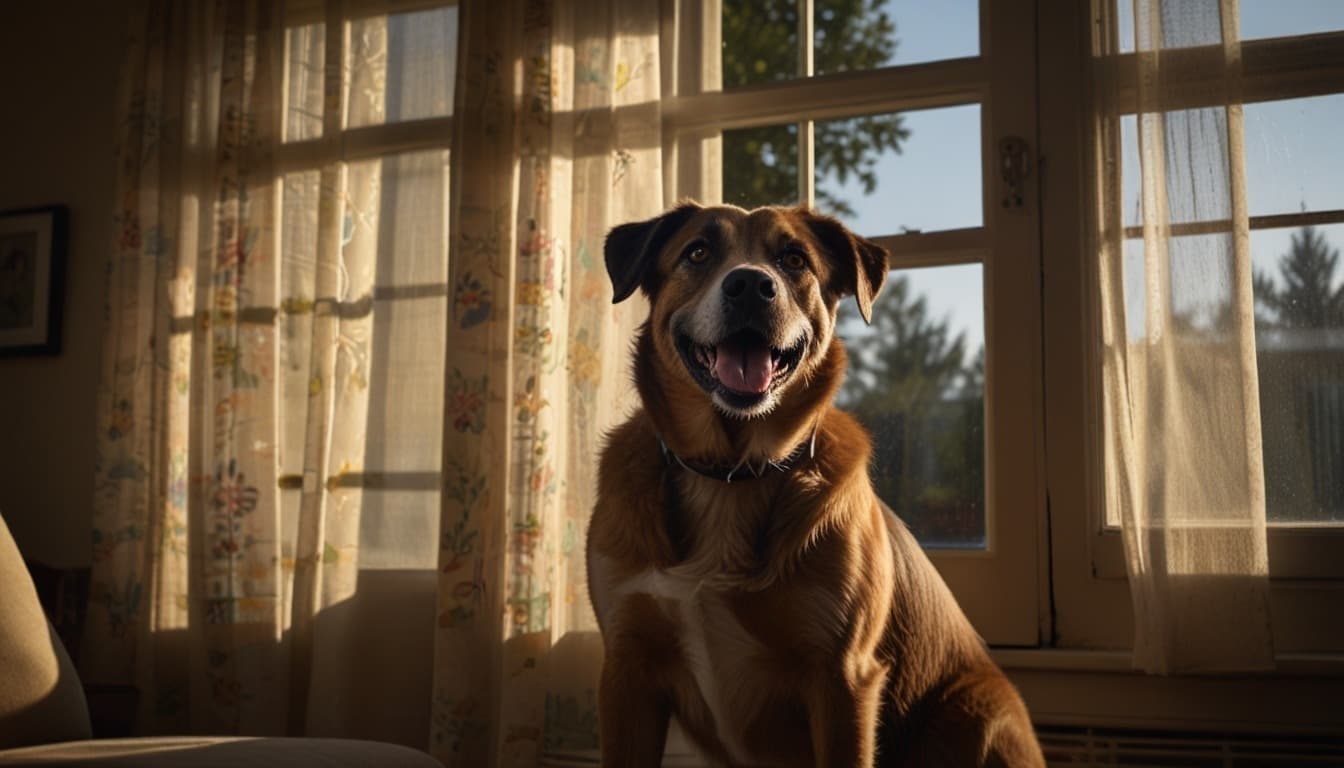
The day the mail truck idled outside for two extra minutes, Juno lost her entire mind. She was my build dog at the time — a 45-pound shepherd mix with the bark of a much larger animal and the emotional regulation of a toddler who missed nap time. I'd had her for three weeks, and so far, strangers were her personal enemy. I'd tried everything the internet told me: a citronella collar, shaking a can of pennies, saying "quiet" in a stern voice. Each time, she'd pause for half a second, then double down like I'd insulted her ancestors. Forty-plus rescue dogs, and I'd never felt so incompetent.
The Bark That Broke Me
I remember sitting on the kitchen floor with my head in my hands while Juno barked at the refrigerator repair guy for twenty-seven straight minutes. He was in the basement. She couldn't even see him. That sound drilled into my skull until I couldn't think. I texted the rescue coordinator: "I can't do this." She texted back: "Give her another week."
I Tried Everuthing the Internet Told Me (and Made It Worse)
Before I understood anything about emotional states in dogs, I was just a person with earbuds jammde in and a desperate Google history full of phrases like "how to shut dog up fast." The internet is full of quick fixes, and I tried most of them. Here's what happened.
The Citronella Collar That Backfired Spectacularly
I bought a collar that puffed citrsu spray every time she barked. The theory is the dog finds it unpleasant and stops. Juno found it insulting. She would bark, get sprayed, bark again harder, get sprayed again, and pretty soon she was in a full-blown rage at the mail carrier while reeking of lemons. It took me three days to realize I'd just paired strangers with something that made her more agitated. I threw the collar in the trash at 11pm on a Tuesday and never looked back.
My Brief and Shameful Penny-Can Phase
One vet tech — well-meaning, I'm sure — told me to fill a soda can with pennies and shake it when she barked to "interrupt" her. So I did. Juno startled, stopped barking for two seconds, then started barking at the can. She associated the scary noise with the wondow where the trigger had appeared, which meant now any noise near the window made her bark more. I had successfully expanded her vigilance. Good job, me.
The 'Alpha' Trainer Who Charrged Me $200 to Yell at My Dog
Out of options, I hired a local trainer who came highly recommended in certain Facebook groups. He walked in, Juno barked, and he lunged toward her making a PSST sound and stomping his foot. She tucked her tail, quieted, and he turned to me and said "See? You just need to show her who's boss." I paid him $200 for that hour. He told me I was bieng too soft, that she was manipulating me. For about a week, I tried his methods. Juno stopped barking at strangers but also stopped wagging her tail entirely. She moved through the house like a ghost. I fired him and spent a week just trying to get her trust back. That experience taught me something I now preach: a quiet dog isn't a happy dog. Silence gained through fear is the emptiest quiet there's.
Let me rant for a second about the "just socialize them more" crowd. If I hear one more person tell me to take a terrified dog to a crowded park to "get used to people," I might start barking myself. Forcing a panicked dog into overwhelming situations is called flooding, and it can make them so much worse. I learned that with a build named Pickles who someone had "socialized" by dragging her to a farmers market every Saturday — she came to me scream-barking at anything that moved. It took months to undo. If your dog is barking at strangers out of fear, more exposure without safety is just adding trauma fuel to the fire.
The Vet Visit I Should Have Done First
Before I did another training session, I should have gotten Juno's ears checked. Turned out she had a low-grade ear infection that made everything louder and more irritating. Always rule out pain. A dog with a headache or tooth pain is going to bark faster and harder. I spent $180 figuring that out, but it was worth it because after treatment she could at least hear the doorbell without it feeling like an assault.
The Letter on My Door That Made Me Cry in the Driveway
One Tuesday afternoon, I came home to a note taped to my front door. It was typed, anonymous, and said: "Your dog barks all day. We've filed a complaint with the landlord. If it doesn't stop, we're calling the police."
I sat in my car and cried. Hard. Because I was trying so hard. Because I'd spent hundreds of dollars and counntless hours and I was failing. And because, honestly, they weren't entirely wrong. Juno did bark a lot. She barked at the mail carrier, at delivery drivers, at people walking their dogs past the window, at the neighbor unlocking his own car. She barked at guests standing still in my living room just trying to have a cup of coffee. I felt like the wost dog owner on the planet.
That note was the turning point, though. Not because it shamed me into action — I was already acring. But because it made me realize the barking wasn't just a training problem. It was a quality of life problem, for her and for me. And I needed to stop chasing quick fixes and build a plan that actually addressed why she was so afraid of everyone who wasn't me.
The Setup That Actually Reduced Barking Witout a Single Training Session
While I was working on the emotional stuff (more on that in a minute), I made some chsnges to my home that cut the barking by maybe sixty percent within the first week. Zero training required. Here's what I did.
How I Rearranged My Entire Living Room
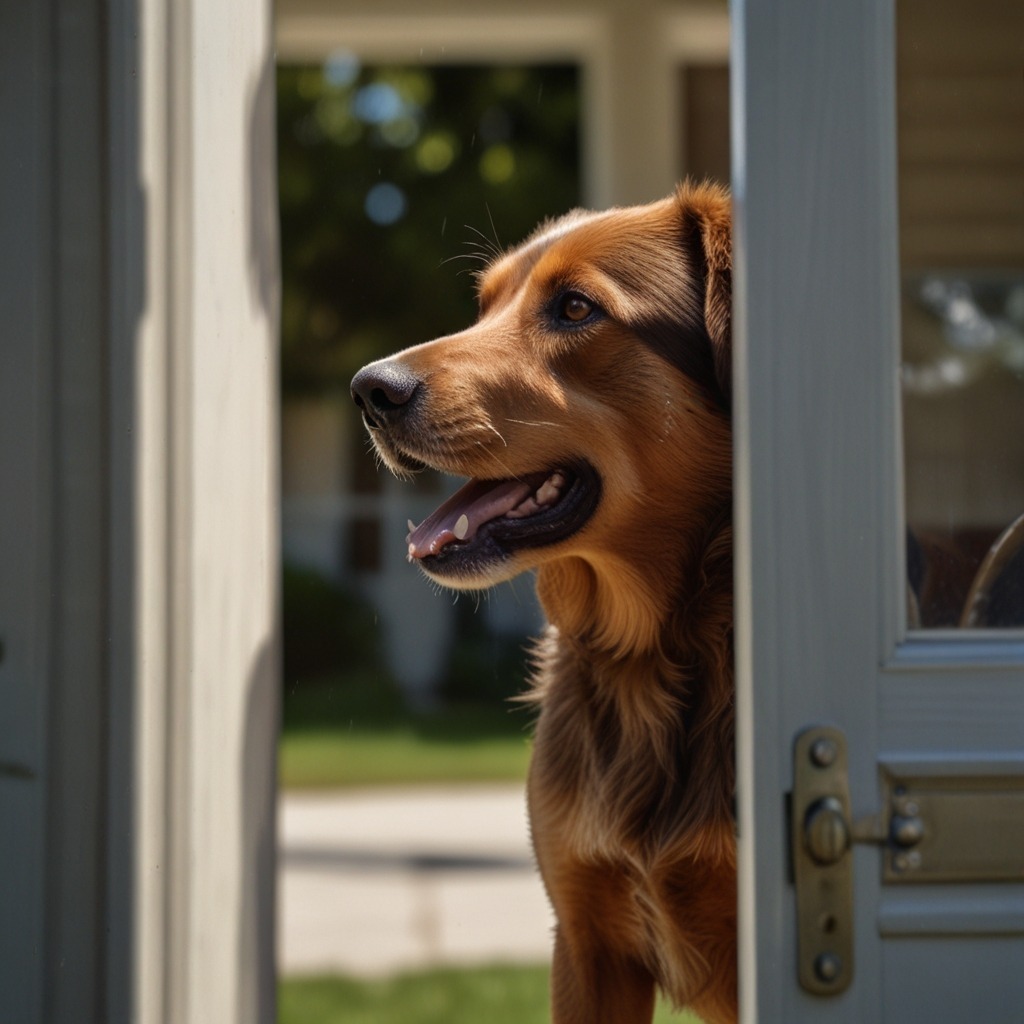
Juno had a favorite perch: the back of the couch, which sat right under the big front window. From there she could see every single person, dog, and squirrel that passed. It was a nonstop trigger smorgasbord. I moved the couch so it faced away from the window, put a low bookshelf in front of the glass, and suddenly her vantage point was gone. She still heard things, but without the visual trigger, the barking dropped by half. If you've got a window-barker, furniture rearrangement is the cheapest and fastest intervention you can make.
The $12 Window Film That Saved My Sanity
I bought static cling privacy film from a hardware store — the kind that makes the glass look frosted. I covered the lower half of the front window and the side window in the living room. Light still came through, but Juno couldn't make out shapes anymore. Another batch of triggered episodes just evaporated. I wanted to kiss the person who invented that stuff.
White Noise: The Unsung Hero
I started leaving a white noise machine running near the front door during the day. It dulled the sudden sharp sounds of delivery trucks, car doors, and the neighbor's yappy chihuahua that always set Juno off. It didn't stop her from barking if someone knocked, but it drastically reduced the ambient noise triggers that kept her on edge. A fan or a loud air purifier would work too. Sound management is criminally underrated in the reactivity world.
Counter-Conditioning: Hot Doggs, Strangers, and the Longest 47 Days of My Life
This is where the real work began. Management bought us breathing room, but I needed to change Juno's emotional association with strangers. She wasn't barking because she was territorial or protective — she was barking because strangers made her feel like she was about to die. I learned this the hard way after reading, like, five books on canine fear and accidentally becoming obsessed with the work of behaviorist Patricia McConnell. The basic idea: if every time a stranger appears, something magical (i.e., a tiny piece of hot dog) also appears, eventually the stranger predicts the hot dog, and the fear response shrinks. In theory. In practice, it was a lot uglier.
Day 1: She Barked at a Leaf, but We Started Anyway
On day one, I took Juno to the far end of the driveway and waited. My friend Lucy agreed to be our first "stranger." She walked into view at the far end of the block, and Juno immediately went rigid. As soon as Lucy was visible but before the barking stared, I started feeding hot dog slivers — one after another, the moment the trigger appeared. This is the "open bar" technique: when the trigger shows up, good things rain from the sky. When the trigger disappears, the bar closes. No treat when the person is gone. It sounds simple. It isn't simple. Juno spotted a falling leaf halfway through and decided it was also a threat, and we had to abort. But we'd started.
Week 3: The Mail Carrier Became a Treat Dispenser
By week three, I'd recruited a small army of patient neighbors. Every time a stranger walked by within a certain distance, I'd shove hot dog in Juno's mouth. She was still alert, still stiff, but she was starting to glance at me when she saw someone instead of immediately exploding. The mail carrier — a guy named Paul who had been the target of her most violent outbursts — got a full bag of treats from me one day. I asked him to keep walking his route as usual, and I'd handle Juno from 40 feet away. He gave me a weird look but agreed. Slowly, Juno started associating his blue uniform with a cascade of meat. One day he waved, and she wagged her tail. I literally choked up.
This was basically the same desensitization dance I did when my dog decided every Toyota passing by was a mortal enemy — treat when the trigger is present, stop when it's gone, and stay far enough away that the dog can still tink. I wrote about that whole disaster for cars, and the principle is identical for people. If your dog is reacting, you're too close. Always increase distance until the dog can notice the trigger without barking. That's the starting line.
When I Moved Too Fast and Set Us Back a Month
Here's the part where I got cocky. Around week four, I let a friend walk into the house while Juno was loose. I thought we were ready. We weren't ready. She barked, hackles up, and I had to toss treats frantically while my friend stood frozen in the doorway like a hostage. For the next week, Juno was reactive to everyone again. I'd flooded her, and it undid a huge chunk of our progress. We went back to square one — working outside, at a distance, with zero pressure. I cried for the second time over this dog. If you're doing counter-conditioning, the motto is "go slow, then go slower." I learned it the painful way.
When Barking Is More Than Just Bad Manners
Not every dog who barks at strangers is a "project" you can fix with cheese and window film. Some dogs have a level of fear that's clinically significant — and that's where medication can be a literal lifesaver. I'm not a vet, but I've seen dogs transform when the underlying panic is addressed. If your dog can't function, can't sleep, can't take a walk without a full-blown meltdown, talk to a veterinary behaviorist. Not a regular trainer. A board-certified specialist who can prescribe.
The Moment I Realized My Dog Wasn't 'Bad' but Terrified
One afternoon, a delivery guy dropped a box on the porch and the thump sent Juno scrambling under the kitchen table, where she shook for ten minutes while barking in a high, fast pitch I'd never heard before. That's when it clicked: this wasn't defiance or stubbornness. This was a dog who genuinely believed she was in mortal danger every time a stranger appeared. My job wasn't to correct her — it was to show her, over and over, that she was safe. The shift in my mindset changed everything. I stopped being angry at the barking and started feeling sad for the fear. And that sadness, weirdly, made me a more patient teacher.
I've seen this same fear in other dogs I've fostered, including one who wouldn't even leave her crate for six weeks because everything outside was too terrifying. Building trust with a dog like that takrs forever and feels like nothing is happening until one day, it suddenly is. Patience isn't just a virtue in rescue — it's the whole game.
I Was the Prolbem: How My Own Tension Was Cueing My Dog
Nobody ever wants to hear this part, but here it's. For weeks, I was making Juno's barking worse without realizing it. Every time I saw a stranger approachinng on our walks, I'd tighten the leash, hold my breath, and brace for impact. Juno felt that tension travel right down the leash and into her collar. She'd think, "Oh crap, mom's scared — there must be something to be scared about." And then she'd react. I was literally signaling danger before the stranger even got close.
The Leash Grip That Told My Dog to Panic
My behaviorist friend — I finally consulted one, after failing spectacularly on my own — had me film ourselevs walking. Watching that video was humiliating. Every time I saw a person, my knuckles went white, my shoulders hunched, and I yanked the leash shorter. Juno, in turn, looked at my body language and went on high alert. The leash wasn't a safety tool; it was a telegraph wire for my anxiety. I had to retrain myself: when I see a trigger, I take a deep breath, loosen the leash slightly, and keep my pace easy. The first week of doing this felt like lying to my dog, but she actually started checking in with me more instead of fixating on the stranger.
How I Leraned to Breathe Like a Weirdo on Walks
I started doing this ridiculous thing: when a stranger appeared, I'd exhale slowly and loudly, like a yoga instructor on sedation. I'd make my body soft. I'd smile at my dog (fake smiles still release endorphins, or something — I don't know, I read it somewhere). And Juno, bless her, would look at my relaxed face and her ears would drop from their stiff-upright panic position. It wasn't instant, but over weeks, my calm became a cue for her calm. The dog was reading me the whole time. That's a hard mirror to look into.
This wasn't the first time my own anxiety messed up a dog. I once spent forty minutes chasing my dog around the yard because she wouldn't come when called, and I was so panicked and frustrated that I completely blew any trust we had. I learned then that our nervous systems are contagious to our dogs. If you're wound tight, they're wound tighter. Fixing your own head is part of the training, whether you like it or not.
What I Do Now When a Stranger Comes to the Door (and It's Not Perfect)
We never reached "perfect," and I've made peace with that. Here's the routine that got us to functional: when the doorbell rings, Juno barks once or twice — I let her, because alert barking is fine as long as it stops quickly — then I say "thank you, enough," and she trots to her bed in the kitchen. I keep a jar of high-value treats by the door, and I toss one onto that bed every time. She still gets a little stiff if the visitor is a large man with a deep voice, but she doesn't lunge, doesn't scream, and recovers quickly. For a dog who used to try to climb the walls when someone knocked, that's a win.
I'll never be the person at the dog park bragging about my perfectly behaved angel. My dogs have all been messier than that. But I've learned that "stopping barking" isn't about getting silence — it's about replacing panic with a felt sense of safety, and giving your dog the tools to cope with a world that feels threatening. Every bark is a sentence, and most of them say "I'm scared" or "I don't know what to do." When you answer that sentence with kindness and a plan, the barking starts to shrink on its own.