My Dog Barked at Every Stranger Like They Were an Axe Murderer—Here’s What Finally Made Him Chill the Heck Out
My rescue hound barked at every single person like they were an axe murderer. Here's what I tried, what failed, and the one weird parking lot trick that finally made him give strangers a chance.
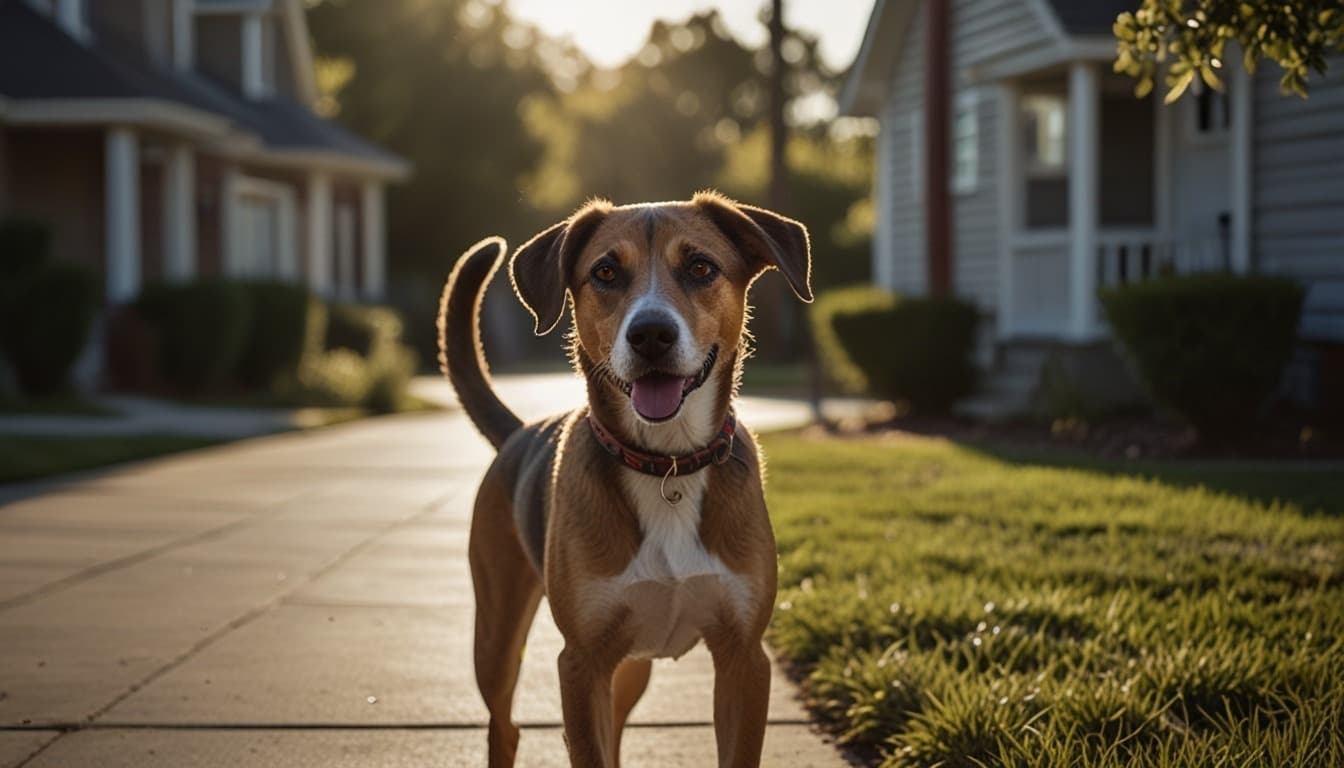
The first time my dog Bruiser saw a stranger on our street, he let out a bark so loud that a neighbor three houses down texted me to ask if everything was okay. I was standing there, leash wrapped twice around my hand, trying to keep 65 pounds of coonhound mix from launching himself at a perfectly innocent woman walking a tiny white poodle. The poodle didn't even glance at us. Bruiser screamed like the woman was carrying a bag of firecrackers and a grudge.
I apologized. She scowled. I dragged Bruiser home, collapsed on the couch, and Googled "how to stop dog barking at strangers" for about 4 hours. I found a lot of garbage. I also found a lot of trainers who talk about dog pychology like they're analyzing a Tolstoy novel but never mention the one thing that actually helped us—and I mean the thing that happened by accident on a rainy Tuesday when I'd given up trying.
So if you're reading this while your dog is losing his mind at the delivery guy for the third time today, I'm not gonna give you a perfect 5-step plan. I'm gonna tell you what I tried, what failed spectacularly, what made it worse, and what finally got Bruiser to the point where he can see a stranger in a hat and not sound like he's being electrocuted. And I'll throw in the stories I wish someone had told me when I was crying in my car after a walk gone wrong.
Bruiser's Bark Could Shatter Glass (And My Sanity)
Bruiser came to me at about 18 months old, already a failed hunting dog from somewhere in rural Georgia. He'd been in the shelter for 6 months before I fostered him because he'd bark at anyone who walked past his kennel. Not cute little woofs—the kind of deep, chest-rattling bay that makes your follings vibrate. I thought I could fix him with exercise and love. God, I was naive.
For the first 3 months, every walk was a tactical operation. I'd scan the street like a soldier, cross when I saw someone approaching, duck behind cars. If a stranger materialized too suddenly—and let's be real, in a neighborhood, strangers materialize constantly—Bruiser would go off. Hackles up, fromt feet off the ground, barking with his whole body. People would cross the street to avoid us. One guy actually said "train your dog" while I was clearly attempting to train my dog. Thanks, dude. Super helpful.
The worst was the mail carrier. Our mail carrier, a perfectly pleasant guy named Dave, would walk up the driveway and Bruiser would throw himself at the front window so hard I was terrified the glass would break. I had to start closing the blinds at 2pm and sitting in the dark like a weirdo. My other two dogs—a lazy senior pit mix and a build-fail chihuahua who thinks she's a lion—would just watch Bruiser like he'd lost his mind, which he had.
I remember one evening I was so exhausted and defeated that I called my vet, Dr. Nguyen, who's been putting up with my panic calls since before my divorce, and said "I think this dog is broken." She said, very gently, "Sarah, he's not broken. He's terrified. Barking is a symptom, not the problem." That stayed with me. But it took me months to really understand what she meant.
The mistake I kept making
I kept trying to stop the barking. That's what everyone does. They see the behavior and they want to extinguish it. So I tried "quiet" commands, I tried a spray bottle (which just made him scared of spray bottles and still bark), I even—and I'm not proud of this—yelled at him. Which obviously made everything worse because now the stranger was scary AND mom was scary. Brilliant, Sarah. Brilliant.
I learned later—teh hard way—that when a dog is barking at strangers out of fear, you can't punish the barking out of them. you've to change how they FEEL about the stranger. Which sounds very Dr. Phil, but it's true. I'll say it louder for the people in the back: The barking isn't disobedience. It's a panic attack with teeth.
This is the most important thing I'll tell you in this whole rambling mess of an article: If you're trying to stop the noise without addressing the fear, you're just teaching your dog to suppress the warning sin. And a dog who doesn't bark before he bites is a dog nobody wants. So let's not do that.

Why "Just Ignore It" Is Terrible Advice
Someone told me to ignore Bruiser when he barked. Don't react, don't comfort, don't do anything. They said comfort reinforces the fear. that's, to put it politely, a steaming load of crap. Dogs aren't robots who think "oh mom is petting me, this danger must be fine, I'll store that in my fear spreadsheet." They're mammals. Comfort during genuine fear doesn't reinforce the fear; it can actually help regulate them. I'm not saying coddle them like a baby and never teach them to cope—I'm saying if your dog is genuinely terrified and you stand there stone-faced ignoring him, you're not teaching him anything except that you're useless in a crisis. Ask me how I know.
There was about a 2-week period where I tried this. Bruiser would launch into his barkathpn, and I'd stand there, rigid, staring straight ahead, pretending the barking wasn't happening. He didn't calm down. He got worse. His barking became more desperate, like he was screaming "MOM WHY AREN'T YOU REACTING, THE MONSTER IS RIGHT THERE." I abandoned that nonsense after I nearly dislocated my shoulder when he lunged at a jogger. The jogger just kept jogging, headphones in, completely oblivious to the chaos. I envied that man.
The Vet Check I Wish I'd Done on Day Three
Okay, I'm not one of those people who thinks every behavioral issue is medical—I've seen plenty of dogs who are just jerks or poorly socialized. But with a dog who's suddenly reactive, or whose reactivity is getting worse despite training, there might be something physical goimg on that's lowering their threshold for panic.
For Bruiser, it turned out he had a low-grade ear infection that had probably been brewing for weeks. His ears just looked a little waxy to me; I'm a former shelter worker, not a vet, and I've cleaned enough dog ears to feel invincible. But Dr. Nguyen scoped him and found inflammation deep in both ear canals. She said it probably wasn't causing acute pain, but chronic discomfort can make even a calm dog snappy and a nervous dog a complete wreck. I've written about my ear cleaning disasters before—notably when I almost pokeed a hole in my dog's eardrum—so I should've known better.
There's no guarantee treating the ears made a difference in his barking, but within 2 weeks of antibiotics, he was marginally less explosive. Small wins. I'll take 'em.
If your dog is suddenly barking at strangers when he used to be fine, or if the intensity just seems unhinged, take him to the vet. Thyroid issues, pain, hearing loss—they can all mess with a dog's behavior. I've seen a dog with a cracked tooth who'd snarl at aynone who got near his face, and his owners thought he'd become aggressive. Nope. Just tooth. Fixed the tooth, fixed the "aggression." It's worth the $80 exam.
While I was dealing with Bruiser's ear gunk, I also started paying more attention to his gut. I'd been down the probiotic rabbit hole with one of my other dogs—a saga that involved $340 in supplements that made diarrhea worse, which I wrote about in excruciating detail—and I’ve learned that gut health can affect behavior more than people think. A stressed gut makes a stressed dog. I'm not saying probiotics will cure barking, but if your dog's digestive system is a mess, his entire body is on high alert. Just something to consider before you spend thousands on a behaviorist.
From 50 Feet Away: How We Started
Alright, here's the part where I actually tell you what worked. Not what I read in a book. Not what a trainer on YouTube with a perfectly behaved border collie told me. What worked for a real dog with a real over-the-top fear of strangers, in a real neighborhood with limited space and neighbors who definitely thought I was raising a hellhound.
The parking lot phase
I started in a grocery store parking lot at 7am on a Sunday, because I needed strangers at a distance I could control. We sat in the back of my Honda CR-V with the hatch up—Bruiser on a short leash, me with a pouch of diced hot dogs—and just watched people walk from their cars to the store. We were about 100 feet from the main foot traffic. Bruiser saw people. His ears went forward. He tensed. But he didn't bark. I shoved hot dog after hot dog into his face and said nothing. I'd like to say I had a zen trainr demeanor, but I was actually stress-sweating through my shirt and praying nobody would approach us.
We did this for 5 mornings. Looking back, I should've done it for longer, but I got impatient—a recurring tjeme in my dog training career. After those parking lot sessions, he started to look at me when he saw a person, instead of fixating. That's called a "check in," and it's the first tiny sliver of hope.
50 feet, then 40, then 30
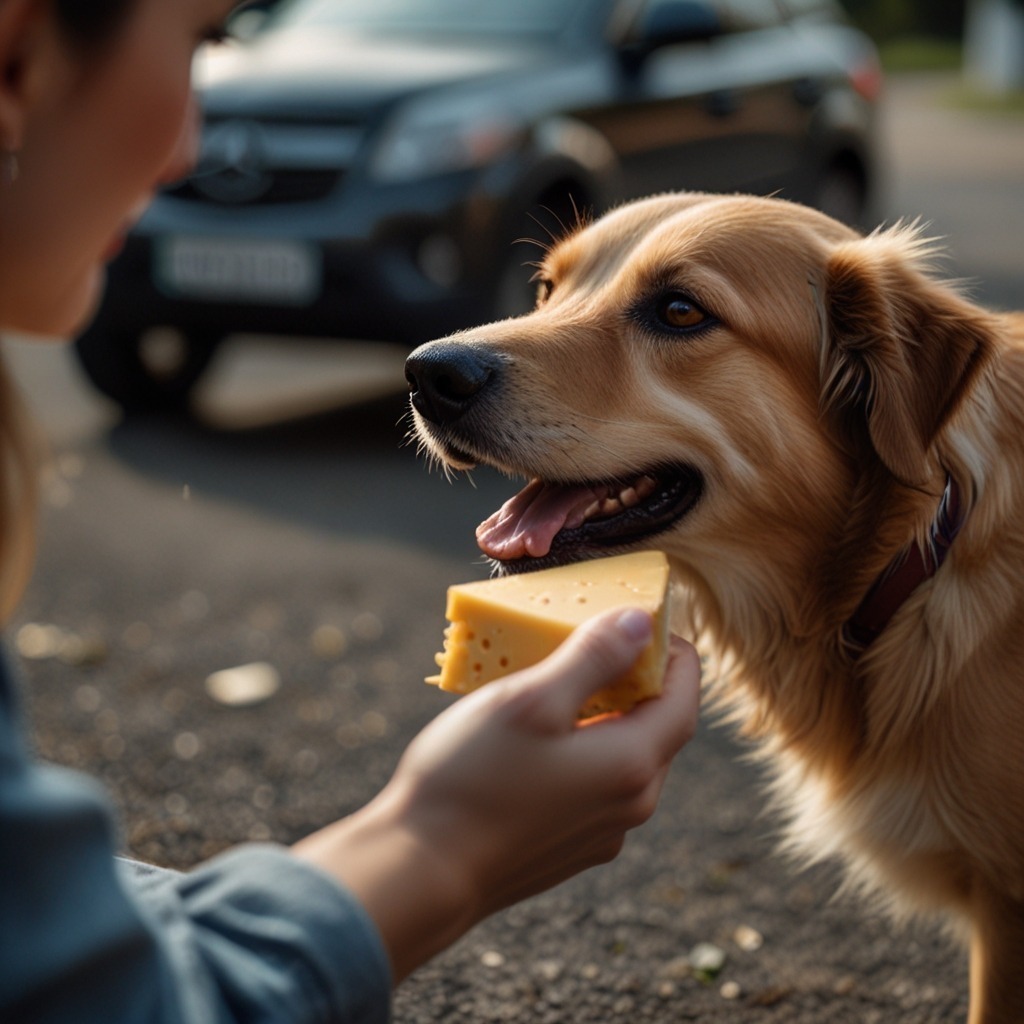
Once Bruiser could calmly watch people from 100 feet, I started closing the distance using a long line and an empty church parking lot near my house that always had a few people walking dogs. 50 feet was still safe. At 50 feet, he'd notice a person, look at me, get a chunk of cheese, and then look back at the person without barking. That's the engage-disengage game. He sees the trigger, looks away (or at me), gets rewarded. The reward isn't for being quiet; it's for the voluntary disengagement. That's the part most people skip. They wait for quiet and then reward, which teaches the dog that quiet after barling gets treats. That's not what you want.
At 40 feet, he could still handle it. At 30 feet, we had a few close calls—he'd stiffen, the hackles would rise, and I'd immediately increase distance and toss cheese on the ground for him to sniff. Sniffing is grounding. I learned that trick from a trainer who works with severely fearful dogs and it made more difference than any command I ever taught.
The "look at that" breakthrough
About 3 weeks in, I taught him a formal "look at that" cue. Here's how it works: you mark and reward your dog for looking AT the trigger, not looking away. It sounds backwards, but trust me. When a dog sees something scary and you reward them just for noticing it, the scary thing starts to predict good stuff. Eventually, the dog looks at the stranger and then immediately looks at you for the treat—that's a conditioned emotional response. The stranger becomes a cue for "mom has cheese." I've used this with dogs who wouldn't leave their crate and it's been a big deal. For Bruiser, I'd whisper "look" when he spotted a person, click, treat. Within a week, he'd glance at a strangre and whip his head around like "pay me." I almost cried the first time it happened.
The Day the Amazon Driver Became His Best Friend
This is the part of the story where I tell you about the specific moment that changed everything, not because the training was so brilliant but because life threw us a weird curveball and I decided to let it play out.
It was February. Drizzling. I was expecting a package but hadn't tracked it. Bruiser and I were in the front yard—I'd been doing decompression walks in my own yard because I'd read some research about how sniffing in a familiar environment lowers cortisol—and a beat-up Honda Civic pulled up at the curb. Not the usual Amazon van. A guy in a hoodie got out, holding a cardboard box, and walked toward my house. My gut tightende. Bruiser's whole body went rigid. I braced for the explosion.
But the guy, maybe 22 years old, did something unexpected. He saw Bruiser tense up, stopped about 15 feet away, and said "Hey man, you want me to just leave this here?" He was talking to me, but he was also looking at Bruiser with this calm, no-big-deal energy. He set the box down on the wet grass, stepped back, and just stood there with his hands in his pockets, not staring, not moving.
Bruiser didn't bark. He just stared. Then he sniffed the air. I threw a handful of kibble on the ground and said "go ahead." Bruiser ate the kibble, looked at the guy, looked back at me, ate more kibble. The guy said "cool dog" and walked back to his car. Bruiser watched him leave and then went back to sniffing the yard like nothing had happened. I stood there in the rain, holding an empty treat pouch, realizing that this random Amazon Flex driver had just done more for my dog's rehabilitation than half the YouTube trainers I'd watched. He'd given Bruiser a choice: approach or don't, bark or don't, and he'd respected the space. That's all Bruiser ever needed—a stranger who wasn't a threat.
I'm not saying you should stake out your front yard hoping for a random kind stranger to materialize. But I kept that memory as a model for how I wanted every future interaction to go. I started telling people who approached us on walks: "He's scared. Can you just ignore him?" Most people were cool about it. Some weren't. I learned to body-block the ones who weren't.
What I'd Do Differently If I Could Start Over
This section is basically a list of my regrets, which is the most helpful thing I can offer. Learn from my errors. Please.
I Wouldn't Have Let Him Rehearse the Barking
Every time Bruiser barked at a stranger and the stranger eventually walked away, his dog brani learned: "Barking makes the scary thing disappear." That's self-reinforcing behavior. The more he practiced it, the more ingrained it became. If I could go back, I'd have managed his environment more strictly from day one—no walks near schools at dismissal, no front window access during delivery times, no situations where he'd be over threshold. Would that have been inconvenient? Yes. Would it have shortened the training timeline by months? Also yes. Instead, I let him bark at the mailman 200 times before I wised up.
I Would've Muzzle Trained on Day One
Not because Bruiser ever bit anyone—he didn't—but because having him muzzle trained would've made me calmer, and a calmer handler means a calmer dog. I was always a little tense on walks, bracing for the worst, and dogs read that tension like a billboard. A properly fitted basket muzzle (the $12 one I wassted money on because it was too small and he couldn't pant—learn from me) would've given me peace of mind and made walks less stressful for both of us. I muzzle trained him eventually, using the same slow process I used with nail clipping desensitization, and it was worth every peanut-butter-smeared minute.
I Would've Stopped Apologizing
For about a year, every walk ended with me apologizing to someone. "I'm so sorry, he's a rescue, we're working on it." That apology was for me, not for them. It made me feel better, but it didn't help Bruiser. What helped was a brisk "We're training, please give us space" and then moving on. I started sauing it without eye contact, without explanation, and I can't tell you how freeing that was. I didn't owe strangers a backstory for my dog's fear. Neither do you.
When It's Not Just Barking: The Fear Biter Scare
I need to talk about what happened with a build dog about 4 years before Bruiser, because it's the thing that still keeps me up at night and I never want anyone to make the same mistake I did.
I had a little terrier mix named Jasper who barked at strangers in the classic small-dog-with-big-opinions way. But his barking was different from Bruiser's—it was higher-pitched, faster, and his body was always moving: lunging forward, retreating, spinning, lunging again. I wrote it off as "he's just reactive" and did the usual counter-conditioning stuff. Then one day, a friend came over who Jasper had met before, and he bit her. Right on the ankle. No warning bark, no growl—just walked up behind her while she was standing at the kitchne counter and clamped on. It wasn't a severe bite, but it was a bite, and I was horrified.
That was the moment I learned the difference between a fear-barker and a fear-biter. Some dogs bark to create distance. Some dogs have skipped past that and are ready to escalate. Jasper had been rehearsing his fear for years, and eventually the barking wasn't enough—his brain had learned that people were dangerous and he needed to take action. He had to be placed in a home without children, with an owner who was experienced with bite-risk dogs. I still think about him.
This story doesn't have a happy ending, but it has a critical lesson: if your dogs barking at strangers is accompanied by snarling, snapping, or lunging without the barking, get professional help. Not a dog walker who calls themselves a trainer—a certified behavior consultant or a veterinary behaviorist. Some dogs need medication to lower their baseline anxiety enough that training can even work. Prozac for dogs is a thing. It's not a failure to use it. I've seen it save dogs from euthanasia. I'll write about that another time, but for now, just know that barking can be the first sign of a much deeper fear issue, and ignoring it until the bite happens is a disaster waiting to happen. I learned that the hard way.
The $12 Muzzle I Threw in the Trash
It was too small. He couldn't pant. I should've measured his snout properly. Now I own a $40 Baskerville that fits like a dream and has room for a full tongue-out pant. Measure twice, buy once. Or something like that.
And Then We Adopted Another Barer (Because I Never Learn)
Six months after Bruiser got to a manageable place, a friend found a stray beagle mix wandering near the highway and I—because I've the self-preservation instincts of a moth—said I'd build him. He barked at everything: strangers, squirrels, leaves that moved suspiciously, his own reflection in the oven door. I thought I'd lose my mind. But this time, I had a system. I knew not to punish the barking. I knew to start at distances that felt safe. I knew that his gut was probably in shambles after living on roadkill and rainwater, so I did the probiotic thing early—not the expensive dust I'd fallen for before, but the one that actually worked. It still took months, but I didn't cry in the car once. Progress.
That beagle, by the way, is now sleeping on my feet as I type this. He still barks at the mailman, but it's a softer, "hey, I see you" bark instead of a "I'll end you" bark. I'll take it.
A side note: I've also fostered a chihuahua who dislocated my finger during a freak leash-wrapping incident, and let me tell you, small dogs can be just as barky and fear-reactive as big ones, but people laugh it off. Don't. A terrified Chihuahua is still terrigied, and they can bite just as hard proportionally. I've written about the whole use disaster and it's a cautionary tale about ignoring little dog behavior because it's "cute." It's not cute. It's fear, and it desreves the same careful approach as a Great Dane's fear.
Why I Stopped Worrying About What the Neighbors Think
There was a long stretch where I'd avoid eye contact with everyone on our street. I was sure they were judging me—the crazy dog lady whose hound baayed at their kids, the one who carried a treat pouch even to take out the trash. Then one day my neighbor Mrs. Chen, who's 82 and walks her ancient shih tzu at exactly 7:14 every morning, stopped me and said: "I've been watching you work with your dog. You're doing a good job. He's lucky to have you."
I bawled. Right thre in the street. Big ugly tears.
I'm not saying everything got easy after that. But I stopped hiding. I let people see the training, the fails, the treat scatter when he got too close to a trigger. And you know what? Most people were kind. Some offered to help—to walk by slowly, to toss treats, to be "stranger practice." The ones who weren't kind? They were never goig to be, no matter how much I apologized or over-explained. Their opinion doesn't matter. Your dog's quality of life matters. Your sanity matters.
Bruiser still has bad days. Yesterday a man in a big puffy coat and a baseball hat walked toward us and Bruiser let out two sharp barks before looking at me like "sorry, forgot myself." It happens. I'm okay with it. He's not a robot. He's a dog who spent his first year of life learning that strangers meant pain or fear or loneliness, and he's spent every year since learning that maybe—just maybe—they mean cheese instead. That's a hell of a thing to unlearn. If all he manages in this lifetime is a quieter bark and a quicker recovery, I'll call that a win.