My 70-Pound Lab Tried to Climb Into the Dishwasher to Escape the Fireworks. Here's What Finally Let Us Sleep Through July 4th.
After years of panting, hiding, and one very expensive X-ray, I learned that fireworks anxiety isn't about 'just calming down.' Here's what worked—and what was a waste of money.
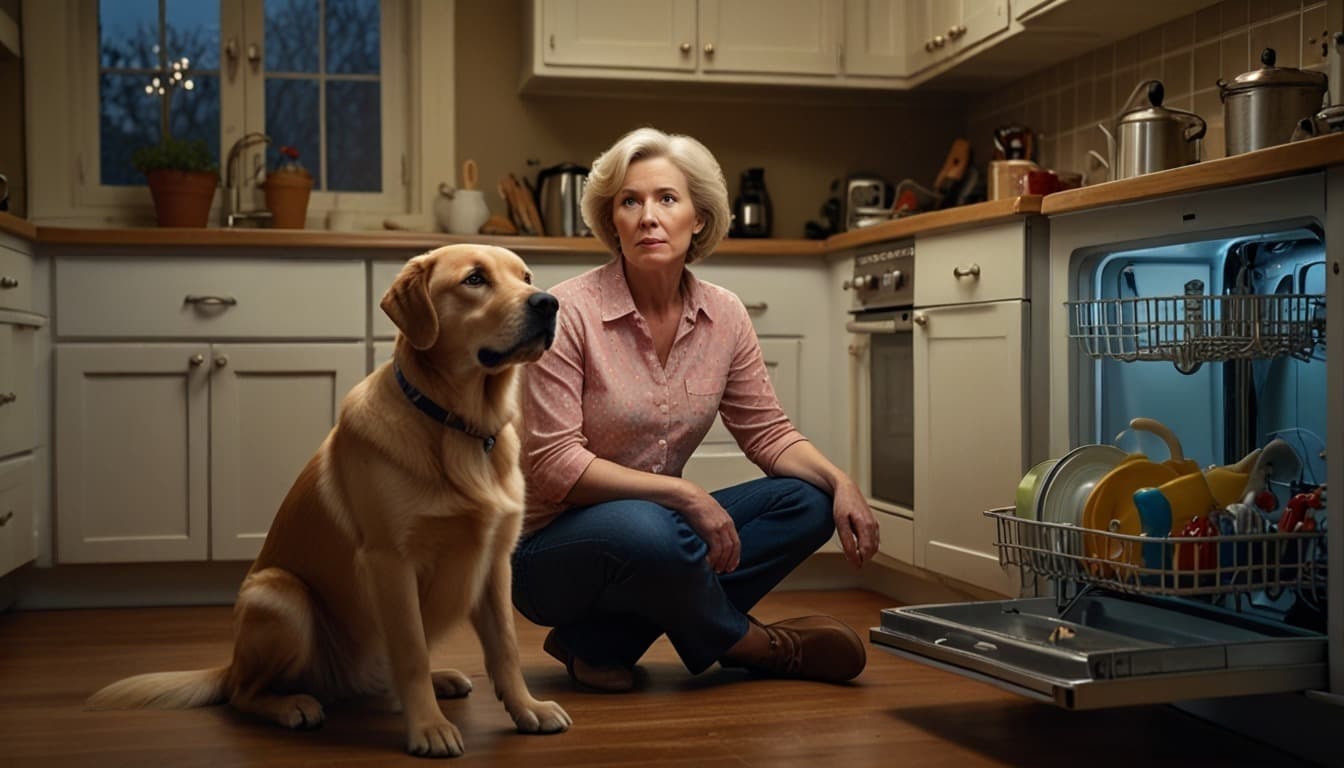
The first time I heard a mortar shell go off in my neighborhood — not the cute little pop-pop-pop kind, the kind that sounds like a car exploded — my 70-pound black lab, Luna, went full-on panic. She didn't just tremble. She didn't just pace. She threw herself at the dishwasher door, clawed it open somehow, and tried to wedge her whole body inside. I found her crammed in there with her butt hanging out and her head pressed against the bottom rack, whimpering like the world was ending.
I yanked her out, checked for blood (none, thank god), and then spent the next four hours sitting on the bathroom floor with her because it was the only room in the house without windows facing the street. That night cost me a $340 emergency vet X-rya the next morning — I was convinced she'd hurt her spine or cracked a rib, but nope, just a few bruises and a dog who was terrified out of her mind. The dishwasher was fine, somehow.
That was six years ago. Since then I've fostered over 40 dogs, and I can say with complete confidence that fireworks anxiety is one of the hardest, most heartbreaking things to manage. It's not like a thunderstorm where you can see the clouds building and plan ahead. Fireworks are unpredictable, they're loud in a way that feels physically assaulting, and they often happen late at night when you're just trying to exist. I've tried everything — and I mean everything — and I've made a lot of expensive, useless mistakes. So if you're here because your dog is currently hiding in the bathtub or your cat is shedding under the bed, I see you. I've been you.
The dishwasher incident (and the $340 X-ray that followed)
Look, I wish I could tell you that I handled that first bad fireworks night with grace. I didn't. I panicked. I screamed at Luna to "get out of there" which obbviously didn't help. I was crying. My neighbor — the one who sets off illegal mortar shells every year and laughs about it — was probably having a great time while I was covered in dog hair and dishwasher detergent residue.
The X-ray was just the first in a long line of vet visits related to fireworks anxiety. Dr. Nguyen, who's put up with my panic calls for 11 years, once told me that the number of dogs who injure themselves during fireworks season is genuinely staggering. Not just from trying to squeeze into small spaces like Luna — I've seen dogs break through glass windows, tear up carpet down to the subfloor, and one build hound who chewed halfway through a door frame. It's not bad behavior. It's pure, unadulterated terror. And it breaks my heart every time.
That X-ray bill also taught me something I wish I'd learned sooner: waiting until the fireworks start to do something about it's already too late. By the time the booms are happening, your dog's brain is flooded with cortisol and theyre not capable of learning or calming down in any rational way. You can't train a dog who's in full fight-or-flight. You can only manage the fallout. So the real work has to happen weeks, sometimes months, before the first firework ever goes off.
But I'm getting ahead of myself. Let me tell you about all the things I tried firsst — the things that made me feel like a failure, the things that were a complete waste of money, and the few things that actually made a dent.
What vets tell you (and what they skip)
Dr. Nguyen — she's this tiny Vietnamese woman who doesn't sugarcoat anything — once looked at me after I'd brought in my third build dog with fireworks-related stress diarrhea and said, "Sarah, you need medication. The dog needs medication. Not next time. Now." I'm not a vet, let me be clear about that. But I've worked in a shelter for six years, I dropped out of vet tech school, and I've had more conversations about dog anxiety meds than I've had hot dinners. What I've learned is that vets are often reluctant to prescribe fast-acting anxiety meds unless you ask directly, because they don't want to seem like they're pushing drugs. The irony is, millions of dogs suffer unnecessarily because their owners don't know that medication exists and it's safe.
Trazodone, gabapentin, sometimes a combination of both — those are the go-tos for situational anxiety like fireworks. They're not a long-term fix, but they can be the difference between a dog who spends the night in a blind panic and a dog who's a little groggy but fundamentally okay. I used to be weirdly judgmental about anxiety meds, like I'd failed as a trainer if my dog needed a pill. Crap, was I wrong. Some dogs are just wired differently. You can do all the counter-conditioning in the world and still have a dog who loses their mind at the sound of a distant boom.
The thing vets don't always emphasize is that you've to test the medication BEFORE the scary night. Dosage matters, and every dog metabolizes things differently. I've had a build pittie who got completely knocked out by a half dose of trazodone, while a 55-pound shepherd mix needed almost double what the vet initially suggested to even take the edge off. The worst time to discover your dog has a paradoxical reaction to a sedative is at 11 PM on July 4th when every clinic is closed. So I always, always recommend doing a trial run on a quiet weekend afternoon — give the meds, watch how they respond, and report back to your vet so you can adjust if needed. I've done this dozens of times and it's never failed to save me from a midnight disaster.
Also, anti-anxiety meds aren't a magic wand. They lower the threshold for panic, but they don't eliminate fear entirely. You still need a calm environment, some white noise, and your own presence (if you're not also freaking out, whch is a whole other topic). More on that later.
Thundershirts: the strangest thing I've ever put on a dog
I'll be honest — the first time I wrapped a dog in a Thundershirt, I felt ridiculous. It looks like a tiny doggy straightjacket made by someone who got their sewing machine on Etsy. But here's the thing: for some dogs, it works. Not all dogs. Maybe 40% of the ones I've tried it on showed noticeable improvement — less pacing, less panting, able to lie down for a few minutes at a stretch. For the rest, it was about as useful as a decorative bow.
Luna, the dishwasher climber, absolutely hated it. She froze like a statue and wouldn't move, which some people mistake for calm but it's really learned helplessness. So I stopped using it. My current build dog, a scruffy terrier naned Poe, actually seems to like the pressure — he nestles into it like a baby burrito and falls asleep. Go figure. I keep one around because it's non-invasive and can't hurt, but I never count on it as my only plan.
The supplement aisle is a minefield (and I've wasted a fortune)
God, where do I even start. I've spent probably $600 on calming supplemennts over the years — chews, powders, tinctures, sprays, you name it. The pet industry knows we're desperate and they've filled shelves with stuff that has zero regulation and even less evidence behind it. I'm not anti-supplement, but I'm anti-getting-ripped-off.
Calming chews that did absolutely nothing
Those soft chews with chamomile, L-theanine, and "proprietary calming blends" — I'm sure they taste great because my dogs gobbled them up, but I saw no difference in behavior whatsoever. I tried three different brands. The only thing they accomplished was making my wallet lighter. One of them even gave my build dog the runs, which brings me to a tangent I'll spare you from (but I've written about gut issues plenty, including the 6-week probiotic nightmare that finally ended when I found the right one — stomach upset is so common with these things).
The CBD oil that made things worse
I'm not anti-CBD, either. But the market is the Wild West. I tried a "pet CBD" tincture from a brand that looked reputable, and within an hour my build husky was panting hard and stumbling like she was drunk. Scared the hell out of me. I called poison control, they told me to monitor her, and she was fine by morning, but I never touched that bottle again. I know thhere are good products out there with real testing, but unless you're getting something with a certificate of analysis and you've talked to a vet who understands cannabinoids, I just can't recommend it in good conscience. Too many variables.
What actually helped (and didn't break the bank)
After all that trial and error, the only supplement that consistently takes a tiny edge off — and I mean tiny — is plain old L-theanine in a reputable brand that lists the exact milligrams. Combined with a really good routine, it helps some dogs transtion from frantic to merely anxious. For my own dogs, I use it as a background aid, never as the main event. It's like taking a deep breath when you're stressed: doesn't fix the problem, but makes it easier to cope.
[IMAGE 2]
Speaking of routines, let me climb onto my soapbox for a minute about something that drives me insane.
Why 'stay calm' is the worst advice
Every year, right before July 4th, I see a dozen blog posts and social media infographics that say, "Just stay calm and your dog will be calm!" Screw that. It's not that simple, and it makes people feel guilty for having normal human emotions. When Luna was trying to fold herself into the dishwasher, was I staying calm? No. I was a wreck. Because I love my dog and it's terrifying to watch her suffer.
Here's what I think people actually mean when they say "stay calm": don't punish your dog for being scared, and don't add your own chaotic energy on top of their fear. That's fair. Yelling, flapping your hands, chasing them around the house — that's going to make things worse. But you know what else is okay? Sitting on the floor, speaking in a low, gentle voice, and just beinng present. You don't have to be a zen master. You just have to be a safe landing pad. I've sat with sobbing build dogs at 2 AM, and I'm pretty sure my heart rate was through the roof, but they still found comfort in my presence because I wasn't adding to the chaos. So screw the "stay calm" police. Do your best. That's enough.
My neighbor's illegal mortar shells and an unexpected tangent
This is where I'm going to wander off topic for a minute, because I think it's relevant. My neighbor — let's call him Greg — has been setting off fireworks every summer for the 8 years I've lived in this house. Not the legal, ground-based kind. The kind that go 500 feet in the air and sound like a bomb going off. I've called the non-emergency police line so many times they probably have me flagged. Nothing ever happens. Greg just stands in his yard, beer in hand, while my dogs disintegrate into puddles of fear inside my house.
I've gone over there twice to talk to him calmly, explaining that I run a small rescue and the fireworks terrify the animals. He nodded, said he understood, and then did the exact same thing the next year. Some people just don't care. And the thing is, I'm not anti-fun. I like fireworks in a controlled setting, professionally done. But the random, surprise explosions that last for weeks around every minor holiday? They turn my life into a warzone. I've started driving my dogs out to my sister's farm in the countty on the worst nights, but not everyone has that option. The point is, sometimes the environment is stacked against you, and you can't control it. That's when medication, preparation, and knowing when to just leave the house become your best tools.
I'll get back on track now. But I needed to get that out.
The ear infection from all that stress-head-shaking
Weird thing nobody tells you about anxious dogs: they shake their heads. A lot. Like, constantly. It's part of the stress response. And if you've got a dog with floppy ears, all that head-shaking combined with stress can lead to a nasty yeats or bacterial infection in the ear canal. I found this out the hard way with my build beagle, who was so terrified during a thunderstorm (which is basically silent fireworks) that she shook her head for six hours straight. Two days later, her ear smelled like a forgotten gym bag.
I ended up having to clean her ear twice a day for a week, which she haetd, and I almost made it worse because I didn't know what I was doing. I've written before about how I almost poked a hole in my dog's eardrum with a Q-tip, and this experience was a close second in the "things I wish I'd known" category. Now I always check ears after any long anxiety episode, and I keep a gentle ear cleaner on hand (one that doesn't cause vertigo — been there, done that, the dog will never forgive you).
This is a practical thing you can do the next morning: lift the ear flap, take a sniff. If it's yeasty or sour, head to the vet before it turns into a full-blown infection. It's such a small thing, but it can save you a $200 vet bill and a lot of pain for your pup.
Desensitization: the slow, boring thing nobody wants to do
Alright, let's talk about the actual training part. Because all the supplements and Thundershirts and medication in the world won't fix the underlying fear if you don't also do some desensitization work. And I'm not going to pretend it's fun or quick. It's tedious, it's repetitive, and you'll feel like an idiot doing it. But it's the only thing that produces lasting change.
Why playing firework sounds on YouRube at 3am felt insane
I started with Luna during the off-season — like, the middle of November. I'd wait until the house was quiet, put on a YouTube video of fireworks sounds at the absolute lowest volume, and just sit with her while eaitng popcorn or petting her. For the first two weeks, she'd lift her head and look around, but she wouldn't panic because the volume was so low it was almost inaudible. I'd reward her with treats when she stayed relaxed. Eventually, over the span of about six weeks, I very slowly increased the volume, one notch at a time, never letting it get to a point where she reacted with fear.
This process was so mind-numbingly boring I can't even describe it. Some nights I'd be sitting there at 11 PM, exhausted, playing fake firework sounds on my laptop like a crazy person. But it worked. By the time July rolled around again, Luna's reaction to real fireworks was noticeably less severe. Not gone — never gone — but she didn't try to climb into any appliances, and that felt like a massive victory.
I've done similar work with many fosters since. The key is to start at a volume where the dog notices the sound but doesn't freak out, and then gradually build tolerance over weeks and weeks. You pair the sound with something good — chicken, cheese, a favorite toy — so the dog's brain starts to associate the boom with "ooh, treat!" instead of "I'm going to die." I wrote a whole post about the slow, frustrating ting that actually worked for my reactive dog, and this is essentially the same concpet — just applied to a different trigger.
The day my dog stopped flinching
I remember the exact moment I knew it had paid off. A car backfired in my driveway — lpud, sudden, sounded exactly like a firework — and Luna didn't even get up. She looked at me, wagged her tail once, and went back to licking her paw. I almost cried. That was after three months of consistent, boring, repetitive training. It's not sexy, but it's real.
What to actually do (the messy, imperfect version)
You don't need a perfect protocol. Play firework sounds on your phone while you're folding laundry. Give treats randomly. If your dog has a bad day and gets spooked, don't push it — go back to a lower volume, end on a positive note. Never punish fear. And for the love of everything, don't try to "flood" your dog by exposing them to loud fireworks all at once. I've seen people do that at the park and it's borderline abusive. Desensitization is a marathon, not a sprint. Even 10 minutes a day, a few times a week, can make a difference over time.
The July 4th Eve Benadryl run
I've to mention Benadryl because someone's going to ask about it. Yes, some vets recommend diphenhydramine for mild anxiety. No, you shouldn't just guess the dose. I once made an emergency run to CVS at 10 PM on July 3rd because I'd forgotten to fill a build dog's trazodone prescription, and the vet on call told me to give Benadryl as a temporary measure. It made the dog a little sleepy, but it didn't touch the fireworks panic. In my experience, Benadryl is barely a whisper against the cannon fire. It can be a backup plan, but never your primary. Always ask your vet for the correct mg/kg dose because too much can cause urinary retention and other issues.
What finally worked for Luna (and me)
I didn't find a single magic solution. I found a messy combination that, over time, turned July 4th from a night of terror into something manageable. Here's what we landed on after years of trial and error:
Two weeks before expected fireworks, I'd start low-volume desensitization again as a refresher. The night before, I'd give Luna her trazodone dose at dinner — not right before bed, because it takes a couple hours to peak. I'd set up a "safe zone" in my bedroom: the closet door open, a pile of old blankets on the floor, a white noise machine cranked to the sound of rain, and all windows covered with blackout curtains. I'd have a frozen Kong stuffed with peanut butter ready to go, because licking is a self-soothing behavior for dogs.
When the booms started, I didn't make a big deal of it. I just sat on the floor with my laptop, pretending to work, while she pressed herself against my leg. I didn't pet her frantically (which can reinforce fear), but I didn't ignore her either. I just existed calmly beside her. Some years she'd tremble a bit, but she never tried to escape again. She'd eventually fall asleep, head on my foot, snoring softly while the world outside sounded like a battlefield.
I also leaned on my network — my sister's farm was a lifesaver for the worst nights. I'd pack up the dogs and a bottle of wine for myself, and we'd ride out the noise far from civilization. Not everyone has that luxury, I know. But sometimes the best solution is to remove yourself from the trigger entirely, if you can. No shame in that. I've driven my dogs 45 minutes each way just to sit in a quiet parking lot for a few hours during a fireworks display. Desperate times.
One year, I even got a prescription for myself for a mild sedative because my own anxiety around fireworks was through the roof — worrying about the dogs made it wore. My doctor laughed, but she understood. We're all in this together.
I'm not going to wrap this up with a neat little bow and a list of steps, because real life doesn't work that way. Fireworks anxiety is a beast. You'll have setbacks. You'll try something that works for three years and then suddenly doesn't. You'll stand in your bathroom at midnight, holding a 50-pound dog who's vibrating with fear, and you'll feel helpless. That's okay. You're not failling. You're doing the hardest, most loving work there's: showing up for a creature who can't understand why the sky is screaming.
The dishwasher incident feels like a lifetime ago now. Luna passed away two years ago, peacefully, on a quiet Sunday afternoon with no fireworks in sight. I've got Poe the terrier now, and he's got his own quirks. But when I see a dog trembling in a shelter during fireworks season, I don't panic anymore. I know what to do. I know it won't be perfect. And I know that sometimes, just being there's enough.