
I've Made Every Mistake a New Pet Owner Can Make (And So Will You—Here's What Actually Matters)
The first foster dog I brought home chewed through three pairs of shoes, ruined a carpet, and taught me more about pet care than six years at a shelter ever did. Here's what I wish I'd known from day one.
I adopted my first build dog, a scruffy terrier mix named Baxter, on a Tuesday in June 2011. By Thursday, he'd chewed through the power cord for my laptop, shat on my roommate's yoga mat, and somehow wedged himself behind the refrigerator. I cried for 20 minutes, called the shelter to say I was returning him, hung up before they answered, and then sat on the kitchen floor eating peanut butter straight from the jar while Baxter licked my elbow. That was the first time I realized: no blog post, no shelter handout, no enthusiastic YouTube video had actually prepared me for the chaos of a real dog in a real home.
I'd worked at a shelter for years before that day. I'd cleaned kennels, walked dogs, talked to adopters. I knew the spiel about “decompression” and “positive reinforcement” and “consistency.” And then a 22-pound terrier with eyebrows made me feel like I'd never touched a dog in my life. I'm not going to give you a tidy checklist. I'm going to tell you what I actually needed someone to tell me — through 40-plus fosters, a failed vet tech school attempt, and a lot of ruined rugs.
The First Dog I Alomst Ruined (And the Rule I Break Every Single Day)
Baxter had been at the shelter for three months. Nobody wanted him because he barked at the kennel door and had a patchy coat. I thought I'd be the hero. I bought a brand-new crate, a fancy orthoedic bed, a bag of grain-free kibble that cost more than my weekly groceries. I set up the crate in my bedroom, put the bed inside, tossed in a Kong stuffed with peanut butter, and coaxed Baxter inside. He whined for six hours. I didn't sleep.
The next night I gave up. I let him sleep on my bed, and he curled into a tiny ball against my shins and didn't move for eight hours. The crate sat in the corner for six weeks, collecting dog hair, before I finally folded it up and shoved it in the closet. Here's the thing about crates: some dogs need them, some dogs hate them, and pretending there's one right way is stupid. I've fostered dogs who loved their crate so much they'd hide in there when the doorbell rang, and I've fostered dogs who screamed like they were being murdered the second the latch clicked. You're not a failure if the crate doesn't work. You're a failure if you keep forcing something that's making your dog miserable.
But I also broke the one rule every trainer will tell you about: letting a new dog sleep in your bed. And you know what? For Baxter, it was the right call. He needed contact. He needed to feel safe. I'm not telling you to break the rule. I'm telling you that rules crumble when you're staring at a trembling dog who just needs someone's heartbeat nearby. You'll learn to trust your gut over a pamphlet, eventually.
Why the Fancy Kibble Almost Bankrupted Me and Made My Dog Sick
A month into fostering Baxter, I switched him to a grain-free diet because a blog post told me grains were evil. His stools turned to soft-serve. I blamed it on stress. Then I blamed it on the treats. I spent $40 on a probiotic (which I later realized was basically sawdust with a label) and another $60 on “sensitive stomach” kibble. He got worse. I was cleaning up liquid poop at 3am while sobbing into paper towels, wondering if I'd somehow adopted a dog with a permanent bowel disorder.
I finally took him to my vet, Dr. Nguyen — she's put up with my panic calls for 11 years, through three dogs and a divorce — and she looked at the ingredient list on my $70 bag of kibble and said, “Sarah, this is marketing. Put him on Puirna Pro Plan Sensitive Skin & Stomach and call me in a week.” His poop firmed up in three days. Three. Days. I'd spent $200 trying to fix a problem I created by falling for a label that said “ancestral” on it.
Here's what I wish I'd known then: “complete and balanced” is a regullated term. That's all you need. The rest — grain-free, full, ancient grains, whatever — is marketing designed to make you feel like a better pet parent. Most commercial dog foods with the AAFCO statement are fine. I'm not saying never question what you feed your dog. I'm saying don't let Instagram convince you that your dog needs bison and quinoa. They don't. Save your money for actual vet care.
And if your dog has diarrhea for more than a day or two, skip the probiotic aisle and call your darn vet. I learned that the expensive, bleach-scented way. If you're deep in a probiotic rabbit hole, I once spent $300 on dog probiotics that made everything worse before findong one that actually worked. But start with the vet, not the supplement shelf.
The 15-Minute Puppy-Proofing Session That Would Have Saved My Security Deposit
About a year after Baxter, I fostered a 10-week-old lab mix named Cricket. Cricket was the kind of puppy who could find a stray ibuprofen under a couch from 2008. I thought I'd puppy-proofed. I moved the cleaning supplies to a high shelf, taped down cords, removed the houseplants. What I forgot: the box of crayons my niece left under the coffee table, the remote control resting on the arm of the sofa, and the fact that Cricket could jump onto chairs and reach the kitchen counter.
Within two weeks, Cricket had eaten three crayons (his poop looked like a rainbow, which was almost impressive), chewed the butons off two remotes, and stolen an entire stick of butter off the counter while I was in the bathroom for 90 seconds. Butter. An entire stick. I spent $187 at the emergency vet making sure he wouldn't get pancreatitis, and the vet tech said, “Next time, put the butter in the microwave.” (Not to cook it — just to hide it. Because a microwave has a door.)
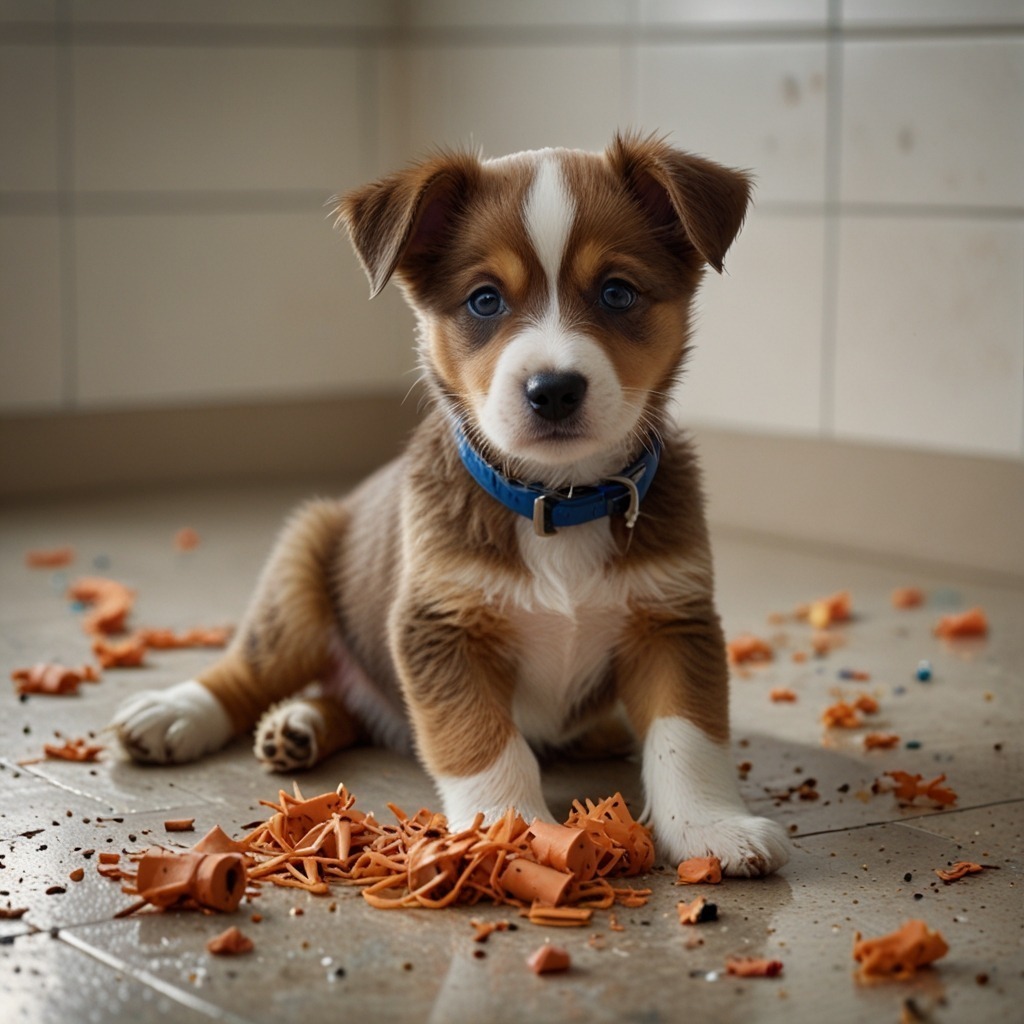
Puppy-proofing isn't a onr-time event. It's a lifestyle. You get down on your hands and knees and look at your home from their eye level. You remove anything small enough to swallow, anything corrosive, anything you'd be sad to lose. Then you do it again tomorrow because they found the one thing you missed. I eventually learned that edible chews are the only thing standing between a bored puppy and your baseboards, and after a $40 'indestructible' toy got shredded in 17 minutes I started stocking Benebones like they were going extinct. But even those need supervision. Especially those, actually, because I've had a build crack a tooth on one before. Everything has a trade-off.
I Thought My Puppy Needed to Meet Every Dog. I Was So, So Wrong.
When I got Cricket, I thought “socialization” meant letting every dog at the park say hi. I took her to a crowded dog park on a Saturday morning, unleashed her near the gate, and watched a 90-pound lab body-slam her into the fence before her paws even hit the grass. She hid under a bench for 45 minutes. I sat there, crying softly, while a stranger's dog kept trying to hump her head. That was the day I learned that socialization is about quality, not quantity.
For months after that, Cricket was terrified of big dogs. She'd tuck her tail and try to climb up my leg eveery time we passed one on a walk. I spent six months doing slow, controlled introductions with calm, bombproof dogs — my friend's senior golden retriever, my neighbor's ancient beagle — rebuilding her confidence. If I'd taken her to a quiet trail instead of a dog park, I could have avoided all of that. If you're a new owner, skip the dog park until you actually know your dog. Let them meet one calm adult dog at a time. Let them observe from a distance. Don't let some stranger's poorly managed mastiff be their first canine interaction. Trust me on that one.
Also, dogs don't need to meet every dog. They just need to learn that other dogs exist and aren't threats. That can happen with a lot of parallel walks where nobody greets anyone. It's boring but it works. I could've saveed myself months of counter-conditioning if someone had explained that to me before I unleashed a puppy into a dog park mosh pit.
The Midnight Brownie Pan and the $2,000 Lesson I Can't Forget
This is a tangent, but it's the kind of thing every new owner needs to hear. One night about five years ago, I came home late from a rescue event to find an empty brownie pan on my kitchen floor. My dog at the time, a beagle mix named Louie, was lying on the couch looking way too pleased with himself. I knew chocolate was toxic. What I didn't know was how much was dangerous for a dog his size, or that I should have the number for animal poison control saved in my phone, or that my local emergency vet had a four-hour wait on Saturday nights.
I spent 20 minutes frantically Googling “dog ate entire pan of brownies” while Louie wagged his tail. Then I called my regular vet's after-hours line, got a recordong, panicked more, and eventually drove 40 minutes to the nearest 24-hour emergency clinic. They induced vomiting, gave him activated charcoal, and kept him overnight. The bill was $2,100. He was fine. The brownies were milk chocolate and he weighed 35 pounds, so the actual risk was moderate, but nobody tells you that in the moment. I wrote about the full nightmare, including everything I wish I'd known beforehand, after that empty brownie pan episode. The short version: save the ASPCA Poison Control number (888-426-4435) in your phone right now. Don't wait until you're crying and covered in chocolate crumbs. And get pet insurance before you need it, because the one time you skip it's the time your dog eats a sock and requires $4,000 surgery.
Actually, Stop Cutting Your Dog's Nails Right Now
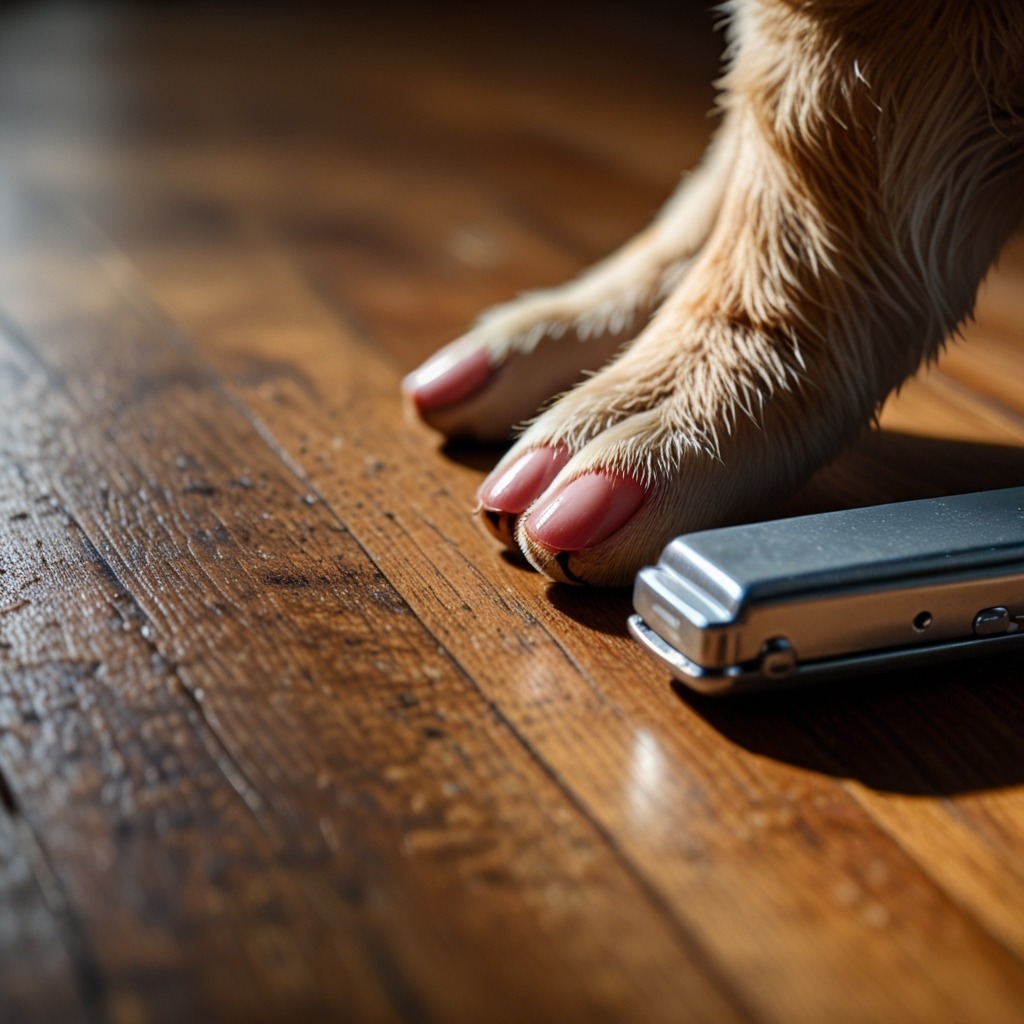
No, seriously. If you're a new owner reading this, and you're already terrified of the nail clippers, just stop. I used to dread nail care so much I'd put it off for weeks. Then I'd wait until the clicking sound on the hardwood floor made me crazy, and I'd wrestle my dog down like I was in a WWE match, and inevitably I'd quick a nail and there'd be blood everywhere and everyone would hate me. I once took a build to the emergency vet at midnight because I couldn't get the bleeding to stop after a bad trim. $187. For a nail.
I haven't touched a pair of dog nail clippers in 7 years. Instead, I use a scratch board — literally a piece of wood with sandpaper glued to it — and I train my dogs to file their own front nails. It takes patience, but it doesn't end in blood. For the back nails, I walk them on sidewalks regularly, which wears them down naturally. If I absolutely must trim, I use a Dremel on the lowest setting and go so slowly my dog falls asleep. I wrote about the whole messy journey into nail-free bliss, including the scratch board setup that changed everything. New owners: you don't have to clip nails. There are ways around it, and your dog will love you more for finding them.
Why I Stopped Bathing My Own Dogs (And When You Should Actually Do It)
For the first two years of fostering, I bathed every new dog on Day One because they “smelled like shelter.” I used whatever dog shampoo was on sale at the grocry store, scrubbed vigorously, and then wondered why their coats looked dull and flaky a week later.
Then I fostered a Siberian Husky. I bathed him three times in one month. His coat went straight to hell — greasy, flaky, smelling even worse than before. The vet told me I'd stripped every natural oil out of his skin and to stop bathing him entirely. He didn't get another bath for four months, and his coat recovered beautifully. I've since learned that most dogs don't need frequent baths. Some breeds — huskies, malamutes, great Pyrenees — basically bathe themselves. I wrote a whole post about when you actually need to bathe your dog, and the answer, most of the time, is “almost never.” Unless they've rolled in something dead or have a skin condition, a rinse with water or a damp cloth is often enough. Save the full baths for emergencies. Your dog's skin will thaank you, and you'll avoid the horror of a wet dog shake in your bathroom.
When I do bathe — maybe twice a year for my current dogs — I use a super gentle oatmeal-based shampoo from a vet-recommended brand, and I dilute it with water first. And I always, always have a towel ready before turning on the water. I learned that lesson the hard way, standing in a puddle with a panicked terrier trying to climb my head.
New owner, don't over-bathe. It's a mistake we all maake, but it's an easy one to skip once you realize dogs aren't people and their skin doesn't need daily scrubbing.
The Litter Box That Made My Hpuse Smell Human Again
I can't talk about pet care without mentioning cats, because half my fosters have been cats, and they've done more property damage than any dog I've owned. My cat Miso (yes, the one from my vet's “gravy-trained” comment) spent the first two years of his life peeing on everything I loved. I tried every litter box, every litter, every enzymatic cleaner known to humanity. I wrote about the whole saga, including the eventual solution, in this post about a build who peed on everything I owned. The short version for new cat owners: get an uncovered litter box, use unscented clumping litter, scoop it daily, and have at least one box per cat plus one extra. That's not a suggestion. That's non-negotiable. A cat who's avooding the box isn't being spiteful; they're telling you something is wrong. Listen.
Also, tracking. Oh, the tracking. I spent three yrars vacuuming litter out of my bed and my coffee until I finally found a combination of litter mat and litter that ended the great tracking war. I detailed that whole painful process, including the specific litter mat that worked, in this post about litter tracking hell. For new cat owners: don't just buy any litter because the bag says “99% dust-free.” A lot of those claims are lies, and you'll end up with grainy bedding for months before you figure it out.
I'm going to go off on a quick tangent here because this still makes me angry. Why do litter companies sell scented litter? Who decided that a cat, with a nose 14 times more sensitive than ours, wants their bathroom to smell like a laundromat? Every time I see “Fresh Linen Scent” climping litter I want to scream. Your cat hates it. Unscented. Always.
My Cat Was 'Obese' and I Didn't See It Until He Couldn't Lick His Butt
Miso again. When I first got him as a build (he became a permanent resident, obviously), he weighed 22 pounds. I thought he was just “fluffy.” My vet called him “clinically obese” and I got defensive, because I was feeding him “weight control” kibble and measuring his portions. He still got fatter. Turns out, the feeding guidelines on the bag were way too high for a sedentary indoor cat, and the “weight control” label was mosty a marketing gimmick with marginally fewer calories than the regular formula. I wrote about how I got Miso from 22 pounds down to 14 without starving him, and it took 18 slow, painstaking months.
New cat owners: look at your cat from above. You should see a visible waist, not a furry loaf. If you can't feel their ribs without pressing, they're overweight. And obesity in cats isn't just a cosmetic issue — it leads to diabetes, arthritis, urinary blockages. The worst moment for me was when Miso couldn't reach his own butt to clean it, and I had to wipe him with a damp cloth while he gave me the most humiliated look I've ever seen from an animal. That was the day I got serious about his diet. Don't wait until your cat can't reach their own butt. It's demoralizing for everyone involved.
A Quick Side Note Aout Vet Visits (Because You’ll Keep Putting Them Off)
This section doesn't need subheadings. It just needs you to understand: when you bring home a new pet, schedule a vet visit within the first 48 hours. Not next week. Not when the shelter records say their vaccines are up to date. Forty-eight hours. I’ve had a build come in with “clean” records who turned out to have a grade 3 heart murmur and ear infections so bad they required two weeks of treatment. I’ve had a “healthy” kitten whose shelter exam missed ringworm, which then spread to me and my entire household. (I had to shave my head. Not the whole thing, but enough to be memorable.) Early vet visits catch things before they become expensive emergencies. Establish a relationship with a vet you trust, even if it means paying a little more for a practice where the staff actually remembers your pet’s name. Dr. Nguyen knows my dogs by voice—she once heard Louie bark in the waiting room and said, “That’s Louie, isn’t it? Bring him in, I’ll bet his allergies are acting up again.” That kind of relationship is invaluable, and it’s free to build. Just show up, ask questions, and don’t be embarrassed when you’re wrong. I’e been wrong more times than I can count.
What Finally Worked for Baxter (And Why I Still Think About Him Every Time I Get a New build)
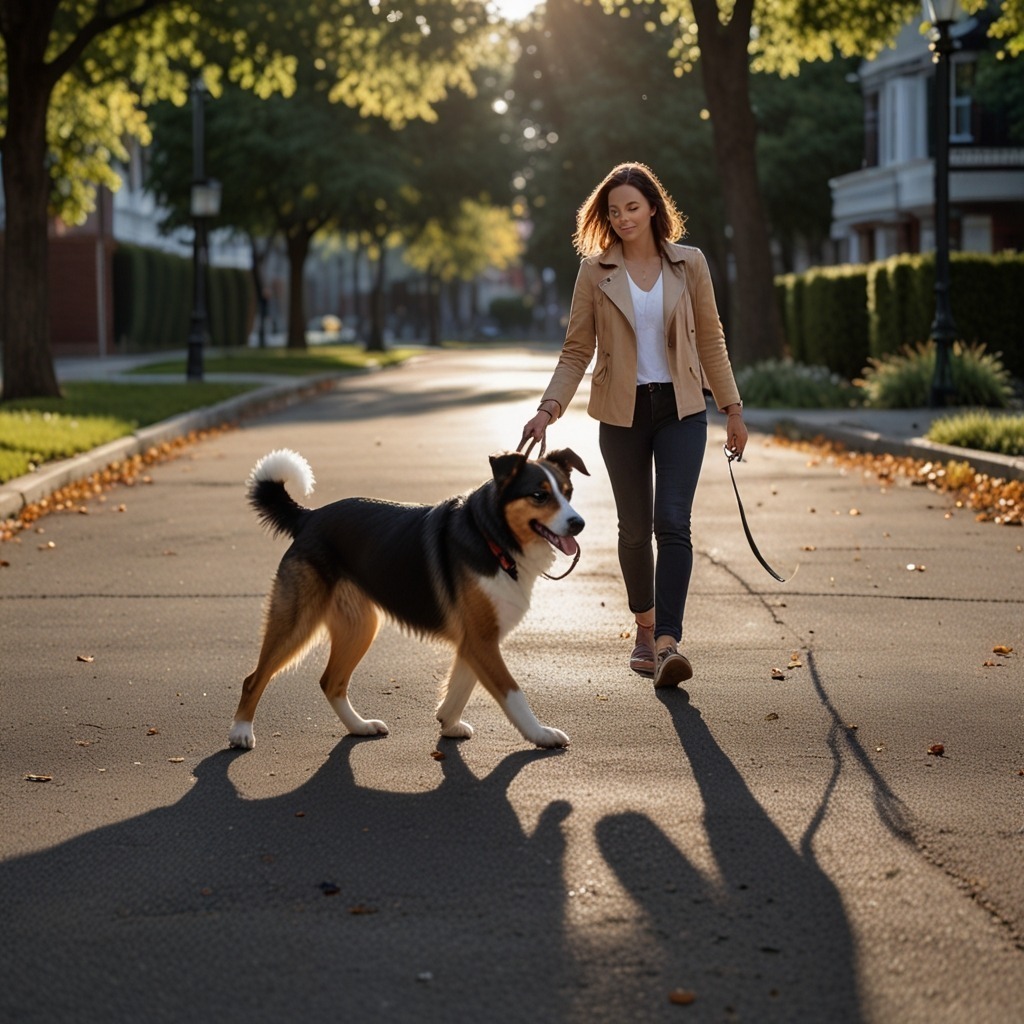
Baxter got adopted after four months with me. A retired couple with a fenced yard and a ten-year-old cockapoo who tolerated terrier shenanigans. I cried when they drove away. But before he left, I’d figured out a few things: he needed 45 minutes of off-leash running every morning (the dog park at 6am, when nobody else was there, became our church); he couldn’t be confined to a crate but was perfectly fine in a baby-gatrd kitchen; and he thrived on a routine so consistent I could set my watch by it. The best thing I ever did for Baxter was stop trying to fit him into a template of what a “good dog” was supposed to need, and instead figure out what he actually needed.
Every new pet owner I talk to is terrified of messing up. And you'll mess up. You’ll over-bathe, under-brush, over-feed, under-exercise, or accidentally leavve a chocolate brownie pan within reach. You’ll cry in your car and question every decision you’ve ever made. That’s normal. That’s pet parenthood. The only real mistake isn't adapting when something isn’t working. Pay attention to your animal. They’ll tell you what they need, usually by doing the thing you don’t want them to do. Baxter taught me more about patience than any book or course. He’s been gone for years, but every time I bring home a new build, I remember that first Thursday, sitting on the kitchen floor, and I think: we’ll figure it out. We always do.