I've Fostered 40+ Dogs and These Behavior Problems Made Me Want to Cry — Here's What Actually Changed (and What I Just Learned to Live With)
After 40+ foster dogs and every mistake in the book, here's what actually stopped the barking, chewing, jumping, and door-eating — and what I just learned to live with.
Let me start with the leather couch. It was a hand-me-down from my ex-husband's grandmother, the kind of heavy, indestructible furnitute that survived three kids and two cross-country moves. I figured it was safe. I was wrong.
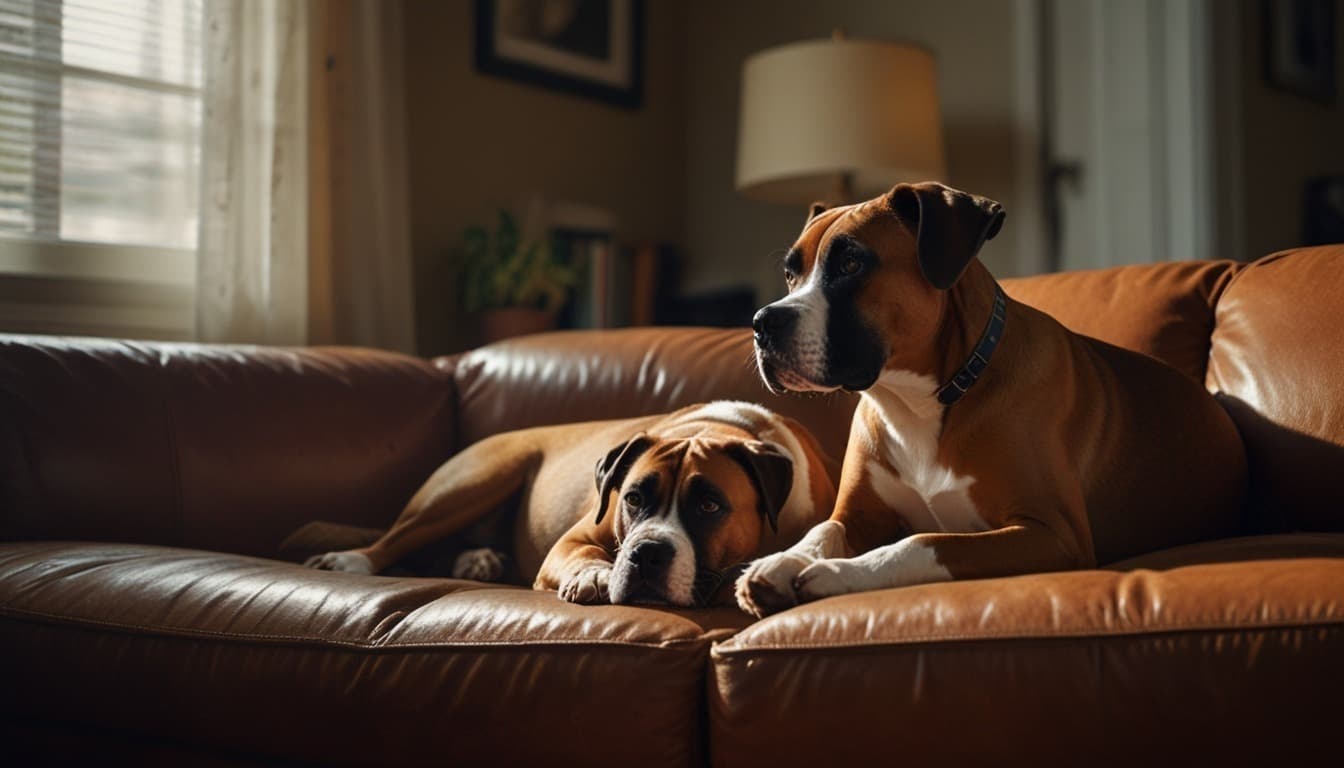
My third build dog, a 60-pound Boxer mix named Tank (the name should've been my first clue), ate an armrest-sized hole in it during the 45 minutes I ran to the grocery store. I came home, saw the stuffing scattered like confetti across my living room, and sat down on the floor and cried. Actually sobbed. The kind of ugly crying where you can't catch your breath. Tank, meanwhile, was wagging his entire back end like he'd just gifted me the greatest present in the world.
That was 11 years ago. Since then I've fostered over 40 dogs through my little weekend rescue operation, made every mistake in the book, and learned that most "common dog behavior problems" aren't really problems — they're just dogs being dogs in a world that doesn't make sense to them. The trick isn't fixing the dog. It's figuring out what need isn't being met, and then getting creative enough to meet it without losing your sanity or your security deposit.
I'm not a vet. I'm not a certified trainer. I'm just someone who's cleaned up more pee, repaired more drywall, and apologized to more neighbors than I can count. Here's what I know.
The time my build dog ate trough a door (and I finally understood separation anxiety)
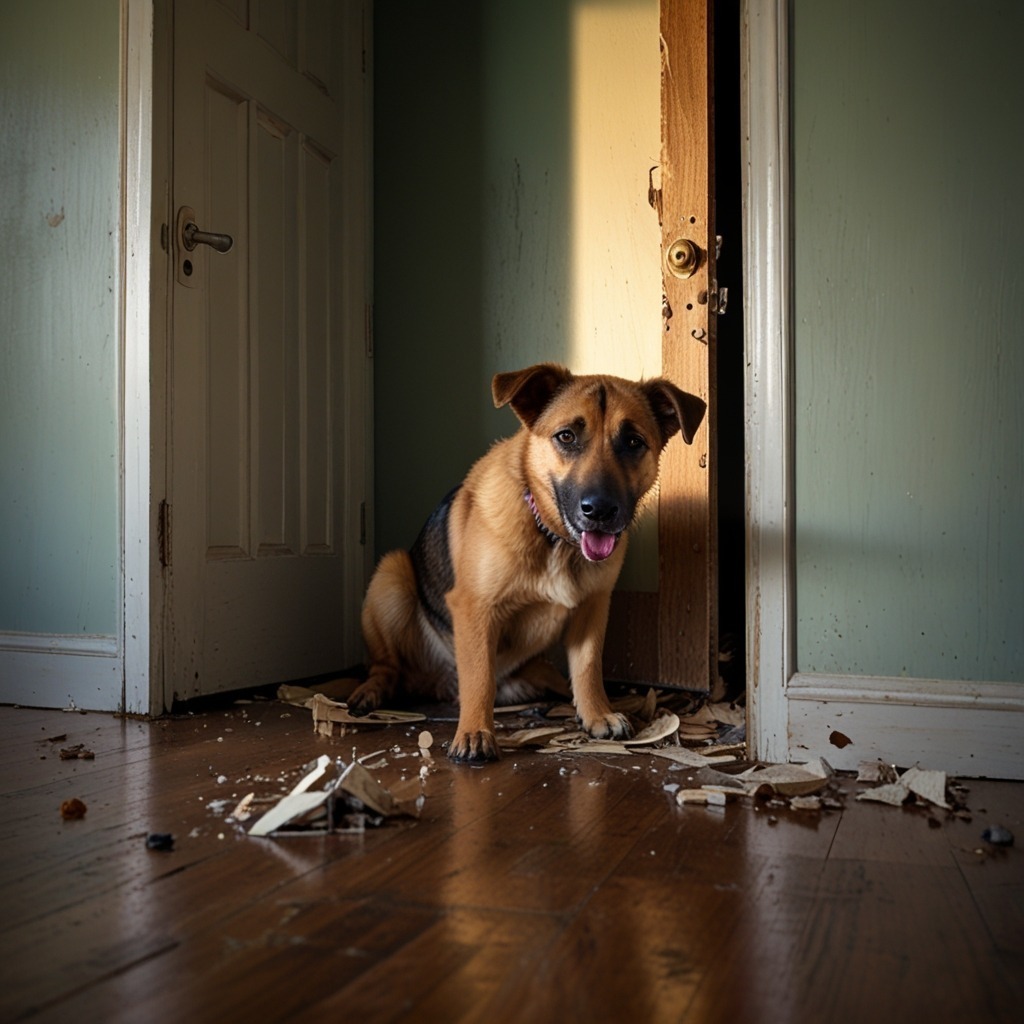
I used to think separation anxiety was just a dog being dramatic. You know, the kind of thing people say when their dog whines for five mintues after they leave. Then I fostered a Shepherd mix named Luna who literally chewed a hole through my hollow-core bedroom door. Not scratched. Chewed. Through. The door. She splintered the wood, pulled out chunks of it, and when I got home she was lying on my bed — on the wrong side of the door — looking proud of herself.
The hole was big enough to fit my head through. I wish I was exaggerating.
I called my vet, Dr. Nguyen — she's put up with my panic calls for 11 years, through three personal dogs and a divorec — and she told me something I'll never forget: "Sarah, that dog isn't being bad. She's terrified. Treat the terror, not the destruction."
That reframe changed everything for me. Luna wasn't trying to destroy my house. She was panicking. The destruction was a symptom, not the disease. So I stopped being angry (eventually) and started treating the anxiety itself. Here's what actually helped:
The crate training I had to un-learn
I'd always crate trained my fosters with the standard advice: put them in the crate, give them a treat, leave. For most dogs that works fine. For Luna, it made everything ten times worse. She'd drool so much the crate tray lokoed like a small pond, she'd scrape at the door until her paws bled, and once she bent the wire door so badly I had to throw the whole crate away.
What finally worked was getting rid of the crate entirely. I know, I know — every trainer on the internet just clutched their pearls. But for Luna, confonement was the trigger. She needed space to pace, to move, to not feel trapped. So I dog-proofed my bedroom (everything off the floor, cords hidden, nothing chewable within reach), set up a camera so I could watch her, and left for 10 minutes the first day.
She paced. She whined. She didn't destroy a single thing. The next day, 15 minutes. The day after, 20. It took two months of this slow, boring, incremental exposure — me leaving and coming back before the anxiety tipped over into destruction — but eventually I could leave for four hours and she'd just sleep on the bed. No hole. No drool. No blood.
I wrote about a similar night-from-hell experience when my personal dog ate an entire pan of brownies and I had to rush to the emergency vet — that story still makes my stomach drop. But that night taught me that pnaic and destruction often go hand-in-hand, and you can't punish panic out of a dog.
Medication isn't a cop-out
Here's a thing I used to judge people for: putting their dog on anti-anxiety medicattion. I thought they were just lazy. "Train your dog, don't drug them," I'd think, feeling very smug on my high horse.
Then Luna's anxiety was so severe that she couldn't learn. She was so flooded with cortisol all the time that no amount of training would stick — her brain literally couldn't form new associations because she was in constant fight-or-flight mode. Dr. Nguyen suggested a short course of trazodone paired with the behavior modification work. Within two weeks, Luna could relax enough to actually learn that me leaving wasn't the end of the world. She stayed on it for three mnoths while we did the training, and then we weaned her off. She was fine.
Sometimes dogs — like people — need chemical help to get to a place where learning is possible. That's not failure. That's biology.
Barking at 3am and oter ways dogs make you lose your mind
My current personal dog, Gus, is a 45-pound hound mix who has exactly two volumes: asleep and foghorn. For the first six months I had him, he barked at everything. The mailman. A leaf falling three streets over. The refrigerator ice maker at 3am. Once he barked at his own fart — I watched him startle, spin around, and then bark directly at his own rear end for a solid 30 seconds. The neighbors must have thought I was running a torture chamber.
I tried yelling "QUIET!" wich, shockingly, didn't work, because to a dog, you yelling sounds like you're joining the barking party. I tried a citronella collar (awful — my whole house smelled like bug spray and Gus just learned to bark in a different tone that didn't trigger it). I tried one of those ultrasonic boxes, and it just made him bark more because now there was a weird noise AND something to bark at.
Here's what actually made tjings better, and it's so boring I almost hate to tell you.
Management before training
Step one wasn't training at all. It was putting frosted window film on every window that faced the street. Ten bucks at Home Depot. Suddenly Gus couldn't see the mailman, couldn't see the neighbor's cat, couldn't see the kid on the skateboard. His whole reason for perimeter-barking disappeared overnight. Was he cured? No. But the barking cut down by about 70% immediately, and now we had a manageable problem instead of a constant headache.
I know it feels like you're avoiding the problem, but here's the truth: every time your dog rehearses the barking behavior, it gets more ingrained. Your'e not training anything when you let them practice the bad behavior and then correct them. You're just creating a cycle. Cut off the trigger first. Then teach the alternative.
The "thank you" protocol
This one I learned from a trainer friend who's way smarter than me. When Gus would bark at something, I'd go look at it. Literally walk to the window, look out, say "thank you" in a calm voice, and then walk away. The idea is that the dog's job is to alert you to potential threats. If you acknowledge the alert, their job is done. They don't need to keep barking.
It felt ridiculous at first. Me, in my bathrobe at 6am, walking to the sliding door to "thank" my dog for alerting me to the existence of a squirrel. But it worked. Not overnight, and not perfectly — but over a few weeks, Gus started barking once or twice, then looking at me for the "thank you," and then settling. Now we're at about 85% success. The ice maker still gets him sometimes, but honestly, same.
I wrote a whole separate post about my barking mistakes with a different dog — if you're dealing with this, you miht find it helpful. It's basically a catalog of everything I did wrong, if you want to feel better about yourself.
Jumping: the 80-pound lap dog problem
I'm 5'4″. When a big dog jumps on me, they can put their paws on my shoulders and look me in the eye. It's not cute. It's a concussion waiting to happen.
My build Moose — a Great Dane mix who masqueraded as a small horde — had a jumping problem so bad that he once knocked my 75-year-old mother into a bush. She was fine, thank God, but I aged about ten years in that moment. Moose wasn't aggressive; he was just overwhelmingly friendly with absolutely no concept of his own size. He wanted to get closer to people's faces because he loved them, and the fastest way to do that was to stand up.
Everybody told me to turn my back and ignore him. Great advice in theory. In practice, turning your back on an 80-pound dog who's already mid-air means getting body-checked between the shoulder blades. Not my favorite feeling.
Four-on-the-floor, relentlessly
The only thing that worked was creating a world where jumping got zero reward — ever — and having all four paws on the ground got him everything he ever wanted. Treats, pets, attention, his meals, his leash going on for walks. All of it. Every single interaction, for weeks, was conitioned on him keeping his feet down.
I wore a treat pouch around my waist like a giant nerd for two months. The second Mooose's front feet lifted even an inch off the ground, all attention stopped. I became a statue. No eye contact. No "no." No pushing him off (which, to a dog, feels like play). Just a boring, unmoving human. The instant all four paws were back on the floor, I'd throw a party — treats, high-pitched praise, ear scratches. Within a few weeks, he started shwoing hesitation before jumping. Within a couple months, the jumping stopped almost entirely, except when he was especially excited, and even then he'd self-correct mid-bounce like he remembered the rules.
Consistency was the whole game. Every person who came in my house had to follow the same protocol. I literally handed printed instructions to guests. Yes, I was that person. No, I'm not sorry.
The leash-pulling that dislocated my shoulder (almost)
I used to think leash pulling was just a training issue. Then I fostered a 90-pound Lab named Bruno who pulled like he was trying out for the Iditarod. The first week I had him, he saw a squirrel, lunged, and pulled me off my feet. I landed in a puddle, covered in muddy water, while Bruno stood there looking confused about why the walk had stopped. My shoulder was sore for weeks.
Flat collars made it worse. Choke chains — which I used back in my dumb, early days — made him cough and hack and still pull like a freight train. Prong collars were suggested to me by a well-meaning neighbor and I'm so glad I never tried one; they look like medieval torture devices and honestly, if you need to hurt your dog to get them to stop pulling, you've already lost the plot.
The use that saved my shoulders
A front-clip use was the big deal. The leash attaches at the chest, so when the dog pulls, it turns them sideways instead of giving them the power of their whole chest and shoulders. It doesn't hurt them; it just makes pulling physically ineffective. Bruno hated it at first — he'd do this awkward spinny dance like "why am I going sideways?!" — but within about three walks, he figured out that a loose leash meant forward movement and pulling meant going nowhere.
I went through a bunch of garbae harnesses before finding one that actually worked. I wrote about the $12 use that finally did the trick here, including the five other ones that were basically expensive junk.
Oh, and I learned to identify squuirrels before Bruno did. Situational awareness: the other half of loose-leash walking.
Digging: my yard looks like a minefild and I've made peace with it
Some dogs dig. Some dogs REALLY dig. My build Tilly, a terrier mix whose ancestors were probably bred to hunt badgers, dug holes with the intensity of a backhoe operator on a deadline. In her first week, she excavated a crater under my fence that was deep enough to bury a toddler. I filled it in. She dug it out agaain the next day. I put rocks in it. She dug around the rocks. I put chicken wire under the soil. She dug through the dirt ABOVE the chicken wire and then just lay in the shallow dirt trench like a satisfied lizard.
After about a month of fighting a losing battle, I realized something: Tilly wasn't trying to escape. She just really loved digging. It was her favorite hobby. She'd dig, pant happily, roll in the hole, and then nap in it. Who was I to take that away?
So I gave her a digging zone. A 4-foot by 4-foot sandbox in the corner of the yard, buried with toys and treats. I'd redirect her to it whenever she started digging elsewhere. It worked kind of — she still snuck in some unauthorized digs, but the crater-count dropped dramatically. Sometimes the solution isn't stopping the behavior; it's giving it an appropriate outlet.
A tangent, because I'm thinking about Tilly: she once dug up an entire sprinkler head. Just yanked it right out of the ground, PVC pipe and all. The yard flooded, the water bill was alarming, and I had to call my ex-husband to help fix it because I'm useless with plumbing. That was a fun phone call. "Hey, remember that dog you said I shouldn't build? She just destroyed our — I mean MY — irrigation system." He actually laughed. Progress, I guess.
Resource guarding: the growl that made my blood run cold
Resource guarding is scary. Full stop. When a dog you've been caring for — a dog who's been sweet and cuddly all week — suddenly growls at you over a bone with the kind of low, serious threat that says "I'll bite you," it shakes something in you. Your trust evaporates. You wonder if you've made a terrible mistaek bringing this dog into your home.
That was Reggie, a 50-pound Cattle Dog mix. The first time he guard-growled at me, I backed away so fast I tripped over my own feet. Then I did the stupidest thing possible: I took the bone away.
Here's what I know now that I didn't know then: taking away the guarded item confirms the dog's fear. It teaches them that yes, you're going to steal their stuff, and next time they need to escalate the warning sooner and louder. I made the problem worse in about three seconds.
Trade-up games and not being an idiot about it
The fix, which I learned from a behaviorist friend over a very panicked phone call, is counterintuitive. You don't take things away. You teach the dog that you approaching their stuff predicts something EVEN BETTER appearing. I'd walk near Reggie while he had a mid-value chew and toss a piece of hot dog toward him without stopping. Just kept walking. Did this for days. Then I'd drop the hot dog closer. Then I'd pause for a second before dropping. Eventually, when I approached, Reggie would look up with this expression like "oh boy, here comes the chicken lady!" instead of "back off, this is mine."
It took weeks. It took patience. It took me not being a control freak who needs to prove I'm the boss. Bcause here's the thing: I don't need to take things from my dog. If it's dangerous (chocolate, cooked bones), I manage the environment so they don't get it in the first place. If it's just a chew toy they've "claimed," I leave them alone. Not everything has to be a dominance contest.
Speaking of which…
That time I tried alpha rlling and I'm still embarrassed
When I first started fostering, I watched a certain TV show that convinced me I needed to be the "pack leader." So when my second build dog, a mouthy adolescent Lab, got rowdy, I pinned him on his side. Alpha roll. Dominance displayed. I felt very tough and capable for about three seconds.
Then he panicked. He squirmed, yelped, and when I let him up, he cowered away from me with his tail tucked so tight it was practically inside his body. I had terrified a dog who was already scared and confused in a new environment. He didn't trust me for weeks. I had to rebuild every ounce of our relationship from scratch, and I dserved every bit of that struggle.
The whole dominance theory has been debunked for years — the researcher who coined it literally retracted his own findings — but it still floats around like a bad smell. Dogs aren't wolves in your living room plotting coups. They're animals who need safety, predictability, and clear communication. Leadership isn't about force. It's about being the source of all good things and setting boundaries without breaking trust.
I don't have a three-step fix for this one, because the fix is just: don't do it. Don't alpha roll, don't scruff shake, don't yell, don't hit, don't rub their nose in pee. If you're doing any of that, stop. You're not training. You're bullying. And your dog knows the difference.
The $340 vet bill that explained everything about chewing
Chewing is maybe the most universal dog complaint. Puppy chews shoes. Dog chews furniture. Article after article tells you to "provide appropriate chews" and "redirect," which is fine advice but honestly not helpful when you're staring at your grandmother's dining chair legs that now look like beaver sculptures.
My build puppy Cooper once ate something he shouldn't — I still don't know what — and I ended up at the emergency vet with $340 in x-rays to make sure he didn't have an obstruction. He was fine. He pooped out what looked like a shredded rubber duck two days later. But that vet visit made me realize something: most destructive chewing isn't about the chew toys at all. It's about unmet needs.
Cooper was a 7-month-old Cattle Dog mix. He had enrrgy to burn and a brain that needed a job. I was walking him twice a day and giving him a Kong with peanut butter, and thinking that should be enough. It wasn't. I wtote about a Lab who taught me the same lesson — sommetimes more exercise isn't the answer; mental exhaustion is.
Mental work tires them out faster than running
I started giving Cooper "jobs": puzzle feeders for every meal, 10-minute training sessions before I left the house, scent games where I'd hide treats around the room and make him find them. A 10-minute scent game tired him out more than a 30-minute walk. He'd pass out afterward, construction-worker style, snoring on the floor. The chewing dropped off dramatically becuase he was too mentally exhausted to look for trouble.
Also, I finally learned to pick up my damn shoes. Dogs don't understand property valeu. If it's on the floor and it smells like you, it's fair game. Management: the least exciting but most effective tool in behavior modification.
Socialization failures I'm still cringing about
I used to think socialization meant letting my dog meet every dog, every person, every leaf that moved. I'd take fosters to the dog park on day two and let them get body-slanmed by a pack of strange dogs, and then wonder why they developed reactivity. I wrote about that particular disaster here, and I still feel guilty about it.
Real socialization isn't about saying hi. It's about exposure without pressure — teaching your dog that the world is boring and safe, not that every stranger is a new best friend. A dog who calmly ignores people and dogs is far better adjusted than one who lunges to greet everyoen. I wish I'd known that 14 years ago. So many of my fosters would have had easier transitions.

When the chewing stopped but the shoe-setaling didn't, and I gave up
Here's a short one, and I'm not giving any advice here because I've none. My dog Gus doesn't destroy shoes. He just collects them. I'll come home and find one running shoe on his bed, completely unharmed, like a little offering. He doesn't chew them. He doesn't even slobber on them. He just… relocates them. I've tried redirecting. I've tried closing closet doors. He waits. He's patient. One day I found my left slipper in the yard, perfectly dry, just sitting in a sunbeam. I've accepted it. Some behaviors aren't problems — they're just personality.
Sometimes you just let the dog be weird. Not everything needs fixing.
What I finally stopped worrrying about after 40-plus dogs trampled through my life
I used to think every build dog needed to be a perfect citizen before I coukd adopt them out. No barking, no jumping, no pulling, no nothing. If they had a single "behavior problem," I felt like a failure. I'd scramble to fix everything, stuffing their issues into a box labeled "before the next adopter sees."
That was exhausting. And dishonest. And unfair to both the dogs and the adopters. Now I'm honest: "He pulls on leash a bit, but a front-clip use helps." "She barks at the doorbell. You can work on it, or you can just disconnect the doorbell like I did." Most behavior "problems" aren't dealbreakers. They're quirks. They're manageable. They're part of loving an animal who doesn't speeak your language and didn't ask to live in your world.
When a potential adopter asks me "is he a good dog?" I always say the same thing: "He's a dog. He chewed my baseboards and peed on my rug and once ate a stick of butter, wrapper and all. He's also the sweetest, goofiest, most loving creature I've ever met. Those things aren't contradictions. They're the whole package." The people who get that are the ones who take the dog home.
I guess what I'm saying is, if you're in the middle of a behavior problem right now — staring at your destroyed couch, crying because your dog just lunged at a stranger, wondering if you're a terrible owner — you're not. You're just someone who's having a hard time with an animal who's also having a hard time. You'll figure it out. Or you'll learn to live with it. Or you'll call a professional and they'll help. But you don't have to fix everything by Tuesday.
Speaking of accepting things I can't change: I should go take my own dogs out before Gus staarts relocating my shoes again. The left slipper still hasn't forgiven me for the yard incident.