I've Fostered 40+ Dogs and the Ones That Were Actually Good With Kids Were Never the Ones I Expected
I've fostered 40+ dogs, and the ones who were actually good with kids were never the breeds you'd expect. Here's the messy, real-world truth about what makes a family dog safe.
The Golden Retriever at the Shelter Who Broke My Heart and Taught Me Everything About 'Family Dogs'
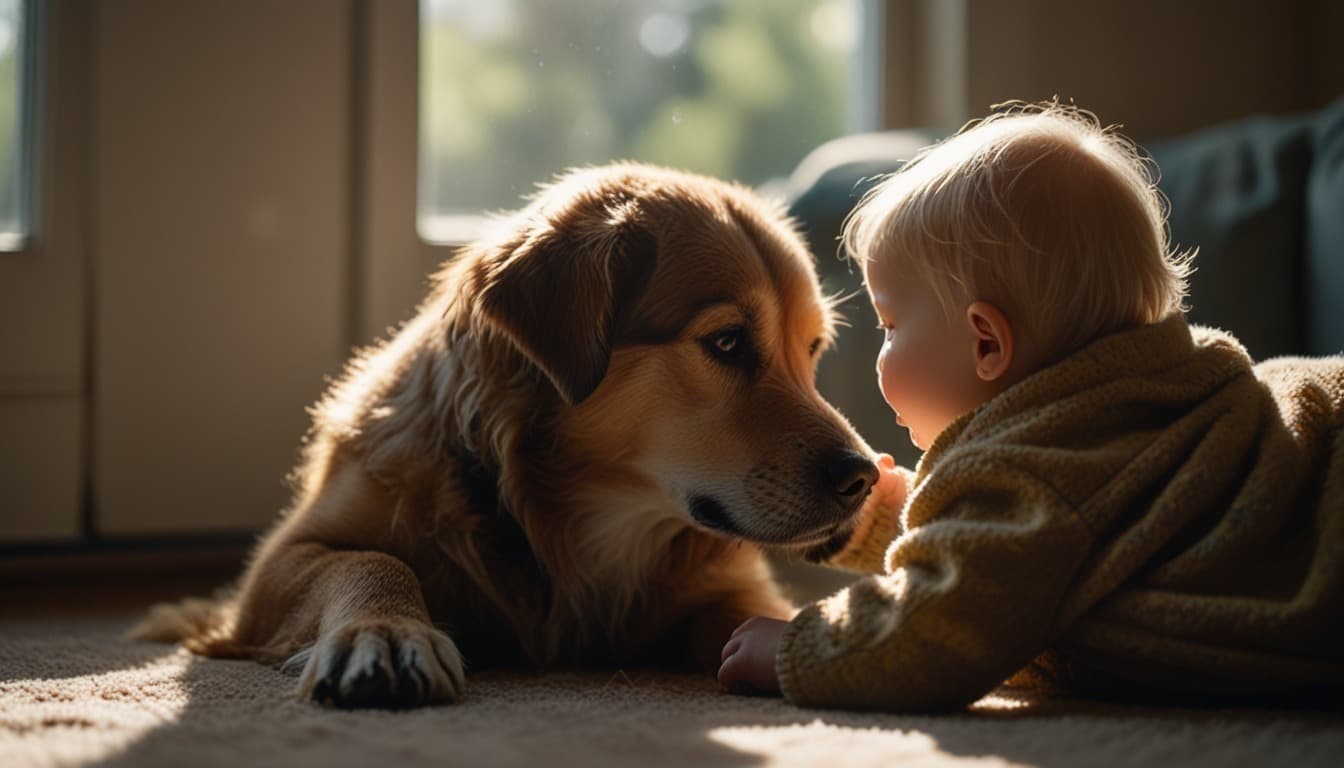
I still remember the way Charlie looked at me from behind that chain-link kennel door. Big, blocky head, feathery tail wagging so hard it banged against the metal walls, those soft brown eyes that practically had 'I'm the perfect family dog' stamped on his forehead. He was a 4-year-old Golden Retriever surrendered by a family with a toddler. The intake form said 'nipped at child — no warning.' The staff had already writtn him off as not safe for kids. And I — I, who at that point had fostered maybe 30 dogs and thought I knew a thing or two — walked in there ready to prove them wrong.
Spoiler: I didn't prove anyone wrong. I proved myself naive. But Charlie taught me more about what actually makes a dog safe for families than any breed list ever has.
The 15-Minute Meet-and-Greet That Told Me Absolutely Nothing
I brought my neighbor's kid — a calm, dog-savvy 8-year-old named Maya — to meet Charlie at the shelter. He was a dream. Leaned into her for pets, licked her hand, sat when she asked him to sit. Zero red flags. I signed the build papers that day, convinced this was just another case of a family that didn't undersrand dog body language, that the 'nip' was probably a warning snap after the toddler pulled his ears one too many times.
What I didn't know yet was that Charlie had a double ear infection that had gone untreated for months. The shelter vet found it on intake — inflamed, yeasty, painful enough that even gentle pressure made him flinch. The toddler in his previous home had, in fact, grabbed his ear. And Charlie, in pain and startled, had air-snapped. He didn't break skin. He didn't lunge. He gave the most restrained warning a dog can give, and that family gave him up anyway.
I treated his ears. They cleared up within three weeks. Charlie turned into the most patient, bombproof dog I've ever had in my home — he let Maya dress him in a tutu, he let her toddler cousin crawl over him while he lay on the rug, he once let a baby grab his lip and pull and all he did was look at me with a long-suffering expression that said why are tiny humans like this. But here's the thing: if someone had adopted Charlie based on a 15-minute shelter visit and a breed label, they never would have known about the ear infection. They would've just seen Golden Retriever = kid-safe, brought him home, and maybe gotten a very different outcoome if a kid grabbed his ear before the infection healed.
That's the first lie I want to shatter. Breed tells you probabilities. It doesn't tell you about the individual dog sittinng in front of you, their pain level, their history, their specific triggers. And if you're not willing to look past the label and see the dog, you're setting everyone up for failure.
The Thing About 'Gentle' Breeds Nobody Warns You About
Goldens, Labs, Cavaliers, Newfies — they top every 'best family dogs' list on the internet. And sure, on average, they score higher on sociability and lower on aggression than a lot of other breeds. But that doesn't mean every individual Golden is a safe bet around your toddler. It doens't mean Labs don't resource-guard (oh, they do — I've met plenty). It doesn't mean a Cavalier with a slipped disc won't snap if a kid picks them up wrong.
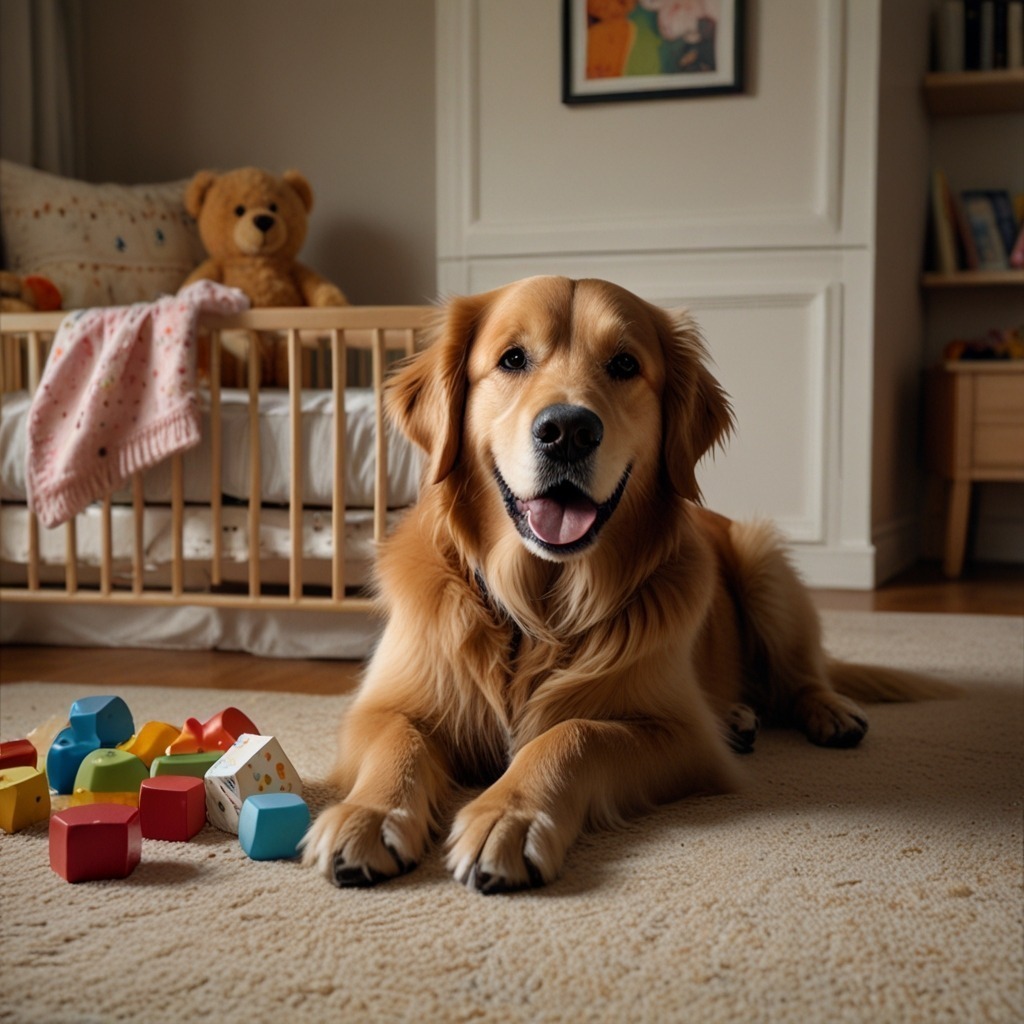
I've fostered three Goldens total. One was Charlie — saintly. One was a hyperactive mess who knocked over small children just by wagging his tail too hard and once gave my nicee a bloody nose with an enthusiastic nose-boop. One was an older girl who'd been used as a breeding dog and was so shut down she'd pee if you raised your voice near her. Same breed. Three completely different dogs. Breed is a starting point, not a guarantee.
Actually, let me back up —
What Even Is a 'Family Dog' Anyway?
Because the phrase gets thrown around like it means one thing. It doesn't. A family with a newborn has different needs than a family with three rowdy 10-year-olds. A family that lives in an apartment and never goes outside except to walk the dog is different from a family with a big fenced yard where the dog can escape the kids. A family where the parents have experience with dogs is different from one thaat's never owned a pet before. The dog that would be perfect for one of those setups could be a disaster in another. So when someone asks me 'what's the best family dog?' I've about 47 follow-up questions before I'll even attempt an answer.
But I've fostered 40+ dogs. I've watched them interact with kids of all ages — my own nieces and nephews, neighbors' kids, kids who visited the rescue on weekends. And I've learned, the hard way, that the dogs who end up being truly safe, truly reliable, truly family are rarely the ones the inteernet told me to expect.
The 5 Dogs I'd Actually Trust Around a 2-Year-Old (And Why None of Them Were Puppies)
Notice that word: trust. Not 'supervise closely and hope for the best.' Trust. As in, I'd leave the room to grab a coffee and not have a panic attack. That's a high bar. Very few dogs meet it. Here are the ones that did, in my house, with my specific kids in my specific situation.
The 8-Year-Old Beagle Mix Who Knew the Assignment
Maggie was a dumpy little thing — short legs, a belly that practically dragged on the ground, ears that picked up every crumb on the floor. She came to me as an owner surrender from an elderly woman who'd gone into assisted living. The woman had grandkids who visited, apparently, because Maggie was utterly unflappable around small humans. A toddler could take food right out of her bowl and she'd just sigh and walk away. She slept through screaming, through tantrums, through the chaos of a birthday party with 15 six-year-olds. She was, in short, a rock.
What made her that way? Age, for one. An 8-year-old dog is settled. They've seen it all. They don't have the frantic, impulsive energy of a puppy or the teenage boundary-pushing of a 2-year-old dog. They know the world isn't ending if a kid makes a loud noise. Also, temperament. Maggie was just innately calm. And third — and this is huge — she'd had positive, gradual exposure to kids throughout her life. She wasn't thrown into a chaotic household at age 6 after living like a quiet only-dog. The transition for her was just a different set of kids, not an entirely new concept.
The 4-Pound Chihuahua Who Never Snapped (I Knoow, I Was Shocked Too)
Look, I've met a lot of Chihuahuas. Many of them live up to the stereotype — nervous, nippy, possessive. But Peanut was different. Peanut was raised by a build mom who had three kids under 5 and actively socialized her. She was handled gently from day one. She learned that kids meant treats and soft touches, not grabbing hands and shrieking. She'd sit on a kid's lap for hours, little body vibrating like a tiny motor. She'd let them carry her around like a stuffed animal, legs dangling, expression vaguely resigned.
The lesson here: size dorsn't dictate safety. A tiny dog can be a saint if they're properly raised and managed. And a giant dog can be a liability if they're not. More on that in a minute.
The 3-Year-Old Pit Mix Who Taught Me About Patience
Bruno was the dog I swore I'd never build — blocy head, cropped ears (not my doing), a sheet of intake notes that included 'dog-reactive, barrier frustration, previous bite to a man's hand.' But the rescue was desperate and I had an empty crate. He was a project dog, not a family dog candidate. Until my brother visited with his 5-year-old twins and Bruno — this dog who'd allegedly tried to bite a man — melted into a puddle of wiggles and licks and gentle play-bows. He was careful with them. Deliberate. He'd lie down to be at their level. He'd bring them toys with a wagging tail so vigorous his whole back end swayed.
Now, I'm not saying every Pit mix is a hidden family gem. What I'm saying is that Bruno, despite his label and his history and the internet's opinions about his breed, was brilliant with those kids. Because his issue wasn't with kids. His issue was with strange men. Kids he adored. I'd never leave him unsupervised with a child — not because I didn't trust him, but because I don't leave ANY dog unsupervised with a child — but in terms of day-to-day interactions, he was safer than half the Labs I'd met.
The 10-Year-Old Shepherd Mix Who Just Wanted to Be Left Alone (And Was, Respectfully)
Luna wasn't kid-averse, exactly. She just didn't see the point of them. She'd tolerate petting for about 30 seconds and then get up and walk to her crate, where she'd flop down with a loud sigh. My nieces learned to respect that signal fast. And you know what? That made her a good family dog. Not because she was actively cuddly or playful, but because she communicated clearly and the humans in the house listened. A dog who knows how to say 'I'm done' and has their boundaries respected is far safer than a dog who's forced to tolerate handling until they finally snap.
This is something I wish more 'best family dogs' articles talked about: the dog doesn't have to be the kid's best friend. They just have to coexist peacefully. And that requires the adult humans to be the ones enforcing boundaries, not relying on the dog to be endlessly patient.
The 2-Year-Old Mutt Who'd Been Returned Tice (And Was Actually Perfect)
His name was Tater — a gangly, dorky, 40-pound mystery mix who'd been adopted and returned twice for being 'too much.' Too much energy, too much jumping, too much mouthing. He was a disaster in his first two homes, both with kids under 10. And yet, in my house, with my structured routine and clear boundaries and three kids who knew how to interact with dogs, he thrived. He stopped jumping within a month. He learned to bring a toy when he was excited instead of mouthing hands. He'd play fetch with the kids for an hour and then pass out cold on the dog bed, snoring like a freight train.
The difference? Management. His first homes expected the dog to just 'be good' without putting in the work to teach him what good looked like. They didn't provide enough exercise, they didn't supervise interactions, they didn't use baby gates or crates or time-outs. Tater wasn't a bad dog. He was a normal adolescent dog who'd never been shown what to do instead of being a tornado. Put him in the right environment and he was a dream.
So. Those are my five. Not a purebred in sight. Not a puppy. Not a single one I'd have predicted from a breed description alone. All of them, in their own way, were wonderful with kids. And all of them taught me that the question isn't 'what breed should I get?' It's 'what's this individual dog actually like, and am I willing to do the work to set them up for success?'
The Big, Fluffy Lie: Why Size Matters Way Less Than Everyone Thinks
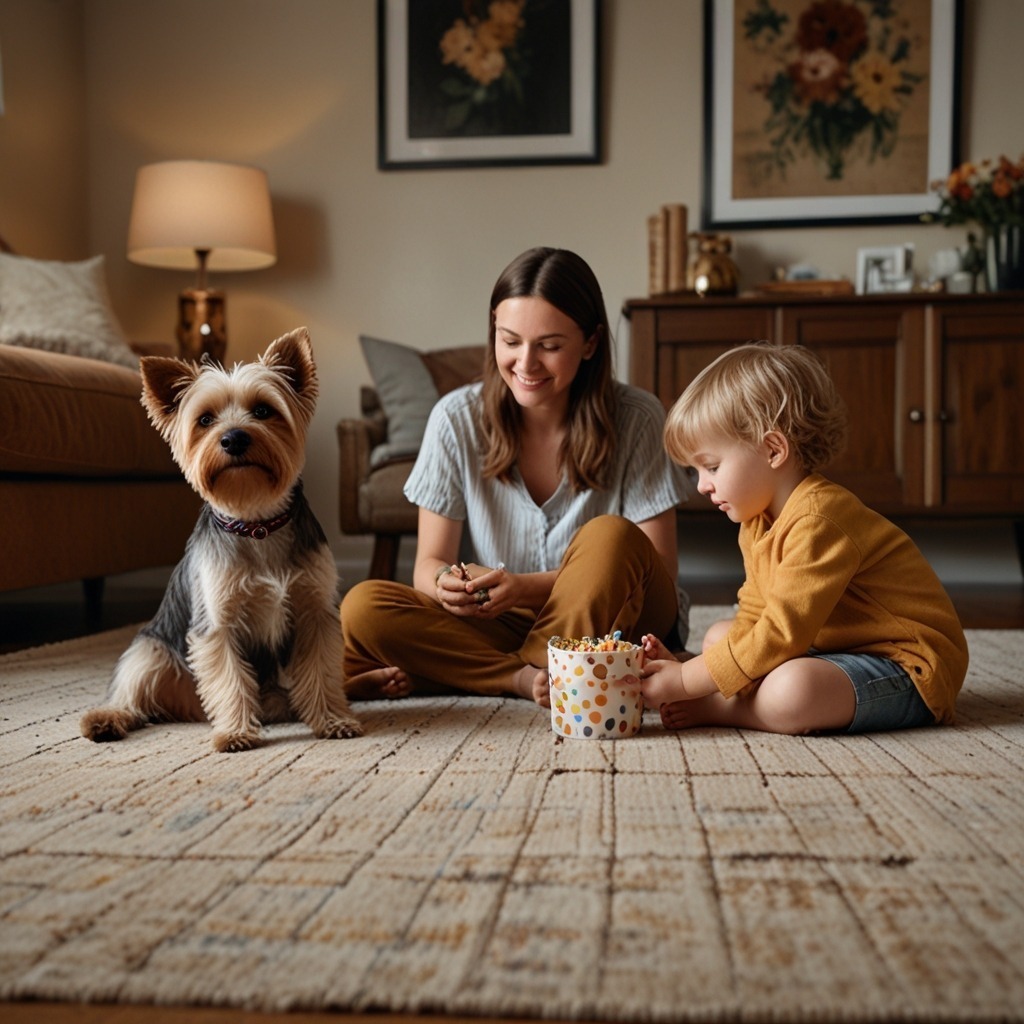
I can't tell you how many times someone has told me 'oh, we want a small dog because the kids are little — a big dog might knock them over.' And I get it. The mental image of a 90-pound Lab bowling over a toddler is vivid and realistic. It's happened in my living room. Multiple times. But here's the thing: small dogs get hurt. A toddler tripping and falling on a 5-pound Yorkie can break bones. A preschooler grabbing a Chihuahua too roughly can dislocate a shoulder. The 'small dog = safe for small kids' equation only works if you've a bombproof small dog and a gentle child, whhich — let's be honest — is a unicorn combo.
Meanwhile, big dogs who've been properly trained can be amazingly careful. My current dog, a 75-pound Shepherd mix, steps around toddlers like they're made of glass. He's been taught 'leave it' and 'gentle' and 'back up.' He knows his own strength. The size of the dog matters far less than the training the dog has received and the supervision the humans provide.
The Great Dane Incident That Cost Me a Coffee Table
One of my early fosters was a Great Dane named Bertha. Yes, Bertha. She was 125 pounds of pure, goofy affection. She'd never been taught not to lean on people. One afternoon, my neighbor's 6-year-old was over, and Bertha, delighted to see this tiny human at eye level, decided to do her signature happy-lean. The kid went flying backwards into the coffee table, which — being a cheap IKEA thing — collapsed dramatically. The kid was fie. Bertha was confused. The coffee table was toast.
Was Bertha a bad family dog? No. She was a giant untrained idiot who needed someone to teaach her body awareness. Which brings me to my next rant —
The Energy Mismatch Thaat'll Make You Hate Your Life (And Your Dog)
More often than size or breed, the thing that makes or breaks a dog's fit with a family is energy. And I'm not just talking 'high energy' vs 'low energy.' I'm talking about the specific kind of energy, the way it expresses itself, and whether it matches the household rhythm. A family with two sedentary adults and a baby who mostly stays inside is going to struggle with a dog who needs two hours of off-leash running a day. A family with three competitive soccer players who are constantly in and out of the house is going to overwhelm a sensitive, low-energy dog who just wants to nap in a quiet corner.
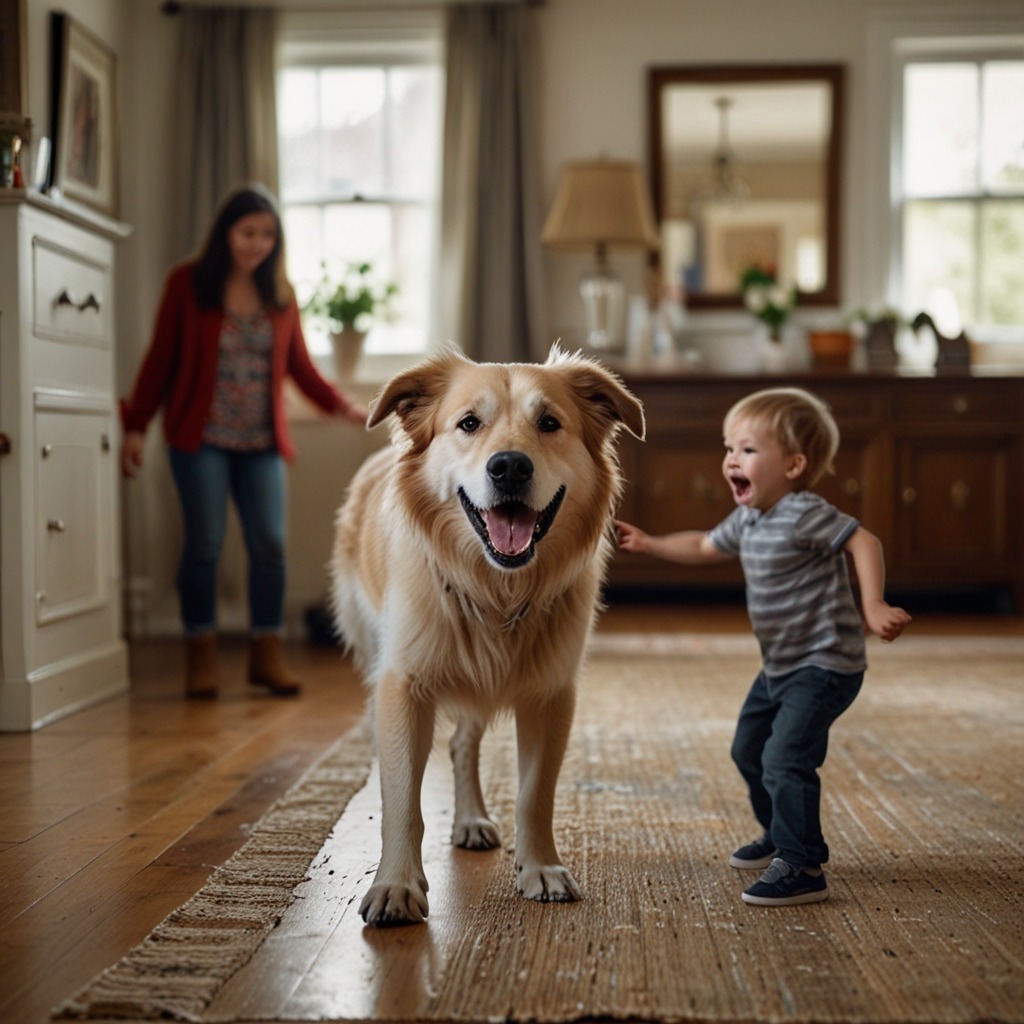
And the mismatch doesn't just make everyone tired. It creates behavipr problems. A dog who's chronically under-exercised becomes destructive, anxious, reactive — all the things that get labeled 'aggression' or 'bad with kids' when really it's just a dog screaming for an appropriate outlet.
When 'Smart' Turns Into 'Neurotic' — My Border Collie build Who Herded the Kids
I once fostered a 2-year-old Border Collie named Quinn. She was brilliant. Scary brilliant. She learned the names of every toy in the house, she could open lever-handle doors, she figured out how to open up her crate from the inside. She also, unfortunately, decided that my visiting nephews — ages 3, 5, and 7 — were sheep. She'd circle them, nip at their heels, try to keep them in a group. The 3-year-old thought it was hilarious until he got a pinching nip on the back of his thigh and started wailing. Quinn wasn't being mean. She was doing exactly what a hundred generations of breeding programmed her to do. But in a sbuurban living room with small children, that instinct was a liability.
I ended up transferring Quinn to a dog sport home where she could channel that drive into agility and herding trials. She was a fantastic dog. Just not a fantastic family dog. Not because she was dangerous, but because her needs and a family's needs didn't align. This is the kind of thing breed matters for — not 'is this breed good with kids' in some abstract sense, but 'does this breed's fndamental wiring work with how my family actually lives?'
I Walked a Lab 8 Miles and He Still Ate the Couch — So Let's Talk Real Exercise Needs
Speaking of mismatches. I ranted about this in detail over in my post about the 8-mile-walk-that-did-nothing, but the short version: physical exercise alone rarely fixes a dog who's wired for mental work. That Lab, Duke? I could've run him until his paws bled and he'd still have destroyed my sofa because his brain was bored out of its skull. What he needed was training sessions, puzzle toys, scent games, a job — not just more miles.
If you're a family with kids, the dog you bring home needs to have an energy level and a type of energy that you can actually meet. If you're already stretched thin with bedtime routines and homework and soccer practice, the last thing you need is a dog who needs an hour of fetch followed by a training sssion followed by a frozen Kong just to be normal. That's not me being dramatic. That's me having cleaned up the aftermath of couches, baseboards, shoes, and drywall when a family overestimated what they could handle.
Look, I'm going to go off on a tangent here because it's been bugging me. Remember the trope 'a tired dog is a good dog'? It's not wrong, exactly, but it gets misapplied. A tired dog is a dog who's had both physical and mental outlets. A dog who's just been physically exhausted but still has a buzzing brain is a dog who'll lie on the floor panting for 20 minutes and then get up and eat your remote. The best family dogs I've known weren't necessarily the ones who needed the least exercise. They were the ones whose exercise needs aligned with what the family naturally provided — whether that was a three-mile daily jog or just 20 minutes of trick training in the living room.
Alright, tangent over.
And Then There's the Whole Rescue vs. Breeder Thing
I'm not opening that can of worms today. Not fully. I'll just say this: I've fostered rescue dogs who were amazing with kids, and I've met purebred puppies from excellent breeders who grew up to be spooky, reactive messes because the family didn't socialize them right. And I've seen the reverse. The ethics of where you get your dog are important — this post on puppy socialization nightmares goes into some of that — but from a pure safety standpoint, a well-run rescue that evaluates their dogs carefully and matches them appropriately can be just as good a source as a breeder. The key word being 'carefully.' If a rescue or breeder waves a dog in your face and says 'this one's great with kids, no we haven't actually tested them with a toddler, but trust us,' run.
The Training Nobody Tells You You'll Need When There's a Toddler in the House
Everyone knows to teach 'sit' and 'stay' and 'leave it.' Fewer people think about the skills that specifically relate to kid-filled homes. Like 'gentle mouth' — the dog learning to take treats without using teeth, which translates to being less likely to nip if a kid's hand accidentally ends up in their face. Like 'go to your mat' — an off-switch that means 'go lie on your bed and chill out while the kids are eating / running around / being chaotic.' Like 'trade' — dropping whatever they've picked up (a sippy cup, a small toy, a chicken bone from the floor) in exchange for something better, without guarding it.
Resource Guarding: The Ugly Side of 'Family Friendly' Dogs
I've seen more so-called 'family dogs' returned to the shelter for resource guarding than for any other reason. A Lab who growls when the toddler crawls near his food bowl. A Golden who snaps when a kid tries to take a bully stick away. These aren't bad dogs. Resource guarding is a normal, instinctive behavior — it's just one that's dangerously incompatible with small children who don't understand boundaries.
The worst part? Most of the guarding I've seen cuold have been prevented or managed with training, but the families didn't know what to look for until it escalated. The early signs are subtle: the dog freezes when a kid approaches the bowl, eats faster, positions their body between the kid and the thing they're guarding. By the time it's a growl or a snap, the dog has been communicating discomfort for weeks or months. If you've young kids, you need to become fluent in that body language before the dog arrives. And you need a management plan: feed the dog in a crate or behind a baby gate, pick up high-value chews when kids are roaming, teach the children never to approach the dog when they're eating. It's not hadr, logistically. But the emotional buy-in — the willingness to prioritize the dog's comfort over the desire to have a picture-perfect 'dog and baby share everything' moment — that's the part people skip. And then the dog gets blamed.
Teaching 'Gentle' Mouth Befoer the Baby Arrives (and Other Stuff I Wish I'd Done)
With my own dog, I did this thing where I'd hold a treat between my fingers and only release it when he took it with the softest possible mouth. If he grazed my skin at all, the treat disappeared. He learned. Now he takes treats like a tiny, polite dinosaur. That same soft-mouth instinct transfers to interactions with kids — he's careful with his teeth when he takes toys, careful when he plays, careful when a toddler's sticky fingers get too close to his mouth. It's not a guarantee against a bite, but it's a layer of protection.
Other things I'd do: get the dog comfortable with being handled everywhere — paws, ears, tail, mouth — so that when a kid inevitably grabs a body part, the dog doesn't startle. Practice 'sudden loud noises don't mean anything' by pairing startling sounds with treats. Desensitize to strollers, crawling, erratic movements. You can do this gradually before the kid even arrives, if you're planning ahead. And if the kid is already here and the dog is already here and you're reading this thinking 'crap, I did none of that,' it's not too late. Dogs are adaptable. You just have to commit to doing the work now, consistently, before there's an incident.
Which reminds me — I need to talk about the stress thing. Because stress and kids and dogs exist in a terrible feedback loop that a lot of people don't notice until the dog's pooping liquuid in the corner or has developed a hot spot the size of a dinner plate.
I once had a build, a swweet Lab mix named Opal, who came to me with chronic diarrhea. I did the whole probiotic rodeo — the expensive chews, the powders, the special diets. I went through $340 worth of supplements before I realized (and this is detailed in the very un-fun probiotic diary I kept) that her gut wasn't the root problem. The root problem was that she was incredibly stressed by the noise and chaos of my three nieces visiting every weekend. Once I gave her a quiet space away from the kids and a regular routine, her digestion normalized within a week. No probiotic needed. The stress was literally making her sick.
So, if your 'family dog' suddenly develops unexplained health issues — stomach upset, skin problems, obsessive licking — consider whether the household environment might be overwhelming them. A dog can love your kids and still find the noise level unbearable. Giving them an escape route (a crate with a cover, a gated-off bedroom) isn't cruel. It's kind.
What a Do'gs History Actually Tells You (And What It Doesn't)
I've been burned by this so many times. A dog comes in with the label 'good with kids' from the previous owner, and I assume they're safe. But that label could mean the dog lived with teenagers who never interacted with them, or the dog was fine until the baby started crawling, or the owner was in denial about the growling. People lie on surrender forms. They downplay. They remember the best version of their dog, not the scary moment they're trying to forget.
On the flip side, I've had dogs arrive with warnings like 'not for homes with chidren under 12' who turned out to be perfectly gentle with supervised, respectful kids. The warnings were based on a single incident in a chaotic, unstructured home — not a fair test of the dog's actual temperament. I take every history with a grain of salt the size of a boulder now. I observe. I test. I let the dog show me who they're in my environment, with my structure. That's the only way to know.
This is where rescue organizations that do build-to-adopt or trial periods are worth their weight in gold. You need to see the dog in your actual house, with your actual kids, over time — not in a shelter meet-and-greet room with a half-dozen other barking dogs and a stressed-out dog who's been living in a kennel for three weeks. That version of the dog isn't the real dog. The one who settles into your home after two weeks and starts showing their true self? That's the real dog.
The Breeds I'd Shortlist If I Had a Kid Tomorrow (But With a Ton of Caveats)
Alright, fine. I've been avoiding giving a list, because I hate lists, but I also know that people want a starting point. So here's my biased, not-exhaustive, heavily caveated list of breeds and types I've personally seen do well with kids — with the understanding that the individual dog matters more than the breed, the training matters more than the breed, and the management matters more than the breed.
Labrador Retrievers — with the caveat that they're mouthy, high-energy, and will eat your children's toys. They're not born trained. They need exercise and mental work and a solid 'leave it' command. But a well-bred, well-raised Lab is hard to beat for patience and goofy tolerance. I've also seen Labs who were neurotic, resource-guarding messes because they came from backyard breeders and weren't socialized. So, vet your source.
Golden Retrievers — see entire section above. Same caaveats as Labs, minus the toy-eating obsession but plus a tendency to develop chronic ear infections that can make them touch-sensitive. Ask me how I know.
Mixed-breed mutts — specifically, adult or senior mixed breeds from a rescue that's done a thorough evaluation. A 6-year-old Heinz 57 who's lived in a build home with kids and proven themselves steady is worth more than any purebred puppy in my book. You get a known quantity. You skip the nightmare adolescent phase. And you get a dog who's already developed whatever temperament they're going to have.
Cavalier King Charles Spaniels — if you can find one from a breeder who health-tests for mitral valve disease and syringomyelia. They're small enough not to knock a toddler over, portable enough to take everywhere, and bred for centuries to be lap dogs. But their health issues are a landmine. I've known three Cavaliers, and two of them developed debilitating pain conditions that made them snappy by age 6. The third is still a wiggly angel at 9. It's a gamble.
Staffordshire Bull Terriers — I'm going to get hate for this. But the ones I've met who were well-bred and properly socialized have been absurdly affectionate, patient, and gentle with kids. The 'nanny dog' reputation is oversold and dangerous to rely on, but the core temperament of a stable, well-raised Staffy is genuinely tender. The problem is that they're often poorly bred and undersocialized, and when things go wrong, they go wrong harder than with a smaller breed because they're strong. If you go this route, you'd better know what you're doing.
There are breeds I'd avoid, too, but that feels like a different post. The shotr version: if a breed was developed to work independently (livestock guardians, some terriers) or has intense herding drive (Border Collies, Aussies) or a low threshold for handling (many toy breeds), you're stacking the deck against yourself. Not impossible, just harder.
The Time My build Dog Let a Toddler Use Him as a Pillow and I Just Sat There Crying a Little Bit
It was a Sunday. My brother's family was visiting — all three kids, the youngest barely 18 motnhs old and still in that unsteady waddling phase where she'd trip over air. My build at the time was a rangy, scruffy terrier mix named Oscar who'd been found as a stray. No known history. He'd been with me three weeks and I'd kept the kids at arm's length because I was still evaluating.
But toddlers are fast. I turned my back to grab my coffee, and by the time I turned around, the baby had toddled over to Oscar's bed, plopped down, and laid her head right on his flank like he was a pillow. Oscar lifted his head, blinked at me, licked the baby's ear once, and went back to sleep. I stood there frozen, coffee in hand, and watched them breathe together for probably five minutes. The baby's hand was curled in his fur. His tail gave one lazy thump.
I cried. Not because I was sad. Because I'd spent the previous three weeks trying so hard to be careful, to do everything right, to not be the person who assumed a stray dog was safe around kids and ended up on the news. And here was this dog, who'd never been tested with a toddler before in his life, choosing to be gentle even when I wasn't hovering.
That's the thing about the right dog, in the right home, with the right humans. They'll surprise you. Not because of their breed or their age or their background, but brcause you created a space where they felt safe enough to surprise you. Oscar wasn't on any 'best family dog' list. He was just a good dog who landed in a home that set him up to succeed.
Anyway. I should go feed the actual dogs before they stage a protest. There's a build cat on the windowsill who's been judging me the entire time I've been writing this, and I'm starting to feel personally attacked. Good luck with your search, truly. Take your time. Meet the actual dog. And for the love of everything, don't bring a puppy into a house with a crawling infant unless you've the energy of a caffeinated hummingbird.