I Walked My Foster Lab 8 Miles and He Still Destroyed the Couch — Here's How Much Exercise They Actually Need
I once walked a foster Lab 8 miles and he still destroyed my couch. After 14 years of fostering Labs, here's the exercise math that actually works—and it's not what the internet keeps telling you.
The day I fostered a 90-pound yellow Lab named Gus—a dog who had been surrendered twice for 'too much energy'—I thought I knew what I was in for. I'd been rescuing dogs for years. I'd dealt with border collie mixes, husky crosses, pits that could run for days. I was, in my own head, an Exercise Expert. So on day one I strapped on my hiking boots, clipped a use onto Gus, and we did an 8-mile loop through the state park. Up hills, through streams, the whole thing. When we got home Gus drank an entire bowl of water, flopped onto his side, and closed his eyes. I sat on the couch, smug as hell, patting myself on the back for tiring out my new build in under two hours.
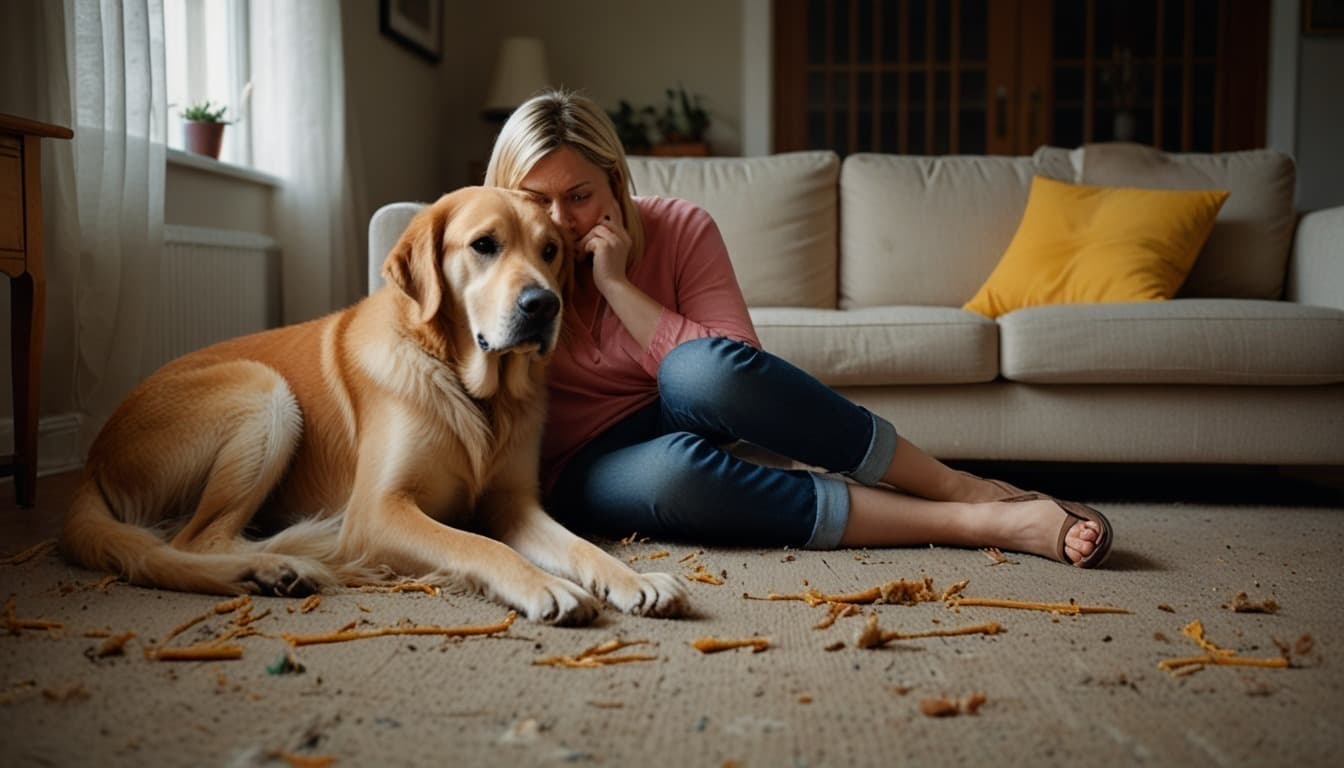
An hour later I came out of the bathroom to find Gus standing on top of a shredded couch cushion, stuffing hanging from his mouth like a dead squirrle, tail wagging so hard his whole body was a blur. He had energy left. A lot of it. The kind of energy that makes you question every life choice you've made.
That was fourteen years ago, give or take, and I've fostered more Labs than I can count since then—some from breeders who couldn't handle the puppy phase, some from shelters, a few strays who found their way into my yard. And if there's one thing I've learned the hard way, it's that the internet's advice about Labrador exercise is mostly garbage. This idea that you can just 'exercise them enough and they'll be tired' is a half-truth that leads to chewed baseboards, counter-surfing disasters, and dogs who are somehow both exhausted and ready to sprint through a screen door.
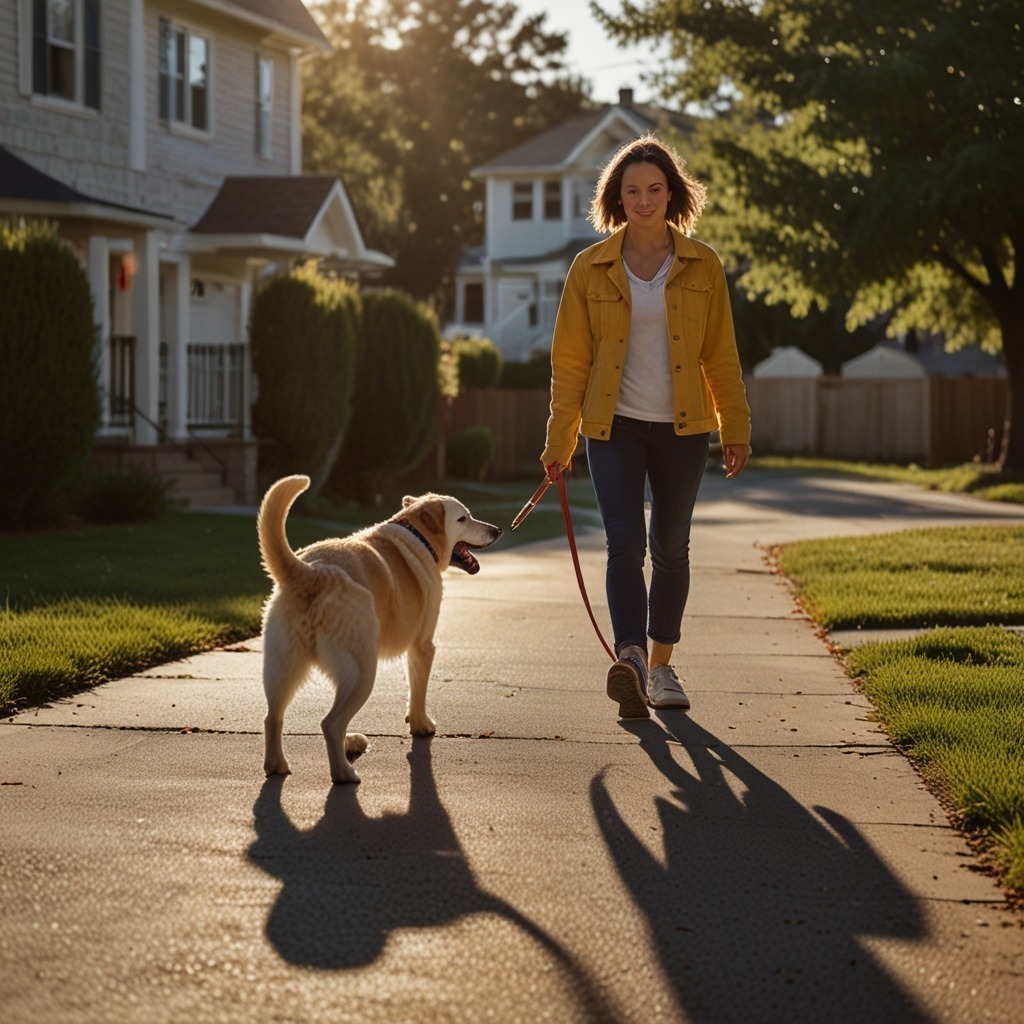
So let me tell you what actually works. Not the generic 60-to-90-minutes-per-day guideline that every vet website copies and pastes, but the real, messy math that includes mental stimulation, age, individual temperament, and the fact that some Labs will look at you after a marathon and say 'that was a nice warmup.'
The Nap Math I Had Completely Wrong
Here's the thing I dind't understand back when I was hiking Gus through the woods: exercise for a Labrador isn't just about burning calories. It's about meeting a deep, evolutionary need to work, sniff, retrieve, and problem-solve. A Lab's brain was built to spend hours quartering a field, locating downed birds, swimming through cold water, and then coming home to sleep in front of a fire. If you only give them physical exercise without the mental piece, you're basically creating a very fit, very frustrated animal who's still looking for a job to do.
Gus was physically tired. His muscles were done. But his brain had spent two hours on a single-track trail, leashed to a human who wasn't giving him any decisions to make. He'd been a passengre. And Labrador Retrievers aren't passengers—they're the ones who want to drive the damn car.
Why more miles don't always mean more calm
I've watched people at my local dog park brag about running their Lab 10 miles in the morning, then come home to find the dog has rearranged the kitchen. They think the answer is 12 miles. Then 15. Then they're on a running forum asking if they can take their Lab on a half marathon and someone says 'sure, they're working dogs' and six months later that dog has blown out a cruciate ligament and the owner is staring at a $4,000 surgery bill.
Exhaustion and fulfillment aren't the same thing. A dog can collapse from fatigue and still be mentally understimulated—just like you can spend eight hours doomscrolling and feel drained but not satisfied. Labs need to think. They need to use their noses, solve puzzles, retrieve things, and feel like they've accomplished something. Without that, a tired Lab is just a Lab who's too worn out to control his impulses right now, but give him twenty minutes of rest and he's back to chewing your baseboards.
The age factor everyone forgets
I've also made the mistake of applying the same exercise formula to every dog. A 3-year-old Lab in his prime is a different animal from a 10-month-old puppy whose growth plates are still open, or an 11-year-old with arthritis in both hips who sttill tries to act like he's two. The guidelines that float around—like the 'five minutes per month of age' rule for puppies—are a starting point, not gospel. And they do nothing to account for the fact that some Labradors are field-line and built like marathon runners, while others are show-line and would prefer to nap on a memory-foam dog bed after a single lap around the block.
My current dog, a black Lab mix named Hank who's about seven now, can go all day if we're doing something interesting—swimming, fetch with a chuck-it, a hike where he's allowed to carry a stick in his mouth the entire time. But if I try to jog with him? He looks at me like I've asked him to do my taxes. He'll trot alongside for half a mile, then slam on the brakes and refuse to move until we turn toward home. And he's a perfectly healthy Lab. He just has opinions. Labs, as it turns out, are full of them.
That Time I Created a Fitness Monster
Around 2017 I fostered a chocolate Lab named Marley—not the cute movie one, an actual terror—and I decided I was going to be the perfect build mom. Every morning at 6 a.m. we ran three miles. Lunchtime: 30 minutes of fetch. Evening: another walk, plus training. After two weks, Marley was in the best shape of his life and also completely unbearable. He'd wake me at 4:30 a.m. by dropping a tennis ball on my face. If I tried to skip a run because it was raining, he'd pace circles around the living room, whining, occasionally pawing at the door so hard the blinds rattled. I had, through my own hubris, conditioned an already high-energy dog into an athlete who needed that output daily. The minute I got sick and couldn't exercise him for two days, he chewed through a doorframe. Not the door—the frame around it. That's a level of destruction that takes commitment.
All that to say: consistency matters, but you can absolutely overdo it. Building a Lab's baseline to match your own peak fitness is a risky game. Life happens—you'll get the flu, you'll sprain an ankle, you'll have a week of meetings—and now your dog thinks the world is ending because he's used to running 5K before breakfast.
The 60-Minute Rule (That's Barely the Starting Line)
Alright, I'm going to give you some actual numbers, because you came here for that and I've been dancing around it. For an adult Labrador—say 2 to 7 years old—you're looking at a baseline of 60 to 90 minutes of dedicated exercise per day. But here"s the catch: at least half of that needs to be off-leash or on a long line, where the dog can move at his own pace, stop to sniff, and make choices. A walk around the neighborhood on a six-foot leash where you dictate the speed and direction doesn't count as a full workout for a Lab. It's barely an appetizer.
I know, because I've tried it. When I was working at the shelter, we'd walk the Labs for a solid hour on-leash, and they'd come back just as amped as when they left. The magic happened when we had a fenced area and could let them zoom, wrestle with another dog, or chase a flirt pole. Twenty minutes of that would do more for their mental state than an hour on pavement ever could.
So my real recommendation: aim for 30 minutes of high-quality off-leash exercise (running, swimming, fetch, play with another dog), plus 30-45 minutes of what I call 'sniffari'—a walk where you let them set the pace and follow their nose, preferably somewhere with grass, trees, interesting smells. Toss in 15 minutes of training or puzzle work somewhere in the day—doesn't hav to be all at once—and you've got a recipe for a Lab who's actually content, not just exhausted.
Of course, some Labs will need more. Working lines? You might be looking at two hours easy, especially if they don't have a job. Couch-potato Labs from show lines might be fine with 45 minutes total. I've met both extremes, and I've been wrong plenty of times asuming a dog fit the breed average. That's why you watch the dog, not the clock.
When 'Exercise' Means Throwing the Ball for 20 Minutes and Calling It Done
I see this all the time. Someone posts on a Lab forum: 'My Lab is so hyper, I throw the ball in the backyard for an hour every day and he's still crazy.' And the responses are people telling them to throw the ball for longer. Which is like telling someone whose kid is bouncing off the walls to just give them more sugar.
The fetch trap
Fetch is great. I love fetch. My shoulder is permanently achey from years of it. But fetch alone is a high-arousal, repetitive activity that sends a dog's adrenaline through the roof and then leaves them hanging. There's no cool-down, no mental challenge, just a cycle of sprint-sprint-sprint. I've seen dogs become so obsessed with the ball that they can't think about anything else. They'll ignore other dogs, ignore you, ignore the fact that ther paw pads are bleeding—because the ball is life and everything else is noise.
A better approach: mix fetch with impulse-control training. Make them sit and wait while you throw the ball, then release them. Ask for a down halfway through the retrieve. Hide the ball and make them find it. Turn a mindless chase into a conversation. That's the stuff that actually wears out a Labrador's brain.
Sniff walks are the real MVP
I can't emphasize this enough. A 30-minute walk where the dog is allowed to sniff everything—mailbox posts, fire hydrants, the spot wjere someone spilled a smoothie three days ago—is worth more than an hour of power-walking. Sniffing lowers a dog's heart rate, processes a ton of sensory information, and gives them a way to experience the world that's deeply satisfying. I've watched build Labs go from frantic to zen in the space of a good sniff walk. It's like a meditation app but with more pee-mail.
I once walked a build Lab named Daisy who had so much anxiety she couldn't settle for more than five minutes. My vet suggested medication, but I wanted to try something else first. I switched our walks from structured heel-walks to long, meandering sniff sessions whre she set the agenda. Within a week she was snoozing on the rug instead of pacing. I wrote a whole post about that—about a dog who was terrified of everything and how socializing her differently changed the game (I Thought My Dog Was Just 'Shy' — Turns Out He Was Terrified of His Own Shadow. Here's What Actually Helped.). The exercise part of that equation wasn't about distance; it was about giving her control over her environment.
Puppy Math Is a Different Species
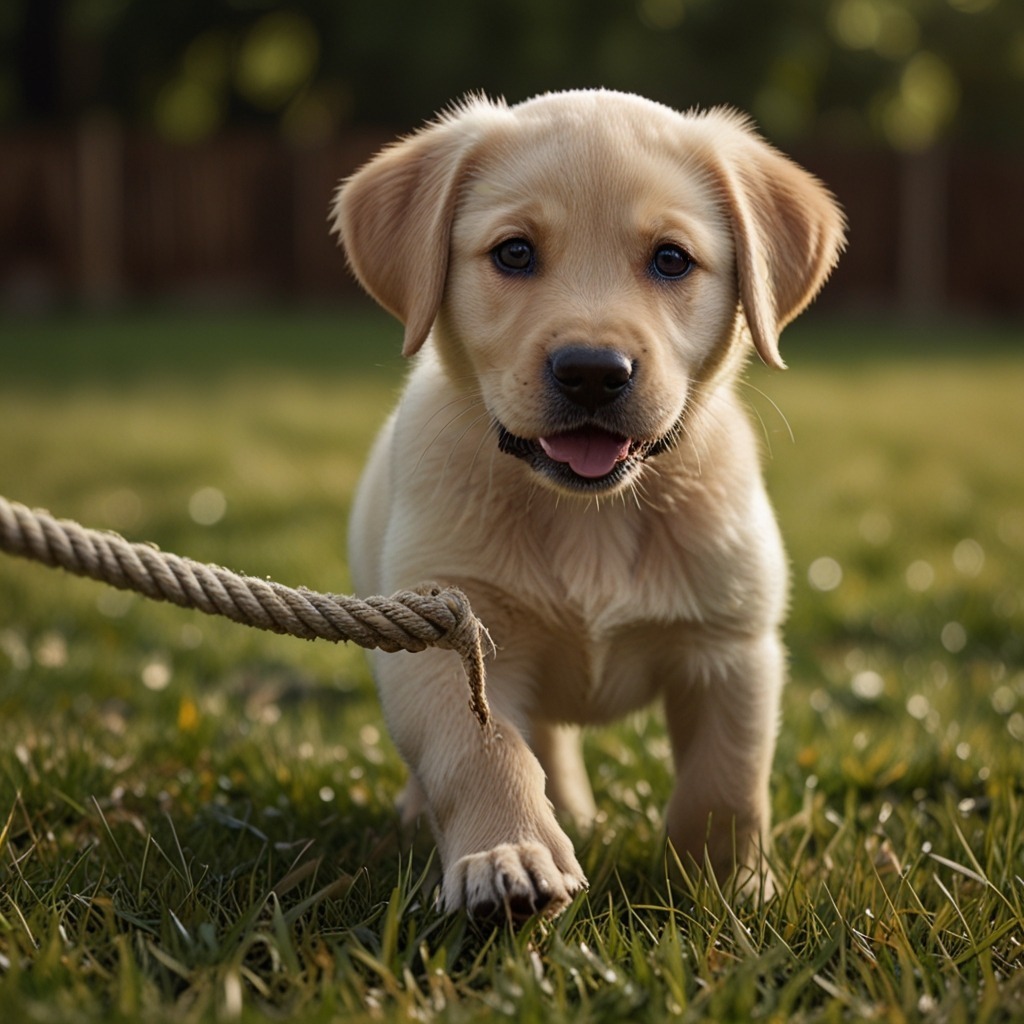
If you've got a Labrador puppy, forget evrrything I just said about 60-minute off-leash sessions. Puppy joints are made of rubber bands and hope, and overdoing exercise before the growth plates close—usually around 12 to 18 months—can cause permanent damage. I learned this the expensive way, as I learn most things.
The 5-minute rule that saved my sanity
You've probably heard the guideline: five minutes of structured exercise per month of age, up to twice a day. So a 4-month-old Lab puppy gets about 20 minutes of leashed walking or fetch twice a day, max. That sounds absurdly low when you've a shark-toothed tornado ricocheting off your furniture from 5 a.m. to 10 p.m. But structured exercise—repetitive movements on hard surfaces, jumping, stairs, sustained runming—that's what damages joints. Free play on grass, where the puppy can stop and start and change direction naturally, is different. That's fine. Let them be idiots in the yard. Just don't take them on a 3-mile jog.
Why my vet yelled at me about growth plates
Around 2014 I fostered a 6-month-old Lab puppy named Tank. He was massive, already 65 pounds, and had energy that could power a small city. I thought I was being responsible by taking him on long, slow walks to 'tire him out.' My vet, Dr. Nguyen—who's put up with my panic calls through three dogs and a divorce—looked at his X-rays after he started limping and said, very calmly, 'Did you run this dog?' I said no, just walks. Long walks? Yes. On pavement? Yes. She explained that repetitive impact on hard surfaces was inflaming his growth plates, and that if I didn't cut it out, I'd be looking at elbow dysplasia before he was two. I felt about two inches tall. I'd been trying to do the right thing and I'd ended up hurting him.
From then on, I became obsessive about low-impact exercise for puppies: swimming, gentle play, mental games, short sniff walks on dirt trails. Tank's limping resolved and he grew up sound. But I still cinge when I see people jogging with their 8-month-old Lab, thinking they're doing the dog a favor.
What I did with my last litter of build pups
Last year I whelped a litter of accidental Lab-cross puppies—long story, a build I took in was pregnant, surprise!—and I raised them from day one. I kept their exercise to 15-minute play sessions in a puppy-proofed room, with tons of chew toys, puzzle feeders, and short outdoor exploration when weather allowed. None of them destroyed my house because their brains were kept busy. You can exhaust a puppy with a cardboard box and some hidden treats faster than any walk. It's a magic trick I wish I'd known sooner.
The Senior Lab Who Taught Me That Walks Are Medicine
My old boy, Clarence—a yellow Lab I adopted when he was 10 and had already been returned to the shelter twice—taught me more about exercise than any hyperactive puppy ever did. When I got him, he was overweight, arthritic, and so stiff in the mornings he could barely stand. The shelter told me he was 'low energy.' What he actually was was in pain.
Joint pain and the slow-down nobody warns you about
Senior Labs often lose momentum not because they're lazy, but because moving hurts. And here's the heartbreaking part: they still want to go. They'll see you pick up the leash and their tail will wag, but five minutes into the walk they'll start lagging, and you'll think they're just old and tired. But it's pain. It's always pain until proven otherwise.
I spent a small fortune on joint supplements, prescription anti-inflammatories, and an orthopedic bed before I understood that Clarence didn't need less exercise—he needed different exercise. Short, frequent walks on soft ground. Swimming, which was like a miracle for his hips. Gentle stretching that I learned from a canone rehab therapist. I stopped measuring his exercise in minutes and started measuring it in tail wags and how well he slept that night.
When 15 minutes is a victory
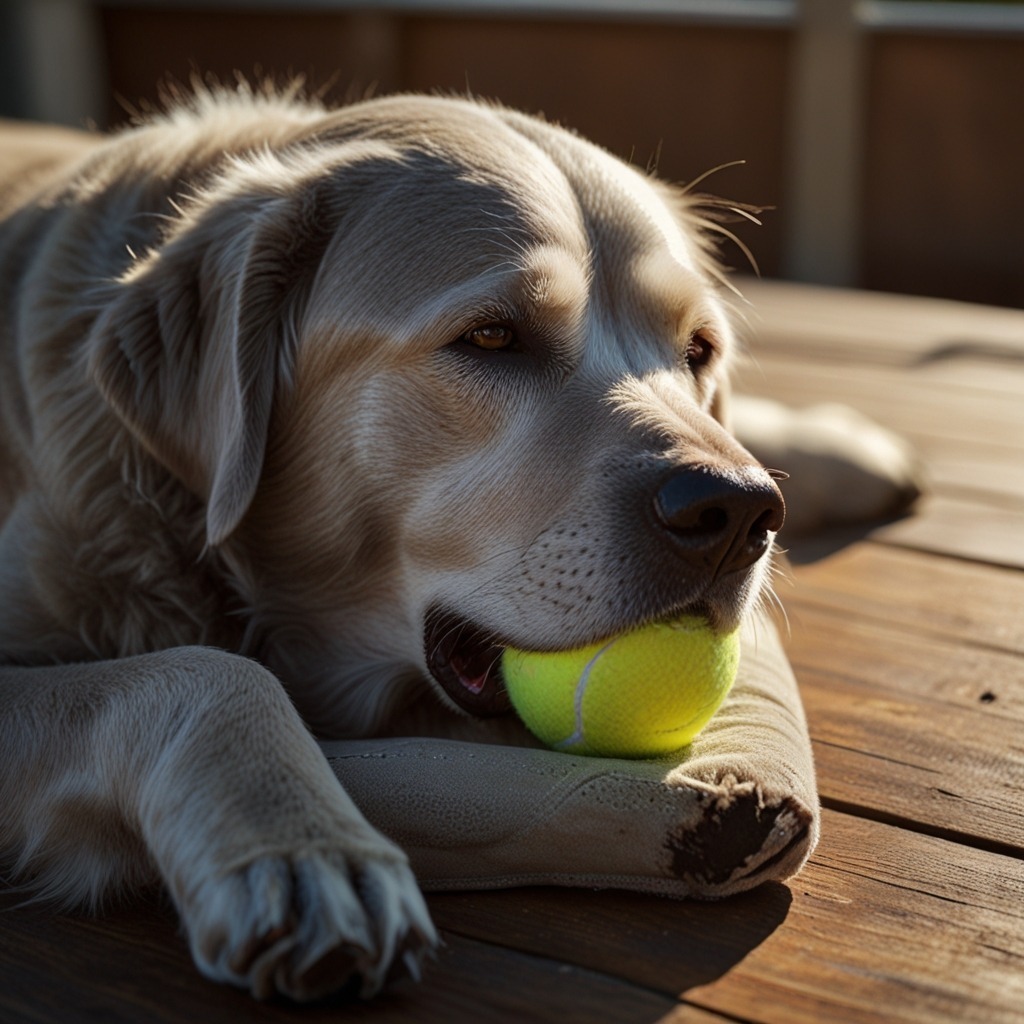
There was a morning, about six months after I adopted him, when Clarence took himself on a walk around the yard—no leash, no ptompting—and trotted back to me with a stick in his mouth. It was maybe four minutes total, but his eyes were bright and his tail was helicoptering. That was more exercise, in the sense that matters, than any forced march I'd ever taken him on. He lived to fifteen, which is ancient for a Lab, and I'm convinced the gentle, consistent movement kept him going.
I wish someone had told me earlier: with seniors, the goal isn't to wear them out. It's to keep them comfortable enough to want to move. The movement itself is the medicine. Once you get that, the whole exercise equation shifts.
The 3 a.m. Car Chaser and the $40 Allergy Chews That Should Have Been Walks
I need to tell you about a Lab I fostered named Cody who had a very specific prblem: he was obsessed with cars. Specifically Toyotas. No idea why. He'd launch himself at the window every time a Camry drove past, and on walks he'd nearly yank my arm out of the socket trying to chase one. I thought it was a training issue, so I spent weeks doing counterconditioning. I bought a calming vest. I even bought $40 allergy chews because someone online said his paw-licking was allergies and that's why he was so wound up. I was an idiot.
The real problem was that Cody was getting one 15-minute leash walk a day because I was overwhelmed with other fosters and working long hours. He was under-exerrcised and under-stimulated, and his brain had latched onto cars as the most exciting moving object in his world. When I finally got my act together and started giving him real, off-leash exercise—including a doggy daycare twice a week where he could run himself ragged—the car chasing faded. Not overnight, but enough that I could actually train him without feeling like I was fighting a freight train. (I wrote about that whole saga in another post: My Dog Tried to Chase Every Toyota That Passed. Here's What Actually Stopped Him.)
Moral of the story: a lot of 'behavior problems' are just exercise problems wearing a disguise. Before you buy the chews, the vest, the pheromone diffuser, ask yourself if your dog went on a good sniff walk today. You'd be surprised how often that's the answer.
And on the topic of wasting money on chews, I once spent $340 on probiotics because I thought my build's diarrhea was a gut health issue, when in reality the dog was so stressed from lack of exercise and shelter life that his system just couldn't settle. Once we got him into a routine with proper walks and downtime, his poop firmed right up. I wrote about that expensive mistake too, in case you're in the middle of your own soft-serve nightmare (here).
What the Hell Do You Do When Your Lab Refuses to Walk?
This one throws people. Everyone assumes Labs are these bottomless pits of energy who will go-go-go until they drop. And most of them will. But I've fostered Labs who, for whatever reason—bad experiences, pain, fear—planted their feet and refused to leave the drivewway. My neighbor adopted a Lab from a hunting kennel who was terrified of leashes because he'd only ever been walked on a choke chain. First week home, the guy would lie down on the sidewalk and not move for 20 minutes.
If your Lab won't walk, don't force it. It's not a stubbornness thing most of the time—it's a signal. Could be pain (hip dysplasia, arthritis), could be fear (a loud noise spooked them, or they were attacked by another dog on a walk), or could be that you've been pushing too hard and they've learned that walks equal exhaustion and no fun. I've had to rehab several shut-down dogs by making walks into a game: scatter treats in the grass, let them decide we're only going three houses down and then back, bring a squeaky toy and act like a fool. It takes patience, but it works. I went deep on this whole process in a post about a dog who wouldn't leave the crate (My build Dog Wouldn't Leave the Crate for Six Weeks. Here's What Finally Made Him Trust Me.), and a lot of the principles are the same: let the dog set the pace, make it rewarding, and stop worrying about distance.
The Afternoon Gus Fell Asleep in the Sun and I Stopped Worrying
I mentioned Gus at the beginning. The couch-destroyer. After that 8-mile hike disaster, I backed waaaaay off. I cut his walks down to 30 minutes of sniffing, gave him puzzle toys stuffed with frozen peanut butter, and started taking him to a fenced field where he could just be a dog—no agenda, no mileage goals. Some days he'd run circles for 20 minuets, then flop on his back and roll in the grass. Other days he'd spend most of the time sniffing a single patch of clover like it contained the secrets of the universe.
A few weeks in, I came home from a pee break to find him asleep on the back deck, stretched in a patch of afternoon sun, one paw twitching as he dreamed. He'd been home alone for three hours and hadn't eaten a single thing. He just slept. That's when I realized I'd been trying to beat the energy out of him instead of giving him a life that made him feel safe and satisfied. The exercise wasn't the goal—it was a side effect of a good day.
That's the thing I hope you take from this. Labradors need movement, sure. They need to run and swim and retrieve and sniff and carry things around. But the number on your step counter doesn't matter. The tired dog who's still mentally revved up isn't better off than the dog who had a short walk and then spent an hour working a kong. Pay attention to the dog in front of you—not the breed description, not the forum advice, not the Instagram influencer who runs 10 miles with her Lab every morning. Watch your dog's breathing after a walk, their willingness to settle, the way they apptoach the next activity. That's your only real measurement.
Gus eventually got adopted by a family with a pool and a kid who threw tennis balls for hours. As far as I know, he never ate another couch. But I'm not sure the miels made the difference. I think it was the kid, the pool, the constant, messy, unpredictable joy of being part of a family that actually saw him, not just his energy level. Exercise is part of that. Just not the part everyone thinks.