I Used to Wrestle My Dogs Like a Professional Wrestler Just to Clean Their Ears—Then I Learned This Embarrassingly Gentle Way
I used to wrestle my dogs to the floor and squirt ear cleaner everywhere. Then I learned a painfully simple method that made ear cleaning boring—for both of us.
I still remember the look on Sadie's face when I cornered her with the ear cleaner bottle. Not anger. Not fear. Just pure, unadulterated betrayal. She was a eight-pound terrier mix who'd been through seven homes before mine, and I'd just spent two months convincing her that human hands meant treats and scratches, not smacks and being thrown outside. And here I was, advancing on her with a squirty bottle and a cotton ball like I was about to do something unspeakable.
I'd done the research. I'd watched the YouTube videos. I knew you were supposed to lift the ear flap, fill the canal with cleaner, massage the base for thirty seconds, and then let them shake it out. Easy. The vet tech in the video made it look like she was pouring cream into a little porcelain cup. My dog? She made it look like I was trying to waterboard her.
I got the bottle into her ear for maybe two seconds before she went full Tasmanian devil. The cleaner went everywhere—my face, the wall, her neck, probably into her actual brain for all I knew. She yelped, I dropped the bottle, she scrambled under the couch, and I sat there with cleaning solution dripping off my eyebrow, convinced I'd just ruined all that trust we'd built.
That was 2009. I've cleaned a lot of ears since then—six years at the shelter, 40+ build dogs, my own three chaos-goblins. I've made every mistake there's. I've used Q-tips (please, please don't do that—I wrote a whole separate post about that near-miss). I've wrestled 90-pound shepherds. I've been head-butted, sneezed on, and once peed on, directly, while triyng to help a dog with a gnarly yeast infection. None of it was necessary. All of it was because I didn't understand one simple thing: you can't force a dog's ears clean without turning the whole experience into a fight. And fighting breaks trust.
So here's what I wish someone had told me back when I was squatting on my kitchen floor, dirpping ear wash, with my build dog contemplating a life in the walls. This is the slow, gentle, embarrassingly obvious method that actually works—without pinning, without yelling, without anyone losing an eye.
The Anatomy of a Disasrer: What Your Dog's Ear Canal Actually Looks Like
We've all seen the diagrams. A cute little cartoon dog with an arrow pointing to a straight tube called the "ear canal." that's a lie. A very dangerous lie. A dog's ear canal isn't a tube. It's an L-shaped horror-movie tunnel that plunges down and then makes a sharp 90-degree turn tward the eardrum. The vertical part is what you can see, right past the ear opening. The horizontal part is what you can't see, where all the wax and gunk builds up, and where your Q-tip—if you're foolish enough to use one—can jam debris straight into the eardrum like you're loading a musket.
I learned this from Dr. Nguyen, the vet who's put up with my panic calls for eleven years through three dogs and a divorce and one particularly stupid incident with a build beagle and a corn kernel. She drew the ear camal on a napkin for me once, with a ballpoint pen, because I'd called her at 7:30 am on a Saturday convinced I'd ruptured a dog's eardrum. (I hadn't. But the dog's ear was inflamed and the Q-tip had just rammed wax deeper, which the dog then shook into my open mouth. I'll spare you the details.)
That L-shape means any liquid you pour in thete's going to pool at the bend unless you do the massage step properly. It means any tool you stick in there's basically a blind probe. It means that if your dog has an infection or a ruptured eardrum you don't know about, you're about to inject cleaning solution straight into the middle ear, which is a fast track to vestibular disease, head tilt, and a very big vet bill. I've seen it happen. Not to my dog, thank god, but at the shelter we had a surrendered German shepherd who went home with a well-meaning adopter and came back three days later walking like a drunken sailor. The adopter had squirted half a bottle of "natural" ear wash into what turned out to be a ruptured eardrum. The dog recovered, eventually. The adopter never came back.
So before you clean anything, you need to know what you're getting into. Smell the ear first. I'm serious. Bend down, get your nose close, take a whiff. A heslthy ear smells like nothing—maybe a little warm, a little waxy, but not offensive. An infected ear smells like old bread dough, or a damp basement, or the inside of a shoe someone wore without socks. If you catch that smell, stop. don't pour anything in there. Get a vet check. You could have an eardrum that's already compromised, and you really, really don't want to find that out the hard way.
The Death of the Cotton Swab and Everything Pet Stores Told You
Let's talk about the elephant in the aisle: Q-tips, cotton-tipped applicators, whatever you want to call them. I've been in a PetSmart at 9 pm buying cat litter and I've watched people toss those little boxes into their cart like they're grabbing toothpaste. It's not their fault. The packaging sometimes even shows a dog with a Q-rip near its ear, or says "gentle for ears." That packaging is lying to you. It's lying like a rug.
I used Q-tips for years. At the shelter, we had jars of them. The protocol, as handed down by the shelter manager who'd been doing this since the '80s, was to wrap a little cotton around the tip (for "extra gentleness"), dip in cleaner, and swab out the visible part of the ear. Not the canal, just the flap and the opening. Even that made me nervous. Because a dog that jerks its head at the wrong moment—and they all do, because it's weird and tickly—can turn a gentle swab into an eardrum punch. I almost did it once with a chihuahua mix who sneezed mid-swipe. The Q-tip slid in deeper than I'd planned, I felt something give, and I spent the next two days watching that dog for head shaking and discharge. She was fine. I was a wreck. I never used a Q-tip again, not even for the outer folds.
Then there are the pre-soaked ear wipes. Oh, the ear wipes. They come in little tubs like baby wipes, smelling like aloe and lies. I bought a brand once that claimed to "eliminate odors and wax buildup in one gentle swipe." I swiped. The dog's ear smelled exactly the same, except now it was also wet. And the wipe came out brown, which felt like accomplishment, but really I'd just moved some surface wax around. The real problem was deep in the horizontal canal, where my little fingertip-in-a-wipe couldn't reach. Those wipes are fine for cleaning the outer ear flap after a muddy walk. They aren't fine for actually cleaning an ear. They're the equivalent of wiping your kitchen counter with a damp paper towel while the garbage disposal is full of week-old shrimp shells. It looks cleaner. It's not.
Wait, I'm getting ahead of myself. Let me back up and tell you about a dog named Lady, because Lady taught me more about ear cleaning than any video or vet handout ever did.
The $400 Ear That Smelled Like a Brewery
Lady was a standard poodle I fostered about five years ago. She came to me from a hoarding situation, 28 dogs in a single-wide trailer, and her ears were a disaster. I'm not exaggerating when I say the smell was visible. You'd walk into the room and your eyes would water. At first I thought it was just dirt and wax, so I did what any well-intentioned idiot does: I cleaned them. I used the vet-recommended flush, I massaged, I let her shake, I wiped. It helped for about two days. Then the smell came back, angrier, like a yeast beats that had been briefly offended and decided to retaliate.
I took her to the vet. Dr. Nguyen—same Dr. Nguyen, ever patient—took one look down Lady's ear with an otoscope and said, "Both ears are completely stenotic." Which means the canals had swollen nearly shut from chronic inflammation. There was a thick, black, waxy exudate (that's vet-speak for "disgusting gunk") plugging the horizontal canal. It was a yeast and bacterial infection that had been brewing so long it had basically built a condo in there. She had to sedate Lady, flush the ears under anesthesia, and send us home with a $400 bill and three medications: an antibiotic drop, an antifungal drop, and a steroid to reduce the swelling. It took six weeks to clear.
You know what kept it from coming back? Not heroic cleaning. Not expensive ear washes. It was figuring out the simplest possible rotine that Lady could tolerate, and doing it so gently she barely noticed. After her ears healed, I cleaned them once a week with a plain saline ear wash (the vet's recommendation), and I dried them thoroughly with a soft, dry cotton ball after every bath. That's it. I didn't pluck her ear hair, because plucking can cause micro-tears that invite infection, especially in poodles—I learned that lesson the hard way with a grooming disaster you can read about here. I just kept the ears dry and flushed them gently when I noticed any wax starting to build. Lady lived with me for another eight months before she was adopted. Her ears never got bad again. And she never once ran from me when I picked up the bottle.
That's the thing I want you to understand before we get into technique. Most chronic ear problems in dogs aren't from a lack of cleaning. They're from allergies, food sensitivities, ear structure (floppy-eared breeds trap moisture), or underlying conditions that need a vet, not a home remedy. Cleaning is prevention, not treatment. If your dog's ears are already red, swollen, painful, or stink like a frat house basement, put the cleaner down and go to the vet. Please. It'll be cheaper in the long run. I've seen too many people spend $200 on ear washes and wipes and natural miracle cures when what the dog actually needed was a $30 bottle of prescription drops and a diagnosis. Don't be me with Lady. Don't wait.
The Setup That Changed Everything
Okay. So you've sniffed the ears, you've confirmed they're not infected, you've scheduled a vet check if necessary. Now we can actually clean them. But the way you set up matters just as much as what you put in the ear. I spent years doing this wrong. I'd wait until the dog was relaxed on the couch, then suddenly appear with the bottle like a jump-scare villain. The dog would tense up, I'd tense up, and we'd both ennter the interaction already on edge. No wonder it failed.
The better way is to turn ear cleaning into a non-event. Something that just happens in the course of a normal day, with zero drama. Here's what I do now.
Gather Your Suplies Before You Even Look at the Dog
You need:
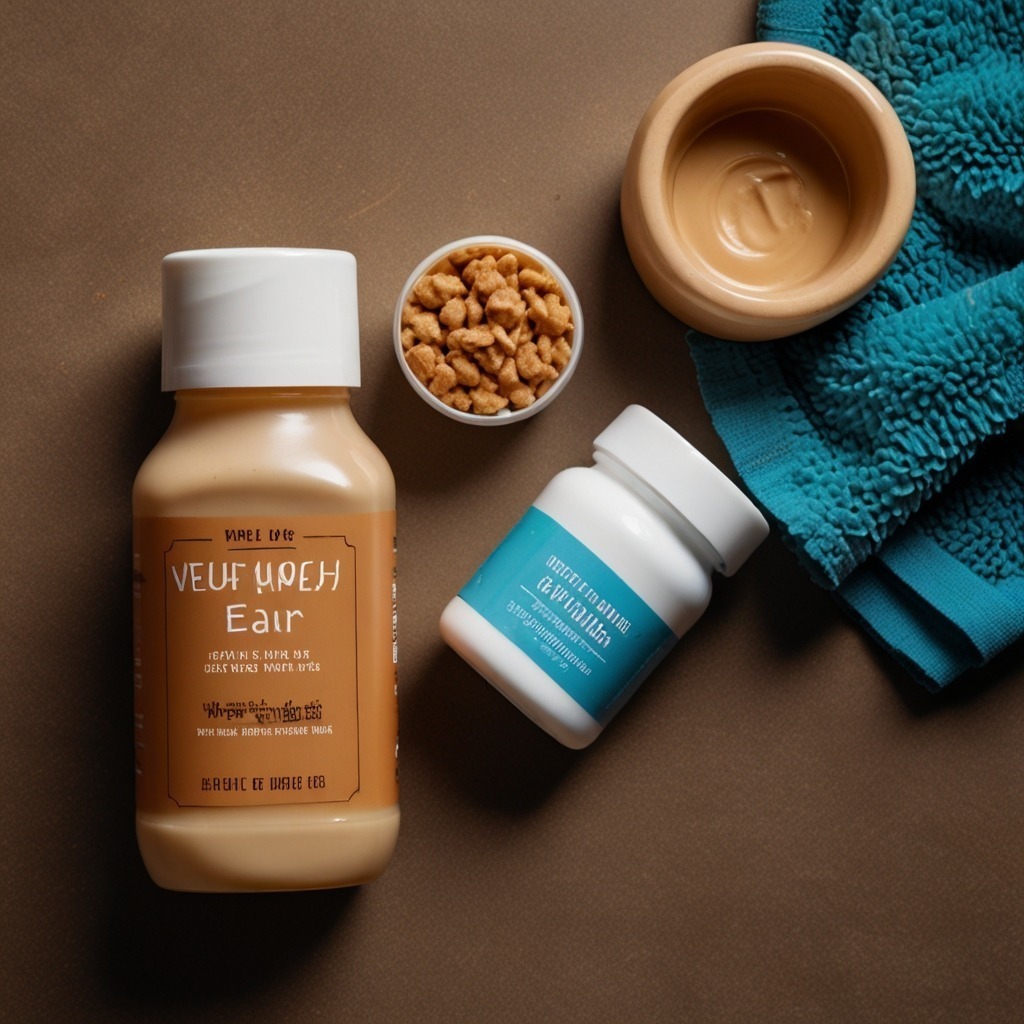
- A dog-specific ear cleaning solution. Not alcohol, not hydrrogen peroxide, not witch hazel, not that bottle of "ear wash" you bought on Amazon that's really just tea tree oil and hope. Look for one with a drying agent (like salicylic acid or an alcohol-free drying ingredient) if your dog is prone to moisture, or a gentle enzymatic cleaner for regular maintenance. I'll talk specific products later.
- Cotton balls. Not Q-tios. Not your finger wrapped in tissue. Soft, plain cotton balls. You'll use them to wipe the outer ear and catch the excess liquid when the dog shakes.
- A towel. Not a big beach towel, just a hand towel. Put it under the dog's head if you're doing this on the floor, or on your lap if you're doing it on the couch. This catches the drips. Ear cleaner isn't pleasant on upholstery; ask my old armchair.
- Treats. The good stuff. Boiled chicken, freeze-dried liveer, tiny cubes of cheese. Not kibble, not a Milk-Bone. Something the dog would walk across burning coals for.
- Optional: a second person if your dog is enormous or wiggly. But with the method I'm about to describe, you probably won't need them.
The Peanut Butter Distraction Trick (Or Why Your Freezer Is Now a Dog Tool)
I owe this one to a trainer friend I met at a rescue event. She uses a frozen Kong stuffed with peanut butter or wet food, and the dog gets to lick it on the floor while she does the ear cleaning. The licking motion is calming to dogs—it's a self-soothing behavior—and it keeps their head in one place without you having to pin them. I've modified this: I smear a thin layer of something sticky (peanut butter, cream cheese, baby food) onto a silicone lick mat and suction-cup it to the side of the fridge or a wall at dog-head height. The dog stands there happily licking while I lift an ear flap and do my thing. it's borderline magic. Even my most ear-sensitive dog, Bentley, who used to pancake himself to the floor at the sight of a cotton ball, now walks over to the lick mat the second he sees me reach for the bottle.
I can't stress enough how much this chsnges the dynamic. You're not "doing something" to the dog. You're having a collaborative moment where the dog is getting a high-value snack and you just happen to be touching his ear. I used a similar approach for nail trimming, and it's the only thing that worked. The lick mat is my secret weapon for everything now. I've four of them.
The Actual Steps, in Stupidly Specific Detail
1. Set up the lick mat, the towrl, and your supplies while the dog is in another room or distracted. I don't let them see me assembling the ear-cleaning arsenal. That's just asking for a dog to hide under the bed.
2. Bring the dog over to the lick mat casually. No excited voice, no "Guess what we're doing!" Just a calm pat and guide them to the mat. Let them start licking.
3. Warm the ear cleaner. I run the bottle under warm tap water for twenty secnods or hold it in my armpit for a minute. Cold liquid in the ear canal is super unpleasant and can make some dogs dizzy. I learned this when I accidentally used a cold bottle on my own dog and he shook like he'd been electrocuted.
4. Gently lift the ear flap (the pinna) straight up. This opens the vertical canal a bit and lets you see the opening. don't cram your finger in. Just lift the flap.
5. Hold the bottle tip right at the opening. don't insert it into the canal. The risk of inserting too deep and damaging the eardrum is real, even with a "safety" tip. Just hold it at the entrance, squeeze the bottle gently, and let the liquid flow down naturally. You want enough to fill the canal, but not so much that it's overflowing immediately. For a small dog, this might be half a teaspoon. For a big dog, maybe a full squeeze or two. If you're not sure, go less. You can always add more.
6. Release the ear flap and massage the base of the ear. This is the part everyone skips. You need to place your thumb on the outside of the ear canal—you can feel it, that squishy tube right under the ear opening, where it meets the skull—and gently, in circular motions, work the liquid down into the horizontal canal. You'll hear a squelchy sound. That's good. It means the liquid is moving around and loosening the wax. Do this for thirty seconds. It'll feel like a lifetime. The dog might tilt its head, lean into your hand, or groan. That's fine. Keep massaging.
7. Let go and let the dog shake. This is nature's evacuation. The head shake sends the loosened gunk and cleaner up and out of the canal. Stand back unless you want a face full of ear-gunk confetti. I protect my face with one hand every time, because I've experienced that confetti and it changes you.
8. Use a dry cotton ball to wipe the outer ear flap and the visible opening. don't go into the canal. Just wipe the folds and the little nooks where gunk collects. Use as many cotton balls as you need. If the cotton ball comes out dark brown and waxy, that's normal. If it comes out with actual pus or blood, stop and call your vet.
9. Reward the dog lavishly. Even if they're still licking the mat, toss a few extra high-value treats into the mix. Act like they just won the Westminster Dog Show. The goal is to make ear cleaning a predictor of good things, not a predictor of wrestling and betrayal.
That's it. The whole thing takes maybe ninety seconds per ear, once a week for most dogs. Some floppy-eared, water-loving breeds might need it every few days. Some dogs with upright ears and no ear problems might need it once a month or less. You'll figure out your dog's rhythm.
When Your Dog Hates You Before You Even Touch the Bottle
Maybe your dog has already formed a negative association. The mere sight of the ear cleaner bottle sends them running. They flatten their ears, whale-eye you from across the room, and suddenly remember they need to pee outside right now even though they just came in. I've fostered so many dogs like this. Some of them had painful ear infections as puppies. Some had owners who held them down and squirted cold alcohol straight into their infected ears. Some are just sensitive, and that's okay.
You can undo this. It takes time and it takes patience, but it's doable. I did it with Bentley, and Bentley once hid in the bathtub for two hours because he heard me crinkle a cotton ball bag.
Step One: Break the Association
For at least a week, don't clean the ears at all. Instead, just bring out the bottle, put it on the floor, and scatter treats around it. Do nothing with the bottle. Just let it sit there while the dog gets delicious things. You're teaching the dog that the bottle isn't a threat; it's a weird thing that sometimes appears and rains chicken.
After a few days of that, pick up the bottle, show it to the dog, treat, and put it awsy. Then touch the dog's ear gently with one finger while holding the bottle, treat, and release. You're building a new history, one tiny step at a time. This is the same counter-conditioning method I used to get a shut-down build to trust me, and it's slow but it works.
What If They Still Panic When the Liquid Hits?
Some dogs just hate the sensation of liquid in their ear. It tickles, it echoes, it's weird. If that's the issue, try pre-warming the bottle even more, or use a ear-cleaning pad instead of liquid—though pads are less effective for deep cleaning. You can also ask your vet about a foaming ear cleaner that expands less in the canal and feels less like waterboarding. My vet recommended one for Bentley that comes out as a mousse and seems to bother him less.
If none of that helps, have a vet or a professional groomer clean the ears the first time while you watch, just to make sure there's no underlying pain you're missing. And never, ever wrestle a panicking dog to the ground for ear cleaning. That's how you get bitten. That's how the dog learns you're not safe. I had to accept this the hard way when I was working at the shelter and a terrified shepherd mix snapped at my face because I thought I could "just get it done quick." I couldn't. The dog didn't forgive me for weeks. I still feel shitty about it.
The Time I Became a Vet Tech Drop-Out During an Ear Cleaning Demonstration
I told you I dropped out of vet tech school. Here's what happened. It was my second semester, and we were practicing physical exams on the school's resident beagle, a stout little dog named Benny who was basically a walking gastrointestinal problem. The instructor was demonstrating how to use an otoscope and ear flush, and she called me up to assist. I was nervous. I'd cleaned maybe ten dogs' ears in my life at that point, all by wrestling. I held Benny's ear flap, she inserted the scope, and everything was fine until she said, "Now go ahead and flush the canal."
I picked up the bulb syringe, which I'd never used before, stuck it way too far into the canal, and squeezed. Benny yelped. The instructor grabbed my wrist. The syringe had gone in almost to the bulb, and I'd basically pressure-washed the poor dog's eadrrum. Benny shook his head and whimpered and I stood there with my face on fire while the instructor calmly removed the syringe, adjusted my hand, and said, "Never insert anything into the canal beyond the tip. You could perforate the tympanic membrane."
I didn't perforate it, thank god. But I realized in that moment that I wasn't cut out for clinic work. Not because I couldn't learn the technique, but because my instinct under pressure was to rush, to force, to finish. That was the exact opposite of what animals need. I lasted another three weeks before I dropped out. I'm not proud of it, but I'm also not ashamed. I learned that I'm better at the slow, at-home, trust-building kind of care than the get-it-done-in-ten-minutes-or-the-next-appointment-will-be-late kind. And my dogs are better off for it.
The Products I Actually Keep in My Cabinet (And the Ones I Threw Away)
Over the years I've tried at least twenty different ear cleaners. Some were expensive, some were "all-natural," some smelled like a chemical factory. I'm not a vet, so I won't tell you which one is "best." I'll just tell you what's worked for my personal dogs and why I landed on them. Take this as a suggestion, not a prescription.
Vet's Best Ear Relief Wash
This one is widely aavilable and it's my go-to for routine maintenance. It's got aloe and chamomile and some witch hazel, but it's alcohol-free and doesn't sting. I've used it on dogs with very sensitive skin and none have had a reaction. It doesn't have a strong drying agent, though, so if your dog swims daily or has floppy ears that never air out, this might not be enough on its own.
Zymox Ear Solution with Hydrocortisone
This is the one my vet recommended when Bentley's ears were mildly yeasty but not infected enough for prescription meds. It's enzymatic, so it breaks down gunk without a lot of forceful flushing, and the tiny amount of hydrocortisone helps calm irritation. The catch is you can't use it if the eardrum is ruptured (the hydrocortisone can be ototoxic), so get a vet chrck first. I use this maybe once a month during allergy season when Bentley's ears start looking pink. It's kept us out of the vet's office for two years now.
Epi-Otic Advanced Ear Cleanser
This is what the shelter used, and it's what Dr. Nguyen sends home after ear flushes. It's drying, it's non-irritating, it's got a faint pleasant smell that doesn't linger. I keep a bottle around for after-bath ear drying, especially for my cocker spaniel mix, who is basically a walking ear infection waiting to happen. It's a bit pricier, but one bottle lasts forever.
What I threw away: any ear cleaner that contained tea tree oil. Tea tree oil is toxic to dogs if they ingest it (and they'll lick their paws after scratching their ears), and it can cause burning in sensitive ears. Also any product in a little squeeze tube with a long nozzle that was supposedly for "deep cleaning." Those nozzles tempt you to go too deep. Just no.
Why I Stopped Fighting Bacteria and Started Fighting Moisture
One thing I didn't understand until I'd fostered a dozen floppy-eared dogs was that moisture is the real enemy. Bacteria and yeast love warm, dark, wet places. A dog with upright ears that let air circulate (like a husky or a corgi) might never need ear cleaning at all. A dog with heavy, droopy ears that trap moisture (basset hounds, cockers, labs that swim constantly) might need it twice a week just to stay dry. The cleaning solution itself can add moisture if you don't let the dog shake it all out properly.
So after every ear cleaning, I do one extra step: I dry the ear opening gently with a fresh, dry cotton ball. I don't go deep. I just hold it against the opening for a few seconds to wick out any remaining liquid. Then I let the dog shake again. If the dog is a swimmer or has gotten a bath, I actually do a quick ear drying routine even if I'm not doing a full clean. Just a squirt of drying solution, a massage, a shake, and a dry cotton ball. This single habit has reduced the number of yeast infections in my household to zero in the last three years. Zero. And I've a dog who thinks the purpose of a kiddie pool is to submerge her entire head.
A tangent: I once thought my cocker spaniel mix had a chronic ear infection that nothing could touch. I tried every cleaner, every diet change, every supplement. Turns out, I was just not drying her ears thoroughly after every bath. She'd get a bath, I'd towel-dry her, and the moisture would sit in those heavy ear leathers all night. By morning, it was a yeast party. A five-minute post-bath ear-drying routine fixed what hundreds of dollars in cleaners couldn't. I still feel dumb about it. I made a similar mistake with shampoos for itchy dogs, by the way. Sometimes the problem isn't what you're adding; it's what you're leaving behind.
The Day Bentley Put His Head in My Lap and I Didn't Need a Lick Mat
About a year ago, Bentley—the dog who used to disappear into the bathtub at the crinkle of a cotton ball—did something that made me cry. I was sitting on the couch, reading something on my phone, and he walked over, put his head in my lap, and sighed. His ears were upright (he's a pit-chihuahua mystery mix, so they're semaphore flags), but they were gunk-free because I'd cleaned them two days earlier. I wasn't even thinking about ears. He just wanted to be there.
I realized then that ear cleaning, when it's done right, stops being a thing you do to your dog and becomes just another part of the rhythm of your life together. Like brushing. Like trimming the little grinch-feet fur so they don't slip on the tile. Like checking for ticks after a hike. It's not a battle; it's maintenance. And once your dog trusts that you're not going to hurt them, they'll let you do almost anything.
So if you're reading this and you're still wrestling your dog to the bathroom floor with ear wash dripping off your elbow, I want you to try something. Tomorrow, don't clean the ears. Don't even take out the bottle. Just sit on the floor with some high-value treats and touch your dog's ear for one second. Then treat. Do it three times and walk away. That's it. See what happens after a week. See if maybe, eventually, you can be like me—sitting on the couch with a dog who trusts you enough to put their head in your lap and let you do the thing that used to make them run.
It won't happen overnight. But it will happen. I've seen it with 40-plus dogs from every background you can imagine. If Bentley can change, any dog can.