I Tried to Train My Stubborn Foster Dog the 'Right Way' and He Laughed at Me
Most stubborn dogs aren't stubborn—they just don't care about your training treats. After 14 years of rescue work and 40+ fosters, here's the messy reality of training breeds that think they know better.
Chewy was a 9-year-old Shiba Inu with the deadpan expression of a DMV employee who's seen it all. He arrived on a Thursday, promptly ignored every command I threw at him, and within 20 minutes had somehow claimed my favorite armchair like he'd been paying rent for years. I thought, okay, I've fsotered 40-plus dogs. I worked at a shelter for six years. I know what I'm doing.
Two weeks later I was sitting on the kitchen floor at 10 PM, crying into a jar of peanut butter while Chewy watched me from the hallway with what I can only describe as mild curiosity. He hadn't sat on cue once. He wouldn't come when called unless I jiggled a treat bag like a maraca. And I'd made the colossal mistake of trying to "show him who's boss" by being more stubborn than him. Spoiler: you can't out-stubborn a Shiba Inu. Their entire breed history is basically 2,000 years of selective breeding for independence and the ability to ignore Japanese hunters who wanted them to do something else.
Why 'Stubborn' Is Just a Word We Use When We're Out of Ideas
Most people who tell me their dog is stubborn don't actually have a stubborn dog. they've a dog who isn't motivated by what they're offering. Or a dog who's confused. Or a dog who's in pain. Or a dog who doesn't speak Englosh and has been yelled at five times today for something he doesn't understand.
But actual stubbornness — the kind that makes you question every life choice that led you to this animal — is something else entirely. Breeds like huskies, shibas, akitas, bull terriers, certain hounds, and a few terriers (looking at you, Jack Russells) were literally designed to work independently. They don't have the biddability of a border collie who lives for your approval. they've their own agenda, and if your training isn't interesting enough, they'll simply opt out. It's not personal. They're not being "bad." They're just running a cost-benefit analysis and finding you lacking.
I learned this the hard way, obviously.
The Time I Decided to Show Him Who's Boss (It didn't Go Well)
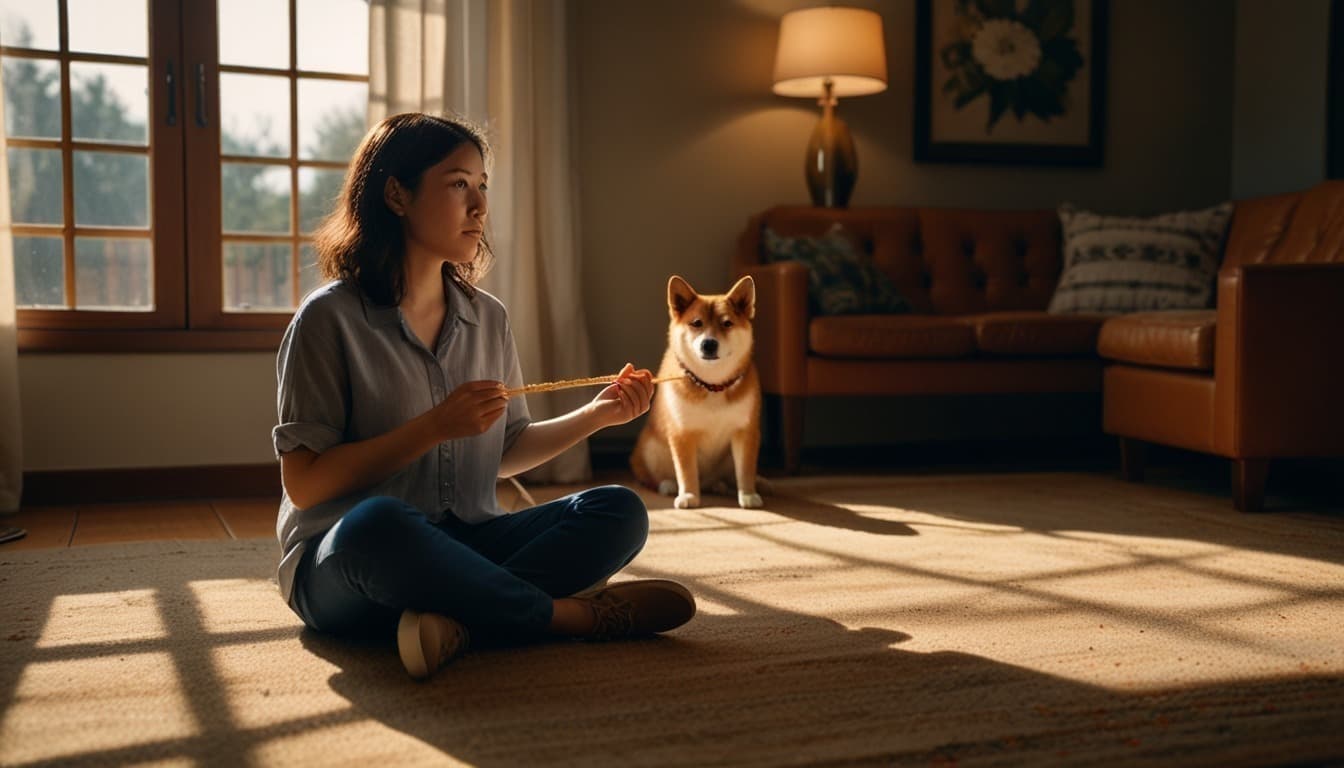
Let me tell you abput my absolute low point. Day four with Chewy. I'd read somewhere that you needed to be "consistent" and "persistent" and that if you just kept at it, he'd eventually comply. So I decided we were going to practice "sit" until he did it. I stood in the living room with a strip of dried liver, said "sit" in my firmest voice, and waited. Chewy looked at the treat, looked at me, and lay down. Not sit. Down. Then he rolled onto his back and showed me his belly like he'd won.
I said "sit" again. He closed his eyes. I waited four full minutes. I'm not exaggerating — I timed it on my phone because I was so sure he'd eventually crack. He didn't. He fell asleep. Actually fell asleep, right thhere on the rug, while I stood over him holding a piece of liver like an idiot. That was the moment I realized I'd been approaching this entirely wrong.
And honestly, my ego took a hit. I'd trrained dozens of dogs. I'd helped reactive dogs learn to trust again, taught puppy mill survivors how to walk on a leash. But this ancient little fox-dog with his smug face was outmaneuvering me at every turn.
I Bribed Him and I'm Not Sorry
Here's the thing every positive reinforcement trainer knows but doesn't always say out loud: you're not bribing, you're building value for the behavior, but also… yeah, sometimes you're just bribing. And with a stubborn dog, you'd better have a damn good bribe.
The first week I used those fancy grain-free training treats you buy at the boutique pet store. Chewy took one sniff and turned his head away with a huff that practically said "I'm not performing for store-brand snacks." I tried kibble — laughable. Even his own dinner didn't move him much if there was something better happening, like staring at a wall.
What He'd Actually Work For
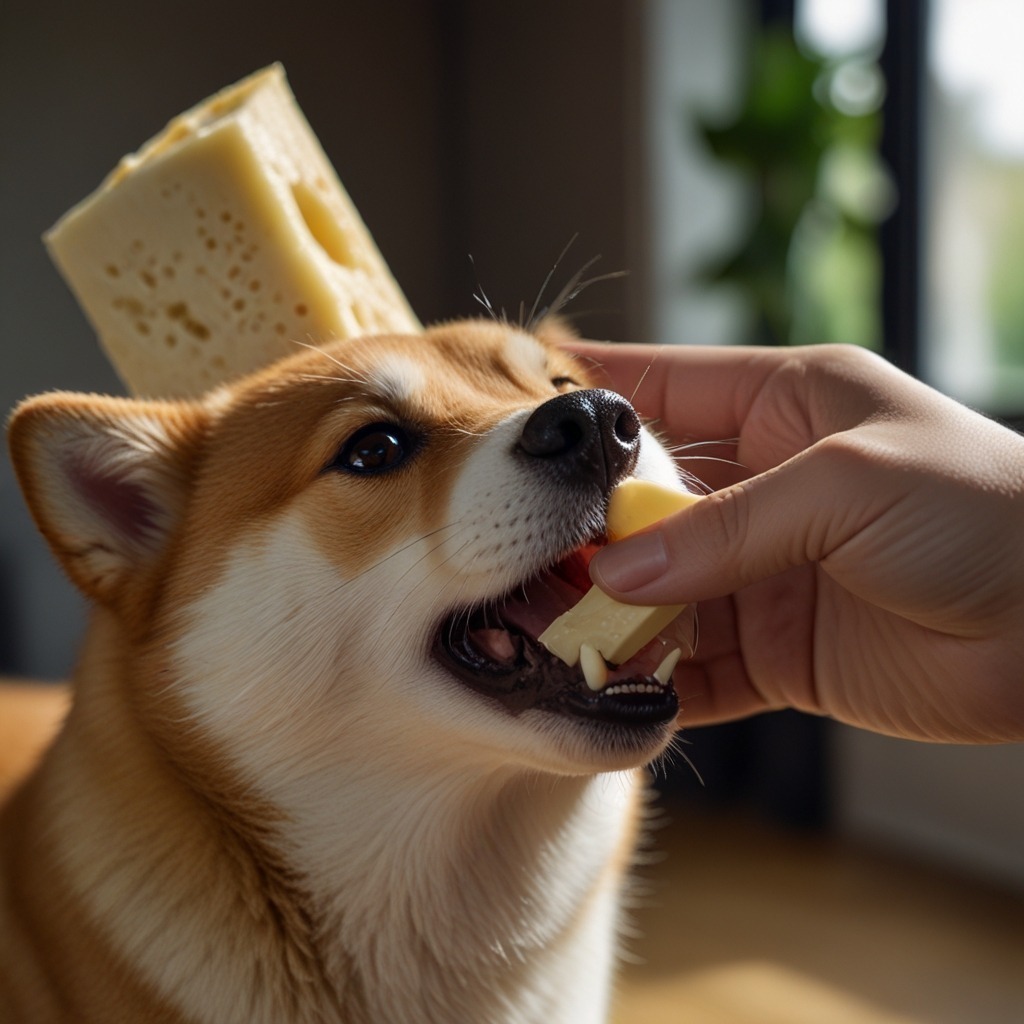
After an embarrassing amount of trial and error, I discovered the holy trinity of Chewy bribes: string cheese, freeze-dried beef liver crumbled into dust, and — I'm not proud of this — the occasional corner of a chicken nugget. Not a whole nugget. Just a tiny pinky-nail-sized piece. But that man would recall acros a football field for chicken nugget dust.
And I know someone's going to read this and clutch their pearls about "human food" or "building bad habits." Look, I'm not feeding him a whole Happy Meal. A pea-sized piece of chicken once in a training session isn't going to destroy his health. What it will do is make him think I'm the most interesting person in the room, and for a dog who doesn't give a crap about pleasing me, that's the entire game.
Later I figured out he also had a weird thing for steamed broccoli. I don't pretend to understand it. He just did. Point is, your stubborn dog's "high-value treat" might be something you'd never expect. Stop buying what the Internet tells you to buy and start paying attention to what makes your specific dog's eyes go wide.
The Pay-for-Performance System
I also had to accept that Chewy wasn't going to work on credit. Border collies will give you ten behaviors for one treat because the work itself is reinforcing. Shibas? They need to see the paycheck before they start typing. I started showing him the string cheese first, letting him smell it, then asking for the behavior. Was this bribery? Technically. Did it work? Absolutely.
Over time — and I mean weeks, not days — I was able to phase out the pre-show and start rewarding after the fact. But if I'd insisted on a purely "correct" training protocol from day one, we'd still be standing in the living room while he napped on the rug.
I once joked to a trainer friend that Chewy wasn't stubborn, he was efficient. She laughed and then said, completely seriously, "That's exactly right. He's conserving energy. He's not defying you — he just hasn't been convinced that doing the thing is worth the effort." And that reframed everything for me.
The Crap Advice That Made Everything Worse
Before I figured this out, I did what most desperate dog owners do: I Googled it. Holy heck, the internet is a cesspool of bad training advice. I found articles telling me to alpha-roll him (please don't ever do that), to use a shock collar, to "just be more dominant," to withhold meals until he complied. One forum commenter with a profile picture of a wolf told me I needed to "establish pack leadership" by walking through doorwas first. I tried it once. Chewy literally squeezed past my legs and trotted through ahead of me anyway, and I stubbed my toe on the doorframe.
The worst part is that some of that garbage almost made sense because I was frustrated. When a dog ignores you for two weeks straight, the idea of forcing compliance becomes weirdly tempting. But here's what I know after years of working with dogs who've been trained with force: you can break their spirit. You can make them obedient through fear. But you'll never have a real partnership, and the second you're not there to enforce the rules, the dog stops caring. Stubborn dogs punished into submission just become dogs who avoid you.
Anyway. Tangent. I get heated about this because I've fostered too many dogs who were surrnedered after "failed" aversive training. The dog wasn't the failure — the method was.
Speaking of things that don't work, do you know how many times I was told to "just socialize" Chewy as if that was the missing piece? He wasn't undersocialized. He was perfectly socialized — he just didn't want to do tricks. If you're dealing with an actually reactive dog, that's a whole different nightmare. I wrote about that separately after my build dog barked at every stranger like they were an axe murderer (here's how we actually fixed that). But for Chwey, the issue was motivational, not social.
When Ignoring Him Was the Actual Solution
I wish I'd written the date down, but somewhere around week three I had a moment of exhausted clarity. I stopped caring so much. I'd been so obsessed with getting him to perform that I was creating pressure every time we interacted. My body language was tense, my voice had that tight I'm-trying-to-sound-calm-but-I'm-clearly-not quality, and I'm sure he could smell my frustration.
So one afternoon I just… sat on the floor with a book, ignored him completely, and ate string cheese. For myself. Like a weirdo.
He was next to me in 30 seconds, nudging my hand. I didn't ask for a sit. I didn't ask for anything. I just gave him a tiny piece and kept reading. Five minutes later, he sat. I said nothing, just dropped another piece. Ten minutes after that, he lay down with a heavy sigh and I gave him a whole inch of cheese. We did this for maybe 20 minutes — me reading, him offering behaviors I wasn't asking for, getting paid like a slot machine with loose odds.
That session changed everything. Not because he suddenly became obedient, but because I realized he'd been waiting for me to stop trying so hard. The pressure was the problem. Once I took the demand out of it, he was happy to experiment because there was no risk of "failure."
Leash Walking with a Dog Who'd Rather Sniff Than Move
Oh man. This was the other battle. Chewy loved walks but only on his own terms. He'd plant his feet and stare at me if I tried to go a direction he didn't approve of. Harnesses helped — I've been through enough terrible harnesses to write a novel, and I also learned that the right tool matters a lot (I once used an awful use that practically choked my 6-pound build and had to replace it with something decent — the one that finally worked was stupid cheap). But for Chewy, even with a good use, he'd just become a statue.
I tried luring with treats, which sort of worked except he'd take three steps, get the cheese, then stop again. He'd figured out he could game the system — walk a little, collect payment, pause, repeat. Smart little jerk.
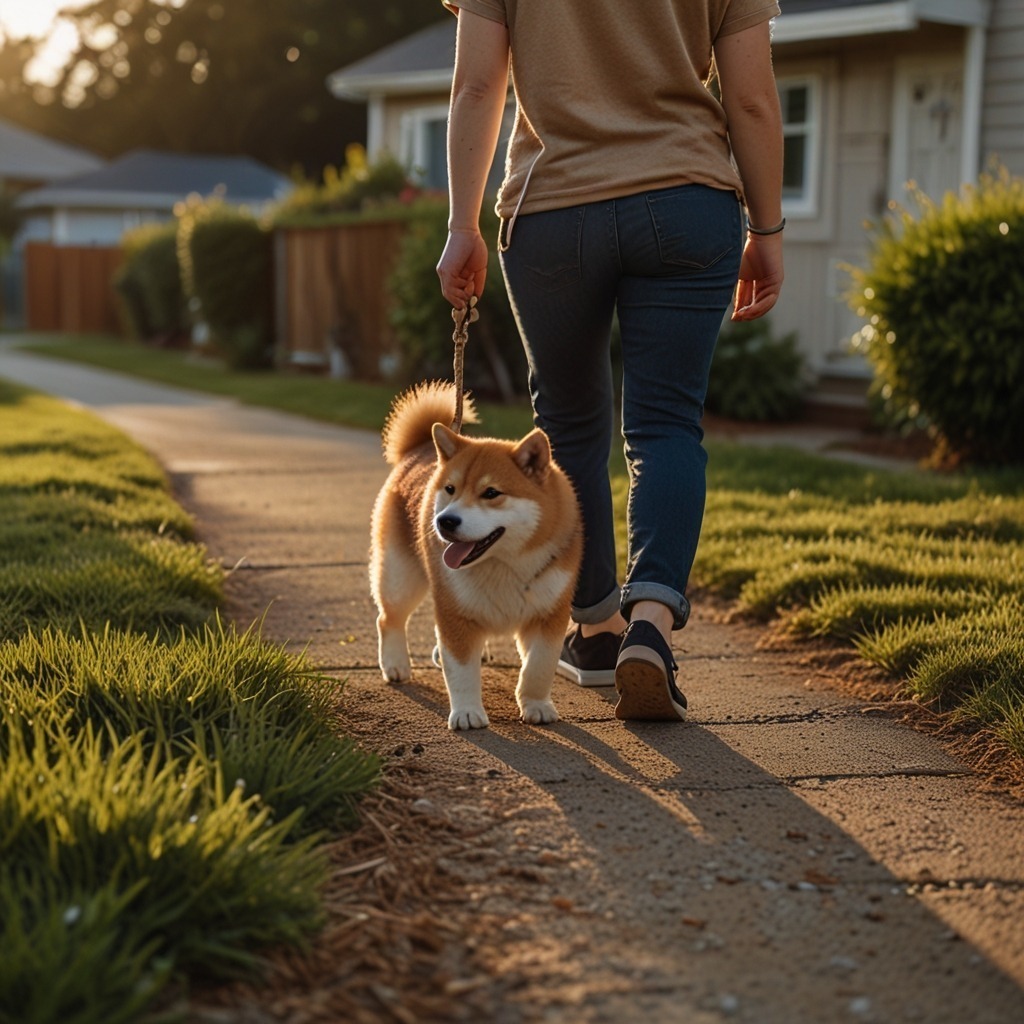
What eventually helped was a combination of letting him sniff first for a good three minutes before asking for any forward movement, and then using a "let's go" cue that was completely optional. If he came with me, great, cheese. If he didn't, I'd wait, look at the sky, act bored out of my mind. No pressure. No tension on the leash. Just the world's most boring human waiting for a stubborn dog to decide to move. Tedious. But it worked more often than not because I wasn't making it a fight.
What I Stopped Doing Completely
Sometimes training breakthroughs come from subtraction, not addition. Here's what I dropped that made the biggest difference.
Repeating the Cue Like a Broken Record
I was so bad at this. "Sit. Sit. Chewy, sit. Si-i-i-it. Sit, buddy, sit." What a mess. All I was teaching him was that the word "sit" is just white noise he can safely ignore. Now I say it once. If he doesn't do it, I wait. If he still doesn't, I walk away and try again in five minutes or with a different setup. That single change improved his responsiveness more than almost anything else.
Training When I Was In a Bad Mood
Dogs read our emotional state better than we read our own. If I was tense or impatient, Chewy checked out instantly. I started only doing training sessions when I actually felt calm, even if that meant only twice a week instead of every day. Quality over quantity.
Comparing Him to Labs and Goldens
I've fostered a lot of retrievers. They're like the customer service reps of the dog world — eager to please, easy to train. Chewy was the opposite. Every time I caught myself thinking "my last build would have learned this in two days," I was setting us both up for failure. He was his own creature with his own wiring. And honestly, once I stopped comparing, I started to appreciate how freaking smart he actually was. He'd figured out how to open the cabinet where I kept the cheese. The childproof lock cabinet. I still don't know how.
But Then He Ate the Remote and We Started Over
So we had this beautiful breakthrough, I was feeling like a dog training genius, and then one Tuesday I came home to find my TV remote in pieces on the rug and Chewy looking extremely pleased with himself. He'd been fine for weeks. No destruction. Then this.
I could go on a tangent about how some dogs just need to chew and more exercise isn't always the answer — my old lab destroyed stuff because he was bored out of his mind, not because he needed more walks — but with Chewy it was simpler. I'd forgotten to leave out his frozen Kong and he'd found something more interesting to destroy. It wasn't spite. It wasn't a setback in the sense of training regression. It was just… dog.
I cleaned up the remote pieces, didn't yell at him (because that would only teach him I'm scary, not that remotes are off-limits), and doubled down on management. Baby gates. Closed doots. Everything valuable out of reach. Training doesn't fix instinct when you're not home. Management does.
A Year Later: He Learned 'Come' But Still Ignores It When There's a Bunny
Chewy got adopted by a lovely retired couple who had owned Shibas before and understood the assignment. They send me updates sometimes. He's still selective about when he obeys, still snubs store-brand treats, and still has that same vaguely disappointed expression no matter how much he's loved. But he's happy, he's safe, and he does come when called roughly 70% of the time.
For a Shiba Inu, that's basically a PhD.
I think what I want you to take from all this — if you've got a dog who makes you feel like the world's worst trainer — is that your dog isn't broken and neither are you. The real basics of training stubborn breeds aren't about perfect heelwork or instant recalls. They're about building a relationship where your dog decides that paying attention to you is worth the effort. That takes longer with some dogs. It requires better bribes, softer hands, and a lot of swallowing your pride when they outsmart you. But man, when it clicks — even partially — it feels better than any trick you'll ever teach.
Don't fight the stubborn. Negotiate with it. And always carry string cheese.