I Tried Every 'Stubborn Dog' Training Hack on My Terrier Mix, and Honestly, the Dog Wasn't the Problem
I thought my terrier mix was stubborn until my vet laughed at me. Turned out I'd been paying him in treats he didn't care about and blaming him when he checked out. Here's what actually worked.
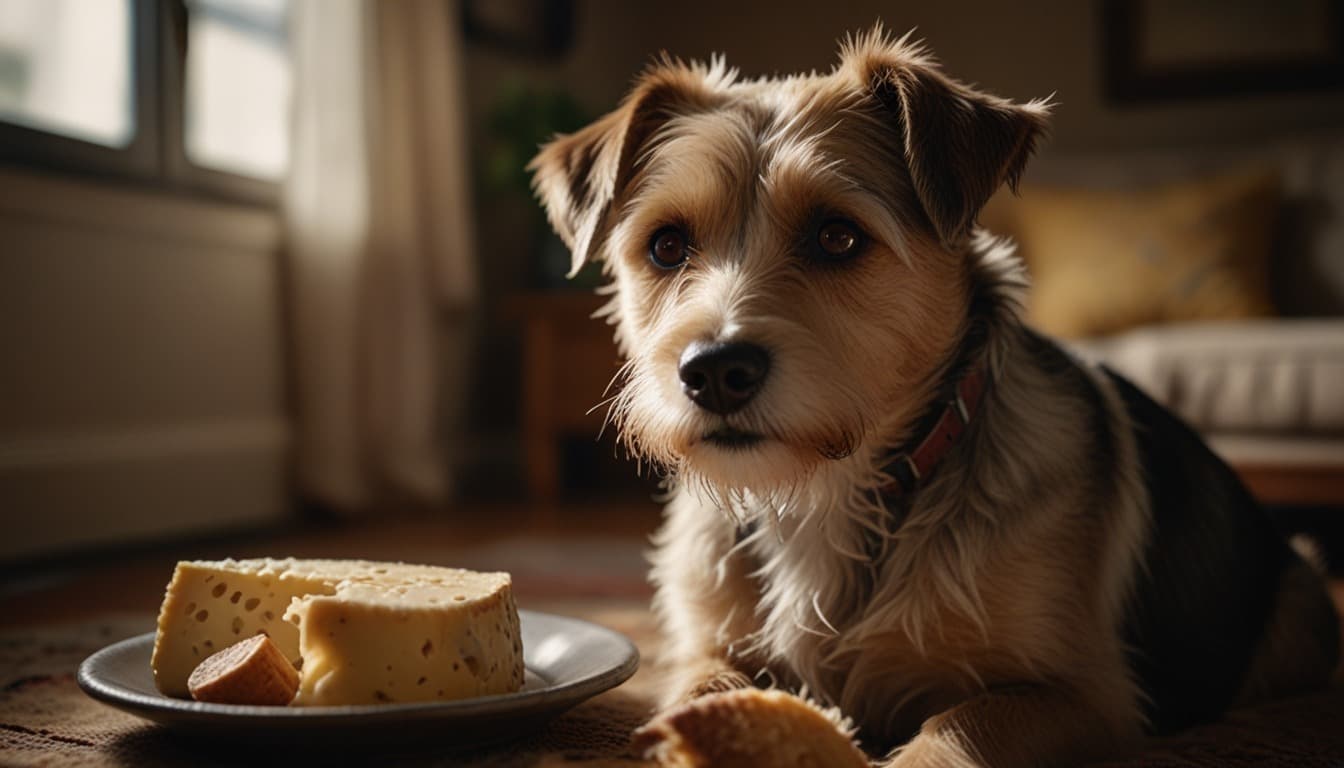
I used to think my terrier mix Gumbo was stubborn because he hated me. Like, personlaly. He'd look at me with those little dead-shark eyes while I waved a piece of cheese in his face, and he'd just… walk away. Not to the other side of the room. To his bed, where he'd flop down with a sigh that sounded like an IRS auditor who'd seen too much. I'd stand there, cheese in hand, feeling like an idiot, and inevitably someone would say the thing. Terriers, man. They're just stubborn.
That word. Stubborn. I've come to hate it. Not because it isn't true—some dogs would rather eat their own foot than do what you ask—but because we use it as a get-out-of-training-free card. We label the dog stubborn and then we stop trying. Actually, scratch that. We don't stop trying. We just try the same thing louder, with more frustration, and then blame the breed when the dog still doesn't give a crap. I did this for six months with Gumbo. Six months of increasing irritation while he rearranged my baseboards with his teeth and ignored every recall I'd ever taught him.
One night I was sitting on the floor at 11pm, scrolling through yet another article about how to train a stubborn dog, while Gumbo calmly dissected the corner of my coffee table directly behind me. The article said to be patient and consistent. It said to use high-value treats. It said all the things I'd already tried while my dog continued his personal project of turning my furniture into mulch. I threw my phone on the couch and said out loud, "This dog is impossible." Gumbo paused, looked at me for half a second, and went back to chewing. And I hated myself a little bit for saying it, because somewhere underneath the frustration I knew the real problem wasn't him. It was that I'd convinced myself he should be learning like my previous dogs had, and he just… wasn't that dog.
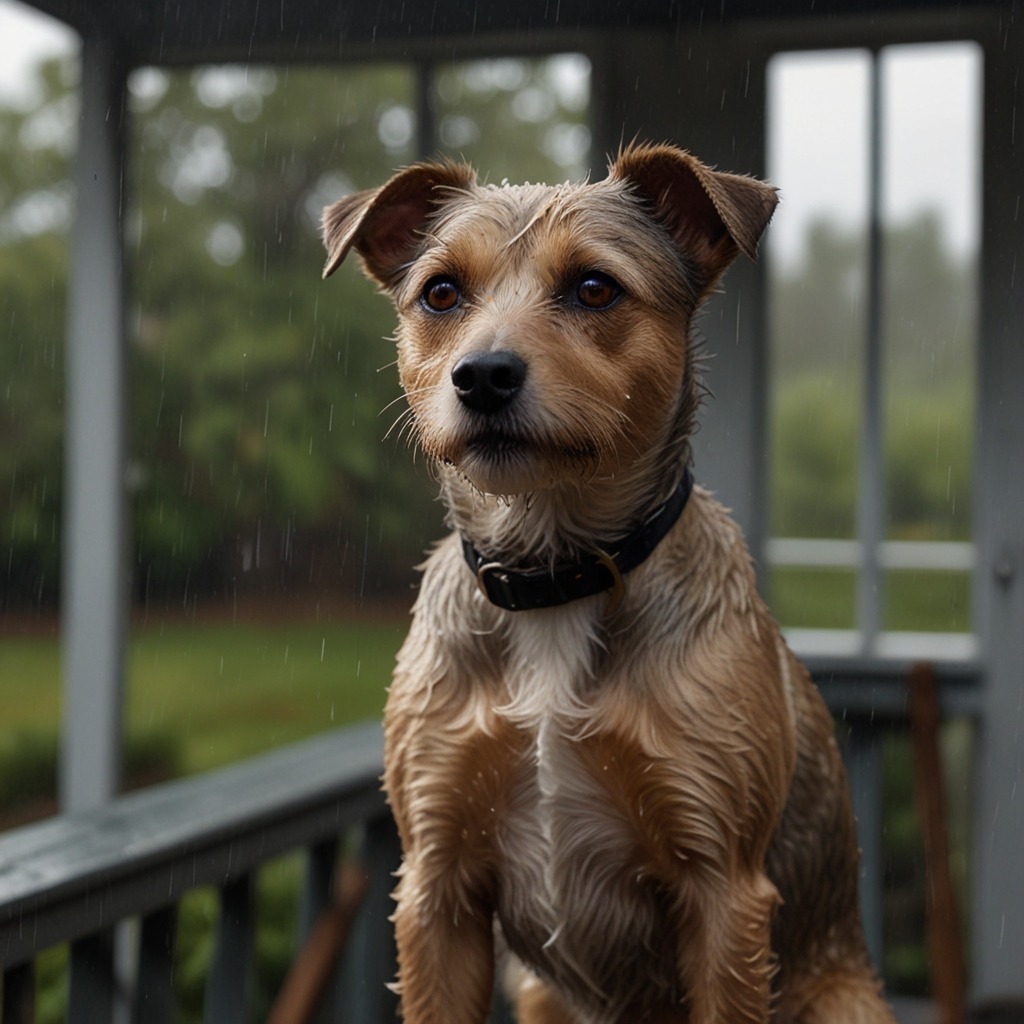
The moment I called my dog 'stubborn' and my vet laughed at me
I brought Gumbo in for his annual checkup a few weeks after The Coffee Table Incident. Dr. Espinoza—she's put up with my panic calls through four build dogs and one very dramatic cat—was feeling his hips and making small talk. I mentioned, as casually as I could, that training was going "slow because honestly, he's just really stubborn." She didn't even look up. She just said, "Or he's bored out of his mind and you're not paying attention to what he's actually telling you."
Ouch.
Look, I've worked in shelters. I've fostered. I should've known better. But it's easy to fall into the stubborn trap because it lets us off the hook. If the dog is stubborn, then it's his fault. I don't have to examine my own timing when I mark a behavior two seconds too late. I don't have to consider that maybe my "come" command sounds different when I'm stressed versus when I'm calm. I don't have to face the humiliating truth that I'd been training Gumbo like a Labrador when he is, in fact, a terrier whose ancestors were bred to hunt rats and make their own decisions underground with zero human input. Asking a terrier to blindly obey is like asking a cat to fetch. It's not impossible, but you better have a damn good reason and a payout that the dog actually cares about.
Dr. Espinoza straightened up and added, "Also, some dogs take longer to trust that doing what you say actually benefits them. Especially if they've had a rough start." Gumbo came to me as a stray at about a year old. Nobody knew his history. The only thing I knew for sure was that he didn't give his cooperation away for free, and I'd spent months trying to buy it with currency he didn't value.
That conversation rewired my entire approach. Not overnight—nothing works overnight with a dog like this—but it planted the seed. I started looking at his resistance not as stubbornness but as information. He was telling me, loud and clear, that my training wasn't working. The question wasn't "How do I make him less stubborn?" The question was "what's he actually willing to work for, and under what conditions?"
What we get wrong about stubborn breedds — and why half of it's our own fault
We talk about stubborn breeds like they're a special category of dog that requires a completely different training philosophy. Huskies, shiba inus, terriers, basset hounds, chow chows, even some bulldogs—they get labeled "independent" or "strong-willed" and the internet fills up with advice about showing them who's boss. I hate most of it. Not because dominance theory is dead—it's, and good riddance—but because the advice rarely starts from the dog's perspective. It starts from our embarrassment that our dog won't perform on command while Karen at the dog park is smugly showing off her border collie's perfect heel.
Here's what I've learned after 40+ fosters and a lot of chewed baseboards: "stubborn" dogs aren't stubborn because they're trying to dominate you. They're stubborn because the thing you're asking is either unclear, unrewarding, or interferes with something they'd reeeeally rather be doing. Like sniffing that bush. Or chasing that squirrel. Or simply not moving from the sunbeam they've been baking in for an hour.
Let me give you an example that still makes me cringe. A few years ago, before Gumbo, I fostered a basset hound named Wallace. That dog's face had more wrinkles than my grandmother's linen closet and about the same level of enthusiasm for physical activity. I tried to teach him "down" using the standard lure method—treat to nose, lower to floor, mark and reward. Wallace stared at the treat. Then he stared at me. Then he lay down, yes, but he did it so slowly and with so much passive resistance that it took literally thirty seconds for his chest to touch the floor. I was convinced he was being defiant. In reality, basset hounds have tiny legs and heavy bodies. The "down" motion is physically awkward for them at first, and Wallace was simply moving at the speed his body allowed. He wasn't stubborn. I was just impatient and comparing him to my build Lab from the month before who would have thrown herself off a cliff for a crumb of cheese.
That's the thing. We compare steady, thoughtful dogs to biddable breeds and then label them stubborn when they don't matcch the benchmark. It's not fair, and it's also just bad training. If you want to work with an independent breed, you've to throw out the playbook written for golden retrievers and start from scratch.
The 'three questions' I now ask every time my dog ignores me
I swiped this from a trainer whose name I've long forgotten but whose advice stuck: every time your dog blows you off, ask yourself three things. One: does the dog actually know what I'm asking, in this context, with this level of distraction? Two: is what I'm offering better than what the dog is currently doing? Three: is the dog physically or emotionally capable of doing this right now? If the answer to any is no, the problem isn't stubbornness. It's your training setup.
I'll be honest—that third question took me forever to accept. Sometimes a dog is tired, overtired, anxious, overstimulated, or just not in the mood. Think about how you'd react if someone asked you to do a crossword puzzle after you'd pulled an all-nighter. You'd look at them like they had three heads. Dogs are the same. But we expect them to be "on" whenever we're, and when they're not, we call it stubbornness.
There's also a whole conversation to be had about breed-specific behaviors that get mislabeled as defiance. When your shiba inu refuses to come inside from the backyard, it's not because she's plotting against you. It's because she's monitoring perimeter security like her ancestors did in the mountains of Japan. When your terrier digs up your flower bed for the fourth time, he's not punishing you for that time you left him alone for four hours. He's doing what terrriers were bred to do for centuries, and no amount of scolding is going to erase that wiring. Training doesn't overwrite genetics. It works with them.
Okay, tangent time. Speaking of breed instincts, I once had a build husky who decided, at 2am, that our living room was a suitable replacement for the Siberian tundra. She didn't just dig at her bed—she excavaed. Destroyed the cushion. Fluff everywhere. I woke up thinking we'd been burglarized by a particularly inefficient criminal who only took stuffing. I yelled her name, and she looked at me with this expression of pure, unbothered satisfaction, like you've no idea how good that felt, human. Was she stubborn? Sure. But she wasn't being a jerk. She was a husky with no outlet for her digging instinct, and I hadn't given her one. That one cost me $80 in replacement bedding and a very sheepish conversation with the build coordinator. I don't know why I'm telling you this except to say—sometimes the "stubborn" behavior is just you not managing the environment properly. More on that later. I think. Maybe. I'm still not sure where I'm going with this.
The treat hierarchy nobody tells you about
For the first three months I had Gumbo, I trained him with kibble and the occasional store-bought biscuit. He'd do a sit if there were zero distractions. A down? Only if he was already tired. A recall? Absolutely never, unless the alternative was me physically picking him up, and even then he'd consider his options. I blamed his stubborn terrier brain. But a friend who competes in rally obedience came over one day, watched me click my tongue and wave a dry biscuit in front of a dog who was actively snifing a dead beetle, and said, "You know that treat is worthless to him, right?"
She was right. I'd been paying my dog in monopoly money and getting mad when he wouldn't work. So I sat down and figured out Gumbo's actual currency. This is where most training advice gets all abstract about "high-value treats," but I think it helps to be embarrassingly specific. So here's what I learned about my own dog's treat preferences, and I've found roughly the same pattern with most of the independent-minded dogs I've fostered.
- Low value (barely registers): Kibble, dry biscuits, baby carrots. He'll take them if he's hungry and nothing else is happening, but he won't lift a paw for these.
- Medium value (works in low-distraction environments): Freeze-dried liver, commercial soft treats like Zuke's, string cheeese cut into tiny bits. He'll respond in the living room, but the yard is pushing it.
- High value (will do a backflip for, or at least a sit): Hot dog pieces, rotisserie chicken, cubed cheddar chese, the weird jerky strips from the bougie pet store that cost $8 a bag.
- Nuclear value (reserved for recall training and vet visits): Warm pieces of grilled steak, squeezy cheese straight from the can, and—I'm not joking—a specific brand of cat kibble that Gumbo would commit mimor crimes to obtain. I found this out by accident when he broke into the build cat's bowl and I had to drag him away while he tried to swallow the entire thing whole.
You may be thinking, Sarah, I'm not carrying around a pocket full of steak in July. Fair. But the point isn't to use nuclear treats for everything. It's to match the reward to the difficulty of the ask. When I'm asking Gumbo to sit in the kitchen while I fill his food bowl, a piece of kibble is fine. When I'm asking him to come away from a live squirrel that's taunting him from three feet away, I'd better have something that smells like a barbeque. If I don't, I'm not training a stubborn dog. I'm just annoying him for no reason.
The treat delivery mistake I made for years
This is going to sound incredibly basic but it changed everything. I used to hold the treat between my fingers, wave it around, and then give it to the dog after the behavior. With my Lab fosters, this worked great. With terriers? They'd snap at my fingers, miss, get frustrated, and wander off. Or they'd focus so hard on my hand that they forgot what I'd asked them to do. The fix was stupidly simple: I started tossing the treat on the ground. Not rolling it, not handing it. Just dropping it at their feet. Suddenly they were less frantic, more focused, and—this was the big one—they stopped fixating on my hand as the source of all good things. It sounds small, but for a dog who's genetically wired to chase and pounce, a moving treat on the floor is infinitely more satisfying than a stationary one in your palm.
This also helped with impulse control, weirdly enough. Because the treat appeared after the behavior, not during, the dog started paying attention to what they were doing that made the magic food rain from the sky. With Gumbo, I saw a change within about a week. He started offering behaviors instead of just staring at me like I owed him money. It was the first time I thought, oh, you're not sttubborn, you just hated the game I was playing.
You're probably boring your dog to death
I don't mean this as an insult. I've bored the absolute hell out of multiple dogs. It's practically my brand. But if you've got a dog who's labeled "stubborn," pause and consider the possibility that your training sessions are unpleasant for them. Too many repetitions, too much pressure, too little fun. Some dogs will tolerate a boring training session out of sheer eagerness to please. Independent dogs wo'nt. They'll check out, sniff the floor, scratch themselves, or just walk away while you're mid-command. And we interpret that as defiance when really they're just opting out of a situation they find mildly aversive.
I had a border collie build once—not a stubborn bered, obviously—and she would work for the sheer joy of working. You could train her with nothing but a tennis ball and a thumbs-up. Gumbo needs a party. He needs short sessions, high enthusiasm, and a reward schedule that's unpredictable enough to keep him guessing. If his tail isn't wagging, the session is over. That's my rule now, and it's saved me so many wasted hours of grinding at a dog who'd already clocked out ten minutes ago.
The evening I realized I was the problem
This is the part where I tell you about the night Gumbo came when I called, for the first time ever, and I burst into tears in my kitchen. It was 9pm, raining, and he'd slipped out the back door when I was bringing in groceries. My heart dropped into my stomach. Gumbo had zero recall. None. We'd been working on it for weeks with the steak pieces and the party voice and he still treated a recall cue like a suggestion I was free to ignore. I ran to the back door, rain hitting my face, and I could just make out his little terrier silhouette sniffing something near the fence. I knew if I yelled with panc in my voice he'd dart. I took a breath, used my happiest idiot voice, and called "Gumbo, come!"
He looked up. He sniffed the air. And then—I swear to you, I couldn't believe it was happening—he startted trotting toward me. Not sprinting. A casual little trot, like he'd just remembered he left the oven on. He came all the way to the door, walked inside past me, and looked at me expectantly. I fumbled for the bag of cheese cubes I'd left on the counter and gave him three. Then I sat on the floor, wet and shaking with adrenaline, and cried for about five minutes while Gumbo happily ate cheese and looked at me like I was very dramatic.
That was the moment I stopped calling him stubborn. Not because he'd finally obeyed—he'd failed the recall dozens of times before that—but because I finally understood that his learning curve wasn't about resistance. It was about trust. He'd needed weeks of low-stakes practice and absurdly good treats before he believed that coming to me when I called was actually a good deal. And maybe he also needed me to stop expecting him to fail. I'm not one of those people who thinks dogs read your mind, but they absolutely read your energy, and if you're tensed up and frustrated every time you give a cue, they're not going to rush toward you. They're going to hesitate. And independent dogs, the ones we call stubborn, hang back the longest.
When consistency is impossible (because you've a life)
Here's a thing they never tell you in training bokos: you're a human being with a messy, inconsistent life, and your dog has to cope with that. The myth of perfect consistency is exhausting. I used to spiral every time I let Gumbo jump on me because I was wearing jeans and didn't care, and then the next day I'd get mad when he jumped on me in clean work pants. It wasn't fair to him. But also, I'm not a robot. I'll never be perfectly consistent, and neither will you. So we need a different approach for the dogs who notice every inconsistency and exploit it.
My solution was to train specific cues that are non-negotiable, and let the rest be a negotiation. Gumbo knows "off" means four paws on the floor, and I enforce that 100% of the time because I decided it mattered. But "place"—go to your bed—is something I only ask when I'm about to make it insanely worthwhile. I don't nag him with it. I don't use it when I'm annoyed. I use it when I'm about to scatter a handful of chicken on his bed, and as a result, he sprints to his bed like it's a slot machine. Some people will tell you that's spoiling him. Those people have never lived with a terrier who will otherwise ignore you for three hours out of pure principle.
Pick your battles. Not every behavior needs to be parade-ready. Focus on the few tings that keep your dog safe and your house standing, and let the rest slide while you're still building your relationship. That's my hot take and I'm sticking to it.
The $78 training class that taught my dog to sit only when there was hot dog in my hand
Wait, I need to tell you about the group class I signed Gumbo up for. This was desperate pre-recall-breakthrough Sarah. I paid $78 for a six-week "basic manners" course at the local pet store, taught by a very nice woman who clearly adored golden retrievers and had no idea what to do with a dog who spent the entire first class facing the wall. Gumbo learned precisely one thing in that class: if he sat when the hot dog appeared, the hot dog would go in his mouth. If there was no hot dog visible, he didn't sit. He had perfectly reverse-engineered the training and decided that the antecedent to sitting was seeing the meat, not hearing the word "sit." The trainer told me I needed to "fade the lure faster." I tried. Gumbo simply stopped sitting.
Here's the thing: that class wasn't useless bexause the trainer was bad. It was useless because it was a cookie-cutter curriculum built for biddable dogs. Independent dogs need you to teach them that the behavior creates the treat, not that the treat creates the behavior. The diffeernce is subtle but massive. I eventually figured this out by accident while making a sandwich. Gumbo was watching me, I asked for a down (the one command he'd half-mastered), and I marked it before reaching for the chicken on the counter. He held the down while I fumbled with the fridge, and when I finally tossed him a piece, something clicked. He'd offered the behavior without seeing the reward first. From then on, I started hiding treats in my pockets, in random jars, on high shelves, so that the reward always seemed to appear magically after the behavior. It made him less dependent on seeing the bribe up front. I'm not a professional trainer. I'm just a person with a terrier and a lot of chicken, but this one tweak did more for us than six weeks of pet store classes.
Why I stopped worrying about 'perfect' training and focused on just two commands
If you're drowning in tarining advice—clicker this, shaping that, heel like a show dog—I'm giving you permission to simplify. For the first year I had Gumbo, I tried to train everything. Loose leash walking, impulse control, a rock-solid stay, a cute "paw" trick. I was all over the place and he was just confused. So I had a come-to-Jesus moment and decided that for the next three months, I only cared about two things: a bombproof recall and a reliable "leave it." That's it. Everything else could wait.
Best decision I ever made. I ran recall drills in the hallways of my apartment building. I played the "name game" where every time he looked at me, I tosded a treat. I practiced recall from increasingly ridiculous distances—across the living room, then the yard, then the park at 6am when nobody was around—and yes, I made a fool of myself cheering like he'd won the Super Bowl every single time. At the same time, we drilled "leave it" with everything from dropped kibble to dead earthworms on the sidewalk. I became the weird lady on the block who carried hot dog pieces in a silicone pouch clipped to my belt loop. I've no regrets.
After three months, Gumbo would come when called about 85% of the time, and he'd leave most things alone when I asked. That 85% felt like a miracle. Was it 100%? No. Is any dog 100%? No, and anyone who says their dog is has never had their dog spot a deer at sunset. But I had a foundation that kept him safe, and from that foundation I could build anything else. I could teach him a solid "stay" because he already had a recall to come back to. I could teach him to walk on a loose leash because he'd learned impulse control through "leave it." The rest unfolded naturally because I'd laid down a base layer of cooperation. He trusted that working with me paid off, and I trusted that he wasn't ignoring me just to be difficult.
This is also the part where I link to a post I wrote about my build puppy who chewed through my basbeoards, because that dog taught me more about management than any trainer ever could. I'll spare you the rerun but the short version is: spmetimes training isn't the answer, environment management is.
The morning Wallace the basset hound sat in the rain for 40 minutes
I mentioned Wallace earlier. I want to tell you about the rainy Saturday when I tried to get him to come inside and he simply decided not to. It was a classic basset hound move—the legs, the stubbornness, the sheer gravitational pull of a good sniff. He'd found a patch of something unidentifiable in the garden and he wasn't leaving it. I called, I whistled, I waved a treat. Nothing. I walked out into the rain in my slippers—destroyed a pair of good slippers—and tried to lure him. He looked at me like I was interrupting a religious experience. I gave up and went inside, figuring he'd come when he was ready. Forty minutes later, he ambled to the door, soaking wet, and looked at me like what? I was busy.
That dog taught me something I carry into every interaction with a so-called stubborn breed: sometimes, the only way to win isn't to play. Wallace wasn't being defiant. He was doing something deeply important to his basset hound soul. I could have dragged him inside and made us both miserable. Instead, I let him finish his business and he came back on his own. That doesn't mean I let every dog run the show. But it does mean I choose my battles, and I don't take it personally when a dog has different priorities than I do. If you're dealing with a dog who's reactive, the same principle applies—you've to meet them where they're, not where you wish they'd be.
What finally worked for Gumbo — and the cheap jerk chicken that saved us
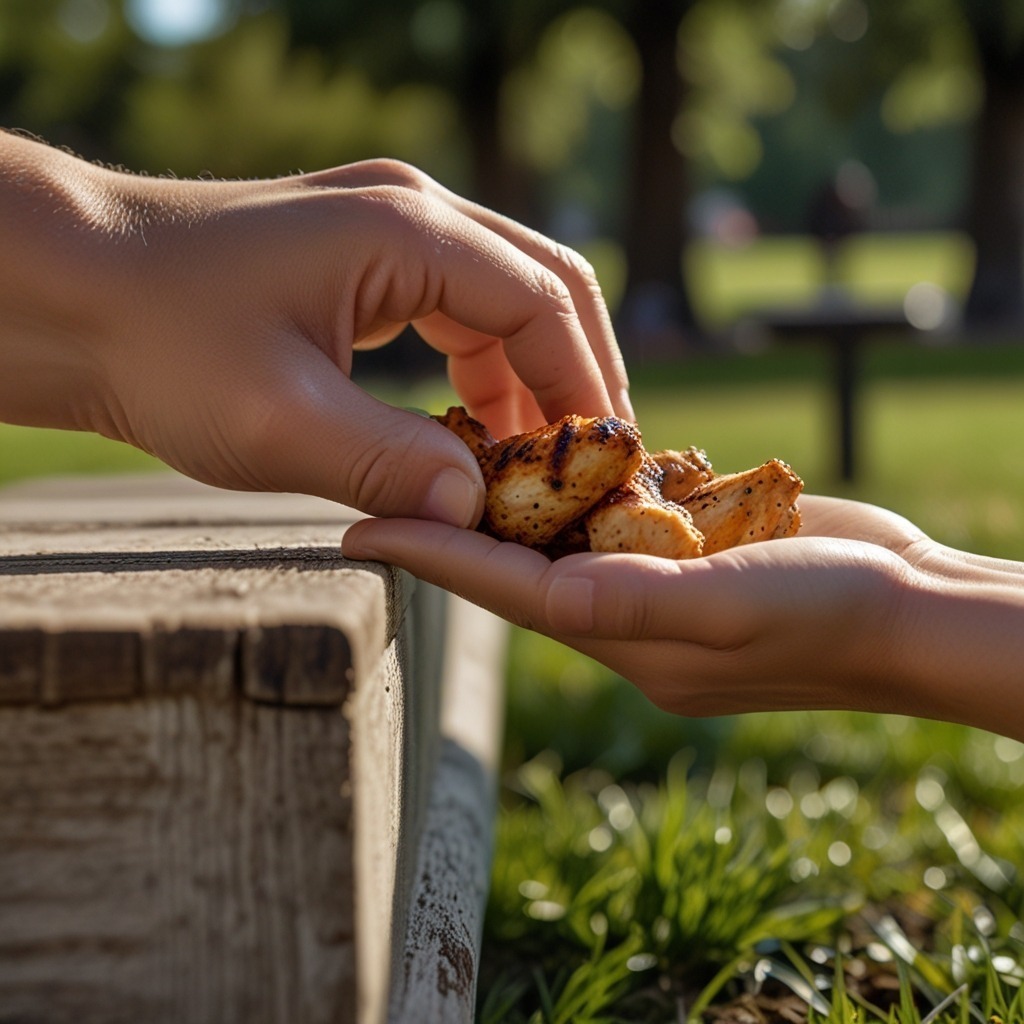
I've mentioned steak and hot dogs, but the real hero of Gumbo's training journey was a $4.99 container of jerk chicken from the hot bar at the grocery store. I know, I know—jerk chicken is spicy and I probably shouldn't feed it to a dog. But this was a mild batch, mostly just brown sugar and smoke, and I was desperate. We were at the park, he'd spotted a squirrel near the treeline, and I called his name with zero expectation. He whipped his head around so fast he nearly fell ovr. I pulled out a piece of that chicken, he came flying back, and something fundamental shifted in our relationship. I'm not saying you should feed your dog jerk chicken. I'm saying you should find that one treat—the one that makes your dog's eyes go wide and their brain go whatever you want, lady, just give me that thing—and you should guard it like a dragon hpard. Deploy it only for the hardest asks. Make it sacred.
Gumbo isn't perfect. He never will be. He still chews things he shouldn't sometimes—toy destructiveness is its own monster—and he'll never be the kind of dog who heels off-leash through a crowded street. But he's not stubborn anymore. Not because his personality changed, but because I finally stopped labeling him and started listening. It took six months of frustration, one blunt vet, a lot of cheese, some tears in my kitchen, and a questionable amount of jerk chicken, but we got there. Or I got there. Honestly, Gumbo was probably fine the whole time.
If you're reading this because your dog ignores you and everyone says it's the breed—take a breath. You're not a bad owner. Your dog isn't broken. You just haven't found the right currency yet, or the right context, or the right amount of patience. Independent dogs aren't giving you a hard time. They're just harder to negotiate with. And if I've learned anything from the terriers and basset hounds and huskies who've passed through my house, it's that the negotiation is always worth it, even when it costs you an $80 dog bed and your dignity at the dog park.