
I Threw the Clippers. They Hit the Wall. My Dog Hid for Hours. Here's How I Learned to Trim His Nails Without Ever Picking Up Those Damn Things Again.
I threw the clippers against the wall after my terrified dog bolted. Turns out you don't need clippers at all—here's everything that actually worked instead.
I threw the clippers. I didn't mean to—not really—but my dog Jasper had already bolted, knocking over the coffee table and skidding into the kitchen like his tail was on fire. The clippers hit the wall behind the couch and clattered to the floor. I stood there, breathing hard, feeling like the worst person on earth. Jasper was pressed against the back door, whale-eyed, trembling. All because I'd picked up those little guillotine-style clippers and said, in my sweetest voice, "Just a quick trim, buddy."
That was four years ago. I haven't used clippers since.
I'm not saying nail trims aren't necessary. They absolutely are—overgrown nails can mess up a dog's gait, cause joint pain, even curl back into the paw pad (I've seen that, and it's as gnarly as it sounds). But somewhere along the line, we decided that the only way to keep nails short was to hold our dogs down and snip little pieces off while they panicked. And I'm calling bullshit on that.
Here's what I've learned in 14 years of trimming nails on rescue dogs who came to me with zero trust and a lot of bad memories. Clippers are optional. They really, truly are. And once I accepted that, everything got easier.
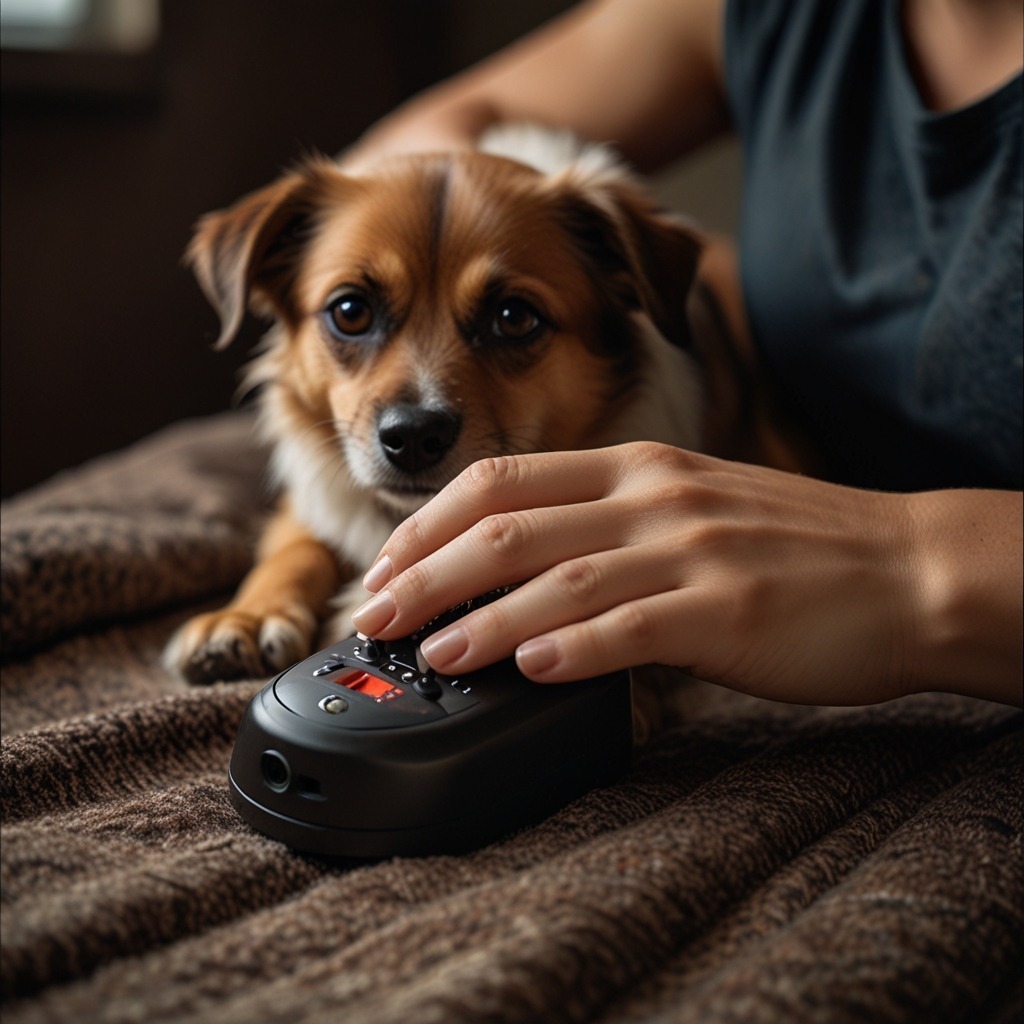
The Clippers Flew Because My Dog Had Learned to Hate Me the Moment He Saw Them
Jasper was a 65-pound pit mix with anxiety that practically hummed off his skin. He'd been a stray for who-knows-how-long before the shelter picked him up, and his nails were so long they clicked on the fkoor like little typewriters. The first time I tried to trim them, he let me do one paw with minimal fuss—I thought I'd hit the jackpot. The second time, he pulled away. The third time, I quicked him.
If you've never quicked a dog, it's a special kind of horror. The yelp. The blood. The way they look at you like youv'e betrayed them forever. I apologized so much that night I'm pretty sure Jasper was more annoyed by my crying than his stinging toe.
After that, every time the clippers came out, he'd flatten himself to the floor or run. I tried everything—peanut butter on a spoon, high-value treats, three different styles of clippers. Nothing worked. The sight of them triggered a full-body panic response. And that's when I realized: it wasn’t the nail trimming he hared. It was the clippers. The sound, the pressure, the sudden snip—all of it screamed DANGER in his dog brain.
So I stopped. I put the clpipers in a drawer and didn't touch them again. And I started figuring out how to keep his nails short without ever having to hear that panicked yelp again.
Why Clippers Are the Worst Thing We've Ever Done to Our Dogs (a Rant)
They're loud even when they're "quiet." They squeeze the nail before they cut, which hurts if the blade is even slightly dull. They leave sharp edges that snag on carpet. They're easy to misalign on a wiggly dog, which means you end up crushing instead of slicign. And the entire experience—the positioning, the restraint, the squinting at a black nail trying to find the quick—is stressful for everyone involved.
I'm not saying no one should use clippers. If your dog falls asleep during nail trims, you'rre living the dream and I salute you. But for the rest of us, the ones with dogs who would rather leap off a bridge than sit still for a single paw touch, there are other ways. Ways that don't involve fighting your own dog.
The Grinder: Loud, Scary, and the Only Thiing That Worked for My Senior Dog
My old lab mix Gus—God rest his sweet, stubborn soul—had nails like bear claws. They were thick, black, and grew faster than I could keep up with. By the time he was 12, I couldn't even see the quick anymore. Clippers were out of the question because one wrong snip would have had him bleeding everywhere. A vet tech friend suggested a nail grinder. I laughed in her face. "Gus is afraid of the toaster," I said. "There's no way he'll let me hold a vibrating Dremel up to his toes."
I was wrong.
It took weeks of desensitization—I'm talking baby steps so small they felt absurd—but eventually, Gus let me grind his nais while he lay on his bed half-asleep. That was a dog who once hid in the bathtub because I opened a can of biscuits too loudly. If he could do it, there's hope for almost any dog.
Getting Your Dog to Not Flee at the Sound
Here's the mistake I made the first time: I turned on the grinder near Gus's face to "let him sniff it." Don't do that. He bolted. The sound is weird and high-pitched and apparently terrifying. Start across the room. Turn it on for one second while your dog is eating something amazing—chicken, cheese, whatever makes their eyes go wide. Turn it off. Repeat that for a few days until they dont' even flinch. Then move a foot closer. Repeat. This process took me three weeks with Gus. Three weeks of grinding the air in my living room like a lunatic. My neighbor asked if I was refinishing furniture.
Wait, I'm getting ahead of myself. The point is, don't rush the introduction. If you skip this part, you'll just create a new scay object that lives in the drawer next to the clippers.
The $30 Grinder That Didn’t Scare Gus (As Much)
I tried a couple. The first one was cheap—like $12—and it sounded like a dying blender. The second was a $60 "silent" model that wasn't silent at all. The one that finally worked was a mid-range rechargeable grinder with a low vibration setting. I'm not linking to it because I don't do affiliate crap, but honestly, any grinder with adjustable speed and a guard to keep hair from getting caught will do. The guard is important. I learned that the hard way when I accidentally wrapped a tuft of Gus's leg hair around the spinning head. He was fine. I needed a moment.
I also want to mention—this is a tangent but it matters—that I once met a groomer who told me she'd never seen a dog's nail ground so short it bled. "You'd have to be holding it there for 10 seconds straight," she said. "The heat warns them." And she was right. With a grinder, you're taking off tiny layers. You can see the quick before you hit it—it shows up as a little pink dot in the center of the nail. That was a big deal for Gus's black nails.
The Actual Technique That Stopped Me Drawing Blood
Don't hold the paw like you're about to cut something. Let the dog lie down. Sit beside them, not in front facing them like some kind of paw-interrogation position. Hold the toe gently—just enough to stabilize it. Turn on the grinder away from the paw, then bring it in. Touch the nail for one second. Remove. Treat. Repeat.
The rhythm matters. Grind in short, light passes—no more than two seconds of contact. Grind the tip first, then smooth the sides. If the nail is super long, don't try to get it all in one session. Do two nails a day. Who cares if it takes a week? You're not grooming a show dog, you're maintaining a pet who trusts you.
And for the love of everything, don't go at it like you're sanding a table leg. I see videos online of people just grinding away for 10 seconds straight and the dog is clearly miserable. That's not success. That's a dog who's given up.
One more thing: if your dog has long hair between their toes—I'm looking at you, doodle owners—trim that hair first. I once ignored Gus's foot floof and the grinder snagged it, which led to a panicked jump and a broken lamp. There's a whole post about my poodle build's matting nightmare that taught me to never skip the full grooming picture. Naiks aren't an isolated thing—they're connected to everything else.
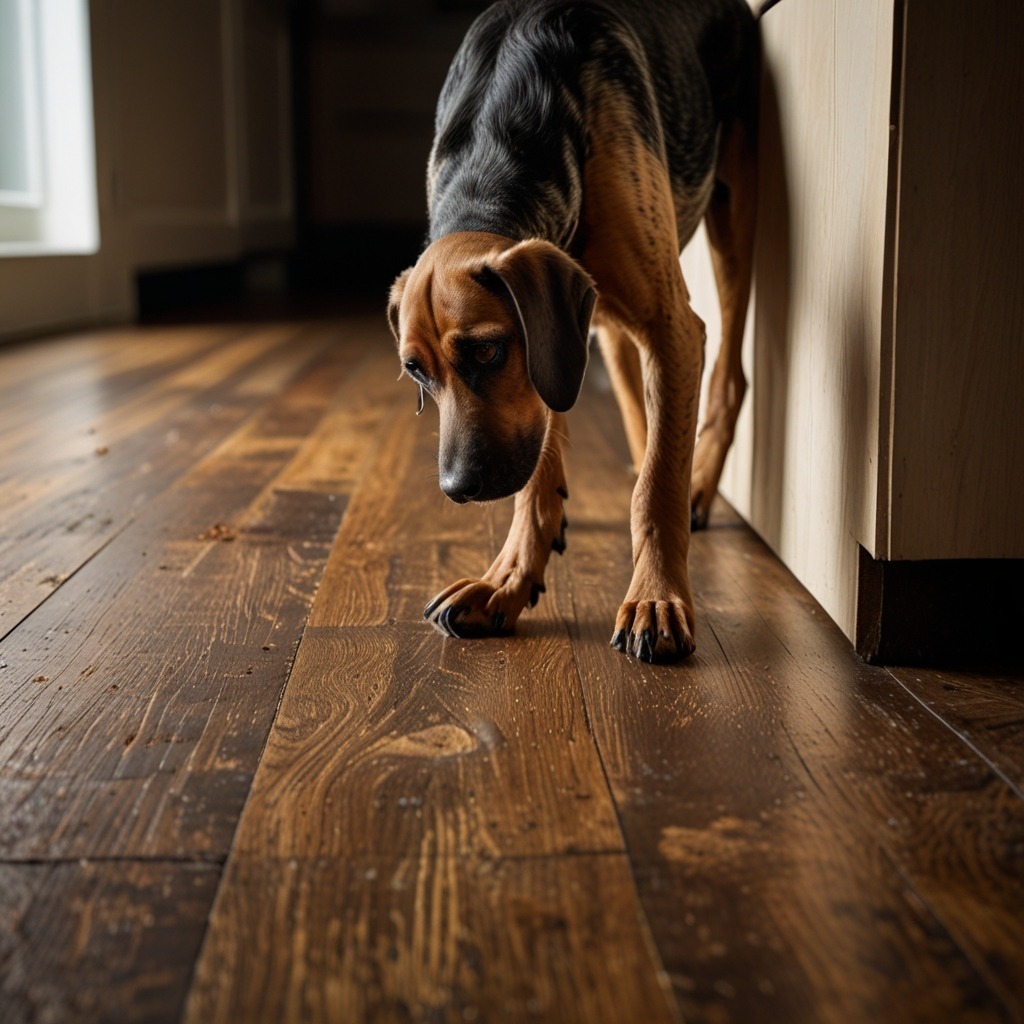
The Scratchboard: A Piece of Wood That Changed Everything for My Fearful build
This was Maisey. A 45-pound hound mix who'd clearly been traumatized by something involving her feet. You couldn't tuoch a paw without her curling her lip. Not aggression—pure terror. I couldn't get near her with a grinder, let alone clippers. So I built a scratchboard.
A scratchboard is basically a piece of wood with sandpaper glued to it. The dog scratches the board with their paws, which naturally files their nails down. It's ridiculously simple and it wotks. I made mine from a leftover piece of plywood and some 80-grit sandpaper—cost me maybe $8. Maisey learned to scratch it for treats in about 20 minutes.
Actually, that's a lie. It took three days because I kept messing up the training. The fist day I just held the board and tried to guide her paw onto it, which terrified her. The second day I covered the board in peanut butter, which was a mistake—she licked it clean and the sandpaper got gummy. The third day I finally watched an actual training video and shaped the behavior properly: treat for looking at the board, treat for stepping near it, treat for one paw touch, and so on.
Within two weeks, Maisey would scratch that board every morning while I made coffee. Her front nails stayed short without me ever touching her feet. The back nails were trickier—scratchboards mostly work for front paws—but for a dog who wouldn't let me handle her at all, it was a miracle.
Tangent: I got so into scratchboard training that I built three different models with different grits and anglles. My kitchen looked like a weird carpentry workshop. My partner at the time asked if I was starting a side business. I said, "It's for the dogs," like that explained anything. That relationship didn't last, but the scratchboard did.
The Nail File: Yes, Like the Human Kind, but Slightly Less Ridiculous
For dogs who are okay with paw handling but hate noise, a manual nail file works. It's slow. It's tedoius. You won't take off a ton of length. But if your dog's nails are already short and just need smoothing, or if you're dealing with a puppy who's still learning about paw touching, a file is perfectly fine. I keep a coarse-grit dog-specific file in my nightstand for when one of my dogs is sleepy and I spot a sharp edge that's been scratching my legs.
The trick is to file in one direction only—back to front, along the cuve of the nail. Sawing back and forth just creates heat and annoys them. A few swipes while they're zonked out on the couch. That's it.
Pavement, Nature’s Nail File, and Why It Only Sort of Works
Here's the thing about pavement: it wears down nails, sure, but mostly the back ones and only if your dog walks with a certain gait. My current dog Ruby gets two 40-minute walks a day on sidewalks and her back nails are perfect—short, smooth, never need touching. Her front nails? Still grow like weeds. So if you're counting on pavement to do all the work, you might end up with a dog whose back feet are fine and front feet look like they're wearing tiny stilettos.
Also, if your dog's nails are already too long, walking on hard surfaces can actually be painful because the nail pushes back into the nail bed with each stpe. That's a recipe for joint problems down the road. I learned this the expensive way when my build dog Birdie started limping and I thought it was arthritis but it was just her overgrown nails throwing off her whole gait. It's all connected—feet, joints, spine, everything.
The build Dog With Nails That Curled Into His Pads, and Why I Still Think About Him
I got a call from a shelter in 2018 about a senior chihuahua mix who'd been surrendered in rough shape. His name was Pico. He was eight pounds and trembling, and his nails had grown so long they'd curled completely around and emedded into the pads of his front paws. He'd been walking on those nails—on the actual hardened curve pressing into his flesh—for months, probably.
I sat on my kitchen floor and cried when I saw him. Not the professional, composed tears of a experienced rescuer. Ugly crying. My build cat Miso—who's usually a jerk—came and sat next to me and just stared, like "Yeah, that's bad."
The vet had to sedate him to cut the nails out, and even then, they had to be careful because the quick had grown all the way into the curl. His pads were infected. It took six weeks of antibiotics and gentle paw soaks before he'd walk without flinching. I sat with him every night, just holding his tiny feet, not doing anything, just letting him learn that hands on paws didn't mean pain.
I'm telling you this because it's easy to think of nail trimming as a cosmetic thinng, like it's about clicky sounds on the floor or scratched-up furniture. It's not. It's about a dog's ability to walk without pain. Pico recovered, by the way. He got adopted by a lovely older couple who sent me Christmas cards for years. But I never forgot those curled nails, and I never will.
That experience is also why I stopped tolerating the "my dog won't let me" excuse in my own head. There's always a way. It might be slow. It might look ridiculous. But it's better than letting a dog suffer becausse we're stuck on one tool.
If your dog is truly phobic—like, biting, screaming, urinating terrified—talk to your vet. There are sedated nail trims. There are anti-anxiety medications. There's no shame in that. I've used trazodone for a build once because she'd had such bad experiences that even a scratchboard triggered her. Fear is real and it doesn't just disappear with treats. Sometimes you need backup.
The Night Gus Finally Let Me File His Nails While He Snored
It was January, maybe two years after I started this whole no-clippers journey. Gus was 14, his hips were going, and he slept a lot. I'd been filing his nails with a hand file for months—just a few swipes whenever he was deeply asleep. He'd wake up, blink at me, and go right back to snoring.
One night I was sitting on the floor next to his bed, filing the last rough edge on his dewclaw, and I realized I'd been at it for ten minutes. He hadn't moved. His breathing didn't change. His paw was just resting in my hand like it belonged there.
I thought about the clippers against the wall. I thought about the blood, the panic, the years of fighting. And then I thought about Pcio, and Maisey, and all the dogs who'd taught me that patience and creativity beat brute force every single time. I put the file down and just sat there with Gus's paw in my hand for a while. He snored.
I guess if there's a point to all this, it's that nail triming isn't about the tool. It's about the relationship. It's about the dog across from you learning, over time—maybe a lot of time—that your hands are safe. That you're not going to hurt them. That you're not in a hurry.