
I Thought Yelling at My Dog Would Stop the Barking. Then My Neighbor Called the Cops. Here's What Actually Fixed It.
I tried yelling, spray bottles, and a bubble machine to stop my dog barking at strangers. None of it worked—until I stopped blaming him.
I used to think my dog was just being an asshole when he barked at strangers. Turns out I was the assohle. Mostly. Okay, not entirely—but I sure didn't help.
His name was Baxter, a shepherd mix with the lung capacity of a fog horn. When I adopted him from the shelter where I worked, they warned me he was "vocal." Vocal. That's like calling a tsunami a little damp. Baxter barked at the mail carrier, the UPS guy, the neighbor kid who walked past our window at exactly 3:47 every afternoon, the squirrel who had the audacity to exist on OUR fence. And by bark, I mean the full-body-spasm kind. Hackles up, spit flying, eyes glazed over like he couldn't hear a word I was saying. Because he couldn't. His brain was basically a balloon of screaming air.
My first instinct was to yell. I'm not proud of it. "QUIET!" I'd bellow, which in retrospect must have sounded to him like I was just joining the chaos party. Spoiler: didn't work. Actually made it worse. He'd bark louder, tail thrashing, as if to say "YES MOM, I SEE THE DANGER TOO, LET'S SCREAM TOGETHER." I tried a spray bottle of water next—a tip I'd gotten from some old-school trainer. Baxter learned to bark at the spray bottle. He'd dodge the mist and then bark at the bottle itself, which I'd be holding, which meant he was now barking at me while I was trying to shush him. That was a new low.
Then my neighbor, Mrs. Chen, a sweet older woman who'd never complained about anything, knocked on my door. She didn't yell. She looked tired. She said the barking was so relentless during the day while I was at work that her grandchildren couldn't nap. She'd been reluctant to say anything, she said, but if it didn't stop she might have to call animal control. Not out of malice—out of desperation. I stood there in my doorway, holding a sopping wet spray bottle, and felt about two inches tall. That's when I knew I had to fix this for real. Not with yelling, not with gadgets, but with actual understanding.
What followed was a year and a half of messing up, learning, unlearning everything I thought I knew from vet tech school and the shelter, and fiinally stumbling onto a handful of things that worked. Some were tiny management hacks nobody talks about. Some were counterintuitive. Some made me want to cry in my laundry room. But eventually, Baxter stopped treating every stranger like an invading army. Here's the whole messy, expensive, humiliating journey.
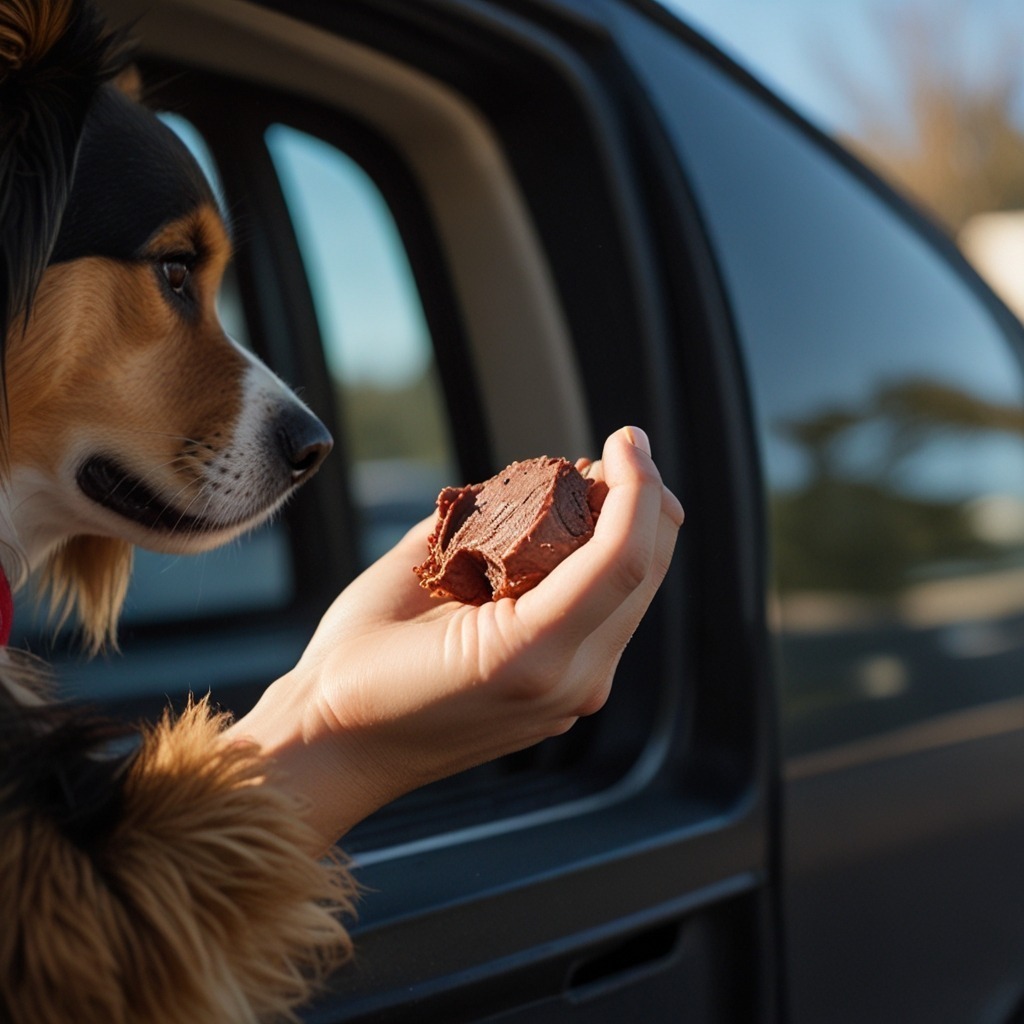
The day my neighbor threatened to call animal control
It was a Tuesday. I remember because I'd just gotten home from my sift at the shelter, where I'd spent eight hours surrounded by barking dogs, and I walked into my own house and was greeted by more barking. So loud my ears rang. The mailman had just dropped off a package on the porch, and Baxter was at the front window, doing his best impression of a possessed hyena. I yelled at him. He kept barking. I grabbed his collar, which only made him twist and bark at my hand. I was exhausted, humiliated, and terrified of losing my dog. So I did what any rational person does: I sat on the floor and cried while a 65-pound shepherd mix barked directly into my ear. Then I went online and started googling "how to stop dog barking at strangers" and fell down a rabbit hole of well-meaning but mostly terrible advice.
The first thing you need to know—and it took me years to really get this—is that barikng at strangers is almost never about "dominance" or "being bad." It's fear. It's territorial instinct. It's over-arousal. Your dog isn't giving you the finger. He's saying "I'm scared, get that person away from my space." Yelling at him only confirms his fear: yes, Mom is also agitated, so there really IS a threat. The spray bottle just added a startling, unpleasant experience onto an already scared dog. I was essentially telling him that every time a stranger appeared, bad things happened. He became MORE vigilant, not less. That's called negative reinforcement, and it's a hell of a drug.
I'd worked at the shelter long enough to know that punishment often makes fear-based behavior worse. But in my own living room, with my own dog, I forgot all of it. I just wanted quiet. Unfortunately, wanting quiet doesn't make it so. I had to get honest about what was happening in his brain.
Dr. Nguyen—she's been my vet for 11 years, through three dogs and a divorce, and she's seen me cry more times than I'd like—once told me that chronic barking at windows can literally change a dog's stress hormone levels. Cortisol stays high, dog lives in a bath of anxiety, and then you wonder why he's on edge all day. She gently suggested that if I didn't change my approach, Baxter might need anxiety meds. That was a wake-up call. I'm not a vet, and I sure as heck didn't want to medicate him if I could help it. So I dove into the science of dog reactivity. And I screwed up a lot.
"Just distract him with treats"—and other advice that spectacularly backfired
When I first started, I thought I was being clever. Every time someone walked past the house, I'd shove a treat in Baxter's face. "Look! A treat! The stranger means chicken!" I'd chirp. And for about half a second, he'd glance at the chickken. Then he'd go right back to barking, now with chicken breath. The problem was timing. By the time the treat appeared, he was already past threshold. His brain was flooded with stress chemicals, and he couldn't process the treat as a reward. I was basically pairing treats with his freak-out, which, if anything, was just creating a really confused, treat-obsessed dog who still wanted to murder the mailman. Not ideal.
Threshold, in dog training, is the point where a dog is so aroused or scared that he can't learn. For Baxter, that threshold was ctossed the instant he saw a person 50 feet away. Trying to ask his brain to learn "strangers predict chicken" in that state was like trying to teach calculus in the middle of a mosh pit. It's not happening. I had to take about forty steps back. Literally. I'll get to that.
But first, let me address another piece of advice I tried: "just socialize him more." I worked at a shelter. I thought I knew socializing. I had a post all about my dog park disaster where a lab pinned my puppy and I realized what I was actually doing wrong (which you can read right here). That same flawed logic—more exposure equals better behavior—nearly wrecked Baxter. I started taking him to busy streets, parks, outdoor cafés, thinking if he just saw enough people he'd get used to them. Instead, he spent every outing vibrating with stress, barking at every single passerby, and then coming home and being even more reactive at the window. I was flooding him. That's the technical term: flood him with the scary thing until he shuts down or explodes. Neither outcome is good.
What I should have done—what I eventaully did—was manage his environment first and re-introduce strangers at a distance where he could stay calm. Not from ten feet away on a crowded sidewalk. From across a parking lot, behind a car, while I fed him bits of hot dog and sang "you're a good boy" off-key. But I'm getting ahead of myself.
The bubble machine incident
This is the part where I tell you about the bubble machine, because it's the dumbest, most expensive parenting fail I've ever had with a dog. I read on some forum that blowing bubbles could distract a reactive dog—"they'd be so entranced by the bubbles they'd forget to bark." So I bought a $40 automatic bubble machine that ran on batteries and smelled like fake vanilla. I set it up in the living room facing the picture window, filled it with dog-safe bubble solution, and waited. UPS truck pulled up. I hit the switch. Bubbles filled the air like a toddler's birthday party in a hellscape. Baxter? He barked at the bubbles. Then he tried to eat the bubble machine. Then he knocked it over, got soapy gunk all over the hardwood, and proceeded to slide through it while still barking at the delivery person. I ended up with a wet floor, a greasy dog, and zero reduction in barking. I threw the bubble machine in the trash. The moral? Not every cute idea translates to real life. And also maybe don't trust forums at 2 a.m. when you're desperate.
But tht's the thing about fixing barking—you'll try stupid stuff because you're tired and embarrassed and your neighbor is rightfully fed up. You'll waste money. You'll swear under your breath. You'll watch YouTube trainers and think "that looks easy" and then your dog will literally eat a bubble machine. But you keep going because you love the little jerk, and somewhere underneath the noise is the dog you know he can be.
What I wish I'd done from day one: just block the view
Management is so boring that most people skip it. We want training to fix the problem, not to rearrange our living room. But the single most effective thing I did for Baxter's window barking was slap frosted window film on every pane he could see out of. It cost maybe $15 at the hardware store. It took 20 minutes to install, and I'll tell you, cutting that stuff with crooked scissors while a dog barked at my heels wasn't my finest DIY moment. But once it was up, the barking at indoor triggers dropped by about 60%. Just like that. He couldn't see the mail truck, the joggers, the kid on a scooter. Out of sight, out of mind.
I also got a cheap white noise machine for when I wasn't home. I put it near the front door. It drowned out the footsteps on the porch and the jangle of keys from the neighbor's apartment. That helped with the barking that happened when I was gone (which I only knew about because Mrs. Chen told me). Management isn't training—but it gives your dog's brain a break from the constant cortisol cycle, which makes training actually possible later. If your dog is barking his head off all day while you're at work, no amount of weekend counter-conditioning is going to stick. He's marinating in stress.
I also rearranged the furniture so his bed was away from the window, behind a big armchair. He still sometimes perked up at sonds, but without the visual trigger, he was way more likely to settle. I kept a basket of stuffed Kongs and long-lasting chews near his bed, so when I left, I'd give him something to do. A tired jaw is a quiet jaw.
I'm not saying you should live in a dark cave with zero stimuli. But for a dog who's already over threshold, cutting visual access for a few weeks can be life-changing. It's like putting an anxiety patient in a quiet room before asking them to do exposure therapy. You wouldn't drag someone with a phobia of spiders into a room full of tarantulas and scream "GET USED TO IT." Same logic applies to dogs.
And while we're on management: the right use for walks matters. If your dog barks and lunges at strangers on leash, a front-clip use can give you better control without choking him. I learned that lesson the hard way with a build Chihuahua mix who nearly dislocated my finger. But even a good use won't fix the barking—it just keeps you safer while you work on the behavior.
The counter-conditioning setup that actually moved the needle
Alright, so this is the training part. The actual behavior modification. I'm going to tell you exactly what I did with Baxter, but I want to be really clear: I'm not a certified behaviorist. I'm a dropout from vet tech school who's fostered 40-odd dogs and made every mistake in the book. This worked for us. It might not work for your dog if there's a medical issue or a trauma history I can't see. If your dog is aggressive—like, actually trying to bite strangers, not just barking—get a professional. Okay? Okay.
The technique I used is called LAT, or "Look At That." It's from the world of force-free training, and it's basically a game where you teach your dog that seeing the scary thing is the cue to look at you for a treat. You're not asking for quiet. You're not punishing the bark. You're changing the emotional response to the trigger by creating a positive association, but from a distance where the dog can still think. The key is starting far enough away that your dog notices the person but doesn't bark. For Baxter, that meant I'd drive him to a empty park, park near the edge, and sit in the car with the windows cracked. A person would walk by 100 feet away. The instant his ears went up and his head turned toward the stranger—before a single bark—I'd mark with a click (or a verbal "yes") and shove a piece of hot dog in his face. Then I'd wait. Stranger gone. Repeat. Over and over and over.
For weeks. I'm not kidding. I sat in that car for twenty minutes a day, rain or shine, with a baggie of cut-up hot dogs that made my hands smell like a baseball stadium. I looked like a weirdo. I didn't care. Slowly, Baxter started to look at the stranger, then whip his head back to me like "where's my hot dog?" The stranger became a predictor of good things, not a threat. We shrank the distance over time. From 100 feet to 80, to 50, to actoss the street. It took about three months to get to the point where we could walk calmly past someone on the same sidewalk without a meltdown. Even then, we had setbacks.
One thing that helped enormously was teaching a solid "touch" cue (nose-to-hand target) that I could use to redirect his attention on walks. That's just a matter of holding out two fingers, saying "touch," and reinforcing when his nose makes contact. I practiced it in the house, then in the yard, then on quiet streets, then eventually near triggers. It gave him a job to do instead of barking. My dog isn't a machine—he still sometimes grumbles or does a single woof—but he's no longer a public menace.
The "quiet" command rabbit hole
I've to talk about "quiet" cues because they're so popular. I tried teaching "speak" so I could then teach "quiet." It was a disaster. Baxter learned to bark on cue, which was adorable for about four seconds, but then he'd offer barking constantly in hopes of earning the "quiet" command. I'd ask him to speak, he'd bark, I'd say quiet, he'd stop for a treat, and then bark again two seconds later because he figured out that bark -> quiet -> treat was a great gig. I created a demand-barking monster. I had to extinguish that whole chain by ignoring him for ten minutes straight while he barked at me expectantly. Let me tell you, ignoring a 65-pound shepherd giving you a full-throated lecture is soul-destroying. I don't teach "speak" anymore. I just teach calmness.
What medication taught me (even though I'm not a vet)
After about eight months, Baxter had improved a lot, but he was still hyper-vigilant indoors. Dr. Nguyen gently brought up the possibility of a low dose of fluoxetine. I resisted. I thought putting him on meds meant I'd failed. Looking back, that was just ego. His brain was clearly not producing enough feel-good chemicals on its own. She started him on a tiny dose, and within four weeks, he was calmer—not sedated, not lobotomized—just less reactive to the same triggers that used to send him into orbit. The window barkiing that remained after management went down another 40%. Suddenly, our training sessions actually worked faster because he wasn't constantly saturated with stress. I'm not saying medication is for every barky dog. I'm saying that if your dog is constantly on edge and you're doing everything right and it's still not working, talk to your vet. It's no different than a human taking anxiety meds. We wouldn't shame someone for taking Zoloft. Don't shame your dog.
I wrote about a build dog who wouldn't leave a crate for weeks, and that dog ended up needing medication too. Sometimes it's just brain chemistry. You can read that story here. The same idea applies to barking at strangers: extreme fear needs more than chicken. It's okay. It doesn't mean you're a bad owner.
Why I stopped blaming the dog (and started blaming the bubble machine)
There was a moment, around month ten, where I sat on my floor with a half-empty package of window film, a bag of hot dog pieces, and a dog who was actually lying down while a person walked past the house. He lifted his head, let out one tiny "woof" that sounded like a question, and then put his head back down. I cried. Mrs. Chen brought me cookies the next week and said she hadn't heard a peep. I'm not gonna lie, it felt like the Olympics of dog ownership.
But here's what I wish someone had told me earlier: the goal is never "no barking." It's "less stress." Some dogs are always going to alert bark. That's part of what they were bred for. My expectation that Baxter would lie silently while strangers approached was just unrealistic. He's a dog. Dogs bark. What I needed was a dog who could recover quickly, whose world wasn't ending every time the doorbell rang. And we got there. Not by dominating him or punishing him, but by listening to what he was telling me: "I'm scared. Help me feel safe."
I also wish I'd known that my own frustration was making things worse. The days I was calm, patient, and armed with snacks, he did better. The days I was exhausted and short-tempered, we backslid. Dogs read our emotional state like a book. If you're tense, they're tense. So as much as it was about training him, it was also about me learning to breathe and not treat every bark like a personal failing. I'm still working on that. I've three dogs now, and sometimes I still lose my cool. But I'm better than I was. And that's enough.
I think about my old shelter days, when I'd see dogs returned for "excessive barking," and my heart would break. Those dogs weren't broken. They just hadn't found someone willing to do the boring, slow work of understanding them. If you're reading this because your dog is barking at strangers and you're at your wit's end, I see you. This stuff is hard. It's okay to feel frustrated. But also: it can get better. Not perfect, but better.
This whole journey also reminded me of another build dog of mine who was terrified of his own shadow—a dog so shy he'd pancake to the floor if a stranger looked at him. I wrote about him in another post, and honestly, the concepts overlap so much: I Thought My Dog Was Just 'Shy'. Fear expresses itself as barking, freezing, hidig, or all of the above. The solution is almost always patience, space, and building trust. Not gadgets. Not yelling. Trust.
Six months latr: still barks at the mail truck, but not the mailman
As I type this, Baxter is curled up on the couch behind me. The mail truck just rumbled past, and he let out a low, grumbly "whuff" without even lifting his head. The mailman will be here in about ten minutes to drop off a package, and I already know what'll happen: Baxter will amble to the door, give one alert bark, look at me, remember that I've got a jar of freee-dried liver on the counter, and come trotting over for his treat. I'll reward the quiet eye contact. He'll take the liver, crunch it, and then lie back down. The mailman might be a stranger, but the routine is safe. That's what we built.
I'm not saying every dog can get here. Some dogs have deeper trauma, more intense genetics, or underlying medical issues that make this a much longer road. But I want you to know that the "perfect" quiet dog isn't the goal. The goal is a dog who trusts you to handle the scary thing, so he doesn't have to. Every time you calmly body-block the window, toss a treat, or simply exhale insead of yelling, you're building that trust. And that trust is worth more than all the bubble machines and citronella collars in the world.
I'll leave you with this: the other day, a stranger knocked on the door to return a misdelivered package. Baxter trotted over, gave a single "woof," looked at me, and sat. I opened the door, took the package, and thanked the guy. Baxter wagged his tail once. No barking fit. No neighbor calls. Just a dog who finally understood that strangers aren't the end of the world. And honestly? I'm prouder of that moment than any diploma I never got.