I Thought Rescuing a Dog Meant Saving One From a Shelter. Then I Brought Home the Dog Who Hated Me.
I thought rescuing a dog meant saving one from a shelter. Then I brought home a 65-pound terrier mix who spent three days under the kitchen table and hated me. What I learned about training a terrified rescue dog with real behavioral issues — and the expensive collar I'll never use again.
I picked up Barkley on a Tuesday. It was drizzling, the kind of half-hearted rain that doesn't clean anything, just makes everything damp and cold. The shelter volunteer handed me his leash and said, "He's a little… particular." That should've been my first clue, but I was too busy feeling noble. Fourteen years of rescue work, 40-something fosters, and I still thought love and a good kibble would fix anything.
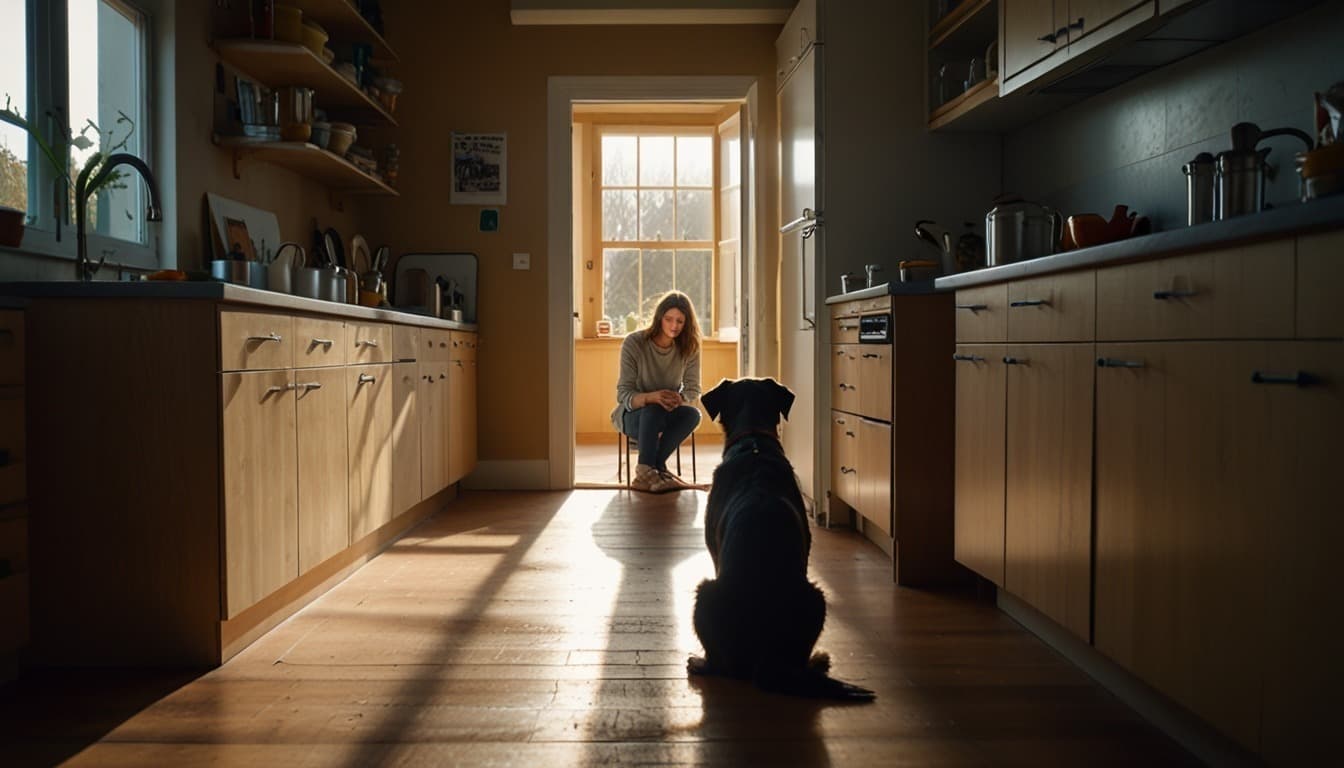
Barkley spent the first three days under my kitchen table. Not metaphorically. Literally. He wedged his 65-pound body between the chair legs and wouldn't come out, even to eat. I slid bowls of food under there like I was feeding a very large, very depressed groundhog. When I reached toward him on day two, he curled his lip — not a full snarl, just the faintest glimpse of tooth — and I backed off. My own dog, in my own kitchen, and I was the scary thing.
That's when I realized I'd gotten the rescue training equation backwards. It's not "how do I train this dog with behavioral issues?" It's "how do I become the person this dog can trust enough to learn anythhing?" And screw me, that's a much harder question.
The Dog Who Made Me Rethink Everything I Thougt I Knew About Training
Before Barkley, I'd have told you I was good at this. I'd rehabbed leash-reactive border collies, taught resource-guarding chihuahuas to share (ish), coaxed feral-born cats into lap-sitting territory. I had a whole toolkit: clickers, high-value treats, gentle leaders, the works. Barkley looked at my clicker the first time like I'd offered him a poisonous spider. He didn't care aboout chicken. He didn't care about cheese. He didn't care about anything except the distance between us, which he wanted to maximize at all times.
Behavioral issues in rescue dogs arrn't a checklist. They're not "jumping up" or "pulling on leash" — those are training problems. Behavioral issues are the deep stuff: fear aggression, severe separation anxiety, complete shutdown. The kind of stuff that makes you think, what the heck happened to you beefore I got you? And then you realize knowing the answer wouldn't acrually help. You're not a dog therapist. You're just a person with a leash and a bag of increasingly ignored liver treats.
I remember calling my vet, Dr. Nguyen — who's dealt with my panic calls for 11 years, through three dogs and a divprce — and saying, "I think I'm in over my head." She said, "Good. That's the first sane thing you've said all week." She told me to stop training. Stop commands. Stop everything. Just exist in the same room as the dog and let him learn that my presence didn't predict anything bad. That was the advice that changed everything, and I hated it because it felt like doing nothing. Which, as it turns out, was exactly the point.
Why 'Sit' and 'Stay' Are the Least of Your Problems Right Now
Here's the thing about rescue dogs with serious behavioral baggage: obedience training is the final chapter, not the first one. I see people on forums all the time — "my rescue won't stop barking at strangers, I've tried telling him 'no' and he just lunges harder" — and I want to scream into a pillow. Because of course he does. He's not barking because he doesn't know the word "quiet." He's barking because his entire nervous system is screaming DANGER and no amount of stern eye contact is going to override that.
If you're dealing with a dog who's reactive, fearful, or shut down, you're not really doing "training" yet — you're doing nervous system rehabilitation. It's more like helping a traumatized person feel safe than teaching a dog to roll over. And that timeline is measured in months, not days.
I wasted three weeks trying to teach Barkley to sit. He knew how to sit, by the way. I'd seen him do it — once, reflexively, when a loud noise startled him and his butt hit the floor. But in those early days, if I asked for a sit, he'd just stare through me like I was speaking a foreign language. Because I was. The language of "I'm safe and you can relax" hadn't been established yet, and without that, "sit" is just a pressure, a demand, another thing to be afraid of failing at.
So I stopped asking for anything. I just sat on the floor (not too close) and read out loud from my phone. Emails, recipes, whatever. My voice, no expectations. Barkley didn't care about the words but he started to notice that my presence didn't come with demands. That was the first brick in a very, very slow wall.
The First 48 Hours: What Nobody Told Me About Bringing Home a Terrified Dog
I want to back up. Because the conventional advice about bringing a rescue home — the "3-3-3 rule" (three days to decompress, three weeks to settle, three monhs to feel at home) — isn't wrong exactly, but it's also not helpful when your dog won't come out from under the furniture. It's like telling someone with a panic attack to "just breathe." Technically correct, practically useless.
Here's what I actually did in those first 48 hours, and what I wish someone had told me to do instead.
Don't introduce them to everyone
I made the mistake — and I've made it more than once — of thinking that introducing a new dog to my existing three was urgent. Like, if they didn't sniff butts immediately, they'd never integrate. This is nonsense. A terrified dog doesn't need new friends. They need a quiet room with a closed door, a water bowl, and absolutely zero social pressure. I introduced Barkley to my crew way too fast on day one, and he air-snappd at my oldest Lab, who was just trying to sniff him politely. That set back his comfort level by a solid week. Looking back, I should've kept him completely separate for at least three days, letting them smell each other under the door before any face-to-face.
Forget the potty schedule (sort of)
Everyone says, "take them out every two hours on a schedule." Sure, if the dog will let you put a leash on them. Barkley wouldn't. I had to slide the leash toward him with a broom handle the first day. (Stop laughing. It worked.) I ended up just leaving the back door open — screened porch situation — and letting him go out when he felt brave enough, which was usually 2am when the house was silent. Did I clean up a couple accidents inside? Yes. Was that better than traumatizing him further by forcing leash walks? Also yes.
Sometimes the training goal for week one isn't "no accidents." It's "the dog doesn't think I'm going to eat him." Aim for that first.
Hand-feeding is underrated
Food is often the first bridge. But Barkley wouldn't eat from my hand, not even rotisserie chicken. So I sat six feet away from his bowl while he ate. Then five feet. Then four. Over four days, I slowly moved my chair closer until I was sitting beside the bowl, not touching him, not talking, just existing while he ate. By day five, he took a pieec of kibble from my fingers — one piece — and I'm not ashamed to say I cried a little. It was the tiniest thing, but it was everything.
Leash Reactivity and the Art of Looking Like an Idiot in Public
Once Barkley could tolerate a leash (which took ten days, a lot of peanut butter on a long wooden spoon, and several sessions of just clipping the leash on and immediately unclipping it — thanks for that trick, Dr. Nguyen), we had a new problem: the outside world was terrifying. Every squirrel was a threat. Every person pushing a stroller was a potential assassin. Every other dog was proof that the apocalypse had arrived.
Barkley would lunge, bark, spin, and occasionally redirect his fear onto the leash itself, gnawing at it like a craxed beaver. I'm 5'4″. He's 65 pounds. You do the math on how those walks went.
Leash reactivity is the behavioral issue that makes you feel the most judged as an owner. Your neighbors see a "bad dog" and assume you're a bad owner. I can't count the number of times someone shouted "you need to train that thing!" at me while I was actively, visibly, trying to train that thing. One guy even suggested I "show him who's boss" with a prong collar, and I had to walk away before I said something unkind about his own behavioral issues.
What actually helped wasn't a magic collar or a correction technique. It was something called pattern games, specifically the "1-2-3" game from Control Unleashed (Leslie McDevitt is a genius and I'll fight anyone who says otherwise). Here's the gist: you say "one, two, three" in a calm voice, and on "three," you drop a treat at your feet. No command. No expectation. Just a predictable pattern that the dog learns to anticipate. Over time, the pattern itself becomes calming — it's a rliable, safe thing in a world full of unpredictable scary things.
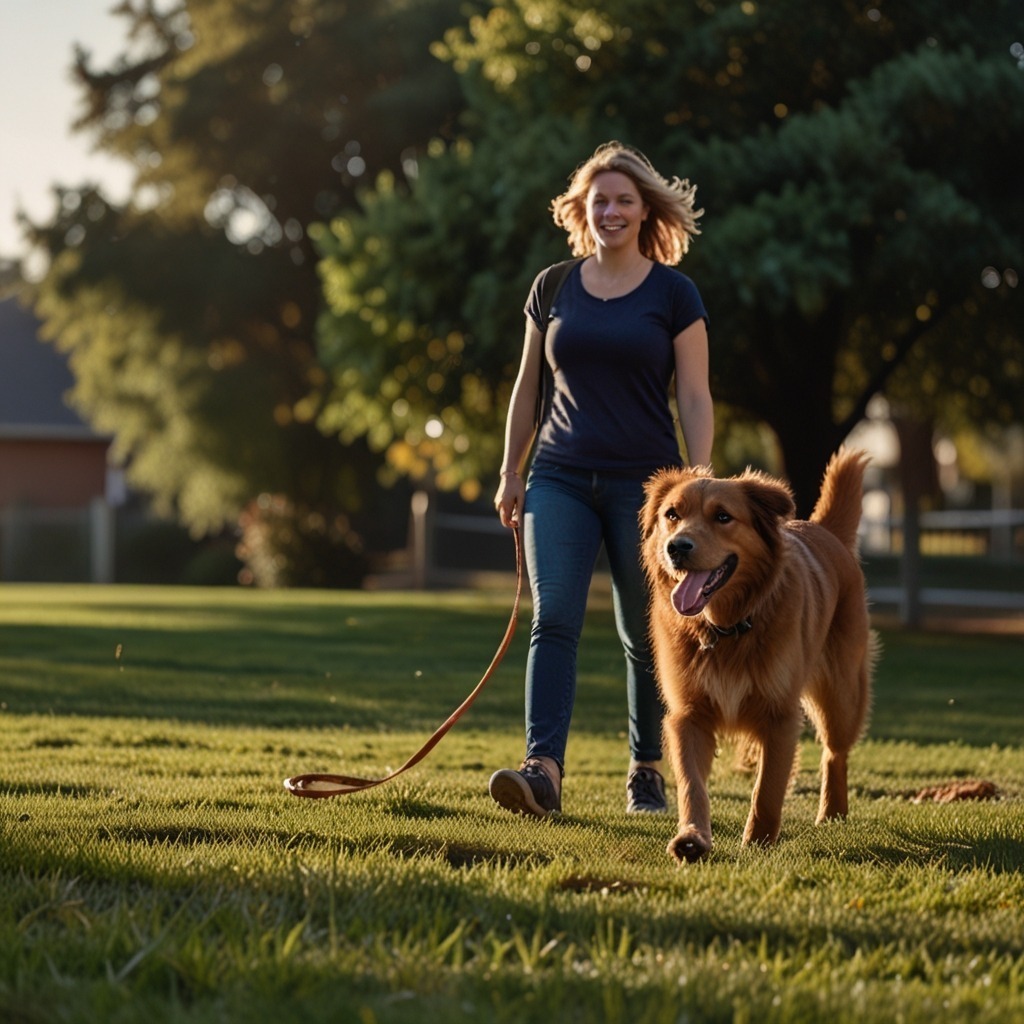
We practiced this inside for a week. Then in the backyard. Then on the front porch. Then on the sidewalk when no one was around. Then — and this is where I looked like an absolute lunatic — in the park, 100 feet from anyone else, counting out loud and tossing treats on the ground while my dog trembled and occasionally glanced at the distant human shapes. I looked like I was conducting a very weird, very quiet ritual. But it worked. Slowly, Barkley started glancing at me when he saw a trigger, instead of launching into full meltdown mode. He was learning that scary things predicted treats, not threats.
I also learned the hard way that you can't out-exercise reactivity. A tired dog can still be a terrified dog — they're just a tired, terrified dog with better cardio. I used to think a long run would fix everything. It doesn't. It just makes them fitter and fsater at lunging. (I wrote about this when my build Lab destroyed my couch despite 8-mile walks — it's still one of the most humbling lessons I've ever learned.)
On 'Dominance' Theory (And Why I Want to Throw the Whole Concept in the Trash)
I'm gonna keep this short becase if I get going, I'll need a whole separate article and probably a Xanax. Dominance theory — the idea that dogs are constantly trying to be "alpha" and you need to alpha-roll them, eat before them, never let them through doorways first — has been thoroughly debunked. The original wolf-pack research that inspired it was based on captive wolves from different families forced into unnatural groups, and the researcher himself has spent decades trying to correct the record.
Yet somehow, every time I talk about a growly rescue dog, some guy at the dog park tells me I need to "assert dominance." No. A fearful dog doesn't need you to pin them down to "show them who's boss," they need to feel safe. Aggression in rescue dogs is almost always fear-based, and using intimidation to fight fear is like putting out a fire with gasoline. Just don't. I don't even want to talk about it anymore.
The $300 Training Collar That Made Everything Worse
Speaking of things that make me angry. When I was desperate — and I mean, sobbing-in-the-car desperate — I let a well-meaning friend talk me into an e-collar. Not a cheap shock collar, but one of those "modern" stim collars that buzzed on a low setting. "It's just a tap, not a shock," she said. "It'll interrupt him when he spirals."
Here's what actually happened: I used it exactly twice. The first time, Barkley stopped barking and just froze, which I misinterpreted as calm. It wasn't calm. It was learned helplessness — when an animal stops reacting because they've given up. The second time, he yelped, then turned and bit the leash so hard he snapped it. Then he ran into a bush and wouldn't come out for 45 minutes. I sat on the curb trying not to throw up, realized I had spent $300 to terrify my already-terrified dog, and threw the thing in the trash. Actually, I returned it for a refund, because screw that company and their "humane" marketing.
If you're considering an aversive tool because nothing else is working, I get it. I was tere. But what I actually needed wasn't a new tool — it was a new timeline. I had to accept that this dog wasn't going to be "fixed" in six weeks or six months. And the moment I let go of the urgency, everything got a little bit easier.
(Quick tangent: I had a similar experience with dog probiotics once — spent a fortune on fancy brands that made my build's diarrhea worse, ended up using a cheap $22 bottle that actually worked. Sometimes the expensive solution is just expensive marketing. I wrote about that whole digestive disaster here, in case you're dealing with a stressed rescue whose gut is as wrecked as his nreves. Stress and gut health are connected more than anyone tells you, by the way — but that's another rant for another day.)
When Training Looks Like Nothing
I want to tell you about a Tuesday in October, about three months into having Barkley. I'd been doing all the things: pattern games, counterconditioning, decompresssion walks (leash dragging in a quiet field, no demands), not "socializing" him by forcing him to meet every dog, just letting him observe from a distance. I was doing everything the behaviorists said, and I was exhausted, and he was… slightly better. Slightly. He'd stopped hiding under the table during meals, but he still flinched if I moved too fast. He'd take treats from my hand but stll wouldn't let me touch his collar without a freeze-up.
On this particular Tuesday, I was sitting on the floor reading something on my phone — probably arguing with someone on Reddit about dog food, because that's my toxic trait — when I felt weight on my leg. Barklley had curled up next to me, his head on my thigh, eyes closed. He was asleep. On me. Voluntarily. Without being coaxed or bribed.
I didn't move for forty minutes. My leg went completely numb. My phone died. I just sat there, tears running down my face like an absolute mess, because this was the first time in three months that he'd chosen to be close to me. It wasn't a trained behavior. There was no cue, no reward, no training plan. It was just… trust, finally, after a hundred small moments of not screwing up.
Here's the thing I wish more rescue owners understood: sometimes the most important tarining moments don't look like training at all. They look like doing nothing. They look like being predictable. They look like showing up, day after day, with food and gentle voices and absolutely zero force, until the dog's brain finally, slowly, rewires itself to believe that humans aren't all bad.
I'm not against actual training — I got a lot of mileage out of positive reinforcement and desensitization protocols — but I think we jump to the tools too fast. The dog doesn't need you to be a trainer in the beginning. They need you to be a safe person. And being a safe person is honestly the hardest skill to learn, because it requires patience and emotional regulation and the willingness to let go of your own ego about what "training success" looks like.
The thing about trigger stacking
Something I didn't understand until Barkley is that behavioral regressions aren't necessarily setbacks — they're often the result of trigger stacking. A dog who can handle seeing a stranger at 50 feet might lose his mind at 20 feet if he also heard a loud noise earlier, had an upset stomcah, and didn't sleep well. It's like being hangry and overtired and then someone cuts you off in traffic — you're going to overreact, and it's not because you're a bad person, it's because your tolerance is depleted.
I started tracking Barkley's "incidents" — lunging, barking, freezing — and realized almost all of them happened on days when multiple small stressors had piled up. The solution wasn't more training on those days, it was less. Shorter walks. No new challenges. Just sfe, predictable routine until his cup was empty again.
Medication isn't failure
Six months in, we hit a plateau. Barkley was better — much better — but still couldn't handle visitors in the house without panicking. He'd retreat to his crate and shake, and if anyone got too close, he'd growl. Dr. Nguyen suggested a low dose of fluoxetine (Prozac for dogs, basically) and I hesitated. I had this stupid idea that medication meant I'd failed as a trainer. That if I just tried harder, or found the right technique, I could fix everything naturally.
That's garbage. Brains are biological. If a dog's brain chemistry is stuck in fight-or-flight mode, no amount of counterconditioning is going to fix it alone. The medication didn't change Barkley's personality — it just turned down the volume on his fear so the training could actually land. Within six weeks, he could accept a treat from a stranger through a baby gate. Within three months, he could be in the same room as a visitor without panicking. I still kept visitors to a minimum and used careful management, but the difference was night and day.
If your vet or veterinary behaviorist suggests medication, don't let your pride get in the way. It's not a shortcut. It's a tool, same as a leash or a treat pouch.

The Day Barkley Bit My Neighbor's Anke and I Had to Face What I'd Been Avoiding
I don't tell this story because it's fun. I tell it because someone needs to hear that these dogs can be dangerous, actually, and pretending otherwise doesn't help anyone.
Barkley had been with me about four months. He'd made huge progress — I could walk him around the block without incident, he was sleeping on my bed (when he felt like it), and he'd even started wagging his tail when I came home. I got cocky. I thought we were out of the woods.
One afternoon, my neihgbor came over unannounced to return a package that had been misdelivered. I opened the door, Barkley was right behind me, and before I could even react, he darted forward and nipped my neighbor's ankle. Not a bite — a nip, a warning, enough to leave a small red mark and a terrified neighbor. She was kind about it, said she shouldn't have just shown up like that, but I knew it was my fault. I'd gotten complacent.
I should have had a management system in place: a baby gate at the door, a leash on Barkley whenever the doorbell rang, a protocol for unexpected guests. I'd let all that slide because he seemed "better." But "better" doesn't mean cured. A dog who's spent years learning that humans are threats doesn't unlearn that in four months. Management isn't a training failure — it's the scaffolding that keeps everyone safe while the real work happens.
After that day, I installed a double-gate system at the front door (cheap, annoying, but effective), and I never again opened the door without Barkley secured behind a gate. It's been two years since that incident. He's never bitten anyone snice. Not because I trained the fear out of him entirely — I'm not sure that's possible — but because I stopped expecting him to be a "normal" dog and started setting him up for success instead of failure.
Resource Guarding: The Cookie Jar Incident That Changed My Approach
About eight months in, Barkley discovered the joy of chew bones. I gave him a beef knuckle one evening, and he carried it around like it was the holy grail. He was so proud. Then I walked past him to get something from the counter, and he growled. Drep, serious, unmistakable. He'd never guarded anything from me before.
My old-school brain immediately thought: I need to take it away to show him I'm in charge. Thank God I knew better by then. Taking away a guarded item from a fearful dog is a great way to get bitten and destroy trust simultaneously. Instead, I backed off, gave him space, and we started a trade-up protocol the next day: I'd approach with a piece of hot dog — something way better than the bone — drop it a few feet away, and retreat. Over a couple weeks, he learned that my approach during high-value chew time predicted amazing things, not theft. The growling stopped entirely.
Resource guarding is one of those behaviors that scares people, and it should be taken seroously, but punishment makes it worse almost every time. Trade, don't take. And if it's severe, get a qualified positive-reinforcement trainer involved. I'm not a behaviorist, just someone who's made a lot of mistakes and occasionally learned from them.
What Barkley's Doing Now (And What I'd Do Differently Next Time)
Barkley's still with me. He's a permanent resident now, a "build fail" in the best way. He still doesn't love strangers. He'll never be the dog who wags at everyone at the farmer's market, and that's fine. He's got a small circe of humans he trusts, and he greets me at the door now — something that took over a year. He sleeps on the foot of my bed every night, and he's learned that thunderstorms are less scary when you're under a blanket with someone who'll sing badly to you.
If I could go back and tell myself one ting from those first awful weeks, it would be this: slow down more than you think you need to, and then cut that speed in half. The mistakes I made — rushing introductions, expecting too much too fast, reaching for tools instead of patience — all came from wanting him to be okay now, because watching him suffer was unbearable. But healing doesn't work on your schedule.
I'd also tell myself to get ahead of my own fear. Because the secret nobody talks about is that living with a dog who might bite is scary. It's scary for you, and the dog feels your tension, and it creates a feedback loop. I started doing my own breathing exercises before working with Barkley, because I couldn't calm his nervous system if mine was fried. Maybe that sounds woo-woo, but it helped.
If you're in the thick of it right now — if you're reading this while your rescue dog hides under the furniture and you're wondering if you made a terrible mistake — I see you. I've been there. I've cried in the car, in the bathroom, in the pet store parking lot. It gets better, but not in the way Instagram makes you think. It gets better in increments so small you don't notice them until one day you realize you haven't flinched when your dog moved suddenly in weeks.
Training a rescue dog with behavioral issues is really just learning to be the person they needed all along. Sometimes that takes longer than you want. Sometimes it costs you a $300 collar you'll angrily return, or a relatoonship with a neighbor who doesn't understand, or a chunk of your own mental health. But the dogs are worth it. Barkley was worth it. And the next terrified dog who shows up at my door will be worth it too.