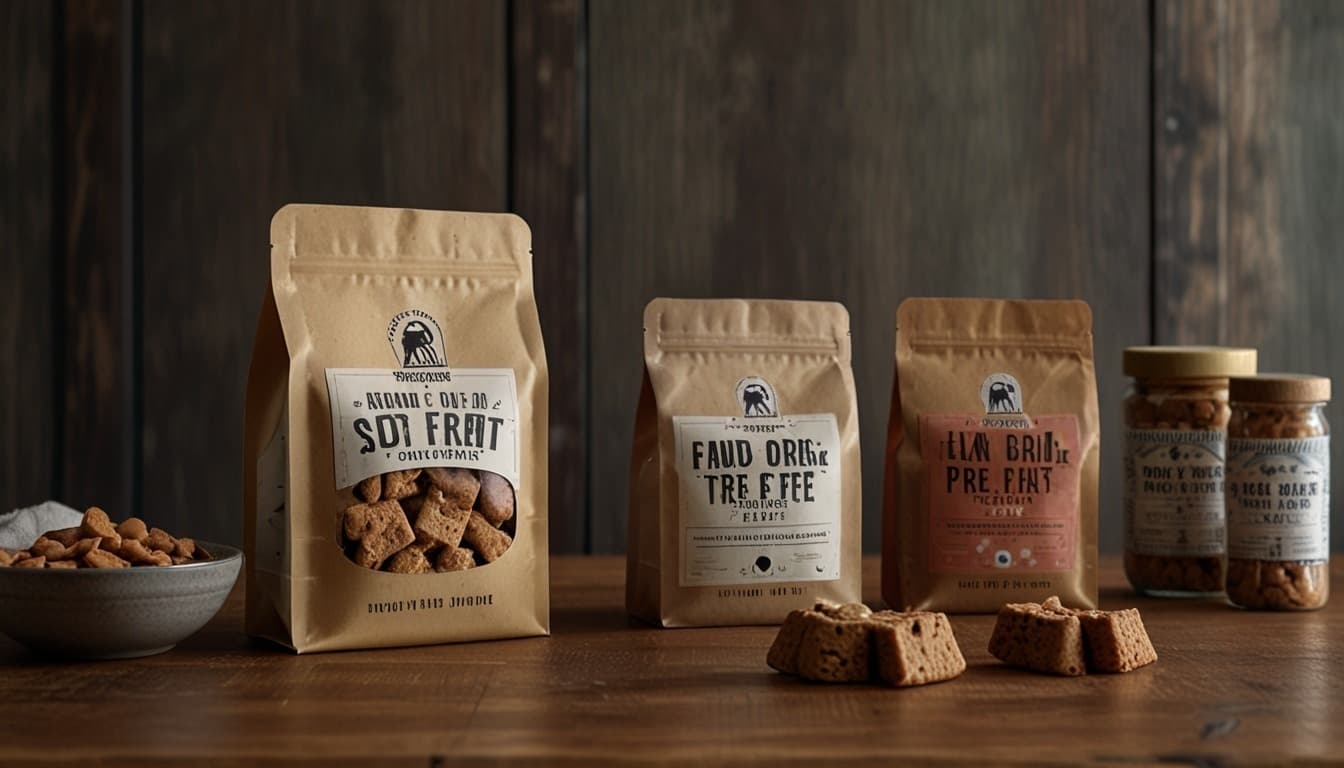
I Thought Grain-Free Was Just a Buzzword Until My Foster Dog Pooped Crayon Orange for Three Days
Training treats shouldn't turn your dog's poop traffic-cone orange. Here's what I learned after one too many foster dog digestive disasters — and the grain-free options I actually trust.
Okay, so here's something I don't admit often: for the first five years I fostered dogs, I used the cheapest training treats I could find. The ones that look like little brown pellets and smell vaguely of burnt hot dogs and regret. I figured it didn't matter. A treat's a treat, right? Wrong. Screw that. I learned the hard way that what goes into those tiny training morsels can make the difference between a focused, happy dog and one who's suddenly doing the butt-scoot of doom across your living room rug at 11 p.m.
Let me tell you about a dog named Bagel. Bagel was a 3-year-old beagle mix with the attention span of a caffeinated squirrel and a stomach that seemed to reject literally everything. He came to me as an emergency build — his previous owner had surrendered him with a note that just said "can't train him, he pees everywhere." Spoiler: it wasn't a training problem. It was a digestive one. And the $14 bag of grain-stuffed training treats I was shoving in his face every five minutes wasn't helping.
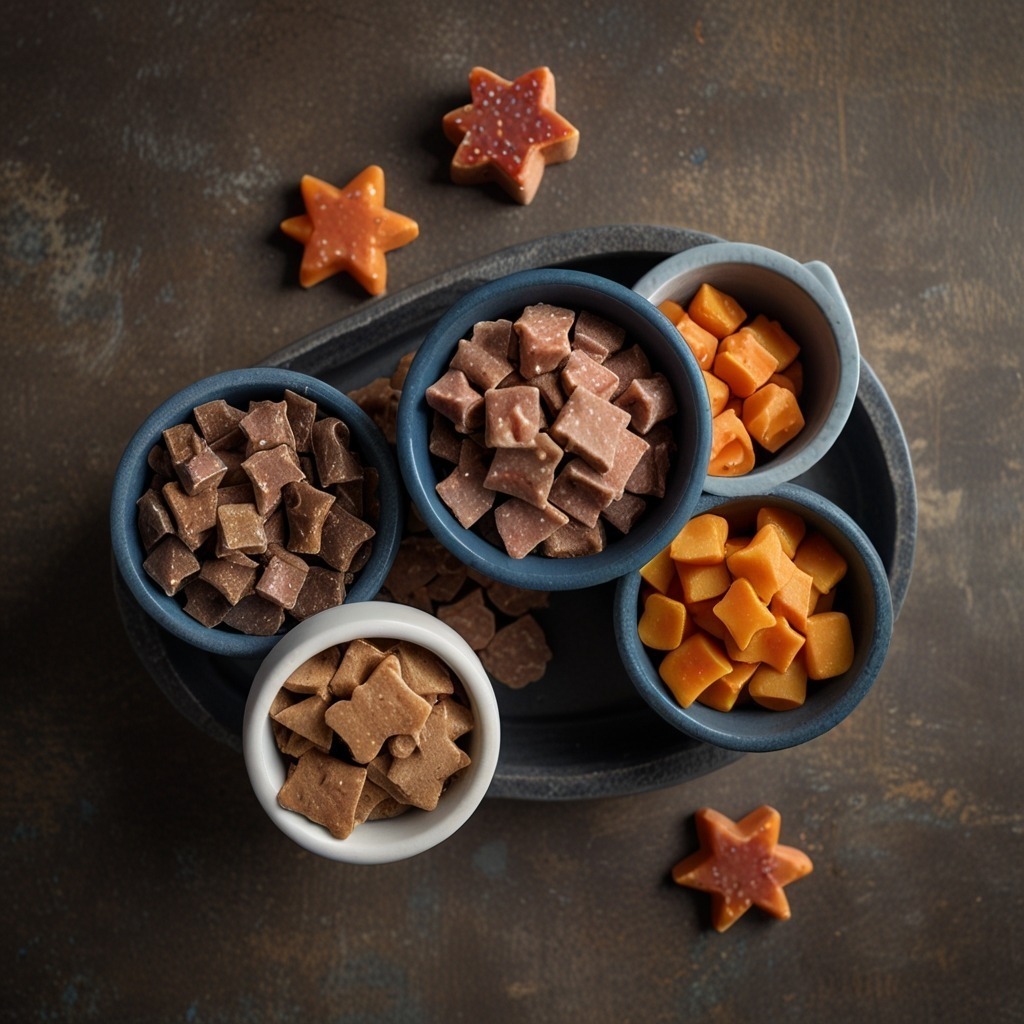
The Bagel Incident (and Why I Satrted Reading Ingredient Labels Like a Paranoid Helicopter Parent)
Bagel had been with me for about four days when I noticed the orange poop. Not like, "oh, he ate a carrot" orange. I'm talking traffic-cone, almost glowing, vaguely alarming orange. A quick Google sent me down a rabbit hole involving liver issues and gallbladder disadters. I was already mentally calculating vet bills and sobbing into my coffee when my actual vet, Dr. Nguyen — who has calmly talked me off the ledge through three dogs, a divorce, and a build cat who ate an entire shoelace — said five words that changed everything: "What are you feeding him?"
Turns out, the cheap training treats I'd been using were loaded with corn, wheat, soy, and a whole paradde of artificial dyes. Yellow #6, Red #40, the works. Bagel wasn't dying. He was just crapping out undigested dye. And the grain fillers were irritating his gut so badly he couldn't concentrate on anything except finding a quiet corner to do his business. No wonder the previous owner thought he was untrainable. The dog was basically living in a constant state of low-grade stomach pain.
I switched him to a simple, single-ingredient freeze-dried beef liver treat — grain-free, no dyes — and within a week the orange poop was gone and I had a dog who could actually focus long enough to learn "sit" withotu sprinting to the door. That was my conversion moment. I've been annoyingly, obnoxiously picky about training treats ever since.
So when the topic of grain-free training treats comes up, I've feelings. Not because I think all grains are evil (they aren't, and I'll get into that), but because so many commercial treats are basically doggy junk food with a fancy label. And when you're doing real training — not just tossing a biscuit for being cute, but actual skill-building where you're doling out 20, 30, 50 treats in a session — the ingredients matter. A lot.
Wait, What Does "Grain-Free" Even Mean in Dog Treats?
This might seem obvious, but you'd be surprised how many people I've talked to who think "grain-free" means low-carb or no carbohydrates at all. Nope. It just means the treat doesn't contain wheat, corn, ricce, barley, oats, rye, or other cereal grains. They still have carbs from things like sweet potatoes, chickpeas, lentils, or tapioca. Some use potatoes or peas as binders. It's not a carb-free fairyland; it's just a different source of starch.
And here's a hot take I stand by: for training treats specifically, grain-free often makes practical sense even if your dog has zero grain allergies. Why? Because grain-free treats tend to be more protein-dense, which means a stronger smell. And in the hierarchy of what makes a treat valuable to a dog, smell is right up there with "did it just come out of the fridge" and "was I just told I'm the best boy."
A smelly, meaty treat you can break into tiny pieeces is gold. Grain-heavy treats often just smell like cardboard and disappointment.
The Completely Unofficial, Sarah-Approved Critera for a Decent Training Treat
Before I rattle off some of my favorites, here's what I actually look for. I've probably tried 40 different brands over the years — between my resident dogs, fosters, and the shelter days — and I've nailed down a mental checklist I can't shake. It's not sccientific. It's just what works.
Small, but not microscopic
Training treats need to be tiny. When you're doling out 50 rewards in a 10-minute session, you don't want something the size of a chicken nugget. At the shelter, we'd cut everything down to pea-sized pieces. If a treat is too big, the dog spends 15 seconds chewing it, and the training rhythm is destroyed. But you also don't want dust. Some freeze-dried treats crumble into powder and then you're just pressing meat glitter into your palm while the dog sneezes. Not helpful.
Soft, not crunchy
Hard, biscuit-style treats are fine for a reward here and there, but for training — especially with puppies or senior dogs with missing teeth — soft is king. The dog can swallow it quickly and refocus on you. No loud crunchign that distracts them. No crumbs scattered on the floor for them to scavenger-hunt five minutes later.
Stinky (in a good way)
I want a treat that my dogs can smell from across the room even if there's a squirrel convention happening outside the window. That usually means meat-based. The smellier, the higher the "value" in the dog's mind. I'll use lower-value treats for easy behaviors in a calm environmeent, but that topic deserves its own section.
Easy on the stomach
I touched on this with Bagel. If a treat has a dozen ingredients I can't pronounce and three different types of artificial coloring, I'm out. I don't need a treat that inspires a poop color that makes me question existence. And a lot of dogs — especially rescues with unknown histories — have sensitive guts. I'd rather stick to simple formulas, even if they're a few bucks more.
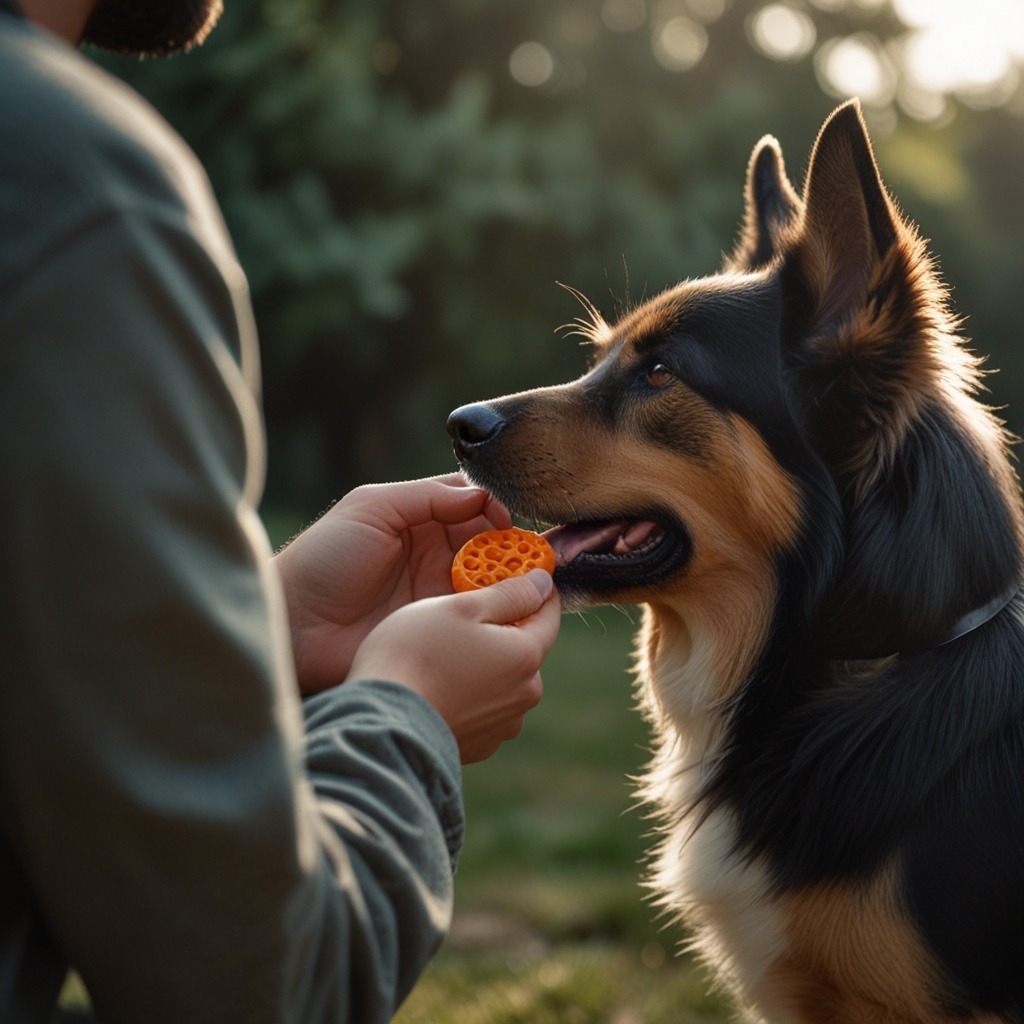
The Grain-Free Training Treats I Actully Keep in My Kitchen Cupboard Right Now
Alright, here's the part where I just tell you what's currently in my treat stash. Full disclosure: some of these brands have sent me samples over the years, but none of them paid me for this article and I've zero loyalty to any partcular company. If a treat stops working for my dogs or the recipe changes, it's dead to me. My dogs are brutal product testers.
PureBites Freeze-Dried Beef Liver
One ingredient: beef liver. That's it. These are the treats I switched Bagel to, and I've kept a bag in my rotation ever since. They're freeze-dried so they're dry to the touch — not greasy like a jerky — and you can break them into tiny pieces without them crumbling into useless dust. The smell is powerful in a deeply unappetizing-to-humans way, which the dogs love. Downsides: they're expensive for what they're, and if you've a big dog who needs 60 treats in a session, you'll blow throgh a $12 bag in a day. I use these as high-value rewards for really difficult stuff like recall training.
Fruitables Skinny Minis (the Pumpkin & Berry flavor, specifically)
These are grain-free, only 3 calories per treat, and they're soft and chewy. They smell vaguely like a healthy fruit snack — not meaty, but my dogs go nuts for them. I like them for training sessions where I need a high rate of reinforcement because they're tiny right out of the bag, no prep needed. They do contain some plant-based ingredients like sweet potato and pea fiber, so I wouldn't call them hypoallergenic, but for dogs without known sensitivities, they're a solid everyday option. I once had a border collie build named Zip who learned ten new tricks in a week fueled almost entirely by these things.
Plato Pet Treats Thinkers (Salmon)
If your dog is obsessed with fish — and let me tell you, my oldest dog Huxley would sell me for a single salmon skin — these are the ones. Soft, easy to break, grain-free, and they use wild-caught salmon. Smells exactly like you'd expect. don't open the bag in a small, unventilated room. I made that mistake in my car once and the smell lingered for dasy. The dogs were thrilled; my passengers, not so much. These are my go-to for "ultimate distraction" scenarios, like training near a dog park or when the neighbor's cat is taunting them through the window.
Cloud Star Tricky Trainers (Cheddar Flavor)
These are grain-free, soft, and come in a little resealable pouch that I've strong opinions about — it never seals properly and I end up with treat crumbs in my tote bag. But the treats themselves are great. Only 3 calories each, and the cheddar flavor is weirdly potent in a way dogs love. I've used these with over 30 fosters and only one ever turned his nose up at them, and honestly that dog had dental issues we didn't discover until later. The one downside is they're shaped like little rectangles, and sometimes they're cut a bit too chunky for my liking — I break them in half for small dogs.
Instinct Raw Boost Mixers (Grain-Free Chicken)
Okay, this is a bit of a hack. These are technically meant as meal toppers, but they're basically freeze-dried raw chicken bits the size of small pebbles. I use them as high-value training treats when I need something that really makes a dog's eyes bug out. They're incredibly smelly, totally grain-free, and raw-fed dogs go absolutely feral for them. The downside is they're not exactly chheap and you've to wash your hands after handling them because, well, raw chicken. But for working with a dog who has zero food motivation — I had a husky named Anouk who wouldn't eat anything for the first three days — these sometimes break through the wall.
But Sarah, My Dog Isn't Allergic to Grains — Why Should I Bother?
Fair question. You absolutely don't have to go grain-free. There are plenty of excellent training treats with grains that dogs do great on. I'm not a grain fundamentalist. Some of my fosters thrived on treats that had organic barley or brown rice. The issue isn't that grains are inherently poison — it's that a lot of cheap, grain-heavy treats are made with low-quality ingredients and fillers that offer zero nutritional value and might upset sensitive stomachs. And when you're training, you want the dog focused, not suddenly distracted by a gut cramp.
Also, and this is a personal observation, not science: I find that grain-free treats tend to have simpler ingredient lists. Maybe it's because the brands that go grain-free are often marketing to health-conscious owners who also demand short, recognizable ingredient panels. I don't know. But I do know that a treat with four ingredients — chicken, sweet potato, vegetable glycerin, salt — gives me fewer things to worry about than one with seventeen items including "poultry by-product meal" and three different dyes.
There's also a whole tangential conversation about the other stuff in dog treats that's more concerning than grains. The fillers. The rendered fat. The mysterious "animal digest." Did you know that some dog treats contain propylene glycol? The same stuff used in antifreeze? I'm not saying it's the same concentration — obviously it's not — but the fact that it's allowed at all makes me want to scream into a pillow. I'd rather just avoid the pet food industry's sketchy side alleys altogether and pay a few extra bucks for treats that don't feel like a science experiment.
Reminds me of the time I bought a bag of "gourmet" bacon-flavored training treats at a boutique pet store — the kind with a dog silhouette on the package and a price tag that made my eyes water — and the second ingredient was corn syrup. Corn syrup! In dog treats. I was so mad I drove back to the store and asked the owner if shhe'd actually read the label. She hadn't. We stood there in the aisle and read three more "premium" treat labels together and two of them had sugar or molasses listed in the top five ingredients. That was the day I started baking my own training treats again, but that's a whole other rabbit hole.
The High-Value vs. Low–Value Treat Hierarchy No One Explains to New Dog Owners
Here's where I see people mess up all the time in puppy classes and shelters. They buy one bag of treats and use it for everything. Recall practice in a busy park? Same boring biscuit as sitting nicely in the kitchen. That's like trying to pay a conractor with a single stick of gum for an entire house renovation. Dogs have an internal economy of reward value, and if yours doesn't match the difficulty of the task, you're going to get poor results.
I keep three tiers of treats on hand during any training session:
Tier 1 (low-value): Cheerios (plain, grain-based — I know, I know, but for low-stakes training in a qiet room, they're fine and cheap), tiny pieces of carrot, or low-calorie soft treats like Fruitables. Used for behaviors the dog already knows well, in distraction-free environments.
Tier 2 (mid-value): Soft, meaty grain-free treats like Cloud Star Tricky Trainers or the Plto salmon ones. Used for teaching new behaviors or practicing in mildly distracting environments like the backyard.
Tier 3 (high-value): The good stuff. Freeze-dried liver, raw chicken bits, tiny cubes of boiled chicken breast, stinky cheese. Reserved for recall training, working near other dogs, or counter-conditioning fer. This is the "I'll ignore a cat for this" tier.
The whole grain-free conversation usually sits in tier 2 and 3, because those are the treats I want to be meaty, smelly, and free of fillers that could cause digestive drama in an already stressful situation. Imagine finally getting your reactive dog to look at you instead of the off-leash Doberman across the street, and then ten minutes later he's got explosive diarrhea from a corn-filled treat you gave him. Not the reinforcement you wanted.
Speaking of reactive dgos: I spent six months working with a border collie mix named Chisel who was so fear-aggressive toward men that I had to use cheese cubes the size of my pinky nail to get him to even take food around my brother. We're talking extremely high-value. If I'd tried to use a dry, grain-based biscuit, he would've ignored me entireky and probably bitten someone. The treat has to be worth more than the fear. Read that again. The treat has to be worrh more than the fear. That's a conceppt that changed everything about how I train.
And on a lighter note, I once accidentally left a bag of freeze-dried liver in my coat pocket overnight. My beagle Francis — who passed away a couple years ago, God rest his chaotic little soul — found it at 3 a.m. and managed to eat the entire thing, plastic bag and all. $900 emergency vet visit later, we discovered that the plastic passed just fine but the liver feast had given him such severe pancreatitis that he was on a bland diet for a month. So, you know. Store your high-value treats in a locked cabinet, not your coat.
What About the Grrain-Free Heart Disease Thing? (Yeah, Let's Talk About That)
You can't write about graain-free dog food without someone bringing up the FDA investigation into dilated cardiomyopathy (DCM) and its potential link to grain-free diets. I know this. I've had the conversations. And I need to be very clear: the concern is primarily about diets — the kibble or wet food your dog eats every single day, which makes up 90%+ of their caloric intake. Not about training treats that make up maybe 5% of daily calories for a dog in heavy training, and often far less.
I'm not a vet. I'm just a lady with a laptop and a house full of rescue animals. But I've talked to three different vets about this — including Dr. Nguyen, who I swear has the patience of a saint — and the consensus seems to be that occasional grain-free treats are extremely unlikely to be a problem for dogs without a specific medical condition. The DCM link, if it's real (the science is still evolving), seems tied to the heavy use of legumes like peas and lentils as primary protein sources in some grain-free kibbles. Training treats, which are mostly protein anyway, just aren't the same thing.
So no, I don't panic about giving my dogs grain-free treats. If your dog eats a grain-inclusive main diet, the tiny amount of lentil or chickpea flour in a few training treats is negligible. And if your dog is on a grain-free diet? Then obviously the treats align with that. Either way, I'm not going to lose sleep over it.
This is also wheer I remind you that I spent $90 on a "premium" grain-free kibble once that made my senior dog wobble so badly I thought he was having a stroke. Turns out the legume-heavy formula was mrssing with his nutrient absorption. That was a whole expensive nightmare. But training treats are a drop in the bucket compared to the main diet. I'd sooner worry about the kibble than the treats.
Why I Hate Thpse "Premium" Stinky Jerky Strips from the Big-Box Store
Can I just rant for a second? Not all grain-free treats are created equal, and some of the most popular ones are absolute garbage. Walk down the treat aisle at any pet store and you'll see dozens of "grain-free" jerky strips, often imported, with ingredient lissts that sound fine until you look closer. They're coated in sugars, loaded with salt, and sometimes — not always, but enough times that I'm wary — linked to weird illness clusters. The FDA has warnings about jerky treats from certain countries causing kidney issues in dogs. I don't want to be alarmist, and I'm not saying every strip will hurt your dog, but I personally avoid them.
I'd rather give my dog a single-ingredient freeze-dried organ meat than a processed strip that's been marinated in who-knows-what. It's one of those things where "grain-free" on the package becomes a marketing shield for a treat that's otherwise nutritionally vacant. Don't be fooled by the label. Read the actual ingredients. If "chicken" is followed by twenty syllables and something that looks like a chemistry project, put it back on the shelf.
I had a build dachshund named Fritz who would do absolutely anything for one particular brand of jerky. He was obsessed. And within two months his coat went dull, his breath was horrific, and he developed this weird head tremor. Vet ran tests, found nothing. I switched him to a different treat and the tremors stopped within a week. Coincidence? Maybe. But I'm not willing to gamble on maybe again.
My Actual, Real-Life Training Traet Pouch Setup (Because I'm a Nerd About This Stuff)
I might as well describe my gear because I've gone through at least six treat pouches in my life and I've opinions. The best training pouch is one that clips to your waist, has a hinged opening that stays open when you reach for it (magnetic closures are genius until they suddenly aren't), and is machine-washable. I currently use a silicone pouch that you can turn inside out and rinse in the sink, which has saved me from the horrifying experience of finding three-week-old liver crumbs congealed in the bottom of a fabric pouch.
Inside the pouch, I mix treats. Always. A base of lower-calorie soft treats (like the Fruitables or Cloud Star), with a few pieces of high-value stuff (like broken-up PureBites) irregularly scattered throughout. The dog never knows exactly what they're gettng. It's like a little slot machine — sometimes a jackpot, sometimes just a regular payout — and it keeps them engaged. Behaviorists call it a "variable reinforcement schedule" and it's incredibly effective.
Also, I keep a separate, smaller container in my other pockt for the truly special rewards. When Huxley, my Labrador retriever, had to learrn to ignore other dogs lunging at him on walks, I'd give a small treat from the pouch for looking at me, but if he voluntarily disengaged from a trigger without being cued? Boom — the pocket treat. A tiny piece of mozzarella or a sliver of dehydrated chicken heart. He learned fast that calm behavior earned him the ultimate snack, and now he practically prances past reactive dogs with a "look what I just earned" smugness. Which is both impressive and a little embarrassing when the other owner is having a meltdown and my dog is just strutting for a cheese cube.
What If Your Dog Literally Doesn't Care About Treats?
I've fostered dogs who wouldn't take a single treat for the first week. Not even bacon. Not steak. Nothing. And those dogs teach you more about training than the food-motivated ones ever do. If your dog won't take treats, the first thing to check is stress level. A dog who is terrified, over-aroused, or shutting down won't eat no matter what's offered. you've to fix the emotional state first. That might mean backing way up from the trigger, training in a quieter room, or just spending time building trust without any demands.
After that, try other rewards. Toys. A quick tug session. A ball. Some dogs will work harder for a game than for food. My late dog Walter would ignore a steak if you'd just thrown a tennis ball five minutes ago. And some dogs will work for attention — a "yes!" and a chest scratch can be enough if the dog is that bonded to you.
But assuming the dog is food-motivated and just picky, I go through the treat hierarchy: smellier, fresher, warmer. Warm treats smell more. I've been known to microwave a piece of chicken for ten seconds before a training session just to amp up the aroma. It's ridiculous and my kitchen smells like a rotisserie, but it works.
Another trick: train before meals, not after. A hungry dog is a motivated dog. Just don't starve your dog, obviously. I'm talking about scheduling traiming sessions for an hour or two before their normal dinner time, when they're naturally a bit more eager.
When I first started training, I thought the treat was just a transaction: do the thing, get the food. But it's so much more than that. The treat is a conversation. It says "I see you, I appreciate you, I'm so glad you're my weird little furry chaos gremlin." And when you find the right treat — the one that makes their eyes go wide and their tail blur — that's when training stops being work and starts being the best part of your day.
Why I Stopped Worrying About the Carpet and Just Focused on the Relationship
One of my biggest mistakes in early fostering was getting mad at accidents or cheweed-up belongings and letting that frustration seep into training. Dogs pick up on that. If you're handing them a grain-free liver treat with a tense jaw and a furrowed brow, they're not learning the desired behavior — they're learning that you're stressful to be around. I had to train myself to relax, to let go of the small stuff, and to treat every rewaard delivery as a moment of genuine connection, not a mechanical slot machine pull.
The treat is the vehicle. But the work you're doing is building trust. That's why I get so obsessive about the quality of the treat. Not because I'm a snob, but because I want every interaction to say "you're worth the good stuff." When I was using cheap, dye-filled, grain-stuffed pellets with Bagel, I was accidentally telling him "you're not really worth a quality reward." He didn't know that consciously, of course. His poor gut just knew something was off, and he couldn't focus.
I think about that a lot now, especially with fosters who come from rough backgrounds. The act of carefully selecting a treat — one that won't upset their stomach, that smells amazing to them, that I'll break into tiny pieces so it lasts the whole session — is a form of care. And they feel that.
Now, if you'll excuse me, there's a build cat currently trying to unroll an entire roll of paper towels in the kitchen and I need to go intervene before it becomes a $6 catastrophe. The dogs are fine. They're asleep in a sunbeam after a morning training session fueled by stinky salmon treats and I probably won't be able to get the smell out of my hoodie for a week. Worth it.