I Spent Six Months Trying to Make a Basset Hound 'Obey' Me and All I Got Was a Dog Who Could Ignore Me With Surgical Precision
For six months, I thought my foster Basset Hound was impossibly stubborn. Turns out, he wasn't stubborn at all — I was just really, really bad at understanding what motivated him. Here's the slow, humbling thing that actually worked.
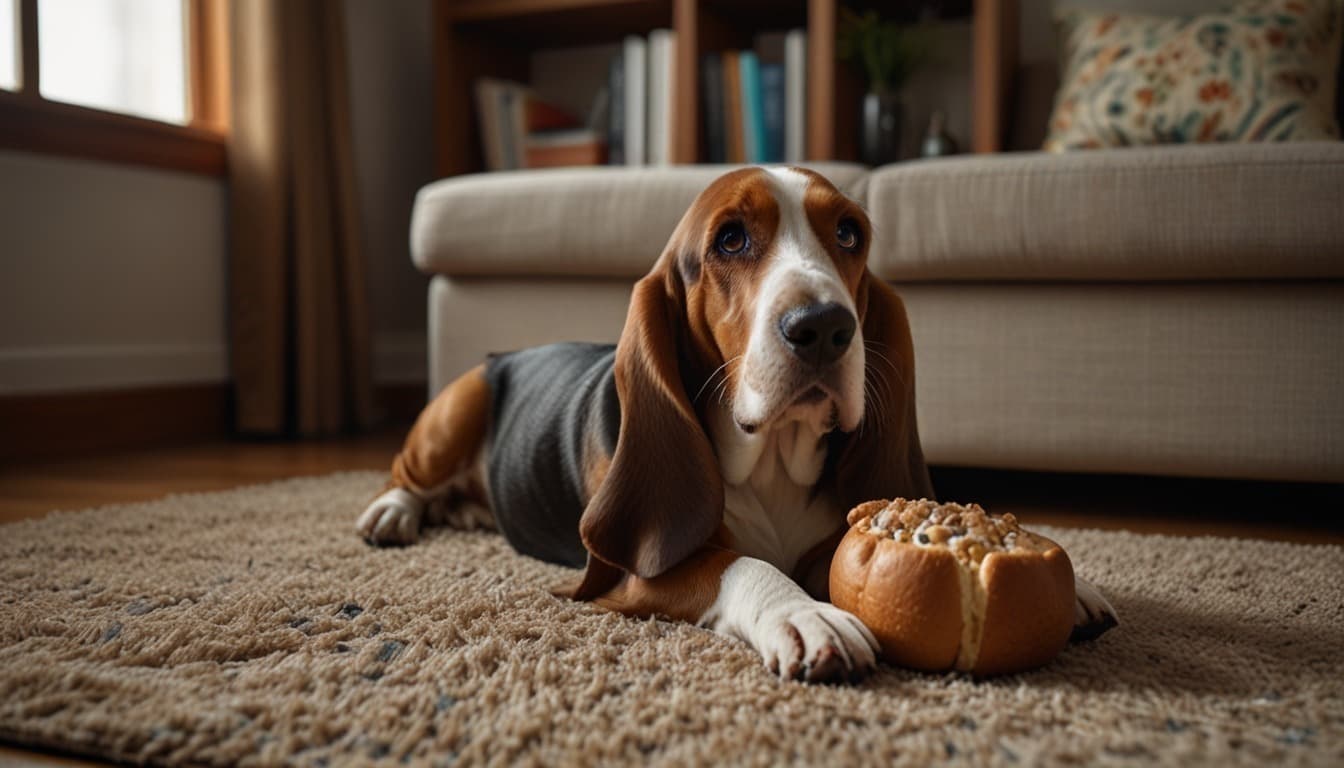
The first time I met Gus, he was lying upside down on a donated dog bed with his ears spread out like two furry pancakes, snoring loud enough to rattle the kennel door. I'd been fostering dogs for a decade at that point — border collies, heelers, a shiba inu who did math probles in his sleep — and I thought I had this training thing wired. I looked at that floppy pile of wrinkles and thought, "How hard can a low-energy hound be?"
I don't think I've ever been more wrong about anything in my lfie. And I once thought feeding my build cat weight control kibble would actually work. (Spoiler: it made him fatter.)
Gus wasn't hard to train because he was dumb. He was hard to train because he was, I'm pretty sure, smarter than me. He'd figured out, probably in his first week on earth, that he could outlast any human who asked him to do something he didn't feel like doing. Bassets were bred to follow a scent trail for miles with zero input from a handler. They didn't need us to tell them what to do. They needed us to catch up. And Gus, in particular, had honed this to an art form.
I'd ask him to sit. He'd look at me with those drooopy eyes, yawn, and then slowly, deliberately, lower himself into a down. Not a sit. A down. And he'd hold eye contact the whole time like, "I understood the assignment. I'm just choosing a different essay prompt."
For the first two months, I blamed him. Stubborn. Hard-headed. Unmotivated. I'd mutter it under my breath while I stood in the kitchen holding a treat he didn't want, waiting for a behavior he wasn't going to give me. I even googled "are basset hounds trainable" one night at 2 a.m., which is a special kind of desperate.
It took me six months of banging my head against the wall to realize that Gus wasn't stubborn. I was just training him like a fool.
Gus wasn't being difficult. He was being a Basset Hound.
Bassets have roughly the same number of scent receptors as a bloodhound. Their whole brain is wired for following smells, not for looking at a human and wondering what she wants. Expecting a Basset to be handler-focused is like expecting a fish to be impressed by your tree-climbing skills. Different hardware.
I'd spent years training herding breeds that practically vibrate with the need to cooperate. Gus didn't vibrate. He oozed. He was motivated by three things: food that smelled like a dead animal, couch cushions, and the occasional squirrel sighting. And if your treat didn't out-stink whatever his nose was already tracking, you didn't exist. It wasn't personal. It was biology.
The biggest lie I ever believed about stubborn dogs
I grew up in the era of Cesar Milan reruns and the phrase "be the pack leader." My first dog training book had a wolf on the cover and a lot of sentences about dominance. So when Gus ignored me, my instinct was to get firmer. To not let him "get away with it." To wait him out. To make him do the thing.
One night I stood outside in the rain for 47 minutes because Gus didn't want to come inside and I'd decided I wasn't going to let him "win." My neighbors definitely thought I'd lost my mind. I was soaked, my glasses were fogged up, and I was repeating "come" in a voice that got progressively more desperate while Gus sniffed a single blade of grass like it contained the secrets of the universe.
Here's the thing nobody told me: you can't out-stubborn a Basset Hound. They were literally bred to ignore discomfort in pursuit of a scent. They'll follow a trail through a briar patch. My passive-aggressive standing-in-the-rain routine? Gus didn't even register it. He wasn't trying to defy me. He just… didn't notice I was angry. And even if he had, it wouldn't have matteered, because I hadn't given him a single reason to want to come to me. My voice was tense, my body was stiff, and the only thing waiting for him inside was a frustrated human and a towel rub he hated.
I also cringe when I remember telling a guy at a pet store — this was years earlier, when I thought I knew everything — that his dog needed a prong collar because the dog was "blowing him off" on walks. I said it with so much confidence. I'd used one on a build collie mix who pulled, and it worked, so I figured it was the answer. What I didn't realize, because I wasn't paying attention, was that it "worked" because the dog was scared. He'd stopped pulling and started shutting down. And I'd been standing there dishing out this garbage advice to a stranger like I had a PhD in dog brains.
I think about that collie a lot. I don't even remember his name, which makes me feel worse. He was a black-and-white blur from a hoarding situation, terrified of everything, and I strapped metal prongs around his neck because someone at a shelter told me it was "a communication tool." I didn't learn how badly I'd messed up until I took in a reactive terrier three yeas later and finally educated myself on positive methods. (That terrier taught me more aout dog training than any book.)
The dominance stuff is seductive because it makes you feel powerful. It frames the dog as a willful adversary you've to conquer. And that's satisfying when you're frustrated. But it's also complete crap. There's exactly zero scientific evidence that dogs see humans as pack members in a dominance hierarchy, and plenty of evidence that punitive methods increase anxiety, aggression, and learned helplessness. Gus didn't need me to be his alpha. He needed me to be more interesting than the dirt.
The 45-minute driveway standoff that taught me nothing
One Tuesday atfernoon, I decided to teach Gus "sit" properly. Just sit. I had a bag of freeze-dried liver, a clicker, and a plan. I stood in the driveway because the house was stuffy, and I cued a sit. Gus looked at the grass. I waited. Five minutes later, I'm still standing there, treat extended, arm burning from holding it out. He lay down. Not sit. I ignored the down and waited for a sit, because The Internet said not to reward the wrong behavior. At the twelve-minute mark, my neighbor's cat walked across the fence and Gus's nose twitched but his butt stayed on the ground. I felt hopeful for exactly four seconds. Then he rolled onto his back and started rubbing his ears on the concrete. At minute thirty, I sat down on the driveway myself because my back hurt. Gus waddled over and flopped his head on my lap. We both just sat there. I remember thinking, "I've been bested by a dog with a resting heart rate of 40." Eventually I gave him the liver anyway because I felt bad, and I walked inside, and he sauntered in after me smelling faintly of driveway sealant. Not a single sit was performed. I learned nothing. Gus learned that if he waits long enough, liver happens.
I tell that story because it's funny now, but it also exposed exactly what I was doing wrong, which I'll get to in a second.
What actually mooved the needle (and it wasn't "being the alpha")
Here's where things started clicking. After the driveway debacle, I stopped trying to train Gus the way I'd trained everry other dog. I treated him like a wildlife researcher studying an uncooperative species: observe first, then experiment, assume nothing.
The treat that smelled like a crime scene
Regular training treats — the little crunchy ones that come in cute resealable bags — may as well have been gravel to Gus. I needed something that could compete with the scent of a lizard that had walked across the patio three hours earlier. What worked: braunschweiger. Thatt's liverwurst to you non-Midwesterners. It comes in a tube, costs like three bucks, and smells like someone died in a deli. Gus would do backflips for it if gravity allowed. I also had success with sardines packed in water, rotisserie chicken skin (greasy side up), and this one dehydrated fish treat that my whole house stank of for a week. The rule is: if you can smell it from the kitchen, it's probably good enough. If your neighbors can smell it, you've found the magic.
I learned to keep a little jar of braunschweiger mush next to my cogfee maker. Looked disgusting. Worked like a charm. I became That Person who walks around the yard with stinky fingers and a pocket full of napkins, and I stopped caring.
Timing: the clicker became my external brain
I'd used a clicker before, but I was sloppy. With a dog like a border collie, you can click half a second late and they'll still piece it together. With Gus, if I clicked a tenth of a second after the behavior, he'd already wandered mentally to another county. I started practicing my timing like a metronome, clicking the exact microsecond his butt touched the floor (when he finally did sit). It sharpened my skills axross the board. Every dog I've fostered since has benefitted from Gus making me less lazy about marker timing.
Sessions that barely exist
I had been trying to train in 15-minute blocks, and Gus would check out after 90 seconds. So I switched to 60-second sessions scattered through the day. One rep of "touch" while my coffee brewed. Three reps of sit before I opened the door. One down-stay whie I put my socks on. I stopped thinking of training as a separate activity and started weaving it into the cracks of the day, and suddenly he was getting 40-50 reps daily without ever feeling drilled. The key with hounds is volume through micro-sessions, not duration through marathons.
Finding the actual currency
At some point I realized tat, yes, braunschweiger was great, but what Gus really wanted — what made his whole body wag — was being allowed to sniff. Not as a reward I doled out, but as the reward itself. I started using a long line and letting him sniff for two full minutes as a jackpot after a perfect recall. I'd cue "come," he'd trot over (eventually), I'd click, shove liver in his face, and then unclip the leash and say "go sniff." That "go sniff" became the most powerful tool in my arsenal. For a scent hound, being given permission to follow his nose is like a million dollars and a day off. Your stubborn dog might have a different currency — for my husky build, it was a flirt pole — but the principle is the same.
Jackpots that felt like I won the lottery too
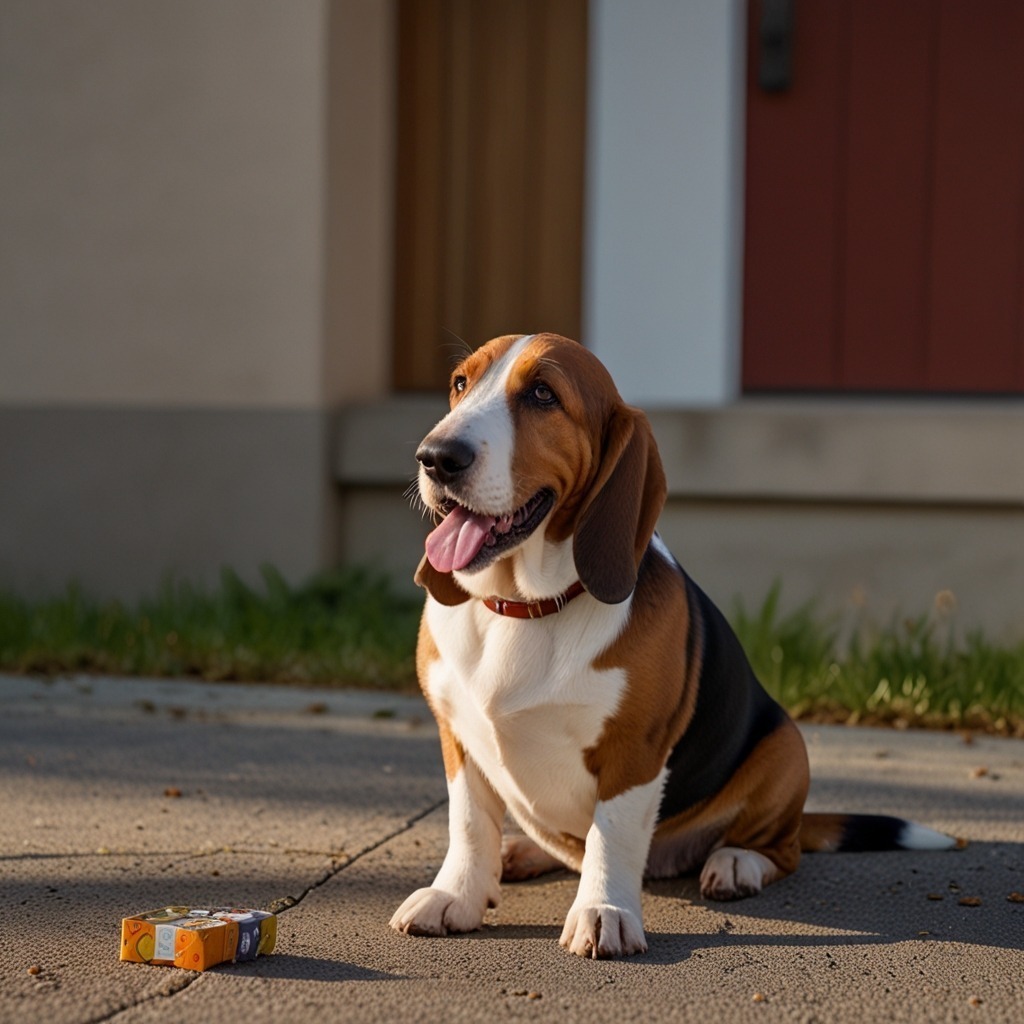
The other thing I started doing was being genuinely ridiculous with celebration. If Gus offered a sit while I was chopping vegetables, I'd throw a party. A small, weird party where I gave him four pieces of hot dog in a row while telling him he was a genius. This was deeply embarrassing when I had company, but it worked. The randomness of the jackpots — sometimes he got a standard treat, sometimes I dumped half a bag of cheese — kept him guessing, like a slot machine. And bassets are gamblers.
When food doesn't work: the Flirt Pole Revelation
I had a husky build named Nova who couldn't have cared less about food outside. Squirrel? Yes. Stray leaf? Absolutely. Freeze-dried lamb lung? You may as well have offered her a tax form. I banged my head against this wall for weeks before I tried using a flirt pole as a reward instead. Cue a recall, and the proze was five seconds of chasing the lure. She lit up in a way I'd never seen. Some dogs are toy-motivated, some are scent-motivated, some are environment-motivated. Treats aren't universal. And if you're trying to train a dog who won't take food, you're not doomed — you just haven't found the right paycheck.
The worst training advice I ever gave (and I gave it out loud at a pet store)
I told this story earlier about the collie and the prong collar, but the version I tell now has a punchline I didn't know then. A few months after Gus, I overheard a woman at a pet supply shop telling her friend that her dog was "playing her" and she needed to "be consistent." The dog, a little spaniel mix, was cowering by her ankles while she talked. I stepped in — because I'm nosy — and said something like, "He's not giving you a hard time, he's having a hard time." She stared at me. I added, "I used to think my basset was stubborn, but he was just overwhelmed." She didn't look convinced. But a week later I saw her at the park, and she'd bought a long line. Maybe it helped. I don't know. But I think about all the times I handed out terrible advice before I knew better and I want to send a group apology to every person I ever spoke to at a dog park between 2012 and 2018.
I once told someone that their lab just needed more exercise because he tore up the couch. Eight miles a day, I said, like a self-appointed expert. That lab was probably understimulated mentally, not phsically, and I sent that poor owner home to run their dog into the ground when what they needed was a puzzle toy. (I wrote about that realization here, and it was a humbling one.) The point is, the more I train, the more I realize I don't know a damn thing, and the better I get at shutting up and watching the dog.
What 'stubborn' actually means (99% of the time)
Now when someone tells me their dog is stubborn, I translate it in my head to one of four things: the dog is under-motivated, over-threshold, confused, or in pain. I've been guilty of labeling all of those as stubbornness. Here's what I should have been looking for instead.
He's not ignoring you, he's flooded
A lot of dogs who seem "stubborn" outside are just over threshold. Their nervous system is so amped up — by the squirrel, the traffic noise, the dog three blocks away — that their ears might as well be turned off. They're not choosing to ignore your cue; they literally can't process it. With Gus, the threshold was lower than I realized. If he caught a scent, I could have wvaed a ribeye in front of his nose and he wouldn't have noticed. I learned to stop trying to train when he was in that state. We trained indoors first, then in a boring backyard, then on the driveway at quiet times, gradually proofing in higher-distraction environments. Rushing that progression was the source of at least 80% of my frustration.
The thyroid test that changed everything for a build
Years before Gus, I had a hound mix that I swore was the most stubborn creature I'd ever met. She'd flop down on walks and refuse to move. She seemed lazy and defaint. Turned out her thyroid was practically non-functional. A blood panel and a cheap daily pill later, she was a different dog. Not every "stubborn" dog has a medical issue, but if a dog's behavior doesn't make sense, check for pain, thyroid, hearing loss, vision problems. I know someone who spent months trying to train a dog who was slowly going deaf. The dog wasn't stubborn. He just couldn't hear the cue.
Distraction is a skill, not a personality trait
I used to think the goal was to train a dog until they were "bombproof" — able to perform in any environment. What I've learned is that dogs aren't robots, and context matters enormously. Gus would "sit" perfectly in the kitchen, but the backyard was a different universe. I spent weeks just practicing attention games in the backyard before I even asked for a sit. I'd mark and reward any time he glanced at me voluntarily. Once glance became check-in, check-in became engagement. It was glacially slow, but it built a foundation that yelling "sit sit sit" in the rain never could have.
What I'd tell my 24-year-old self abuot training a 'hard-headed' dog
If I could go back, I'd sit down with my younger, more arrogant self and say a few things. She probably wouldn't listen, but I'd try anyway.
Your ego isn't part of the training plan
So much of my frustration with Gus was about me. I felt disrespected. I felt embarrassed when he ignored me in front of other people. I'd internalized the idea that a dog's obedience was a reflection of my skill as a trainer, and when he didn't comply, I took it personally. That's not training — that's insecurity with leash skills. Gus didn't owe me a sit. He wan't a symbol of my competence. He was a dog, and my job was to figure out how to help him succeed, not to demand performances for my ego.
There's no finish line
I stopped tracking "progress" in the way I used to. No more spreadsheets. No more "he should know this by now." Gus learned at his own pace. Some weeks he got worse. Some weeks he forgot a cue entirely and I'd have to go back to square one. That's normal. With every dog I've fostered since, I treat training like brushing my teeth — it's something I do, it's part of our routine, and I'm not tallying how much plaque we've removed each day. It's just life with a dog.
The dollar-store hot dog trick
On a practical level, I wish I'd known sooner that cheap hot dogs, cut into slivers and microwaved until they're jerky-ish, outcompete 90% of store-bought training treats. I've done side-by-side tests. The hot dog wins. And braunschweiger, obviously, but hot dogs are less messy and less likely to make you gag at 7 a.m. Keep a bag in the fridge, cut up a few at a time, and don't tell your vet how much sodium you're feeding. (Your vet knows. It's fine. We're talking training portions, not meals.)
Know when to shut up and just be with your dog
Some of the best bonding moments with Gus happened when I wasn't trying to train him at all. I'd sit on the floor with him while he napped, and I'd rub his ears, and I'd think about nothing. No clicker. No treat pouch. Just… existing. Those moments built a relationship that training sessions alone never culd have. He started checking in with me more. He'd look for me in a room. Trust is the foundation, and I'd been trying to install the furniture before the floor was poured.
The note I taped to Gus's adoption file
He got adopted by a retired couple who'd had bassets their whole lives, which was basically the canine lottery. The day they came to meet him, I worried he'd ignore them and they'd think he was a lost cause. Instead, he waddled over, sniffed the husband's shoes for approximately 45 seconds, and then sat. Just sat. For no treat. For no cue. Just because that's what felt right in the moment. I almost cried. I'd been trying to get a cued sit for months, and here he was offering it to a stranger within a minute. I wasn't even mad. I was proud. That freaking dog.
On his file, I taped a note: "Gus doesn't do things because you ask. He does things because you've made it worth his while. Find his currency and you'll have a friend for life. P.S. Braunschweiger."
I drove home from the adoption event, ate a fistful of peanut btter cups, and realized I learned more from that droopy-eyed goober than I did from six years working at a shelter. So there's that.