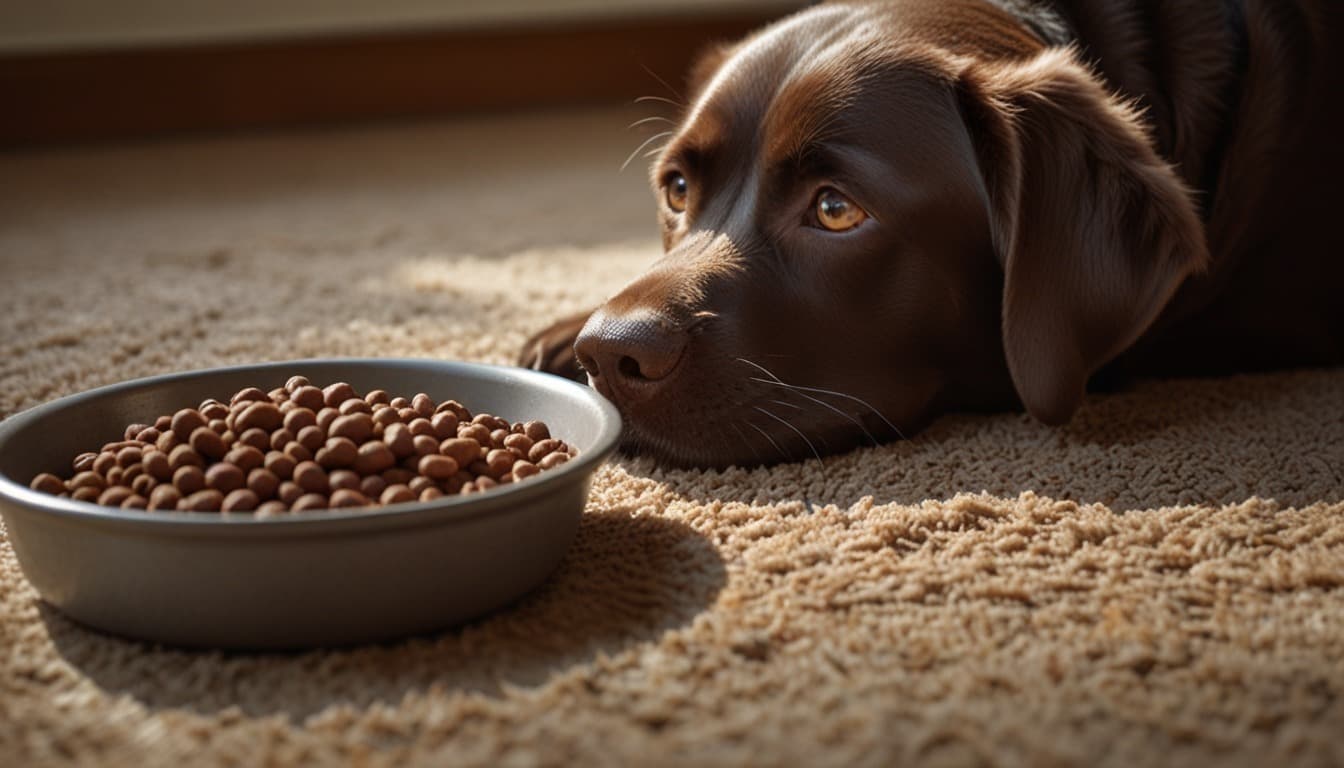
I Spent $400 on ‘Senior Joint’ Kibble and My Old Lab Just Got Angrier — Here’s the Dry Food That Actually Got Him off the Floor
I fed my arthritic senior Lab every 'joint health' kibble I could find. Most made him worse. Here's the dry food that actually helped, plus the expensive mistakes I'll never make twice.
The first time Rusty couldn't get up off the flor, I thought he'd had a stroke. I was 34, in the middle of a divorce, and my 11-year-old chocolate Lab was the only thing holding my tiny apartment together. Then one Tuesday morning, he just… didn't. His back legs splayed out on the laminate, his eyes panicked, and I did what any completely unprepared dog owner does: I cried. And then I called Dr. Nguyen at 7:03 AM.
She's put up with my panic calls for 11 years, through three dogs and a divorce, so she knew my voice before I even finished saying hello. "Sarah, breathe. Is he breathing?" Yep. "Is he bleeding?" No. "Then you can stop crying and tell me what happened."
Rusty had been slowing down for months. I'd noticed the morning stiffness, the way he'd take an extra beat to get off his bed, the slight hesitation before jumping into the car. But he was 11. That's what old dogs do, right? I told myself it was normal. What wasn't normal was his back legs just giving out like someone had unplugged him. Dr. Nguyen came over that evening after her shift — she lives six blocks away, and I still owe her roughly 400 dinners for that — and after feeling his hips, watching him struggle to put weight on his back right leg, she said the word I'd been dreading. Arthritis. Severe, both hips, with some nerve involvement. She showed me on her phone an x-ray she'd taken a few months prior that I'd apparently blocked from memroy. His hip joints looked like two jagged rocks rubbing together.
She gave me a prescription for pain meds, talked about physical therapy, weight loss, and then she said something that has haunted me ever since: "And for god's sake, stop feeding him that cheap senior dog food. It's making the inflammation worse."
I won't tell you which brand it was because honestly, it doesn't matter. I'd picked it up at the grocery store because the bag had a silver Labrador on the front (Rusty-adjacent) and the words "SENIOR VITALITY" in giant letters. It cost about $19 for a 30-pound bag. I'd been patting myself on the back for being such a responsible owner, while slowly destroying my dog's joints.
Look, I'm not a vet. I dropped out of vet tech school in my third semester because I was 22 and dumb and thought I could learn everything on the job at the shelter. I've learned a lot of things the hard way since then. And the hard way, in this case, involved $400 worth of boutique dog foods, three supplement-induced diarrhea disasters, and a lot of 2 AM carpet scrubbing. So if you're standing in the pet food aisle right now staring at a wall of bags, all promising to help your creaky old dog, here's everything I wish someone had told me before I made every mistake there's.
The Crap ‘Joint Health’ Kibble I Fell For, and the Six-Month Hole It Dug
After Dr. Nguyen's scolding, I did what any 21st-century pet owner does: I panic-researched. I googled "best dry dog food for arthritis" at 11 PM on a Tuesday, and the algorithm served me a beautiful, SEO-optimized listicle written by someone who had clearly never owned a dog with arthritis. It recommended a grain-free, high-protein kibble with glucosamine and chondroitin. The brand had a pictire of a wolf on the bag and cost $68 for 25 pounds. I clicked "buy now" before I could second-guess myself.
I fed Rusty that food for six months. He ate it eagerly, which I took as a good sign. What I didn't know was that the food was packed with pea protein, lentils, and a thick layer of chicken fat that made it smell like a KFC dumpster. The glucosamine amount listed on the guarantee? 750 mg/kg. Do the math — that's about 250 mg per cup. Most actual therapeutic doses for a dog Rusty's size are closer to 1,500 mg of glucosamine plus 1,200 mg of chondroitin (and that's if you believe those numbers, which I no longer entirely do, but we'll get to that). So I was giving him a homeopathic sprinkle of joint supplement while the inflammatory ingredients — the legumes, the high omega-6 fats — were doing more daamge than the glucosamine was fixing.
I wrote about that whole disaster in more detal over on a different post — the one where I fed my 12-year-old Lab 'joint health' kibble and he could barely stand up — so I won't rehash all of it. But the short version is: his pain got worse. Not better. Worse. He started limping after short walks. He'd whine in his sleep. I'd catch him licking his hip joints obsessively, leaving wet, bald patches on his fur. I finally took him back to Dr. Nguyen, who took one look at the bag I'd brought in and said, "Sarah, this is a marketing experiment you paid $68 for."
So I threw out the rest of that bag and started over. And that's when I learned the first thing nobody tells you about feeding an arthritic senior dog: it's not just about adding joint ingredients. It's about removing the things that make inflammation worse.
What Arthritis Actaully Does to a Dog’s Joints (And Why Some Foods Make It Angrier)
I'll keep this short because I'm not a scientist and I'm not going to pretend I can explain synovial fluid without sounding like a textbook. But here's what matters: arthritis is inflammation. The cartilage that cushions the joint wears down over time, and the body responds by sending inflammatory chemicals to the area, which makes the whole thing swell up, hurt, and eventually develop bone spurs. It's not just "old dog stiffness." It's your dog's own immune system attacking his joints because the cartilage is breaking apart.
So when you feed a food that's high in omega-6 fatty acids — which are pro-inflammatory — you're literally pouring gasoline on the fire. Most commercial dog foods, especially cheap ons, are loaded with omega-6s from chicken fat, corn, and soybean oil. And they're low in omega-3s (the anti-inflammatory ones found in fish oil). The ratio in a standard kibble might be 20:1 omega-6 to omega-3. You want something closer to 5:1 or even 3:1 for a dog with active arthritis.
This is why just picking a bag that says "joint health" means nothing. If the company didn't reformulate the fat sources, if the omega-3s come from flaxseed (which dogs can't convert efficiently), if the glucosamine is at a laghably low dose — you're paying for a label.
I wish I'd known that before I wasted so much mpney. But I didn't. So I kept trying.
What Dr. Nguyen Actually Said When I Asked Her Point-Blank
A couple weeks after the boutique kibble diaster, I cornered Dr. Nguyen during a nail trim appointment for my build husky (that's a story for another day, but I haven't touched a pair of dog nail clippers in 7 years, and she's stopped giving me the side-eye about it). I sadi, "Just tell me what to feed him. I'm done guessing."
She sighed the sigh of a woman who has been asked this question 10,000 times and knows I won't like the answer. "There's no one perfect food, Sarah. But here's what I look for when I'm treating an arthritic dog. Moderate to high protein from a real animal source, not pea protein isolates. An omega-6 to omega-3 ratio under 5:1, with EPA and DHA specifically, not just generic omega-3s. Glucosamine and chondroitin at meaningful levels — at least 1,000 mg/kg of glucosamine if you want it to do anything. Lower calorie density because every extra pound is 20 extra pounds of pressure on those hips. And absolutely no corn, wheat, or soy if the dog has any sensitivity at all, because food sensitivities also trigger inflammation."
I wrote it all down on a receipt from my wallet. Then I went home and spent four hours comparing labels online. What I found was… discouraging. Most "senior" dry foods failed at least three of those criteria. Some failed all of them. But a handful actually did what they claimed. I started rotating through them, keeping a pain journal for Rusty, and after about a year, I had a list of foods that consistently helped. Not cured. Helped. Important distinction.
The Dry Foods That Finally Got Rusty Moving Again
I'm not going to list these in a cute little grid or give them star ratings. I hate that. These are just the foods I've personally fed to my own senior dogs or to fosters who came in with creaky hips, and that I'd feed again. Some require a prescription. Some don't. Some cost a stupid amount of money. I'll be honest about all of it.
Purina Pro Plan Veterinary Diets JM Joint Mobility
This is prescription-only, which means you need a vet to authorize it. It's not cheap — about $85 for a 27.5-pound bag the last time I checked — but it's the one that made the biggest difference for Rusty. The protein is salmon and fish meal, so the omega-3s come from real fish, not flax. It has a 2.1:1 omega-6 to omega-3 ratio, which is damn near unheard of in dry food. Glucosamine is 1,200 mg/kg. It also has chondroitin, MSM, and high levles of vitamin E. The calorie count is reasonable: 365 kcal/cup, so you don't have to starve your dog to maintain his weight. The downside is the price and the fact that it's not available without a prescription. But if your dog's arthritis is moderate to severe, and you can get your vet to sign off, this one is worth every penny.
Hill’s Prescription Diet j/d Joint Care
Also prescription, but a little cheaper — around $75 for a 27.5-pound bag. This one has an even more aggressive omega-3 profile. EPA and DHA from fish oil are on the ingredient list, not just hidden in "fish meal." It's clinically proven to improve weight-bearing in dogs with arthritis within 28 days (there's an actual study, I promise I'll link it sometime). The protein is lower than I'd like at 19%, but the calorie density is only 310 kcal/cup, so it's easier to control weight. I used j/d for a build named Duke, a 9-year-old shepherd mix who arrived at my house barely able to walk. After a month on this plus pain meds, he was trotting around the yard chasing squirrels. Not sprinting. But trotting. For a dog who had been on death's door, that felt like a miracle.
Wellness Complete Health Senior
Over-the-counter, easier to find. It's about $55 for a 30-pound bag. The protein is 25% from deboned chicken and chicken meal, and the omega-3s come from flaxseed and salmon oil. The omega-6:3 ratio is around 8:1, which isn't the best, but it's significantly better than a 20:1 grocery store food. It has glucosamine (400 mg/kg) and chondroitin (300 mg/kg), which are lower than the prescription options but present. I used this for Rusty during a period when I was broke and couldn't afford the JM. It wasn't as effective, but it was a hell of a lot better than what I'd been feeding before. If you can't get a prescription or can't stomach the price, this is a solid middle ground.
Nutro Ultra Senior
Again, over-the-counter. Around $48 for a 25-pound bag. This one has a "superfood" blend with coconut, chia, kale, blueberries, etc., which I normally roll my eyes at, but the protein is 26% from chicken, lamb, and salmon meals. The omega-3s are decent, and the glucosamine is surprisingly high at 900 mg/kg (listed on the guaranteed analysis, which I appreciate). It also has taurine and no artificial preservatives. I fed this to my build collie mix, Toby, who had early-stage hip dysplasia. He did well on it for a year before he was adopted. The downside is that some dogs find the "superfood" bits — those little freeze-dried pieces — objectionable. Toby picked them out and left them in a neat pile next to his bowl.
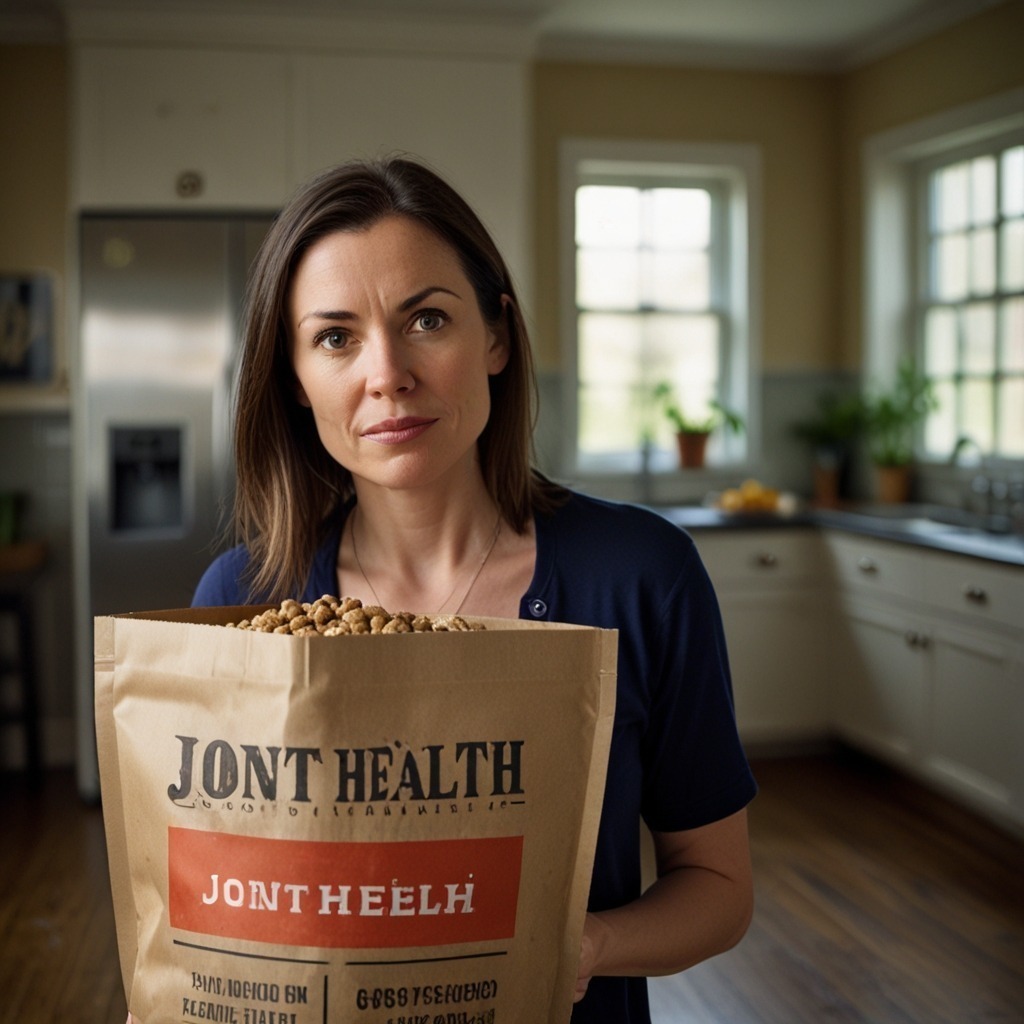
I should mention that all of these foods work best when you pair them with something wet or a topper. Dry food alone can be dehydrating for senior dogs who already don't drink enough water. I always add a splash of warm water or a spoonful of canned food to make it a little soupy. It helps with digestion and keeps everything moving. Literally and figuratively.
Oh, And While We’re Talking About Old Dogs With Achy Joints…
Nail trims. Nail trims on an arthritic dog should be classified as a contact sport. Rusty used to whip his head around and snap at the air if I so much as touched his paw. I don't blame him — his feet hurt, and the pressure of the clippers made him feel unstable. I tried peanut butter, I tried sedatives, I tried crying. Nothing worked until I gave up clippers entirely. Now I use a scratchboard and a dremel, and I haven't drawn blood in seven years. I wrote about the whole slow, frustrating process here, but the short version is: if your dog's arthritis makes nail trims a nightmare, you aren't alone. And there are ways that don't involve an emergency vet visit at midnight.
A Tangent Abput Fish Oil and Diarrhea (Because This Keeps Happening)
When I first started researching arthritis diets, I thought I was so clever. I'd just buy a $19 bag of regular senior food and dump fish oil capsules on top. Save money! More omega-3s! What a genius. Two weeks later, Rusty's poop looked like a melred chocolate milkshake and he'd had five accidents in the house. The fish oil was giving him raging diarrhea, because his old gut couldn't handle that much sudden fat. I backed off, but the damage was done. I spent another month trying different brands of fish oil, different doses, different forms. Nothing worked without also wrecking his insides.
That's when I learned the second thing nobody tells you: senior dogs often have sensitive stomachs on top of their joint issues. Years of eating processed food, a few rounds of antibiotics, and just plain age can leave their microbiome a mess. And when their gut is inflamed, it makes systemic inflammation worse — including in their joints. So if you're trying to help your dog's arthritis by adding all these anti-inflammatory supplements, but his gut can't handle them, you're chasing your tail.
I wish I'd known about probiotics back then. I didn't. I stumbled into the right one by accident years later when I was fostering a dog with chronic diarrhea. That's a whole other story — here's the $22 bottle I now buy in bulk — but the takeaway is: if you're going to give your arthritic senior dog a joint supplement or fish oil, you almost always need to support his gut at the same time. Otherwise you're just trading one problem for another. And the smell of dog diarrhea at 3 AM isn't something I'd wish on anyone.
Why Glucosamine in Kibble Is Sort of a Scam (And Why I Still Look for It Anyway)
Okay, I need to say this part carefully because people get very attached to their glucosamine. I'm not saying glucosamine doesn't work. I'm saying the amount in most commercial dry foods is so laughably low that you might as well write "contains unicorn dust" on the bag. The clinical studies that show glucosamine helps with arthritis use doses of 1,000-1,500 mg per day for a 50-75 pound dog. The average "joint health" kibble has maybe 300-500 mg per cup. If your dog eats 3 cups a day, he's barely hitting the low end of the therapeutic range. And that's assuming the glucosamine in the kibble is stable and bioavailable after processing at high temperatures. Which it often isn't.
Dr. Nguyen told me once, off the record, that she doesn't put much stock in food-based glucosamine. She recommends a separate supplement. I've used Dasuquin, Cosequin, and a few others. But here's the thing: I've also had dogs who got better on a high-omega-3 food with no glucosamine at all. So I don't think it's the glucosamine doing the heavy lifting. I think it's the omega-3s, the high-quality protein, and the calorie control. Glucosamine is just the cherry on top. And if the cherry costs you $15 more per bag and doesn't actually deliver a therapeutic dose, what are you paying for?
That's why I look for it on the label, but I don't make it my main criteria. If a food has everything else right — good protein, low omega-6, EPA/DHA, reasonable calories — and happens to have some glucosamine, great. If it's lacking glucosamine but hits every other mark, I'll add a separate supplement and call it a day. But I'll never again buy a food just because the bag screams "JOINT SUPPORT." Screw that.
The Weight Connection (Or, Why I Had to Stop Feeding Rusty Like He Was a Puppy)
I'm going to tell you something embarrassing. When my ex-husband moved out, I kept feeding Rusty the same amount of food I always had. 3 cups a day. It was our routine. It made me feel like at least one thing in my life hadn't changed. But Rusty wasn't chasing a tennis ball for an hour anymore. He was sleeping 18 hours a day on my couch. So he gained 8 pounds. 8 pounds doesn't sound like a lot, but on a dog with arthritis, it's the equivalent of carrying a bowling ball around on your hips all day. Every extra pound adds 3-5 pounds of pressure on the joints, depending on which study you read. 8 extra pounds is 24-40 extra pounds of force every time he takes a step.
Weight loss became priority number one, even before I figured out the food. Dr. Nguyen gave me a calorie target: 900 calories a day. To hit that with dry food, I had to feed only 2 cups of most kibbles, and Rusty would stare at me like I was starving him. So I bulked up his meals with green beans (canned, no salt), pumpkin puree, and a little water. The volume filed him up without adding calories. He lost the weight in four months. And the difference in his mobility was immediate — before I even changed his diet to an arthritis-specific one. He could stand up without so much shaking. He started following me to the kitchen again. All because his joints weren't carrying that damn bowling ball anymore.
So yes, pick a good dry food. But don't ignore the scale. If your senior dog is even 10% overweight, fixing that's the single biggest thing you can do for his arthritis. More than any kibble, more than any supplement. And I say that as someone who has wasted a lot of money on kibble and supplements.
When I Stopped Obsessing Over Joint Supplements and Just Fed Him Real Food
There was a period, about 18 months after Rusty's initial collapse, when I just stopped. Stopped the obsessive label reading, stopped the supplement roulette, stopped the pain journal. Not because he was cured — he wasn't and never will be — but because I'd found a rhythm that worked. He was eating the Purina JM prescription food. He was on a low dose of gabapentin for the bad days. He was a healthy weight. I'd learned to read his body: the slight hitch in his step that meant rain was coming, the way he'd lean his head into my hand when his hips were particularly achy.
One morning I walked into the living room and he was already up. Standing by the door, tail wagging slowly, waiting for his breakfast. No strugge. No splayed legs. No panicked eyes. I crouched down and he pushed his big block head into my chest, and I cried for the second time. But this time it wasn't fear. It was just relief.
I can't promise any of the foods I mentioned will do that for your dog. Arthritis is a degenerative disease. It doesn't reverse. The best you can hope for is to slow it down and make your dog comfortable. But I can promise this: ignoring it, or feeding a cheap bag of "senior" food and hoping for the best, will only make it worse. you've to pay attention. you've to be willing to spend a little more money on a food that actually does what it claims, or at least doesn't add fuel to the fire. you've to be okay with trial and error, and with the fact that sometimes you're just going to waste $68 on a bag of marketing lies.
I've fostered 40+ dogs, and almost all of the seniors who came through my door had some degree of arthritis. The ones who improved ate high-quality food with low inflammatory fat profiles, got their weight under control, and had owners who didn't just shrug and say "well, he's old, what can you do." The ones who didn't improve? Their owneers kept feeding them whatever was on sale at the grocery store and wondering why their 12-year-old Lab couldn't get in the car anymore.
You don't have to be perfect. Trust me, I'm not. I've made every mistake. But start somewhere. Switch to a better dry food. Cut back his portions. Add a fish oil (gently, with his vet's okay). Pay attention to whether he's licking his joints or hiding more than usual. The small things add up. And one morning, maybe you'll walk into your living room and find your old dog already up, tail wagging, ready for whatever comes next.
Rusty's 5 AM Wet Carpet Wkae-Up Call — 18 Months Later
This morning, at 5:06 AM, Rusty woke me up by pressing his cold, wet nose directly into my eyelid. He hadn't done that in three years. His hips are still creaky, and he still takes carprofen on the days we go for longer walks, but he's moving. He's interested. He's a dog again, not just a sad lump on an orthopedic bed. I got up, fed him his prescription food with warm water mixed in, and watched him climb back onto the couch without hesitating. I've spent thousands of dollars and made more mistakes than I can count, but that one moment — a 13-year-old Lab hauling himself onto a couch like it's nothing — was worth every penny. If you're starting this journey, I hope you get your version of that moment. You probably will, if you're stubborn enough to keep trying.