
I Spent $340 on Probiotics That Made My Dog's Diarrhea Worse—Here's the One That Finally Firm Up His Gut (And the 3am Cleanup That Broke Me)
After $340 in useless probiotics and a 3am cleanup that broke me, I found the specific strains and ingredient labels that actually fixed my dog's chronic diarrhea. No miracle cure—just hard-won experience and one product that changed everything.
I don't know what time it was exactly. Sometime after midnight, definitely before 4am. I was on my hands and knees in my laundry room scrubbing liquid dog shit out of the ridges on the baseboard heater. My build dog at the time—a senior beagle mix named Gus who'd been dummped at the shelter with notes saying 'chronic diarrhea, good luck'—was standing behind me wagging his tail like everything was fine. I was crying. Not pretty crying either. The kind where snot runs down your lip and you're so tired you forget to wipe it.
That was month four of trying to fix his gut. I'd already burned through three different probiotics at that point, plus prescription food, plus pumpkin, plus some $28 powder that smelled like burnt yeast and made him vomit. My vet, Dr. Nguyen—she's put up with my panic calls for 11 years, through three dogs and a divorce—had drawn blood twice, done fecal tests, ruled out parasites, pancreatitis, EPI. The works. Her official diagnosis was 'idiopathic chronic enteropathy' which is vet-speak for 'his guts are a disaster and we don't know why.'
And the probiotics? Most of them were making things worse. I didn't know that yet. I just kept buying them because that's what every single blog post and pet store employee told me to do. 'He needs good bacteria!' Sure. But nobody was talking about which bacteria, or what CFU count actually meant, or how half the products on the shelf are basically dead on arrival because of how they're manufactured and stored.
This is the article I wish I'd had at 3am with my face two inches from a baseboard heater. I'm not a vet. I'm just someone who's fostered over 40 dgos, cleaned up more diarrhea than a pediatric ward, and made every mistake there's with supplements. What I'm about to tell you comes from vet consults, a lot of reading, and the kind of trial-and-error that costs real money and sleep.
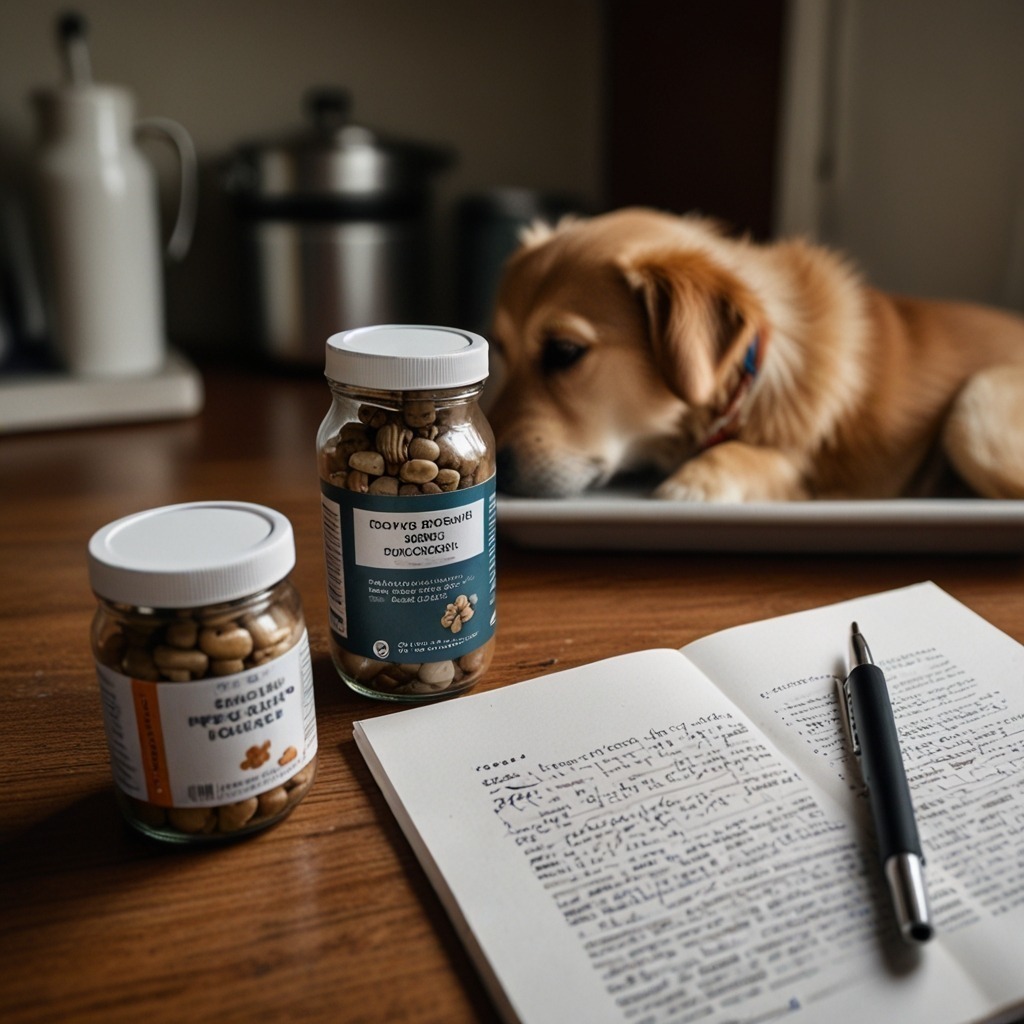
The $40 bottle of probiottics that made my dog worse
Let me tell you about the first probiotic I tried for Gus. It was a well-known brand in a sleek green bottle, advertised specifically for digestive health. 10 billion CFUs per scoop. Touted six different strains on the label. Cost $38.99. I was so optimistic.
Three days in, Gus's already-soft stool turned into a geyser. There's no polite way to say it. The frequency doubled. The smell got so bad my other dog—a normally stoic cattle dog mix named Marge—would leave the room. I stopped it after day five. Called Dr. Nguyen, who said something I've never forgotten: 'Sarah, not all probiotics are created euqal, and some of them might as well be sawdust with a fancy label.'
She wasn't wrong. I later learned that many probiotic supplements—especially the powders in tubs that you open and close repeatedly—lose viability within weeks. The bacteria die. You're literally sprinkling dead microbes onto your dog's food and wondeirng why nothing changes. Some of the strains in that bottle were also things like Lactobacillus casei and Enterococcus faecium—strains that can actually be problematic for dogs with severe dysbiosis. Enterococcus in particular has a fun tendency to become pathogenic if the gut environment is already a trainwreck. I didn't know that then. I just knew I'd paid $40 to make my dog sicker.
I've made this same mistake at least three times across different dogs. One build—a terrified little poodle mix I called Charlie—had such bad SIBO that the probiotic I tried (a different brand, same result) triggered a flare-up so severe he stopped eating for two days. I learned that if your dog has small intestinal bacterial overgrowth, you don't start with a broad-spectrum probiotic. You need to sort out the overgrowth first, often with antibiotics, then rebuild. That's a whole other nightmare I'll get to.
But before I figured any of this out, I had to understand what a probiotic is actually supposed to do. And for that, we've to talk abut what's living in your dog's gut.
What actually lives in your dog's gut (and why I used to think probiotics were BS)
For a long time I was skeptical of the whole idea. The gut has trillions of bacteria. You're going to add a few billion from a capsule and expect them to move in and redecorate? It seemed like tossing a handful of strangers into a stadium and expecting them to change the crowd's behavior. I wasn't wrng to be skeptical, but I was missing something important.
The bacteria in a probiotic don't necessarily colonize permanently. This surprised me. A lot of them are what researchers call 'transient'—they pass through, but while they're in there, they do useful things. They chhurn out short-chain fatty acids that feed the cells of the intestinal lining. They lower the pH, making the environment less hospitable to pathogens like Clostridium perfringens, which is a major cause of acute diarrhea in dogs. They communicate with the immune system. The idea isn't that they move in forever; it's that they show up, do some renovation work, signal to the host's own microbiome to step up, and then peace out. That changed my whole perspective.
I went down a research rabbit hole. I'm not a scientist—I dropped out of vet tech school, remember—but I can read a paper if there's a coffee nearby. What I learned is that a dog's gut microbiome is massively influenced by diet, stress, antibiotics, and age. A dog who's been on a round of metronidazole (which kills aaerobes indiscriminately) is a ghost town ecologically. Probiotics after antibiotics make a lot of sense. A dog who's been eating cheap kibble full of fillers? Different situation. The gut is probably inflamed from the constant irritation of ingredients that don't belong in a canine digestive system. You can't just throw Lactobacillus at that and call it fixed. You need to address the diet too.
Anyway, after my $40 green bottle disaster, I got smarter about what to look for. And the first thing I tossed was the notion that higgher CFU counts are always better. That's a marketing trap and I fell for it.
The CFU numbers game
CFU stands for colony-forming units. It's a measure of how many live bacteria are in a dose. You see bottles boasting 50 billion, 100 billion, even 200 billion CFUs. Sounds impressive. But here's the thing: the number on the label is what was in there at the time of manufacture, not necessarily what's still alive when you open the bottle three months later. Probiotics are fragile. Heat, moisture, oxygen—all of it kills them. Unless the product has some kind of protective coating or microencapsulation technology, a chunk of those bacteria are already dead when they hit your dog's stomach. And then they've to survive stomach acid. Most don't.
I had a long conversation with a veterinary nutritionist at a conference once—this was maybe six years ago, I was working the shelter booth—and she told me point blank: 'CFU without evidence of viability is marketing. You want a product that guarantees potency through the expiration date, not just at manufacturing.' That's why I now look for probiotics with some form of entrric coating or microencapsulation, or at minimum, a company that does third-party stability testing. Spoiler: most don't.
The strain specificity nobody talks about
This is the part where my eyes used to glaze over. Lactobacillus this, Bifidobacterium that. Who cares? Turns out, strain maters enormously. Not just the species—the specific strain number. Lactobacillus acidophilus is a species. Lactobacillus acidophilus DDS-1 is a strain. Different strains do different things. Some are studied for diarrhea, some for constipation, some for anxiety (yeah, the gut-brain axis is a thing in dogs too). You can't just grab a bottle with 'Lactobacillus' on it and assume it'll fix stool consistency.
I'm gonna name some strains here because you need to know what to actually look for. But before I do, let me link to something related—I wrote about a kitten who pooped liquid for 11 days straight and how finding the right wet food (not probiotics, food) was what finally turned the tide. Different species, same principle: someitmes the supplement isn't the hero. That whole saga is here, if you'e dealing with a similar nightmare on the feline side.
Now, the stranis that actually have some evidence for dogs with digestive issues:
Lactobacillus rhamnosus GG (ATCC 53103). This is one of the most studied probiotic strains in humans and there's growing veterinary literature too. It's shown effectiveness against acute diarrhea, particularly antibiotic-associated diarrhea. I've used a product containing this strain for several build dogs and noticed a difference within 72 hours, which isn't a controlled study, it's just my observation. But vets I trust recommend it.
Bifidobacterium animalis subsp. lactis (various strains, but especially BB-12). This one's big for gastrointestinal regulation and immune modulation. There's decent data in both humans and dogs. I first heard about it from a veterinary gastroenterologist I consulted about Gus—she recommended a product with BB-12 specifically.
Lactobacillus acidophilus DDS-1. This strain has some animal-specific research backing its ability to srvive stomach acid and adhere to intestinal cells. Not every L. acidophilus is equal. The DDS-1 designation matters. I've seen products that just list 'L. acidophilus' with no strain—that's useless, skip it.
Enterococcus faecium SF68. This one is tricky. Enterococcus species have a reputation for being potentially pathogenic, as I mentioned earlier, but the SF68 strain is well-studied in veterinary medicine and has been shown effective for diarrhea in dogs and cats. The key is that it's the specific SF68 strain, not ranfom E. faecium. I'd still be cautious using this in a dog with severe dysbiosis, but under veterinary guidance, it has its place.
Bacillus coagulans GBI-30, 6086. Bacillus species form spores, which means they're naturally resistant to stomach acid and heat. They survive manufacturing and storage way better than Lactobacillus, which is why I started gravitating toward spore-forming probiotics for some of my more fragile fosters. This particular strain has research on both diarrhea and constipation—it's sort of a normalizing agent rather than pushing things in one direction.
The point is, you want a probiotic with a few of these specific, research-backed strains—and you want the strain designations on the label. If the label just says 'Lactobacillus' with no further info, put it back. I don't care if it's on sale.
Gus, my test case: two weeks of chickken and rice did absolutely nothing
Before I found a probiotic that actually helped Gus, I did all the standard stuff. I put him on a bland diet of boiled chicken and white rice for two weeks. Everyone—every website, every Facebook group, every well-meaning neighbor—told me this was the cure. Just chicken and rice until the stool firms up. I made huge batches every three days. My fridge was a chicken graveyard.
It didn't work. Not at all. His stool got maybe 5% firmer, a subtle change from 'melted chocolate ice cream' to 'slightly thicker melted chocolate ice cream.' I was losing my mind. I called Dr. Nguyen again and she said something I've repeated to dozens of build parents since: 'Chicken and rice is a temporary band-aid. It's nutritionally incomplete and doesn't address whatever underlying dysbiosis is happening. For some dogs, the rice actually makes things worse because of the starch load.'
That was a lightbulb moment. I'd been dumping refined carbs into a dog with a messed-up gut, essentially feeding the bad bacteria. Rice ferments in the colon. It can increase gas, bloating, and osmotic diarrhea. I'm not saying chicken and rice never works—it does for some acute GI upset cases—but it's not a long-term solution and it's definitely not a cure for chronic enteropathy.
If you're dealing with a dog who's pooping liquid and you've been doing chicken and rice for more than five days with no improvement, stop. Call your vet. You need actual diagnostics, not another pot of boiled chicken. I wrote about a similar situation with a puppy once—she was pooping every few hours and I was convinced she was dying, turns out it was just the food. Sometimes the answer is simpler than we think, but you need a vet to help you figure out if that's the case.
Anyway, after the chicken and rice failure, I started researching specific probiotic products. I made a spreadsheet. Yes, I'm that person. I cross-referenced strains with the research I colud dig up, checked for third-party testing, looked at manufacturing info, read a bunch of reviews from people who actually had dogs with chronic diarrhea (not just 'my dog's poop was a little soft' reviews—the real deep-end stories). I landed on three products that seemed promising. One of them changed everything.
The ingredient list test that saved my brain
I want to talk about what's in a probiotic besides the bacteria because this is where a lot of products go sideways. Filler ingredients, prebiotic fibers that aren't appropriate for sensitive dogs, dairy residues that trigger allergies—all of this stuff can make a probiotic useless or actively harmful.
Here's my quick checklist for vetting an ingredoent label on a dog probiotic:
- No maltodextrin. This is a cheap filler often used as a carrier for the bacteria. It's also a high-glycemic starch that can feed the wrong microbes in a dysregulaated gut. I've seen it worsen diarrhea in multiple dogs.
- No FOS (fructooligosaccharides) if your dog has SIBO. FOS is a previotic fiber that feeds bacteria. That's great in a healthy gut. In a gut with overgrowth in the small intestine, it's throwing gasoline on a fire. I learned this the hard way with Charlie, my SIBO build. More on that later.
- No vague 'proprietary probiotic blend' without strain identification. This is a red flag. If they won't tell you which strains and at what CFU per srain, they're hiding something. Usually it means the formula changes batch to batch based on whatever raw materials are cheapest.
- Check for dairy or egg allergens. Some dogs with chronic GI issues also have food sensitivities. If your dog is itchy or gets ear infections along with the diarrhea, a dairy base in the probiotic might be a trigger. Look for dairy-free options.
- Look for some form of protective encapsulation. Lactobacillus especially is a delicate flower. If the product doesn't mention enteric coating, microencapsulation, or at the very least, a Bio-tract or similar technology, you're gambling on whether any live bacteria survive transit. Spore-forming probiotics (Bacillus species, generally) don't need this as badly, which is why I lean toward them for convenience.
I've thrown away bottles of probiotics that cost $50 because the ingredient list made me cringe. It's not wasteful—it's acknpwledging that I made a purchase based on marketing and now I know better.
The product that finally worked for Gus (and why I'm still mad about how simple it was)
This is the part where I'm supposed to give you a glowing recommendation. Here's the thing: I'm not going to tell you 'this one brand is the holy grail' because I don't know your dog. Different dogs respond to different strains. What I can tell you is what worked for Gus, and what I've seen work across multiple build dogs with different gut issues.
After my spreadsheet deep-dive—and a long phone call with Dr. Nguyen where I read her all my notes like a lunatic—we settled on a probiotic that had three things that mattered: (1) it used a spore-forming Bacillus strain with actual published research in dogs, (2) it had zero fillers, no maltodextrin, no FOS, just the spores in a capsule that could be opened onto food, and (3) the company provided a guaranteed potency through the expiration dae, not just at manufacture. The strain was Bacillus coagulans GBI-30, 6086, the one I mentioned earlier.
I want to pause here and acknowledge something: I hated that this worked. I hated it because I'd spent four months and conservatively $340 on other products—not counting the vet bills, not counting the special foods, not counting the enzymes I tried, not counting the canned pumpkin I bought in bulk. The solution was sitting there the whole time in a bottle that cost me $22. The simplicity made me furious.
Within four days of starting that probiotic, Gus's stool went from liquid to soft-formed. It wasn't perfect. He still had some mucus, and the color was off—still is sometimes—but it was a dramatic improvement. By the end of week two, he was producing actual logs. Logs! I felt like a proud parent. I took a picture and almost sent it to Dr. Nguyen before deciding that was a boundary I should respect.
Gus stayed on that probiotic for eight months. During that time, I also changed his diet—I'll get to that—and slowly introduced a prebiotic that was specifically suited for dogs with gut damage, not the gneric FOS that makes everything worse. The combination was key. Probiotic without the right prebiotic is like sending construction workers to a job site with no materials.
And then thete was Charlie, who needed something completely different.
Charlie, the 6-week-old build puppy who taught me about SIBO in the most expensive way possible
Charlie came to me at six weeks old. He was a poodle mix, barely two pounds, and he'd been separated from his mother too early. His stomach was a balloon. He'd been on three different antibiotics by the time the rescue got him because he'd had pneumonia, a skin infection, and then diarrhea that wouldn't quit. By the time I picked him up, he was pooping foul-smelling water that smelled like something died in an egg factory.
I tried my usual spore-based probiotic on him. Bad idea. Within 24 hours, he was worse—more gas, more pain, more liquid. He started crying when I touced his belly. I rushed him to the emergency vet, where they diagnosed small intestinal bacterial overgrowth (SIBO). Essentially, bacteria that should've been in his colon had set up camp in his small intestine, fermenting food before it could be absorbed properly. The probiotic I gave him? More bacteria. Into an already-overloaded small intestine. I'd basically poured fuel onto the fire.
The vet put him on a course of metronidazole and told me no probiotics at all during the antibiotic period—which goes against what you hear everywhere about always pairing antibiotics with probiotics. But her reasoning was sound: the metronidazole was killing the overgrotwh, and adding more bacteria would just confuse things. Once the antibiotics were done and a recheck fecal was clean, THEN we added probiotics. But a very specific kind.
She recommended a single-strain product with Lactoacillus rhamnosus GG—nothing else. No broad-spectrum blend. No prebiotics at first. Just the LGG strain to start rebuilding the gut barrier without overwhelming the system. We waited another two weeks before introducing a small amount of a specific prebiotic called partially hydrolyzed guar gum (PHGG), which is a gentler fiber that doesn't rapidly ferment and cause gas like inulin or FOS can. That made all the difference. I wrote about some other gut-related mistakes in this post about when my build dog pooped crayon-orange—spoiler, grain-free isn't always the answer either.
The Charlie case taught me that probiotic use has to be tailored to the actual diagnosis. SIBO versus post-antibiotic dysbiosis versus food-responsive enteropathy versus stress colitis—these are all different things and they need different approaches. Anyone who tells you 'just give your dog probiotics' without a diagnosis is skipping a very important step.
When probiotics are the wrong tool
Here's a very short section I feel qualified to write: probiotics won't fix structural problems. They won't fix intestinal lymphoma, which I once had a build diagnosed with and that's a whole different heartbreaking story. They won't fix a partial obstruction. They won't fix EPI (exocrine pancreatic insufficiency) without enzyme replacement. They won't fix a dog who's been eating socks.
If your dog has lost significant weight, has blood in the stool consistently, is vomiting, or has diarrhea that hasn't improved after two days—go to the vet. Probiotics are supportive, they're not a substitute for diagnostics. I say this with the exhaustion of someone who once assumed a build's diarrhea was 'just stress' for two weeks before learning he had an e. coli infection that required specific antibiotics I'd been failing to address.
That said, for the garden-variety chronic loose stool that comes from dysbiosis, food changes, or past antibiotic use? A good probiptic can absolutely be part of the solution.
The food pieece of the puzzle that I kept ignoring
I've been dancing around this, so let me just say it: probiotics work better when the diet supports them. Gus's big turnaround came when I finally ditched the chicken-and-rice nomsense and switched him to a limited-ingredient, highly digestible food with a moderate fat content. Dogs with chronic enteropathy often don't handle high fat well. Gus certainly doesn't.
I ended up on a prescription hydrolyzed protein diet for a few months while his gut calmed down. Not cheap. But the combination of that diet—which meant no proteins his immune system could freak out over—and the Bacillus probiotic finally reset the system. After three months, I transitioned him to a novel-protein kibble (kangaroo, because of course) and he's been stable since.
The probiotic helped, but it was part of a bigger picture. I wish someone had told me that earlier. I remember writing this post about how I fed Gus 'light' kibble and he turned into a sausage—turns out his weight issues were also tied to gut inflammation and absorbing nutrients poorly. So many of these problems are connected in ways you don't expect.
And while I'm linking things, I've also had a lot of experience with skin issues in rescue dogs, and there's a known gut-skin axis in dogs too. I wrote about what soothes itchy skin in this piece on itchy dogs. The number of times a skin problem turned out to have a gut component was staggering. The two systems talk to each other constantly. Probiotics aren't just about poop.
What I'd actually recommend trying, in this order
You came here for actionable steps. Here they're, grounded in my experience, not a textbook:
Step 1: Vet visit with fecal testing. Rule out parasites, Giardia, coccidia, and bacterial infections. If your vet hasn't done a fecal float AND an antigen test for Giardia, ask for both. I've missed Giardia befoer because one test was negative and I didn't know the difference. If your dog came from a shelter or a breeder with questionable sanitation, the odds of a parasite are high even if you don't see worms.
Step 2: If all tsts are clean, talk to your vet about food-responsive enteropathy. This is essentially a food intolerance that causes chronic loose stool. A hydrolyzed protein diet trial is the diagnostic gold standard. It's expensive, yes, but so is cleaning diarrhea off your baseboard heaters at 3am. Some dogs respond to just removing chicken or beef from the diet. Gus didn't—he needed the full hydrolyzed route—but many do.
Step 3: Once the diet is sorted, choose a probiotic with strain specificity. Not a blend of 14 random strains that sounds impressive. Look for L. rhamnosus GG, or B. animalis BB-12, or Bacillus coagulans GBI-30, 6086—strains with some veteriinary research. Check the ingredient list for unnecessary fillers. If you can, get a capsule-based product and open it onto food rather than a tub powder that loses potency every time you open it.
Step 4: Consider prebiotics separately and carefully. Don't just grab a probiotic that's loaded with inulin or FOS if your dog has a sensitive gut. Start with the probiotic alone for a week or two. If things are improving but not perfect, THEN consider a gentle prebiotic like PHGG or even just cooked and pureed pumpkin (which contains soluble fiber that feeds good bacteria without the rapid fermentation).
Step 5: Track everything. I keep a poop journal. I'm not kidding. A small notebook where I log date, time, consistency (I use a 1-5 scale where 1 is water and 5 is firm), any mucus or blood, and what the dog ate and any supplements that day. It's tedious, but it gave me actual data to show my vet instead of me just saying 'he has diarrhea a lot.' Patterns emerged. I learned that Gus's stool always got worse on Mondays, which is when I gave him a bully stick as a treat. The bully stick was causing a subtle flare. I never would've connected that without the log.
I know this is a lot. It's overwhelming. I remember sitting on my kitchen floor after the Charlie situation, surrounded by bottlrs and vet receipts, and just feeling like I was failing. But it gets clearer with time. You learn your dog's rhythms. You learn which strains work and which don't. You learn to read an ingredient label like a detective.
Why I stopped trusting Amazon reviews for supplements
This is a tangent but I need to say it. I used to rely heavily on customer reviews when choosing products. I'd scroll throuhg Amazon, sort by 'most helpful,' and buy whatever had 4.5 stars. Then I learned how easy it's to game those systems—fake reviews, incentivized reviews, brands that pay for positive placements. More importantly, I noticed a pattern: the top-rated probiotics often had the least specific labeling. Lots of 5-star reviews saying 'my dog loves the taste!' — which tells me nothing about whether the product actually helps with diarrhea. Dogs will eat literal garbage. Taste isn't the metric.
I started looking at reviews from people whose dogs had actual digestive diagnoses. Those are hard to find. What I ended up doing instead was asking my vet, askiing the rescue's vet, and looking at products recommended by board-certified veterinary nutritionists. Not influencers. Not pet store employees who did a 20-minute training module. Actual experts. That narrowed the field to maybe five or six products, and then I filtered by ingredient list quality and strain specificity.
That's the whole approach. Boring, I know. No miracle cure. Just systems and patience and a willingness to spend money on the right things instead of the shiny things.
The moment I knew the probiotic was actually working
Gus is currently asleep on the couch behind me, his head resting on a pillow he stole from my bedroom. His coat is shiny, his weight has been stable for over a year, and I can't remember the last time I had to scrub liquid poop out of anything. He still has occasional soft days—if he gets into something he shouldn't, or if we travel and he gets stressed—but his baseline is normal. That feels like a miracle.
The moment I knew, really knew, that we'd turned a corner wasn't when his stool firmed up. It was about six weeks into the new probiotic and diet regimen, when I caught him trotting across the yard with a bounce in his step that I'd never seen before. He was comfortable. He wasn't hunchhed and licking his belly. He was just a dog, being a dog, not a dog who was constantly trying to manage gastrointestinal pain. That's the thing about chronic gut issues in dogs—it's not just the diarrhea. It's the low-grade misery that you don't see until it's gone.
I still keep a bottle of probiotics in the fridge. I rotate sometimes depending on what's happening—if one of my dogs goes on antibiotics, I use the LGG strain for rebuilding. If someone eats something they shouldn't and gets a stomach upset, I reach for the Bacillus spores. I've become the neighborhood crazy dog gut lady and honestly? I'm okay with that.
If you take one tihng from this mess of a post, let it be this: probiotics aren't magic, but the right probiotic, paired with the right diet and a solid vet workup, can absolutely tip the scales. And if you're currently on your kitchen floor at 3am wondering if you're a terrible dog owner—you're not. You're just outnumbered by bacteria. That's a temporary problem.