I Quit Dog Nail Clippers After a Midnight Vet Run That Cost Me $187 — Here’s What I Do Instead That Doesn’t End in Blood
One wrong snip and my kitchen looked like a crime scene. After a $187 midnight vet visit, I threw away every pair of dog nail clippers and figured out methods that don't end in blood.
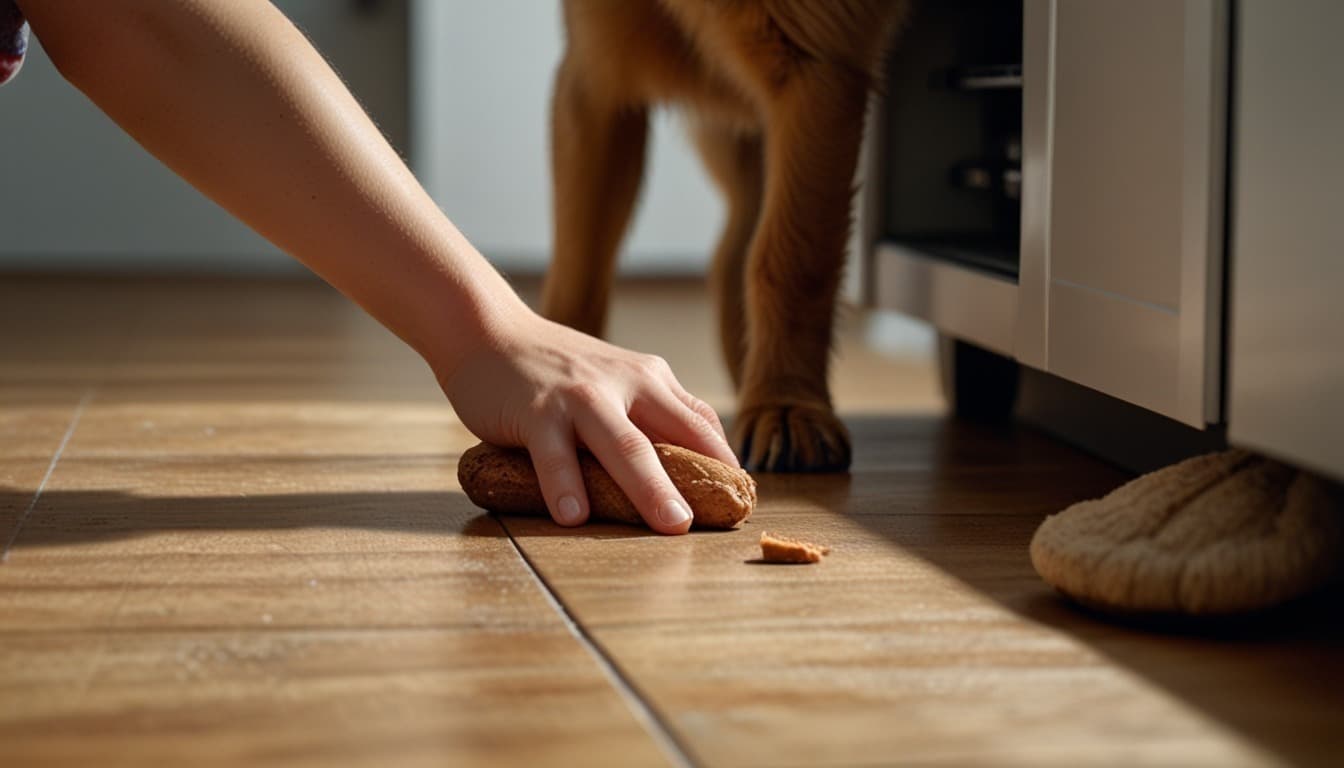
The blood was so unexpected I didn't even realize I'd done it until I saw the drops on the white kitchen tile. Little red Rorschach tests trailing from where my build dog, Bruno, had been standing to where he'd run under the table. I looked at the clippers in my hand — those stupid, guillotine-style clippers that the shelter had given me for free — and there was a tiny chunk of something dark on the blade. I'd nicked the quick. Badly. Bruno, a 70-pound boxer mix who'd already been through hell before landing in my rescue, was now huddled under my dining table licking his paw and looking at me like I'd personally betrayed him. It was 9:47pm on a Tuesday. The nearest emergency vet was 22 minutes away. I spent the next hour and a half sitting on my floor, holding a paper towel to his nail and crying into a cup of cold coffee.

That was the night I threw every pair of dog nail clippers in my house straight into the trash. Not the recycling — the actual garbage can outside, so I wouldn't be tempted to fish them out later. I'd been trimming dog nails for years at that ponit, between my own dogs and the 40+ fosters that had cycled through my small rescue, and I'd never quicked one that badly. But there's something about the combination of a nervous dog, dull clippers, and a caregiver who's running on four hours of sleep that turns a routine nail trim into a disaster. After that night, I knew: I was never using clippers again. I'd have to figure out every other possible way to keep my dogs' nails short, or I'd be visiting the vet every month with a $20 bill and a tail of shame.
So that's what I did. Over the next few years I tried everything — Dremels, scratch boards, pavement walking, hand files, those weird little electric nail grinders you see on late-night Amazon scrolls, even a nail file attachment for a vacuum cleaner that I'm still too embarrassed to describe. Some of it worked beautifully. Some of it was a total waste of money. Some of it turned into a weird bonding ritual between me and my dogs that I now genuinely look forward to. This isn't a tutorial written by a groomer who's never been bitten. This is the real, messy, trial-and-error journey of someone who's bled for this knowledge. Literally.
The Night I Realized Clippeers Weren't Just Scary — They Were Making Everything Worse
Before the Bruno incident, I thought I was decent at nail trims. I'd worked at a shelter for six years — I'd held hundreds of dogs while the vet techs clipped their nails. I'd watched the technique, I'd memorized the angle, I'd learned where the quick was on black nails versus white nails. I dropped out of vet tech school, sure, but I knew the basics. The problem, I eventually realized, wasn't my skill. It was that I was using a tool that my dogs had learned to fear. Every single one of them, even my easygoing lab mix Gus, would tense up the moment I pulled out the clippers. And tense dogs wiggle. Wiggle leads to snips in the wrong spot. Snips in the wrong spot lead to blood, and blood leads to a dog who's even more terrified next time. It's a garbage feedback loop.
I remember one particular build, a tiny terrier named Pickle, who would literally scream the second she saw the clippers. Not a yelp — a full-on, human-like scream that made my neighbors think I was murdering someone. I'd spend 20 minutes just trying to get one paw done, and then I'd have to stop because we were both shaking. I'd give her a treat and she'd take it from my hand like I'd tricked her. That's no way to build trust with a dog who's already been dumped by her previous family.
At some point I stumbled on a study — or maye it was just a really passionate Reddit thread — that said the pressure of clippers can be uncomfortable even when you don't hit the quick. The squeezing sensation on the nail can freak a dog out, especially if their nails are thick or if they've had a bad experience before. I never verified that with a vet, but it made sense. My dogs had opinions about the clippers, and those opinions weren't subtle.
Why Pavement Is the Laziest (and Sometimes the Best) Nail Trimmer
If you've got a dog who walks on concrete every day, you might not need to do much else. My neighbor's dog, a border collie who runs alongside her bike on asphalt paths for an hour every morning, has nails so short they barely click on the floor. I hate her a little bit for it. For the rest of us — the ones with dogs who prefer grass, or who live in apartments where the longest walk is from the couch to the food bowl — pavement can still help, but it's not a complete solution. The back nails, especially, never seem to wear down enough, and if your dog has any kind of funky gait or arthritis (more on that later), they'll wear unevenly. Still, I make a point now of taking my dogs on a short concrete loop a few times a week just to keep things filed naturally between actual trims. It's not a replacement for a grooming routine, but it's a free and effortless supplement. And if your dog's nails are currently overgrown, don't expect pavement to fix them overnight. Those long nails will need to be btought down first with something else before the pavement can maintain them.
The Dremel: How I Stoped Being Terrified of Power Tools Near My Dog's Toes
Okay, let's talk about the Dremel. The first time someone suggested I use a rotary tool on my dog's nails, I laughed. I'd seen enough horror stories about dogs getting their fur caught in the spinning bit, or owners accidentally sanding down to the quick in half a second. But desperation is a powerful motivator, and after the clipper fiasco, I was willing to try anything. I bought a cheap pet-specific nail grinder on Amazon — the kind that takes two AA batteries and makes a sound like an angry mosquito — and I set up camp on my living room flor with a jar of peanut butter and zero expectations.
The first attempt was a disaster. Gus, my lab, acted like I was trying to drill into his soul. He yanked his paw back so fast I almost sanded my own thumb. So I did what any rational person would do: I put the Dremel away for three months and went back to panicking every time I heard a click on the hardwood floor.
What finally turned things around was a desensitization process that I cobvled together from YouTube videos, a fear-free grooming group on Facebook, and the desperate notes I took after my $400 vet bill for a sedated poodle groom (a story I've told before in a different post, but the short versino is: I never wanted to put a dog through that again).
Step 1: Make the Sound Boring
For a full week, I turned the Dremel on for 30 seconds at a time while the dogs were eating dinner. Not near them — just in the same room. I'd sit on the couch, turn it on, turn it off. Repeat. Gus glanced up once, then went back to inhaling his kibble. My terrier mix, Miso, who's generally convinced that every new object is a murder weapon, took about four days to stop side-eyeing it. The goal wasn't to get them to love it. It was to make it so unremarkable that they'd stop caring.
Step 2: Touch Feet Without the Drama
Once the sound was no big deal, I started handling their paws while the Dremel was off. Just touching — no tool, no grinding. I'd gently squeeze each toe, hold the paw for a few seconds, then release and give a treat. I did this while we were watching TV, not during a designated "grooming session." I wanted paw handling to be as normal as ear scratches. Some dogs are naturally fine with this; my build dog at the time, a sweet old lab with arthritis (whose hip pain was made so much worse by overgrown nails, as I talked about in this post about joint issues), would literally offer me his paw like he was asking for a manicure. But for the suspicious ones, this step took weeks.
Step 3: The First Real Grnd — One Nail, Lots of Cheese
When I finally brought the Dremel to an actual nail, I only did one nail per session. One. I'd smear a lick mat with cream cheese, stick it to the floor, and while the dog was licking for dear life, I'd touch the Dremel to the tip of one nail for exactly two seconds and then stop. No attempt to actually shorten anything. Just contact. I'd praise them like they'd just performed open-heart surgery on me, give them a jackpot of cheese, and end the session. The next day, I'd do a different nail. Over about two weeks, I graduated to actually grinding the nail down — still slowly, still one nail at a time — until I could do a whole paw in one sitting without any drama.
The weirdest part? Once my dogs figured out that the Dremel didn't hurt, they actually preferred it to clippers. The vibration is strange but not painful, and there's no sudden pressure. I've since upgraded to a real Dremel (the 7300-PT, if you're curious) bceause the pet-specific ones tend to be underpowered for big dogs, but the principle is the same. I now keep all my dogs' nails short with a Dremel session every 7 to 10 days. It takes maybe five minutes per dog, and nobody bleeds.
The Scratch Booard That My Cat Hates But My Dog Will Actually Use
Here's a tangent: I've a cat, Luna, who is currently sitting on the windowsill judging me. She's a 14-pound tabby with the personality of a disgruntled accountant. I once bought her a $40 scratching post covered in sisal rope, thinking she'd love it. She ignored it for six months, then used it exactly once while making eye contact with me, as if to prove a point. So when I heard about scratch boards for dogs — those sandpaper-covered planks you teach dogs to paw at to file their own nails — I was skeptical. But I had a roll of grip tape left over from a home improvement project, and I was bored on a Saturday.
I cut a piece of plywood, wrapped it in the grip tape, and propped it up against the wall. Then I held a treat just behind it so my dog, Miso, would have to paw at the board to get to the treat. It took about six repetitions before she figured out that scratching the board made good things happen. Within a week, I'd trained her to "scratch" on command, and I'd incorporated it into our morning routine. She'd do a few scratches on the board, I'd give her a treat, and her front nails would stay filed down between Dremel sessions.
Does it replace the Dremel? Not entirely. Her back nails still need work, and the scratch board only files the tips of the front ones. But for a dog who's fearful of tools, or for a quick maintenance between grinds, it's a ridiculously easy solution. I left the board out in the living room, and occasionally I'd hear the scritch-scritch of her paws on it without me even asking, which probably says more about her love of treats than her love of nail maintenance.
The Time I Tried Filing My Dog's Naills While Binge-Watching The Great British Bake Off
This isn't a section with tips. This is a cautionary tale. It was a rainy Sunday, I was deep into a Bake Off marathon, and I thought, how hard can it be to just use a regular human nail file while we're both on the couch? My oldest dog, Jasper, is a 14-year-old shepherd mix who's basically a sentient throw pillow. He sleeps 23 hours a day and doesn't flinch at anything. So I grabbed an emery board, gently took his paw, and started filing.
Thirty seconds in, I realized I'd made a terrible mistake. Filing a dog's nail by hand is like trying to carve a marble statue with a spoon. It takes forever, the nail dust gets everywhere, and the sound — that soft ssshhhiiick noise — apparently triggers something deep in Jasper's ancient brain that says "this is wrong." He didn't panic, but he kept pulling his paw away and giving me a look that said, "I'm too old for this nonsense, Sarah." I got through half of one nail before I gave up, brushed the dust off my leggings, and accepted that hand filing is for show dogs and people with infinite patience.
I suppose there's a world where you could use a coarse-grit file on a small dog who's perfectly still, but I don't live in that world. My dogs are squirmy, my attention span is short, and I've got better things to do with my Sunday afternoons than inhale keratin dust. So hand filing isn't in my rotation. But I tried it, and now you don't have to.
For the Dogs Who'd Rather Eat the Treat and Bolt: Restraint Without the Wrestling Match
One of the biggest mistakes I made early on was thinking I had to hold my dog firmly to keep them still. I'd wrap an arm around their chest, pin their paw in place, and essentially turn the nail trim into a full-body restraint situation. Unsurprisingly, my dogs hated it. What I've learned since then (thanks to a behaviorist who visited the rescue and basically rewired my brain) is that restraint often makes anxiety worse. If a dog feels trapped, their fight-or-flight response kicks in, and you're suddenly wrestling a 60-pound animal who's decided this is a life-threatening event.
The alternative is something called cooperative care — a fancy term for "let the dog opt in." I don't force my dogs into a position. I sit on the floor, Dremel in one hand and a lick mat on the ground, and I wait for the dog to lie down next to me. If they get up and leave, we stop. If they come back, we continue. It's slow, especially at first, but it teaches the dog that they're not trapped. My dogs have learned that nail trims are a choice — one that comes with cheese, but a choice still, . And when a dog chooses to stay, they're infinitely calmer.
I also stopped trying to do all four paws at once. These days I'll do two paws on Tuesday, the other two on Thursday. It's less efficient, but efficiency isn't the goal when you're working with a living creature who has opinions. Sometimes I'll even do just one paw if my dog seems checked out. The trust is more important than the nail length.
When Nails Get So Long They Change the Way a Dog Walks
I want to pause here and talk about something I didn't understand until I started fostering senior dogs: overgrown nails aren't just a cosmetic issue. They can straight-up aletr a dog's gait and cause joint pain. When nails are too long, the toe is pushed upward from the ground, which shifts the dog's weight back onto their heels and changes the alignment of their entire leg. Over time, this can contribute to arthritis, especially in older dogs or breeds prone to hip dysplasia. I wrote about this in agonizing detail when my dog Gus started having trouble getting off the couch, and the entire ordeal is in this post — but the short version is that a $12 nail trim can save you hundreds in joint supplements and pain management down the line.
If you're reading this and your dog's nails are clicking on the floor when they walk, they're too long. Clicking = contact with the ground = that toe is being pushed backward. You don't need to fix it today, but you do need to start a gradual shortening plan. (Don't go and cut them all back at once, because you'll hit the quick — the quick recedes slowly as the nail is kept short. More on that in a sec.)
The $40 Bottle of Calming Chews That Did Absolutely Nothing
Can we talk about the "calming" products for a minute? I'm not against them on principle — my vet has prescribed actual anti-anxiety medication for dogs who truly can't handle grooming, and there's a time and place for pharmaceutical help. But the natural chews? The hemp-based treats, the "stress relief" drops, the lavender-scented paw balms? I've thrown so much money at these things over the years, and the only thing they reliably calmed was my bank account. I once bought a $40 bottle of "vet-formulated" chews that claimed to reduce grooming anxiety within 30 minutes. I gave one to Miso before a nail session, and she spent the next half hour vibrating with unfocused energy, then bolted when I turned the Dremel on. So much for that.
I'm not saying all calming products are useless. I know some people swear by them, and maybe there's a dog out there who's genuinely soothed by a chamomile-infused biscuit. But in my experience, nothing replaces slow, patient desensitization. The treats might take the edge off if your dog is only mildly anxious, but for dogs with genuine fear, you're better off talking to your vet about prescription options — or, honestly, just letting the vet handle the nail trim if things are that bad. Which brings me to my next point.
Why I Still Pay the Vet $18 to Trim My Oldest Dog's Nails
I've one dog — Jasper, the aforementioned senitent throw pillow — who has reached an age where grooming is just hard on his body. He's got arthritis in his front paws, a corn on one of his pads that the vet is monitoring, and a general distaste for anyone messing with his feet. I could Dremel his nails at home. I've the skills and the tools. But every time I try, he stiffens up and I can see the discomfort in his eyes, and I end up cutting the session short out of guilt. So I take him to the vet once a month, pay an $18 nail trim fee, and let a trained professional with two assistants handle it in under three minutes. He's not sedated for this, but he's a lot more cooperative on a metal table with strangers than he is with me on the living room floor.
If you've got an older dog with joint pain, you know exactly what I'm talking about. And if you're at the point where home nail care is causing more stress than it's worth — for you and the dog — there's zero shame in outsourcing it. When I let my build poodle's coat mat so badly the vet had to sedate her, I learned the expensive way that some grooming battles are't worth fighting alone (that story, by the way, is here). Nail trims aren't quite at that level for Jasper, but they'rre close. I'd rather pay the $18 and keep our relationship stress-free than try to be a hero and end up with a sore dog and a ruined evening.
Also, if your dog's nails are dark and you can't see the quick, many vets will do a "quick check" with a bright light and mark the safe cutting poimt for you. I had a vet tech do this for me once, and I took a photo of Jasper's paw next to a ruler like some kind of weirdo, just so I'd remember for future Dremel sessions. Still have that photo. Still use it.
What I Actually Do Now, Step by Step, With My Three Dogs
So after all the trial and error, here's my current ssytem. It's not fancy, and it's not a perfect one-size-fits-all plan, but it works for my household of one senior dog, one anxious terrier mix, and one lab who would sell his soul for cheese.
Tools I Keep Around
- A Dremel 7300-PT (pet-safe, low speed, rechargeable).
- A lick mat with suction cups on the back — I smear cream cheese, peanut butter, or canned dog food on it and stick it to the floor.
- High-value treats cut into tiny pieces (cooked chicken, hot dog slices, or freeze-dried liver).
- Styptic powder — I haven't needed it in years, but I keep a little pot of it in my grooming drawer because I'm not an idiot.
- Good lighting. I sit near a window or use a headlamp. You can't see what you're doing if you're squinting in a dark room.
The Routine (With Variations by Dog)
Gus the Lab (easy, food-motivated): I set the lick mat down, call him over, and he immediately starts licking. I Dremel all four paws in one go — about 90 seconds per paw if I'm being thorough, less if I'm just doing a touch-up. He barely glances at the Dremel. The secret is the lick mat. He's so focused on getting every last molecule of peanut butter that he genuinely doesn't care what's happening to his feet.
Miso the Terrier (anxious, suspicious): I don't use the Dremel on her unless she's already in a calm state — usually after a long walk, when she's dozy and half-asleep on the rug. I'll lie down next to her, gently take one paw, and do just two or three nails before she starts pulling away. I stop the second she shows discomfort. Over the course of a week, I'll work through all four paws one nail at a time. It's slow. It's tedious. But it's also the only way she tolerates it, and our relationship is better for it.
Jasper the Senior (arthritic, grouchy): I don't do his nails at home anymore, as I mentioned. Off to the vet we go. But I still handle his paws gently a few times a week to keep him comfortable with touching, in case I ever need to check for an injury or a corn.
How Short Is Short Enough?
You want the nails to be short enough that they don't touch the ground when the dog is standing on a flat sirface. For most dogs, that means you'll see a tiny gap between the nail tip and the floor. If they click, they're too long. If you're working with black nails and can't see the quick, take off tiny slivers at a time and look at the cut end. When you start to see a small dark circle in the center — that's the start of the quick — stop. Don't be a hero.
I Dremel my dogs' nails every 7 to 10 days, but I only take off a tiny amount each time. The frequent, small trims actually encourage the quick to recede, which means you can get the nails shorter over time without ever hitting the sensitive part. It's like training a retractable roof to move back.
The One Thing Nobody Tells You About Nail Trims
Nobody talks about the emotional weight of it. I didn't realize when I got into rescue work that nail trims would become this weird barometer of trist between me and a dog. I'd have a build who'd been at my house for two weeks, eating out of my hand and sleeping on my bed, and the first time I pulled out the Dremel, they'd look at me like I was a complete stranger. It hurt a little, I'm not gonna lie. But I learned to see it not as a rejection, but as information. Nail trims reveal where a dog is at emotionally. If they're still flinching when you touch their paws, there's more trust-building to do. If they're relaxed and offering paws, you're doing something right.
I used to rush the process because I thought the nails were an ugrent problem. And sure, severely overgrown nails are a welfare issue — I've seen dogs come into the rescue with nails curled into their paw pads, which is a whole other level of neglect. But for the average dog whose nails are just a little too long, you've got time. Time to desensitize, time to build a positive association, time to let the quick recede. Nobody's grading you on speed. Except maybe the dog. And the dog wants you to be slow.

These days, nail care in my house is low-stress. It's just another chore, like brushing teeth (which, okay, I've outsourced to dental chews and the occasional vet cleaning, as I sheepishly admitted once), but without the guilt. The Dremel lives on a shelf in the hall closet, not hidden away like a shameful secret. I don't dread the sound of clicking claws on the hardwood anymorre. And I haven't seen a drop of blood on my kitchen floor since that Tuesday night with Bruno, who, by the way, eventually let me Dremel his nails too, after about six months of trust-building and a truly embarrassing amount of deli turkey.
When the Thunder Finally Stopped — Or, What I Learned About Fear
I used to think that if a dog was afraid of something, you had to push through it. You show them it's not scary, and eventually they'd get over it. That's how I was taught at the shelter, more or less, and it's how I approached early nail trims. But fear doesn't disappear because you ignore it. It hides. It waits. It comes out sideways — in a growl, in a snap, in a dog who suddenly won't let you touch his paws at all. The hardest thing I've ever had to learn in rescue is that forcing a dog to tolerate something isn't the same as helping them feel safe. And nail trims are where that lesson plays out over and over and over again.
So if you're reading this and your dog hates whatever method you're using, please believe me: it's okay to stop. It's okay to try something new. It's okay to go slower than you think is reasonable. The dog will be fine. Their nails can wait. The relationship can't.
Now if you'lll excuse me, Miso is currently sitting on the scratch board and staring at me with an expression that says "I did the thing, pay me." I guess that's my cue.